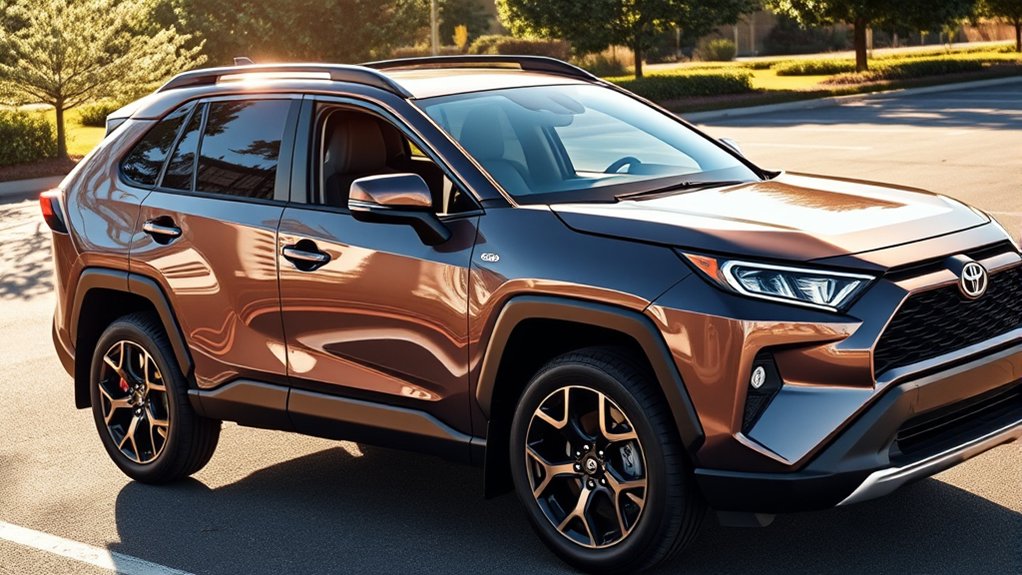
The redesigned 2026 Toyota RAV4 is a practical compact SUV for drivers who value fuel economy, cargo space, modern technology, and available all-wheel drive. However, the best version depends on whether you want maximum efficiency, stronger towing capability, rugged equipment, or plug-in electric driving.
Last updated: July 15, 2026
Quick Answer
The 2026 Toyota RAV4 is worth considering if you want an efficient, roomy, five-seat SUV with standard hybrid power and useful safety technology. Selected FWD trims reach an estimated 47 city/40 highway mpg, while properly equipped AWD versions can tow up to 3,500 pounds. Its main drawbacks are trim complexity, higher plug-in pricing, and limited long-term data for the redesigned generation.
Key Takeaways
- Every 2026 U.S. RAV4 uses either a regular hybrid or plug-in-hybrid powertrain.
- Regular-hybrid output is 226 horsepower with FWD and 236 horsepower with AWD.
- Fuel economy, towing capacity, charging equipment, and cabin features vary significantly by trim.
- The plug-in hybrid offers 324 horsepower and up to an EPA-estimated 54 miles of electric range on the SE.
- The 2026 redesign has promising specifications, but it does not yet have years of long-term reliability evidence.
Why Choose a Toyota RAV4? Key Benefits Explained

The 2026 Toyota RAV4 combines several qualities that compact-SUV buyers frequently want: efficient hybrid performance, seating for five, flexible cargo room, available AWD, and a broad range of comfort and capability features.
Toyota also simplified the powertrain decision by making the U.S. lineup fully electrified. You can choose a regular hybrid that refuels like a conventional gasoline vehicle or a plug-in hybrid that can complete many local trips using electricity when charged regularly.
Main Advantages of the 2026 RAV4
- Strong fuel economy: Selected FWD trims are listed at an estimated 47 city/40 highway mpg.
- Useful cargo capacity: Toyota lists up to 37.8 cubic feet behind the rear seats.
- Choice of FWD or AWD: FWD favors efficiency, while AWD can provide additional traction and unlock higher towing ratings on selected trims.
- Modern standard technology: A 12.3-inch digital gauge cluster and Toyota Safety Sense 4.0 are standard.
- Several distinct trim personalities: Core, sport-oriented, rugged Woodland, and performance-focused plug-in models serve different buyers.
- Long hybrid-battery coverage: Toyota covers the hybrid battery for 10 years or 150,000 miles, whichever comes first.
The 2026 RAV4 pairs up to an estimated 47 city/40 highway mpg with as much as 37.8 cubic feet of cargo space behind the rear seats.
Drawbacks to Consider
The RAV4 is not automatically the best SUV for every buyer. The number of powertrain, drivetrain, and trim combinations can make shopping confusing. Some desirable equipment is limited to expensive trims, and the plug-in hybrid only delivers its full economic benefit when you can charge it regularly.
The redesigned multimedia system also places several functions on the touchscreen. Test the climate controls, menus, voice commands, seating position, rear visibility, and road noise before deciding.
Finally, the 2026 model begins a new RAV4 generation. Toyota has extensive hybrid experience, but buyers should not treat the redesigned vehicle as having the same long-term reliability record as earlier generations.
How Does the RAV4 Hybrid Perform on Fuel Economy?
The 2026 RAV4 delivers competitive fuel economy, but the exact rating depends on trim, drivetrain, tires, and equipment. You should compare the specific configuration on the window sticker rather than relying on one lineup-wide figure.
Impressive Fuel Efficiency Ratings
The most efficient regular-hybrid configurations combine front-wheel drive with road-focused tires. Rugged AWD versions sacrifice some efficiency for added ground clearance, all-terrain tires, and capability.
| 2026 RAV4 configuration | Toyota-listed estimate | Power |
|---|---|---|
| LE, SE, or XLE Premium FWD | Up to 47 city/40 highway mpg | 226 net combined hp |
| Woodland AWD | 41 city/35 highway mpg | 236 net combined hp |
| XSE or Limited AWD | 43 city/37 highway mpg | 236 net combined hp |
| Plug-In Hybrid SE | Up to 40 mpg combined in hybrid operation and an EPA-estimated 54-mile electric range | 324 net combined hp |
These figures come from Toyota’s current 2026 RAV4 specifications and 2026 RAV4 Plug-In Hybrid information. Actual mileage varies with speed, temperature, terrain, traffic, tire pressure, accessory use, cargo, and driving style.
Hybrid System Performance Benefits
The regular RAV4 Hybrid combines a 2.5-liter four-cylinder engine with Toyota’s fifth-generation hybrid system. The electric components assist during acceleration and recover some energy during deceleration.
FWD models produce 226 net combined horsepower. AWD models produce 236 horsepower and use an electrically driven rear axle rather than a conventional mechanical connection between the front and rear axles.
This design provides smooth low-speed response and does not require external charging. The battery recharges through regenerative braking and the gasoline engine as needed.
Note: A regular RAV4 Hybrid cannot provide the long electric-only range of the plug-in model. Its EV mode is intended for limited low-speed use when conditions and battery charge permit.
How Does the RAV4 Hybrid Compare With Competitors?
The RAV4 is highly efficient, but buyers should compare equivalent hybrid trims and drivetrains. Comparing a RAV4 Hybrid with a gasoline-only rival can create a misleading result.
| Model and representative trim | Listed city/highway MPG | Important context |
|---|---|---|
| 2026 Toyota RAV4 Hybrid LE FWD | 47/40 | FWD efficiency-focused configuration |
| 2026 Honda CR-V Sport Hybrid 2WD | 43/36 | Another roomy, road-focused hybrid alternative |
| 2026 Hyundai Tucson Hybrid SEL AWD | 36/37 | Standard AWD on this comparison trim |
The RAV4 has the strongest listed city figure in this specific comparison. However, comfort, pricing, cargo layout, ride quality, controls, warranty terms, and local availability may matter more than a few MPG.
See the manufacturers’ current specifications for the Honda CR-V and Hyundai Tucson Hybrid before comparing exact trims.
RAV4’s Interior Features and Technology
The RAV4’s cabin focuses on storage, visibility, passenger space, and easy access to frequently used features. Toyota lists up to 37.8 cubic feet of cargo room behind the second row, giving you space for groceries, luggage, sports equipment, or a stroller.
The standard 12.3-inch digital gauge cluster displays vehicle, trip, safety, and hybrid information. Lower trims receive a 10.5-inch Toyota Audio Multimedia touchscreen, while selected higher trims use a 12.9-inch display.
Available or standard features vary by trim and may include:
- Wireless Apple CarPlay and Android Auto for compatible phones.
- Up to five USB-C ports across the cabin.
- One or two Qi-compatible wireless chargers, depending on trim.
- Heated or ventilated front seats on selected models.
- A digital rearview mirror on higher trims.
- A hands-free power liftgate on selected configurations.
- A 1,500-watt cargo-area outlet on appropriately equipped models.
Toyota Safety Sense 4.0 is standard, along with Blind Spot Monitor and Rear Cross-Traffic Alert. Higher trims can add systems such as a panoramic-view monitor, parking assistance, Traffic Jam Assist, Front Cross-Traffic Alert, and Lane Change Assist.
Driver-assistance equipment can reduce workload in certain conditions, but it does not replace attentive driving. Availability, subscriptions, network access, speed limitations, and operating conditions can affect individual features.
Pro Tip: During your test drive, use the touchscreen while parked, adjust the climate settings, pair your phone, load the cargo area, and sit in the rear seat. A feature list cannot tell you whether the controls, seats, and visibility suit you.
How Does RAV4’s Reliability Stack Up Against Rivals?
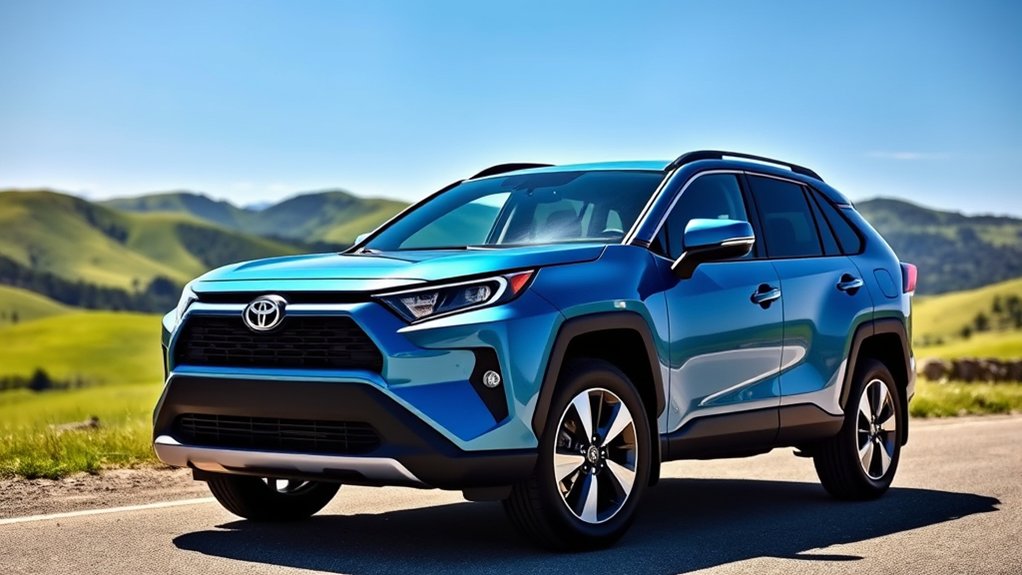
The RAV4 nameplate has a broad reputation for durability and resale demand, and Toyota has many years of experience building hybrid vehicles. Those points can make the RAV4 attractive to long-term owners.
However, the 2026 RAV4 begins a redesigned generation with a new body, updated hybrid systems, new multimedia technology, Toyota Safety Sense 4.0, and additional software-based features. It is too early to claim that this specific generation has proven ten-year reliability.
What the Warranty Covers
Toyota’s published U.S. warranty for the 2026 RAV4 includes:
- Basic warranty: Three years or 36,000 miles.
- Powertrain warranty: Five years or 60,000 miles.
- Hybrid-system components: Eight years or 100,000 miles.
- Hybrid battery: Ten years or 150,000 miles.
Coverage is subject to Toyota’s terms, exclusions, maintenance requirements, and the vehicle’s original in-service date. Read the warranty booklet supplied with the vehicle for complete details.
How to Evaluate Reliability Before Buying
- Review the exact model year rather than treating every RAV4 generation as identical.
- Check the service history when buying used.
- Confirm that software updates and recall work are complete.
- Inspect tires, brakes, suspension, fluids, charging equipment, and accident history.
- Use Toyota’s VIN-based recall and service-campaign lookup.
Resale value also depends on mileage, condition, accident history, trim, location, market demand, and fuel prices. Historical demand can be encouraging, but no resale result is guaranteed.
What Towing Capacity Can You Expect From the RAV4?
The 2026 RAV4’s towing capacity ranges from 1,750 to 3,500 pounds. The correct limit depends on powertrain, drivetrain, trim, installed equipment, and the vehicle’s specific rating.
| Configuration | Maximum published towing capacity |
|---|---|
| Regular-hybrid FWD models | 1,750 lb |
| Regular-hybrid LE AWD | 1,750 lb |
| Regular-hybrid XLE Premium, Woodland, SE, XSE, or Limited with qualifying AWD configuration | Up to 3,500 lb |
| Plug-In Hybrid SE, XSE, or Woodland AWD | Up to 3,500 lb |
| Plug-In Hybrid GR SPORT | Use the model-specific rating; Toyota does not include it in the published list of 3,500-pound configurations |
The Woodland includes a two-inch receiver and wiring harness, making it the most towing-ready trim from the factory. Other configurations may require approved towing equipment.
Warning: Never select a trailer using the advertised maximum alone. Passengers, cargo, accessories, hitch load, and trailer tongue weight affect payload and axle limits. Follow the vehicle’s owner documentation, certification labels, hitch ratings, and applicable trailer-brake laws.
A heavier trailer also increases braking distance and places greater demands on the cooling system, tires, suspension, and brakes. Reduce speed, allow more stopping room, secure the load, and inspect the hitch, lights, tires, safety chains, and braking system before departure.
Is the RAV4 Plug-In Hybrid a Smart Financial Choice?
The 2026 RAV4 Plug-In Hybrid can be a sensible purchase, but it is not automatically cheaper to own than the regular hybrid. It produces 324 net combined horsepower and offers an EPA-estimated 54 miles of electric range on the SE.
The plug-in model is most likely to fit you when:
- You can charge at home or work on most days.
- Your typical daily travel fits within or near the electric range.
- Your electricity cost per mile is lower than your gasoline cost per mile.
- You value stronger acceleration and available PHEV-specific equipment.
- You plan to keep the vehicle long enough to benefit from reduced gasoline use.
The regular hybrid may offer better overall value when you cannot charge reliably, drive mainly on long highway trips, want a lower purchase price, or do not expect fuel savings to recover the plug-in premium.
In the United States, the federal New Clean Vehicle Credit is not available for vehicles acquired after September 30, 2025. State, local, utility, and charging-equipment programs may follow different rules, so review current incentives through the U.S. Department of Energy’s state incentive database.
Before buying, compare the purchase price, financing, insurance, electricity rate, gasoline price, annual mileage, expected charging frequency, and local incentives. That calculation provides a more useful answer than MPG alone.
How Does Towing Impact RAV4’s Hybrid Performance?
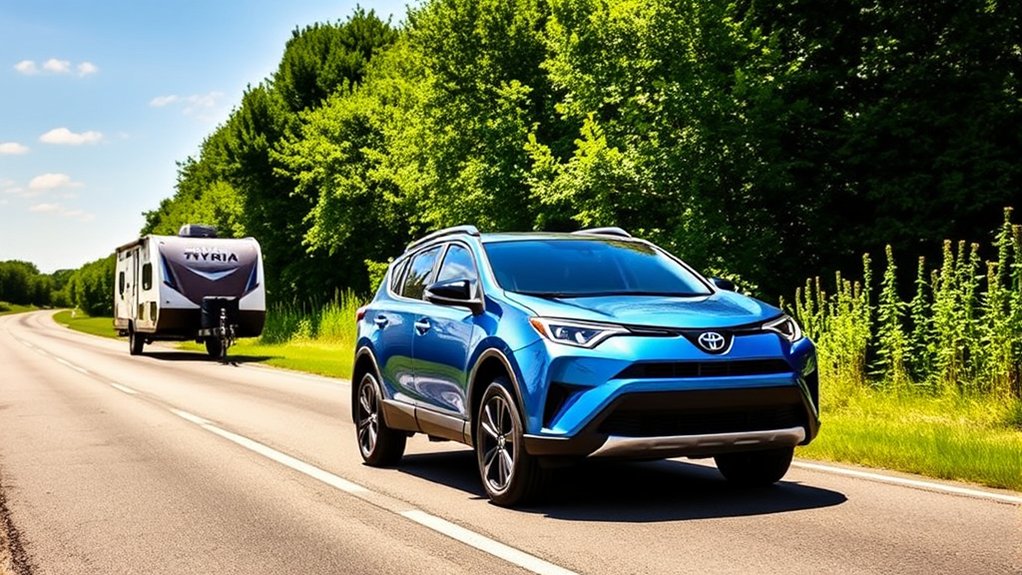
Towing increases the amount of energy the RAV4 needs to accelerate, climb hills, and overcome aerodynamic drag. You should expect lower fuel economy than the vehicle’s unloaded rating.
On the plug-in hybrid, towing can also reduce electric-only range. The size and shape of the trailer can matter as much as its weight because a tall, wide trailer creates substantial air resistance at highway speeds.
Towing can affect the RAV4 in several ways:
- Lower MPG and EV range: Added weight and drag require more energy.
- Slower acceleration: The vehicle must move a greater combined mass.
- Longer stopping distances: Brakes work harder, especially on descents.
- Reduced available payload: Trailer tongue weight counts against the vehicle’s carrying capacity.
- Different handling: Crosswinds, passing trucks, steering inputs, and poor load balance can cause trailer movement.
- More heat: Hot weather, steep grades, and sustained high speed increase stress on vehicle systems.
The 226- or 236-horsepower regular hybrid and 324-horsepower plug-in hybrid provide useful acceleration, but horsepower does not override towing, payload, axle, hitch, or tire limits.
Safety and Driver-Assistance Features
The 2026 RAV4 includes Toyota Safety Sense 4.0, Blind Spot Monitor with Rear Cross-Traffic Alert, LED headlights with Automatic High Beams, a backup camera, and a tire-pressure monitoring system.
Selected trims add parking assistance, a panoramic-view monitor, Front Cross-Traffic Alert, Lane Change Assist, Traffic Jam Assist, and Advanced Park. Some connected features require an active trial or subscription and network availability.
NHTSA selected the 2026 RAV4 Hybrid and Plug-In Hybrid for testing under its 5-Star Safety Ratings program. Because the 2026 vehicle is a redesign, do not apply the 2019–2025 generation’s crash-test results to it automatically. Check the NHTSA ratings database and the IIHS vehicle-ratings database for completed results.
Which 2026 RAV4 Trim Should You Choose?
| Trim | Best suited to | Notable features |
|---|---|---|
| LE | Value-focused buyers | 10.5-inch multimedia system, 12.3-inch gauge cluster, TSS 4.0, available AWD |
| XLE Premium | Comfort and practical everyday features | SofTex-trimmed seats, heated front seats, power liftgate, available AWD |
| SE | Sportier styling without top-trim pricing | Sport design, heated front seats, regular-hybrid or plug-in-hybrid availability |
| Woodland | Outdoor use and towing preparation | AWD, all-terrain tires, raised roof rails, fog lights, receiver and wiring harness |
| XSE | Technology and sport-oriented comfort | 12.9-inch screen, heated and ventilated front seats, AWD, regular hybrid or PHEV |
| Limited | Premium regular-hybrid equipment | JBL audio, panoramic roof, dual wireless chargers, heated rear outboard seats |
| PHEV GR SPORT | Drivers prioritizing handling and performance styling | 324-hp PHEV system, GR-tuned steering and suspension, performance tires |
Who Should Buy a Toyota RAV4?
The RAV4 is a strong match when you want:
- A fuel-efficient five-seat SUV.
- Useful cargo space without moving to a three-row vehicle.
- A regular hybrid that does not need external charging.
- A plug-in option for electric commuting and gasoline-backed road trips.
- Available AWD and configuration-dependent 3,500-pound towing.
- A wide dealer and service network.
You may prefer another vehicle when you need a third row, substantially more towing capacity, a more luxurious cabin at a similar price, simpler physical controls, or a lower-cost gasoline-only model.
Related Guides
Frequently Asked Questions
What are the maintenance costs associated with a Toyota RAV4?
Maintenance costs depend on mileage, labor rates, tires, driving conditions, and whether repairs fall under warranty. Regular services include oil and filter changes, tire rotations, fluid and brake inspections, cabin and engine air filters, and scheduled checks listed in Toyota’s maintenance guide. The hybrid system does not eliminate routine gasoline-engine maintenance.
How does the RAV4 compare with other SUVs in its class?
The 2026 RAV4 offers excellent listed fuel economy, useful cargo space, multiple AWD configurations, and regular-hybrid and plug-in-hybrid choices. The Honda CR-V Hybrid, Hyundai Tucson Hybrid, Subaru Forester Hybrid, and Kia Sportage Hybrid may offer different strengths in ride comfort, interior design, pricing, warranty coverage, or passenger space. Compare equivalent trims and test-drive your finalists.
What common issues should RAV4 buyers check?
Issues vary by model year, generation, powertrain, and individual vehicle. Check the VIN for recalls and service campaigns, review maintenance records, test every electronic feature, inspect for warning lights or leaks, and obtain an independent inspection when buying used. The redesigned 2026 model does not yet have a long-term issue history.
Does the RAV4 come with a warranty?
Toyota lists a three-year/36,000-mile basic warranty and a five-year/60,000-mile powertrain warranty for the 2026 RAV4. Hybrid-related components receive eight-year/100,000-mile coverage, while the hybrid battery is covered for ten years or 150,000 miles. Terms and exclusions apply.
How does the RAV4’s resale value hold up over time?
RAV4 models often attract strong used-market demand, but resale value is not guaranteed. Mileage, trim, condition, maintenance history, accidents, regional demand, fuel prices, interest rates, and the broader used-vehicle market all affect the final value.
Do you have to plug in the regular RAV4 Hybrid?
No. The regular RAV4 Hybrid recharges its battery through regenerative braking and the gasoline engine. Only the RAV4 Plug-In Hybrid is designed for external charging and extended electric-only driving.
Is AWD necessary on a Toyota RAV4?
AWD is useful for frequent snow, loose surfaces, steep driveways, and buyers who need a qualifying 3,500-pound towing configuration. FWD is usually more efficient and may be sufficient for drivers who mainly use paved roads in mild weather.
Conclusion
The 2026 Toyota RAV4 is a compelling compact SUV when efficiency, cargo flexibility, available AWD, and electrified power are high priorities. Its regular hybrid offers the simplest ownership experience, while the plug-in hybrid adds stronger acceleration and useful electric range for drivers who charge regularly.
Your best choice depends on the exact trim and drivetrain. Compare the window-sticker fuel economy, towing rating, standard equipment, purchase price, charging access, insurance, and independent safety results before buying. A careful trim comparison and test drive will tell you more than the RAV4 name alone.
Sources
- Toyota: 2026 RAV4 Overview and Specifications — fuel economy, cargo capacity, trims, towing, and technology.
- Toyota USA Newsroom: The 2026 RAV4 Arrives — powertrains, horsepower, trim equipment, towing configurations, and warranty coverage.
- Toyota: 2026 RAV4 Plug-In Hybrid — horsepower, electric range, charging, technology, and capability.
- NHTSA: 2026 Vehicles Selected for Safety Testing — 2026 RAV4 Hybrid and Plug-In Hybrid testing status.
- Honda: 2026 CR-V Specifications — competitor hybrid fuel-economy comparison.
- Internal Revenue Service: Clean Vehicle Tax Credits — current federal consumer-credit availability.

