
Toyota RAV4s have a strong reputation for durability, but no model is problem-free. The issues you may encounter depend heavily on the model year, engine, drivetrain, maintenance history, and operating conditions. Knowing the verified trouble spots and their warning signs can help you avoid unnecessary repairs and evaluate a used RAV4 more carefully.
Quick Answer
Toyota RAV4s are generally durable, but common problems vary by year and powertrain. Verified concerns include oil consumption in certain 2006–2008 vehicles, sensor-related codes in some 2009–2012 models, and selected newer-model issues involving water leaks, AWD components, 12-volt batteries, or hybrid cable corrosion. Diagnose by VIN and symptoms.
Key Takeaways
- RAV4 problems are model-year and configuration specific, so broad claims about every generation can be misleading.
- Certain 2006–2008 RAV4s were covered by a Toyota program addressing excessive engine-oil consumption.
- A diagnostic trouble code identifies a monitored condition, not automatically the part that must be replaced.
- Recalls, Technical Service Bulletins, warranty extensions, and customer support programs have different rules.
- Use your 17-character VIN to check Toyota and NHTSA records before buying or repairing a RAV4.
Common RAV4 Problems: What to Look Out For

Some RAV4 concerns are limited to a particular engine, drivetrain, production period, or emissions certification. A problem documented for one configuration should not be treated as a defect in every RAV4 from the same year.
| Model or configuration | Verified concern to research | What to check |
|---|---|---|
| Certain 2006–2008 RAV4s | Excessive engine-oil consumption addressed by Toyota Warranty Enhancement Program ZE7 | Oil-level history, consumption-test records, warning lights, smoke, leaks, and repair invoices |
| Some 2009–2012 RAV4s with non-PZEV 2AR-FE engines | P0138 oxygen-sensor circuit condition involving sensor response and ECM logic | Stored codes, emissions label, exhaust leaks, sensor data, and calibration history |
| Certain 2019 Adventure and Limited AWD models | Buzz or groan from the torque-vectoring AWD transfer case | Noise around 20–30 mph, drivetrain configuration, service history, and applicable campaign records |
| Certain 2019–2021 RAV4-family vehicles | Water entry from roof-rail mounting clips | Headliner stains, musty odors, damp trim, electrical issues, and roof-rail repair records |
| Some 2020–2021 RAV4 and RAV4 Hybrid models | Depleted 12-volt battery associated with a DCM firmware condition | Battery-test results, firmware-update records, SOS light behavior, and repeated no-start complaints |
| Certain 2019–2022 RAV4 Hybrid AWD models | Corrosion at the rear motor-generator high-voltage cable connection | Hybrid warnings, AM-radio static, no-start history, corrosion inspection, and program eligibility |
Warning: Stop driving as soon as it is safe if the red oil-pressure light appears, the engine overheats, the check-engine light flashes, you smell raw fuel, the vehicle loses power, or the transmission cannot engage reliably. Shut the engine off and arrange professional diagnosis or towing.
More routine warning signs include declining fuel economy, a steady check-engine light, repeated oil top-ups, delayed shifting, damp interior trim, unusual drivetrain noises, or recurring 12-volt battery failure. Record when each symptom occurs because temperature, speed, load, and driving mode can narrow the diagnosis.
What to Do When the Check-Engine Light Comes On
A steady check-engine light usually means the engine control system has detected an emissions or performance fault. A flashing light can indicate a severe active misfire that may damage the catalytic converter.
- Check how the vehicle is running. Stop driving if it shakes, overheats, loses power, smells strongly of fuel, or displays an oil-pressure warning.
- Inspect the fuel cap. Confirm that it is installed correctly and that its seal is not visibly cracked or damaged.
- Read all stored, pending, and permanent codes. Write them down before clearing anything.
- Review freeze-frame data. This records conditions such as speed, temperature, load, and engine speed when the fault set.
- Check Toyota documentation. Search for applicable TSBs, campaigns, and recalls using the exact year, engine, drivetrain, code, and VIN.
- Test before replacing parts. Inspect wiring, connectors, fluid levels, leaks, sensor data, and related systems.
A trouble code identifies the condition detected by the computer. It does not automatically identify the part that caused it.
Transmission Issues: Diagnosis and Solutions
Transmission symptoms can occur in older or newer RAV4s, but you should not apply one mileage threshold or diagnosis to every model. Toyota has used different automatic transmissions, continuously variable transaxles, hybrid transaxles, sensors, control modules, and AWD systems across the RAV4 lineup.
Symptoms that deserve inspection include:
- Delayed engagement when selecting Drive or Reverse
- Harsh, slipping, flaring, or unusually slow shifts
- Failure to downshift when expected
- Shuddering under light acceleration
- Transmission, AWD, or check-engine warnings
- Fluid leaks, burning odors, or abnormal mechanical noises
Possible causes include incorrect or degraded fluid, a low fluid level caused by leakage, sensor or wiring faults, shift-solenoid problems, valve-body wear, software calibration, internal clutch wear, an AWD component, or an engine fault that changes how the transmission behaves.
An OBD-II scanner can retrieve codes, but a basic scanner may not access all Toyota transmission, AWD, hybrid, or body-control data. Proper diagnosis may require Toyota-compatible scan data, fluid-temperature readings, pressure testing, wiring checks, and a controlled road test.
Pro Tip: Note the exact speed, engine temperature, drive mode, throttle position, and length of the trip when a shift or drivetrain symptom occurs. Repeatable conditions give a technician much more useful information than a general description such as “it shifts badly.”
[Amazon Products Picked for You]

[Easy to Use—Work Out of the Box] + [FOXWELL 2026 New Version] FOXWELL NT604 Elite scan tool is the 2026 new version from FOXWELL, designed for car owners who want to figure out the cause of issues before fixing car problems by scanning common systems like ABS, SRS, engine, and transmission. The NT604 Elite obd2 scanner diagnostic tool comes with the latest software—no need to waste time downloading software first. Plug the scanner into the OBDII port with OBDII cable to start the diagnosis.

2026 XTOOL OBD2 Scanner D7W : All-round Upgraded Version of D7/D7S/D7BT/D7PRO Exclusive 3-Year Free Updates; WiF! Freedom - 20X Faster Precision obd2 scanner diagnostic tool with AI-assisted; 4,000+ Active Tests; 150+ Vehicle Brand Coverage; Upgraded 7.3V Fast Charging; Advanced ECU Coding & PMI Offline Program ming; Pre/Post Diagnostic Reports; One-Click Report Printing; Auto VIN Scanning; 22 Languages Support; 8-PID Live Data Monitoring; Hidden Issue Detection Before Failure - Professional Performance for Car Owners, DIYers & Home Users,and an ideal choice for purchasing for your loved father
Excessive Oil Consumption: Causes and Remedies
Toyota documented excessive oil consumption in certain 2006–2008 RAV4 vehicles through Warranty Enhancement Program ZE7. The program did not automatically apply to every RAV4 in those years, and qualification depended on vehicle eligibility and a dealer-performed oil-consumption test.
Oil can disappear because the engine burns it internally or because it leaks externally. Worn or stuck piston rings may contribute to internal consumption, while valve-cover gaskets, timing-cover areas, oil-pan seals, filters, drain plugs, or other components may leak externally.
[Amazon Products Picked for You]

NOT FOR USE ON AIRCRAFT - Look for our Aircraft specific testing kits on Amazon.

Premium Material-100% rigorously tested before shipping, Meets OEM standards.The oil filter cap for Toyota constructed of premium aluminum for long lasting durability and reliability

Premium Material & Excellent Quality:Made of high-quality premium aluminum alloy for high strength, durability and long service life. Every product is 100% rigorously tested before shipment and meets OEM standards, ensuring stable performance and safe use.
Common Symptoms Observed
- Oil level falling noticeably between scheduled services
- Repeated need to add oil
- Blue or gray exhaust smoke, especially after startup or acceleration
- Oil residue beneath the vehicle or on engine components
- Oil-fouled spark plugs
- Reduced performance, misfire codes, or catalytic-converter contamination
- Oil-pressure or low-oil warnings
Visible smoke and leaks can help identify the source, but their absence does not prove the engine is not consuming oil. Keep a written log showing the odometer reading, oil level, quantity added, oil specification, and driving conditions.
Recommended Maintenance Practices
Check the oil on level ground using the procedure in your owner’s manual. Allow the engine to sit for the specified time, wipe the dipstick, reinsert it fully, and read it again. Add only the correct grade and quantity, and do not overfill.
Follow the Warranty and Maintenance Guide for your exact model year and powertrain. Oil intervals are not based only on whether the oil is labeled synthetic or conventional. Time, oil grade, engine design, towing, short-trip use, dust, temperature, and other operating conditions can change the schedule.
For example, Toyota’s 2023 RAV4 Prime Warranty and Maintenance Guide specifies a 10,000-mile or 12-month interval with the required 0W-16 oil under stated normal conditions. It calls for 5,000-mile or six-month oil service under listed special operating conditions. Other RAV4 years may have different requirements.
Warning: A red oil-pressure warning can indicate inadequate lubrication, even when oil remains on the dipstick. Pull over safely, shut the engine off, and do not continue driving until the cause has been checked.
Misdiagnosed Catalytic Converter Issues: What to Know
A catalyst-efficiency code such as P0420 does not automatically mean the catalytic converter must be replaced. The powertrain control module compares upstream and downstream sensor behavior to judge how effectively the system stores oxygen and treats exhaust gases.
Before condemning the converter, diagnosis should consider:
- Exhaust leaks ahead of or near the sensors
- Active or recent engine misfires
- Excessive oil consumption or coolant entering the engine
- Incorrect fuel mixture or fuel-trim readings
- Air-fuel ratio or oxygen-sensor response
- Damaged wiring, poor grounds, or loose connectors
- Applicable calibration updates or Toyota service information
- Converter temperature and efficiency test results
A sulfur-like odor, poor acceleration, rattling from the converter, excessive heat, or repeated efficiency codes may justify further testing. However, replacing the converter without correcting an oil-burning, misfire, or fuel-control problem can damage the replacement.
Do not rely on a universal age or mileage limit for converter life. A converter’s condition depends on engine health, contamination, impacts, operating temperature, fuel control, and driving history.
Identifying Symptoms of O2 Sensor Failures in Your RAV4
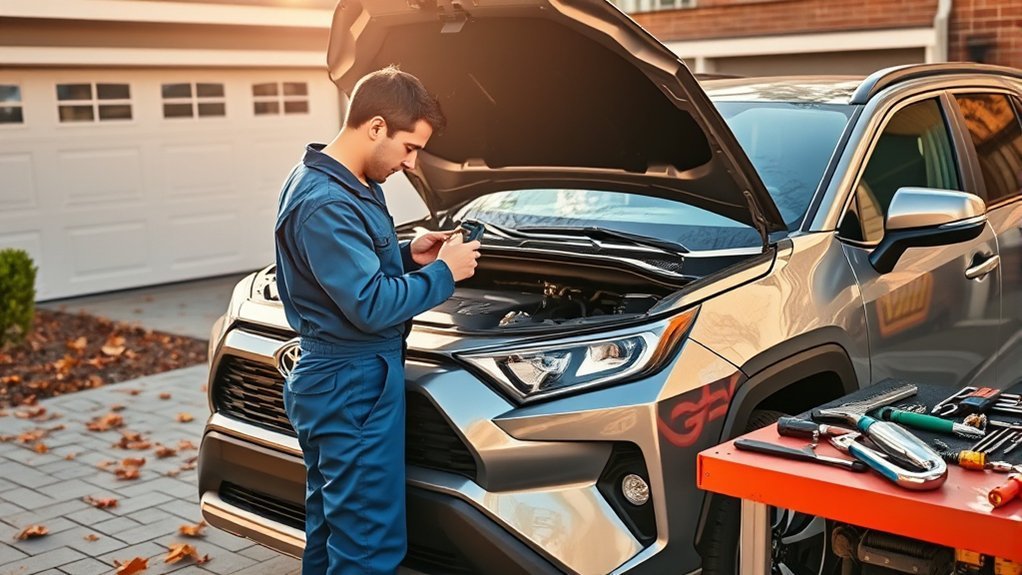
Oxygen sensors and air-fuel ratio sensors help the engine computer monitor combustion and exhaust conditions. Depending on the sensor location and failure type, symptoms may include poor fuel economy, hesitation, unstable idle, increased emissions, slow warm-up fuel correction, or an illuminated check-engine light.
Toyota issued T-SB-0151-18 for some 2009–2012 RAV4s equipped with non-PZEV 2AR-FE engines that displayed DTC P0138. Toyota’s procedure included checking for exhaust leaks, confirming the code, inspecting sensor response, replacing the specified sensor when required, and updating ECM logic.
This bulletin does not mean that every P0138 code or every RAV4 oxygen-sensor code needs the same repair. Exhaust leaks, wiring faults, fuel-control problems, contamination, and other sensor conditions can produce similar symptoms.
Use live scan data and the Toyota repair procedure for the exact code and vehicle. Avoid replacing a sensor solely because its name appears in the code description.
Note: Toyota uses both air-fuel ratio sensors and conventional oxygen sensors. Their normal voltage or current patterns differ, so generic testing advice may not apply to every sensor position.
[Amazon Products Picked for You]

【Replacement OE Number】(234-4622): 2344556, 2344757, 88975496, 13355 ,8946502340, 8946506100, 8946506150, 8946506190, 8946506260, 8946506290, 894650K020, 894650R010, 894650R040, 894650R080, 8946516050, 8946526130, 8946533080, 8946533180, 8946578010, 8946580041,15231, 15422, 15485, 15567, (234-9041): 2349041, 2349044, 8946706030, 8946706070, 8946706110, 8946707010, 8946708050, 8946708070, 894670E120, 894670R010, 8946712070, 8946728010, 8946733160, 8946742040, 8946742080, 8946748020, 8946772010

This DENSO Oxygen Sensor is compatible with Toyota RAV4 2018, 2017, 2016, 2015, 2014, 2013, 2012, 2011, 2010, 2009, 2008, 2007, 2006 2.4L 2.5L L4 (Downstream)

One Year Quality Guarantee
Troubleshooting EVAP System Errors in Your RAV4
The evaporative-emissions system, commonly called the EVAP system, stores fuel vapors and routes them into the engine instead of releasing them into the atmosphere. A fault can turn on the check-engine light even when the vehicle seems to drive normally.
Common EVAP-related causes include:
- A loose, damaged, or incorrect fuel cap
- A deteriorated fuel-cap gasket
- Cracked, disconnected, or restricted vapor hoses
- A sticking purge valve or vent valve
- A damaged charcoal canister
- A faulty pressure sensor or wiring connection
- Damage near the fuel tank or filler neck
Start by recording the exact code. Inspect the cap and visible hoses, but do not assume every EVAP code is a cap problem. A smoke test, bidirectional scan-tool test, pressure reading, or electrical test may be needed to locate a small leak or valve fault.
Toyota maintenance guides also call for inspection of fuel lines, connections, vapor-vent hoses, and the fuel-cap gasket at specified intervals. Use the schedule for your exact RAV4.
Warning: Fuel vapor is flammable. Do not smoke, create sparks, use an open flame, or open fuel-system components without the correct tools and procedures. A persistent raw-fuel smell requires prompt professional inspection.
RAV4 NHTSA Recalls: What You Should Know
Recall lists based only on model year cannot confirm whether your RAV4 is affected. Production dates, equipment, manufacturing plant, previous repairs, and VIN range can change applicability.
Use both official lookup tools:
- NHTSA recall lookup: Enter the 17-character VIN or supported license-plate information to find unrepaired safety recalls.
- Toyota recall and service-campaign lookup: Check Toyota-specific safety recalls and service campaigns.
NHTSA states that open safety recalls should be repaired free of charge. Recall status can change, so checking at least twice each year is sensible, especially if you bought the vehicle used or recently changed your address.
Past RAV4 campaigns have involved different systems, including airbags, fuel systems, steering, suspension, electrical components, and other safety-related parts. Historical headlines about unintended acceleration, floor mats, fuel pumps, or Takata airbags do not establish the status of your individual RAV4.
NHTSA’s Takata list includes 2004–2005 Toyota RAV4 vehicles, but NHTSA still instructs owners to confirm current applicability through the VIN lookup rather than relying only on a model-year list.
Importance of Technical Service Bulletins for RAV4 Maintenance
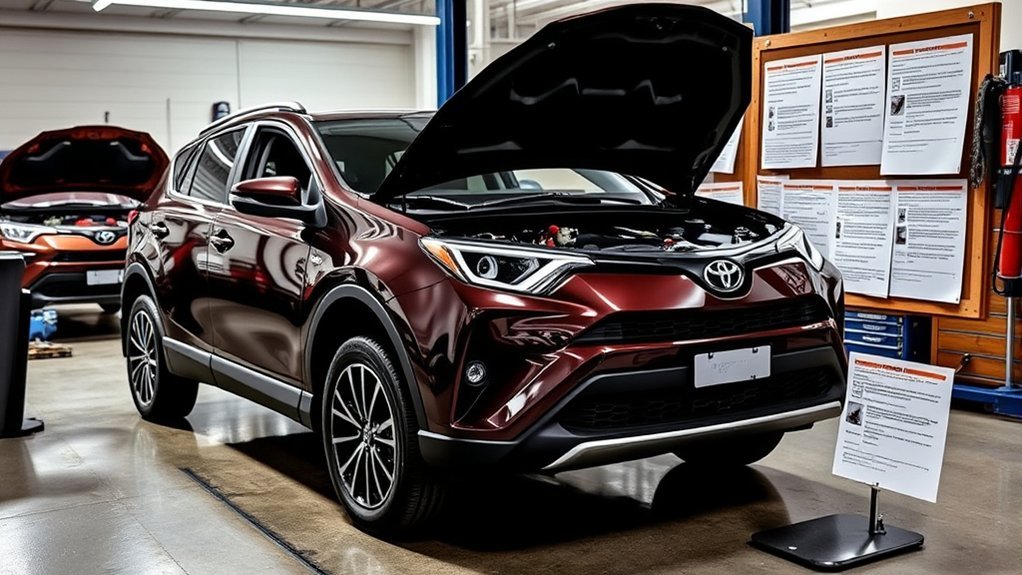
A Technical Service Bulletin, or TSB, is repair information Toyota sends to dealerships. It may describe a known symptom, affected configuration, diagnostic method, revised part, calibration update, or repair procedure.
A TSB is not automatically a safety recall. It also does not automatically mean Toyota will pay for the repair. Coverage depends on the original warranty, an emissions warranty, a recall, a special service campaign, a warranty enhancement, or a customer support program.
The distinctions matter:
- Safety recall: Addresses a safety defect or noncompliance. An open recall repair is provided without charge.
- Technical Service Bulletin: Gives technicians diagnostic or repair information for a defined condition.
- Special service campaign: A manufacturer action that may provide a repair for selected vehicles under stated terms.
- Customer support or warranty-enhancement program: Extends coverage for a specific condition, component, period, mileage, or vehicle group.
You can search manufacturer communications through the NHTSA vehicle and manufacturer-communications resources. A Toyota dealer can also check applicability using your VIN and current Toyota service information.
Bring the exact symptom, code, service records, and VIN when requesting a TSB review. A bulletin that mentions your model year may still exclude your engine, trim, drivetrain, emissions certification, or production range.
Real Owner Experiences: Are RAV4s Reliable?
Owner experiences can reveal recurring symptoms, but they should not replace technical documentation or a vehicle inspection. A driver who reaches 200,000 miles shows what may be possible with that vehicle. It does not establish a guaranteed or average lifespan for every RAV4.
Condition matters more than reputation alone. Two RAV4s from the same year can have very different histories because of maintenance, corrosion exposure, collision repairs, towing, short-trip use, overheating, oil-level neglect, and previous diagnostic work.
When evaluating reliability, look for:
- Complete oil-change and maintenance records
- No unresolved warning lights or recently cleared readiness monitors
- Consistent cold-start behavior
- Smooth shifting under light and heavier acceleration
- No overheating, fluid leaks, fuel smells, or abnormal smoke
- No damp headliner, musty smell, or unexplained electrical damage
- Completed recalls, campaigns, and applicable support-program repairs
- A pre-purchase inspection by an independent qualified technician
Hybrid models require additional attention to hybrid-system warnings, cooling-system maintenance, underbody condition, and high-voltage cable or connector concerns. Do not touch, disconnect, or disassemble orange high-voltage components.
Proactive Maintenance Tips to Prevent Common RAV4 Issues
Preventive maintenance cannot eliminate every defect, but it can reduce secondary damage and help you detect changes early.
- Follow the exact Toyota schedule. Use the Warranty and Maintenance Guide for your model year, engine, and operating conditions.
- Check engine oil regularly. Check before long trips and more often if the engine has a history of consumption or leakage.
- Use the specified fluids. Do not choose engine, transmission, differential, transfer-case, or coolant products based only on generic recommendations.
- Record warning codes before clearing them. Preserve pending codes, permanent codes, and freeze-frame information.
- Inspect leaks promptly. Engine oil, coolant, transmission fluid, differential oil, brake fluid, and fuel require different responses.
- Keep the fuel-cap seal clean and intact. Replace a damaged cap with the correct part.
- Watch for interior water entry. Check the headliner, pillars, spare-tire area, carpet, and electrical connectors after heavy rain.
- Test the 12-volt battery. Repeated discharge can be a battery problem, a charging problem, a parasitic draw, or a software-related condition.
- Check recalls and campaigns by VIN. Repeat the check periodically because new actions can be announced.
- Ask about applicable TSBs. Provide the exact symptom and code rather than requesting a repair based only on a bulletin title.
Used RAV4 Pre-Purchase Checklist
A careful inspection is especially important when the vehicle has incomplete records or has recently had warning lights cleared.
- Verify the VIN. Confirm that the dashboard, door label, registration, and vehicle-history documents match.
- Check open recalls and campaigns. Use both NHTSA and Toyota tools.
- Start the engine cold. Listen for rattles, knocking, prolonged cranking, or uneven idle.
- Inspect all fluids. Look for low levels, contamination, leaks, burnt odors, or evidence of recent topping-off.
- Scan every available module. Review current, pending, permanent, and history codes when the scan tool supports them.
- Check readiness monitors. Multiple incomplete monitors may indicate that codes or battery power were recently cleared.
- Drive at several speeds. Test light acceleration, firm acceleration, deceleration, reversing, parking maneuvers, and highway cruising.
- Test AWD or hybrid operation. Watch for warnings, noises, hesitation, or abnormal vibration.
- Inspect for water entry. Check the headliner, roof rails, pillars, carpets, cargo area, and electrical connectors.
- Arrange an independent inspection. A lift inspection can reveal corrosion, fluid leaks, collision repairs, damaged shields, and high-voltage cable concerns that are difficult to see from the ground.
Frequently Asked Questions
How does the RAV4 compare with other SUVs in reliability?
No single score describes every RAV4 generation. Compare the exact model year, engine, drivetrain, recall history, maintenance records, and inspection results with competing vehicles from the same year. A well-documented individual vehicle is usually a safer choice than one purchased only because its model has a strong reputation.
What is the average lifespan of a Toyota RAV4?
Toyota does not publish one guaranteed lifespan for every RAV4. Some well-maintained vehicles reach 200,000 miles or more, while neglect, corrosion, overheating, collision damage, oil starvation, or severe use can shorten service life. Maintenance history and present condition matter more than an unsupported mileage promise.
Are there any specific RAV4 models to avoid?
A blanket avoid-list is less useful than checking the exact configuration. Closely inspect certain 2006–2008 vehicles for oil-consumption history, selected 2019 torque-vectoring AWD models for transfer-case noise, certain 2019–2021 vehicles for roof leaks, and certain 2019–2022 Hybrid AWD vehicles for rear motor-cable corrosion. Verify applicability by VIN.
How often should I service my RAV4 for optimal reliability?
Follow the Warranty and Maintenance Guide for your exact model year and powertrain. Toyota schedules use both mileage and time, and special operating conditions may shorten some intervals. Do not assume every RAV4 uses the same oil-change, coolant, transmission-fluid, differential, or inspection schedule.
What should I do if my RAV4 has an open recall?
Read the recall instructions and contact an authorized Toyota dealer to schedule the free repair. Follow any stop-driving or parking instructions in the notice. Keep the completion record, and check the VIN again later to confirm that the recall no longer appears as open.
Does a check-engine light mean the catalytic converter is bad?
No. Even a catalyst-efficiency code does not prove the converter has failed. Exhaust leaks, misfires, oil consumption, fuel-control problems, sensor response, wiring faults, and calibration issues should be evaluated before the converter is replaced.
What is the difference between a recall and a TSB?
A safety recall addresses a safety defect or regulatory noncompliance and provides a free remedy for affected vehicles. A TSB gives dealerships diagnostic or repair information for a defined condition. A TSB does not automatically make the repair free unless separate warranty, campaign, or support-program coverage applies.
Conclusion
Toyota RAV4 problems should be evaluated by model year, engine, drivetrain, symptoms, and VIN rather than by reputation alone. Certain configurations have documented concerns, but that does not mean every vehicle in the same year is affected.
Check the oil regularly, preserve diagnostic codes, investigate warning lights before replacing parts, and verify recalls and service programs through official sources. When buying a used RAV4, complete service records and an independent inspection provide more useful evidence than a generic best-year or worst-year list.
Sources
- Toyota Warranty Policy Bulletin POL14-12 — excessive engine-oil consumption coverage for certain 2006–2008 RAV4 vehicles
- Toyota T-SB-0151-18 — P0138 diagnosis for specified 2009–2012 RAV4 configurations
- Toyota Manuals and Warranties — model-specific owner’s manuals and maintenance guides
- NHTSA Recall Lookup — official open-recall search by VIN or supported license-plate information
- Toyota Recall and Service Campaign Lookup — Toyota-specific recall and campaign search
- NHTSA Investigations, Recalls, and Manufacturer Communications — recall guidance and access to manufacturer communications and TSBs
