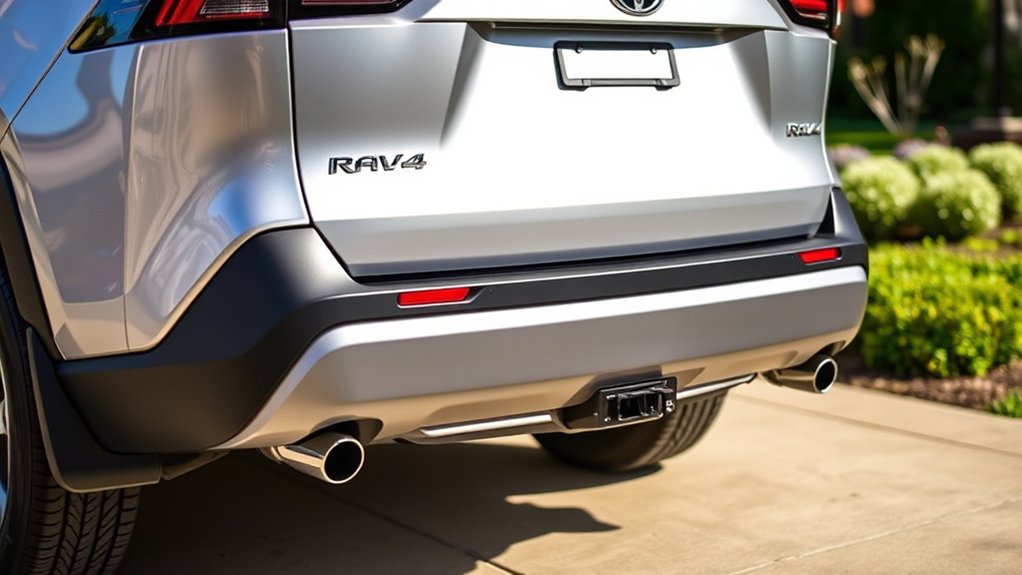
A Toyota RAV4 may or may not include a tow hitch depending on the model year, market, and trim. Most RAV4 owners still need to add a Toyota accessory hitch or an aftermarket hitch, but newer trims create important exceptions. The safest choice is to confirm your exact model’s towing rating, hitch fitment, wiring needs, and payload limit before you buy parts or pull a trailer.
Quick Answer
Most Toyota RAV4 trims do not include a tow hitch as standard equipment. However, Toyota lists the 2026 RAV4 Woodland grade with a 2-inch rear tow hitch receiver and wiring harness. For many other trims and older model years, you’ll need an OEM accessory hitch or a compatible aftermarket hitch.
Key Takeaways
- A RAV4 hitch is usually an accessory, not standard equipment, but the 2026 Woodland grade is a key exception.
- Towing capacity depends on model year, trim, drivetrain, payload, hitch rating, and trailer setup.
- A 4-way flat connector handles basic trailer lights, while trailers with electric brakes usually need a 7-way setup and brake controller.
- Dealer-installed Toyota hitches often look cleaner, while aftermarket hitches may cost less and install faster.
- Never tow beyond the lowest rating among the vehicle, hitch, ball mount, trailer, and loaded cargo.
At a Glance
| Time Required | About 1 to 2.5 hours for many bolt-on aftermarket installs; longer for OEM-style bumper-cut installations or wiring work. |
| Difficulty | Moderate for a bolt-on hitch if you have tools and help; advanced for OEM-style installs that require trim removal or bumper cutting. |
| Tools Needed | Socket set, torque wrench, safety glasses, trim tools if needed, wiring kit, zip ties, and a helper or lift for safer positioning. |
| Cost | Varies by model year, hitch type, wiring, dealer/shop labor rate, and local taxes. Get a written quote for hitch, wiring, labor, and any sensor-related work. |
Does the Toyota RAV4 Come Standard With a Hitch?
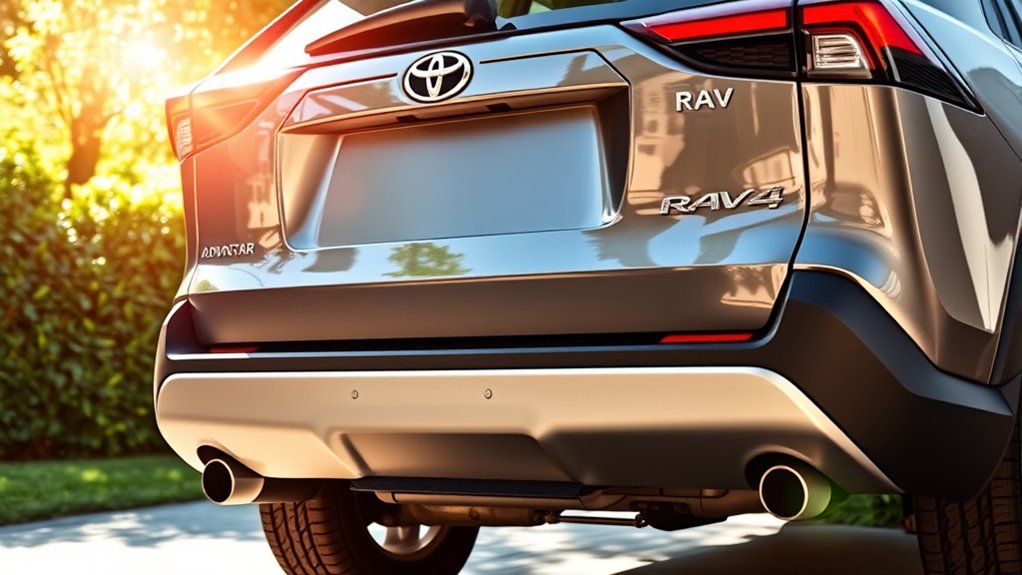
Most Toyota RAV4 trims do not come standard with a trailer hitch. In many cases, you buy the hitch receiver and trailer wiring separately through Toyota parts, a Toyota dealer, or an aftermarket hitch installer.
The important update is the 2026 RAV4 Woodland grade. Toyota lists it with a 2-inch rear tow hitch receiver with wiring harness. That means a blanket “no RAV4 includes a hitch” answer is no longer accurate for every model.
For older RAV4s and many non-Woodland trims, you should assume the hitch is optional until you verify the window sticker, build sheet, owner’s manual, dealer record, or a physical inspection at the rear bumper.
Note: Toyota equipment can vary by model year, country, trim, and package. Always check your exact VIN and owner’s manual before buying a hitch or towing accessories.
Which RAV4 Trims Include a Hitch or Towing Equipment?
The answer depends heavily on model year. The redesigned 2026 RAV4 lineup uses different trim names and towing ratings than many 2019–2025 RAV4 models.
| Model year / group | Hitch availability | What to verify |
|---|---|---|
| 2026 RAV4 Woodland | Toyota lists a 2-inch rear tow hitch receiver with wiring harness. | Confirm final equipment on the window sticker and dealer build sheet. |
| Other 2026 RAV4 trims | A hitch may be optional or dealer-installed depending on trim and accessories. | Check whether the trim includes a receiver, wiring, or only a towing rating. |
| 2019–2025 RAV4 models | Most need an accessory or aftermarket hitch. | Verify trim, drivetrain, tow rating, hitch rating, wiring, and bumper/sensor compatibility. |
Do not confuse “rated to tow” with “already equipped to tow.” A trim can have a published towing capacity but still need a hitch receiver, ball mount, trailer wiring, and sometimes a brake controller before it is ready for your trailer.
What Are the Towing Capacities for the RAV4?
RAV4 towing capacity is not one number for every model. Toyota’s 2026 information lists some AWD grades at up to 3,500 pounds, while all FWD models and the LE AWD model are listed at 1,750 pounds. Toyota also lists the 2026 RAV4 Plug-in Hybrid Woodland, SE, and XSE with 3,500 pounds of towing capacity.
Your real towing limit is the lowest rated part of the whole setup: vehicle, hitch receiver, ball mount, hitch ball, trailer, cargo, passengers, and wiring.
For 2025 and many older fifth-generation RAV4s, common U.S. ratings include 1,500 pounds for many gas trims, 1,750 pounds for many hybrid trims, 2,500 pounds for RAV4 Plug-in Hybrid models, and 3,500 pounds for certain Adventure or TRD Off-Road models. Treat those as general guidance only, not a substitute for your owner’s manual.
Warning: Never tow based only on the hitch’s rating. A hitch may be rated higher than your RAV4. Your vehicle’s towing capacity, payload, tongue weight, tire rating, and trailer-brake requirements still control the safe limit.
What Factory Hitch Options Are Available for Your RAV4?
Toyota offers genuine towing accessories for some RAV4 model years. A genuine Toyota hitch can fit cleanly, keep the receiver higher and more integrated, and match the vehicle’s design better than many low-hanging aftermarket hitches.
On Toyota’s parts site, the Toyota Genuine Towing Receiver Hitch Kit is listed as a towing accessory, and Toyota tells owners to confirm vehicle and trailer compatibility, load properly, use any needed equipment, and follow the owner’s manual before towing.
Factory-style installations can be more involved than a simple bolt-on hitch. Depending on model year and trim, the installer may need to remove bumper trim, cut a receiver opening, relocate small components, or account for rear sensors.
Also check the wiring. A Toyota hitch receiver does not always mean trailer wiring is already installed. Some Toyota accessory setups require a separate trailer wiring harness, and the 2026 Woodland is notable because Toyota lists a receiver and wiring harness as standard equipment.
How to Choose Between OEM and Aftermarket Hitches?
Choose an OEM-style hitch if you care most about a factory look, ground clearance, and dealer-backed installation. Choose an aftermarket hitch if you want broader price options, faster availability, or a bolt-on setup for bike racks, cargo carriers, or light towing.
| Factor | OEM / Toyota accessory hitch | Aftermarket hitch |
|---|---|---|
| Look | Usually cleaner and more integrated. | Some are hidden, while others hang below the bumper. |
| Installation | May require bumper work, trim removal, or professional installation. | Many are bolt-on, but you still need proper torque and fitment checks. |
| Wiring | May use Toyota wiring, but it can be sold separately. | Often uses a vehicle-specific 4-way harness, with 7-way upgrades if needed. |
| Best for | Owners who want a factory-style appearance and dealer fitment support. | Owners who want lower cost, simple accessory use, or a DIY-friendly option. |
Cost Considerations And Budget
Do not rely on one fixed hitch price from a forum, dealer quote, or old article. Toyota states that accessory prices can exclude taxes, installation, shipping, and dealer charges, and the dealer sets the actual price.
Ask for a full written quote that separates the hitch receiver, ball mount, wiring harness, labor, shop supplies, tax, and any bumper or sensor work. This makes OEM and aftermarket quotes easier to compare.
If you only need a hitch for a bike rack or cargo carrier, you may not need trailer wiring. If you plan to tow, include wiring in your budget from the start.
Installation Complexity And Time
OEM-style hitch installation can take longer because the receiver may sit higher and pass through the bumper cover. That cleaner look can be worth it, but it may require trimming and careful alignment.
Many aftermarket hitches attach below the bumper using existing mounting points. U-Haul’s RAV4 hitch guide says installation for a 2019–2021 RAV4 can take about 1 to 2.5 hours, depending on the hitch and vehicle.
If you install a hitch yourself, use the exact torque specifications from the hitch instructions. Recheck the fasteners after your first towing trip or accessory use, especially if the instructions call for a follow-up inspection.
Aesthetic Preferences And Performance
An OEM-style hitch often looks better because less hardware is visible below the bumper. Some hidden aftermarket hitches also look clean, but low-mounted designs may reduce departure angle and scrape more easily on steep driveways.
A cleaner look does not automatically increase towing capacity. Your capacity still comes from the RAV4’s rating, the hitch rating, the ball mount rating, the trailer weight, and how the load is distributed.
What Are the Installation Costs and Complexity for RAV4 Hitches?
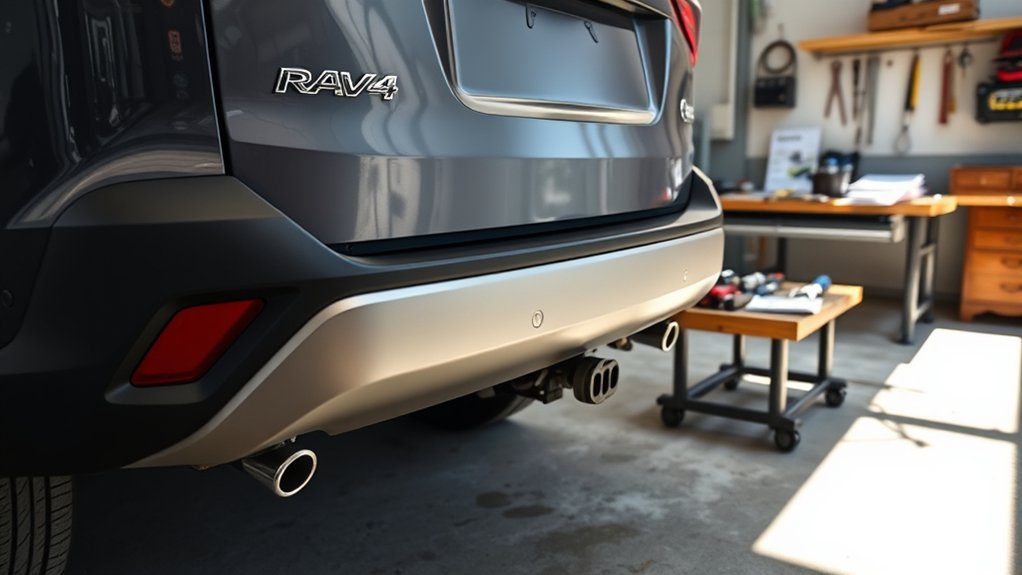
RAV4 hitch installation costs vary because the job can range from a simple bolt-on receiver to a factory-style install with bumper trimming and wiring. A fair quote should include parts, labor, wiring, taxes, and any special work around rear sensors or the liftgate kick sensor.
Cost of Installation
Dealer-installed OEM hitches often cost more because the parts and labor can be more involved. Aftermarket hitches can cost less, but the final price depends on receiver style, wiring, labor, and whether the shop also installs a ball mount or connector bracket.
- Ask what receiver size you’re getting: many RAV4 towing setups use a 2-inch receiver, but you should confirm fitment and accessory compatibility.
- Ask whether wiring is included: a hitch for a bike rack may not need wiring, but towing usually does.
- Ask about bumper trimming: some installations look cleaner because they cut or pass through the bumper cover.
- Ask about sensors: a tow hitch or rear-bumper accessory can affect hands-free liftgate kick-sensor operation on equipped vehicles.
Installation Complexity Factors
The biggest complexity factors are bumper design, receiver height, rear sensor placement, rust on mounting points, and wiring access behind the rear trim. A hybrid or plug-in hybrid model can also have different packaging than a gas model, so fitment matters.
For aftermarket wiring, vehicle-specific harnesses can reduce splicing. Tekonsha’s RAV4-compatible T-One 4-way flat harness, for example, is described as a plug-and-play connector with no cutting or splicing.
Pro Tip: Take a photo of the hitch label after installation. The label shows the hitch’s rating and can help you compare it with the vehicle, ball mount, and trailer ratings later.
What Wiring Solutions Are Recommended for RAV4 Hitches?
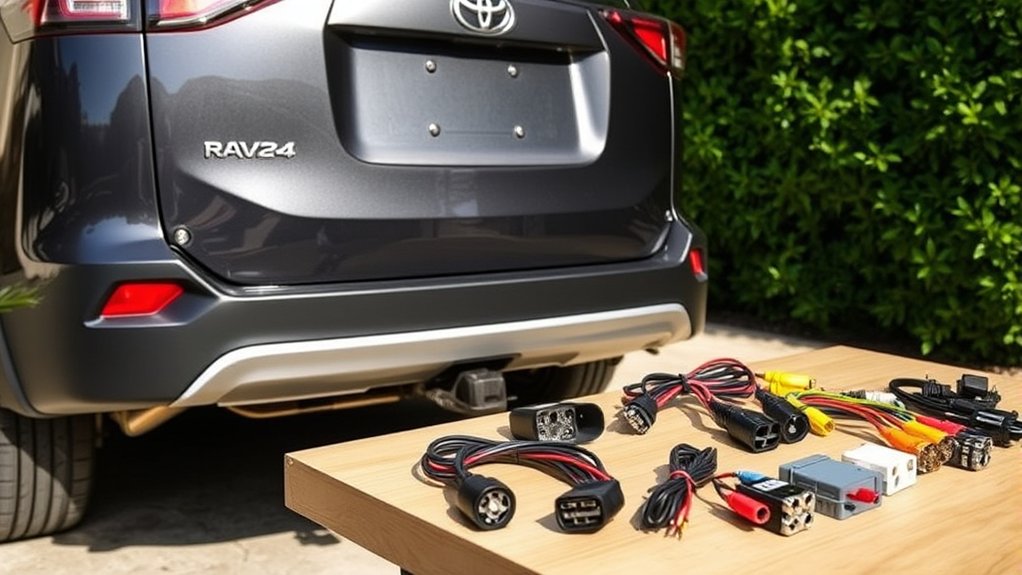
Choose wiring based on the trailer, not just the hitch. A hitch receiver gives you the physical connection. Wiring gives the trailer lights, signals, and brakes the electrical connection they need.
| Connector | Best for | What it usually handles |
|---|---|---|
| 4-way flat | Small utility trailers, light trailers, and basic lighting needs. | Tail lights, brake lights, and turn signals. |
| 7-way round | Trailers with electric brakes, auxiliary power, or more advanced towing needs. | Lighting plus added circuits such as brake-control output and charge line, when properly wired. |
If your trailer has electric brakes, a simple 4-way connector is usually not enough. You may need a 7-way connector, brake controller, power wire, ground, and proper mounting bracket. Trailer-brake rules also vary by state or province, so check your local requirements before towing.
After installation, test the left signal, right signal, brake lights, running lights, and hazards before every trip. Also secure the connector so it does not drag, fill with water, or rub against the exhaust.
How Do Tongue Weight and Payload Affect RAV4 Towing?
Towing capacity is only one part of the equation. Tongue weight is the downward force the trailer puts on the hitch. Payload is the weight your RAV4 carries inside and on the vehicle, including passengers, cargo, accessories, and tongue weight.
For example, a trailer might fall under the published tow rating but still overload the RAV4 after you add passengers, camping gear, a cargo box, and tongue weight. That is why you should check the tire-and-loading label, owner’s manual, hitch label, and trailer weight label before towing.
- Loaded trailer weight: trailer plus water, fuel, gear, food, tools, and accessories.
- Tongue weight: downward weight on the hitch, which counts against payload.
- Gross vehicle weight rating: the maximum safe loaded weight of the RAV4.
- Gross combined weight rating: the combined loaded weight limit, where listed in the owner’s manual.
How to Maintain Your RAV4 Hitch and Wiring?
Regular maintenance helps prevent rust, loose hardware, and electrical problems. This matters even if you use the hitch only for a bike rack or cargo carrier.
- Clean the receiver tube so the ball mount or accessory slides in fully.
- Inspect the receiver, safety-chain loops, hitch pin, clip, and mounting bolts before towing.
- Look for rust, cracks, bent metal, missing hardware, or scraped wiring.
- Rinse road salt, mud, and saltwater from the hitch and connector area after trips.
- Use a weather cap on the trailer connector when it is not in use.
- Test all trailer lights before every tow.
- Recheck torque if the hitch instructions call for it after initial use.
If you see movement at the hitch, damaged wiring, repeated fuse problems, or warning lights after wiring work, stop towing and have the setup inspected.
What Common Questions Do RAV4 Owners Have About Hitch Installation?
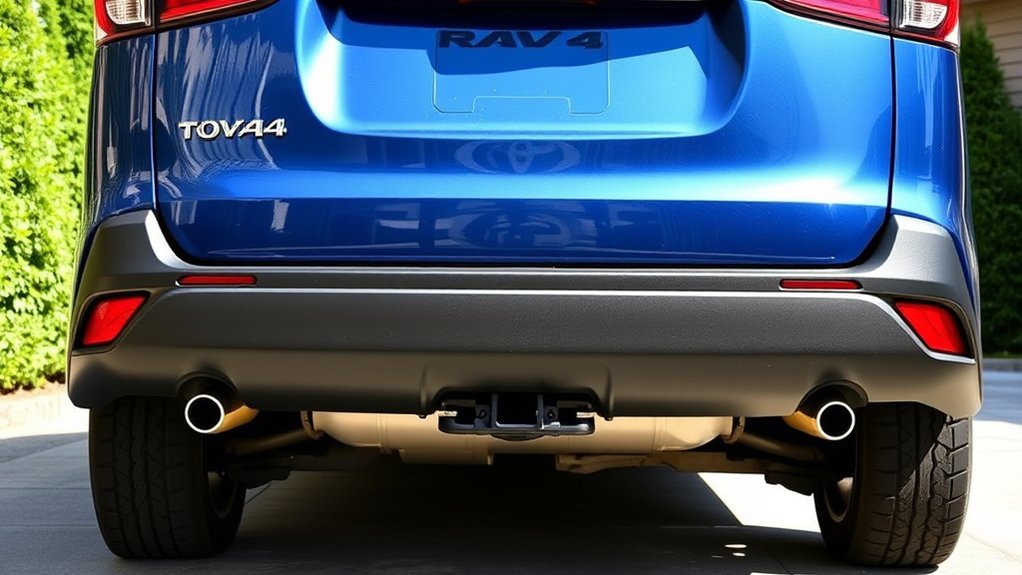
RAV4 owners usually ask the same core questions before adding a hitch: whether they need dealer installation, whether wiring is included, how much the RAV4 can tow, and whether a hitch affects sensors or ground clearance.
| Question | Best answer |
|---|---|
| Do I need professional installation? | Use a professional if the install requires bumper cutting, wiring, sensor work, or you do not have a torque wrench and safe lifting setup. |
| Does a hitch mean I can tow the hitch’s full rating? | No. You must stay under the lowest rating among the RAV4, hitch, ball mount, trailer, and loaded payload. |
| Do I need wiring for a bike rack? | Usually no, unless the rack blocks lights or requires an auxiliary light kit. |
| Can a hitch affect the liftgate kick sensor? | Yes, on equipped vehicles. Ask the installer before choosing a hitch style. |
Pre-Tow Checklist for RAV4 Owners
Before you tow with a RAV4, run through this quick safety check. It can catch many common problems before they become dangerous.
- Confirm your RAV4’s tow rating in the owner’s manual.
- Confirm the loaded trailer weight, not just the dry trailer weight.
- Confirm the hitch, ball mount, hitch ball, and coupler ratings.
- Check tongue weight and payload.
- Connect safety chains in a crossed pattern under the coupler.
- Insert the hitch pin fully and secure the clip.
- Test all trailer lights.
- Check tire pressure on the RAV4 and trailer.
- Confirm trailer brakes work if your trailer has them.
- Drive slower, leave more stopping distance, and avoid sudden steering inputs.
Related Guides
Frequently Asked Questions
Can I install a hitch myself on my RAV4?
Yes, you can install some RAV4 hitches yourself if the hitch is a bolt-on design and you have the right tools, a torque wrench, instructions, and a safe way to support the hitch. Use a professional for OEM-style bumper-cut installs, wiring, rusted mounting points, or sensor-related work.
What is the weight limit for towing with a RAV4 hitch?
The weight limit depends on your exact RAV4. Current Toyota information lists 2026 RAV4 towing ratings from 1,750 to 3,500 pounds, depending on trim and drivetrain. Many 2025 and older models have different ratings. Always use your owner’s manual and the lowest rating in your full towing setup.
Will a hitch affect my RAV4’s fuel efficiency?
An empty hitch receiver usually has little effect. Towing a trailer, carrying a cargo basket, or using a large bike rack can reduce fuel economy because of added weight and wind drag. Expect the biggest fuel-use change when towing at highway speeds or climbing hills.
Are there specific hitches for different RAV4 models?
Yes. Hitch fitment can change by model year, trim, gas or hybrid powertrain, plug-in hybrid layout, bumper design, and rear sensor equipment. Choose a hitch listed for your exact RAV4 and confirm it fits before installation.
How do I know if my RAV4 has the towing package?
Check the window sticker, build sheet, owner’s manual, dealer service record, and the rear of the vehicle. Look for a receiver under or through the bumper and a trailer wiring connector. If you are buying used, ask a Toyota dealer to check the VIN and inspect the installed equipment.
Do I need a 4-way or 7-way connector for my RAV4?
A 4-way flat connector is usually enough for small trailers that only need basic lights. A 7-way connector is usually needed when the trailer has electric brakes, auxiliary power, or a brake controller requirement. Match the connector to the trailer and local towing laws.
Conclusion
A Toyota RAV4 does not automatically come with a hitch, but the correct answer depends on model year and trim. The 2026 Woodland grade is a major exception because Toyota lists it with a 2-inch rear tow hitch receiver and wiring harness. Many other RAV4 owners will need an OEM accessory hitch or a compatible aftermarket hitch.
Before you buy, confirm your RAV4’s towing capacity, payload, receiver size, wiring needs, and sensor compatibility. The right hitch setup can make your RAV4 more useful, but only when every part of the towing system stays within its rated limit.
Sources
- Toyota USA Newsroom: The Next Adventure Begins, 2026 RAV4 Arrives this Winter — backs up 2026 Woodland hitch and wiring equipment.
- Toyota USA Newsroom: Toyota Debuts All-New RAV4 — backs up 2026 RAV4 towing capacity by drivetrain and grade.
- Toyota 2026 RAV4 Plug-in Hybrid — backs up 3,500-pound towing capacity for Woodland, SE, and XSE Plug-in Hybrid grades.
- Toyota Genuine Towing Receiver Hitch Kit — backs up Toyota accessory hitch guidance and towing warnings.
- U-Haul RAV4 Hitch Installation Guide — backs up typical installation time for a RAV4 hitch install.
- Tekonsha T-One 4-Way Flat Harness for Toyota RAV4 — backs up plug-and-play 4-way wiring guidance for compatible RAV4 models.

