
If you’re checking whether a Toyota RAV4 has an e-CVT, the answer depends on its model year and powertrain. RAV4 Hybrid and Plug-in Hybrid models use Toyota’s electronically controlled continuously variable transaxle, while many earlier gas-only RAV4 models use a conventional automatic transmission. Specifications also vary between countries, so this guide focuses mainly on U.S.-market vehicles.
Quick Answer
RAV4 Hybrid and Plug-in Hybrid models use Toyota’s e-CVT, but older gas-only RAV4s do not. The e-CVT is a planetary power-split transaxle that coordinates the gasoline engine and electric motors without a belt-and-pulley CVT. It is generally simple, but maintenance and towing limits depend on the model year and grade.
Key Takeaways
- RAV4 Hybrid and Plug-in Hybrid models use an e-CVT; many gas-only RAV4s use an eight-speed automatic instead.
- Toyota’s hybrid e-CVT uses planetary gears and motor-generators rather than the belt and variable pulleys found in a conventional CVT.
- A rise in engine speed without a noticeable gearshift can be normal during hard acceleration.
- Toyota does not give every owner a universal 30,000-to-60,000-mile fluid-replacement rule.
- Towing capacity, fuel economy, warranty coverage, and drive modes vary by year, grade, and market.
What Is an e-CVT and How Does It Work in the RAV4?

The RAV4 Hybrid’s e-CVT is part of its hybrid transaxle. Instead of shifting through fixed first, second, and third gears, it coordinates a gasoline engine with two front motor-generators through a planetary power-split device.
One motor-generator, commonly called MG1, starts the gasoline engine, generates electricity, and helps control engine speed. The main drive motor, MG2, can propel the vehicle, assist the gasoline engine, and recover energy during regenerative braking.
By controlling the speed and load of these components, the system continuously adjusts the effective relationship between engine speed and road speed. That creates smooth acceleration without the stepped shifts you would feel from a traditional automatic transmission.
Note: Toyota’s hybrid e-CVT is not the same as a conventional belt-and-pulley CVT. It uses motor-generators and a planetary gear arrangement rather than a metal belt running between variable pulleys.
Which Toyota RAV4 Models Use an e-CVT?
The transmission depends on the powertrain and model year. The following table covers common U.S.-market configurations.
| Model | Transmission | What to Know |
| 2019–2025 RAV4 gas models | Direct Shift eight-speed automatic | These models do not use the hybrid e-CVT. |
| 2016–2025 RAV4 Hybrid | Hybrid e-CVT | Uses a gasoline engine, front motor-generators, and a planetary power-split transaxle. |
| 2021–2025 RAV4 Prime or Plug-in Hybrid | Plug-in-hybrid e-CVT | Uses a larger traction battery and can travel farther on electric power than the standard Hybrid. |
| 2026 U.S. RAV4 | Hybrid or Plug-in Hybrid e-CVT | The U.S. lineup is fully electrified, with no gas-only version. |
Toyota confirms that the 2025 gas RAV4 uses an eight-speed electronically controlled automatic, while the Hybrid combines its engine and motor-generators with a continuously variable transaxle. The redesigned 2026 RAV4 lineup uses Hybrid or Plug-in Hybrid powertrains.
Key Features of the RAV4 Hybrid Drivetrain
The RAV4 Hybrid drivetrain combines the e-CVT, gasoline engine, electric motors, traction battery, power-control electronics, and regenerative braking system. These parts work together rather than operating as separate systems.
Planetary Power-Split Mechanics
A planetary gearset links the engine, MG1, MG2, and the wheels. Electronic control changes motor speed and electrical load to keep the gasoline engine near an efficient operating range.
The system has no normal stepped gear changes. It also avoids the belt, pulleys, and shift programming used by many conventional CVTs.
You may still see a shift lever and familiar positions such as Park, Reverse, Neutral, and Drive. Those controls select an operating state rather than moving the transaxle through a conventional set of forward gears.
Engine and Motor Synergy
At low speeds and light loads, the electric motor may move the RAV4 without the gasoline engine running. During stronger acceleration, the engine and motor can work together. At steady speeds, the system continually adjusts their contribution based on battery charge, temperature, speed, and driver demand.
When you slow down, MG2 can act as a generator. It converts some of the vehicle’s motion into electricity and sends that energy back to the traction battery.
Electronic All-Wheel Drive
On many RAV4 Hybrid AWD models, a separate electric motor powers the rear wheels when extra traction or acceleration is needed. This layout does not require a conventional driveshaft connecting the front transaxle to a rear differential.
The rear motor and traction controls can help on slippery roads and mild unpaved surfaces. They do not replace suitable tires, careful driving, or the ground clearance needed for difficult trails.
Real-World Driving Impressions of the RAV4 Plug-In Hybrid
The e-CVT usually feels smooth because it does not pause to change through fixed gears. Acceleration can feel immediate at lower speeds because the electric motor produces torque without waiting for an engine downshift.
Smooth Driving Experience
In slow traffic, the gasoline engine may shut off while the electric motor moves the vehicle. The engine can restart automatically when you ask for more power, the battery charge drops, or cabin heating and other conditions require it.
The Plug-in Hybrid can cover more distance in electric operation when its traction battery is charged. Once the available charge falls, it continues operating as a conventional hybrid rather than becoming a gas-only vehicle.
Normal Engine-Reving Behavior
During hard acceleration or a steep climb, engine speed may rise quickly and remain steady while road speed catches up. This can sound different from an automatic transmission that changes gears several times.
A smooth rise in engine speed without grinding, banging, warning messages, or loss of power is usually a normal characteristic of the power-split system.
Pro Tip: Before assuming the transmission is slipping, check whether the sound occurs only during strong acceleration and disappears when you ease off the accelerator. Persistent grinding, vibration, leaks, or warning lights require inspection.
Drive and Operating Modes
Available modes depend on the model year and grade. For example, Toyota lists Normal, Eco, Sport, EV, and Trail modes for 2025 RAV4 Hybrid models. Plug-in Hybrid models may also include EV/HV and charge-hold operating controls.
EV mode does not guarantee electric-only operation in every situation. Low battery charge, high power demand, temperature, defroster use, and other operating conditions can cause the gasoline engine to start.
How Efficient Is the RAV4’s e-CVT?
The e-CVT supports efficiency by letting the hybrid control system choose an effective engine speed without waiting for fixed gear changes. It also works with regenerative braking and electric assistance to reduce fuel use, especially in city driving.
Fuel economy still depends on model year, grade, wheels, drivetrain, temperature, speed, traffic, cargo, and driving style. Plug-in-hybrid efficiency also depends on how often you charge and how much of each trip is completed on electricity.
The EPA rates the 2025 RAV4 Hybrid AWD at 39 mpg combined, with 41 mpg city and 38 mpg highway.
That official 2025 EPA rating is much more useful than a general claim that every RAV4 Hybrid achieves mileage in the 50s. Toyota’s published 2026 estimates also vary by grade and drivetrain.
How Does the RAV4’s e-CVT Compare to Traditional Transmissions in Reliability?
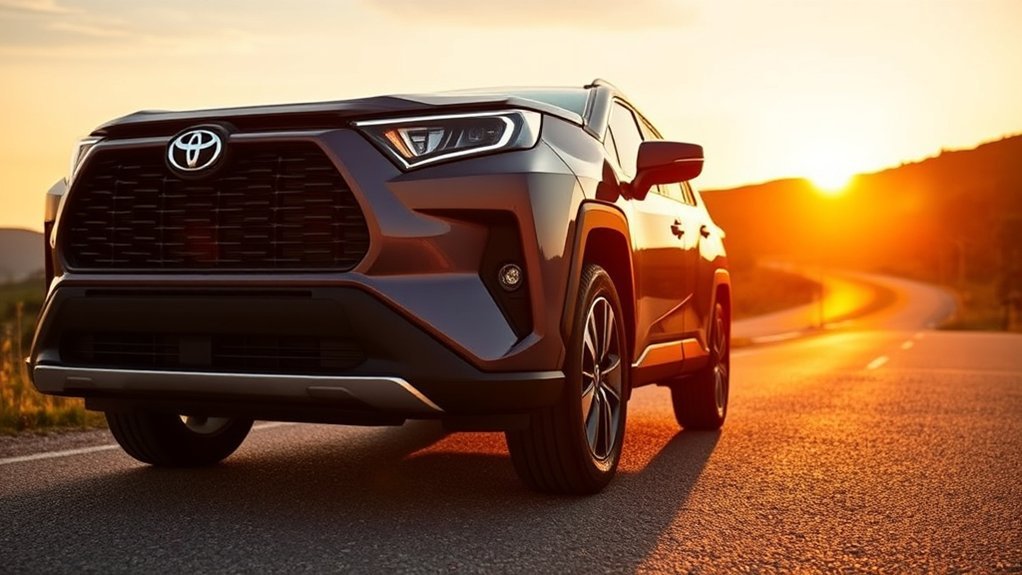
Toyota’s hybrid e-CVT has a mechanically different design from both a belt CVT and a stepped automatic transmission. It does not need a belt to move between variable pulleys, and it does not perform normal upshifts through several clutch-controlled gear ratios.
That simpler operating concept removes some parts associated with conventional shifting. However, the transaxle still contains gears, bearings, seals, motor-generators, wiring, sensors, and cooling or lubrication systems that can develop faults.
No broad claim that every e-CVT fails less often than every traditional transmission can be made without a defined dataset. A better conclusion is that Toyota’s power-split design avoids several common belt-CVT wear concerns and has been used across multiple generations of Toyota hybrids.
Service history, collision damage, water exposure, improper fluid, neglected leaks, electrical faults, and extreme loads can still affect reliability. A pre-purchase inspection is sensible when buying a high-mileage used RAV4 Hybrid or Plug-in Hybrid.
Common e-CVT Concerns and Solutions
Some behaviors that feel unusual are normal for a hybrid e-CVT. Others deserve prompt diagnosis.
| Symptom | What It May Mean | What to Do |
| Engine revs rise during acceleration without a shift | Often normal e-CVT operation | Monitor for warning lights, vibration, grinding, or reduced power. |
| Soft electric whine at low speed | Motor-generator operation may be audible | Compare the sound under the same conditions and note any sudden change. |
| Fluid under the vehicle | Possible transaxle, differential, coolant, engine-oil, or other leak | Have the source identified promptly. Do not assume the fluid type by color alone. |
| Grinding, banging, or repeated shuddering | Not a normal e-CVT characteristic | Reduce load and arrange a professional inspection. |
| Hybrid-system warning or reduced-power message | The vehicle has detected a hybrid, electrical, cooling, or drivetrain fault | Follow the displayed instructions. Stop safely when instructed and obtain diagnostic service. |
| Poor acceleration with no warning light | Could involve battery charge, temperature, engine performance, brakes, tires, or another system | Record when it occurs and have the complete vehicle diagnosed rather than replacing transmission parts by guesswork. |
Software updates may correct certain control or warning-message concerns, but software should not be treated as the default explanation for every symptom. A qualified technician should scan all relevant control modules and inspect the vehicle before recommending repairs.
[Amazon Products Picked for You]

[Easy to Use—Work Out of the Box] + [FOXWELL 2026 New Version] FOXWELL NT604 Elite scan tool is the 2026 new version from FOXWELL, designed for car owners who want to figure out the cause of issues before fixing car problems by scanning common systems like ABS, SRS, engine, and transmission. The NT604 Elite obd2 scanner diagnostic tool comes with the latest software—no need to waste time downloading software first. Plug the scanner into the OBDII port with OBDII cable to start the diagnosis.

Your Car's Personal Doctor: Say Goodbye to Check Engine Light Troubles! The YM319 OBD2 scanner swiftly reads and clears engine fault codes, pinpointing the root cause of issues. Monitor your engine's every "breath" like a pro—view freeze frame data, check I/M readiness status, run oxygen sensor tests, and more. With a built-in database of over 63,000 fault codes, it delivers precise and reliable diagnostics, making it your trusted partner for vehicle maintenance and repair.

[All System Diagnostics, Professional-Level Scanner] - BLCKTEC 460T is the ultimate OBD2 diagnostic tool for home mechanics and professionals. It supports all 10 OBD2 modes, reads and clears Engine/Transmission/ABS/SRS codes, performs All-System Diagnostics, offers workshop reset tools, and provides real-time live data. It helps you pinpoint issues, assess your car's condition, and prepare for SMOG checks with ease. NOTE: Function availability depends on your vehicle. Before you buy, be sure to use the Compatibility Checker on BLCKTEC website or contact our customer support to verify that the features you need are supported for your vehicle’s specific year, make, and model.
Maintenance Tips for Optimizing RAV4 e-CVT Longevity
Start with the maintenance guide for your exact model year. Toyota’s schedules can differ between a RAV4 Hybrid, RAV4 Prime or Plug-in Hybrid, market, and operating condition.
- Follow Toyota’s inspection schedule: The 2026 U.S. maintenance guide lists e-transaxle-fluid inspections at specified mileage intervals. It does not require every owner to replace the fluid automatically every 30,000 to 60,000 miles.
- Use the specified fluid: When fluid service is required, use the exact type and procedure listed for your model. Mixing fluid types or setting the level incorrectly can cause problems.
- Repair leaks promptly: Low fluid can damage gears, bearings, and motor-generator components.
- Keep cooling areas clear: Follow the owner’s manual instructions for the hybrid-battery cooling intake and filter. Blocked airflow can reduce hybrid performance.
- Respond to warning messages: Do not keep driving normally when the vehicle displays a stop, overheating, or hybrid-system warning.
- Stay within load limits: Heavy towing, overloading, and repeated steep climbs add heat and load to the drivetrain.
- Keep service records: Records help technicians identify patterns and can support warranty claims.
The current Toyota RAV4 Hybrid Warranty and Maintenance Guide should be treated as a model-year example, not as a universal schedule for every RAV4.
Warning: Do not open, probe, disconnect, or repair orange high-voltage cables, the traction battery, inverter, motor-generators, or internal hybrid-transaxle components unless you are properly trained and equipped. High-voltage systems can cause serious injury or death.
You should also check your 17-digit VIN through Toyota’s recall and service-campaign lookup. A campaign can apply to a limited production range even when another RAV4 from the same year is unaffected.
[Amazon Products Picked for You]

6Qt Genuine 00289-ATFWS

For best performance, follow the manufacturer's recommendations in your vehicle owner’s manual.

For use in 95% of vehicles including most CVTs in operation with US registered light duty applications
Towing, Off-Road Driving, and Extreme Weather
[Amazon Products Picked for You]

Avalon Trailer Wiring Harness: This custom 4 way trailer wire for Toyota Avalon fits for 2013-2018 Toyota RAV4/2013-2017 Toyota Avalon; Note: You will need to run the hot lead up to your car battery, it does need 12v to operate

This trailer hitch is rated for up to 3,500 lbs Gross Trailer Weight (GTW) and 525 lbs Tongue Weight (TW). It is also compatible with weight distribution systems rated for up to 4,000 lbs and 525 lbs weight distribution tongue weight (WDTW).

Designed for —— for Toyota RAV4 2019-2024; for Toyota RAV4 Prime 2021-2023; for Lexus NX250/NX350/NX350h/NX450h+ 2021-2025 [EXCEPT ALL F Sport].
Towing Capacity
The e-CVT does not determine towing capacity by itself. Cooling, brakes, suspension, chassis configuration, AWD hardware, hitch equipment, and vehicle programming all affect the rating.
For 2026 U.S. models, Toyota states that selected AWD Hybrid and Plug-in Hybrid grades can tow up to 3,500 pounds. FWD versions and the LE AWD are rated at 1,750 pounds. Earlier RAV4 Hybrid and Prime models have different limits.
Always use the rating in the owner’s manual for your exact year and grade. Include the trailer, cargo, accessories, fluids, and tongue weight when checking limits.
Off-Road Driving
The e-CVT’s smooth low-speed control can work well on maintained dirt roads, snow-covered streets, and mild trails. Electronic AWD and Trail mode can help manage wheel slip on equipped models.
The transmission does not turn the RAV4 into a dedicated rock crawler. Ground clearance, approach angles, underbody protection, tire construction, water depth, and traction conditions remain important.
Extreme Weather
RAV4 hybrid systems are designed to operate across normal seasonal conditions, but temperature can change how they behave. Cold weather may reduce battery output, limit EV operation, and lower fuel economy. High temperatures, steep climbs, towing, and heavy loads can increase cooling demand.
Use the recommended fluid, keep cooling inlets clear, install suitable tires, and follow any warning displayed by the vehicle. Avoid promising that an e-CVT alone can overcome ice, deep snow, flooding, or severe heat.
Related Guides
Frequently Asked Questions
What are the advantages of an e-CVT over a traditional CVT?
Toyota’s hybrid e-CVT does not use the belt and variable pulleys found in a conventional CVT. It combines planetary gears with motor-generators, provides smooth power delivery, supports regenerative braking, and lets the hybrid system control engine speed efficiently.
How does the e-CVT affect towing capacity in the RAV4?
The transmission is only one part of the towing package. Capacity varies by year and grade. Selected 2026 AWD Hybrid and Plug-in Hybrid grades are rated up to 3,500 pounds, while FWD models and the LE AWD are rated at 1,750 pounds. Check the manual for your exact vehicle.
Is the e-CVT suitable for off-road driving?
It is suitable for the light off-road conditions the RAV4 is designed to handle. Smooth low-speed control, electronic AWD, and Trail mode can help, but tires, clearance, road surface, and driver judgment determine whether a route is safe.
Can the e-CVT handle extreme weather?
The system is designed for normal hot and cold weather, but temperature affects battery output, EV availability, fuel economy, and cooling demand. Suitable tires, correct fluids, clear cooling inlets, and careful driving remain essential.
What warranty coverage applies to the RAV4 e-CVT?
For 2026 U.S. vehicles, Toyota’s powertrain warranty covers listed transmission and transaxle components for five years or 60,000 miles, whichever comes first. Separate hybrid-system coverage lasts eight years or 100,000 miles, while the hybrid battery has ten-year or 150,000-mile coverage. Terms vary by year, market, state, and component.
Does the RAV4 e-CVT fluid need to be changed every 30,000 miles?
Not as a universal Toyota requirement. The applicable maintenance guide may call for inspections at specified intervals, while replacement depends on the model year, operating conditions, fluid condition, repair history, and Toyota’s service instructions.
Conclusion
The Toyota RAV4’s e-CVT is a key part of its Hybrid and Plug-in Hybrid systems, but it is not used in every RAV4 ever sold. Unlike a conventional belt CVT, Toyota’s system combines a planetary power-split device with electric motor-generators to deliver smooth acceleration, regenerative braking, and efficient engine control.
Normal engine-rev behavior can sound unfamiliar, but grinding, leaks, strong vibration, warning messages, and reduced power deserve professional diagnosis. Follow the maintenance guide, towing limit, fluid specification, and warranty terms for your exact model year rather than relying on one schedule or specification for every RAV4.
Sources
- Toyota: 2025 RAV4 overview — supports the gas eight-speed automatic, Hybrid drivetrain, drive modes, and 2025 specifications.
- Toyota: 2026 RAV4 overview — supports the fully electrified lineup, planetary-type transmission, powertrain design, and model-specific efficiency figures.
- Toyota 2026 RAV4 Hybrid Warranty and Maintenance Guide — supports e-transaxle-fluid inspections and U.S. warranty coverage.
- U.S. Department of Energy and EPA: 2025 RAV4 Hybrid AWD — supports the official 39-mpg combined fuel-economy rating.
- Toyota recall and service-campaign lookup — provides VIN-specific recall and campaign information.
- National Highway Traffic Safety Administration recall lookup — provides federal recall information and VIN searches.
