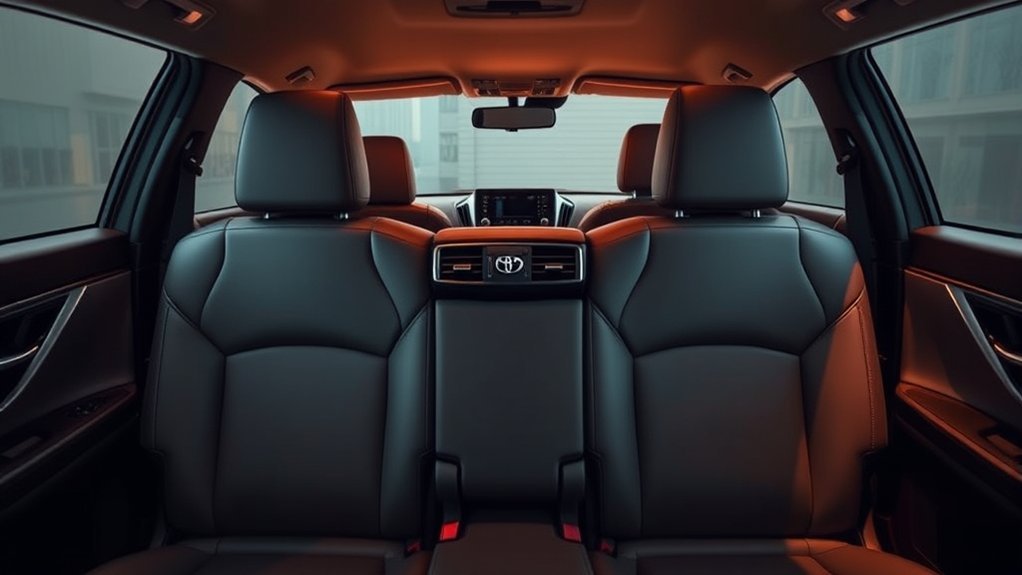
Many Toyota RAV4 models have dedicated rear air vents, but the exact answer depends on the model year, powertrain, trim, and country. For example, the 2021 U.S. gasoline LE did not list rear-seat vents, while the 2021 Hybrid LE did. Toyota then listed rear-seat vents on the 2022 and 2024 gasoline LE, so “XLE and higher only” is not a reliable rule.
Quick Answer
Yes, many Toyota RAV4s have rear air vents, usually on the back of the center console. Availability varies by model year and powertrain. The 2021 U.S. gasoline LE lacked them, but the Hybrid LE included them, and Toyota listed rear-seat vents on the 2022 and 2024 gasoline LE.
Key Takeaways
- Rear-vent availability cannot be determined from the LE, XLE, or Hybrid badge alone without checking the model year.
- The 2021 U.S. gasoline LE did not list rear-seat vents, but the 2021 Hybrid LE and gasoline XLE did.
- Toyota listed rear-seat vents as standard on the 2022 and 2024 U.S. gasoline LE.
- Rear outlets normally share the vehicle’s main HVAC system; they do not automatically provide a separate rear temperature zone.
- For a used RAV4, confirm the equipment by inspecting the center console and checking the correct brochure, window sticker, or owner’s manual.
Which RAV4 Trims Include Rear Air Vents?

The answer changed during the fifth-generation RAV4’s production run. That is why two owners can both have an LE yet find different equipment in the back seat.
| U.S. Model | Rear-Seat Vents | What Toyota Listed |
|---|---|---|
| 2021 gasoline LE | No dedicated rear vents listed | Basic climate-control system; the XLE added dual-zone automatic climate control with rear-seat vents. |
| 2021 Hybrid LE | Yes | Dual-zone automatic climate control with rear-seat vents. |
| 2022 gasoline LE | Yes | Climate-control system with rear-seat vents. |
| 2024 gasoline LE | Yes | Climate-control system with rear-seat vents; the XLE added dual-zone automatic control. |
| 2026 U.S. RAV4 | Check the exact specification | The redesigned lineup and trim structure differ from earlier years. Verify the selected vehicle’s specification sheet or manual. |
Note: This comparison refers to U.S.-market vehicles. Equipment names and standard features can differ in Canada, Europe, Australia, Asia, and other markets.
For model years not shown above, do not assume the equipment matches the previous or following year. A mid-generation feature change can affect even the base trim.
Why Model Year and Market Matter
Toyota changes trim structures and standard equipment over time. The 2021 U.S. lineup, for example, included a gasoline LE without listed rear vents and a Hybrid LE with them. By 2022, Toyota’s U.S. brochure listed rear-seat vents on the gasoline LE as well.
The lineup changed again for the redesigned 2026 RAV4. Toyota’s current U.S. page lists LE, SE, XLE Premium, Woodland, XSE, and Limited hybrid trims. That means an older statement about Adventure or TRD Off-Road models should not be applied automatically to a current vehicle.
To check a particular RAV4:
- Confirm the full model year, powertrain, trim, and sales market.
- Look at the back of the front center console for two adjustable outlet grilles.
- Review the original window sticker or model-year brochure.
- Use Toyota’s manual and warranty portal to select the exact vehicle.
- When buying used, verify the actual vehicle rather than relying only on an online listing.
Why Rear Air Vents Matter for Passenger Comfort
Rear air vents help conditioned air reach second-row passengers more directly. Without them, the back seat depends mainly on air moving from the dashboard outlets, front footwells, and other cabin openings.
Dedicated rear outlets can be especially helpful during:
- Hot-weather trips with children or adult passengers in the second row
- Cold starts when rear passengers need warm air sooner
- Long drives with luggage that may slow air circulation
- Ride-share or family use involving frequent rear-seat occupants
- Trips with secured pet carriers in the rear seating area
Rear vents do not create extra cooling capacity, but they can distribute the available conditioned air more evenly throughout the cabin.
Rear vents should not be confused with a separate rear climate zone. In most RAV4 configurations, rear passengers can aim or close the outlets, but the air temperature and main fan speed still come from the front climate-control system.
The Functionality of Rear Air Vents in the RAV4
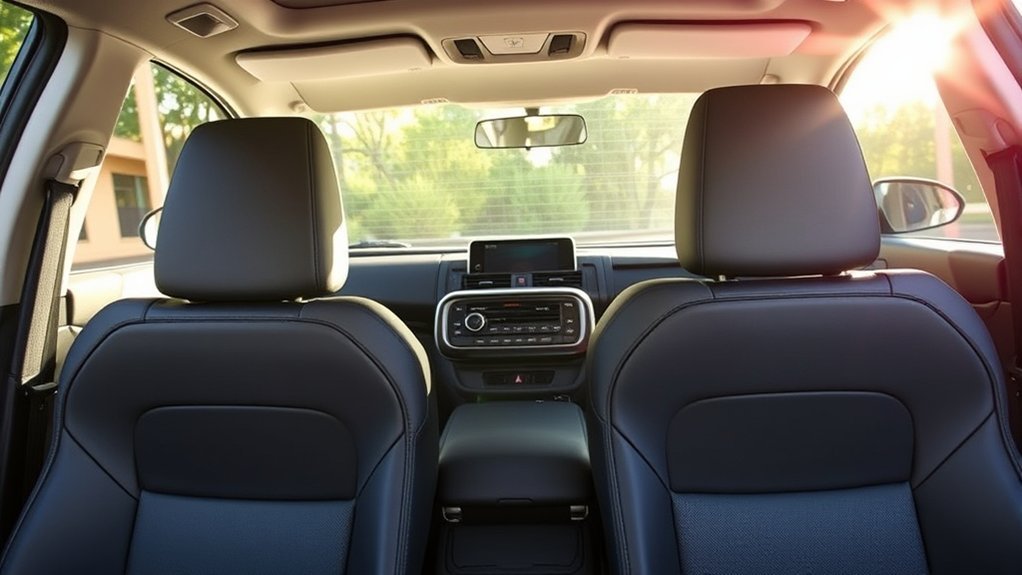
When equipped, the RAV4’s rear outlets are generally positioned on the back of the center console between the front seats. They receive air from the same HVAC system that supplies the dashboard and floor outlets.
The selected airflow mode affects how much air reaches them. If the system is sending most airflow to the windshield for defrosting, for example, the center-console vents may produce less air. Higher blower settings usually increase output throughout the system.
A RAV4 may have one of several climate-control arrangements:
- Basic climate control: The driver selects one cabin temperature setting and fan speed.
- Dual-zone automatic climate control: The driver and front passenger can select different front temperature settings.
- Rear-seat outlets: These direct air toward the second row but do not necessarily add independent rear temperature controls.
Pro Tip: For faster rear-seat cooling, briefly release trapped hot air by opening the doors or windows, begin driving, turn on the A/C, and then use recirculation after the cabin starts cooling.
Debunking Myths About RAV4 Rear Air Vents
Myth: Every gasoline LE lacks rear vents.
The 2021 U.S. gasoline LE did not list them, but the 2022 and 2024 gasoline LE did. A trim badge without a model year is not enough to answer the question.
Myth: Every RAV4 from the same generation has identical ventilation.
Standard equipment can change during a generation. Toyota added listed rear-seat vents to the gasoline LE between the checked 2021 and 2022 U.S. brochures.
Myth: Rear vents mean the RAV4 has three-zone climate control.
Rear outlet grilles usually distribute air from the main system. They do not automatically give rear passengers their own temperature setting.
Myth: A missing S-Flow button proves there are no rear outlets.
Dashboard controls should not be used as a substitute for checking the physical console, specification sheet, or applicable manual.
Myth: Rear vents themselves noticeably reduce fuel economy.
The outlet grilles simply distribute air. Cooling the cabin and running the A/C compressor create the meaningful energy demand. The effect varies with temperature, sunlight, trip length, fan use, and vehicle type.
What to Do If Your RAV4 Lacks Rear Vents?

If your RAV4 does not have center-console rear outlets, you can still improve second-row comfort without making permanent HVAC modifications.
[Amazon Products Picked for You]

🌀🌀 Dual Fan for Car Backseat – Two independently adjustable fan heads provide personalized cooling for every backseat passenger. Ideal as dual car fans for backseat for kids or babies.(No Battery!!!)

【VERSATILE USB PLUG COMPATIBILITY】: Powered by 5V/2A USB-A cable, this auto AC fan is compatible with power banks, car chargers, and AC adapters, making it versatile for most 12V/24V car models, including vans, trucks, SUVs, and RVs. When the car stops, the rearseat fan will also stop working. There's no need to worry about forgetting to turn off the fan, which can save electricity and reduce fuel consumption. Please noted the fan is USB plug not rechargeable. ⚠️ Note: For best performance, please use a stable 5V/2A power supply.
Verify Your RAV4’s Equipment First
Before buying accessories, confirm that the vehicle truly lacks rear outlets. Some owners overlook the grilles on the back of the center console or leave their thumbwheel in the closed position.
If the outlets are present but no air is coming through, check:
- Whether the vent louvers or shutoff control are closed
- Whether the front system is in windshield-defrost mode
- Whether the blower is set too low
- Whether bags, covers, or rear-seat accessories are blocking the outlets
- Whether the cabin air filter or HVAC system needs inspection
Explore Aftermarket Solutions
Adding factory-style rear ducts is not a simple clip-on upgrade. A proper conversion may require a compatible center console, ductwork, trim removal, and changes inside the dashboard or HVAC housing. Parts can differ by year and powertrain, and there may be no approved factory retrofit procedure.
Before considering permanent work, ask a qualified automotive HVAC or interior specialist to inspect the vehicle and provide a complete estimate. In many cases, a removable fan and improved climate-control use are safer and much less expensive.
Warning: Do not cut console panels, splice wiring, route cords across seat tracks, or install equipment near side-curtain airbags without professional guidance. Loose accessories can become projectiles during sudden braking or a collision.
Utilize Portable Fans
A compact USB or 12-volt fan can improve circulation when the vehicle lacks dedicated rear outlets. Choose a unit with a secure mount, enclosed blades, and adjustable airflow.
For safer use:
- Secure the fan so it cannot fall into a footwell or strike a passenger.
- Keep it away from airbag deployment paths and the driver’s field of view.
- Route the power cable away from pedals, seat rails, buckles, and child-seat anchors.
- Use a properly rated USB port or fused 12-volt adapter.
- Unplug the fan when parked if the outlet remains powered with the ignition off.
Adjust Climate Settings
Set the front system to face-level or combined face-and-floor airflow rather than windshield-only defrost when conditions allow. Aim the outer dashboard vents slightly inward and rearward, and use a moderate-to-high fan setting until the cabin approaches the selected temperature.
On a very hot day, release trapped cabin heat before relying on recirculation. Once the hottest air has escaped and the A/C is cooling, recirculation can reduce the amount of hot outside air entering the cabin.
Do not set the temperature lower than necessary in an attempt to make the system cool faster. The fan setting, airflow mode, sun load, and removal of trapped heat often make a greater practical difference.
Ways to Enhance Rear Passenger Comfort Without Air Vents
Several simple measures can reduce the heat load and improve circulation for rear passengers:
- Park in shade when practical. A cooler starting temperature reduces the work required from the HVAC system.
- Use a windshield sunshade. This can limit heat absorbed by the dashboard and front cabin.
- Use legal rear-window sunshades. Make sure they do not block required visibility.
- Keep the cabin air filter maintained. A badly restricted filter can reduce overall HVAC airflow.
- Leave space around airflow paths. Avoid packing bags tightly between the front seats or directly against any floor-level outlets.
- Pre-condition when supported. Owners of compatible plug-in models may be able to cool the cabin while the vehicle is connected to external power.
Breathable seat covers may improve how the seat surface feels, but confirm that any cover is compatible with seat-mounted airbags and does not interfere with child-seat installation.
Note: Never leave children, vulnerable adults, or pets unattended in a parked vehicle. Fans and sunshades cannot make a closed vehicle safe in hot weather.
[Amazon Products Picked for You]

SUN COVERAGE: Helps Block UVA/UVB Rays. Includes two auto shades, each measuring 15 x 19 inches (35.6 x 43.2 cm), for maximum sun protection; ideal as a sun shade for car window use on side windows.

Stretch to fit coverage, car window shade for baby measures 14 x 28 inches and stretches to 18 x 34 inches for large side windows

Advanced UV Protection Car Window Shade for Babies & Kids: Protect your little ones with EcoNour car window shades that block harmful UV rays and reduce sun glare. Ideal for side window and rear window use, ensuring a safer and more comfortable ride for babies and kids.
Common Questions About RAV4 Rear Air Vents
The most common confusion comes from comparing vehicles from different years. A statement that is accurate for a 2021 gasoline LE may be wrong for a 2022 or 2024 gasoline LE.
Rear Vent Availability Overview
For the checked U.S. brochures:
- 2021 gasoline LE: No rear-seat vents listed.
- 2021 gasoline XLE: Rear-seat vents listed with dual-zone automatic climate control.
- 2021 Hybrid LE: Rear-seat vents listed with dual-zone automatic climate control.
- 2022 gasoline LE: Rear-seat vents listed with the standard climate-control system.
- 2024 gasoline LE: Rear-seat vents listed with the standard climate-control system.
This timeline is more useful than a simple “LE versus XLE” answer because it shows that Toyota changed the base gasoline model’s equipment.
Trim-Specific Vent Features
Higher trims may still provide climate-related upgrades even when the LE has physical rear outlets. Depending on the year, those upgrades can include dual-zone automatic climate control, heated or ventilated front seats, heated rear seats, or additional front vent-flow controls.
Those comfort features should be compared separately. A base trim can have rear outlet grilles without offering the same automatic climate functions or seat heating found on a higher trim.
Exploring Aftermarket Options for Enhanced Ventilation
Removable accessories are normally the most practical aftermarket approach. A securely mounted fan can circulate cooled air toward the second row without altering the factory HVAC system.
A replacement cabin air filter may restore airflow if the existing filter is overdue or clogged, but a so-called high-capacity filter does not create new cooling power. Use a filter that meets the vehicle manufacturer’s size and airflow requirements.
Permanent rear-duct conversions should be treated as custom automotive HVAC work. Before approving one, request:
- A written list of parts and modifications
- Confirmation that airbags, wiring, seat movement, and safety systems will remain unobstructed
- An explanation of how condensation and duct sealing will be handled
- A labor and parts warranty
- A comparison between the retrofit cost and the cost of choosing a factory-equipped vehicle
For shoppers who regularly carry rear passengers, selecting a RAV4 that already has the desired ventilation and climate features is generally the cleaner solution.
[Amazon Products Picked for You]
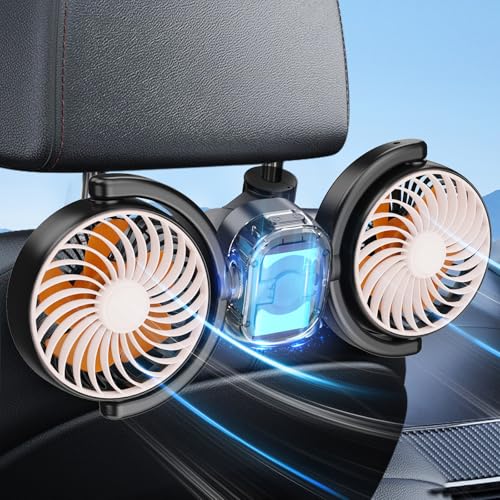
Larger Fan Heads, Bigger Blades — Real Airflow for the Back Seat: Designed with larger fan heads and oversized blades, this backseat car fan moves more air than typical...
Related Guides
Frequently Asked Questions
Can I install rear air vents in a base-model RAV4?
A custom installation may be technically possible, but it is rarely a simple accessory upgrade. Factory-style work can require ducts, console components, trim removal, and HVAC modifications. Have an automotive HVAC specialist inspect the exact model before altering the vehicle.
How do rear air vents affect fuel efficiency?
The outlet grilles themselves have no meaningful fuel-economy penalty. Energy use comes from operating the HVAC system, especially the A/C compressor in hot weather. Cooling demand, outside temperature, sunlight, fan speed, and trip length determine the practical effect.
Are rear air vents available in hybrid RAV4 models?
Yes, the checked U.S. brochures list rear-seat vents on the 2021 and 2024 Hybrid LE, with higher hybrid trims building on that equipment. Availability in another year or country should still be verified using the applicable specification sheet.
Do rear air vents require maintenance?
The outlet grilles need little maintenance beyond keeping them clean and unobstructed. Overall airflow also depends on the cabin air filter and HVAC system, so follow the maintenance guidance for your model year.
Can I close the rear air vents if needed?
Many center-console outlets can be aimed or closed with their local control. The exact design varies, so inspect the outlet and consult the applicable owner’s manual rather than forcing a stiff louver or wheel.
Why is little or no air coming from my RAV4’s rear vents?
Check that the outlet is open, increase the blower speed, and select a face-level or combined face-and-floor mode. Defrost mode may direct most air toward the windshield. Also check for obstructions and have the cabin filter or HVAC system inspected if airflow remains unusually weak.
How can I confirm whether a used RAV4 has rear air vents?
Inspect the back of the center console, confirm the model year and powertrain, review the original window sticker, and check the corresponding Toyota brochure or owner’s manual. Do not rely solely on a seller’s trim-level description.
Conclusion
The Toyota RAV4 does offer rear air vents, but there is no single trim rule that applies to every model year. The 2021 U.S. gasoline LE did not list dedicated rear-seat vents, while the 2021 Hybrid LE did. Toyota then listed rear-seat vents on the 2022 and 2024 gasoline LE, showing why the model year and powertrain matter as much as the trim badge.
When comparing vehicles, inspect the back of the center console and verify the exact specification through the window sticker, official brochure, or Toyota owner’s manual. If a RAV4 lacks rear outlets, careful climate settings, reduced sun load, and a securely mounted portable fan are usually more practical than attempting a permanent HVAC retrofit.
Sources
- Toyota 2021 RAV4 eBrochure — documents the difference between the 2021 gasoline LE, gasoline XLE, and Hybrid LE climate equipment.
- Toyota 2022 RAV4 eBrochure — lists rear-seat vents on the 2022 gasoline LE.
- Toyota 2024 RAV4 eBrochure — lists rear-seat vents on the gasoline LE and hybrid models and explains higher-trim climate features.
- Toyota 2026 RAV4 — current U.S. model and trim information.
- Toyota Manuals and Warranties — official portal for selecting the applicable vehicle manual.
- FuelEconomy.gov: Fuel Economy in Hot Weather — explains how air-conditioning use and hot-weather conditions affect vehicle energy consumption.
