
Many late-model Toyota RAV4 models have air vents for the second row, usually on the back of the front center console. However, availability can vary by model year, trim, package, and market. These outlets share the vehicle’s main climate-control system; they normally do not give rear passengers a separate temperature or fan-speed setting.
Quick Answer
Many newer Toyota RAV4s have rear console air vents, but you should verify the exact model year and trim before buying. Rear passengers can usually aim, restrict, or close the airflow. The front climate controls still determine the temperature, fan speed, air-conditioning operation, and airflow mode for the cabin.
Key Takeaways
- Many late-model RAV4s have rear air vents on the back of the center console, but equipment varies by year, trim, package, and market.
- Rear vents distribute air from the main HVAC system; they are not normally an independent rear climate zone.
- Rear passengers may be able to aim or close the vents, while the front controls set temperature, fan speed, mode, and A/C operation.
- Check the exact vehicle’s specification sheet, window sticker, owner’s manual, or center console before relying on a trim-level claim.
- Weak rear airflow is often caused by a closed vent, an unsuitable front airflow mode, a low fan setting, an obstruction, or a dirty cabin-air filter.
Does the Toyota RAV4 Have Rear AC Vents?

Many recent Toyota RAV4 models are equipped with rear air outlets, commonly positioned on the back of the center console between the front seats. They help move conditioned air toward second-row passengers instead of relying only on the dashboard vents.
That does not mean every RAV4 ever produced has the same equipment. Toyota has sold the RAV4 through several generations, powertrains, grades, option packages, and regional specifications. The safest answer is therefore:
Many late-model RAV4s have rear console vents, but the exact vehicle must be checked because equipment can vary by model year, trim, package, and market.
Toyota’s current U.S. RAV4 specification page lists equipment by grade and notes that features and regional availability can change. For a used vehicle, the original window sticker, owner’s manual, or a physical inspection is more dependable than assuming that every RAV4 with the same trim name is identical.
Note: “Rear AC vents,” “rear air vents,” and “second-row vents” generally describe outlets connected to the main front HVAC system. They do not automatically mean the vehicle has independent rear climate control.
How RAV4 Rear Air Vents Work
The rear vents receive air from the same heating, ventilation, and air-conditioning system that serves the front of the cabin. When the driver changes the temperature, fan speed, airflow mode, recirculation setting, or A/C operation, those changes can affect the air reaching the second row.
The rear outlets usually provide local control over the direction and amount of air leaving the vent. Depending on the vent design, a passenger may be able to:
- Aim the louvers upward, downward, left, or right.
- Reduce airflow through that individual outlet.
- Close the outlet when direct air is not wanted.
However, those adjustments do not normally change the system’s actual temperature or blower speed. Those settings remain controlled from the front climate-control panel.
Rear Vents vs. Dual-Zone Climate Control
Dual-zone climate control is frequently misunderstood. In a RAV4, the two zones generally refer to the driver and front passenger. It allows the two front occupants to choose different temperature settings within the system’s operating limits.
The second-row vents then distribute air generated by that main system. They do not ordinarily create a third climate zone for the rear seats.
| Function | Who Controls It? |
|---|---|
| Direction of air from an individual rear vent | Rear passenger, using the vent louvers |
| Opening or restricting an individual rear vent | Rear passenger, when the vent includes a closure control |
| Cabin fan speed | Front climate-control panel |
| Air temperature | Front climate-control panel |
| A/C, recirculation, defrost, and airflow mode | Front climate-control panel |
How to Check Whether a RAV4 Has Rear Vents
Do not rely solely on a generic online trim description, especially when shopping for a used vehicle. Packages, regional specifications, and midyear production changes can affect the installed equipment.
- Inspect the rear of the center console. Look between the two front seats for one or two adjustable vent outlets facing the second row.
- Check the original window sticker or build sheet. Search for wording such as “rear-seat vents,” “rear air vents,” or “rear console vents.”
- Review the exact model-year manual. Toyota provides manuals through its owner’s manual and warranty portal.
- Use the correct regional specification page. Equipment on a U.S. RAV4 may differ from a vehicle sold in Canada, Europe, Australia, or another market.
- Confirm the physical vehicle before purchase. Photos, a video walk-around, or an in-person inspection can settle the question immediately.
Pro Tip: When buying remotely, ask the seller for a clear photo of the back of the center console. This is faster and more reliable than assuming the feature is included because of the trim badge.
Customizing Airflow for RAV4 Passengers
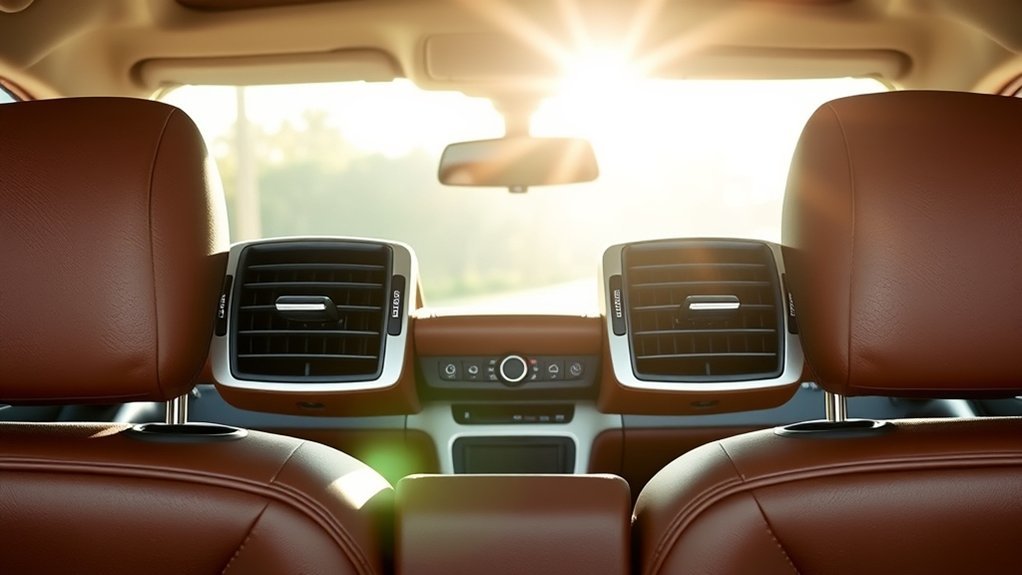
Rear passengers can improve comfort by aiming the outlets toward their upper body while leaving enough space around each vent for unrestricted airflow. If one passenger feels too cold, that person can redirect or restrict the nearest outlet without shutting down the entire climate system.
The driver can then use the front controls to balance the cabin:
- Fan speed: Increase it temporarily when the second row needs more airflow, then reduce it after the cabin reaches a comfortable temperature.
- Airflow mode: Select a mode that sends air through the dashboard or face-level outlets when stronger rear-console airflow is needed.
- Temperature: Use a moderate setting rather than selecting the lowest or highest possible temperature for long periods.
- Recirculation: Use it to cool a hot cabin more quickly after the trapped hot air has been released.
- Automatic mode: On equipped vehicles, this lets the system adjust fan output and airflow distribution to approach the selected temperature.
Warning: Do not cover the rear outlets with bags, blankets, console organizers, seat accessories, or other objects. Blocked vents reduce second-row airflow and can make the system appear faulty.
How Climate Control Affects Fuel Economy and Electric Range
Opening a rear vent does not create a separate air-conditioning load. The energy demand comes from operating the overall HVAC system, especially when the A/C compressor must remove substantial heat and humidity from the cabin.
The official U.S. Department of Energy and EPA hot-weather fuel-economy guidance says that A/C use can reduce a conventional vehicle’s fuel economy by more than 25% under very hot conditions, particularly on short trips. The percentage effect can also be significant in hybrids, plug-in hybrids, and electric vehicles.
Fuel or battery use is affected by the HVAC system’s cooling demand—not simply by whether a rear air outlet is open.
To cool the cabin efficiently:
- Open the doors or windows briefly to release trapped hot air.
- Begin driving rather than idling for a long period with the A/C at maximum output.
- Close the windows and use recirculation once the hottest air has escaped.
- Set a comfortable temperature instead of keeping the system at its coldest setting.
- Park in shade or use a windshield sunshade when practical.
Some RAV4 versions include an economy-oriented climate setting or adjust HVAC output when an Eco drive mode is selected. The exact behavior is model-specific, so consult the owner’s manual before assuming that every RAV4 changes fan speed or temperature in the same way.
How to Adjust Your RAV4’s Climate Control for Maximum Comfort

At a Glance
| Time Required | About 1–2 minutes |
| Difficulty | Easy |
| Tools Needed | None |
| Cost | $0 |
- Open the rear outlets. Make sure the louvers or closure control are not in the shut position.
- Aim the vents. Direct air toward the occupied rear seats rather than at an empty center position.
- Select the appropriate front airflow mode. Face-level or combined face-and-floor modes often provide better airflow through console vents than a windshield-only setting.
- Set a moderate fan speed. Raise it for the initial cooldown or warm-up, then lower it once the cabin stabilizes.
- Balance the front zones. On a dual-zone system, avoid extremely different driver and passenger settings when trying to create an even cabin temperature.
- Use recirculation strategically. It can speed cooling, but switch to fresh air when the windows begin to fog or the cabin feels stale.
- Use automatic mode when helpful. On equipped models, Auto mode can manage several settings while the driver chooses the target temperature.
Troubleshooting Weak or Missing Rear Airflow
If little or no air comes from the rear console vents, check the simple causes before scheduling service.
- Confirm that the vents are open. A closure wheel, slider, or louver may have been moved accidentally.
- Change the front airflow mode. Defrost-only or floor-focused settings may reduce air from face-level console outlets.
- Increase the front fan speed. The rear outlets do not normally have their own blower.
- Remove obstructions. Check for bags, seat covers, console accessories, or debris around the vent openings.
- Check the cabin-air filter. A heavily restricted filter can weaken airflow throughout the cabin. Follow the replacement interval and procedure in the correct owner’s manual.
- Compare all outlets. If airflow is weak from both the dashboard and rear vents, the issue may involve the filter, blower, control system, or HVAC hardware rather than the rear duct alone.
- Arrange an inspection when necessary. Unusual noises, odors, water leaks, inconsistent temperatures, or airflow that remains absent may require professional diagnosis.
Note: Heating airflow may be distributed differently from cooling airflow. In some modes, more warm air is directed toward the floor rather than through the console’s face-level outlets. Check the airflow symbols and instructions for your exact RAV4.
Related Guides
Frequently Asked Questions
Can RAV4 rear AC vents be controlled separately from the front vents?
Not as a separate climate zone in most RAV4s. Rear passengers may be able to aim, restrict, or close their individual outlets, but the front controls normally determine the fan speed, temperature, airflow mode, recirculation, and A/C operation.
Are rear air vents standard on every Toyota RAV4 trim?
Do not assume they are standard across every model year, trim, package, and market. Check the exact vehicle’s center console, original window sticker, specification sheet, or owner’s manual before buying.
Do the rear vents provide their own temperature setting?
Usually not. They distribute air supplied by the main HVAC system. Dual-zone climate control normally separates the driver and front-passenger temperature settings rather than creating a dedicated rear zone.
Do rear AC vents reduce fuel economy?
Opening a rear vent does not create a meaningful separate load. Running the overall air-conditioning system consumes fuel or battery energy, especially in extreme heat. Weather, cabin temperature, trip length, selected temperature, and compressor demand determine the effect.
Can the RAV4’s rear vents supply warm air?
They may deliver conditioned air when the selected HVAC mode routes air through the console outlets. During heating, the system may direct more air toward lower floor outlets. The exact behavior depends on the model and selected airflow mode.
Why is no air coming from my RAV4’s rear vents?
The vents may be closed, the front fan may be set too low, or the selected airflow mode may not send much air through the console outlets. Also check for obstructions and a restricted cabin-air filter. Persistent problems should be inspected by a qualified technician.
Can I close the rear vents when they are not needed?
Many rear-console outlets can be restricted or closed with their louvers, wheel, or slider. Vent designs vary, so inspect the control on your vehicle instead of forcing a louver that is not designed as a shutoff.
Conclusion
Many late-model Toyota RAV4s provide rear console air vents that improve airflow to second-row passengers. However, the feature should be verified on the exact vehicle because equipment varies by model year, trim, package, and market. The rear outlets generally share the front HVAC system rather than providing separate rear temperature and fan controls.
For the best results, keep the vents open and unobstructed, select an appropriate front airflow mode, and use a moderate fan speed. If airflow remains weak after those checks, inspect the cabin-air filter and consult the correct owner’s manual or a qualified service professional.
Sources
- Toyota — Current RAV4 Overview — current U.S. model and grade information.
- Toyota — RAV4 Specifications — grade-specific features and Toyota’s equipment-availability notice.
- Toyota — Owner’s Manuals and Warranties — model-year-specific climate-control instructions.
- U.S. Department of Energy and EPA — Fuel Economy in Hot Weather — how A/C use and cabin-cooling practices affect fuel or energy consumption.
