
The Toyota RAV4 uses a dashboard warning light to alert you to low tire pressure, but most models don’t display individual tire pressure readings on the screen. If you own a 2020 or newer model, you can view tire pressure data through the Toyota app (with an active Connected Services subscription). For a more detailed, always-on view right on your dashboard, aftermarket adapters offer a simple plug-and-play solution. Below, we cover everything you need to know about RAV4 tire pressure monitoring, common problems, and practical fixes.
Quick Answer
- Most RAV4 models only show a low-pressure warning light, not individual tire PSI readings, on the dashboard.
- The recommended tire pressure for most 5th-generation RAV4s (2019+) is 33 to 35 PSI, depending on your trim and tire size. Check the sticker on your driver’s door jamb for the exact number.
- On 2020 and newer models, you can check individual tire pressures through the Toyota app, but this may require a Connected Services subscription.
- Affordable aftermarket adapters (around $30) can activate the hidden tire pressure display on your dashboard without any wiring work.
- Manual checks with a tire pressure gauge are still the most reliable method. Aim to check at least once a month.
Deal tip: Cold mornings drop tire pressure, so a cordless inflator in the trunk makes topping up easy. See the AstroAI L7, DEWALT 20V MAX and ETENWOLF Vortex S6 in our October Prime Day tire inflator and car accessory deals.
How the Toyota RAV4 Monitors Tire Pressure
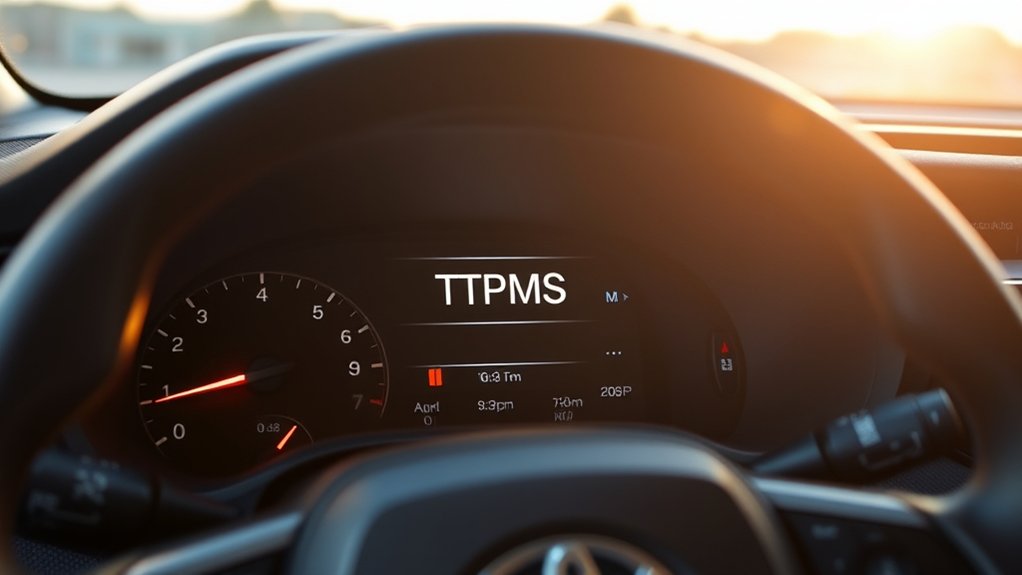
Every modern Toyota RAV4 comes with a Tire Pressure Monitoring System (TPMS). This system uses sensors in each wheel to detect when a tire’s pressure drops below a safe threshold. When that happens, a warning light appears on your dashboard.
However, in most RAV4 trims, the TPMS only triggers that warning light. It does not display individual tire pressure readings on the instrument cluster.
For more detailed data, models from 2020 and newer can show tire pressure through Toyota’s Connected Services app. Keep in mind that this feature may require an active subscription after the initial free trial period ends.
The recommended tire pressure for most 5th-generation RAV4s is 33 to 35 PSI, depending on the trim level and tire size. You’ll find the exact specification on a sticker located inside the driver’s door jamb. The NHTSA recommends always following the vehicle manufacturer’s placard pressure for optimal safety and performance.
If you want real-time pressure readings right on your dashboard, aftermarket adapters are available that activate this hidden feature. We cover those in detail further down.
Common Problems With RAV4 Tire Pressure Monitoring
If you own a RAV4, you may run into a few frustrating TPMS quirks. The dashboard typically only shows a low-pressure warning without telling you which tire is affected or what the actual pressure is. Some models also require a paid subscription just to view tire data through the Toyota app.
The good news is that aftermarket solutions exist to fill these gaps, though they come with their own considerations.
Display Limitations and Issues
The RAV4 is well-known for its reliability, but its tire pressure monitoring display can be a weak spot. Here are the most common issues owners report:
- Many RAV4 models lack a direct tire pressure display and only show a warning light when pressure is low.
- Canadian-built models may have different sensor behavior compared to Japan-built ones, leading to inconsistencies.
- The TPMS can occasionally display “N/A” when sensors are inactive or in sleep mode.
- Owners frequently express frustration over the absence of actual PSI readings, especially for safety reasons.
- Driving for a few minutes may temporarily reactivate sleeping sensors, but this is not a dependable fix for consistent monitoring.
Subscription-Based Access Concerns
One of the bigger pain points with the RAV4’s tire pressure monitoring system is the subscription-based access to tire pressure data through the Toyota app.
Many owners report that after the free trial period ends, ongoing subscription costs become an unwelcome expense just to see basic tire information. This raises questions about safety compliance, since not every driver is willing or able to pay for data their car’s sensors already collect.
User experiences vary a lot. Some models show individual tire pressures on the app without issue, while others only display a warning light with no detailed readings. These inconsistencies can make the ownership experience feel frustrating.
Weigh these factors carefully before committing to a subscription.
Aftermarket Solutions Availability
Dealing with the RAV4’s limited tire pressure monitoring display can be annoying, especially when Toyota wants you to pay for app-based data.
Fortunately, aftermarket devices can improve the experience significantly. These plug-and-play adapters, usually priced around $30, activate your dashboard’s built-in tire pressure display without requiring any wiring changes.
Here’s what these aftermarket adapters offer:
- Plug-and-play installation: No tools or wiring modifications needed.
- Real-time readings: Tire pressure data (often shown in kPa) appears directly on your dashboard.
- Resolves sleep-mode issues: Gets around the sensor inactivity problem some owners experience.
- Model compatibility varies: Check whether the adapter works with Canadian-built vs. Japan-built models before buying.
- Cost-effective: A one-time purchase that eliminates the need for a recurring subscription.
How to Check Tire Pressure Using the App
You can check your RAV4’s tire pressure using the Toyota app, which provides data for compatible models.
To get started, make sure your vehicle is enrolled in Toyota’s Connected Services. Some features depend on your subscription status.
App Features Overview
The Toyota app makes it straightforward to check tire pressure from your phone. Once set up, you can access essential vehicle health information on the go.
Key features include:
- Viewing tire pressure data for specific models, including the 2020+ RAV4.
- Confirming whether your tires are within the recommended range.
- Receiving notifications and alerts when tire pressure changes.
- Accessing detailed tire pressure data (requires an active subscription on most models).
- Exploring additional vehicle information beyond just tire monitoring.
Accessing Tire Pressure
With the Toyota app installed and connected, checking tire pressure is simple.
Open the app and navigate to the “My Garage” section. From there, select “Tire Pressure” under the “Maintenance” heading. You should see individual tire pressures displayed, allowing you to spot any issues quickly.
This is especially helpful since some RAV4 trims don’t show this information on the dashboard at all.
Remember, the recommended tire pressure for most 5th-gen RAV4 models falls between 33 and 35 PSI for both front and rear tires. Check your door jamb sticker for the exact figure.
Regularly monitoring your tire pressure can improve performance and safety, especially during seasonal temperature swings.
Subscription Requirements Explained
While the Toyota app is convenient, understanding the subscription requirements is important before relying on it.
Here’s what you should know:
- Your RAV4 may require a paid subscription for tire pressure access through the app.
- Models from 2020 and newer generally offer app visibility, while older models may not.
- A free trial is available for select vehicles, giving temporary access to tire data.
- Once the subscription expires, you may lose the ability to view tire pressure in the app, even though the car’s sensors still collect this data.
- Some owners report that tire pressures don’t appear in the app despite having an active subscription, which suggests ongoing software reliability issues.
Direct vs. Indirect TPMS: What’s in Your RAV4?
There are two types of tire pressure monitoring systems used in modern vehicles: direct and indirect.
Direct TPMS uses a physical pressure sensor mounted inside each wheel. These sensors transmit actual PSI readings to the vehicle’s computer. The 5th-generation RAV4 (2019 and newer) uses a direct TPMS, which is why aftermarket adapters can unlock pressure readings on the dashboard.
Indirect TPMS, found in some older vehicles, doesn’t use pressure sensors at all. Instead, it relies on the anti-lock braking system’s wheel speed sensors to detect pressure differences based on changes in wheel rotation speed. Indirect systems can’t tell you actual PSI values and are less accurate overall.
Because the RAV4 has direct sensors, the hardware to display individual tire pressures already exists in the car. The limitation is purely a software and feature-gating decision by Toyota, which is why aftermarket adapters and the Toyota app can access this data.
Why Manual Tire Pressure Checks Are Crucial
Manual tire pressure checks are essential because they confirm that your tires are inflated to the manufacturer’s recommended levels. Dashboard displays aren’t always accurate, so relying on them alone could lead to unsafe driving conditions. Performing checks monthly and before long trips helps you catch fluctuations early, especially as temperatures change.
| Tire Condition | Recommended PSI | Pressure Change |
|---|---|---|
| Under-inflated | Varies | Decreases safety |
| Properly inflated | Varies | Ideal efficiency |
| Over-inflated | Varies | Decreases tire life |
| Seasonal change | Varies | 1 PSI per 10°F |
| Regular check | Monthly | Prevent issues |
A tire pressure gauge is cheap and takes seconds to use. Keep one in your glove box. Proper tire pressure is critical for safety, fuel efficiency, and getting the most life out of your tires.
Aftermarket Solutions for Enhanced Tire Pressure Monitoring
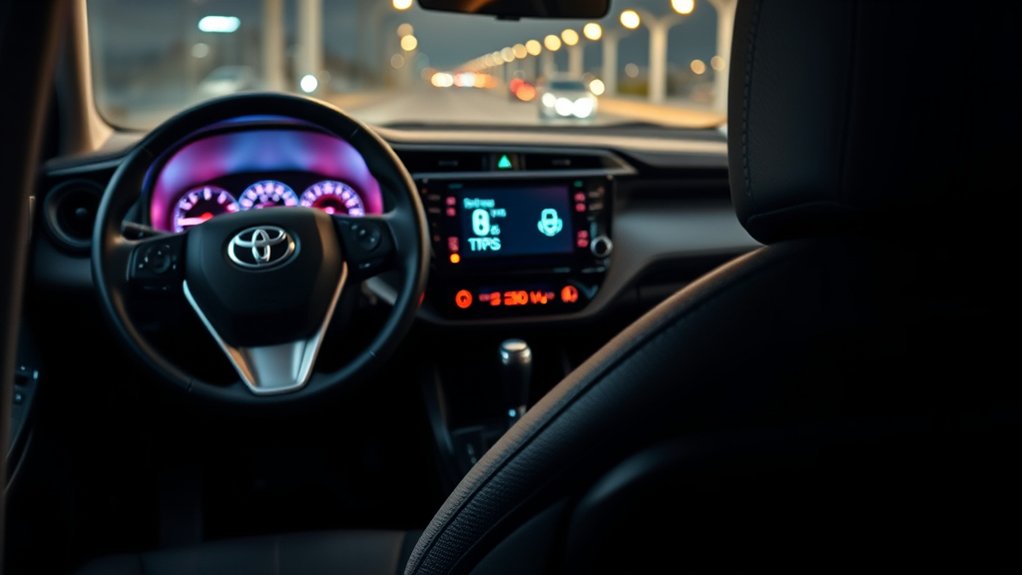
If your Toyota RAV4 doesn’t show individual tire pressures on the dashboard, aftermarket solutions can make a real difference. One of the most popular options is a plug-and-play adapter module that costs around $30.
Enhance your Toyota RAV4’s tire monitoring with budget-friendly aftermarket adapters for real-time pressure readings.
Benefits of using aftermarket adapters for tire pressure monitoring:
- Plug-and-play installation: No wiring modifications needed.
- Real-time readings: View tire pressure data in kPa directly on your dashboard.
- Better safety awareness: Stay informed about your tire health at a glance.
- Proven by owners: Many RAV4 drivers have successfully activated their dashboard displays using these modules.
- Peace of mind: Know your tire status without needing a phone app or subscription.
The Importance of Maintaining Proper Tire Pressure
Keeping your tires at the correct pressure is essential for both safety and vehicle performance. Under-inflated tires reduce traction and increase the risk of blowouts.
A few simple tire maintenance habits go a long way. Keep your RAV4’s tires at the recommended PSI listed on the sticker inside the driver’s door. For most 5th-gen RAV4 trims, that’s between 33 and 35 PSI.
Check your tire pressure at least once a month. Temperature changes affect pressure more than most people realize: tires lose roughly 1 PSI for every 10°F drop in temperature. Catching these fluctuations early improves fuel efficiency and reduces stopping distances and uneven tire wear.
Consistently driving on tires with the wrong pressure can lead to premature replacement, costing you more in the long run.
How to Troubleshoot Tire Pressure Monitoring Issues
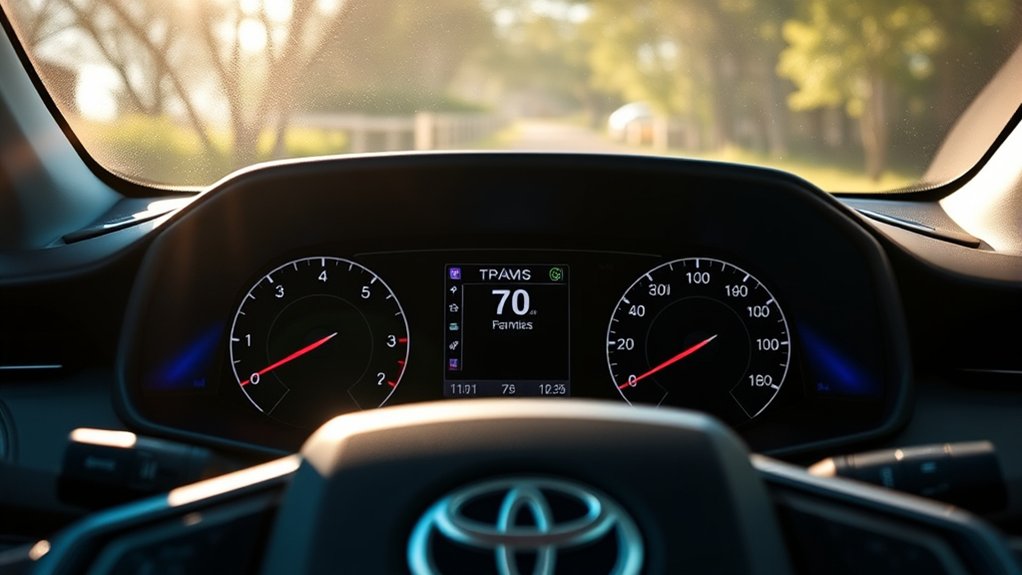
If your Toyota RAV4 isn’t displaying tire pressures, here’s how to troubleshoot the issue:
- Make sure the vehicle has been driven recently. The sensors can enter sleep mode when the car sits idle for a while.
- Check your owner’s manual for specific instructions on accessing the TPMS display on your particular trim.
- If the dashboard shows “N/A,” it could mean a sensor needs to be reset or there is a malfunction.
- For persistent issues, visit a Toyota dealer. They have diagnostic tools to pinpoint the exact problem.
- If your model doesn’t support a direct pressure display, consider an aftermarket adapter for real-time dashboard readings.
Related Guides
Frequently Asked Questions
Can I Reset the TPMS Light Myself in the RAV4?
Yes, you can reset it yourself. Follow the instructions in your owner’s manual. On most RAV4 models, there’s a TPMS reset button or a menu option in the dashboard settings. Regular tire maintenance helps prevent the warning light from coming back.
What Should I Do if the TPMS Warning Light Stays On?
Start by checking your tire pressures with a manual gauge and inspecting each tire for leaks or damage. If pressures look correct and the light persists, try a TPMS reset. If it still stays on, have a dealer check the sensors.
How Often Should I Check My Tire Pressure?
At least once a month, and always before a long road trip. Consistent checks help you catch slow leaks and seasonal pressure changes before they become a safety issue.
Does the RAV4 Have a Spare Tire Monitoring Feature?
No. The RAV4’s TPMS only monitors the four main tires. You’ll need to check the spare manually on a regular basis.
Are There Any Specific Tire Pressure Recommendations for Different Weather?
Tire pressure drops in cold weather and rises in heat. A good rule of thumb: pressure changes by about 1 PSI for every 10°F shift in temperature. In winter, you may need to add a little air. In summer, check that pressures haven’t climbed above the recommended level. Regular checks keep you safe in all seasons.
Conclusion
Staying on top of your Toyota RAV4’s tire pressure keeps your ride safe and efficient. Whether you rely on your dashboard warning light, the Toyota app, an aftermarket adapter, or a simple tire gauge, the important thing is to check regularly. Under-inflated tires affect handling, fuel economy, and tire lifespan. A few minutes of attention each month can save you from costly repairs and keep you confident on the road.
