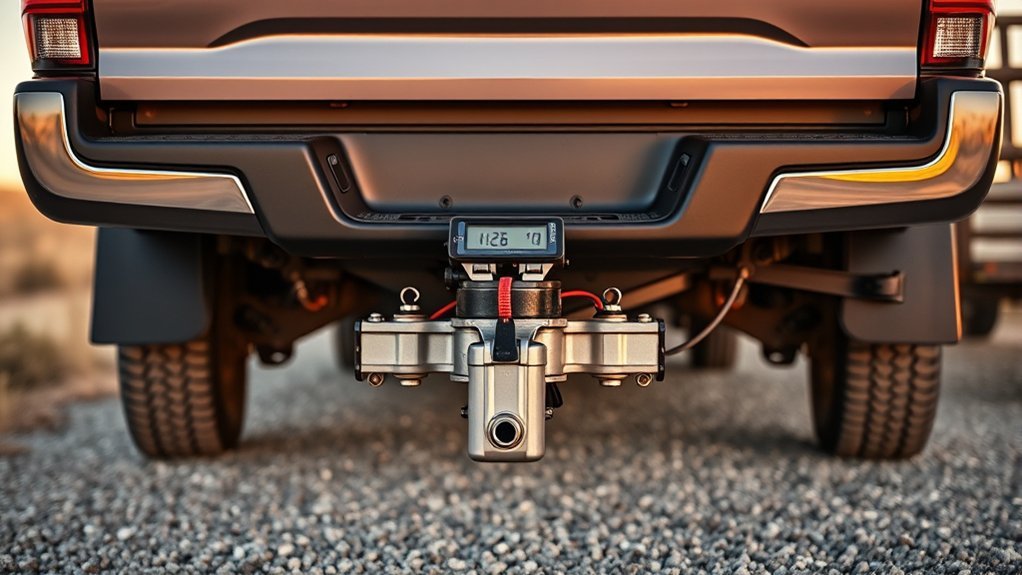
Your Tacoma’s factory tongue-weight limit is typically 650 lb with the tow package (350 lb without). Staying near 10% of trailer weight keeps handling safe and predictable. Tongue weight shifts axle loads, which changes steering, braking, and sway risk. That’s why you should measure tongue weight and check your vehicle payload before you hitch up. A weight-distribution hitch can redistribute load when needed, but never exceed axle or vehicle ratings. Keep load placement and checks routine and you’ll get safer, more predictable towing. More specifics follow.
Quick Answer: Tacoma Tongue Weight Limits
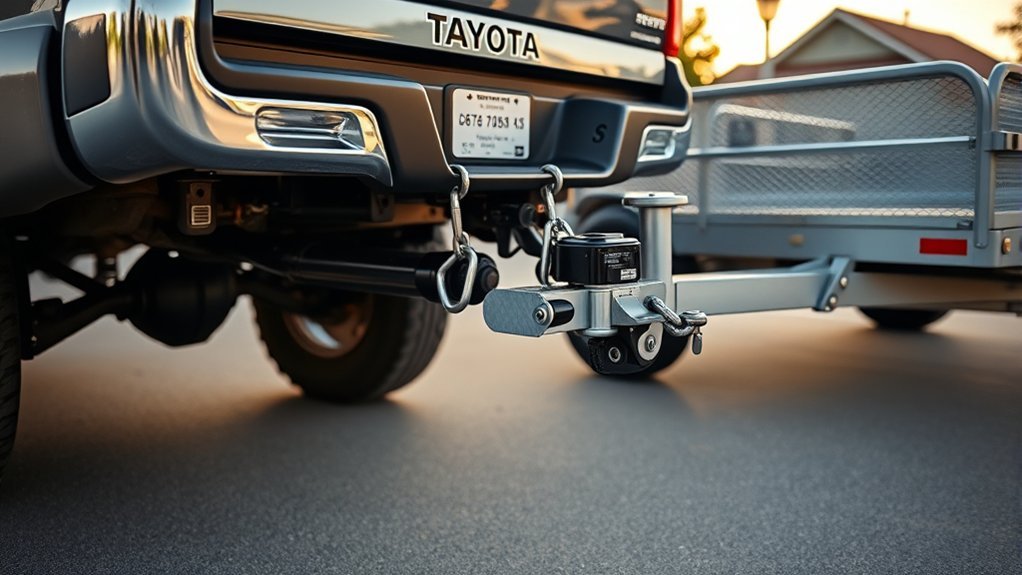
If you’re towing with a Toyota Tacoma, note the factory-rated tongue weight: 650 lb with the factory tow package and 350 lb without it. Use tongue weight to gauge safe towing: aim for roughly 10% of total trailer weight so the trailer stays controlled and predictable. Respect the Tacoma weight limits to preserve stability and handling; exceeding them degrades steering response, increases sway risk, and stresses suspension and frame. A properly adjusted weight-distribution hitch can redistribute load and may permit higher effective tongue weight, but you must evaluate changes against vehicle limits and real-world handling, not assumptions. Measure tongue load before departure, adjust cargo placement, and confirm hitch settings. This disciplined approach keeps your Tacoma towing confidently and safely.
Tacoma Tongue Weight Limits by Trim & Tow Package
Although trim and tow-package choices change your safe tongue load, your Tacoma’s rated limits are clear: the Toyota Tacoma provides a 650 lb tongue weight limit for SR and SR5 trims when fitted with the factory tow package, and 640 lb for Limited, TRD Pro, and TRD Off-Road trims. If you remove the factory tow package, the tongue weight limit drops to 350 lb, which reduces towing capability markedly. You should plan around the Toyota’s official Tacoma specifications: tongue weight should be about 10% of the total trailer weight to maintain predictable behavior. Properly adjusted weight distributing hitches can redistribute load and may permit higher effective tongue loads, but they don’t legally or safely override the manufacturer’s specifications. For operators who value freedom on the road, that means you must select trim and tow-package options that match your towing goals, calculate tongue weight from trailer payload, and use appropriate hitching hardware. Adhere to safe towing practices and the Tacoma’s published limits to avoid overload and loss of control.
Why Tongue Weight Matters : How It Affects Axle Loads and Handling
You picked a Tacoma and configured its tow package to meet rated tongue weights; now look at why that number matters for axle loads and handling. Tongue weight, typically about 10% of trailer mass, directly alters weight distribution between front and rear axles. If you overload the rear axle, you’ll reduce front axle load, compromising steering authority and vehicle stability. For a properly equipped Tacoma with a 650 lb maximum tongue weight, staying within that limit preserves handling and safety while maximizing towing capacity.
Excess tongue weight increases rear axle stress, induces squat, and degrades braking performance by shifting braking force rearward. Conversely, insufficient tongue weight makes the trailer prone to sway, reducing vehicle stability. You can restore balance with weight distribution hitches that transfer some load forward, improving steering feedback and equalizing axle loads. Control tongue weight deliberately to maintain predictable handling, consistent braking, and confidence on the road.
Measure Tongue Weight & Confirm Your Tacoma’s Payload
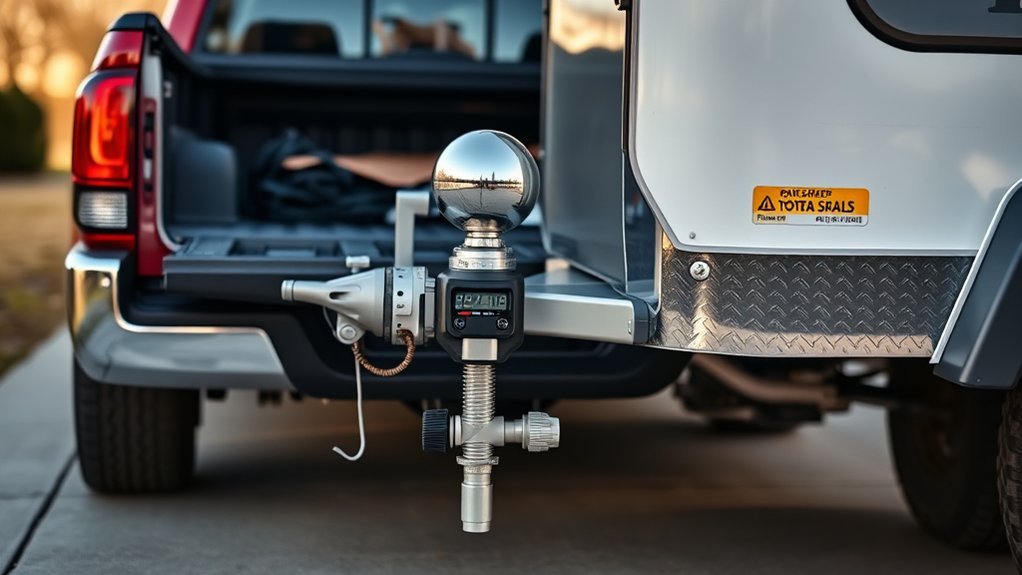
Start by measuring the trailer’s tongue weight with a proper tongue-weight scale or a calibrated floor or jack scale to confirm it sits at about 10% of the trailer’s loaded mass and below your Tacoma’s limit (650 lb with the factory tow package; 350 lb without). You’ll verify trailer weight and tongue weight before hitch-up, then sum vehicle occupants and cargo to check payload capacity. If your Tacoma isn’t properly equipped, adjust loads—move gear forward or reduce trailer cargo—to avoid exceeding axle load limits.
Record measurements: trailer weight, tongue weight, Tacoma curb weight, occupant/cargo weight. Compare totals to towing capacity and payload capacity in your owner’s manual. Maintain correct weight distribution to preserve steering and braking performance; improper loading raises rear axle load and compromises safety. Act decisively: redistribute, lighten, or refuse the tow if any limit’s exceeded. This disciplined approach frees you from risk while maximizing your Tacoma’s legitimate towing capability.
[Amazon Products Picked for You]

1800 lbs Heavy-Duty Capacity, built with strong carbon steel to handle your toughest loads with reliability

Digital battery-powered LED display offers fast, easy-to-read measurements.
When a Weight-Distribution Hitch Helps : And Its Limits
After you’ve measured tongue weight and confirmed payload limits, consider a weight-distribution hitch when rear axle sag or compromised steering or braking appears with heavier trailers. You’ll restore more even load transfer between the rear axle and front axle, improving steering, braking control, and overall towing safety for your Toyota Tacoma. A properly adjusted weight-distribution hitch helps achieve the guideline tongue weight (~10% of trailer weight) and can effectively raise usable tongue weight in practice, sometimes toward 1,000 lbs depending on hitch specs — but it doesn’t override manufacturer weight limits.
- Inspect: verify Tacoma towing package, rear axle condition, and gross trailer weight against tow rating and maximum tongue weight.
- Adjust: set spring bars and shank to distribute tongue weight until level and steering returns to acceptable response across driving conditions.
- Limit: respect Toyota’s specified weight limits (e.g., Tacoma’s maximum tongue weight with tow package); treat the hitch as an aid, not a permissions tool.
[Amazon Products Picked for You]

WEIGHT DISTRIBUTION: Hardened steel chains connect the hitch arms to your trailer frame for improved load distribution. The result is improved steering, braking control, and helping to reduce stressful towing situations.

LEVEL TOWING — Distributes trailer tongue weight across the tow vehicle and trailer to help level the load, improve control and smooth the ride; includes sway control kit #17200 to help reduce trailer sway.

Allows for easy leveraging of weight distribution hookup brackets
Safe Loading Checklist: Positioning, Targets, and Verification
When loading a trailer for Tacoma towing, position cargo so tongue weight falls between 9% and 15% of the trailer’s gross weight and never exceeds the Tacoma’s tongue-weight limit (650 lbs with the factory tow package; 350 lbs without). You’ll begin by determining total trailer weight and calculating a 9–15% tongue-weight target. Use a scale or tongue-weight gauge to verify actual force at the hitch. Employ proper positioning: move heavy items forward or aft until measured tongue weight matches the target without shifting so far rearward that steering control degrades.
Follow the owner’s manual and Toyota Tacoma safety recommendations for maximums and procedures. If you have one, fit a weight distribution hitch to improve load distribution and vehicle stability; verify its settings after initial measurement. Recheck tongue weight after every major repositioning or before long trips. Document measurements and adjustments so you retain control, comply with limits, and tow with confidence.
If Tacoma Tongue Weight Is Too High: Fixes and Alternatives
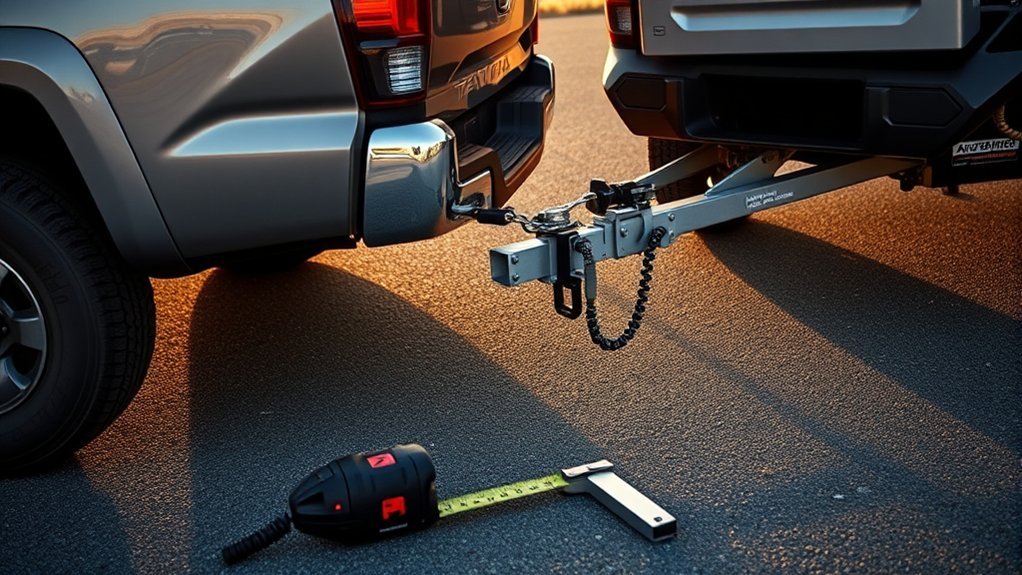
If your Tacoma’s measured tongue weight exceeds its limit, first redistribute cargo in the trailer and vehicle to shift mass forward or aft until the hitch load falls into the 9–15% (preferably 10–15%) target and below 650 lb, and verify with a scale or tongue-weight gauge. Then apply these fixes and alternatives to restore towing stability and preserve Tacoma handling.
- Use a weight distribution hitch to transfer load across axles; this improves towing stability and lets you approach the vehicle’s maximum towing capacity with greater safety.
- Reevaluate trailer loading configuration: perform cargo redistribution, move dense items forward or rearward to hit the ideal safety target, and minimize high-center mass that degrades handling.
- Reduce trailer mass or switch to a lighter trailer when tongue weight remains high despite adjustments; always monitor tongue weight after changes to confirm safety.
Act decisively; these steps protect safety, Tacoma handling, and your freedom to tow within rated limits.
[Amazon Products Picked for You]

Enhanced Structural Integrity: Forged from high-tensile alloy steel, offering superior deformation resistance. The design ensures structural integrity even in harsh conditions, preventing metal fatigue and fractures. It guarantees all-weather security for long-distance towing, snow-resistant, wind-resistant, and heavy-duty usage.

Integrated sway control reduces sway and levels the vehicle and trailer

FOR SMOOTH AND STABLE TOWING: Replacement Hitch Brackets Provide A Rock-Solid Connection, Ensuring Your Trailer Or Caravan Towing Experience Is Smooth And Stable, Whether You're Hauling Heavy Loads Or Navigating Challenging Terrain. For Smoother And Safer Travelling
Frequently Asked Questions
What Is the Maximum Tongue Weight for a Toyota Tacoma?
Maximum tongue weight is generally 650 lbs (SR slightly lower; factory tow package 640 lbs; without tow package 350 lbs). You’ll manage trailer weight, payload specifications, weight distribution, hitch requirements, cargo management, towing accessories, performance factors, vehicle stability.
How Do I Know My Truck Tongue Weight Limit?
Check your door jamb or owner’s manual for hitch specifications; you’ll calculate tongue weight from trailer towing guidelines and cargo weight limits, compare trailer types, consider towing capacity factors, weight distribution hitches and towing accessories advice.
Can a Tacoma Carry a 4×8 Sheet of Plywood?
Yes — you can haul a 4×8 sheet: account for Tacoma cargo capacity, plywood dimensions, weight distribution and load balancing, use bed liner protection, proper tie down methods, follow hauling tips, trailer compatibility, transport regulations and safety precautions.
What Is an Acceptable Tongue Weight?
Think of your tongue weight as a ship’s keel: you should aim for about 10% of trailer weight as noted in Toyota’s towing resources. You’ll protect towing safety, truck stability, load distribution, trailer balance, weight capacity, hitch types, towing equipment, cargo management, driving performance.
Conclusion
You’ve learned the Tacoma’s tongue-weight limits, how they shift axle loads and affect handling, and how to measure and verify payload. Treat tongue weight like the keel of a sailboat: too light and you yaw, too heavy and you bury the bow. Use correct loading, a weight-distribution hitch when within its rating, and redistribute or downsize loads if limits are exceeded. Verify with a scale every trip to keep steering, braking, and safety predictable.
