Toyota Tundra i-FORCE is Toyota’s name for the truck’s gasoline twin-turbo V6 powertrain, while i-FORCE MAX adds an electric motor and hybrid battery for greater output and stronger low-speed torque. For the 2026 U.S. Tundra, the SR uses a 358-horsepower, 406-lb-ft version of i-FORCE; SR5 and higher gas grades are rated at 389 horsepower and 479 lb-ft. i-FORCE MAX produces 437 net combined horsepower and 583 lb-ft. Fuel economy, towing capacity, and availability still depend on the exact trim and configuration.
Last updated: September 19, 2026 — 2026 powertrain specifications and engine-recall information rechecked against Toyota and NHTSA.
Quick Answer
The 2026 Toyota Tundra i-FORCE is a twin-turbo V6 rated at 358 horsepower and 406 lb-ft of torque in the SR, or 389 horsepower and 479 lb-ft in SR5 and higher gas grades. i-FORCE MAX adds a motor-generator and hybrid battery to produce 437 net combined horsepower and 583 lb-ft. The hybrid delivers more torque, but fuel economy, towing limits, and trim availability remain configuration-specific.
Key Takeaways
- The current-generation Tundra does not use a V8; its gas and hybrid powertrains are based on a twin-turbo V6.
- For 2026, the SR i-FORCE is rated at 358 horsepower and 406 lb-ft; SR5 and higher gas grades use the 389-horsepower, 479-lb-ft calibration.
- i-FORCE MAX produces 437 net combined horsepower and 583 lb-ft and is a self-contained hybrid, not a plug-in hybrid.
- Toyota advertises up to 12,000 pounds of towing for the overall 2026 Tundra lineup and up to 11,450 pounds for i-FORCE MAX, depending on configuration.
- Certain 2022–2024 non-hybrid Tundras are covered by engine-debris recalls; always check the individual VIN because model year alone does not determine recall status.
2027 model-year note: Toyota announced an updated 2027 Tundra in July 2026 but said full 2027 details would be released in fall 2026. This guide therefore uses Toyota’s complete 2026 U.S. specifications for configuration-level figures until the full 2027 specification set is published.
What Is Toyota Tundra i-FORCE Technology?
i-FORCE is Toyota’s branding for truck-focused powertrains engineered to deliver strong torque, acceleration, towing performance, and everyday drivability. It is a powertrain designation, not a separate Tundra model or trim level.
Older Toyota trucks also used the i-FORCE name for V8 engines, which can cause confusion. The current-generation Tundra instead uses a 3.4-liter twin-turbocharged V6. According to Toyota’s 2026 Tundra specifications, SR5 and higher gas grades reach 389 horsepower and 479 lb-ft of torque. Toyota’s 2026 brochure lists the base SR at a lower 358 horsepower and 406 lb-ft. i-FORCE MAX produces 437 net combined horsepower and 583 lb-ft.
The key difference is electrification. Standard i-FORCE relies on the gasoline engine alone. i-FORCE MAX combines the twin-turbo V6 with a motor-generator that supplies additional power through the transmission. For a deeper mechanical explanation of the gas engine, see how the Toyota Tundra i-FORCE turbochargers work.
Note: Toyota does not publish an official phrase that expands “i-FORCE” as an acronym. It is best treated as a branded powertrain name rather than assigning it an unofficial meaning.
How i-FORCE Works to Enhance Tundra Performance
The current-generation Tundra’s i-FORCE system combines turbocharging, electronic engine controls, a broad torque curve, and a 10-speed automatic transmission. These features let the V6 deliver substantial low-rpm pulling power without the naturally aspirated V8 used by the previous generation.
Twin Turbochargers
The twin turbochargers use exhaust energy to compress the engine’s intake air. Supplying more air allows the engine to make greater power and torque from its 3.4-liter displacement. Toyota also uses electric wastegate actuators and a water-cooled intercooler to manage boost and intake-air temperature.
Dual VVT-i
Toyota’s Dual Variable Valve Timing with intelligence adjusts intake and exhaust valve timing as operating conditions change. This helps the engine balance low-speed torque, higher-speed power, fuel use, and emissions rather than optimizing it for one narrow operating range.
10-Speed Automatic Transmission
Both powertrains use a 10-speed electronically controlled automatic transmission. Its gear range helps keep the engine in a useful operating band during acceleration, highway driving, hill climbing, and towing.
Electric Assistance in i-FORCE MAX
In the hybrid system, a motor-generator and clutch sit within the bell housing between the gasoline engine and 10-speed transmission. Toyota says the hybrid components handle engine starting, limited electric operation, electric assistance, and energy regeneration. The 2026 specification sheet lists a 48-horsepower electric motor and a 288-volt, 1.87-kWh sealed nickel-metal hydride battery located under the rear passenger seat area.
For a system-specific breakdown, see the Toyota Tundra i-FORCE MAX hybrid system explainer.
Pro Tip: Compare i-FORCE MAX for its extra low-speed torque and response rather than assuming the hybrid badge guarantees a large fuel-economy gain. MPG varies with trim, drivetrain, tires, speed, weather, cargo, and towing use.
Note: The Tundra i-FORCE MAX is not a plug-in hybrid. You do not connect it to an external charger. The truck manages its battery through the gasoline engine and regenerative braking.
What Fuel Economy Can You Expect From i-FORCE?
There is no single fuel-economy rating for every Tundra carrying an i-FORCE badge. Cab style, bed length, two- or four-wheel drive, trim, tires, and hybrid equipment can change the result, so the EPA estimate for the exact configuration is more useful than a lineup-wide number.
On Toyota’s 2026 U.S. model page, several displayed gas i-FORCE grades are listed at an estimated 18 mpg city and 23 mpg highway. The Limited i-FORCE MAX is listed at 20 mpg city and 24 mpg highway, while displayed upper hybrid grades such as Platinum, 1794 Edition, and Capstone are listed at 19 mpg city and 22 mpg highway. TRD Pro is shown at 18 mpg city and 20 mpg highway. Other drivetrain and equipment combinations can carry different ratings.
| Example 2026 Toyota listing | City/highway estimate | What it shows |
|---|---|---|
| Several displayed gas i-FORCE grades | 18/23 mpg | Do not apply this card-level figure to every drivetrain or equipment combination. |
| Limited i-FORCE MAX | 20/24 mpg | This is the highest city/highway pair Toyota displays for the 2026 Tundra hybrid lineup. |
| Platinum, 1794 Edition or Capstone i-FORCE MAX | 19/22 mpg | Hybrid equipment does not give every grade the same fuel-economy rating. |
| TRD Pro i-FORCE MAX | 18/20 mpg | The off-road-focused configuration carries a lower published estimate than the Limited hybrid. |
Real-world fuel consumption may be higher when towing, carrying heavy cargo, driving at high speed, making short trips, operating in very cold weather, or using aggressive acceleration. The hybrid can improve efficiency in some configurations, but it remains a gasoline-powered full-size pickup rather than a vehicle designed primarily for maximum fuel savings.
Comparing i-FORCE and i-FORCE MAX Engines
Both powertrains use a twin-turbo V6 and 10-speed automatic transmission, but output, hybrid hardware, towing limits, fuel economy, and ownership trade-offs differ.
| Feature | i-FORCE | i-FORCE MAX |
|---|---|---|
| Powertrain type | Twin-turbo gasoline V6 | Twin-turbo V6 with motor-generator and hybrid battery |
| Toyota-listed output | 358 hp in SR; 389 hp in SR5 and higher gas grades | 437 net combined hp |
| Toyota-listed torque | 406 lb-ft in SR; 479 lb-ft in SR5 and higher gas grades | 583 lb-ft |
| Hybrid hardware | None | 48-hp motor-generator and 288V, 1.87-kWh NiMH battery |
| Transmission | 10-speed automatic | 10-speed automatic with integrated hybrid motor-generator |
| 2026 maximum towing headline | Up to 12,000 lb for a qualifying gas Tundra configuration | Up to 11,450 lb when properly equipped |
| Main advantage | Strong capability without the additional high-voltage hybrid hardware | More torque, stronger low-speed response, and higher published MPG in some configurations |
| Potential trade-off | Less output than i-FORCE MAX in equivalent higher gas grades | Additional hybrid hardware and a lower maximum towing headline than the highest-rated gas configuration |
| Best suited to | Buyers prioritizing gas-only simplicity, broad configuration choice, or the lineup’s maximum tow rating | Buyers prioritizing 583 lb-ft of torque, hybrid assistance, and stronger low-speed response |
For 2026, i-FORCE MAX raises output over the 389-hp gas calibration from 389 to 437 horsepower and torque from 479 to 583 lb-ft. The base SR uses a lower-output 358-hp/406-lb-ft i-FORCE tune, and no single MPG or towing figure applies to every Tundra.
[Amazon Products Picked for You]

GENUINE OEM: Direct replacement Toyota air filter manufactured by Denso, ensuring perfect fitment and optimal engine performance

And Vehicle Specific

Contains synthetic fibers, which help promote clean oil - to support long engine life and performance
How Much Can a Tundra With i-FORCE Tow?
Toyota advertises a maximum 2026 Tundra towing capacity of up to 12,000 pounds for a qualifying configuration. Toyota separately lists the i-FORCE MAX hybrid at up to 11,450 pounds when properly equipped. More power therefore does not automatically produce the highest tow rating.
The certified limit for an individual truck changes with its cab, bed, drivetrain, trim, wheels, options, passengers, cargo, hitch equipment, and trailer tongue weight. Heavier luxury and off-road configurations can carry lower towing or payload ratings even though they use the more powerful hybrid system.
If you tow regularly, the separate Toyota Tundra Tow/Haul mode guide explains what the mode changes and what it cannot change.
Warning: Never rely only on a lineup maximum. Check the owner’s manual, certification and payload labels, hitch requirements, and Toyota’s specifications for your exact configuration before towing.
[Amazon Products Picked for You]

Used to securely mount Buyers Products 8-Ton Combination Hitches, Models: BH81780, BH82000, BH82516, and BH850MM

COMPLETE KIT: Includes 8597201 Mud Flap Exhaust Shield Kit for added heat protection, making it compatible with dual-rear-wheel (dually) trucks, SUVs, and vehicles with lift kits. Includes trailer mud flaps for towing peace of mind.
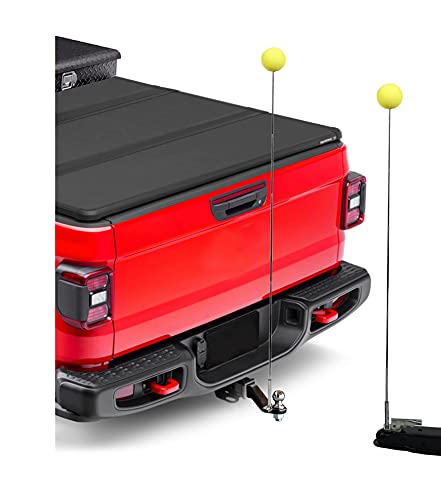
52" TALL EASILY VISIBLE: Align your hitch and ball mount the first time every time. The steel rods extend to 52" and can be seen above any oversized truck beds, day or night
Which Toyota Tundra i-FORCE Powertrain Should You Choose?
The standard gas i-FORCE makes sense when you prefer a gas-only drivetrain, want access to the broader range of gas configurations, or need the specific configuration that reaches Toyota’s 12,000-pound lineup maximum. Remember that the base SR uses the lower 358-hp/406-lb-ft calibration rather than the 389-hp/479-lb-ft version found in SR5 and higher gas grades.
i-FORCE MAX is aimed more at buyers who value its 583 lb-ft of combined torque and electric-assisted response. It can also carry better published MPG ratings in some configurations, but the advantage is not universal and its maximum advertised towing figure is 11,450 pounds rather than 12,000.
Hybrid-system warranty coverage can also matter in the ownership calculation. Toyota states that its hybrid battery limited warranty runs for 10 years or 150,000 miles, whichever comes first, subject to the applicable warranty terms and conditions.
Do not choose solely from the headline horsepower figure. Compare the exact trucks you are considering for the following:
- Certified towing and payload ratings
- Two- or four-wheel drive
- Cab and bed configuration
- Published city, highway, and combined MPG
- Wheel and tire package
- Purchase price, insurance, and expected fuel use
- Whether the added hybrid torque is useful for your normal driving or towing workload
- VIN-specific open recalls and completed service campaigns on used trucks
[Amazon Products Picked for You]

Good quality: made from Black nylon, more durable that would not break or crack easily. Small Things but great use, satisfy your demands

CONSISTENT PERFORMANCE -- Matched cup and cone components ensure consistent performance

100Pcs Door Trim Panel Retainer Clips Compatible with Toyota Tacoma Sienna Cruiser Avalon Corolla Camry Tundra Sequoia Matrix Prius RAV4 Lexus Scion Land, 1Pcs Fastener Remover 90467-10188
i-FORCE Reliability and Recall Considerations
No engine should be described as universally reliable based only on its badge. Maintenance history, production date, driving conditions, modifications, and whether required recall work has been completed all affect the ownership outlook.
Toyota and NHTSA have issued multiple engine-debris campaigns involving certain non-hybrid Tundras with the V35A engine. NHTSA campaign 24V-381 covered certain 2022–2023 Tundras. Campaign 25V767 subsequently included certain 2022–2024 Tundras, and campaign 26V320 expanded coverage to an additional population of certain 2024 Tundras. The underlying concern is that manufacturing debris can contaminate the engine, damage a main bearing, and potentially cause an engine stall or loss of drive power.
Toyota described these engine-debris Tundra recalls as involving conventional gas models rather than the Tundra hybrid. That distinction should not replace a VIN check because production dates and specific affected populations determine eligibility.
Before buying a used Tundra, enter its 17-digit VIN in the Toyota recall and service-campaign lookup and the NHTSA recall database. A model year alone cannot confirm whether an individual vehicle is affected or whether the applicable remedy has been completed.
Note: A recall does not mean every engine in a listed model-year range will fail. It means a defined vehicle population may contain a safety-related defect and should be checked and repaired according to the campaign instructions.
Frequently Asked Questions
What is Toyota Tundra i-FORCE?
i-FORCE is Toyota’s name for the Tundra’s gas twin-turbo V6 powertrain. For 2026, the SR is rated at 358 horsepower and 406 lb-ft of torque, while SR5 and higher gas grades are rated at 389 horsepower and 479 lb-ft. It is a powertrain designation, not a separate Tundra model.
What does i-FORCE mean in a Toyota?
i-FORCE is branded terminology Toyota uses for truck powertrains. Toyota does not publish a formal acronym expansion for the name, so definitions found elsewhere should not be treated as official unless Toyota documents them.
What is the difference between i-FORCE and i-FORCE MAX?
The standard i-FORCE uses a twin-turbo gasoline V6. i-FORCE MAX combines the V6 with a motor-generator and hybrid battery. Toyota rates i-FORCE MAX at 437 net combined horsepower and 583 lb-ft, compared with 358 horsepower and 406 lb-ft in the SR or 389 horsepower and 479 lb-ft in SR5 and higher gas grades.
Do you have to plug in a Tundra i-FORCE MAX?
No. The Tundra i-FORCE MAX is a conventional self-contained hybrid rather than a plug-in hybrid. Its gasoline engine and regenerative-braking system manage the hybrid battery without an external charging cable.
Does i-FORCE MAX always get better gas mileage?
No. Some i-FORCE MAX configurations have better published ratings than gas models, but drivetrain, trim, off-road equipment, tires, vehicle weight, temperature, speed, and towing can reduce or eliminate the difference. Compare the EPA estimate for the exact configuration you are considering.
How much can a Tundra i-FORCE MAX tow?
Toyota lists the 2026 Tundra i-FORCE MAX at up to 11,450 pounds of towing when properly equipped. The overall Tundra lineup maximum is 12,000 pounds and belongs to a qualifying gas configuration, so always use the rating for the exact truck rather than the lineup headline.
What warranty covers the i-FORCE MAX hybrid battery?
Toyota states that its hybrid battery limited warranty is 10 years or 150,000 miles, whichever comes first. Coverage is subject to the terms and conditions in the applicable Warranty and Maintenance Guide.
Is the Toyota i-FORCE engine reliable?
Reliability cannot be guaranteed for every truck. Certain 2022–2024 non-hybrid Tundras have been included in engine-debris recalls 24V-381, 25V767, or 26V320. Check the individual VIN, maintenance history, recall status, and vehicle condition before buying a used Tundra.
What is the difference between a Tundra and a Tundra i-FORCE?
There is no separate vehicle called the “Tundra i-FORCE.” The Tundra is the truck, while i-FORCE identifies its gas powertrain. Depending on trim and model year, a Tundra may use the gas i-FORCE or hybrid i-FORCE MAX system.
Conclusion
Toyota Tundra i-FORCE refers to the current-generation truck’s gas twin-turbo V6 powertrain, while i-FORCE MAX adds a 48-hp motor-generator and hybrid battery. For 2026, gas output ranges from 358 horsepower and 406 lb-ft in the SR to 389 horsepower and 479 lb-ft in higher gas grades; i-FORCE MAX produces 437 net combined horsepower and 583 lb-ft.
The right comparison is configuration-specific. Check the exact truck’s MPG, towing and payload ratings, drivetrain, equipment, purchase cost, hybrid warranty coverage, and VIN-specific recall status rather than relying on a single horsepower or 12,000-pound towing headline.
Sources
- Toyota — 2026 Tundra specifications and trim information — current output, fuel-economy listings, towing maximum, and trim information.
- Toyota — 2026 Tundra brochure — SR and higher-grade engine outputs, motor output, NiMH battery voltage/capacity, equipment, and configuration details.
- Toyota USA Newsroom — 2026 Toyota Tundra overview — powertrain design, Dual VVT-i, 10-speed transmission, hybrid operation, output, and model updates.
- Toyota — Hybrid Trucks — i-FORCE MAX towing maximum and published hybrid fuel-economy headline.
- Toyota — Hybrid Battery Warranty — hybrid-battery limited warranty term and mileage.
- National Highway Traffic Safety Administration — Recall 24V-381 — certain 2022–2023 Tundra engine-debris recall.
- National Highway Traffic Safety Administration — Recall 25V-767 — subsequent engine-debris campaign involving certain 2022–2024 Tundras.
- National Highway Traffic Safety Administration — Recall 26V-320 — additional 2024 Tundra engine-debris recall population.
- Toyota USA Newsroom — 2027 Tundra announcement — July 2026 model-year update and timing for full 2027 details.
- Toyota Recall and Service Campaign Lookup — VIN-specific open-recall and campaign verification.

1 thought on “What Does i-FORCE Mean on a Toyota Tundra? (Explained Simply)”