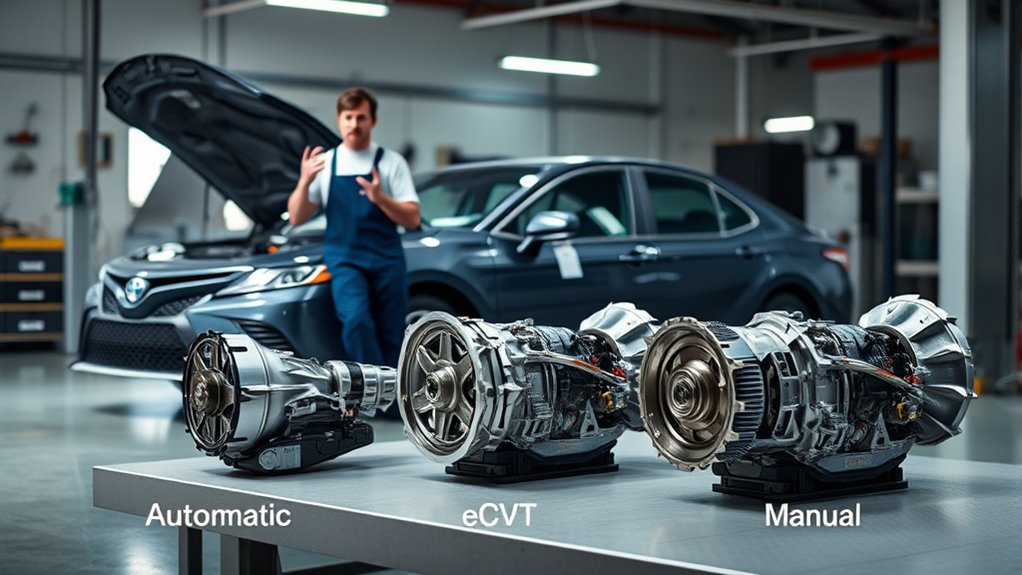
The Toyota Camry transmission you get depends on the model year and powertrain. Newer U.S. Camry models are easy to understand: the 2025 and 2026 Camry are hybrid-only and use Toyota’s electronically controlled continuously variable transmission, or eCVT. If you are shopping used, you will also see the Direct Shift 8-speed automatic in many 2018–2024 gas Camry models.
Last updated: July 4, 2026
Quick Answer
Choose the Camry eCVT if you want the best fuel economy, smooth city driving, and a hybrid powertrain. Choose a used Camry with the 8-speed automatic if you prefer a traditional gas-engine feel, stepped gear shifts, and a more familiar highway passing response.
Key Takeaways
- The 2025 and 2026 U.S. Toyota Camry are hybrid-only and use an eCVT.
- Many 2018–2024 gas Camry models use Toyota’s Direct Shift 8-speed automatic.
- Toyota’s hybrid eCVT is a power-split hybrid transaxle, not a normal belt-and-pulley CVT.
- The eCVT usually wins for MPG and stop-and-go driving, while the 8-speed automatic feels more familiar to gas-car drivers.
- Before buying a used Camry, check service records, software updates, and open recalls by VIN.
Which Camry Years Use eCVT or 8-Speed Automatic?
For new U.S. Camry shoppers, the answer is simple. Toyota says the 2026 Camry is exclusively hybrid, pairing the fifth-generation Toyota Hybrid System with a 2.5-liter engine and an eCVT. Toyota also says the 2025 Camry goes exclusively hybrid.
Used Camry shoppers need more context. Toyota states that all 2024 Camry gas grades used the Direct Shift 8-speed automatic, while the 2024 Camry Hybrid used an electronically controlled continuously variable transmission.
| Camry Model Years | Common U.S. Transmission Setup | Best Fit |
|---|---|---|
| 2025–2026 Camry | Hybrid eCVT across the U.S. lineup | New-car buyers who want hybrid efficiency and available electronic AWD. |
| 2018–2024 Camry Hybrid | Hybrid eCVT | Used buyers who want high MPG and smooth city driving. |
| 2018–2024 gas Camry | Direct Shift 8-speed automatic on many gas grades | Drivers who prefer a traditional automatic feel and gas-only setup. |
Note: Transmission availability can vary by country, trim, drivetrain, and model year. This guide focuses on U.S. Camry models because Toyota changed the U.S. lineup significantly for 2025.
Understanding eCVT: How It Works
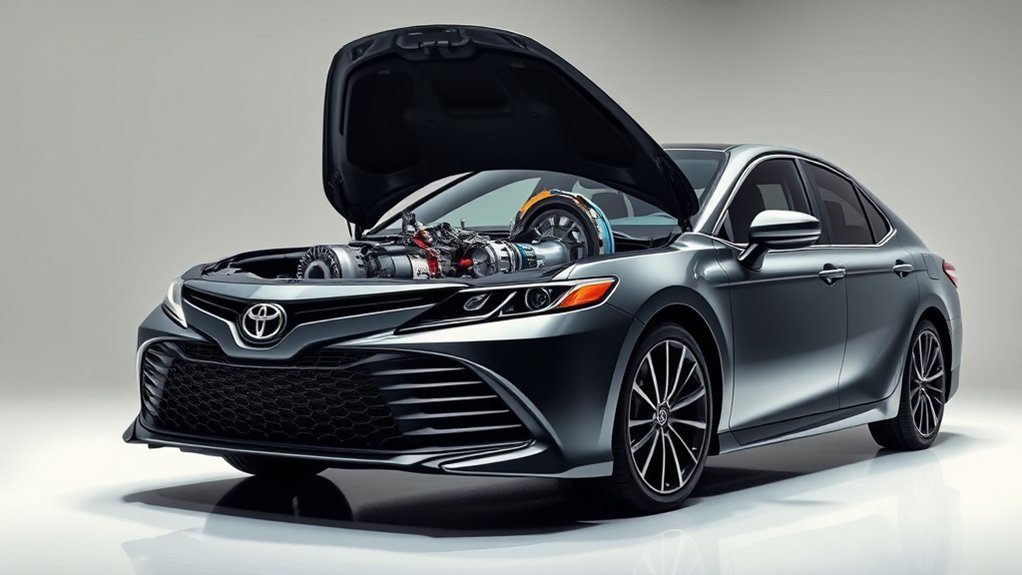
When you drive a Toyota Camry Hybrid, the eCVT does not shift through fixed gears like a normal automatic. Toyota’s hybrid system blends a gasoline engine, electric motor, electric generator, and power-split device to move the car smoothly.
Toyota explains that its hybrid transmission uses a power split device with a planetary gear to reallocate power from the gasoline engine. One output shaft links to the electric motor and wheels, while the other connects to the generator. The system then adjusts engine, generator, and motor speed to work like an electronically controlled continuously variable transmission.
Toyota’s hybrid eCVT feels different from a normal automatic because it is not trying to step through fixed gears. It is trying to keep the hybrid system in an efficient power range.
That is why a Camry Hybrid can feel calm in traffic. You do not feel a series of normal upshifts. Instead, engine speed, electric assist, and road speed blend together.
Is Toyota eCVT the Same as a Regular CVT?
No. Toyota’s hybrid eCVT is not the same as a typical belt-and-pulley CVT. A regular CVT often changes ratio through belts, pulleys, or similar variable-ratio hardware. Toyota’s hybrid eCVT uses a power-split hybrid transaxle with electric motor-generators and a planetary gearset.
This difference matters because many drivers hear “CVT” and think of belt wear, rubber-band acceleration, or weak response. A Toyota hybrid eCVT can still hold engine rpm higher during acceleration, but the hardware layout is different from a conventional belt-style CVT.
Benefits of eCVT in Hybrid Models
The main benefit of the eCVT in Toyota Camry Hybrid models is smooth, efficient power delivery. It lets the gasoline engine and electric motor work together without the stepped gear changes you feel in a traditional automatic.
The eCVT also supports regenerative braking. During deceleration, the hybrid system can recover some energy and send it back to the hybrid battery. That helps the Camry Hybrid use less fuel in city and mixed driving.
| Benefit | What It Means |
|---|---|
| Smooth acceleration | You do not feel normal gear changes during most driving. |
| Better fuel economy | The hybrid system can balance gasoline and electric power more efficiently. |
| Regenerative braking | The system can recover some braking energy and recharge the hybrid battery. |
| Less shift shock | The drive feels more seamless in traffic and low-speed commuting. |
How the 8-Speed Automatic Works in Older Gas Camrys
The 8-speed automatic in many 2018–2024 gas Camry models is a more traditional automatic transmission. It uses fixed gear ratios and a torque converter, so you feel clearer upshifts and downshifts.
Toyota described the 2024 Camry gas grades as using a Direct Shift 8-speed automatic with crisp-yet-smooth shifting, close mid-range ratios for passing, and broad torque-converter lockup for a more direct feel.
This setup suits drivers who like a conventional gas sedan response. It feels more familiar if you are used to older automatic transmissions.
Key Differences Between eCVT and 8-Speed Automatic
The biggest difference is how each transmission delivers power. The eCVT blends engine and electric power for efficiency. The 8-speed automatic selects fixed gears for a more traditional driving feel.
| Category | Toyota Hybrid eCVT | Direct Shift 8-Speed Automatic |
|---|---|---|
| Used in | Camry Hybrid models, including 2025–2026 U.S. Camry | Many 2018–2024 gas Camry models |
| Driving feel | Smooth, steady, fewer shift sensations | Stepped shifts with a familiar automatic feel |
| Best environment | City driving, commuting, mixed driving | Highway cruising and traditional gas driving |
| Fuel economy | Usually higher because it works with the hybrid system | Good for a gas sedan, but usually lower than the hybrid |
| Maintenance approach | Follow the hybrid maintenance guide for your exact model year | Follow the owner’s manual and check used-car service records |
Transmission Mechanism Differences
The eCVT uses the hybrid system’s power-split design to blend gasoline and electric power. It does not need to select first, second, third, and higher gears the way a normal automatic does.
The 8-speed automatic uses fixed gear ratios. It can downshift for passing, upshift as speed rises, and give you the more familiar rhythm of a traditional automatic transmission.
Fuel Efficiency Comparison
The eCVT’s fuel economy advantage comes from the full hybrid system, not from the transmission alone. Still, the difference can be large. According to FuelEconomy.gov, the 2024 Camry Hybrid LE is rated at 52 combined MPG, while the 2024 Camry LE/SE with the 2.5-liter gas engine and 8-speed automatic is rated at 32 combined MPG.
The hybrid advantage is strongest in city and mixed driving because the system can use electric assist and regenerative braking. A gas-only 8-speed Camry cannot recover braking energy the same way.
Driving Experience Variations
The eCVT feels smoother and quieter at low speeds because it avoids normal shift points. During harder acceleration, engine rpm may rise and stay steady while the car gains speed. That sound can feel unusual if you are used to a stepped automatic.
The 8-speed automatic feels more familiar. You can feel gear changes, especially during passing or hill climbing. Some drivers prefer that direct connection because it feels more traditional.
Driving Experience and What to Expect From Each Transmission
When you get behind the wheel of a Toyota Camry, the transmission affects how the car feels more than how the dashboard looks. The eCVT feels calm and efficient. The 8-speed automatic feels more mechanical and familiar.
eCVT Driving Experience
The Camry eCVT works best when you want smooth power instead of shift feel. In light driving, the hybrid system can lean on electric power. During acceleration, the engine and electric motor work together to move the car without normal gear changes.
That does not mean the eCVT is silent. Under stronger acceleration, you may hear the engine hold a steady rpm. That behavior is normal for many hybrids and does not automatically point to a problem.
Traditional Automatic Feel
The 8-speed automatic gives you clearer gear changes. You may feel a downshift when passing and an upshift as road speed builds. Many drivers like that because it feels familiar and responsive.
Some affected 2018–2019 Camry vehicles with the A25A engine had a Toyota service bulletin for hesitation from a slow roll or rolling stop. If you are shopping those years, ask whether any applicable ECM calibration updates were completed.
City vs. Highway Performance
In city driving, the eCVT has the edge. It reduces the busy feeling of gear changes and supports the hybrid system’s fuel-saving behavior.
On the highway, both transmissions can work well. The eCVT keeps the hybrid system efficient, while the 8-speed automatic gives a more traditional passing response. If you dislike steady engine rpm during acceleration, you may prefer the 8-speed feel in an older gas Camry.
Maintenance Considerations for eCVT and 8-Speed Automatic
Do not use one universal transmission-fluid interval for every Camry. Toyota says there is no one-size-fits-all answer for transmission fluid changes and recommends following the manufacturer guidance in your owner’s manual.
That advice matters because Camry transmission service can vary by model year, engine, hybrid system, drivetrain, and driving conditions. Stop-and-go traffic, towing, severe weather, slipping, grinding noises, delayed shifting, vibration, or burnt-smelling fluid can justify earlier inspection.
Many newer vehicles also use sealed transmission systems without a normal dipstick. If you suspect a problem, Toyota recommends consulting a skilled technician or dealership rather than guessing at the fluid level or service procedure.
Warning: Never assume a used Camry has no transmission or hybrid-system concerns because it feels fine on a short test drive. Check the VIN for open recalls, review service records, and ask a Toyota dealer whether any software updates or service bulletins apply.
Used Camry Buyer Checklist
If you are comparing a used Camry Hybrid with eCVT against a used gas Camry with the 8-speed automatic, inspect both carefully. A clean service history matters more than the transmission name alone.
- Check the VIN for recalls: Certain 2025–2026 Camry Hybrid vehicles were included in NHTSA recall 25V869 for a hybrid inverter issue that could lead to limp mode, loss of motive power, or fire risk.
- Ask for service records: Look for regular oil changes, coolant service, hybrid-system checks, and any transmission-related work.
- Test-drive cold and warm: Listen for clunks, whining, warning lights, delayed engagement, slipping, harsh shifts, or vibration.
- Try low-speed rolling stops: On some 2018–2019 gas Camrys with the A25A engine, pay attention to hesitation after a slow roll or rolling stop.
- Confirm fluid guidance: Use the owner’s manual for the exact model year and powertrain, not a generic online interval.
Pro Tip: If you are buying from a dealer, ask for a printed service-history report and recall-status report before you negotiate. That gives you more leverage than a short test drive alone.
Fuel Efficiency and Handling: What to Expect From Each Transmission
The eCVT shines when your main goal is fuel savings. It helps the hybrid system keep the engine in an efficient range and lets the electric motor assist when it makes sense.
The 8-speed automatic feels more engaging to some drivers because it uses fixed gears. It may feel more natural when merging, passing, or driving on open highways.
eCVT Fuel Efficiency Benefits
The eCVT in the Toyota Camry Hybrid supports fuel economy in three main ways:
- Power blending: It balances gasoline and electric power based on speed, throttle input, and battery charge.
- Regenerative braking: It helps recover energy during deceleration and sends some of it back to the hybrid battery.
- Smoother operation: It avoids traditional shift shock, which helps the car feel calmer in traffic.
Handling With 8-Speed Automatic
The 8-speed automatic does not automatically make a Camry “sporty,” but it does give the car a more familiar response. You can feel the gearbox downshift for passing and upshift as speed rises.
| Feature | Benefit | Notes |
|---|---|---|
| Fixed gears | More familiar shift feel | Best for drivers who like normal automatic behavior. |
| Downshifts | Better passing feel | Check for hesitation or harshness on used cars. |
| Sport/manual-style control | More driver involvement | Availability depends on trim and model year. |
| Maintenance | Owner-manual-based service | Do not rely on a universal fluid-change interval. |
Choosing the Right Transmission for Your Driving Needs
Choose the eCVT if fuel economy, smooth commuting, and hybrid efficiency matter most. It is also your only U.S. Camry transmission choice if you are buying a new 2025 or 2026 Camry.
Choose a used 8-speed automatic Camry if you want a gas-only model and prefer conventional gear changes. It may feel more natural if you dislike the steady-rpm sound that some hybrids make during acceleration.
| Choose This | Best For |
|---|---|
| Camry Hybrid eCVT | New Camry buyers, commuters, city drivers, MPG-focused shoppers, and drivers who want smoother low-speed operation. |
| Gas Camry 8-speed automatic | Used-car shoppers who want a traditional automatic feel, gas-only setup, and stepped gear changes. |
Debunking Myths About eCVT and Automatic Transmissions
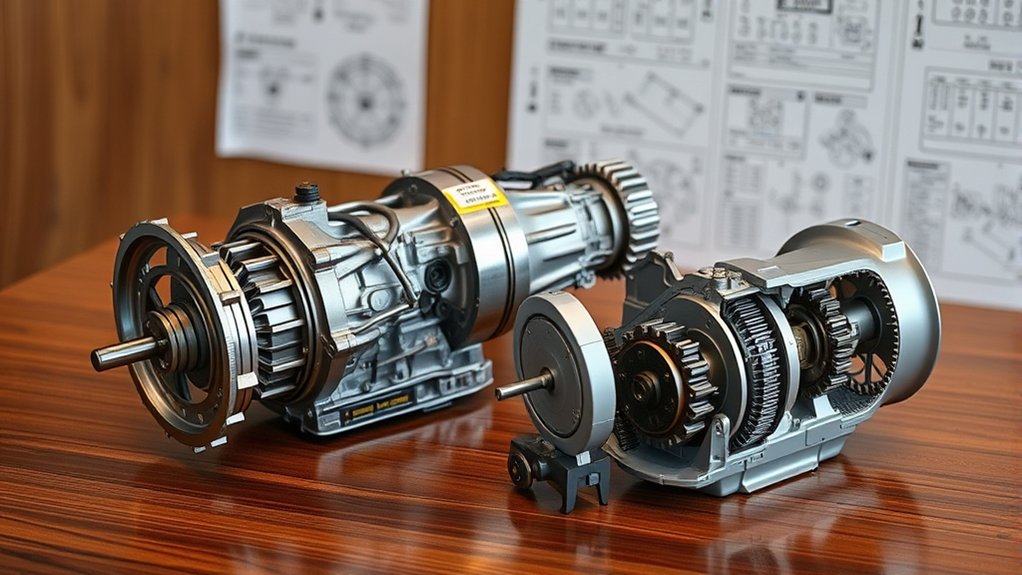
Myths about eCVT and automatic transmissions can make the choice harder than it needs to be. The eCVT is not automatically better for every driver, and the 8-speed automatic is not automatically outdated for used buyers.
| Myth | Reality |
|---|---|
| “eCVT is just a regular CVT.” | Toyota’s hybrid eCVT is a power-split hybrid transaxle, not a typical belt-and-pulley CVT. |
| “The 8-speed automatic is always sportier.” | It feels more traditional, but performance depends on engine, trim, weight, software, and condition. |
| “Hybrid eCVTs need no attention.” | They still need proper inspection, fluid guidance, cooling-system care, and recall checks. |
| “All Camrys now have the same transmission worldwide.” | Transmission availability can vary by market. Always check the specs for your country and model year. |
What’s Next for Toyota Camry Transmissions?
For the current U.S. Camry lineup, Toyota has already made the major change: the Camry is hybrid-only. That means the eCVT is now the main Camry transmission for new U.S. buyers.
The more useful question is whether a Camry Hybrid fits your driving. If you want a new Camry, evaluate the hybrid system, eCVT feel, fuel economy, AWD availability, and recall status. If you want an 8-speed automatic Camry, you will be shopping the used market.
Common User Questions About eCVT and Automatic Transmissions
Most confusion comes from the word “CVT.” Toyota’s hybrid eCVT does not behave like a normal stepped automatic, but it also does not use the same layout as many conventional CVTs.
Drivers who value smoothness and MPG usually prefer the eCVT. Drivers who want a more familiar gas-car response often prefer the 8-speed automatic in older Camry models. Neither choice is automatically wrong. The better option depends on the model year, condition, service history, and how you drive.
Frequently Asked Questions
Is an eCVT better than a CVT?
For a Toyota hybrid, the eCVT is usually the better fit because it is built into the hybrid system. It uses a power-split transaxle with electric motor-generators instead of a typical belt-and-pulley CVT layout. The trade-off is that acceleration can sound different from a normal automatic.
Is eCVT better than DCT?
For daily commuting and fuel economy, an eCVT fits the Camry Hybrid better than a dual-clutch transmission. A DCT can shift quickly in performance cars, but it can feel less smooth at low speeds. The Camry eCVT focuses on smoothness, efficiency, and hybrid power blending.
How reliable is Toyota’s eCVT transmission?
Toyota’s hybrid eCVT has fewer traditional shift events than a normal automatic, and it has a different design from a belt CVT. Still, reliability depends on maintenance, cooling-system condition, driving habits, service history, and whether any recalls or service campaigns apply to the vehicle.
Does Toyota use CVT or eCVT in the Camry?
In the current U.S. Camry lineup, Toyota uses an eCVT because the 2025 and 2026 Camry are hybrid-only. Older gas Camry models, including many 2018–2024 versions, used an 8-speed automatic instead.
Should I avoid a used Camry with the 8-speed automatic?
No. You do not need to avoid it automatically. Test-drive carefully, check service records, and ask whether any applicable Toyota software updates or service bulletins were completed. Pay attention to hesitation, harsh shifts, warning lights, or delayed engagement.
Conclusion
The Toyota Camry eCVT and 8-speed automatic serve different drivers. The eCVT is the clear choice for a new U.S. Camry because the current lineup is hybrid-only. It also makes sense if you want strong fuel economy, smooth city driving, and hybrid efficiency.
The 8-speed automatic still matters for used Camry shoppers. It gives a more traditional gas-car feel with real gear changes and familiar highway response. Before choosing either one, match the transmission to the model year, check the service history, and verify recall status with the VIN.
Sources
- Toyota USA Newsroom: 2026 Toyota Camry — supports 2026 hybrid-only status, eCVT information, horsepower, AWD, and fuel economy estimates.
- Toyota USA Newsroom: 2025 Toyota Camry — supports the 2025 Camry hybrid-only change and THS 5/eCVT tuning.
- Toyota USA Newsroom: 2024 Toyota Camry — supports Direct Shift 8-speed automatic use in 2024 gas Camry grades.
- Toyota Global: Toyota Hybrid System explanation — supports the power-split device, planetary gear, generator, motor, and eCVT operation.
- FuelEconomy.gov: 2024 Toyota Camry MPG — supports EPA fuel economy comparisons for gas and hybrid Camry models.
- Toyota: Transmission fluid guidance — supports owner-manual-based transmission fluid service advice.

