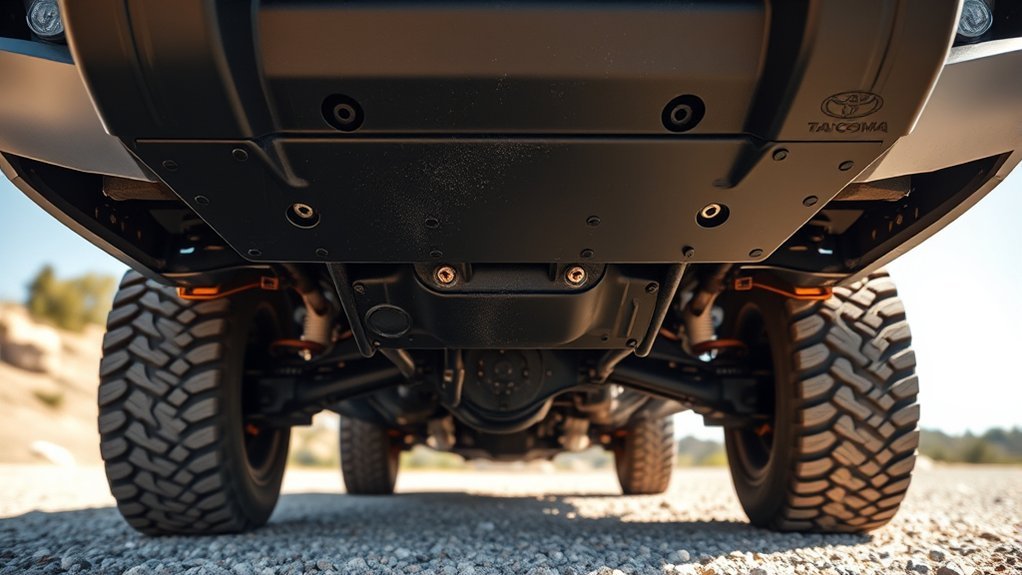
Rocks, ledges, deep ruts, and hidden stumps can strike parts that sit below your Toyota Tacoma’s frame. Skid plates add a replaceable barrier between those hazards and vulnerable components. However, protection varies by plate, material, mounting design, and truck configuration, so choosing an exact-fit system matters more than simply buying the thickest option.
Quick Answer
Toyota Tacoma skid plates protect exposed underbody components from direct impacts and scraping. Common coverage includes the engine and oil-pan area, front differential, transmission, transfer case, and fuel tank. Choose exact-fit plates, prioritize the lowest vulnerable parts, and balance steel’s impact resistance against aluminum’s lower weight and corrosion resistance.
Key Takeaways
- Skid plates reduce direct contact with rocks and trail obstacles, but they cannot prevent every type of underbody damage.
- Engine, transmission, transfer-case, differential, and fuel-tank coverage may require separate plates.
- Steel handles concentrated impacts well, while aluminum reduces added weight and resists corrosion.
- Fitment must match your Tacoma’s model year, drivetrain, powertrain, trim, factory armor, and modifications.
- Mounting design, service access, hardware, drainage, and maintenance matter as much as material thickness.
What Are Skid Plates and Why Do They Matter for Your Tacoma?
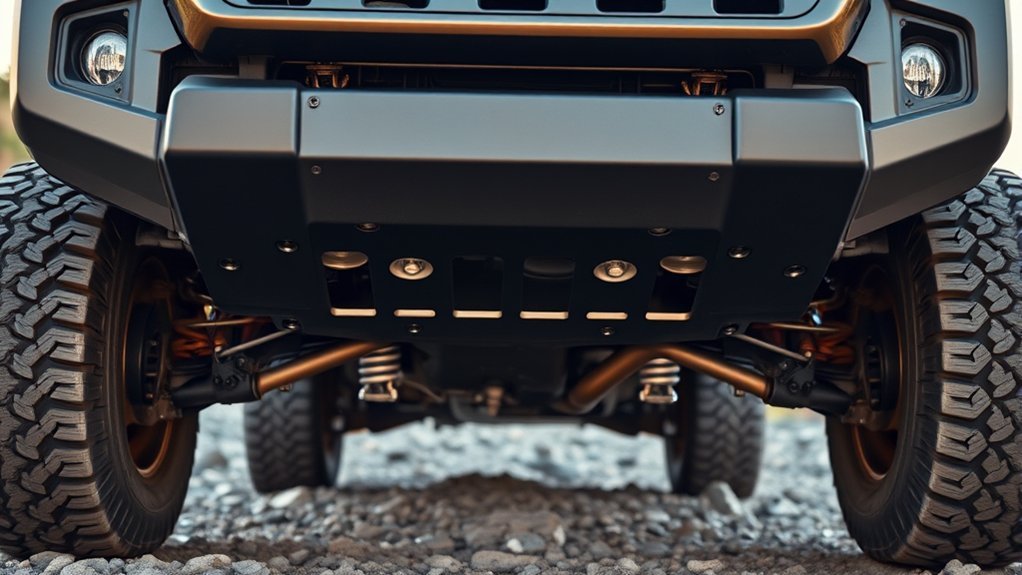
A skid plate is a structural panel mounted beneath part of your truck. It is designed to take scraping and impact before an obstacle reaches the component above it. Depending on the design, the plate may deflect the impact, slide over the obstacle, deform, or absorb some of the force.
A skid plate is not the same as a thin plastic splash shield. Splash shields mainly help control water, dirt, and airflow. They may offer limited protection from small debris, but you should not treat them as rock-crawling armor unless the manufacturer specifically rates them for that purpose.
Factory and aftermarket skid plates can both be useful. Quality depends on the material, bends or reinforcing ribs, mounting points, hardware, coverage, and fit. A poorly mounted thick plate can transfer force into weak brackets, while a well-designed lighter plate may spread the load across stronger frame or crossmember locations.
Note: A skid plate reduces exposure to direct impacts. It does not make the protected component indestructible, and a severe hit can bend the plate into the part above it or damage the mounting points.
What Do Toyota Tacoma Skid Plates Protect?
Tacoma skid plates are often sold by component rather than as one universal panel. Confirm the coverage diagram before buying because product names such as “front skid” or “full system” do not always describe the same protected areas.
| Protected Area | What the Plate Helps Deflect | What to Check |
|---|---|---|
| Engine and oil-pan area | Rocks, stumps, ledges, and debris near the front underside | Oil-filter and drain-plug access, ventilation, and clearance from the oil pan |
| Front differential | Direct impacts on applicable four-wheel-drive models | Drivetrain-specific fitment and clearance during suspension movement |
| Transmission | Central underbody impacts and scraping | Transmission type, exhaust clearance, cooling, and service access |
| Transfer case | Impacts farther behind the transmission on four-wheel-drive trucks | Four-wheel-drive fitment, drain access, and driveshaft clearance |
| Fuel tank | Scraping and concentrated impacts near the tank | Tank size, straps, exhaust routing, drainage, and retained factory protection |
| Rear differential or differential cover | Rear-axle contact with ledges and rocks | Axle-specific fitment, fill-plug access, and ground clearance |
Skid plates do not normally cover every line, bracket, driveshaft, exhaust part, suspension component, or mounting point. Even a multi-piece package should be evaluated by its actual coverage map rather than the words “complete” or “full coverage.”
Types of Skid Plates and Coverage Options
You can build Tacoma underbody protection in stages or install a matched multi-piece system. The right approach depends on your terrain, budget, existing factory armor, and tolerance for added weight.
[Amazon Products Picked for You]
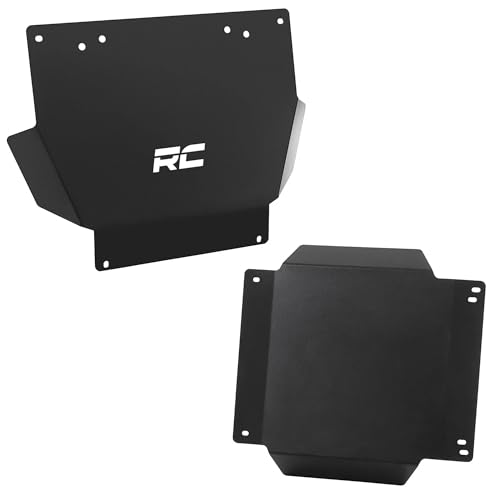
Off-Road Protection: Heavy-duty skid plate armor helps shield your Tacoma’s undercarriage from rocks, stumps, and trail debris—so you can drive with more confidence off-road.

Fitment: Skid plate compatible with 2024-2025 Toyota Tacoma 2WD & 4WD, Fits Gas Models Only (Does Not Fit Hybrid Models)

Compatible Models: Compatible with 2024-2026 Toyota Tacoma 2WD and 4WD models. Note: Some models may require modification
Individual Component Plates
An individual plate protects one main area, such as the engine, transmission, transfer case, or fuel tank. This option works well when your Tacoma already has useful factory protection or when one low component faces most of the risk on your usual trails.
Modular Systems
A modular system lets you add sections over time. Before buying the first panel, confirm that later sections will connect to it without requiring duplicate brackets or incompatible hardware. Using panels from one tested system may produce smoother transitions between plates and fewer edges that can catch on rocks.
Multi-Piece or Full Skid Plate Packages
A multi-piece package can protect several areas and create a smoother surface beneath the truck. However, the word “full” does not guarantee fuel-tank, differential, exhaust, or rear-underbody coverage. Review the component list and installation diagram before ordering.
Factory and Aftermarket Options
Factory plates may integrate cleanly with original mounting points and other equipment. Aftermarket systems may offer different materials, broader coverage, or modular expansion. Neither category is automatically stronger. Compare the exact plate’s construction, weight, mounting method, service access, and documented compatibility.
Which Skid Plates Should You Install First?
You may not need every available panel. Start with components that are low, exposed, expensive to disable, or likely to contact obstacles on your usual routes.
- Engine and front-underbody protection: This is often the first contact area when approaching rocks, ruts, or ledges.
- Transmission and transfer-case protection: Add central coverage when you cross uneven terrain or crest obstacles that can strike the middle of the truck.
- Fuel-tank protection: Consider it when the tank or factory shield remains exposed along your chosen line.
- Differential protection: Add it when rocky steps and deep ruts regularly place the axle housing or cover near obstacles.
For maintained dirt roads and mild trails, factory protection may be adequate if it is present, undamaged, and designed for your intended use. Repeated rock contact, deep ruts, and technical terrain justify broader structural coverage.
Pro Tip: Look beneath your Tacoma after a typical trail trip. Fresh scrapes on crossmembers, factory shields, or low brackets can show where additional protection would provide the most value.
[Amazon Products Picked for You]

RLB-HILON Skid Plate Splash Shield Cover Bolt is at Size M8 - 1.25 X 20mm as the photo showed

Skid plate splash shield cover bolt compatible with compatible with 1996-2021 4Runner, 2007-2014 FJ Cruiser, 1995-2021 Tacoma, compatible with 2000-2021 Tundra, 2001-2007 Sequoia, 2008-2021 Land Cruiser, compatible with 2004-2006 Scion XB

Vehicle Fitment: Compatible with Toyota 4Runner 1996-2021, for Toyota FJ Cruiser 2007-2014, for Toyota Tacoma 1995-2021, for Toyota Tundra 2000-2021, for Toyota Sequoia 2001-2007, for Toyota Land Cruiser 2008-2021, for Scion XB 2004 2005 2006
How to Choose Skid Plates for Your Tacoma
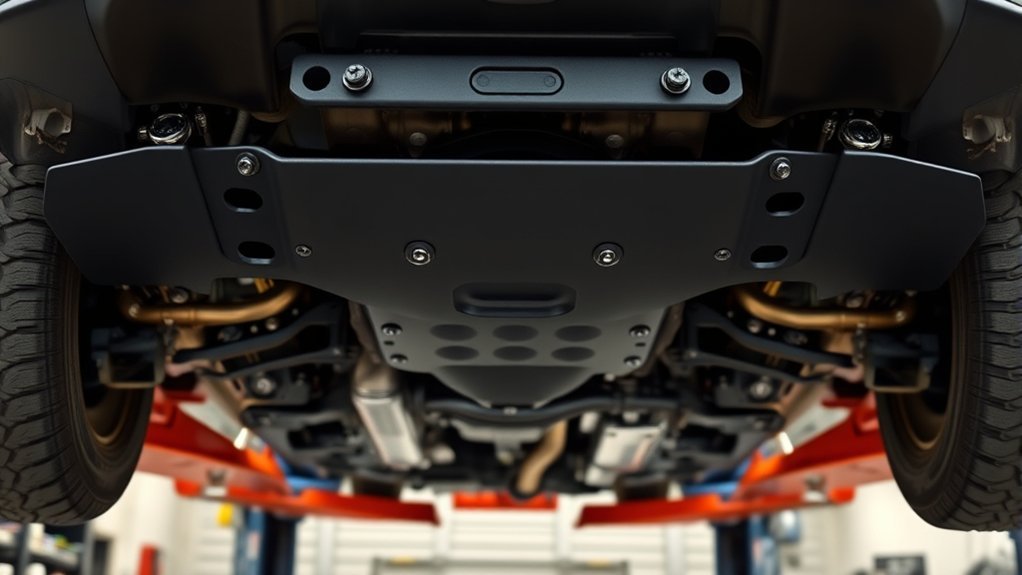
Start with exact fitment rather than material or appearance. Toyota provides manuals and warranty information by vehicle, so use your precise model year and configuration when checking service points and factory equipment. You can access Toyota’s vehicle-specific resources through the Toyota Manuals and Warranties portal.
Tacoma Skid Plate Fitment Checklist
- Model year and generation: A plate designed for one Tacoma generation may not match another generation’s frame, crossmembers, engine, or exhaust routing.
- Drivetrain: Confirm whether the plate is designed for two-wheel drive, four-wheel drive, or both.
- Powertrain and transmission: Check engine, hybrid or non-hybrid configuration, and transmission compatibility.
- Trim and factory equipment: TRD, Trailhunter, and other configurations may include factory protection or different mounting hardware.
- Existing accessories: Confirm compatibility with bumpers, recovery points, crossmembers, steps, exhaust changes, and other skid plates.
- Suspension modifications: Verify clearance at full steering lock and through the suspension’s range of movement.
- Service access: Check access to oil-drain plugs, filters, fluid plugs, grease points, and inspection areas.
- Hardware: Confirm that all brackets, spacers, bolts, washers, and installation instructions are included.
Do not rely only on a marketplace fitment banner. Compare the manufacturer’s fitment list, installation instructions, part number, and photographs of the mounting points.
Construction and Mounting Quality
Thickness is only one part of skid-plate strength. Bends, stamped ribs, welded reinforcements, material grade, unsupported span, and mounting-point placement all affect how the plate handles a hit.
Look for a design that spreads loads across suitable frame or crossmember locations. Avoid plates that appear likely to press directly against the oil pan, transmission case, fuel tank, exhaust, wiring, hoses, or moving drivetrain components after minor deformation.
Service Access, Drainage, and Cooling
Some plates include openings for oil changes and fluid service. Others must be partially or completely removed. Check whether an access opening truly aligns with your truck’s drain plug and whether draining oil could spread across the plate.
Drain holes should allow water and mud to escape. The plate should also maintain the airflow and clearances required by the vehicle and the plate manufacturer. Large amounts of packed mud can trap moisture, add weight, and hide loose hardware.
Steel vs. Aluminum Skid Plates
Steel and aluminum can both protect a Tacoma effectively when the plate is properly engineered. Your driving conditions and acceptable weight usually matter more than choosing one material for every position.
| Material | Advantages | Tradeoffs | Common Use |
|---|---|---|---|
| Steel | Strong resistance to concentrated impacts; can often be straightened after moderate deformation | Heavier; damaged coatings can expose the surface to corrosion | Frequent rock contact and difficult trails |
| Aluminum | Lower weight and strong corrosion resistance | May gouge or deform differently under concentrated impacts; usually costs more than basic steel | Daily driving, overlanding, and moderate trails where weight matters |
| Composite or UHMW-style material | Lightweight, corrosion-resistant, and able to slide across some surfaces | Less common for Tacoma systems; heat limits, mounting, and impact behavior vary by product | Specialized builds and locations supported by the manufacturer |
Do not compare thickness across different materials as though the numbers are equal. Material grade, temper, shape, span, and reinforcement affect performance. A thicker flat panel is not automatically stronger than a thinner formed panel with better support.
[Amazon Products Picked for You]

Fitment: Compatible with Toyota Tacoma 2016-2023 Off-Road/TRD PRO/Sport and SR5 models. (Also fit sport and SR5 models, if air dam/deflector to fit plate is removed). Replacement for PTR60-35190、PTR60-35160.

FITMENT: Compatible with 2024+ Toyota Tacoma, 2025 Toyota 4Runner Limited, Platinum, SR5, TRD Off-Road, TRD Off-Road Premium, TRD Pro, TRD Sport, TRD Sport Premium, Trailhunter 2.4L L4 - Electric/Gas, 2.4L L4-Gas. Please confirm your vehicle before purchasing.

Compatible With Toyota Tacoma 2.7L 4.0L 2005-2015. Replacement OE Number: PT21235075, PT212-35075.
Weight, Ground Clearance, and Driving Tradeoffs
A full set of armor adds weight to the truck. That weight reduces the remaining payload available for passengers, cargo, recovery equipment, camping gear, and trailer tongue weight. Review each plate’s listed weight and calculate the total before building a complete system.
Added weight can also affect fuel economy, although the real change depends on the truck and driving conditions. The U.S. Department of Energy states that an extra 100 pounds may reduce MPG by about 1%, with a greater effect on smaller vehicles. This is general guidance, not a Tacoma-specific prediction.
Lower weight is a real advantage, but plate design and mounting quality matter more than choosing aluminum solely for a possible fuel-economy difference.
A skid plate may also reduce clearance if it hangs below the original mounting points. A smooth plate can still improve breakover behavior by helping the truck slide over an obstacle, but a low bolt head, bracket, or exposed leading edge can become a catch point.
After installation, listen for rattles and vibration. Inspect for contact with the exhaust, drivetrain, steering, or suspension. A bent plate touching another component should be repaired or replaced before the truck returns to the trail.
Installation and Safety Checks
Many Tacoma skid plates use existing holes and bolt-on hardware, but installation difficulty varies. Heavy steel sections may require a second person or a transmission jack to hold the plate safely while the bolts are started.
Warning: Never work under a truck supported only by a hydraulic jack. Park on a solid, level surface, use correctly rated jack stands at approved lifting points, chock the wheels, and follow the vehicle and skid-plate manufacturers’ instructions.
During installation:
- Confirm the part numbers and hardware before lifting the plate.
- Inspect factory mounting points for rust, damaged threads, or previous impact damage.
- Start all bolts by hand before tightening the assembly.
- Use the skid-plate manufacturer’s tightening sequence and torque specifications.
- Check clearance from the oil pan, transmission, transfer case, exhaust, driveshafts, steering, hoses, wiring, and suspension.
- Verify that drain holes and service openings align as intended.
- Recheck the hardware after the first drive and again after the first trail trip, following the manufacturer’s instructions.
Professional installation is sensible when the system is heavy, mounting points require repair, instructions are unclear, or the plate must integrate with a bumper, crossmember, or recovery system.
How to Maintain Tacoma Skid Plates
Skid plates need inspection because they are designed to contact obstacles. Check them after a hard strike and during routine maintenance.
- Look for bent sections that now touch the component above the plate.
- Check bolts, brackets, spacers, and welded areas for movement or cracking.
- Remove packed mud, gravel, road salt, and vegetation.
- Keep drain and ventilation openings clear.
- Repair chipped coatings on steel plates according to the manufacturer’s instructions.
- Inspect aluminum plates for deep gouges, stretched mounting holes, and cracks near bends or fasteners.
- Confirm that service technicians reinstall every plate, spacer, and fastener correctly after maintenance.
A loose plate can rattle, damage threads, enlarge mounting holes, or contact nearby parts. Do not ignore a new vibration or metallic noise after an impact.
Warranty, Insurance, and Vehicle-History Considerations
An aftermarket skid plate does not automatically cancel your entire vehicle warranty. The Federal Trade Commission’s Magnuson-Moss guidance explains that a company generally cannot deny warranty coverage solely because you used a third-party part or repair service. However, coverage may be denied for damage caused by that part, improper installation, or related modification.
The skid plate itself may have a separate manufacturer warranty. Toyota Genuine Accessories may also have coverage based on when and how they were purchased or installed. Review the written terms through the Toyota warranty portal and keep your purchase receipt, installation instructions, torque records, and photographs.
Insurance treatment of aftermarket equipment varies by policy. Ask your insurer whether underbody armor is covered as permanently installed equipment and whether your policy limits reimbursement for accessories or modifications.
Skid plates do not resolve unrelated reliability or recall issues. Use the NHTSA recall lookup to check your Tacoma by VIN and review current recalls, investigations, complaints, and manufacturer communications.
Skid Plates Do Not Replace Responsible Trail Use
Underbody armor provides a margin of protection, but line choice and speed still matter. Slow down before blind ledges, avoid dropping the truck onto obstacles, and use a spotter when you cannot see the terrain beneath the vehicle.
Follow posted route restrictions and local off-highway vehicle rules. The Bureau of Land Management’s off-highway vehicle resources provide regional information and responsible-use guidance for public land.
Frequently Asked Questions
What does a skid plate protect?
A skid plate protects the specific underbody area above it from scraping and direct impacts. Depending on the plate, that may include the engine and oil-pan area, front differential, transmission, transfer case, fuel tank, or rear differential. Check the product’s coverage diagram because one plate rarely protects all of these areas.
Do I need a skid plate on my Tacoma?
You may not need additional armor for normal paved driving. Skid plates become more valuable when you travel on rocky trails, deep ruts, construction roads, or routes with stumps and ledges. Inspect your existing factory protection before buying because some Tacoma trims already include underbody panels.
Are skid plates covered under warranty?
Coverage depends on which warranty you mean. The skid plate may have its own accessory or manufacturer warranty. Installing an aftermarket plate does not automatically void the entire Tacoma warranty, but damage caused by the plate, its hardware, or improper installation may be excluded. Read the applicable written warranty for your vehicle and accessory.
What year was the worst year for Toyota Tacoma?
No single Tacoma model year can be called the worst for every owner. Complaint totals, recalls, sales volume, drivetrain, maintenance history, and vehicle condition all affect reliability. Check the specific truck’s VIN through NHTSA, review its service records, and arrange a pre-purchase inspection instead of relying on a broad year ranking.
Is steel or aluminum better for Tacoma skid plates?
Steel is often preferred for repeated, concentrated rock impacts, while aluminum is useful when lower weight and corrosion resistance are priorities. Neither material is automatically better. Compare material grade, formed structure, mounting design, weight, service access, and intended terrain.
Can I change the oil without removing a Tacoma skid plate?
Some plates provide access openings for the drain plug and oil filter, while others require partial or complete removal. Confirm that the openings match your exact engine and model year. Also check whether draining oil through the opening could spread oil across the plate.
Do skid plates reduce ground clearance?
They can reduce clearance if the panel, bracket, or bolt head hangs below the original underbody. A well-shaped plate may still help the truck slide across an obstacle. Review side-profile measurements and mounting photographs rather than judging clearance from the material alone.
Do I need a full skid plate package?
Not always. Mild-trail drivers may need only front engine protection, especially when useful factory plates are already installed. A multi-piece system makes more sense when the transmission, transfer case, fuel tank, or differential regularly passes close to rocks and ledges.
Conclusion
Toyota Tacoma skid plates can reduce direct impact and scraping damage to vulnerable underbody components, but effective protection depends on coverage, fit, construction, and installation. Start with the lowest exposed area on your truck, confirm exact compatibility, and compare the complete system weight before adding every available panel.
Steel suits frequent hard contact, while aluminum offers useful protection with less added weight. Whichever material you choose, inspect the plates after impacts, keep the mounting hardware secure, and repair any panel that bends into the component it is meant to protect.
Sources
- Toyota Manuals and Warranties — vehicle-specific manuals, warranty terms, accessory coverage, and maintenance information.
- Federal Trade Commission: Nixing the Fix — consumer warranty rights involving third-party parts and repair services.
- National Highway Traffic Safety Administration Recall Lookup — VIN-specific recalls, investigations, complaints, and manufacturer communications.
- U.S. Department of Energy: Driving More Efficiently — general guidance on vehicle weight and fuel economy.
- Bureau of Land Management: Off-Highway Vehicles — public-land information and responsible off-highway vehicle resources.
