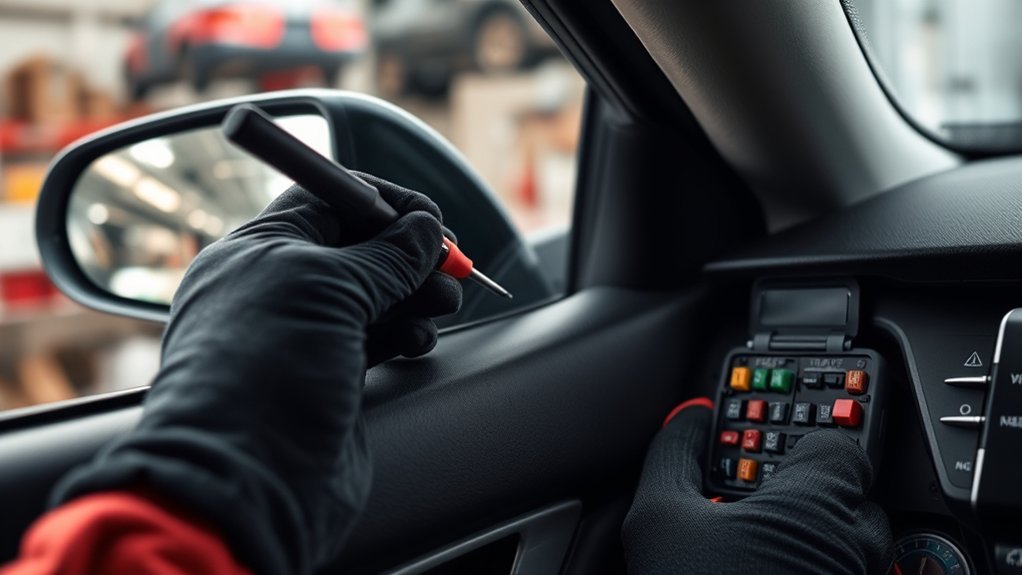
If your Toyota Camry’s power windows are not working, start with the symptom pattern rather than replacing parts. A passenger-window lockout, the ignition mode, a blown fuse, a lost one-touch initialization, a failed switch, damaged door-jamb wiring, a worn regulator, or a weak motor can produce similar symptoms. Because fuse locations, circuit designs, and reset procedures vary by model year, confirm your Camry’s year and use the correct Toyota owner’s manual before opening a fuse box or door panel.
Quick Answer
If only the passenger windows fail, release the window-lock button first. If every window fails, verify the ignition mode and test the model-specific power-window fuse with the same amperage rating. If one window fails from both switches, suspect its wiring, motor, regulator, or lost initialization—not automatically the master switch.
Key Takeaways
- Camry power-window circuits differ by model year, so do not assume every car uses a 30-amp fuse or the same reset procedure.
- The quickest clue is whether the problem affects one window, passenger switches only, or all windows.
- Never install a higher-rated fuse, jump unidentified harness wires, or apply battery power without the correct wiring diagram.
- Motor noise with little or no glass movement usually points toward a regulator, cable, track, or binding-glass problem.
- Use a professional diagnosis when a replacement fuse blows again, wiring is damaged, the glass is loose, or door-panel removal is required.
At a Glance
| Time Required | 5–15 minutes for basic checks; 30–90 minutes for electrical diagnosis; longer if the door must be opened |
| Difficulty | Easy for lockout and fuse checks; intermediate to advanced for wiring, switch, motor, or regulator testing |
| Tools Needed | Owner’s manual, flashlight, fuse puller, matching replacement fuse if needed, digital multimeter, and trim tools for advanced work |
| Cost | $0 for basic checks; usually under $20 for a fuse and basic supplies; switch, motor, regulator, wiring, and labor costs vary by model year and door |
Immediate Causes of Toyota Camry Power Window Failures
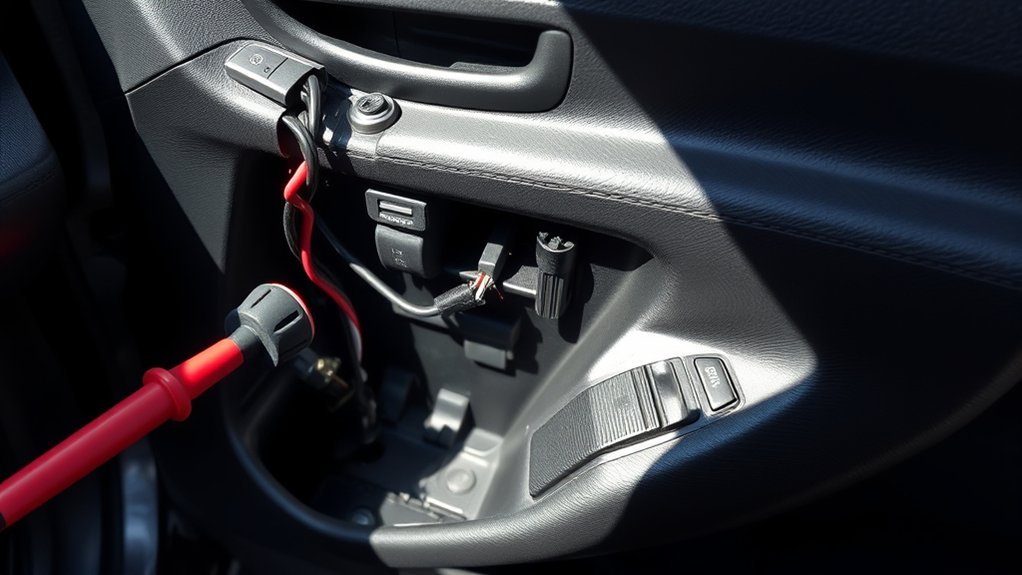
Power windows fail for both simple and mechanical reasons. Begin with the easiest checks, then move toward testing that requires a meter or door-panel removal.
| Symptom | Most Useful First Checks |
|---|---|
| Passenger windows do not work from their own switches | Window-lock button, then test each window from the driver’s master switch |
| One window does not work from either switch | Initialization, door-jamb wiring, motor connector, regulator, glass binding, and the master-switch channel |
| Every window is dead | Ignition mode, 12-volt battery condition, model-specific fuse or circuit protection, shared power/ground, and master control |
| Motor can be heard but the glass barely moves | Regulator cable or gear, loose glass attachment, damaged run channel, or binding tracks |
| Window works intermittently when the door moves | Broken or fatigued wiring inside the rubber door-jamb boot |
| Manual operation works but one-touch does not | Model-specific power-window initialization procedure |
The symptom pattern—one window, passenger controls, or every window—is usually more useful than guessing which part has failed.
Common causes include a locked passenger-control function, a blown or poorly seated fuse, a faulty switch, damaged wiring, low system voltage, a worn motor, a broken regulator, a loose glass attachment, or a window that has lost its one-touch initialization. A moonroof or door-lock problem may or may not share part of the same power supply; circuit grouping depends on the Camry generation and trim.
Identifying the Window-Lock Button Issue
The window-lock button is on the driver’s switch panel. Its purpose is to prevent passengers from operating some or all passenger windows from their own door switches. It is easy to press accidentally while cleaning the panel or adjusting another control.
What the Lockout Button Does
When the lockout is active, passenger switches may appear completely dead while the driver’s master controls still operate the windows. The exact behavior can differ by model year, so test both the local passenger switch and the corresponding driver’s switch.
| Test Result | Likely Meaning |
|---|---|
| Driver’s switch works; passenger switch does not | Lockout is engaged or the local passenger switch/circuit has a fault |
| Neither switch operates one window | Look beyond the lockout at initialization, wiring, motor, regulator, glass binding, or the master-switch output |
| All passenger switches begin working after one button press | The system was operating normally; the lockout had been activated |
Common Lockout Button Triggers
Accidental activation often happens when the driver rests a hand on the switch panel, wipes the door trim, or presses nearby controls. The lockout is also useful when children or pets are in the vehicle, but it should not be treated as a repair when a window still fails from the driver’s master switch.
How to Test the Lockout Correctly
- Place the vehicle in the ignition mode specified by the owner’s manual for power-window operation.
- Press the window-lock button once.
- Test each passenger window from its own switch.
- Test the same windows from the driver’s master switch.
- If only a local passenger switch remains inoperative, inspect or test that switch and its wiring rather than assuming the motor has failed.
Note: A working driver’s control does not prove the passenger switch is good, and a dead passenger switch does not prove the regulator or motor is bad.
Checking Fuses and Electrical Connections
If all windows fail, or a window has no sound or movement, check circuit protection and electrical supply before replacing a motor or regulator. Do not assume the correct fuse is 30 amps. Toyota has used different fuse names, locations, ratings, relays, circuit breakers, and body-control arrangements across Camry generations.
Warning: Replace a fuse only with the exact rating listed for your model year. A higher-rated fuse can allow wiring to overheat. If the new fuse blows again, stop replacing it and have the short circuit or overloaded component diagnosed.
Safe Fuse-Checking Steps
- Identify the vehicle’s model year and locate the fuse-box diagrams in the owner’s manual or on the fuse-box covers.
- Turn the vehicle off before removing a fuse unless the manual or test procedure says otherwise.
- Remove the identified power-window fuse with a fuse puller.
- Inspect it, then confirm continuity with a multimeter when possible; a visual check can miss a hairline break.
- Install only a fuse with the same amperage rating.
- Operate the windows briefly. If the fuse opens again, do not bypass it.
Check the Ignition Mode and Battery Condition
Some Camrys allow window operation only in specific ignition modes or for a limited retained-power period. A weak 12-volt battery, recently disconnected battery, or low-voltage event can also affect body electronics or one-touch settings. Confirm that other accessories operate normally and that the vehicle is in the correct mode before diagnosing a dead circuit.
Compare the Master and Individual Switches
For one failed passenger window, test it from both locations. If the driver’s master switch works but the passenger switch does not, the local switch, lockout circuit, connector, or local wiring is more likely. If neither switch works, testing must continue toward the master-switch output, door harness, motor connector, and regulator.
Inspect the Door-Jamb Harness
Wires flex every time the door opens. A broken conductor inside the rubber boot can cause intermittent operation, especially when moving the door changes the symptom. Look for cracked insulation, stretched wires, corrosion, or previous repairs. Do not seal an unknown electrical fault with tape alone; damaged conductors need a proper automotive wiring repair.
Use a Wiring Diagram Before Voltage Tests
Modern switch assemblies may communicate with body electronics rather than acting as simple direct motor switches. Use the correct factory wiring diagram and connector view from Toyota’s Technical Information System before back-probing a connector. Verify power, ground, and commanded polarity at the correct terminals.
Pro Tip: Record which switch was used, whether you heard a click or motor sound, and whether moving the door changed the result. Those observations often shorten professional diagnostic time.
What You Need to Know About Window Regulator Issues
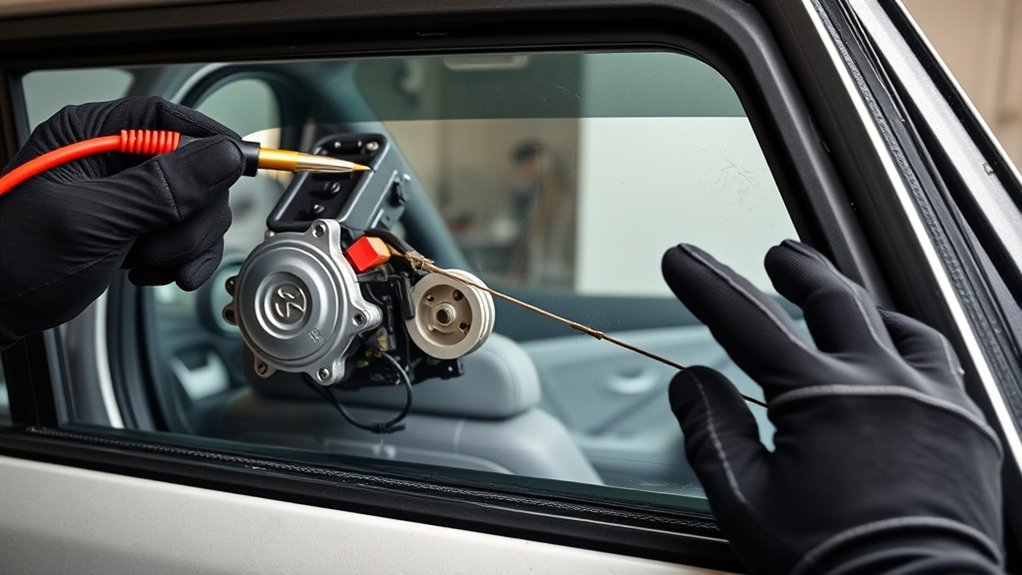
The window regulator supports and moves the glass through a cable, gear, arm, or rail mechanism, depending on the generation and door. The electric motor drives that mechanism. A regulator can fail even when the motor still runs.
[Amazon Products Picked for You]

Fitment: Front left power window regulator assembly with motor fit for 2004 2005 2006 2007 2008 2009 2010 2011 2012 2013 2014 2015 Nissan Titan Pickup | 2004-2010 Infiniti QX56 | 2005-2015 Nissan Armada | 2004 Nissan Pathfinder Armada LE | SE Submodel

Fitments - Replacement for Elan-tra 2011 2012 2013 2014 2015 2016

Direct replacement - this power window regulator and motor assembly is designed to match the performance of the original equipment assembly on specified vehicle makes, models and years
Signs of a Bad Regulator or Glass-Track Problem
- Grinding, crunching, clicking, or cable noises inside the door
- Glass that tilts, drops, rattles, or rises unevenly
- A motor sound without normal glass movement
- A window that moves partway and then binds
- Glass that can be moved excessively by hand
A slow window does not prove the regulator is bad. Dirt in the run channels, hardened seals, low voltage, misaligned glass, excessive friction, or a weak motor can create the same symptom. The door trim and moisture barrier may need to be removed for a reliable inspection.
Warning: Window glass is heavy and can drop without warning when a regulator cable or attachment fails. Support the glass and keep hands clear before loosening motor, regulator, or glass fasteners.
Replacement time is not universal. Access, fastener location, glass alignment, rivets or bolts, trim design, and technician experience all affect the job. Use the model-specific repair manual for removal, torque, and initialization steps.
Troubleshooting Window Motor Malfunctions
A failed or weak motor may be silent, work only when cold, stop under load, or move the glass in one direction but not the other. However, a one-direction symptom can also come from a switch contact, wiring fault, binding regulator, or control-module issue.
[Amazon Products Picked for You]

[Vehicle Fits] - Front Driver Left Side Power Window Lift Motor compatible with 1984-1998 4Runner, 1983-2001 Camry, 1985-1989 MR21, 996-1999 Paseo, 1984-1995 Pickup, 1991-1997 Previa, 1998-2000 Sienna, 1986-1993 Supra, 1995-2004 Tacoma, 2000-2004 Tundra, 1988-1989 Van, 1988 Van Wagon, 1982-1993 Celica, 1998-2002 Corolla,1992-1996 Diamante ,1998-2002 Chevrolet Prizm

[Compatible Models-1]:"Front Driver Side"Compatible with Suzuki Esteem 1995-2002

FITS THESE VEHICLES: 𝗣𝗼𝘀𝘁𝗶𝗼𝗻: 𝗙𝗿𝗼𝗻𝘁 𝗟𝗲𝗳𝘁 1997-2003 Ford F-150; 2004 Ford F-150 Heritage; 1998-1999 Ford F-250; 1998 Ford F-350 (Mexico); 2001-2003 Ford Lobo. 𝗣𝗼𝘀𝘁𝗶𝗼𝗻: 𝗥𝗲𝗮𝗿 𝗟𝗲𝗳𝘁 & 𝗙𝗿𝗼𝗻𝘁 𝗟𝗲𝗳𝘁 1997-2002 Ford Expedition; 1998-2002 Lincoln Navigator.
How to Separate a Motor Fault From a Regulator Fault
- Correct voltage and ground at the motor, no motor action: the motor or its internal connection is suspect.
- Motor runs, glass does not move normally: inspect the regulator, gear, cable, glass clamps, and tracks.
- No command voltage at the motor: continue upstream to the switch, master control, wiring, connector, fuse, relay, or body ECU.
- Window works after cooling: excessive friction, an overloaded motor, or internal thermal protection may be involved; find the cause of the load before replacing parts.
Do not apply direct battery power to an unidentified motor or harness. Reversing polarity may be part of normal motor control on some systems, but applying power at the wrong terminals can short wiring or damage electronic controls. A technician with the correct diagram can isolate the motor safely.
Quick Checks and Safe Temporary Measures
These checks can restore operation when the problem is a setting, loose fuse, or lost initialization. They cannot repair a broken regulator, failed motor, or damaged harness.
- Release the driver’s window-lock button and retest every switch.
- Verify the ignition mode required by the owner’s manual.
- Check the correct model-year fuse and replace it only with the same rating if blown.
- Test one failed passenger window from both the local switch and driver’s master switch.
- Listen for a click, hum, grinding noise, or motor sound while the switch is pressed briefly.
- Check whether opening or closing the door changes the symptom, which can indicate a door-jamb wiring fault.
- If manual movement works but one-touch does not, follow the model-specific initialization procedure.
- Check the VIN for open recalls or manufacturer communications through NHTSA’s recall lookup.
How to Reinitialize a Toyota Camry Power Window
There is no single reset sequence for every Camry year. Many Toyota systems use a full-open and full-close cycle with a brief switch hold, while others require a longer sequence or initialization from the affected door’s switch. Follow the procedure in the owner’s manual for your exact model year. Do not disconnect the battery merely to “reset” the window; that can erase settings and may create additional initialization work.
If the Window Is Stuck Open
Park the vehicle in a secure, dry area. Do not force crooked or loose glass because it may shatter or fall into the door. A temporary exterior weather barrier can help keep rain out until repair, but keep tape off painted surfaces when possible and do not drive if the covering blocks visibility or could detach.
Note: Jumping power between harness wires is not a safe quick fix. Without the exact connector pinout, it can damage a switch, body ECU, or wiring.
Signs It May Be Time to Replace the Window Switch
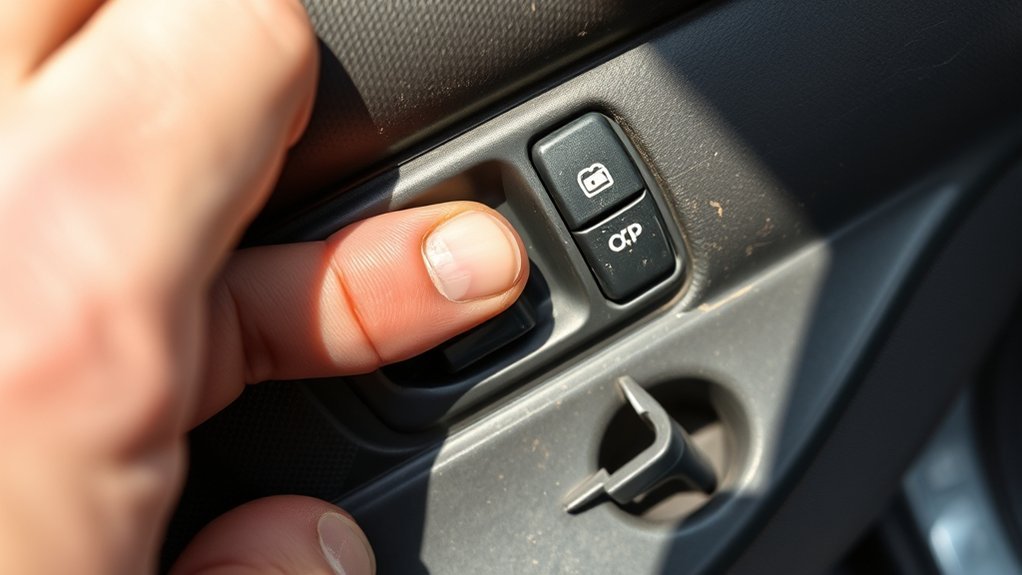
A switch should be tested before replacement because the same symptom can come from the lockout function, wiring, connector corrosion, lost initialization, motor, regulator, or master control.
[Amazon Products Picked for You]

🚗【Compatibility】This automotive power window control button compatible with 2002-2006 Toyota Camry (not the XLE), 2003-2008 Toyota Corolla/Matrix, 2004-2009 Toyota Sienna (14 Pins), 2005-2007 Toyota Tacoma, 2004-2006 Scion xA xB.

Precise fit: Compatible With Toyota Camry 2002-2006, 2003-2008 Corolla, 2003-2008 Matrix; 2003-2008 Pontiac Vibe; 2004-2007 Scion xA, 2004-2007 Scion xB. Replace OE Part Number: 8482033170, 84820-33170, 84820-33170-N, 84820AA070, 8482001021, 8482012490, 8482012491, 84820AA050. Before purchasing, please confirm that the selected model and part number are what you need

【Compatibility】 This master power window switch compatible with 2010-2015 Toyota Prius, 2009-2011 Toyota Camry, 2008-2013 Toyota Land Cruiser, 2012-2015 Toyota Prius Plug-In, 2012-2014 Toyota Prius V, 2009-2015 Toyota Venza, 2011-2014 Lexus CT200h
Switch-Fault Clues
- The window works from one switch location but not the other.
- The switch feels loose, sticks, has visible liquid damage, or works only when pressed at an angle.
- The correct power and ground reach the switch, but the expected output or communication command is absent.
- A known-good, correctly matched switch restores operation after proper testing.
Intermittent movement or operation in only one direction is not enough by itself to condemn the switch. Test the circuit with the proper wiring diagram. On some Camrys, replacing a master switch may also require initialization of one-touch and jam-protection functions.
Professional Repair Costs for Toyota Camry Power Windows
A reliable price cannot be quoted without the Camry’s model year, affected door, diagnosis, part choice, and local labor rate. A fuse or initialization may cost little or nothing, while a switch, harness repair, motor, regulator, or combined motor-regulator assembly can require more parts and labor.
What Changes the Final Price
- Whether the fault is electrical, mechanical, or both
- Front versus rear door and driver versus passenger side
- Separate motor and regulator parts versus a combined assembly
- New genuine, new aftermarket, remanufactured, or used parts
- Diagnostic time, door-trim removal, glass alignment, and initialization
- Broken connectors, damaged wiring, corrosion, or prior repairs
Ask for an itemized estimate that separates diagnosis, parts, labor, shop supplies, and taxes. Confirm the parts and labor warranty. Toyota’s official parts catalog can help identify genuine parts by VIN, but dealer pricing and availability vary.
Dealer Versus Independent Shops
A Toyota dealer has direct access to factory service information, current parts data, and Toyota-specific diagnostic tools. A qualified independent shop may offer a lower labor rate and can still diagnose most window faults when it has accurate wiring information and suitable scan tools. Compare written estimates rather than assuming either option is always cheaper.
Used motors or regulators can reduce the purchase price, but remaining service life and warranty coverage may be limited. A new or remanufactured part with a clear warranty may provide better value when door disassembly is labor-intensive.
How to Maintain Your Power Windows
Power-window systems do not need frequent part replacement, but basic care can reduce drag and catch problems early.
- Keep the glass run channels and weatherstrips clean with products that are safe for automotive rubber.
- Remove ice from the glass and seals before operating the window; do not use the motor to break the window free.
- Stop using a window that tilts, grinds, or drops until the regulator and glass attachments are inspected.
- Keep drinks and cleaning liquid away from the switch panel.
- Test windows occasionally from both the driver’s master control and the individual door switches.
- Use only the lubricant and application points specified by Toyota; spraying grease into the door at random can contaminate glass, seals, and electrical parts.
- Inspect fuses when diagnosing a fault, but do not replace good fuses as routine maintenance.
If a replacement fuse blows, the glass becomes loose, smoke or a burning smell appears, or wiring insulation is damaged, stop operating the window and arrange a professional inspection.
Frequently Asked Questions
What causes all Toyota Camry power windows to stop working?
Check the ignition mode, 12-volt battery condition, model-specific fuse or circuit protection, shared power and ground, and the driver’s master control. Do not assume every Camry uses the same fuse rating or that the door locks and moonroof share the exact window circuit.
Why is only one Toyota Camry window not working?
Test the window from both the local door switch and the driver’s master switch. If neither works, possible causes include lost initialization, damaged door-jamb wiring, a bad motor, a broken regulator, glass binding, or a failed channel in the master switch.
How do I reset a Toyota Camry power window?
Use the initialization procedure in the owner’s manual for the exact model year. Procedures often involve fully opening and closing the affected window and holding the switch briefly, but the sequence and hold time vary. Disconnecting the battery is not a recommended universal reset.
How can I tell whether the window motor or regulator is bad?
A running motor with grinding, tilted glass, or little movement often points to the regulator or glass attachment. Correct power and ground at a silent motor make the motor suspect. No command voltage means the fault is likely upstream in the switch, wiring, connector, fuse, relay, or control system.
Can I replace a blown window fuse with a higher-amp fuse?
No. Use only the exact amperage specified for the vehicle. A higher-rated fuse can allow wiring to overheat. If a correct replacement fuse blows again, the circuit needs diagnosis for a short, binding mechanism, or overloaded motor.
How much does a Toyota Camry power-window repair cost?
Basic checks may cost nothing, and a same-rated fuse is inexpensive. Switch, wiring, motor, regulator, glass-alignment, and labor costs vary by model year, door, part source, and local rates. Get an itemized diagnosis and estimate before authorizing parts.
Conclusion
When a Toyota Camry power window stops working, diagnose the pattern before buying parts. Check the lockout and ignition mode, compare the master and local switches, verify the correct fuse, and consider initialization. Noise, crooked glass, or motor operation without movement points toward a mechanical problem. Repeated fuse failure, damaged wiring, or door-panel work calls for model-specific service information or a qualified technician.
Sources
- Toyota Manuals and Warranties — model-year owner’s manuals, operating instructions, and warranty information
- Toyota Technical Information System — factory repair manuals, wiring diagrams, service bulletins, and diagnostic information
- National Highway Traffic Safety Administration Recall Lookup — VIN-based recall checks and manufacturer communications
- 49 CFR § 571.118 — federal requirements for power-operated window, partition, and roof-panel systems
- Toyota Genuine Parts Catalog — VIN-based identification of Toyota replacement parts
