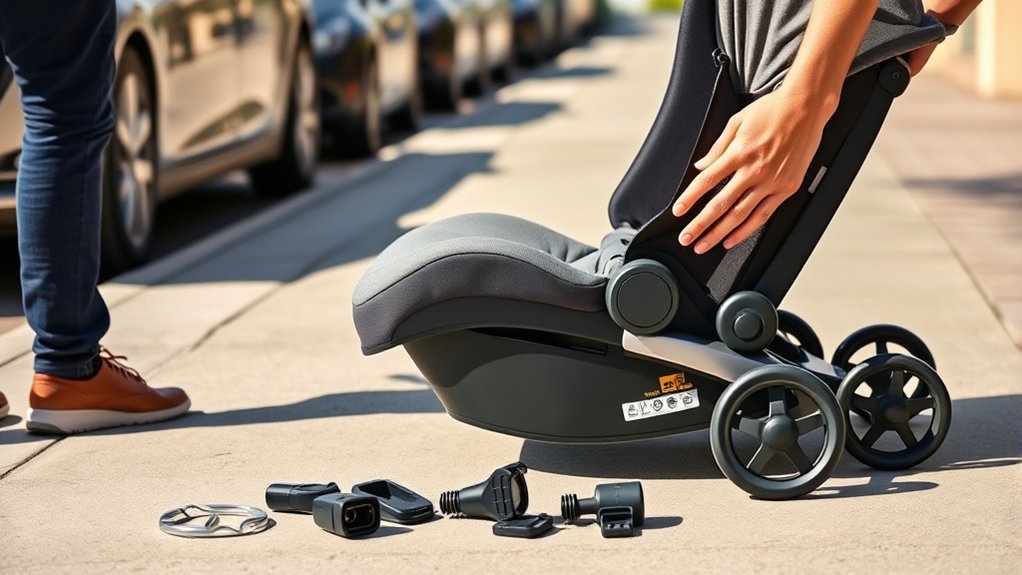
Attaching a Nuna car seat to a stroller should be simple, but a loose connection or missing adapter can make the process confusing. The correct setup depends on your specific PIPA infant car seat and stroller model. This guide explains Nuna car seat stroller compatibility, how to secure the carrier, and what to do when it will not lock into place.
Quick Answer
Nuna PIPA infant car seats work with compatible Nuna strollers, but attachment methods differ. TAVO and TRVL models offer direct connections, while MIXX and TRIV next use approved adapters. Secure the correct attachment, engage the carrier lock, and gently pull upward to confirm it is latched. Never use the stroller if the connection remains loose.
Understanding Nuna Car Seat and Stroller Compatibility
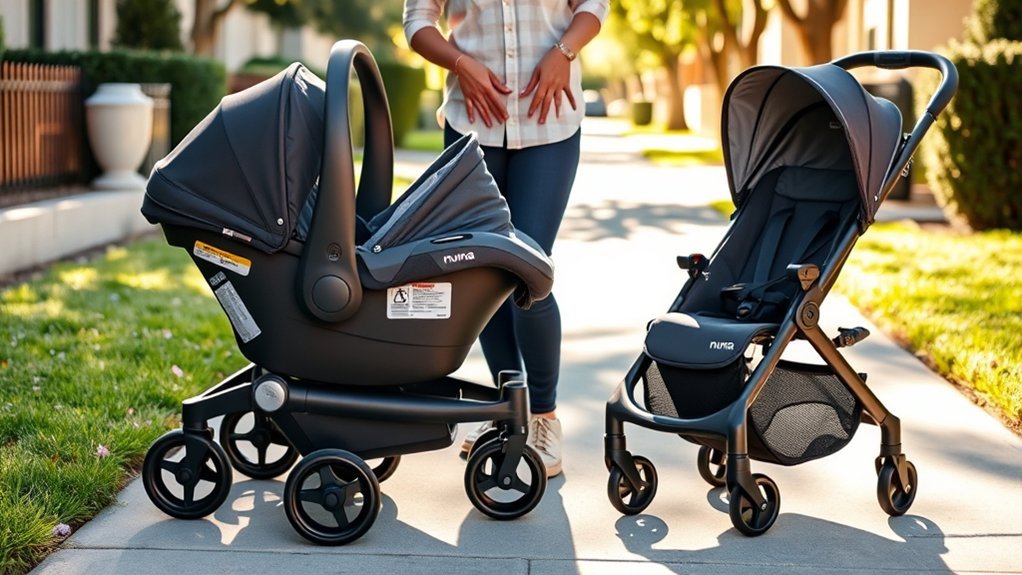
Nuna PIPA infant car seats can connect to a range of Nuna stroller models to form a travel system. However, compatibility does not mean every stroller uses the same attachment method.
The car seat connects to the stroller’s approved mounting points, arm bar, or adapter. It does not attach directly to the pram wheels.
For example, the Nuna TAVO uses a direct connection over its arm bar, while the MIXX requires a ring adapter. Using the wrong attachment method can prevent the carrier from locking correctly.
Which Nuna Strollers Need a Car Seat Adapter?
The following examples show why identifying the stroller model matters before installation:
- TAVO: PIPA infant car seats connect directly to the arm bar without a separate adapter.
- TRVL: PIPA series infant carriers connect directly using the stroller’s carrier-lock system.
- MIXX and MIXX next: These models use the compatible MIXX series ring adapter supplied with the stroller.
- TRIV next: A folding ring adapter is included for connecting PIPA series infant car seats.
- Other Nuna strollers: The required connection depends on the model and its approved accessories.
Nuna confirms the different attachment arrangements in its MIXX compatibility guidance and TRIV next compatibility guidance.
Check the exact model name on both products. Older and newer versions may have different parts, even when their names look similar.
For a non-Nuna stroller, use only an adapter specifically approved for that stroller and your PIPA model. A carrier that appears to fit is not necessarily securely attached.
Step-by-Step Guide to Securing the Nuna Car Seat
The attachment process depends on whether your stroller uses a direct arm-bar connection or separate adapters. The following procedure applies to compatible TAVO and TRVL configurations.
For other stroller models, follow the instructions supplied with their approved adapters.
Warning: Never force a carrier onto a stroller, modify the locking mechanism, or use an unapproved adapter. If the carrier cannot lock securely, stop using that travel-system configuration until the problem is resolved.
- Park the stroller. Engage the parking brake and confirm that the stroller frame is fully open and latched.
- Recline the stroller seat. Move the seat to its lowest recline position when required by your stroller manual.
- Position the canopy. Push it toward the rear so it does not interfere with the carrier.
- Secure the arm bar. Confirm that both ends are properly connected to their mounting points.
- Open the carrier lock. On the TAVO, slide the latch outward to release it.
- Position the car seat. Lower the compatible PIPA carrier onto the stroller so it sits correctly over the arm bar.
- Close the carrier lock. Slide the latch inward on the TAVO to secure the carrier.
- Check the attachment. Gently pull upward on the carrier to confirm that it is fully locked to the stroller.
The same general sequence appears in Nuna’s official TAVO user manual, which also illustrates the lock and release mechanism.
How Do You Remove the Nuna Car Seat?
Engage the stroller brake before removing the carrier. Open the infant carrier lock, operate the designated release handle, and lift the carrier away from the stroller.
Support the carrier while releasing it, and keep your fingers clear of the moving attachment points.
Nuna also instructs owners to remove the infant carrier before folding compatible strollers. The TRVL user manual shows the attachment and removal sequence.
Troubleshooting Car Seat Fit Issues
If your Nuna car seat will not attach securely, begin with the compatibility and positioning checks. Most basic installation problems can be investigated without dismantling the stroller or adjusting its locking hardware.
Never continue using a connection that fails its security check.
Common Fit Problems
Several issues can prevent a car seat from connecting correctly.
- Incorrect adapter: The stroller may require a model-specific ring adapter or separate attachment points.
- Loose arm bar: One side may not be fully seated in its mounting point.
- Incorrect alignment: The carrier may be positioned above the wrong attachment area.
- Open carrier lock: The carrier may appear seated while its secondary locking mechanism remains disengaged.
- Obstructions: Fabric, dirt, or a misplaced accessory may interfere with the mounting points.
- Damaged components: Worn, cracked, bent, or missing parts may prevent reliable engagement.
A successful attachment should remain securely connected during the manufacturer’s recommended upward-pull check.
Do not mistake ordinary movement in the stroller suspension for a loose carrier connection. The key question is whether the carrier remains properly latched to its intended attachment points.
Adjustment Solutions Available
Use a systematic approach rather than repeatedly forcing the carrier into position. Begin with the simplest checks and stop if the attachment still feels insecure.
| Step | Action Required | Notes |
|---|---|---|
| 1. Compatibility | Confirm the stroller, carrier, and adapter models | Use only approved combinations |
| 2. Arm Bar | Check both attachment points | Confirm the bar is securely seated |
| 3. Lock Mechanism | Open and close the designated carrier lock | Verify engagement with a gentle upward pull |
| 4. Obstructions | Inspect and clean accessible mounting areas | Do not dismantle the mechanism |
| 5. Manual Review | Follow the exact model instructions | Check adapter orientation and seat positioning |
If your stroller uses an adapter, remove and reinstall it according to the manufacturer’s instructions. Confirm that its attachment points are fully engaged before lowering the carrier onto it.
If the carrier still fails to lock, discontinue use and contact Nuna or the stroller manufacturer for assistance.
Safety Checks Before Strolling
A properly connected car seat is only one part of a safe travel-system setup. Check the stroller frame, attachment points, parking brake, and infant harness before moving.
These checks help identify problems that might otherwise go unnoticed during an outing.
Stroller Seat Positioning
For the direct-attachment TAVO and TRVL configurations described above, the stroller seat must be in its lowest recline position before attaching the carrier.
However, this instruction should not be applied automatically to every Nuna stroller.
Models using separate adapters may have different requirements, including specific stroller-seat removal or adapter-installation steps.
Follow the exact setup for your product rather than trying to make the carrier fit by changing the stroller’s configuration beyond its approved positions.
Arm Bar Security
On direct-attachment configurations, the arm bar provides an essential connection point for the infant carrier. Both ends must be correctly seated.
Check the bar for cracks, looseness, deformation, or damaged mounting points.
Remember that an arm bar is not a substitute for a child’s safety harness. The infant must remain properly secured in the car seat.
Never use the arm bar to compensate for a carrier lock that will not close.
Car Seat Locking
A secure carrier should remain attached when you gently pull upward after locking it into the stroller.
Before setting off, complete this short check:
- Confirm the stroller frame is fully open and locked.
- Check that the correct arm bar or approved adapters are secure.
- Verify that the carrier lock is fully engaged.
- Perform the manufacturer’s upward-pull check.
- Confirm that the baby is secured with the properly adjusted car seat harness.
- Release the parking brake only when you are ready to move.
Nuna’s PIPA safety guidance explains harness adjustment and proper restraint positioning.
Keep the child supervised during stroller use. Avoid hanging heavy bags from the handle, as added weight can affect stability.
How to Keep Your Car Seat and Stroller in Great Shape
Regular maintenance helps preserve the stroller’s moving parts and the car seat’s attachment system. Focus on cleaning, inspecting, and replacing damaged components rather than modifying them.
Use the maintenance instructions for your exact models.
| Tip | Action | Benefit |
|---|---|---|
| Inspect Components | Check locks, arm bars, adapters, and wheel attachments | Identifies damage or loose components |
| Clean Regularly | Remove dirt from the frame and wheels | Reduces debris buildup |
| Perform Tug Test | Check the carrier after attachment | Confirms that the connection is engaged |
| Store Properly | Keep equipment clean and dry | Helps protect fabric and metal components |
Inspect the wheels for debris, unusual movement, and damaged attachment points. Check that the brakes operate correctly before each outing.
Use only manufacturer-approved replacement parts. Nuna offers limited spare parts, with availability depending on the product.
Its spare-parts ordering guidance explains how to request replacement components using the product’s model information.
Alternative Baby Transport Options: Beyond the Stroller
A stroller travel system is convenient, but it is not the only way to transport an infant. Baby wraps, structured carriers, and age-appropriate stroller configurations offer different benefits.
The appropriate choice depends on your child’s developmental stage and the product’s instructions.
- Baby Wraps: Soft fabric carriers allow hands-free movement while keeping your baby close. Use the correct carrying position and keep the baby’s face visible and airway clear.
- Structured Infant Carriers: These offer adjustable support for the caregiver and child. Confirm that the carrier supports your baby’s age, weight, and head control.
- Stroller Bassinets: An approved bassinet attachment may offer an alternative to using an infant car seat during walks. Check its specific usage and sleep instructions.
- Bicycle Trailers: These may suit older children who meet the trailer manufacturer’s requirements. They are not an appropriate general substitute for transporting a newborn.
The American Academy of Pediatrics advises against carrying infants younger than 12 months on bicycles. Children must have adequate neck strength, sit unsupported, and be able to wear an appropriate helmet before using a bicycle trailer.
Its bicycle passenger safety guidance explains these precautions.
Community Experiences: Tips and Recommendations
For everyday outings, the most useful stroller features are often the ones that make attachment and handling easier.
A compact stroller can simplify short trips, while a larger model may provide more space and a different ride. Neither benefit replaces the need for a correctly fitted car seat.
Before relying on a new travel-system combination, practice attaching and removing the empty carrier at home.
Identify the carrier release, stroller brake, folding control, and adapter attachment points. This makes the process more familiar when you are handling a baby and other belongings.
It also helps to remember that a car seat’s vehicle installation system is separate from its stroller connection. A stroller adapter does not replace the car seat’s approved vehicle base or seat-belt installation method.
For parents using more than one stroller, confirm compatibility separately for each configuration rather than assuming the same adapter works with both.
Cleaning Your Nuna Car Seat and Stroller
Clean your Nuna equipment using methods approved for its materials. Avoid harsh chemicals and cleaning practices that could damage the harness, buckle, fabric, or attachment components.
The following routine covers the main areas.
- Frame and Plastic Parts: Wipe with a damp cloth or soft sponge. Remove dirt from accessible joints and mounting areas.
- Seat Fabric: Follow the product’s care label. Approved removable PIPA fabrics can be washed on a delicate cycle with cold water and mild detergent, then air-dried.
- Harness Straps: Clean with mild soap and water as instructed by Nuna. Allow them to air-dry.
- Buckle: Wipe its exterior with a damp cloth. Do not immerse it in water or lubricate it.
- Stroller Wheels: Remove trapped dirt with water and a soft cloth or brush.
Do not use bleach, harsh chemicals, or dry-cleaning products on the car seat.
After cleaning, allow the equipment to dry before storage. Avoid storing the stroller in a damp location.
If a stain cannot be removed using the approved method, do not use stronger chemicals without manufacturer guidance.
Note: A car seat is designed for travel, not routine infant sleep. If your baby falls asleep in the carrier, transfer them to an appropriate firm, flat sleep surface as soon as it is safe and practical.
The American Academy of Pediatrics’ safe-sleep guidance explains why sitting devices should not replace a crib or other approved sleep space.
Frequently Asked Questions
Can Nuna Car Seats Fit in Any Stroller?
No. Nuna PIPA infant car seats fit compatible Nuna strollers and selected other stroller models using approved adapters. Some Nuna strollers offer direct attachment, while others require a specific adapter. Confirm the exact carrier, stroller, and adapter combination before use.
What Is the Lawsuit Against Nuna Car Seats?
The documented litigation concerns Nuna RAVA convertible car seats and allegations involving their harness-adjustment system and recall remedy. In a March 30, 2026 order, a federal court allowed certain consumer claims to proceed while dismissing another claim. These are contested allegations, not findings of liability. The case does not establish that PIPA stroller attachments are defective.
Can You Replace Nuna Wheels?
Yes, replacement wheels may be available for your Nuna stroller, depending on the model and parts inventory. Contact Nuna with the stroller’s model number and the specific wheel required. Use approved parts and follow the applicable installation instructions.
Will Nuna Replace a Damaged Car Seat?
Nuna may repair or replace a product with a qualifying manufacturing defect under its limited warranty. Accident damage is not automatically covered. A PIPA car seat involved in a moderate or severe crash must not be reused. A minor crash does not automatically require replacement when all applicable safety conditions are met.
The March 2026 federal court order documents the RAVA litigation described above.
Nuna’s RAVA recall information provides the manufacturer’s guidance for affected products.
For defective products and replacement requests, refer to Nuna’s limited warranty terms.
Conclusion
A Nuna car seat can provide a convenient connection between your vehicle and stroller when the correct products and attachment method are used.
Identify your exact stroller model, use the required adapter or direct-attachment system, and confirm the carrier is locked before every outing.
If the connection remains loose, stop using that configuration until the problem has been resolved. A correctly fitted travel system should not require force, improvised parts, or modifications.
Sources
- Nuna TAVO User Manual: Official carrier attachment, removal, and maintenance instructions.
- Nuna MIXX FAQ: PIPA compatibility and ring adapter requirements.
- Nuna TRIV Next FAQ: Folding ring adapter and compatibility information.
- Nuna TRVL User Manual: Direct attachment, carrier locking, and removal procedures.
- Nuna PIPA Infant Car Seat FAQ: Harness care, cleaning, and crash replacement guidance.
- Nuna Ordering Spare Parts: Availability and replacement-parts requests.
- Nuna Limited Warranty: Warranty coverage, exclusions, and replacement procedures.
- United States District Court, March 30, 2026 Order: RAVA litigation and the court’s ruling on the motion to dismiss.
- Nuna RAVA Recall: Manufacturer information about the affected RAVA products and remedy.
- American Academy of Pediatrics: Safe Sleep: Guidance on infant sleep and sitting devices.
- American Academy of Pediatrics: Bicycle Passenger Safety: Age and developmental guidance for young bicycle passengers.
