A well-maintained Toyota Camry can remain dependable beyond 200,000 miles, while some examples reach 250,000 to 300,000 miles or more. That result is possible rather than guaranteed. Your Camry’s model year, powertrain, maintenance history, climate, driving pattern, previous repairs, accident history, and current mechanical condition all influence how long it remains practical to own.
Quick Answer
A Toyota Camry can often reach 200,000 miles with consistent maintenance. Reaching 250,000 to 300,000 miles is possible, but it may require replacing worn suspension, cooling, electrical, air-conditioning, or drivetrain components. Service history and present condition are better predictors than mileage alone.
Key Takeaways
- A properly maintained Camry has a realistic chance of passing 200,000 miles, but no mileage is guaranteed.
- Oil level, cooling-system condition, transmission behavior, rust, warning lights, and service history matter more than the odometer alone.
- Maintenance requirements and known trouble spots vary by model year, engine, transmission, hybrid system, climate, and driving conditions.
- A high-mileage Camry can still be worth keeping when its structure is sound and repairs remain reasonable compared with the cost and risk of replacing it.
Information reviewed: July 13, 2026. Maintenance, warranty, service-campaign, and recall information should always be checked for your Camry’s exact model year and VIN.
How Many Miles Can a Toyota Camry Last?
For many owners, 200,000 miles is a reasonable long-term target when the vehicle receives scheduled maintenance and developing problems are repaired promptly. A Camry can continue beyond that point, but reaching 250,000 or 300,000 miles should not be interpreted as doing so without major wear-related repairs.
The latest available iSeeCars longevity study at the time of this review analyzed almost 400 million vehicles. It estimated that the gasoline Toyota Camry had a 9.0% chance of reaching 250,000 miles, compared with a 2.6% passenger-car average in that dataset. The Camry Hybrid received a 10.2% estimate. These are model-level statistical predictions, not promises about an individual car.
The odometer tells you how far a Camry has traveled, not how well it was maintained. Records, oil use, rust, warning lights, fluid condition, cold-start behavior, and a road test provide more useful evidence.
One neglected Camry may suffer an expensive failure before 150,000 miles, while a carefully maintained example may continue well beyond 250,000. The useful question is not only “How many miles are on it?” but also “What condition are its expensive systems in today?”
What Does 200,000 Miles Mean in Years?
Mileage and age are different kinds of wear. Highway miles can accumulate quickly with fewer cold starts and less stop-and-go use, while a low-mileage car can still suffer from age-related seals, corrosion, rubber deterioration, stale fluids, and long periods of storage.
| Mileage | At 12,000 miles per year | At 15,000 miles per year |
|---|---|---|
| 200,000 miles | About 16.7 years | About 13.3 years |
| 250,000 miles | About 20.8 years | About 16.7 years |
| 300,000 miles | 25 years | 20 years |
These examples are simple mileage calculations, not lifespan forecasts. A 15-year-old Camry with 120,000 miles may need more age-related work than a younger highway-driven car with substantially higher mileage.
Real-Life Mileage Achievements of Toyota Camry Owners
Owners sometimes report Camrys with 300,000, 400,000, or even more miles. These cases show what may be possible, but they should be treated as exceptional anecdotes unless service records and vehicle histories are available. They do not establish the mileage that every Camry will achieve.
A better way to judge longevity is to combine broad vehicle data with the condition of the specific car. Ask whether the engine maintains its oil level, the cooling system controls temperature, the transmission shifts normally, the body is structurally sound, and maintenance has been completed on time.
A vehicle can also remain operational after needing major work. When someone says a car “lasted 350,000 miles,” that does not necessarily mean it reached that mileage with its original suspension, alternator, air-conditioning compressor, wheel bearings, engine mounts, cooling-system components, hybrid battery, or other aging parts.
Why Regular Maintenance Matters for Your Camry
Regular maintenance cannot guarantee a specific lifespan, but it reduces avoidable wear and gives you a chance to find small problems before they damage more expensive components. The correct service schedule depends on your Camry’s year, engine, transmission, hybrid system, mileage, and operating conditions.
Use the applicable Toyota Warranty and Maintenance Guide instead of following one interval found online. Some services are based on mileage, some are based on time, and additional maintenance may apply to repeated short trips, extensive idling, dusty roads, towing, heavy loading, or other demanding use.
[Amazon Products Picked for You]

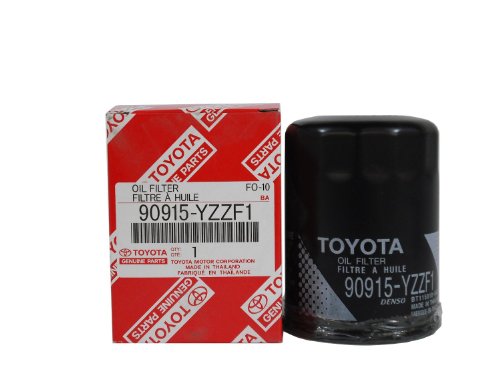
GENUINE OEM: Original Toyota/Lexus factory oil filter part number 90915-YZZN1, ensuring perfect fit and optimal performance for your vehicle
Step-by-step procedures written from a complete teardown and rebuild, giving you the confidence to tackle repairs at any skill level.

2Pcs parking brake rotor plug inspection maintenance hole cap
Practical High-Mileage Maintenance Checklist
| Check regularly | Engine-oil level, coolant level when the engine is cold, tire pressure, exterior lights, fluid leaks, unusual smells, new noises, and dashboard warnings. |
|---|---|
| At scheduled services | Change the engine oil and filter when required, rotate and inspect the tires, check the brakes, and inspect steering and suspension components. |
| At longer intervals | Service coolant, spark plugs, filters, brake fluid, transmission fluid where specified, and other items according to the exact model-year guide and operating conditions. |
| As mileage and age increase | Inspect hoses, belts where fitted, engine mounts, wheel bearings, struts, bushings, exhaust components, charging performance, air-conditioning operation, rust, and transmission behavior. |
Pro Tip: Keep dated receipts and record the mileage for every service and repair. A complete maintenance history helps you spot recurring problems, avoid duplicate work, support resale value, and judge whether the vehicle is becoming too expensive to keep.
How Model Year, Climate, and Driving Conditions Affect Camry Lifespan
“Toyota Camry” covers many generations, engines, transmissions, hybrid systems, and electronic platforms. A problem associated with one year or powertrain should not be applied automatically to every Camry.
- Model year and powertrain: Older four-cylinder cars deserve careful oil-level and oil-consumption checks. Later multi-speed automatics should be judged by cold and warm shift quality. Hybrids require battery, inverter-cooling, and battery-cooling-airflow checks.
- Short-trip use: Repeated cold starts and trips too short to reach full operating temperature can be harder on oil, batteries, exhaust systems, and moisture control than steady highway use.
- Heat: High temperatures can accelerate deterioration of batteries, rubber parts, fluids, paint, and interior materials. Cooling-system and air-conditioning condition become especially important.
- Cold and road salt: Salt and de-icing chemicals can damage the underbody, brake or fuel lines, fasteners, and structural areas. Rust may end an otherwise healthy car’s useful life.
- Long storage: A low-mileage Camry that sits for months can still develop battery, tire, brake, seal, fuel, and corrosion problems.
- Service bulletins and campaigns: Check the exact VIN and year. A technical service bulletin, warranty enhancement, service campaign, and safety recall are different programs with different eligibility and remedies.
Use Toyota’s VIN-based campaign lookup and the NHTSA database before buying or evaluating an older Camry. NHTSA can also show investigations, complaints, and manufacturer communications, but those records do not prove that every vehicle has the reported problem.
Top Factors That Extend the Lifespan of Your Toyota Camry
The following factors have the greatest influence on whether your Camry remains reliable at high mileage:
- Consistent maintenance: Follow the schedule for your exact year and powertrain rather than relying on one generic interval.
- Oil-level monitoring: Check the level between oil changes, especially on an older engine. A vehicle that consumes or leaks oil may need more frequent checks.
- Cooling-system health: Repair coolant leaks, worn hoses, thermostat problems, radiator damage, and failing water-pump components before overheating occurs.
- Prompt diagnosis: Investigate new warning lights, noises, vibrations, leaks, or changes in shifting instead of continuing to drive until the problem becomes severe.
- Moderate driving: Use smooth acceleration and controlled braking. Drive gently after a cold start until the engine and fluids warm through normal operation; extended idling is not required.
- Rust prevention: Wash road salt and corrosive debris from the body and undercarriage, then inspect structural areas and brake or fuel lines.
- Correct parts and fluids: Use components and fluids that meet the specifications for the exact model and repair.
- Recall completion: Check your VIN through the Toyota recall and service-campaign lookup and the NHTSA recall database.
[Amazon Products Picked for You]
Item Package Dimension: 13.69L x 6.019W x 4.20H inches

[Fitment Alert]: Always verify compatibility using the "Amazon Confirmed Fit" button (top-left) before purchasing. Double-check this part matches your exact vehicle year/make/model to ensure proper fitment.
Gasoline Camry Versus Camry Hybrid
Both versions can accumulate high mileage, but their inspection priorities differ. A gasoline Camry requires attention to the engine, cooling system, transmission, emissions components, and normal wear items. A Camry Hybrid also needs inspection of the hybrid battery, inverter cooling system, battery-cooling intake, 12-volt battery, and hybrid warning messages.
Hybrid battery condition varies with age, temperature, usage, and previous care. A high-mileage hybrid should be evaluated with an appropriate diagnostic scan rather than judged only by fuel economy or the absence of a dashboard warning.
Note: In the United States, Toyota states that hybrid batteries in model-year 2020 and newer Toyota hybrids are covered for 10 years or 150,000 miles from first use, whichever comes first, subject to the warranty terms. Older vehicles and other hybrid-related components can have different coverage, so check the applicable Warranty and Maintenance Guide.
Common Issues for High-Mileage Toyota Camrys and Their Solutions
High-mileage problems vary by generation, powertrain, climate, and maintenance history. The following table describes common aging areas without assuming that every Camry will develop the same failure at a fixed mileage.
| Symptom | Possible area | Recommended action |
|---|---|---|
| Oil level drops between services | External leak, oil consumption, valve-cover seal, PCV-system issue, or internal engine wear | Measure consumption, inspect for leaks, maintain the correct level, and diagnose excessive loss. |
| Rough ride, clunks, or uneven tire wear | Struts, control-arm bushings, ball joints, links, alignment, tires, or wheel bearings | Have the suspension, steering, tires, and alignment inspected before replacing parts. |
| Temperature rises or coolant disappears | Leak, radiator, hose, water pump, thermostat, cooling fan, or internal engine problem | Stop before severe overheating and arrange a cooling-system diagnosis. |
| Delayed, harsh, slipping, or shuddering shifts | Fluid leak, control or software issue, mount, sensor, torque converter, or internal transmission wear | Scan for diagnostic codes and obtain a proper transmission evaluation. Do not assume replacement is automatically required. |
| Dim lights, slow starting, or repeated battery failure | 12-volt battery, alternator on gasoline models, cable connection, ground, or electrical draw | Test the battery and charging system before replacing components. |
| Weak air conditioning, noise, or intermittent cooling | Refrigerant leak, compressor, condenser, fan, relay, or control fault | Request leak detection and system diagnosis rather than repeated refrigerant top-offs. |
| Hybrid warning, rapid state-of-charge swings, or reduced performance | Hybrid battery, cooling airflow, inverter cooling, sensors, wiring, or 12-volt battery | Use a hybrid-capable scan tool and inspect cooling airflow before deciding which component is at fault. |
| Rust bubbles, flaking metal, or corroded lines | Body, subframe, suspension mounting points, brake lines, or fuel lines | Have structural and safety-related corrosion assessed before investing in other repairs. |
Warning: Safely stop the vehicle and seek assistance for overheating, a low-oil-pressure warning that stays on, a sudden major change in braking, smoke or a burning smell, a transmission that will not engage normally, or any condition that makes the car unsafe to control. Other red indicators also require immediate attention, but the correct response depends on the symbol; check the owner’s manual rather than assuming every red icon has the same meaning.
[Amazon Products Picked for You]

Top-Rated Affordable: A fan favorite on auto forums—this budget-friendly car lift support is the go-to affordable replacement for Toyota Camry 2.0/2.5/2.5 Hybrid/3.5 2017-2026, for Toyota Camry 2.5 Flexfuel 2018-2026, for Toyota Camry 2.5 VVTi Hybrid 2022-2026. No breaking the bank for reliable performance

【Front End Suspension Kit Fitment】2013-2018 for Toyota Avalon, 2012-2017 for Toyota Camry

【Front End Suspension Kit Fitment】2002-2003 for Lexus ES300, 2004-2006 for Lexus ES330, 2002-2003 for Toyota Camry
Signs a High-Mileage Camry May Still Have Useful Life
A high odometer reading is less concerning when the car shows evidence of controlled wear rather than neglected damage. Positive signs include:
- Complete or credible service records with consistent oil changes and major maintenance documented.
- Stable oil and coolant levels, no active overheating, and no heavy smoke from the exhaust.
- Normal cold starts, smooth idle, predictable acceleration, and no severe warning lights.
- Transmission operation that is consistent when cold and fully warm.
- Even tire wear, controlled ride, straight braking, and no structural corrosion.
- Diagnostic scans without unresolved powertrain, airbag, ABS, or hybrid-system faults.
- Repair needs that are limited, understandable, and supported by a clear diagnosis.
Red flags include repeated overheating, severe oil loss, coolant contamination, major rust at structural or suspension points, multiple warning systems active at once, a slipping transmission, flood history, poorly repaired collision damage, or a seller who will not allow an independent inspection.
How to Decide Whether a High-Mileage Camry Is Worth Keeping
A large repair estimate does not automatically mean the car should be replaced. Consider the vehicle’s complete condition, the quality of the diagnosis, what the repair would restore, and what a replacement vehicle would actually cost.
- Keep repairing it when: the body and structure are sound, the engine and transmission are generally healthy, maintenance is current, and the repair would restore dependable use.
- Think carefully when: several major systems need work at the same time or the vehicle has severe rust, repeated overheating, major oil consumption, extensive accident damage, or unresolved electrical faults.
- Compare total costs: include the immediate repair, likely maintenance during the next year, insurance, registration, financing, taxes, and the cost of replacing the vehicle with something genuinely better.
- Consider downtime and risk: a cheaper older car can still be the wrong choice if unreliable transportation threatens work, medical appointments, or family responsibilities.
- Get a second opinion: a diagnosis supported by testing is more valuable than a parts list based only on symptoms.
A Simple Repair-or-Replace Test
Ask three questions: Is the car structurally safe? Are the engine, transmission, and hybrid system—if fitted—fundamentally healthy? Will the proposed repair produce a reasonably dependable vehicle? If the answer is yes to all three, a repair can make financial sense even when it exceeds the car’s resale value. Resale value alone does not measure the cost of replacing reliable transportation.
What to Check Before Buying a High-Mileage Camry
Do not buy based only on Toyota’s reliability reputation. Review service records, verify the VIN and title history, check for open recalls and service campaigns, inspect the car when the engine is cold, complete a long enough test drive to reach normal operating temperature, and arrange an independent pre-purchase inspection.
The inspection should cover fluid leaks, oil level, coolant condition, cold-start noises, diagnostic codes, transmission operation, brakes, tires, suspension, steering, air conditioning, rust, accident repairs, and hybrid-system health where applicable. A carefully maintained 180,000-mile Camry may be a better purchase than a neglected example with 100,000 miles.
- Before starting: confirm the engine is cold, look underneath for fresh leaks, check tire wear, and inspect the oil and coolant at the proper time and temperature.
- At startup: watch for warning lights that remain on, delayed starting, rattles, smoke, unstable idle, or unusual exhaust odor.
- On the road: test light and firm acceleration, steady cruising, braking, steering, bumps, parking maneuvers, reverse, and all transmission ranges.
- After the drive: recheck for leaks, smells, fan operation, temperature stability, and newly stored diagnostic codes.
- Before payment: verify the VIN on the vehicle and documents, review recall status, and obtain a written inspection report and repair estimate.
Related Guides
Frequently Asked Questions
Can a Toyota Camry last 300,000 miles?
Yes, a Camry can reach 300,000 miles, but that is an excellent outcome rather than a guaranteed lifespan. Reaching that mileage usually requires consistent maintenance, prompt repairs, limited structural rust, and acceptance that normal wear components may need replacement.
Which Toyota car lasts the longest?
No Toyota passenger car is universally the longest-lasting under every study. Among Toyota-brand passenger cars in the 2025 iSeeCars analysis, the Toyota Avalon ranked above the Prius, Camry Hybrid, gasoline Camry, and Corolla for predicted likelihood of reaching 250,000 miles. Rankings change by dataset, vehicle class, model year, and methodology.
Which year of Toyota Camry is most reliable?
No single Camry year is automatically the best for every buyer. Reliability can differ by engine, transmission, trim, production period, maintenance, climate, and current condition. Research the exact year and powertrain, check the VIN for recalls and campaigns, review service records, and obtain an independent inspection.
How many miles can a 2016 Toyota Camry last?
A well-maintained 2016 Camry may pass 200,000 miles and can potentially reach 250,000 to 300,000 miles. Its actual remaining life depends on service history, oil consumption, cooling-system condition, transmission behavior, rust, previous accidents, and current inspection results.
Is 200,000 miles too much for a used Toyota Camry?
Not necessarily. A 200,000-mile Camry with detailed records, little rust, normal oil usage, smooth shifting, and a good inspection may still provide useful service. However, the purchase price should reflect its age, mileage, condition, and likely upcoming repairs.
Are highway miles easier on a Camry than city miles?
Often, steady highway use creates fewer cold starts, gear changes, braking events, and low-speed heat cycles per mile than short urban trips. However, maintenance history, speed, loading, climate, road salt, and accident history still matter, so “highway miles” should not replace an inspection.
How can I tell whether a high-mileage Camry has been maintained well?
Look for dated service records, stable fluid levels, clean cold-start behavior, normal temperature, smooth shifting, even tire wear, limited rust, completed recalls, and a professional inspection without major unresolved codes or leaks. A clean appearance alone is not proof of good maintenance.
Sources
- iSeeCars Longest-Lasting Cars Study — 2025 statistical estimates and methodology for vehicles predicted to reach 250,000 miles.
- Toyota Manuals and Warranties — model-specific manuals, maintenance information, and U.S. hybrid-battery warranty details.
- Toyota Warning Lights — manufacturer guidance on common dashboard indicators and the need to consult the exact owner’s manual.
- Toyota Recall and Service Campaign Lookup — VIN- or plate-based Toyota recall and campaign information.
- National Highway Traffic Safety Administration Recall Lookup — official U.S. recall, investigation, complaint, and manufacturer-communication search.
Conclusion
A Toyota Camry can remain useful beyond 200,000 miles, and reaching 250,000 to 300,000 miles is possible when the vehicle has been maintained carefully. However, the badge and odometer alone cannot predict its remaining life.
Judge a high-mileage Camry by its maintenance records, oil usage, cooling-system health, transmission operation, hybrid-system condition where applicable, rust, warning lights, recall status, and inspection results. Addressing problems early and following the correct Toyota maintenance guide gives your Camry its best chance of delivering many more dependable miles.
