
A Toyota Camry can remain dependable at 200,000 miles, but reaching that mileage depends on more than frequent oil changes. Your model year, engine, transmission, driving conditions, previous service history, climate, and repair quality all matter. The safest approach is to follow Toyota’s schedule for your exact vehicle, inspect aging components regularly, and address small problems before they damage related systems.
Last updated: July 11, 2026
Quick Answer
A Toyota Camry can reach 200,000 miles, but no maintenance plan can guarantee it. Follow the exact Warranty & Maintenance Guide for your model year and engine, check fluids and tires regularly, repair warning signs early, keep records, and have aging systems inspected more often as mileage increases.
Key Takeaways
- Use the maintenance guide for your exact Camry instead of relying on one universal service interval.
- Monitor engine-oil level, leaks, tire pressure, fluid condition, and warning lights between scheduled services.
- Confirm whether your engine uses a timing belt or timing chain before scheduling timing-system work.
- Inspect brakes, suspension, cooling, steering, electrical, and drivetrain components more closely as mileage increases.
- Keep detailed records and repair safety-related problems before spending money on comfort or cosmetic work.
At a Glance
| Time Required | About 15 minutes for monthly checks; professional services vary by condition |
| Difficulty | Easy for visual checks; moderate to advanced for fluid, brake, suspension, and drivetrain work |
| Tools Needed | Owner’s manual, tire-pressure gauge, flashlight, clean cloth, service records, and basic hand tools for qualified DIY work |
| Cost | Varies by model year, current condition, service history, labor rates, and whether work is performed at home or by a shop |
Warning: Never work beneath a vehicle supported only by a jack, open a hot cooling system, smoke near fuel vapors, or touch orange high-voltage cables and components on a hybrid. Brake, steering, fuel, airbag, transmission, and hybrid repairs may require a qualified technician.
Start With the Correct Maintenance Schedule for Your Camry
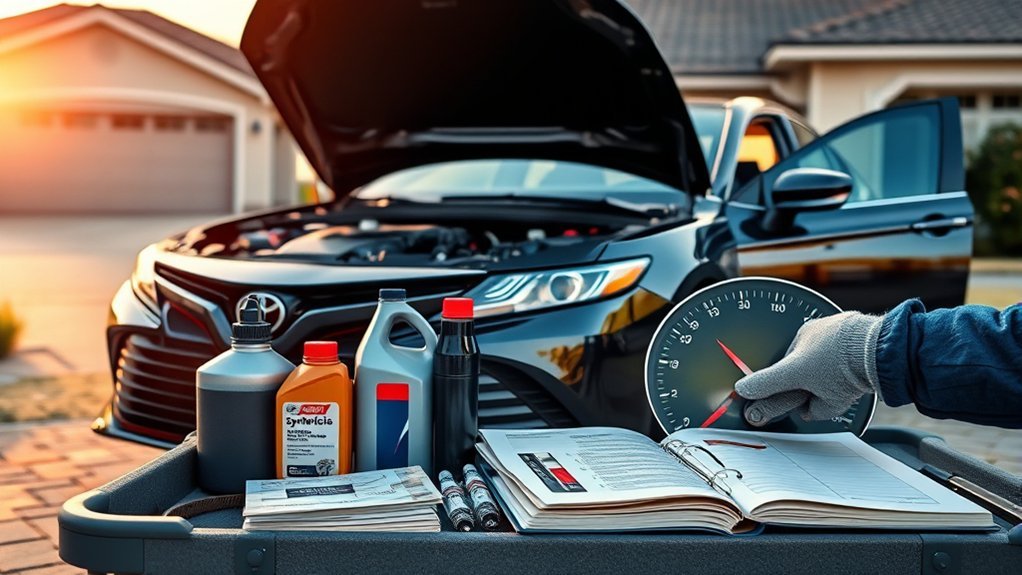
The most important step is identifying your Camry’s model year, engine, transmission, and market. Toyota has sold the Camry with different gasoline engines, hybrid systems, transmissions, timing systems, fluid specifications, and service requirements. Advice written for one version may not apply to another.
Use Toyota’s Manuals and Warranties portal to locate the Owner’s Manual and Warranty & Maintenance Guide for your exact vehicle. If available, add the vehicle by VIN so you do not accidentally use a guide for a different engine or trim.
Note: Mileage figures in a general article are planning checkpoints, not replacements for the schedule in your Camry’s official guide. Time limits and special operating conditions may require service before the normal mileage limit.
Consider Severe or Special Operating Conditions
Your applicable guide may call for additional inspections or earlier service when the vehicle regularly experiences demanding conditions. Examples can include repeated short trips, prolonged idling, dusty roads, heavy stop-and-go traffic, extensive low-speed use, extreme temperatures, or carrying unusually heavy loads.
Do not label your driving as “normal” without checking the definitions in your exact guide. A Camry used for delivery work, frequent short urban trips, or harsh seasonal driving may need a different maintenance plan from one used mainly for steady highway travel.
Create a Baseline When Service History Is Unclear
If you bought the Camry used or cannot verify previous work, begin with a documented baseline inspection. A technician should identify active leaks, scan for diagnostic trouble codes, inspect brakes and tires, evaluate the cooling and charging systems, review fluid condition, and check steering, suspension, belts, hoses, axle boots, and engine mounts.
Do not replace every fluid or component simply because the odometer is high. First determine what is overdue, what has already been replaced, and what the vehicle’s condition actually requires.
Core Toyota Camry Maintenance for 200,000 Miles
Engine Oil and Oil Filter
Use the oil viscosity, specification, filter type, mileage interval, and time interval listed for your exact Camry. A fixed rule such as changing oil every 3,500 to 4,000 kilometers is not appropriate for every model or driving pattern.
Between services, check the oil level on level ground using the method in the Owner’s Manual. High-mileage engines may consume or leak oil even when the dashboard warning light remains off. Look for fresh oil around the valve cover, oil pan, timing cover, filter area, drain plug, and the ground beneath the car.
Record how much oil you add and how far you drive. A clear consumption record helps a technician distinguish a gradual high-mileage trend from a developing leak or mechanical problem.
Pro Tip: Keep a spare sealed container of the correct oil in the trunk and save every service receipt. A maintenance history is more useful than relying on memory when you diagnose a problem or sell the vehicle.
Transmission or Hybrid Transaxle
Do not assume every Camry needs annual transmission-fluid replacement or service at one universal mileage. The correct procedure depends on the transmission, model year, operating conditions, fluid specification, and previous service history.
Have the system inspected if you notice delayed engagement, slipping, shuddering, harsh shifts, unusual whining, fluid leakage, or an overheating message. Low or degraded transmission fluid can damage the transmission or transaxle, not the engine.
Use only the fluid specification and service procedure listed by Toyota. If the service history is unknown, ask a technician familiar with Toyota transmissions to evaluate the vehicle before choosing a fluid-replacement method.
Cooling System
The cooling system protects the engine and, on hybrid models, may also support separate power-electronics or hybrid-component cooling circuits. Follow the exact guide for coolant type and replacement timing.
When the engine is completely cold, inspect the reservoir level and look for dried coolant residue, wet hose connections, radiator damage, a sweet odor, or stains beneath the vehicle. A falling level can indicate a hose, radiator, water-pump, gasket, reservoir, or cap problem.
Temperature warnings, steam, repeated coolant loss, or a rapidly rising gauge require immediate attention. Continuing to drive an overheating engine can cause major damage.
Timing Belt, Timing Chain, and Accessory Belt
Depending on the model year and engine, a Camry may use a timing belt or a timing chain. Do not schedule timing-belt replacement until you confirm which system your engine has.
If Toyota specifies a timing-belt replacement interval for your engine, follow both the mileage and time limits in the applicable guide. A timing chain normally follows different inspection and repair criteria and should not be treated like a rubber timing belt.
Also inspect the external accessory or drive belt for cracking, fraying, glazing, contamination, tension problems, or noise. A worn accessory belt can affect systems such as charging or cooling even though it is not the engine’s timing component.
Spark Plugs, Ignition Components, and Filters
Replace spark plugs with the specified type and at the interval listed for your engine. Incorrect plug design, reach, heat range, or gap can create drivability problems or damage threads and ignition components.
Inspect ignition coils, boots, and wiring when diagnosing a misfire. A flashing check-engine light can indicate a severe misfire that may damage the catalytic converter, so reduce load and have the vehicle checked promptly.
Check the engine air filter and cabin air filter according to the guide and local conditions. Dusty environments may load filters faster. Replace a damaged or excessively dirty filter, but do not replace filters solely because a generic mileage chart says they are due.
Brakes, Suspension, Steering, and Tire Maintenance

[Amazon Products Picked for You]

Measurement: Fit Models with 9.45'' inch (239mm) Front Rotor Diameter
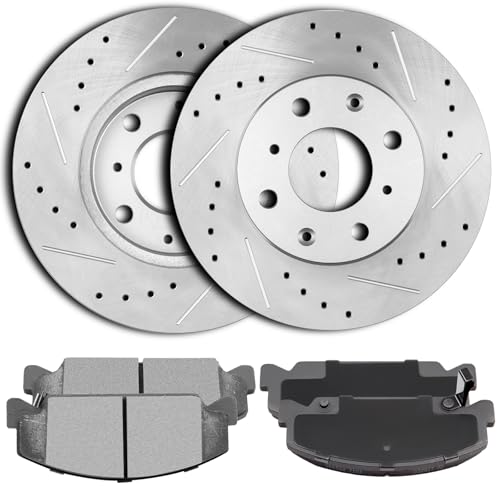
FITMENT - 2pcs slotted discs brake rotors ceramic pads for 1990 1991 1992 1993 1994 1995 1996 1997 1998 1999 2000 for Honda Civic,1993 1994 1995 1996 1997 for Honda Civic del Sol Compatible with 120.40023 ,31029 D273-7178,ATD273C,
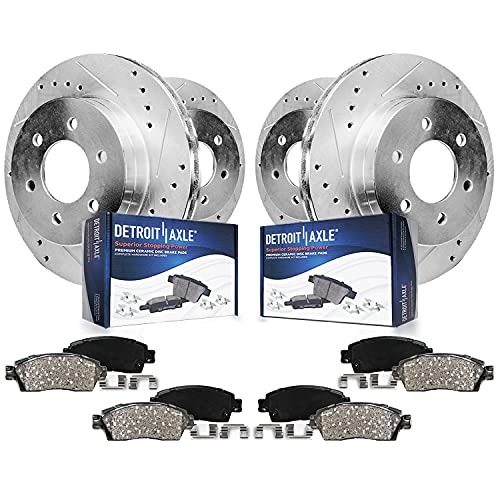
Measurement: Models with 13.78 inch (350mm) Front / 13.23 inch (336mm) Rear Rotor Size
Brake System
Brake inspections should cover pad or shoe thickness, rotor or drum condition, calipers, slide pins, hoses, metal lines, parking-brake operation, fluid level, and signs of leakage. Brake-fluid color alone does not provide a complete assessment of its condition.
Have the brakes inspected immediately if the pedal becomes soft, sinks, pulses strongly, requires more travel, or produces grinding. Pulling during braking, a burning smell, or a brake-warning light also needs prompt diagnosis.
Suspension and Steering
Struts and shocks do not have one automatic replacement mileage that fits every Camry. Inspect them for leakage, loss of damping, excessive bouncing, unstable handling, nose-diving, clunking, and uneven tire wear.
High-mileage inspections should also cover ball joints, tie-rod ends, control-arm bushings, stabilizer links, wheel bearings, engine and transmission mounts, power-steering components where fitted, and CV axle boots. A torn CV boot can release grease and allow contamination into the joint.
Tire Pressure, Rotation, and Alignment
Check all tires, including the spare when applicable, at least monthly while they are cold. Use the pressure on the driver-door Tire and Loading Information label or in the Owner’s Manual, not the maximum pressure molded into the tire sidewall. NHTSA provides additional tire-maintenance guidance.
Rotate the tires according to Toyota’s schedule and the requirements of the installed tire design. Directional tires, staggered sizes, and certain replacement configurations may require a different rotation pattern.
Request an alignment inspection if the Camry pulls, the steering wheel sits off-center, or the tires develop feathering or one-sided wear. Alignment will not repair loose suspension parts, so worn components should be corrected first.
Fuel System Maintenance and Injector Care

Do not assume the fuel filter must be replaced every 30,000 miles or every two years. Fuel-system design and scheduled service vary by model, and some components may not be routine maintenance items.
Use the fuel grade specified by Toyota and buy fuel from a station that appears to maintain its equipment properly. Seek diagnosis if you notice difficult starting, hesitation, repeated misfires, loss of power, fuel odor, poor fuel economy, or fuel-pressure-related trouble codes.
Injector-cleaning products are not a substitute for diagnosing a failing pump, restricted injector, ignition problem, vacuum leak, sensor fault, or mechanical issue. Use additives only when they are compatible with the vehicle and genuinely needed.
[Amazon Products Picked for You]

DESIGNED TO EXCEED EXPECTATIONS: Red Line complete SI-1 fuel system cleaner is a premium fuel additive, providing an effective fuel treatment solution to clean and prevent corrosion in fuel systems.
For best performance, follow the manufacturer's recommendations in your vehicle owner’s manual.

DESIGNED TO EXCEED EXPECTATIONS: Red Line complete SI-1 fuel system cleaner treatment for cleaning and preventing corrosion in fuel systems
Battery, Electrical, and Hybrid-System Checks
[Amazon Products Picked for You]

OEM-Compatible Hybrid Battery Module - Specifically designed for Hybrid vehicles, ensuring a perfect fit and seamless integration.

【Reliable Car Battery Tester】: The alternator tester can accurately determine whether the car battery needs to be replaced or if there is a power outage, and at the same time evaluate the output status of the alternator, clearly presents real-time voltage data, battery health and charging status. It can effectively prevent the battery from being damaged due to overcharging or undercharging, and extend the battery's service life.

MULTI PURPOSE USE- can be used to test different type of household batteries like AA, AAA, C, D, 1.5V,9V and 1.5V button type
12-Volt Battery and Charging System
Inspect the 12-volt battery for corrosion, loose terminals, swelling, leakage, and damaged hold-down hardware. Slow cranking, dim lights, repeated low-voltage codes, or the need for frequent jump-starts can point to a weak battery, charging problem, parasitic draw, or poor connection.
A battery test is more useful than replacing the battery based only on age. Confirm that the replacement battery matches the required size, terminal layout, capacity, and ventilation arrangement.
Hybrid-Specific Maintenance
Hybrid Camrys require the same attention to tires, brakes, fluids, suspension, filters, and the 12-volt system, plus inspection of hybrid-specific components listed in the applicable guide.
Keep the hybrid-battery cooling intake free from lint, pet hair, luggage, and other blockage. Do not open high-voltage enclosures or touch orange cables. Warning messages, unusual cooling-fan noise, reduced hybrid performance, or repeated hybrid-system faults require qualified diagnosis.
High-Mileage Inspections That Prevent Larger Repairs
As a Camry approaches and passes 100,000 miles, age and condition become as important as the odometer. Add the following items to regular inspections:
- Fluid leaks: Engine oil, coolant, brake fluid, transmission fluid, fuel, and washer fluid.
- Rubber components: Hoses, seals, boots, mounts, bushings, weather seals, and drive belts.
- Wheel bearings: Humming, growling, looseness, or noise that changes while turning.
- CV joints and axles: Clicking during turns, vibration under acceleration, torn boots, or grease spray.
- Engine mounts: Excessive vibration, movement, thumping, or harsh engagement.
- Exhaust system: Rust, rattling heat shields, leaks, damaged hangers, or unusual exhaust odor.
- Air conditioning: Cooling performance, compressor noise, blower operation, and drain function.
- Lights and safety equipment: Exterior lights, wipers, horn, seat belts, backup camera, and warning indicators.
- Oil consumption: A documented check of level changes between services.
- Diagnostic history: Stored, pending, and permanent trouble codes interpreted with symptoms and test results.
A Practical Maintenance Roadmap
| Checkpoint | What to Do |
|---|---|
| Every month | Check cold tire pressure, visible tire damage, engine-oil level, coolant reservoir when cold, exterior lights, washer fluid, and new leaks. |
| At each scheduled service | Complete the items listed in the applicable Toyota guide, review previous recommendations, rotate tires when due, and document inspection results. |
| Before a long trip | Check tires, fluids, battery condition, brakes, lights, wipers, spare-tire equipment, emergency supplies, and open recalls. |
| When history is unknown | Perform a baseline inspection and compare the odometer with the exact maintenance guide before approving replacement work. |
| From 100,000 miles onward | Watch more closely for oil use, leaks, worn rubber, cooling issues, suspension looseness, wheel-bearing noise, battery weakness, and neglected scheduled items. |
| Approaching 200,000 miles | Request a complete safety and reliability inspection, prioritize active faults, and plan repairs according to risk rather than replacing everything automatically. |
Warning Signs Your Camry Needs Immediate Attention
Do not wait for the next scheduled service when the vehicle shows a safety or overheating problem. Stop driving as soon as it is safe and seek assistance when you notice:
- A red oil-pressure, brake-system, charging-system, or high-temperature warning
- Steam, overheating, or rapid coolant loss
- A flashing check-engine light with rough running
- Grinding brakes, a sinking pedal, or greatly increased stopping distance
- Strong fuel odor or visible fuel leakage
- Severe steering difficulty or sudden instability
- A tire bulge, exposed cords, rapid pressure loss, or serious vibration
- Transmission slipping, failure to engage, or a major fluid leak
- Smoke, burning odor, or electrical arcing
- A hybrid-system warning accompanied by reduced power or abnormal behavior
Other symptoms such as new rattles, clunks, humming, vibration, hard starting, reduced fuel economy, or minor leakage may not require an emergency stop, but they should still be diagnosed before they become more expensive.
Maintenance Records, Recalls, and Community Advice
Keep a record of the date, mileage, work performed, fluid or part specification, shop, and receipt for every service. Record declined recommendations as well, so you can revisit them instead of forgetting why they were suggested.
Check the vehicle’s VIN through Toyota’s Safety Recall and Service Campaign lookup and the NHTSA recall database. Repeat the check periodically because campaigns can be announced after you purchase the vehicle.
Camry owner groups can help you identify common symptoms, repair experiences, and questions to ask a technician. However, a forum post should not override Toyota’s documentation, a recall notice, a technical diagnosis, or the specifications for your exact vehicle.
Benefits of Proactive Maintenance
Better Reliability and Performance
Scheduled service and condition-based inspections help the engine run with the correct lubrication, keep the cooling system under control, preserve braking and handling, and identify electrical or drivetrain faults before they cause a breakdown.
The goal is not to replace the maximum number of parts. The goal is to keep required maintenance current, catch developing failures early, and use parts and fluids that meet the correct specifications.
Lower Long-Term Repair Risk
A small coolant leak, torn axle boot, low oil level, dragging brake, loose suspension joint, or weak battery may be relatively manageable when found early. Ignoring the same problem can damage connected components or leave the vehicle unsafe to drive.
Prioritize repairs in this order: immediate safety, overheating or lubrication risk, problems that can damage other components, reliability concerns, and finally comfort or cosmetic items.
Frequently Asked Questions
Can a Toyota Camry last 200,000 miles?
Yes, a Camry can reach 200,000 miles, but the odometer result cannot be guaranteed. Previous care, driving conditions, corrosion, accident history, oil level, cooling-system health, repair quality, and timely diagnosis all affect longevity.
What maintenance should be done at 200,000 miles?
Start by reviewing the exact Toyota maintenance guide and the car’s records. Complete overdue scheduled items, scan for faults, and inspect the engine, transmission or transaxle, cooling system, brakes, tires, suspension, steering, axles, wheel bearings, battery, belts, hoses, leaks, and safety equipment.
What are the major service intervals for a Toyota Camry?
Major intervals vary by model year, engine, transmission, market, time, and operating conditions. Use the Warranty & Maintenance Guide for your exact Camry rather than a generic list copied from another model.
How long can a Toyota with 200,000 miles continue to run?
Some vehicles continue for many more miles, while others require repairs that exceed their practical value. A compression problem, serious corrosion, overheating history, transmission failure, or repeated electrical faults can matter more than the odometer alone.
Does every Toyota Camry have a timing belt?
No. Timing-system design varies by model year and engine. Confirm your engine information in Toyota’s documentation before approving a timing-belt replacement or assuming a timing chain requires the same service.
Should transmission fluid be changed if the service history is unknown?
Have the transmission inspected first. The correct decision depends on the transmission type, fluid condition, symptoms, mileage, operating conditions, and Toyota’s procedure. Do not choose a service method based only on a generic mileage rule.
Conclusion
A Toyota Camry does not reach 200,000 miles because of one fluid change, one replacement part, or one perfect interval. Longevity comes from following the correct model-specific schedule, monitoring the vehicle between services, keeping accurate records, and responding quickly to leaks, warning lights, overheating, brake problems, unusual noises, and changes in performance.
Start with Toyota’s documentation, establish the car’s current condition, and prioritize safety and mechanical risk. That approach gives your Camry a realistic chance of remaining dependable without wasting money on unsupported maintenance rules.
Sources
- Toyota Manuals and Warranties — model-specific owner manuals and Warranty & Maintenance Guides; accessed July 11, 2026.
- ToyotaCare and Maintenance Plans — Toyota maintenance-plan and factory-scheduled-maintenance information; accessed July 11, 2026.
- Toyota Safety Recall and Service Campaign Lookup — VIN-based Toyota recall and campaign information; accessed July 11, 2026.
- NHTSA TireWise — tire pressure, inspection, rotation, labeling, and safety guidance; accessed July 11, 2026.
- NHTSA Recall Lookup — vehicle recall searches and recall-check guidance; accessed July 11, 2026.
- U.S. EPA Used-Oil Guidance — safe collection and recycling of used engine oil; updated June 25, 2026.
