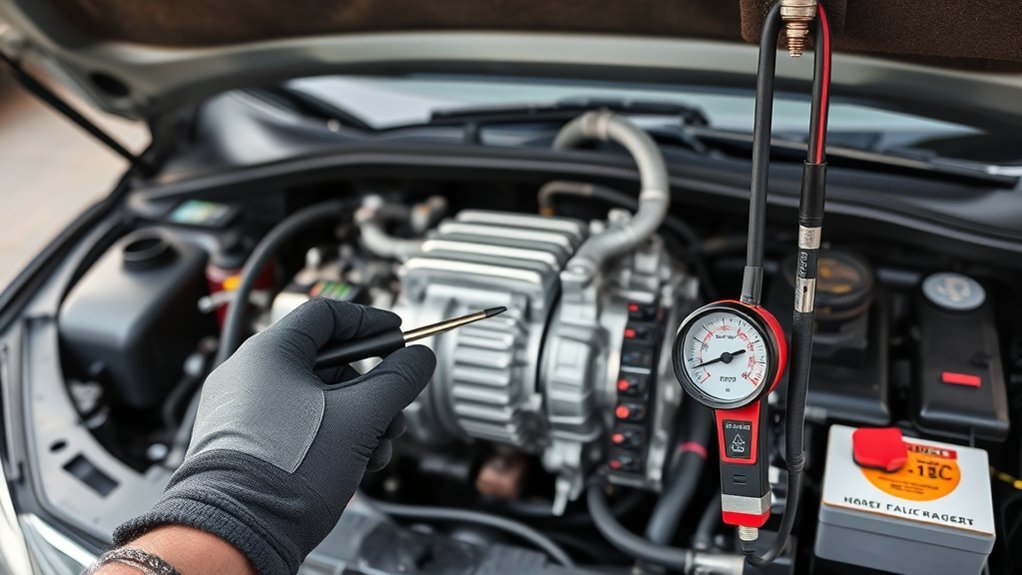
If your Toyota Camry AC works intermittently—cold at first, then warm—the failure pattern is the quickest way to narrow the cause. Strong airflow that turns warm points toward refrigerant loss, compressor control, condenser airflow, electrical or sensor faults, or an air-mix door. Airflow that gradually becomes weak points more toward a restricted cabin filter, blower problem, or evaporator icing. Cooling that fails mainly at idle raises suspicion around condenser airflow and cooling-fan operation. Start with these safe observations before paying for refrigerant or replacement parts.
Last updated: September 19, 2026. This guide covers U.S.-market Toyota Camry models across multiple generations. Exact A/C hardware, refrigerant, controls, and test procedures vary by model year and powertrain.
Editorial basis: This guide was checked against Toyota owner guidance, Toyota Technical Information System resources, and current U.S. EPA motor-vehicle air-conditioning requirements. Model-specific repair procedures should still be confirmed for the exact vehicle.
Quick Answer
When a Toyota Camry AC works intermittently, possible causes include low refrigerant from a leak, poor condenser airflow, a cooling-fan problem, an electrical or sensor fault, evaporator icing, an air-mix door problem, or compressor control. First note whether airflow becomes weak or stays strong while the air turns warm, then compare cooling at idle and road speed. Check the cabin filter and visible condenser blockage. Leave refrigerant, compressor, and high-voltage testing to a qualified technician.
Key Takeaways
- Weak airflow usually points toward the cabin filter, blower, ducting, evaporator icing, or an air-door problem rather than low refrigerant alone.
- Cold air while driving but warm air at idle can indicate poor condenser airflow or an inoperative cooling fan.
- Cooling that stops after several minutes may involve evaporator icing, a temperature sensor, an electrical fault, or compressor control.
- A low refrigerant charge should lead to leak testing, not repeated topping off.
- The correct diagnosis depends on your Camry’s model year, engine or hybrid powertrain, climate-control system, and refrigerant specification.
- The 2026 U.S.-market Camry uses an all-hybrid powertrain, so compressor diagnosis can involve high-voltage components that are not appropriate for casual DIY testing.
At a Glance
| Time Required | A few minutes for the safe owner checks below; professional diagnosis may take longer. |
| Difficulty | Easy for visual and airflow checks; advanced for refrigerant, electrical, compressor, or hybrid-system testing. |
| Tools Needed | Flashlight, vent thermometer, gloves, and the owner’s manual. Professional testing may require a scan tool, leak detector, approved refrigerant-handling equipment, and model-specific service information. |
| Cost | Basic observation is free. Diagnosis and repair costs vary with the model year, refrigerant type, leak location, and failed component. |
Warning: Do not open refrigerant lines, intentionally release refrigerant, bypass pressure protection, or touch unfamiliar hybrid A/C components. In the United States, anyone servicing or repairing an MVAC system for payment or barter must meet Section 609 certification requirements and use approved refrigerant-handling equipment. Avoid unapproved refrigerants and stop-leak sealers.
Why Does My Toyota Camry AC Work Intermittently?

Intermittent cooling can come from the refrigerant circuit, airflow system, electrical controls, compressor control, or temperature doors inside the dashboard. Toyota’s general A/C guidance likewise identifies refrigerant loss, condenser blockage, compressor problems, and restricted cabin airflow as possible causes of poor cooling. The most useful clue is exactly what changes when cooling fails.
If your Camry never gets cold rather than cooling normally and then failing, see the Toyota Camry AC not blowing cold guide. This page focuses specifically on cooling that comes and goes.
- Low refrigerant from a leak: The evaporator may not remain cold enough, and the compressor may be limited or disabled by pressure protection. A low charge should prompt leak testing.
- Poor condenser airflow: A failed cooling fan, blocked condenser fins, or debris between the condenser and radiator can reduce cooling, especially while the car is stopped.
- Compressor-control problem: Depending on the Camry, this may involve a clutch, relay, wiring circuit, pressure sensor, control valve, compressor electronics, or an electric compressor.
- Evaporator icing: Low airflow, a faulty evaporator-temperature sensor, an incorrect refrigerant charge, or another control problem can allow ice to restrict airflow until the system is switched off and thaws.
- Cabin air filter or blower restriction: A dirty filter can reduce air volume but usually does not explain strong airflow that suddenly becomes warm.
- Air-mix or blend-door problem: A stuck door or failed actuator can mix heated air with cooled air or make one side of a dual-zone system warmer than the other.
- Electrical interruption: Loose connectors, damaged wiring, relays where equipped, fuses, sensors, or control-module faults can stop cooling even when the refrigerant circuit is mechanically sound.
- Internal contamination: Moisture or debris can interfere with refrigerant flow after improper service or an extended period with the system open. This requires professional diagnosis.
Note: Do not order a compressor clutch, relay, control valve, or compressor until the part and test procedure have been confirmed for your exact model year and powertrain. Camry A/C designs are not identical across generations.
[Amazon Products Picked for You]

[Specifications]: ①Condition: New; ②Compressor Style: 7ZSE17; ③Oil Type: PAG46; ④Oil Prefilled: 160 ml (20 ml tolerance); ④Pulley Grooves: 6; ⑤Pulley Diameter: 120 mm; ⑥Clutch Included: Yes

【REPLACE PART NUMBER 】-8831008080, 8831008081, 8831008082, 8831008083, 883100R010, 883100R011, 883100R012, 883100R013, 883100R014, 8831042330, 8831042331, 8831042333, 8831042334
Identify Your Camry’s A/C System Before Ordering Parts
Before following a repair video or buying a component, identify the system you actually have. This prevents an older clutch-based procedure from being applied to a different compressor or a hybrid high-voltage system.
- Model year and market: Use the VIN and exact model year because wiring, HVAC controls, sensors, and compressor designs change across generations.
- Powertrain: Confirm whether the vehicle is a conventional gasoline Camry or a Camry Hybrid. The 2026 U.S.-market Camry is an all-hybrid lineup, while earlier generations include different configurations.
- Climate-control type: Note whether the car has manual, automatic, or dual-zone climate control because air-mix doors, sensors, and diagnostic procedures can differ.
- Refrigerant specification: Read the under-hood A/C label rather than assuming the refrigerant type or charge from the model name alone.
- Indicator behavior: If an A/C indicator flashes on an applicable model, record when it happens and consult the exact model-year information instead of assuming one universal relay or compressor fault.
How Do You Diagnose an Intermittent Toyota Camry AC?
Begin with observations that do not require opening the refrigerant system. Try to reproduce the problem under the same weather, HVAC settings, and driving conditions so the failure pattern can be compared.
1. Record When the Cooling Stops
Set the temperature to cold, turn the fan to a medium setting, and note the outside temperature. Record whether the failure happens immediately, only at idle, after a long drive, after the engine warms up, or after the cabin has already cooled. Also note whether the A/C indicator changes or flashes.
2. Separate an Airflow Problem From a Temperature Problem
Place your hand near the center vents and compare the amount of air before and during the failure.
- Airflow becomes weak: Check the cabin filter, blower operation, evaporator icing, and air-door movement.
- Airflow remains strong but becomes warm: Suspect refrigerant, compressor control, condenser airflow, electrical controls, or an air-mix door.
3. Compare Idle and Road-Speed Performance
If the A/C cools while driving but becomes warm during traffic or while parked, inspect the front of the condenser for blockage and observe whether the radiator or condenser cooling fans operate when commanded. Keep your hands, clothing, and tools away from fans because they can start without warning.
4. Check Safe, Accessible Items
- Confirm that the cabin filter is not packed with dirt, leaves, or debris.
- Check whether airflow changes correctly among the dash, floor, and defrost vents.
- Listen for clicking behind the dashboard that may indicate an actuator problem.
- Look for damaged wiring, loose connectors, or an obviously damaged drive belt where applicable.
- Inspect the condenser through the grille for leaves, plastic bags, or heavy dirt.
- Check the applicable fuse information in the owner’s manual before replacing a fuse.
5. Use the Symptom Pattern to Narrow the Search
| Symptom Pattern | Areas to Check |
|---|---|
| Cold while driving, warm at idle | Cooling fans, condenser blockage, fan wiring or control, refrigerant charge, or abnormal system pressure |
| Cold at first, then weak airflow after 10 to 30 minutes | Evaporator icing, dirty filter, evaporator-temperature sensor, or airflow restriction |
| Strong airflow changes from cold to warm | Refrigerant charge, leak, compressor command, control valve where equipped, pressure sensor, or air-mix door |
| Cooling returns after restarting the car | Electrical connection, relay where equipped, sensor, compressor control, or control-module fault |
| One side is warmer than the other | Dual-zone air-mix actuator, door calibration, sensor input, or uneven evaporator cooling |
| Cooling changes when driving over bumps | Loose connector, damaged wiring, relay contact where equipped, or intermittent ground |
| A/C indicator flashes on an applicable model | Record when it happens and use the exact model-year manual or climate-control scan data; the detected fault is not universal across Camry generations |
6. Let a Technician Perform Refrigerant and Electrical Tests
A complete professional diagnosis may include scanning the climate-control system for codes and live data, measuring vent and ambient temperatures, verifying fan commands, testing power and ground circuits, comparing refrigerant pressures with temperature and operating conditions, checking for leaks, and confirming the specified refrigerant charge by weight. Model-specific procedures and wiring information are available through the Toyota Technical Information System.
Pro Tip: Record a short video showing the climate-control settings, vent airflow, outside temperature, engine-temperature indication, and the moment the air becomes warm. An intermittent problem is easier to reproduce when the failure conditions are documented.
What Symptoms Point to the Cause of an Intermittent Camry AC?
Intermittent cold air is the main symptom, but the accompanying behavior often points toward the affected system.
- Vent temperature fluctuates: The air changes from cold to warm even though the controls remain unchanged.
- Airflow fades over time: The vents start strong and gradually weaken, then recover after the A/C is turned off. This pattern can suggest evaporator icing.
- Cooling is poor while stopped: The system improves after the car begins moving, which may indicate a condenser-fan or airflow problem.
- Only one side is warm: A dual-zone sensor, actuator, or air-mix door may not be responding correctly.
- Clicking occurs behind the dashboard: A door actuator may be slipping or repeatedly trying to reach its commanded position.
- Grinding, rattling, or squealing occurs under the hood: A compressor, pulley, bearing, belt, or another rotating component may require immediate inspection.
- A fuse repeatedly opens: Do not keep replacing it. A short circuit, overloaded motor, or failed component must be located.
- Oily residue appears at an A/C fitting or hose: Refrigerant oil may be escaping, although residue alone does not confirm the leak location.
- An A/C indicator flashes: On an applicable Camry, treat it as a diagnostic clue and check the exact model-year information rather than assuming one universal cause.
A dirty cabin air filter should be considered when airflow is weak, but it is less likely to be the main cause when the air volume stays strong and only the temperature changes.
How Do You Know if a Toyota Camry AC Compressor Is Failing?
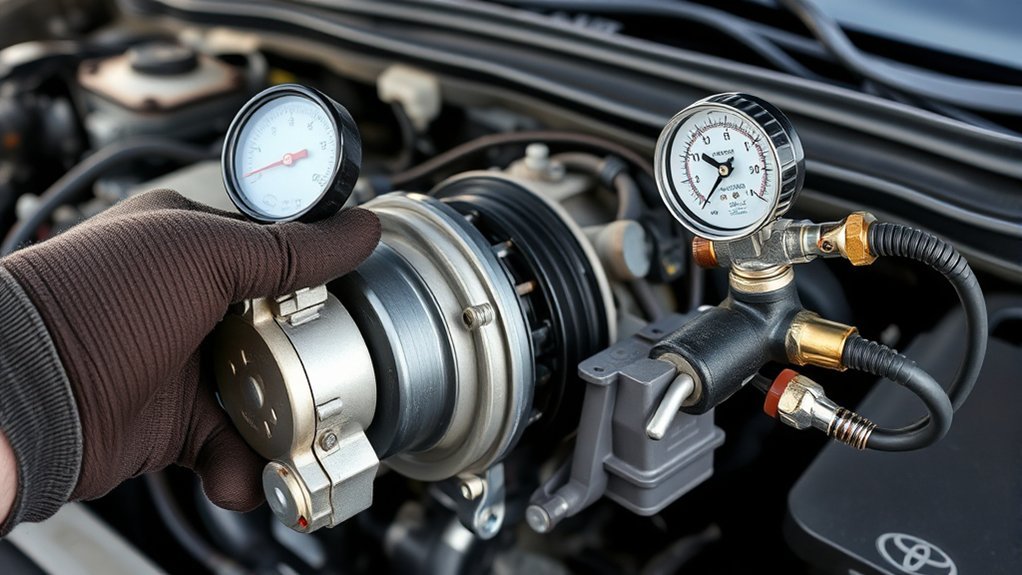
A compressor should not be condemned based only on intermittent cooling. The control system may be preventing or reducing operation because of a pressure, temperature, electrical, refrigerant, or sensor problem.
Possible compressor-related warning signs include:
- Grinding, rattling, or knocking that begins when cooling is requested
- A damaged pulley, bearing, connector, or drive belt on systems that use them
- Correct electrical command and power reaching an applicable compressor but no expected pressure response
- Metal debris or severe contamination found during professional refrigerant recovery
- A compressor-control valve that does not respond correctly on a compatible variable-displacement system
- An electric-compressor fault on a compatible hybrid system
Some older or conventional systems may use an electromagnetic clutch that can fail to engage. Other systems regulate compressor output differently, and Camry Hybrid systems can use a high-voltage electric compressor. Visible clutch cycling is therefore not a universal Camry test.
Caution: Do not touch refrigerant tubing to judge pressure or compressor condition. Lines and nearby engine components may be hot, and refrigerant can cause serious cold burns if a line or fitting is disturbed.
[Amazon Products Picked for You]

Vehicle Fitment: Air Conditioner AC Compressor Compatible with Chevrolet for Camaro 3.6L 2010-2015, Confirm that this AC Compressor for car will fit your car by using Amazon's garage. Please make sure to match photos with your existing a/c compressor.

Fitment for A/C Compressor with Clutch: for Ford Crown Victoria 4.6L 2003-2007, for Ford Expedition 5.4L 2002-2006, for Ford Explorer 4.6L 2002-2005, for Lincoln Aviator 4.6L 2003-2005, for Lincoln Navigator 5.4L 2002-2006, for Lincoln Town Car 4.6L 2003-2005, for Mercury Grand Marquis 4.6L 2003-2006, for Mercury Mountaineer 4.6L 2002-2005, for Ford E-150 4.2L 2002-2003, for Ford E-150 4.6L 2003-2007, for Ford E-150 5.4L 2002-2007, for Ford E-150 Club Wagon 4.2L 2003

PREMIUM PERFORMANCE: This Reman A/C Compressor delivers top-notch cooling efficiency, ensuring your vehicle's interior stays comfortable in all weather conditions.
Can Low Refrigerant Cause Intermittent Camry AC Cooling?
Yes. A low refrigerant charge can contribute to weak or intermittent cooling, but warm air does not prove the system is low. Your Camry’s A/C is designed to operate with a specified refrigerant type and charge amount, and the under-hood refrigerant label identifies the specification for that vehicle.
A low refrigerant charge is a symptom that calls for leak investigation, while an excessive charge can also reduce cooling and raise system pressure.
Low charge can reduce cooling performance, cause compressor operation to be limited by pressure protection, and contribute to unstable system behavior under some conditions. Too much refrigerant can also impair performance.
Do not rely on a generic sight-glass observation or a single low-side gauge reading. System pressures change with outside temperature, cabin heat load, fan speed, engine or compressor speed, compressor design, and control commands. The EPA explains that topping off or recharging can improve cooling but does not permanently repair a refrigerant leak, and a measured evacuation/recharge allows the specified amount to be installed when that service is appropriate.
If cooling has weakened, a technician should evaluate the entire system rather than automatically adding refrigerant.
How Should Toyota Camry AC Leaks Be Diagnosed and Repaired?
You can perform a limited visual inspection, but refrigerant recovery, line opening, evacuation, and charging require the correct refrigerant-specific equipment and procedures.
[Amazon Products Picked for You]

Professional AC Leak Detector Kit: Designed specifically for detecting automotive air conditioner leak, Vansky AC leak detector flashlight incorporates cutting-edge R&D technologies. Equipped with 68 high-quality LED beads, it can accurately pinpoint leaks, even in garage or indoor space. Compared to other flashlights, Vansky optimized ultraviolet light operates at a level 40% brighter, setting it apart in brightness.
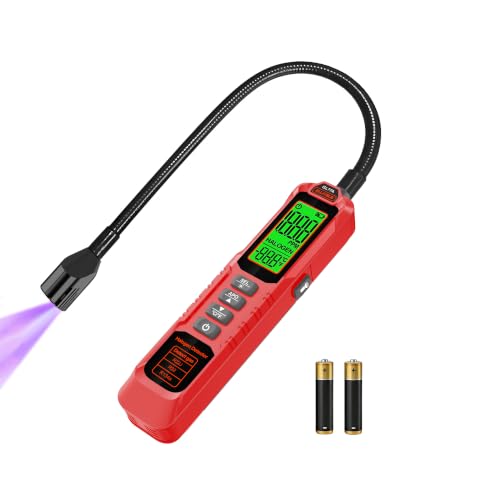
High-Sensitivity Freon Leak Detector: The GL77A refrigerant leak detector utilizes a premium heat dioxide semiconductor sensor. Boasting a maximum sensitivity of 0.49oz/year (14g/year), it accurately detects a wide range of halogenated refrigerants. Detection for R134a, R1234yf, R410a, R22, R404a, R407c, R454b, R32, and more. (Note: Due to space limitations, the user manual only lists common models, but this device is fully capable of detecting all halogen refrigerants).

Upgraded version of WJL-6000. Traditional corona sensor with updated analogue circuit, fast triggers on R11, R22, R134A, R404a, R410A and all halogenated refrigerants including HFCs, CFCs,HCFCs and blends.
Safe Checks You Can Perform
- Look for obvious physical damage to the condenser through the grille.
- Inspect accessible hoses and fittings for heavy oily residue or impact damage.
- Check whether dirt or debris is blocking condenser airflow.
- Write down whether the system has been recharged before and how quickly cooling faded again.
- Read the under-hood refrigerant label so the shop knows which refrigerant the vehicle requires.
What a Proper Leak Repair Should Include
- Confirm the refrigerant type and vehicle specification.
- Perform a system performance test and inspect the components.
- Recover the refrigerant with approved equipment when the system must be opened.
- Use an appropriate leak-detection method, such as an electronic detector, approved dye, or another manufacturer-supported procedure.
- Repair or replace the leaking component and any required seals.
- Evacuate the system according to the applicable service procedure to remove air and moisture before charging.
- Recharge the exact specified amount by weight.
- Confirm vent temperature, system pressure, condenser-fan operation, compressor control, and leak-free operation.
The EPA notes that topping off or recharging may improve cooling but does not permanently repair a refrigerant leak. Repairing the source of the leak provides a longer-lasting result.
Note: Avoid stop-leak products unless the vehicle manufacturer and servicing shop specifically approve them. Some sealers can interfere with service equipment, contaminate the system, or complicate a later repair.
How Can You Reduce Repeat Camry AC Problems?

Routine inspection cannot prevent every electrical or mechanical failure, but it can reduce airflow problems and help you notice a change before the system stops cooling consistently.
- Follow the model-year maintenance guide: Use the Toyota Manuals and Warranties portal to find the guidance for your exact Camry.
- Inspect the cabin filter when airflow falls: Replace it according to the maintenance guide or sooner when it is visibly dirty, damaged, or restricted.
- Keep the condenser face clear: Remove loose leaves and debris carefully without bending the fins or directing excessive pressure at the condenser.
- Do not add refrigerant as routine maintenance: A normally operating sealed system should not be treated as though periodic topping off is a scheduled service.
- Run the system periodically: Brief operation during cooler months can help you notice a developing problem before hot weather.
- Watch for water drainage: Water dripping under the vehicle after A/C use is usually normal condensate. Water inside the cabin may indicate a blocked drain or another problem.
- Respond to unusual sounds: Grinding, squealing, repeated clicking, or abnormal fan noise should be inspected before the fault worsens.
- Keep service records: Record refrigerant work, leak repairs, filter replacement, diagnostic codes, and test results.
There is no single cabin-filter interval or annual A/C inspection rule that applies to every Camry. The correct schedule depends on the model-year guide and the conditions in which you drive.
When Should You Get Professional Help for an Intermittent Camry AC?
Schedule professional diagnosis when simple airflow and visual checks do not reveal the cause or when the problem involves refrigerant, high voltage, repeated electrical failures, or a component that must be tested under operating conditions.
Professional help is especially important when:
- The A/C repeatedly changes from cold to warm
- A recharge improved cooling only temporarily
- The cooling fan does not run when commanded
- A fuse fails more than once
- You hear grinding, rattling, or severe belt noise
- The system develops a refrigerant or electrical fault code
- One side of a dual-zone system remains warm
- Airflow fades after several minutes and returns after the system rests
- The vehicle is a Camry Hybrid and compressor or high-voltage diagnosis is required
- A line, condenser, compressor, or evaporator must be opened or replaced
Ask the shop to document the vent temperature, outside temperature, fault codes, pressure readings, refrigerant amount recovered where applicable, leak-test result, fan operation, and the reason a part failed its test. A diagnosis based on measurements is more useful than replacing parts until the symptom disappears.
In the United States, the EPA regulates motor-vehicle air-conditioning service. Anyone performing MVAC service for payment or barter must meet the applicable Section 609 technician-certification requirements and use approved refrigerant-handling equipment.
Frequently Asked Questions
Why does my Camry AC work sometimes and then stop?
Possible causes include an intermittent electrical connection, condenser-fan failure, evaporator icing, low refrigerant from a leak, a faulty sensor, an air-mix door problem, or compressor control. Note whether the airflow becomes weak or stays strong and warm because that distinction narrows the diagnosis.
Why is the AC cold while driving but warm when my Camry is stopped?
Road speed pushes more air through the condenser. If cooling weakens at idle, check for a cooling-fan problem, blocked condenser, fan-control fault, incorrect refrigerant charge, or another condition causing abnormal system pressure. Keep clear of the fans because they can start automatically.
Why does the airflow get weaker after the AC runs for a while?
Gradually weakening airflow can indicate ice forming on the evaporator. Possible contributors include a clogged filter, poor airflow, a faulty evaporator-temperature sensor, an incorrect refrigerant charge, or another control problem. If airflow returns after the system rests, tell the technician how long the failure takes to occur.
Can a dirty cabin air filter make the AC work intermittently?
A heavily restricted filter can reduce airflow and may contribute to evaporator icing. However, it usually does not explain strong airflow that suddenly changes from cold to warm. Inspect the filter, but continue diagnosis if replacing it does not correct the temperature problem.
How do I reset a Toyota Camry AC system?
There is no universal battery-disconnection reset that repairs every Camry A/C fault. Turn the climate control off, restart the vehicle, and retest the settings. If the controls remain unresponsive or the fault returns, follow the procedure in the model-year owner’s manual or have the climate-control system scanned. Do not disconnect a hybrid battery or high-voltage component.
Should I add refrigerant when the AC starts blowing warm?
Not until the system has been evaluated. Warm air can result from fan, sensor, electrical, air-door, or compressor-control problems as well as low refrigerant. Adding refrigerant without knowing the existing charge can overcharge the system and may hide a leak temporarily.
What does a flashing AC light mean on a Toyota Camry?
On an applicable Camry, a flashing A/C indicator is a diagnostic clue that should be checked with the exact model-year information. The trigger is not universal across Camry generations, so do not assume the relay, clutch, compressor, or one sensor has failed without testing. Record when the light flashes and have the climate-control system checked if the condition returns.
Sources
- Toyota Manuals and Warranties — model-year owner’s manuals and maintenance guidance.
- Toyota Technical Information System — model-specific repair manuals, wiring diagrams, service bulletins, and diagnostic information.
- Toyota: Troubleshooting Common Car AC Issues — general Toyota guidance on restricted airflow and common cooling faults.
- Toyota 2026 Camry — current U.S. Camry powertrain information.
- EPA: Options for Recharging Your Air Conditioner — leak repair, top-off limitations, leak detection, and refrigerant charging.
- EPA: Regulatory Requirements for MVAC System Servicing — refrigerant handling, venting, recycling, and equipment rules.
- EPA: Section 609 Technician Certification — certification requirements for paid or bartered motor-vehicle A/C service.
Conclusion
When your Toyota Camry AC works intermittently, diagnose the pattern before the part. Determine whether airflow becomes weak or merely warm, whether the failure occurs at idle or road speed, whether an A/C indicator changes, and whether restarting the vehicle temporarily restores cooling. Those observations can separate filter and icing problems from fan, electrical, refrigerant, air-door, and compressor-control faults.
You can safely inspect the cabin filter, condenser face, vent operation, visible wiring, and model-specific fuse information. Refrigerant recovery and charging, compressor diagnosis, high-voltage work, and advanced electrical testing should use the correct Toyota service information and equipment. A measured diagnosis is safer and usually more useful than replacing parts based on the symptom alone.
