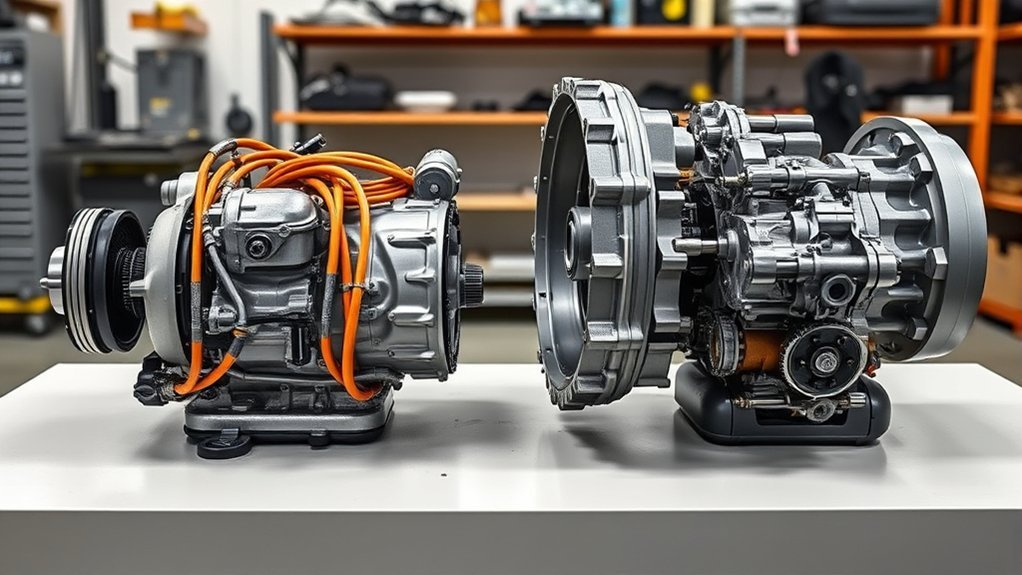
When you compare an e-CVT with a traditional automatic transmission, the biggest difference is how each system connects the engine to the wheels. An e-CVT coordinates engine and electric-motor power as part of a hybrid drivetrain, while a traditional automatic shifts through a fixed set of gears. That difference affects acceleration, engine sound, fuel use, maintenance, towing suitability, and repair needs.
Quick Answer
An e-CVT usually provides smooth, efficient hybrid operation without conventional shift events. A traditional automatic uses fixed gears and produces a more familiar shifting feel. Neither design is automatically better or more reliable. Your best choice depends on the specific vehicle, driving conditions, towing needs, service history, and manufacturer maintenance schedule.
Key Takeaways
- An e-CVT is an electronically managed hybrid drive system, not simply a belt-and-pulley CVT with added electronics.
- Not every e-CVT uses the same hardware. Some use planetary power-split gearing, while others use two motors and a direct engine-drive clutch.
- Traditional automatics shift through fixed ratios and usually give you clearer shift sensations.
- An e-CVT can support strong fuel economy and smooth acceleration, but the entire vehicle design determines real-world results.
- Reliability, towing capacity, fluid service, and repair costs must be checked for the exact model rather than assumed from the transmission label.
What Is an e-CVT and How Does It Work?
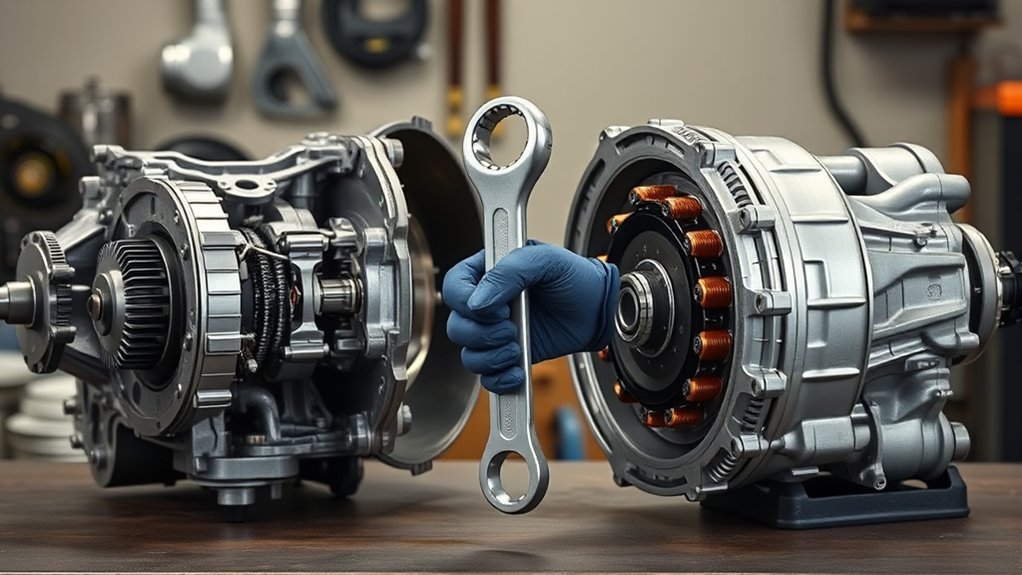
The term e-CVT, short for electronic continuously variable transmission, describes a hybrid powertrain that can vary the relationship between engine speed and vehicle speed without shifting through a normal sequence of fixed gears. The word describes how the system behaves, but it does not identify one universal mechanical design.
For example, Toyota describes its THS II transaxle as a two-motor mechanical power-split system. An Oak Ridge National Laboratory evaluation of the 2010 Prius documents an engine, drive motor, generator, planetary gearset, reduction gears, and differential within the drive system.
Honda has used the electric-CVT label for a different layout. Its documented i-MMD system contains two electric motors and a clutch that can connect the gasoline engine directly to the drive axle during suitable high-speed cruising. At lower speeds or during stronger acceleration, the drive motor can propel the vehicle while the engine generates electricity.
Power-Split e-CVT
In a Toyota-style power-split system, the engine and two motor-generators are connected through planetary gearing. Electronic control of the motor-generators changes how engine power, electrical power, and wheel speed interact. This creates a continuously variable effective ratio without a belt moving between variable-width pulleys.
The physical gears still have fixed tooth counts. The system feels continuously variable because motor-generator speed can be controlled over a broad operating range, allowing the engine to run at a speed selected for the requested power and efficiency.
Two-Motor and Direct-Drive e-CVT
In a two-motor system such as Honda’s documented i-MMD arrangement, the traction motor handles much of the wheel propulsion during low-speed and moderate-speed driving. The gasoline engine can turn a generator, and electrical energy then powers the traction motor. Under suitable highway conditions, a clutch can connect the engine directly to the wheels through a fixed mechanical ratio.
Note: An e-CVT should not be assumed to contain a conventional CVT belt. Check the manufacturer’s technical description for the exact vehicle because the internal design varies among brands and hybrid systems.
How Does a Traditional Automatic Transmission Work?
A traditional automatic transmission uses a fixed number of forward gear ratios. Most conventional designs combine planetary gearsets, clutch packs, hydraulic pressure, electronic controls, and a torque converter. The transmission selects different combinations of gears and clutches as you accelerate or slow down.
- Launch: A torque converter commonly transfers engine power while allowing the vehicle to remain stopped with the engine running.
- Acceleration: The transmission shifts from one fixed ratio to another as speed and load change.
- Cruising: Higher gears reduce engine speed, and a lockup clutch may reduce torque-converter slip.
- Downshifting: The transmission selects a lower gear when you request more acceleration or when additional engine braking is needed.
This is different from a common belt-type CVT, which changes ratio by moving a belt or chain between variable-diameter pulleys. A traditional stepped automatic does not normally depend on that type of traction belt.
e-CVT vs. Automatic Transmission: Key Differences
| Feature | e-CVT | Traditional Automatic |
|---|---|---|
| Typical application | Full hybrids and some plug-in hybrids | Gasoline, diesel, mild-hybrid, and some full-hybrid vehicles |
| Ratio control | Continuously manages engine, motor, and wheel speeds without normal stepped shifts | Selects from a fixed number of forward gears |
| Common hardware | Varies by design; may use motor-generators and planetary power-split gearing or two motors with a direct-drive clutch | Fixed gearsets, clutch packs, hydraulic controls, electronics, and usually a torque converter |
| Acceleration feel | Usually smooth and continuous, with electric torque available at low speed | Distinct upshifts and downshifts, although modern units can shift very smoothly |
| Engine sound | Engine speed may rise and remain steady while road speed catches up | Engine speed usually rises and falls with each gear change |
| Fuel-economy role | Helps the hybrid system coordinate efficient engine operation, electric assistance, and regenerative braking | Uses higher gears, lockup operation, and programmed shifting to reduce fuel use |
| Towing and sustained load | Depends entirely on the vehicle’s published rating, cooling system, battery, and hybrid calibration | Common in high-capacity tow vehicles, but capability still depends on the exact vehicle and transmission |
| Routine service | Model-specific fluid inspection or replacement, leak checks, cooling-system checks, and diagnostic scans | Model-specific fluid service, possible filter service, leak checks, and diagnostic scans |
| Repair considerations | May require hybrid-qualified diagnostics and high-voltage safety procedures | Widely understood by transmission shops, although modern units can still be complex and expensive |
Efficiency and Performance Benefits of an e-CVT
An e-CVT can help a hybrid powertrain use the gasoline engine, traction motor, generator, and battery more effectively. The controller can decide whether the engine, electric motor, or both should provide power at a given moment. It can also recover some kinetic energy through regenerative braking and store it in the traction battery.
The U.S. Department of Energy explains that a hybrid combines an internal-combustion engine with one or more electric motors. Regenerative braking, reduced engine idling, and electric assistance can improve fuel economy without preventing normal vehicle performance.
During gentle acceleration, an e-CVT may use substantial electric assistance while keeping the engine within a useful operating range. During stronger acceleration, the engine and motor can work together. When you slow down, the traction motor may operate as a generator and return energy to the battery.
The e-CVT supports efficiency by coordinating the hybrid system. It does not determine fuel economy by itself. Vehicle weight, aerodynamics, tires, engine design, battery condition, temperature, speed, and driving style also matter.
Electric-motor torque can also provide prompt response from a stop. However, it is inaccurate to promise that every e-CVT eliminates lag or accelerates more quickly than every traditional automatic. Performance must be judged using the specifications and road behavior of the complete vehicle.
How Does an e-CVT Affect Your Driving Experience?
The most noticeable difference is the absence of normal shift events. When you press the accelerator, the vehicle may build speed in one continuous motion rather than producing a sequence of upshifts.
Low-Speed Driving
Many full hybrids can begin moving under electric power when battery charge, temperature, and power demand allow it. This can make parking-lot and stop-and-go operation feel quiet and smooth. The gasoline engine may start automatically when more power, cabin heat, or battery charging is needed.
Hard Acceleration
During a strong acceleration request, engine speed may rise quickly and remain relatively steady while road speed continues to increase. Some drivers describe this as a disconnected or “rubber-band” sensation, even when the vehicle is accelerating normally.
Other drivers prefer the smooth delivery because there is no interruption for a conventional gear change. Some manufacturers also program simulated shift steps, sound changes, or paddle-controlled responses to create a more familiar driving sensation.
Regenerative Braking Feel
An e-CVT hybrid also coordinates regenerative and friction braking. You may notice stronger deceleration when lifting off the accelerator or selecting a higher-regeneration mode. Brake-pedal feel can vary as the vehicle blends energy recovery with the conventional brakes.
Pro Tip: Test-drive the vehicle on a hill, an entrance ramp, a rough road, and in slow traffic. These conditions reveal engine sound, acceleration response, regenerative-braking feel, and simulated shifting more clearly than a short drive around a dealership.
e-CVT vs. Standard Automatic: Pros and Cons
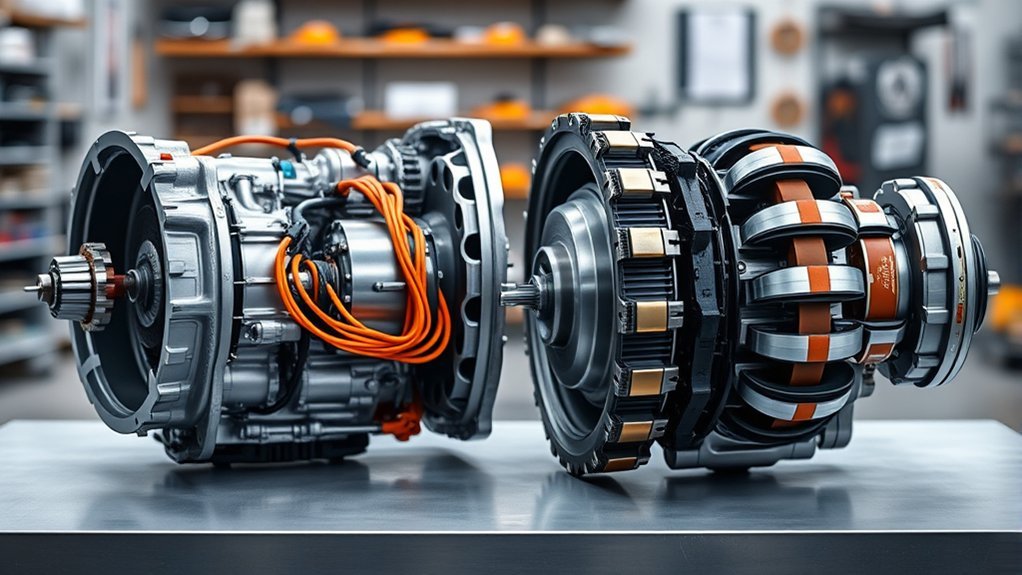
Advantages of an e-CVT
- Smooth power delivery: Normal acceleration does not require a sequence of conventional shifts.
- Useful low-speed torque: The traction motor can respond quickly from a stop when sufficient electrical power is available.
- Efficient hybrid coordination: The controller can blend engine power, electric assistance, battery charging, and regenerative braking.
- Reduced engine idling: A full hybrid can shut off the gasoline engine when conditions permit.
- Potentially fewer conventional shift components: Some e-CVT designs avoid the many shift clutches found in a multi-speed automatic.
Limitations of an e-CVT
- Unfamiliar sound: Engine speed may not rise and fall in proportion to road speed.
- Limited driver feedback: Drivers who enjoy distinct shifts may find the power delivery less engaging.
- Specialized diagnosis: Transmission concerns can involve the motor-generators, inverter, battery, control software, or cooling system.
- No universal towing advantage: You must use the towing limit published for the complete vehicle.
- Repair availability: Not every independent transmission shop is equipped or trained to diagnose high-voltage hybrid systems.
Advantages of a Traditional Automatic
- Familiar operation: Engine sound and acceleration usually follow recognizable gear changes.
- Broad vehicle selection: Traditional automatics are available in small cars, performance vehicles, vans, SUVs, and heavy-duty tow vehicles.
- Established repair network: More general transmission shops have experience rebuilding or replacing conventional units.
- Direct performance feel: Fixed gears can provide clear downshifts and stronger driver feedback.
Limitations of a Traditional Automatic
- Shift interruption: Gear changes can create a small pause, flare, or bump, especially if the transmission is worn or poorly calibrated.
- More shift hardware: Multi-speed units may contain numerous clutch packs, valves, solenoids, and hydraulic passages.
- Heat sensitivity: Towing, repeated acceleration, low fluid, or restricted cooling can raise transmission temperature.
- Potentially costly repairs: A modern automatic can be expensive to rebuild or replace despite the wider repair network.
Which Transmission Is Better for You?
An e-CVT may suit you better when your priorities are smooth urban driving, low-speed electric operation, fewer noticeable shifts, and strong hybrid fuel economy. It is especially appealing if most of your driving involves traffic, short trips, or mixed city and suburban roads.
A traditional automatic may suit you better when you prefer distinct gear changes, regularly tow with a vehicle designed for that purpose, want a broader selection of non-hybrid vehicles, or value access to conventional transmission repair specialists.
Do not choose solely from the label on the specification sheet. Compare the complete vehicles by considering:
- Official fuel-economy ratings and your normal route
- Acceleration and engine sound during a real test drive
- Published towing and payload limits
- Hybrid-system and transmission warranty coverage
- Maintenance requirements and fluid specifications
- Local access to qualified repair facilities
- Vehicle price, insurance, and expected ownership period
- Reliability history for the exact model year and powertrain
[Amazon Products Picked for You]

For use in 95% of vehicles including most CVTs in operation with US registered light duty applications
Optimized viscosity and advanced friction reducing additive technology provide exceptional fuel economy performance

6 Quarts of genuine Subaru CVTF-II fluid
Reliability and Repair Considerations
An e-CVT can be mechanically simpler than a multi-speed automatic in some respects because it may not need a torque converter or a large collection of shifting clutch packs. That does not prove that every e-CVT vehicle will be more reliable.
The complete hybrid system can include motor-generators, an inverter, a traction battery, power electronics, control modules, high-voltage wiring, cooling pumps, and temperature sensors. A fault in one of these systems can produce symptoms that feel like a transmission problem.
A traditional automatic has its own potential failure points, including clutch packs, solenoids, valve-body passages, seals, bearings, the torque converter, and hydraulic pumps. Reliability therefore depends on the design, manufacturing quality, software, operating temperature, maintenance history, vehicle use, and previous repairs.
When evaluating a used vehicle, review service records and check for warning lights, fluid leaks, delayed engagement, harsh shifts, abnormal noises, reduced-power messages, and unresolved diagnostic trouble codes. A pre-purchase inspection should include the hybrid system when the vehicle has an e-CVT.
[Amazon Products Picked for You]

CEL Doctor: The ANCEL AD310 is one of the best-selling OBD II scanners on the market and is recommended by Scotty Kilmer, a YouTuber and auto mechanic. It can easily determine the cause of the check engine light coming on. After repairing the vehicle's problems, it can quickly read and clear diagnostic trouble codes of emission system, read live data & hard memory data, view freeze frame, I/M monitor readiness and collect vehicle information

Easily Diagnose Car and Truck Issues from Your Phone – Scan and identify 39,000+ issues across thousands of vehicles, from Check Engine lights to enhanced codes. Validate repairs or vehicle condition and reset codes without being an expert.
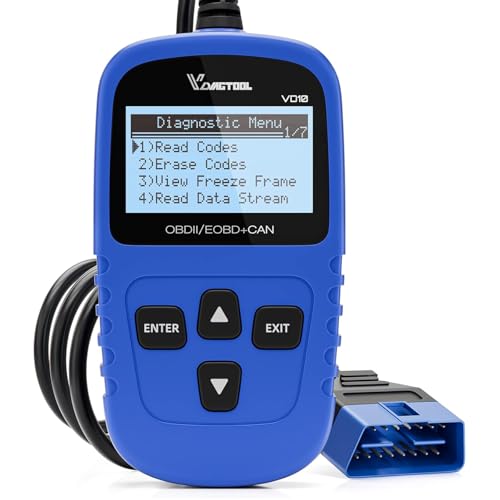
【A MUST-HAVE TOOL FOR DIYERS】 - VDIAGTOOL VD10 car code reader is an incredibly useful obd scanner for each car owner or hobbyist, even for those with little to no experience when it comes to vehicle mechanics! Similar to a fixd car diagnostic tool, using this car diagnostic scanner is extremely easy. All you have to do is attach it to your car OBDII port and you can diagnose car problems in seconds! Read Codes (DTCs); Clear Codes; Live Data; View Freeze Frame; I/M Readiness; Vehicle Information.
Essential Maintenance Tips for e-CVT and Automatic Transmissions
There is no single fluid-change interval that applies to every e-CVT and traditional automatic. The correct schedule comes from the maintenance guide for the exact model, model year, powertrain, and operating conditions.
| Maintenance Item | e-CVT | Traditional Automatic |
|---|---|---|
| Fluid interval | Follow the model-specific maintenance guide; the schedule may call for inspection or replacement based on time, mileage, or severe use | Follow the model-specific maintenance guide; intervals vary widely by design and operating conditions |
| Fluid type | Use only the exact manufacturer-approved transaxle fluid | Use only the exact manufacturer-approved automatic-transmission fluid |
| Filter | May be absent, internal, or not listed as a routine service item | May be replaceable, internal, or serviced only during pan removal or repair |
| Routine checks | Inspect for leaks, warning messages, cooling concerns, damaged wiring, and unusual noises | Inspect for leaks, delayed engagement, shift problems, overheating, and unusual noises |
| Diagnostic service | Use a scan tool capable of reading hybrid, battery, inverter, motor, and transmission modules | Use a scan tool capable of reading transmission data, shift commands, temperatures, and pressure-related faults |
For Toyota vehicles, the Toyota owner-manual portal provides model-specific manuals and warranty information. Owners of other brands should use the equivalent official manufacturer portal or the printed maintenance guide supplied with the vehicle.
Warning: Do not substitute a generic transmission fluid because its label says it is compatible with several vehicles. Incorrect electrical, friction, viscosity, or additive properties can cause poor operation or damage. High-voltage hybrid components should be diagnosed or opened only by trained technicians using the manufacturer’s isolation and safety procedures.
Heavy towing, repeated mountain driving, commercial use, extreme temperatures, and frequent high-load operation may place the vehicle under a severe-service schedule. Follow the vehicle’s published limits and never exceed its tow, payload, axle, or combined-weight ratings.
[Amazon Products Picked for You]

Enhanced friction durability for smooth transmission performance

Backward compatible with previous DEXRON automatic transmission fluids and can be used as a much-improved replacement for older vehicles/transmissions originally using previous DEXRON fluids

Auto Transmission Flush Machine: Driving Force: (Electric) DC12V; Pressure Gauge: 0-60PSI
Frequently Asked Questions
What is the difference between a CVT and an e-CVT?
A common mechanical CVT usually varies ratio with a belt or chain running between variable-width pulleys. An e-CVT is part of a hybrid drive system and uses electric-motor control to create continuously variable operation. Its internal hardware may include planetary power-split gearing or a two-motor arrangement with a direct engine-drive clutch.
Is an e-CVT more reliable than a traditional automatic?
Not in every vehicle. Some e-CVT designs avoid conventional shift clutches and torque converters, which can reduce certain mechanical wear points. However, the hybrid system adds motors, power electronics, a battery, cooling equipment, and specialized controls. Compare reliability data for the exact model year and powertrain.
What are the limitations of an e-CVT?
Possible drawbacks include an unfamiliar engine sound during acceleration, limited shift feedback, specialized hybrid diagnosis, and fewer repair options at general transmission shops. Towing and sustained-load capability also depend on the complete vehicle rather than the e-CVT label.
How can you tell whether a vehicle has a CVT, e-CVT, or automatic transmission?
Check the owner’s manual, manufacturer specification sheet, window sticker, or transmission code linked to the VIN. Driving feel alone is not conclusive because conventional automatics can shift almost imperceptibly and some CVTs or e-CVTs simulate stepped gear changes.
Does an e-CVT have a belt?
Many well-known e-CVT systems do not use the variable-pulley traction belt found in a common mechanical CVT. Toyota-style systems use power-split gearing, while Honda’s documented two-motor system uses motors and a direct-drive clutch. Verify the design for the specific vehicle.
Can you tow with an e-CVT vehicle?
You can tow only when the manufacturer gives that vehicle a towing rating. The rating accounts for the engine, motors, battery, cooling system, brakes, chassis, tires, and driveline. Never assume that another hybrid with a similar e-CVT has the same capability.
Does an e-CVT need transmission-fluid changes?
An e-CVT contains lubricating fluid, but the inspection or replacement schedule varies. Some maintenance guides specify an interval, while others call for inspection or replacement under severe operating conditions. Use the exact fluid and schedule listed for the model and year.
Conclusion
An e-CVT is usually the stronger choice when you value smooth hybrid operation, efficient city driving, and electric-motor assistance without conventional shift events. A traditional automatic transmission may be more appealing when you prefer fixed-gear feedback, need a vehicle configured for substantial towing, or want broader access to conventional transmission repair services.
Neither design is automatically more durable, faster, or less expensive to maintain. Compare the exact vehicles, test-drive them under realistic conditions, review their maintenance schedules and warranties, and confirm any towing requirement before deciding.
Sources
- Toyota Motor Corporation: 2.0-Liter Toyota Hybrid System II — documents Toyota’s two-motor mechanical power-split transaxle and hybrid control approach.
- Honda Motor Co.: Sport Hybrid i-MMD Technical Overview — documents a two-motor electric CVT, three driving modes, and direct engine-drive clutch operation.
- U.S. Department of Energy Alternative Fuels Data Center: How Hybrid Electric Cars Work — explains electric assistance, regenerative braking, batteries, motors, and hybrid fuel-economy benefits.
- Oak Ridge National Laboratory: Evaluation of the 2010 Toyota Prius Hybrid Synergy Drive System — provides a technical teardown of the Prius motor, generator, planetary gearing, and reduction gears.
- Toyota Manuals and Warranties — supports using the exact vehicle manual and maintenance guide rather than a universal fluid-service interval.
