
Tire rotation and wheel alignment are different services, but both can affect tire wear, handling, and long-term ownership costs. Rotation changes where each tire sits on the vehicle. Alignment measures and corrects how the wheels point and contact the road. Knowing which service you need can prevent unnecessary work and help you address the real cause of a tire or steering problem.
Quick Answer
Tire rotation moves tires to different positions to help balance normal wear. Wheel alignment adjusts wheel angles to manufacturer specifications so the vehicle tracks correctly. Rotation is usually scheduled by mileage, while alignment is normally checked after an impact, abnormal tread wear, steering changes, suspension work, or when the manufacturer recommends it.
Key Takeaways
- Rotation changes tire positions; alignment changes wheel angles.
- Follow your owner’s manual for the correct rotation interval and pattern.
- Pulling, an off-center steering wheel, and edge wear can justify an alignment check.
- Speed-related vibration more often points to wheel balance, tire damage, or a wheel or suspension problem.
- Directional, staggered, and some performance-tire setups cannot use a standard crisscross rotation.
Why Tire Rotation Is Important for Your Vehicle

Tire rotation means moving tires from one wheel position to another according to a pattern approved for the vehicle and tire type. The goal is to spread normal position-related wear across the set rather than allowing one axle or corner to wear out much sooner than the others.
Each tire position handles a different combination of steering, braking, acceleration, cornering, and vehicle weight. On many front-wheel-drive vehicles, for example, the front tires handle steering, a large share of braking, and engine power. They may therefore wear faster than the rear tires. Rear-wheel-drive, all-wheel-drive, electric, towing, and performance vehicles can produce different wear patterns.
According to the National Highway Traffic Safety Administration, rotation can reduce irregular wear and help tires last longer. NHTSA advises checking the owner’s manual for the correct pattern and interval. When the vehicle manufacturer recommends rotation, a general range is about 5,000 to 8,000 miles, or sooner if uneven wear develops.
Rotation can help maintain consistent traction, road noise, and handling as the tires age. It cannot, however, repair wear caused by incorrect pressure, damaged suspension parts, an alignment problem, or a tire defect.
Pro Tip: Record each rotation’s date, mileage, tread depth, and tire positions. This creates proof of maintenance for mileage-warranty claims and makes developing wear patterns easier to spot.
[Amazon Products Picked for You]

[🔨PROFESSIONAL QUALITY ] - AUTOWN Tire Repair Kits are made of refined high-quality steel, AUTOWN upgraded tire patch kits comply with exacting standards of audit, can repair the toughest tires on the market.
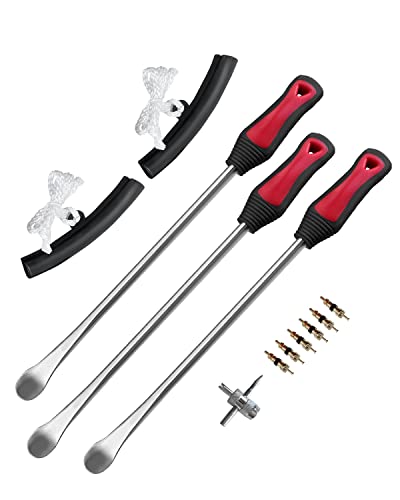
High Quality: Crafted from hardened steel-iron, each tire iron spoon features curved tips for superior strength and reliable durability. This robust construction ensures you can easily break beads and remove or reinstall tires on various vehicles with minimal effort and maximum reliability.

STEEL-IRON TIRE SPOONS: Each tire lever is constructed of hardened steel-iron with curved tips that provides strong toughness and reliable durability.
Choosing the Correct Tire Rotation Pattern
There is no single rotation pattern that works for every vehicle. Use the pattern in your owner’s manual or tire documentation. Common arrangements include:
- Front-wheel drive: The front tires commonly move straight to the rear, while the rear tires cross to the front.
- Rear-wheel drive: The rear tires commonly move straight to the front, while the front tires cross to the rear.
- AWD or 4WD: A crossing pattern may be used when all four tires are the same size and non-directional. Equal tread depth is especially important because large differences can affect some driveline systems.
- Directional tires: These normally move front to rear on the same side unless they are removed from the wheels and remounted in the correct direction.
- Staggered sizes: If the rear tires are wider or a different diameter from the fronts, front-to-rear rotation may not be possible. Side-to-side movement may also be restricted by directional tread.
- Full-size matching spare: Some vehicles use a five-tire rotation. A temporary spare should not be included.
The Michelin tire-rotation guide and Bridgestone rotation guide explain how drivetrain, tire direction, size, and spare-tire design change the correct pattern.
Why Wheel Alignment Matters for Your Ride
Wheel alignment is the process of measuring and, where the vehicle allows it, adjusting the wheel and suspension geometry to match manufacturer specifications. It does not involve moving tires from one position to another.
Correct alignment helps the tires point in the intended direction, contact the road properly, and work together as the vehicle travels straight and turns. Poor alignment can contribute to rapid edge wear, steering pull, an off-center steering wheel, wandering, or reduced steering consistency.
An alignment machine measures the relationship between the wheels, steering system, suspension, and vehicle centerline. Some alignment angles are adjustable, while others may require replacement of bent, loose, or worn parts before the readings can be corrected.
Unlike tire rotation, alignment does not have one universal mileage interval. Check the owner’s manual, but also consider an alignment inspection when:
- The vehicle consistently pulls or drifts on a straight, level road.
- The steering wheel is not centered while the vehicle travels straight.
- The inner or outer shoulder of a tire is wearing faster than the rest of the tread.
- You hit a severe pothole, curb, or road object.
- New tires are installed and the old tires show abnormal wear.
- Steering or suspension parts are replaced.
- The vehicle is lifted, lowered, or otherwise modified in a way that changes ride height.
- The manufacturer lists an alignment inspection in the maintenance schedule.
NHTSA states that proper alignment can help maximize tire life and prevent the vehicle from veering on a straight, level road. A qualified technician should inspect damaged or worn suspension and steering parts before attempting to align the vehicle.
Note: A slight drift on a crowned road does not automatically prove the alignment is wrong. Tire pressure, tire construction, wind, brake drag, loading, and road slope can also affect tracking.
[Amazon Products Picked for You]

【Caliper Removal Not Required】 Unlike traditional wheel alignment tools, our upgraded alignment tool eliminates the need for brake caliper removal. The inclusion of versatile extension pieces allows for direct and immediate use, streamlining the entire process for a truly efficient DIY experience.

Precision Toe Angle Measurement: Please remove the tire first and then mount our wheel alignment tool on the wheel hub for toe angle measurement. This measurement method minimizes inaccuracies caused by tire bumps or sidewall inscriptions. Included two 5m tape measures with 1/32" increments, delivering high-accuracy measurement data.

【Easy to Use DIY Front-end Toe Adjustment】Attach the toe plates to the brake rotor after removing the tire, in conjunction with digital angle finder, then hook dual tape measure to compare wheel distances directly. This mechanical design requires no complex calibration or electronics, lowering the skill threshold for DIY enthusiasts to perform quick and effective front-end adjustments
Signs Your Vehicle Needs Tire Rotation or Wheel Alignment
The location and shape of the tire wear usually provide more useful information than wear alone. Before choosing a service, compare all four tires, check their cold pressure, and note when the symptom occurs.
| Symptom | More Likely Need | What to Check |
|---|---|---|
| Front and rear tires are wearing at different rates | Rotation | Mileage since the last rotation, tread depth, drivetrain, and approved pattern |
| Vehicle pulls consistently on a flat, straight road | Alignment or mechanical diagnosis | Pressure, tire condition, brakes, suspension, steering, and alignment readings |
| Steering wheel is off-center while driving straight | Alignment check | Steering and suspension condition before adjustment |
| Inner or outer tread edge wears rapidly | Alignment, pressure, or suspension diagnosis | Alignment readings, tire pressure, ball joints, bushings, and related parts |
| Steering wheel or seat vibrates at certain speeds | Balancing or tire, wheel, and suspension inspection | Lost wheel weights, bent wheels, tire damage, runout, debris, and worn components |
| Cupped or scalloped tread | Balance and suspension inspection | Wheel balance, shocks or struts, wheel bearings, and alignment |
Rotation changes where a tire wears. Alignment changes how the tire meets the road. Balancing changes how smoothly the tire and wheel assembly spins.
Do not assume that rotation will correct every irregular pattern. Once a tire has developed severe feathering, cupping, or shoulder wear, correcting the mechanical cause can stop further damage, but it cannot restore the rubber that has already worn away.
[Amazon Products Picked for You]

SAVE TIME & MONEY ON TOE CHECKS - Check toe-in and toe-out at home and make basic adjustments before seeking professional service, helping save time and reduce costly shop visits. Built-in tape-measure slots help keep the tape in place and reduce slipping during use.

Wide Compatibility:upgraded wheel alignment tool accommodates a wider range of vehicles, including models with low ground clearance or unique caliper bracket positioning.this wheel alignment kit suitable Car, Truck, SUV,ATV. wheel alignment tool can be used directly without removing the caliper.

DIY front‑end toe adjustment for home garages - Designed for car owners and home garages who want tocheck front-end toe and assist with basic adjustments between professional visits. Use after minor suspension, steering, or tire work to verify toe settings and keep steering stable without a costly shop trip.
How Tire Rotation Differs From Wheel Alignment
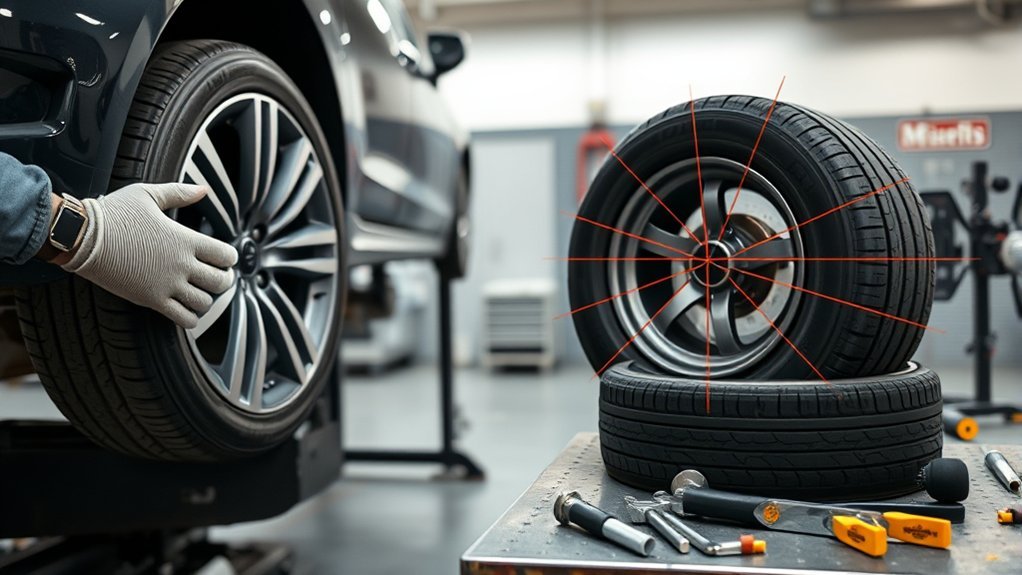
Tire rotation, wheel alignment, and wheel balancing address separate parts of tire maintenance. They may be performed during the same visit, but one service does not automatically replace or require the others.
| Aspect | Tire Rotation | Wheel Alignment | Wheel Balancing |
|---|---|---|---|
| Main purpose | Distribute position-related wear | Correct wheel and suspension geometry | Correct uneven weight around a spinning tire and wheel |
| What changes | The position of each tire | Alignment measurements and adjustable suspension or steering settings | The placement of balance weights on the wheel |
| Typical trigger | Scheduled mileage or developing axle-to-axle wear differences | Pulling, off-center steering, edge wear, impact, repair, or measured misalignment | Vibration, new tire installation, lost weights, or wheel and tire service |
| Equipment needed | Lift or jack stands, correct sockets, and a torque wrench | Professional alignment rack and measuring equipment | Wheel-balancing machine |
| Can it fix existing tread damage? | No | No, but it may prevent additional alignment-related wear | No, but it can reduce vibration and further imbalance-related wear |
Tire Rotation Process
During a tire rotation, the wheels are removed and installed in new positions using the approved pattern. A proper service should also include a visual tire inspection, tread-depth comparison, pressure check, and examination of the wheel fasteners and visible brake and suspension components.
After installation, the lug nuts or bolts must be tightened in the correct sequence and to the torque value listed by the vehicle manufacturer. Some vehicles may also require a tire-pressure monitoring system relearn or tire-position reset.
Warning: Never work under a vehicle supported only by a jack. Use approved lifting points, properly rated jack stands, wheel chocks, and the manufacturer’s wheel-fastener torque specification. If you do not have the correct equipment or experience, use a qualified service facility.
Wheel Alignment Adjustments
During an alignment, a technician mounts sensors or targets to the wheels and compares the readings with the vehicle manufacturer’s specifications. The technician then adjusts the settings that the vehicle allows.
If a reading cannot be brought into specification, the vehicle may have a bent, worn, loose, shifted, or non-adjustable component. Replacing or repairing that part may be necessary before a successful alignment can be completed.
The Michelin alignment and balancing guide distinguishes alignment-related symptoms such as pulling and edge wear from balance-related symptoms such as speed-sensitive vibration.
How Often to Rotate Tires and Check Alignment

Use your vehicle owner’s manual as the primary source for tire-maintenance intervals. A tire warranty may also require rotation records at a stated mileage.
- Tire rotation: A common general range is every 5,000 to 8,000 miles when rotation is recommended, but the exact interval depends on the vehicle, tire, drivetrain, warranty, and driving conditions.
- Severe use: Towing, heavy loads, frequent hard acceleration, city driving, rough roads, off-road use, and high-output vehicles may justify shorter intervals.
- Wheel alignment: Check it when symptoms appear, after a significant pothole or curb impact, after relevant steering or suspension work, after ride-height changes, or as directed by the manufacturer.
- Wheel balancing: New tires should be balanced when installed. Recheck balance if vibration develops or a wheel weight is lost.
- Tire pressure: Check all tires at least monthly when cold, using the pressure on the door-jamb placard or in the owner’s manual, not the maximum pressure molded into the tire sidewall.
Linking rotation to “every other oil change” is not always reliable because modern oil-service intervals differ widely. Mileage, time, tire condition, and the owner’s manual provide better guidance.
Benefits of Regular Tire Maintenance
Rotation, alignment, balancing, pressure checks, and tire inspections work together. None of these services can compensate for neglected or damaged components, but timely maintenance can reduce irregular wear and help preserve predictable handling.
Enhanced Tire Longevity
Regular rotation can prevent one axle or wheel position from using up its tread much sooner than the others. Correct pressure and alignment also help the tread contact the road as intended.
The actual increase in tire life varies. It depends on tire design, drivetrain, alignment condition, road surface, climate, vehicle load, inflation pressure, driving style, and how early maintenance begins. For that reason, a universal percentage increase should not be promised.
Improved Vehicle Handling
Similar tread depths across the tire set can help maintain consistent steering, braking, and cornering response. Correct alignment helps the vehicle track as designed, while balancing helps each tire and wheel rotate smoothly.
If handling changes suddenly, do not assume routine maintenance is the only answer. A damaged tire, bent wheel, loose component, failing wheel bearing, brake problem, or suspension fault may require immediate inspection.
Cost-Effective Maintenance Solutions
Routine tire care can reduce the chance that a usable tire must be replaced early because one shoulder, axle, or tread area wore out first. It can also reveal damage, low pressure, loose components, or developing wear before the problem becomes more expensive.
- Follow the vehicle and tire manufacturer’s rotation schedule.
- Keep rotation and alignment records.
- Check cold pressure and tread condition monthly.
- Investigate pulling, vibration, noise, or rapid wear instead of masking the symptom.
- Correct mechanical problems before installing a new set of tires.
Related Guides
Frequently Asked Questions
Is tire rotation the same as wheel alignment?
No. Rotation moves tires to different wheel positions to distribute normal wear. Alignment measures and corrects how the wheels point and contact the road. The services use different equipment and solve different problems.
Is an alignment required after a tire rotation?
Not automatically. Rotation does not normally change the alignment settings. An alignment should be measured if the vehicle pulls, the steering wheel is off-center, the tires show edge wear, or another condition suggests the geometry may be incorrect.
What is the difference between alignment, balancing, and rotation?
Rotation changes tire positions. Alignment corrects wheel and suspension geometry. Balancing corrects uneven weight in the spinning tire-and-wheel assembly. Pulling and edge wear often justify an alignment check, while vibration at certain speeds more commonly justifies a balance and tire inspection.
Is it okay to rotate tires without getting an alignment?
Yes, provided the tires are eligible for rotation and the vehicle has no alignment symptoms. Follow the approved rotation pattern, inspect the tread, set the correct cold pressure, and tighten the wheel fasteners to the manufacturer’s specification.
Can rotating tires fix uneven tread wear?
Rotation may slow position-related wear by moving the tire to a less demanding location. It will not repair tread that is already worn or correct low pressure, misalignment, worn suspension parts, wheel imbalance, or tire damage. Diagnose the cause before the pattern becomes severe.
Should I get an alignment after hitting a pothole?
A minor impact does not always change the alignment. Arrange an inspection if the hit was severe or if you notice pulling, an off-center steering wheel, vibration, tire-pressure loss, wheel damage, new noise, or abnormal tread wear afterward.
Conclusion
Tire rotation and wheel alignment support the same broad goal, but they perform different jobs. Rotate eligible tires at the interval and in the pattern specified by the vehicle or tire manufacturer. Request an alignment check when measurements, impacts, repairs, steering behavior, or tread wear suggest it is needed. When vibration is the main symptom, include wheel balance, tire condition, wheel damage, and suspension components in the diagnosis.
For the best results, combine rotation and alignment care with monthly cold-pressure checks, tread inspections, proper wheel-fastener torque, and prompt attention to changes in handling or ride quality.
Sources
- National Highway Traffic Safety Administration: TireWise — tire pressure, tread, rotation, balancing, alignment, and tire-safety guidance.
- Michelin USA: Tire Rotation Guide — rotation intervals, drivetrain patterns, directional tires, and staggered fitments.
- Michelin USA: Wheel Alignment and Balancing — alignment symptoms, balancing symptoms, and the differences between the services.
- Bridgestone: Tire Rotation Guide — rotation frequency, patterns, full-size spare use, and special tire configurations.
