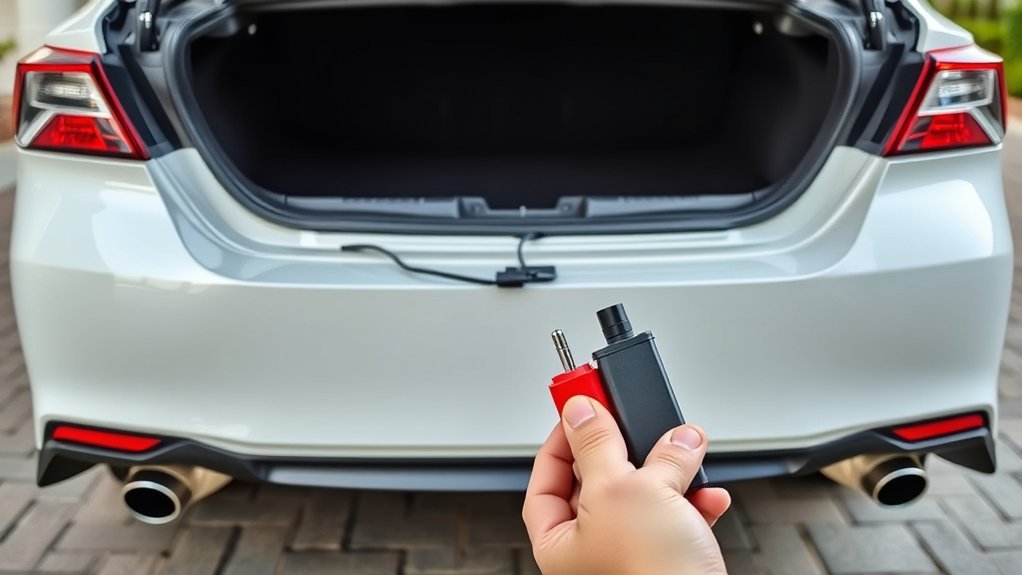
Toyota Camry trailer wiring starts with one question: is your exact Camry approved to tow? For the 2025 U.S.-market Camry Hybrid, Toyota says trailer towing and tow-hitch installation are not recommended. Older Camry manuals and other markets can differ, so use the owner’s manual for your exact model year and market. If towing is permitted—or you are adding a lighting connector for an approved non-towing accessory—use a compatible harness or powered converter and test every circuit before use.
Last updated: September 19, 2026.
Quick Answer
Before installing trailer wiring on a Toyota Camry, check the owner’s manual for your exact year and market. Toyota’s 2025 U.S. Camry Hybrid manual says the vehicle is not designed for trailer towing and Toyota does not recommend installing a tow hitch. If your exact Camry is approved to tow, use a compatible harness or powered converter, match the connector to the trailer’s required functions, protect any fused 12-volt feed, and test every circuit before driving.
Key Takeaways
- A hitch or wiring kit does not create towing capacity. For example, Toyota’s 2025 U.S. Camry Hybrid manual does not recommend trailer towing or tow-hitch installation; older years and other markets can differ.
- A 4-way connector handles basic trailer lights and ground. It does not provide electric-brake output, reverse-light power, or an auxiliary 12-volt feed.
- Do not rely on wire color alone. Use the vehicle-specific harness instructions and verify each circuit by function.
- Keep the powered converter, fuse, grounds, and wiring away from water, heat, sharp edges, and moving parts.
- Test the trailer lights before every trip and stop towing if any required light, connector, fuse, or wire is damaged.
At a Glance
| Time Required | Varies by model year and harness. Plug-in signal connections can be quick, while routing a fused 12-volt lead from the trunk to the battery can add substantial time. |
| Difficulty | Intermediate; professional installation is safer if you cannot identify the correct harness, ground, or 12-volt battery connection |
| Tools Needed | Trim tools, socket set, wire cutter and stripper, crimping tool, circuit tester or multimeter, zip ties, protective loom, and a heat source if the kit uses heat-shrink connectors |
| Cost | Varies by model year, harness type, connector, protective supplies, and whether professional labor is needed |
Confirm Your Camry Can Tow Before Installing Wiring
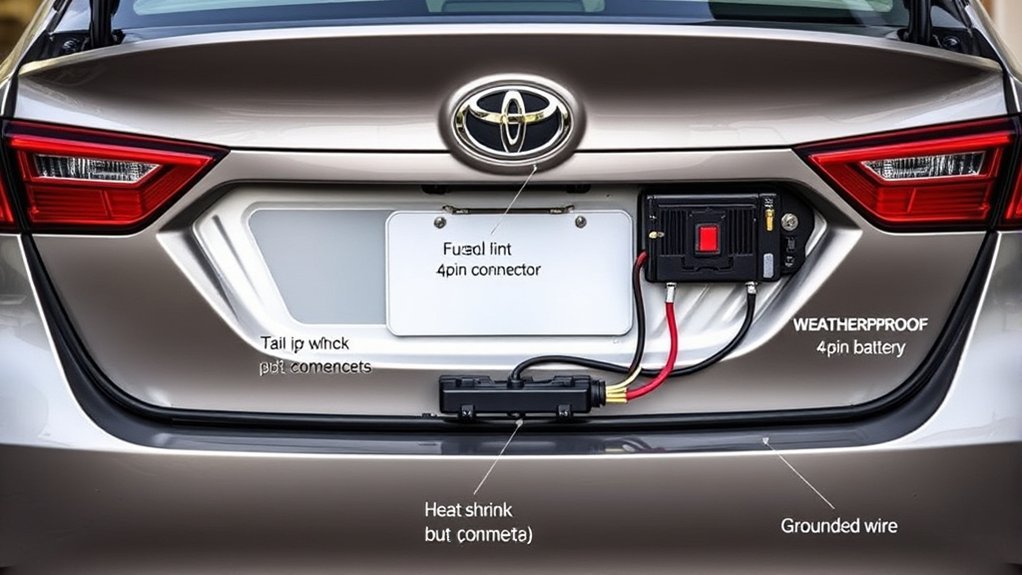
Start with the Toyota manual for your exact vehicle. Towing guidance can differ by model year, powertrain, country, and equipment package. Do not apply a capacity quoted for another Camry to your car.
This distinction matters. The 2025 U.S. Camry Hybrid owner’s manual states that Toyota does not recommend trailer towing or the installation of a tow hitch or tow-hitch carrier. By contrast, some older Camry manuals contain trailer-towing instructions. Treat the exact owner’s manual for your vehicle as the controlling source.
If the manual says trailer towing is not recommended or provides no trailer weight rating, do not assume that an aftermarket hitch changes that guidance. A hitch or wiring product can physically fit a vehicle without creating manufacturer towing approval.
Warning: Do not begin a trailer-wiring or hitch installation until you have confirmed towing approval, weight limits, and required equipment for your exact Camry. When the vehicle manual, hitch label, trailer label, and local law show different limits, follow the lowest applicable limit.
Weight Ratings to Check
If your exact Camry is approved to tow, several ratings may apply. They are not interchangeable, and the lowest relevant limit controls. If Toyota does not publish a trailer weight rating for your vehicle, do not infer one from the hitch label.
| Rating | What It Limits | Where to Verify It |
|---|---|---|
| Trailer weight rating | The maximum loaded trailer weight Toyota permits, if towing is approved | Owner’s manual or official towing information for the exact vehicle |
| GVWR | The maximum loaded weight of the Camry itself, including passengers, cargo, accessories, and tongue load | Certification label and owner’s manual |
| GAWR | The maximum permitted load on each axle | Certification label |
| GCWR | The maximum combined loaded weight of the tow vehicle and trailer, when Toyota publishes this rating | Owner’s manual or official towing guide |
| Hitch and ball ratings | The maximum trailer and tongue loads allowed by those individual components | Permanent labels and manufacturer instructions |
Why Trailer Wiring Matters When Towing Is Approved
When towing is approved, trailer wiring communicates braking and turning intentions to drivers behind you. Federal Motor Vehicle Safety Standard No. 108 sets lighting and reflective-equipment requirements for new trailers and motor-vehicle equipment, while state laws govern operation on public roads. A working connector is therefore a safety component, not merely a convenience.
A compatible harness also protects the Camry’s lighting circuits. Modern vehicles may use separate brake and turn circuits, low-current signal wires, electronic lamp monitoring, or networked control modules. A vehicle-specific converter reads those signals and supplies the trailer lights without forcing the car’s thin factory wiring to carry the full trailer-light load.
The safest installation starts with the correct vehicle and trailer ratings, then uses a harness designed for that exact electrical system.
Choose the Right Harness and Trailer Connector
Match the wiring solution to the Camry’s exact model year, powertrain, and lighting system, then match the connector to the trailer’s required functions. Use a plug-in vehicle-specific harness when one is listed for the exact vehicle; otherwise use only a converter and installation method specifically supported by its manufacturer for that application. Powered converters are common on modern Camrys because they use the vehicle’s lamp circuits as signals while supplying trailer-light power through a protected 12-volt feed.
Fitment catalogs and towing approval answer different questions. Current catalogs can list powered converters for recent Camrys even when Toyota’s owner’s manual does not recommend trailer towing. Treat a wiring product listing as evidence of electrical fit only, not as a towing-capacity rating.
[Amazon Products Picked for You]

EASY TO INSTALL — No cutting! No splicing! This trailer wiring harness kit plugs into existing factory wiring on your vehicle and equips it with a standard, rear 4-pin trailer wiring connector for plugging in and towing a trailer

Plugs into vehicle tail light assembly to provide a 4-way flat socket
4-Way, 5-Way, and 7-Way Functions
| Connector | Typical Functions | Important Limitation |
|---|---|---|
| 4-way flat | Ground, taillights or running lights, left stop and turn, right stop and turn | No electric-brake output, reverse circuit, or auxiliary 12-volt circuit |
| 5-way flat | Basic 4-way functions plus one auxiliary circuit, often reverse lockout for hydraulic surge brakes | The fifth function must be verified for the actual trailer |
| 7-way blade | Basic lights plus circuits that may include electric-brake output, reverse lights, and auxiliary 12-volt power | A 7-way socket alone does not add a brake controller or prove that the Camry can tow that trailer |
Note: A 4-way flat commonly uses white for ground, brown for running lights, yellow for left stop/turn, and green for right stop/turn. Do not extend that color assumption to every 5-way or 7-way connector. Traditional 7-way RV-blade and SAE J2863 layouts can use different color assignments, so identify each pin by function using the connector diagram and a tester.
Prepare Your Toyota Camry for Wiring
Proceed only after confirming that the intended use is permitted for your exact Camry. Park on a level surface, apply the parking brake, switch off the ignition, and remove the key. Read the complete harness instructions before removing trim. If the instructions require disconnecting the 12-volt battery, follow the vehicle manual and harness directions.
[Amazon Products Picked for You]

Plugs into vehicle tail light assembly to provide a 4-way flat socket

Fitment: Compatible with Toyota Avalon 2011-2012, Toyota Camry Hybrid 2007-2011, Toyota Camry Except SE 2010-2011, Toyota Venza 2009-2017, Mitsubishi Outlander 2014-2021
Required Tools and Supplies
- A vehicle-specific trailer wiring harness and converter approved for the exact Camry
- The correct connector, such as a 4-way flat or a properly wired 7-way system
- Trim-removal tools, a socket set, screwdrivers, and pliers
- A wire cutter, wire stripper, quality crimping tool, and heat source for approved heat-shrink connectors
- A circuit tester, multimeter, or trailer-light tester
- Protective loom, grommets, cable clamps, and weather-resistant zip ties
- The fuse and fuse holder supplied with the powered harness
Access the Trunk Area
Open the trunk and remove the cargo floor or side trim only as directed by the harness instructions. Keep clips and fasteners organized so the panels can be reinstalled without rattles. On many plug-in systems, the T-connectors fit between the factory taillight plugs and lamp assemblies.
Locate the approved route for the converter, ground, 4-way lead, and battery power wire. Do not drill until you have checked both sides of the panel for fuel lines, brake lines, wiring, battery components, and structural parts.
Pro Tip: Photograph each trim panel and connector before removal. The photos make reassembly easier and help you confirm that factory wiring has not been pinched or left unplugged.
How to Install Toyota Camry Trailer Wiring
The exact connector locations, trim panels, 12-volt battery position, and wire route vary by model year and powertrain. Use the following sequence as a safety framework only after confirming the intended use is allowed, and follow the instructions supplied with the exact harness whenever they differ.
- Confirm towing approval and harness fit. Verify the exact year, trim, powertrain, connector type, and trailer functions before opening the kit.
- Prepare the work area. Turn the vehicle off, protect painted and interior surfaces, and disconnect the 12-volt battery only when directed.
- Access the taillight connectors. Remove the cargo floor, threshold, or side trim required by the kit without pulling on factory wiring.
- Install the plug-in T-connectors or approved signal connections. Seat every connector until its lock engages. Do not force mismatched plugs.
- Mount the converter and ground it. Secure the converter to a clean, dry, stable surface. Attach its ground exactly as directed, usually to clean bare metal or an approved factory ground point.
- Route the fused power lead. Run the supplied wire to the vehicle’s 12-volt battery through protected areas, away from exhaust, steering, suspension, sharp edges, and moving parts.
- Connect the battery lead and fuse holder. Use the supplied ring terminal and fuse arrangement. Install the fuse only after all other connections are complete.
- Secure and protect the wiring. Add loom and grommets where needed, support the wire at safe intervals, and leave enough slack for normal body movement without allowing the wire to hang.
- Reinstall trim and test every function. Confirm the Camry’s lights still operate, then test the trailer connector before attaching the trailer and again with the trailer connected.
[Amazon Products Picked for You]

Electrical System Type: 3 Wire System; Battery Powered: Yes; Converter Type: Universal, Potted, Powered, Protected, PWM; Output: 4-Way Flat; Amp Rating:3 Amps/6 Amps Proudly...
Making Safe Wiring Connections
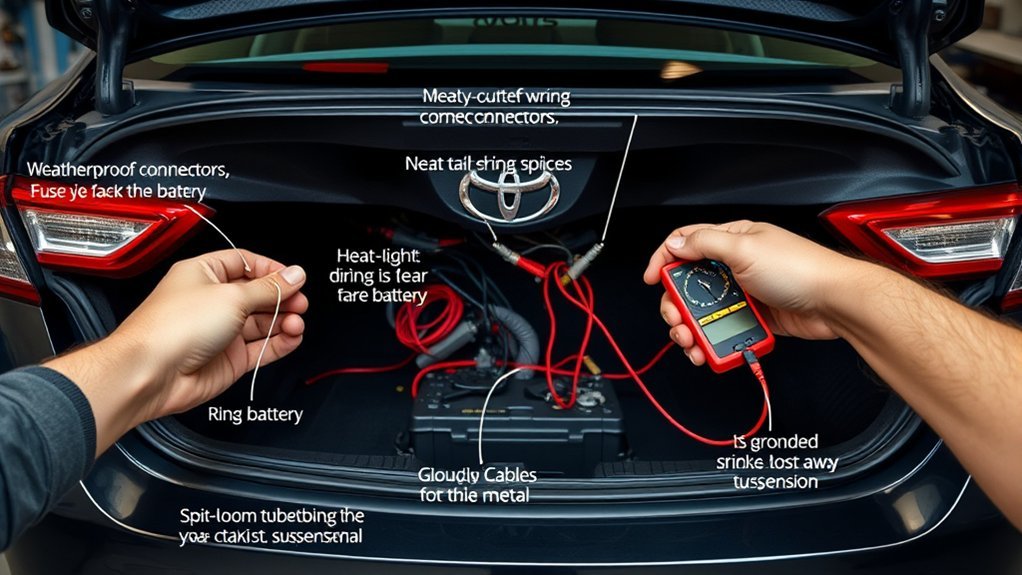
Never assign a function solely from a wire’s insulation color. Identify the vehicle-side connectors by the harness instructions, and verify trailer-side pins by function. A mistaken connection can create inoperative lamps, backfeeding, blown fuses, or damage to a converter module.
Use sealed crimp connectors only when the kit requires a splice. Strip the correct amount of insulation, use a crimper sized for the terminal, and perform a gentle pull test. Shrink the seal evenly without overheating nearby trim or wiring. Twisting wires together and covering them with household electrical tape is not a durable automotive repair.
Ground connections deserve special attention. Paint, rust, seam sealer, and loose fasteners add resistance, which can cause dim lights, flickering, or one lamp changing when another circuit is activated.
Routing the Power Wire: Best Practices
A powered converter’s battery lead should carry trailer-light power without loading the Camry’s lighting circuits. Route it according to the harness manufacturer’s approved path. Some kits use an interior route; others allow a protected underbody route.
- Use an existing grommet when the instructions permit it, or protect any approved pass-through with a correctly sized grommet.
- Keep the wire away from exhaust components, driveshafts, steering parts, suspension travel, sharp brackets, and lift points.
- Do not attach the power wire to brake lines, fuel lines, high-voltage hybrid cables, or air-conditioning lines.
- Place the supplied fuse near the 12-volt battery positive connection as directed by the kit.
- On a hybrid Camry, connect only to the specified 12-volt system. Never work on orange high-voltage cables or hybrid battery components.
After routing, inspect the full path from the converter to the battery. The wire should not rub, sag, cross a hot surface, or become trapped when trim panels are installed.
Final Steps for a Secure Installation
Mount the converter box on a clean, dry surface where cargo cannot strike it and water cannot collect. Reinstall the threshold, carpet, cargo floor, and clips without pinching the harness. Store an interior 4-way connector in the trunk when the kit is designed for that arrangement, or secure an exterior connector in a protective mounting bracket.
Insert the supplied fuse only after the installation is complete. Then test the connector with a dedicated tester or multimeter before connecting the trailer.
Pre-Tow Function Test
- Check the Camry’s taillights, brake lights, turn signals, and hazard lights without the trailer attached.
- Test the connector ground and each output circuit.
- Connect the trailer and check running lights, left turn, right turn, brake lights, and hazards.
- Turn on the headlights and apply the brakes while a turn signal is flashing. This higher electrical load can reveal a weak ground.
- If using a 5-way or 7-way system, test every additional function with the correct equipment, including reverse lockout or electric-brake output where applicable.
- Confirm the cable has enough turning slack but cannot drag, pinch, or touch the exhaust.
Warning: A 4-way connector cannot operate electric trailer brakes. If the trailer requires electric brakes, the vehicle needs an approved brake-control system and the correct connector, and the Camry must still be rated to tow that trailer.
What You Need to Know About Towing Laws
Trailer requirements vary by state and can cover lighting, reflectors, brakes, safety chains, breakaway systems, registration, dimensions, speed, and equipment inspections. Use the official state motor vehicle directory to reach the correct DMV or transportation agency before towing.
Federal Motor Vehicle Safety Standard No. 108 sets requirements for lamps, reflective devices, and associated equipment on new trailers and other covered motor vehicles and equipment. It does not replace state operating rules, and it does not tell you whether a specific Camry may tow a specific trailer.
Trailer Lighting Requirements
At minimum, the trailer’s required lights and reflectors must be present, visible, securely mounted, and working. The exact equipment depends on the trailer’s size and type. Side markers, clearance lamps, identification lamps, and additional reflectors may be required on larger trailers.
Trailer Brakes and Safety Chains
Brake thresholds and breakaway-system rules are state-specific. Do not assume that a trailer below a commonly quoted weight is exempt in every state. Safety chains provide a secondary connection if the coupler separates, but they do not guarantee control. Follow the hitch and trailer instructions for chain rating, attachment points, slack, and whether the chains should be crossed under the tongue, and comply with local law.
Weight-Limit Compliance
Do not compare the loaded vehicle-and-trailer combination only with the Camry’s GVWR. The Camry must remain below its GVWR and axle ratings, while the trailer must remain below its own GVWR. If Toyota publishes a GCWR and trailer weight rating for your exact model, the loaded combination must also stay within those limits.
Troubleshooting Common Trailer Wiring Problems
| Symptom | Likely Checks | Safe Next Step |
|---|---|---|
| No trailer lights | Harness fuse, battery feed, vehicle ground, connector seating, converter input and output | Test the vehicle connector with the trailer disconnected to separate vehicle and trailer faults |
| One side does not work | Loose T-connector, damaged trailer wire, poor lamp ground, incorrect pin assignment | Verify the affected circuit at the vehicle connector, then trace the trailer side |
| Lights are dim or flicker | Rusty ground, paint under a ground terminal, corroded plug, overloaded converter | Clean and tighten grounds, then check current limits in the harness instructions |
| Fuse blows repeatedly | Shorted trailer wire, crushed insulation, wet connector, incorrect fuse, converter overload | Stop replacing fuses until the short or overload is found and repaired |
| Camry lights malfunction after installation | Incorrect connection, damaged factory terminal, converter fault, backfeeding | Disconnect the trailer and have the installation inspected before driving at night or towing |
Essential Maintenance Tips for Your Trailer Wiring System
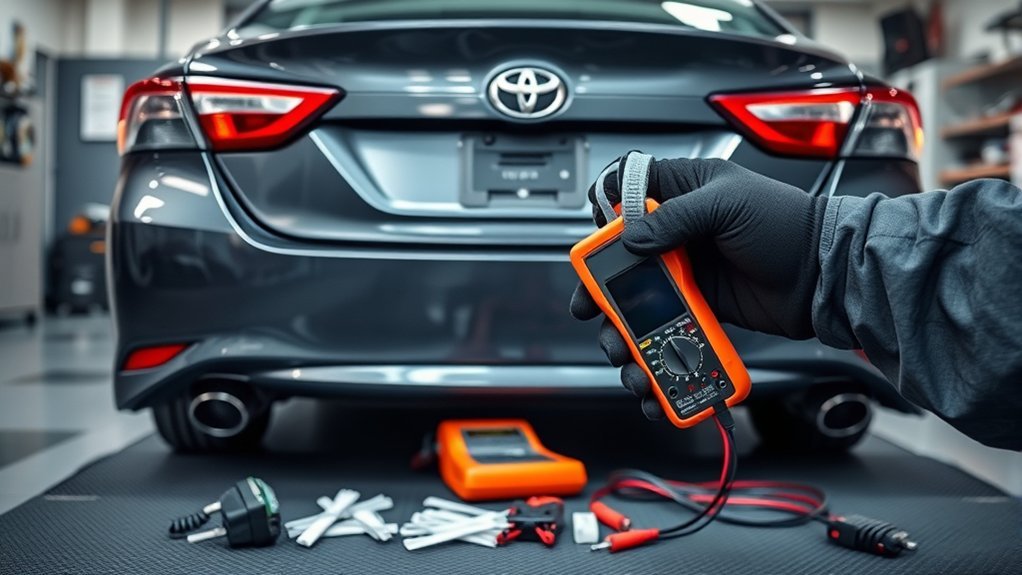
Inspect the wiring before every towing trip. Look for cuts, crushed insulation, loose supports, corrosion, bent pins, damaged seals, and a connector that can reach the trailer without dragging. Confirm that the fuse rating matches the harness instructions.
- Test all light functions. Check running lights, brake lights, turns, and hazards before departure.
- Keep connections clean and dry. Replace cracked caps or seals and remove corrosion using a method approved by the connector manufacturer.
- Protect the route. Replace missing clips, loom, or grommets before abrasion exposes a conductor.
- Inspect grounds. Tighten loose hardware and correct rust or paint that prevents a sound connection.
- Address blown fuses correctly. Use only the specified fuse and repair the short or overload before installing another.
- Check for recalls. Search the Camry, trailer, hitch, and electrical equipment through the NHTSA recall database.
Frequently Asked Questions
Can a 2025 Toyota Camry tow a trailer?
Toyota’s U.S. 2025 Camry Hybrid owner’s manual says Toyota does not recommend towing a trailer, installing a tow hitch, or using a tow-hitch-mounted carrier. A physically compatible hitch or wiring kit does not override that manufacturer guidance.
Can you tow a trailer with a Toyota Camry?
Only when Toyota’s documentation for your exact model year and market permits it. Recent U.S. Camry guidance can prohibit trailer towing, while older generations or other markets may differ. Do not rely on a generic capacity quoted for a different Camry.
How do you read a 7-pin trailer wiring diagram?
Read the diagram by connector orientation, pin position, and circuit function, not by wire color alone. A 7-way can carry ground, running lights, left and right stop/turn, electric-brake output, auxiliary 12-volt power, and reverse lights, but color assignments can differ between connector standards. Verify both sides with their diagrams and a tester.
Can a trailer hitch be installed on a Toyota Camry?
Aftermarket hitches are available for some Camry model years, but installation compatibility and towing approval are separate questions. A hitch may be intended for a bicycle rack or cargo carrier. Confirm the vehicle manual, hitch instructions, load limits, and local requirements before using it to tow.
Can a 4-pin connector operate electric trailer brakes?
No. A standard 4-way flat connector provides ground and the three basic lighting functions. Electric trailer brakes require a brake-control output and a connector with the necessary circuit, commonly a properly configured 7-way system.
Does a hybrid Camry need special trailer wiring?
Use a harness listed for the exact hybrid model and connect only to the specified 12-volt electrical system. Do not tap, move, or route wiring against orange high-voltage cables or hybrid battery components. Use a qualified installer when the approved routing or battery connection is unclear.
Conclusion
Safe Toyota Camry trailer wiring begins before any trim is removed. First check the exact owner’s manual: the 2025 U.S. Camry Hybrid, for example, is not recommended by Toyota for trailer towing or tow-hitch installation. If your exact Camry and intended use are permitted, choose a compatible harness, match the connector to the required functions, follow the kit’s routing and fuse instructions, and test every circuit before use. If towing approval, wiring identification, or hybrid-system routing is unclear, stop and use Toyota documentation or a qualified installer rather than guessing.
Sources
- Toyota Manuals and Warranties — exact model-year owner manuals and vehicle-specific guidance
- Toyota 2025 Camry Hybrid Owner’s Manual — current U.S. guidance stating that Toyota does not recommend trailer towing or tow-hitch installation
- 49 CFR 571.108, Federal Motor Vehicle Safety Standard No. 108 — federal requirements for lamps, reflective devices, and associated equipment
- USAGov State Motor Vehicle Services — directory for official state DMV and transportation agencies
- NHTSA Recall Lookup — recall checks for vehicles and motor-vehicle equipment
- CURT Trailer Wiring Diagram and Installation Help — connector functions and the distinction between common 7-way wiring configurations
- SAE J2863, Automotive Trailer Tow Connector — seven-position trailer tow connector standard
