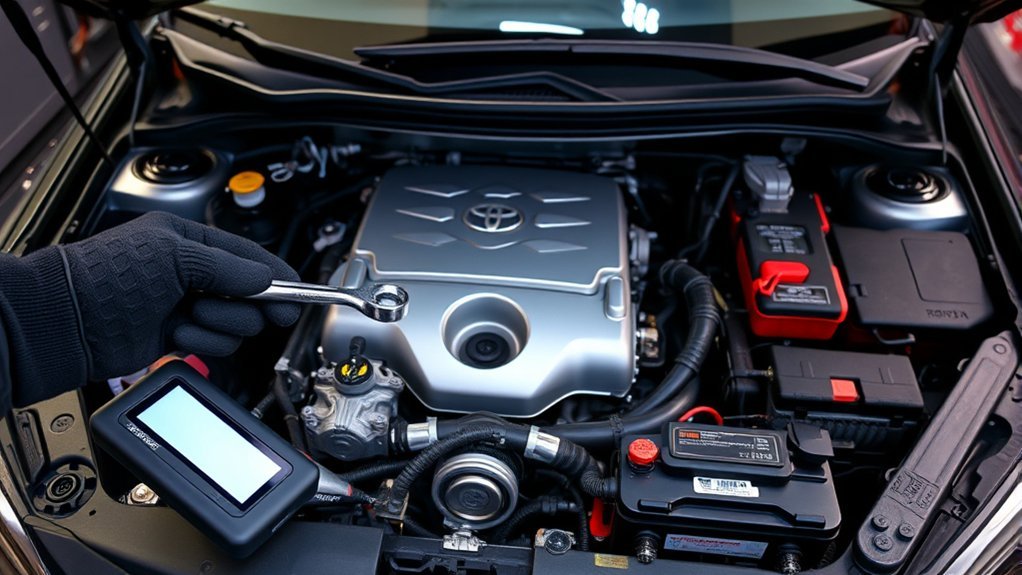
If your Toyota Camry idles roughly, stalls, or runs at an unusually high idle after a battery change, throttle-body cleaning, throttle-body replacement, or intake-system repair, the engine control module may need to rebuild learned airflow corrections. However, the correct approach depends on the model year, engine, powertrain, repair performed, and fault codes present. Do not copy a universal pedal-pumping sequence from another vehicle. Start by checking the repair, recording diagnostic codes, and finding the year-specific Toyota procedure.
Quick Answer
Do not assume a pedal-pumping sequence applies to every Toyota Camry. For a gasoline model, first verify the intake and electrical connections, scan and record trouble codes, then start without touching the accelerator, warm the engine, allow a stable idle, and complete a gentle drive. Hybrid models require year-specific Toyota service instructions.
Key Takeaways
- Do not assume that one ignition-and-pedal sequence works for every Toyota Camry.
- Confirm the model year, engine, and gasoline or hybrid powertrain before following any procedure.
- Check the throttle connector, mass-airflow sensor connector, intake duct, clamps, gasket, PCV connections, and vacuum hoses before attempting adaptation.
- Record diagnostic trouble codes and freeze-frame data before clearing anything.
- A rough or high idle can result from an air leak, low voltage, an active fault, incorrect installation, or another engine problem, not only erased learned values.
- U.S.-market 2025 and 2026 Camrys use an all-hybrid powertrain, so gasoline-only idle instructions do not apply in the same way.
- Do not drive a Camry that stalls repeatedly, surges severely, has unpredictable throttle response, enters reduced-power operation, or shows a flashing check-engine light.
At a Glance
| Time Required | About 20 to 40 minutes for inspection, warm-up, and a short verification drive; diagnosis may take longer |
| Difficulty | Easy for basic inspection and gasoline-model adaptation; moderate or advanced when diagnosis or scan-tool initialization is required |
| Tools Needed | No special tool for a basic inspection; an OBD-II scanner is useful, and Toyota Techstream or another Toyota-capable bidirectional tool may be required |
| Cost | Usually no parts if the vehicle only needs adaptation; scanner access, diagnosis, or repairs can add cost |
Last reviewed: July 11, 2026. Procedures and available scan-tool functions can vary by market, model year, engine, and control-module calibration.
Before You Start: Identify Your Camry
Toyota has sold the Camry with different gasoline engines, electronic-control strategies, and hybrid systems. Before following any throttle-body relearn or idle-adaptation instructions, confirm the model year, engine, and powertrain from the VIN label, owner’s documents, underhood emissions label, or vehicle-information screen on a capable scan tool.
For U.S.-market vehicles, Toyota introduced the 2025 Camry as an exclusively hybrid model, and the 2026 Camry uses an all-hybrid powertrain. A conventional gasoline-engine warm-idle routine therefore applies mainly to earlier non-hybrid Camrys. Hybrid models need their exact Toyota procedure because the gasoline engine can start and stop automatically while the vehicle remains in the READY state.
Use Toyota’s official Manuals and Warranties portal for the correct owner’s manual. For factory repair procedures, service bulletins, diagnostic utilities, wiring information, and Techstream support, use the Toyota Technical Information System.
Choose the Correct Relearn Path
| Vehicle or Condition | Recommended Path |
| Earlier gasoline Camry with no active fault and a correctly completed repair | Use the model-specific Toyota procedure when available. A conservative warm-idle and gentle-drive adaptation may be used only when the vehicle operates safely. |
| Camry Hybrid, including U.S. 2025 and 2026 models | Use the exact hybrid repair procedure or have a Toyota-trained technician perform the initialization. Do not rely on continuous engine idling. |
| Any Camry with active throttle, airflow, voltage, lean-condition, or misfire faults | Diagnose and repair the fault before attempting adaptation. |
| Vehicle stalls repeatedly, surges severely, loses throttle response, or enters reduced-power mode | Stop the procedure and do not continue driving. Arrange professional diagnosis or towing when needed. |
Warning: Run the engine outdoors. Never run a Camry inside an attached garage, even with the garage door open. Keep hands, clothing, tools, and cleaning materials away from belts, cooling fans, hot surfaces, and other moving components. Stop if the engine surges, stalls repeatedly, or does not respond normally to the accelerator.
What Is the Throttle Body and Its Role in Engine Performance?
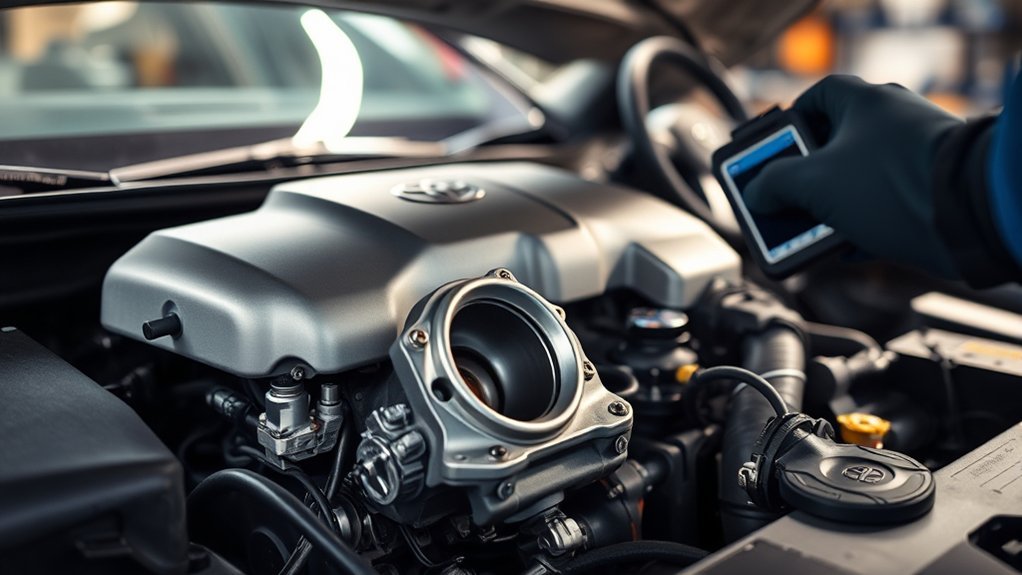
The throttle body controls how much air enters a gasoline engine. On Camrys with electronic throttle control, the accelerator pedal sends an electrical request to the engine control module. The module commands an electric motor inside the throttle body, while position sensors report the pedal and throttle-plate positions.
The engine control module also adjusts engine torque and idle operation for coolant temperature, electrical demand, air-conditioning load, transmission engagement, airflow, and other conditions. It can store learned corrections that help the engine maintain stable operation as components age and operating conditions change.
Battery disconnection, low voltage, throttle-body replacement, cleaning, ECM replacement, or intake-system work may change or reset some learned information. That does not mean every rough idle requires a formal throttle relearn. The correct response depends on what was repaired and whether a fault remains.
Carbon or oily residue around the throttle plate can affect airflow, but rough idle alone does not prove that the throttle body is dirty or defective. Intake leaks, loose connectors, low battery voltage, ignition faults, fuel-delivery problems, contaminated sensors, and other engine issues can create similar symptoms.
Relearn, Adaptation, Reset, and Initialization
- Idle adaptation describes the ECM rebuilding corrections during stable engine operation and normal driving.
- Memory reset means stored values have been cleared through power loss, a scanner command, ECM work, or another service procedure.
- Initialization is a factory-defined procedure that may require specific temperatures, accessory settings, transmission positions, or a scan-tool utility.
- Code clearing erases diagnostic information but does not automatically confirm that an initialization or adaptation has finished.
When Does a Toyota Camry Need a Throttle Body Relearn?
A relearn, initialization, or idle-adaptation period may be appropriate after one of these events:
- The 12-volt battery was disconnected, discharged, or replaced.
- The throttle body was cleaned, removed, or replaced.
- The engine control module was replaced, reprogrammed, or had learned memory reset.
- An intake duct, mass-airflow sensor, PCV connection, vacuum hose, or related component was removed for service.
- The engine began idling poorly immediately after a confirmed repair, and inspection shows no remaining installation problem or active fault.
A relearn is not a substitute for diagnosis. If the Camry ran poorly before the repair, has an active warning light, leaks unmetered air, has incorrect sensor readings, or has a damaged throttle actuator or circuit, relearning alone will not correct the underlying problem.
A relearn can update learned airflow corrections, but it cannot repair a vacuum leak, loose connector, damaged actuator, incorrect installation, low-voltage problem, or failing engine component.
Conservative Gasoline Camry Idle-Adaptation Steps
The following is a low-risk observation and adaptation routine for an earlier gasoline-only Camry after the underlying repair is complete. It is not a universal Toyota factory relearn and does not replace a model-year-specific repair procedure. Do not use it for a Camry Hybrid or for a vehicle with unsafe symptoms.
Prerequisites Before You Begin
- The throttle body, intake duct, air-filter housing, gasket, sensors, connectors, and vacuum lines must be installed correctly.
- The 12-volt battery must be adequately charged and its terminals must be secure.
- You must read and record diagnostic trouble codes before clearing them.
- Active throttle-control, airflow, voltage, misfire, or lean-condition faults must be diagnosed first.
- The engine must respond normally enough to run without being held open with the accelerator.
- Park safely. Work outdoors on a stable surface. Place the transmission in Park, apply the parking brake, and keep your foot off the accelerator.
- Check the completed repair. Confirm that the throttle-body electrical connector, mass-airflow sensor connector, intake tube, clamps, air-filter housing, PCV connections, vacuum hoses, and any removed ground connections are correctly installed.
- Check the battery and codes. Make sure the 12-volt battery is charged. Read and save diagnostic trouble codes and freeze-frame data before clearing anything. Repair active throttle, airflow, misfire, lean-condition, or voltage faults first.
- Switch accessory loads off. Turn off the air conditioner, defroster, exterior lights, seat heaters, audio system, and other unnecessary electrical loads unless Toyota’s procedure states otherwise.
- Start without pressing the accelerator. Allow the engine to warm normally. Once it reaches normal operating temperature, let it idle undisturbed for about five minutes as an observation and adaptation period. This time is not proof that a factory initialization has completed. Repeated stalling, severe surging, or the need to hold the accelerator open is not normal.
- Shut down and restart. Turn the engine off for at least 30 seconds. Restart it without touching the accelerator and observe whether the idle becomes stable.
- Complete a gentle verification drive. If the car is safe to drive and no serious warning is present, drive for about 10 to 20 minutes using light acceleration, steady cruising, coasting, and several normal stops. Avoid hard acceleration while checking the result.
- Recheck the vehicle. Confirm that the idle is stable in Park and Drive, throttle response is predictable, and no warning light or trouble code returns.
Pro Tip: Record the original idle behavior, battery condition, trouble codes, freeze-frame data, and work performed before resetting anything. That information can save significant diagnostic time if the adaptation does not solve the problem.
How to Know the Adaptation Worked
The adaptation was likely successful when the engine starts without extra pedal input, settles to a consistent idle after warm-up, remains stable when shifted into gear, responds smoothly during a normal drive, and does not return a warning light or related trouble code.
The exact idle speed varies with engine temperature, accessory load, transmission position, altitude, engine design, and model year. Do not judge success by one universal RPM number found in a forum or video. Compare the behavior with the specifications and live data for the exact engine.
Important Note for Camry Hybrid Models
A Camry Hybrid can start or stop its gasoline engine automatically while the vehicle remains in the READY state. That behavior makes a conventional continuous-idle routine unreliable. This applies especially to U.S.-market 2025 and 2026 Camrys because those model years use an all-hybrid powertrain.
Do not enter an inspection, maintenance, or service mode by following an unsourced online shortcut. Some service modes change normal hybrid operation and are intended for controlled repair or emissions testing. Use the exact instructions for the model year in Toyota service information or have a Toyota-trained technician perform the adaptation.
Why Pedal Pumping Is Not a Universal Toyota Relearn
Online instructions often tell you to switch the ignition on, press the accelerator a set number of times, wait for a light, and then idle for an exact period. These sequences are frequently copied between makes, engines, and control systems.
Do not assume that a pedal sequence applies to your Toyota Camry unless the factory repair procedure for the exact model year, engine, and control module identifies it. A sequence written for another Toyota, another market, or another manufacturer may accomplish nothing.
Pressing the pedal at the wrong time can also make the engine race when it starts or distract you from the actual problem. If the engine only remains running while you hold the accelerator open, stop treating the condition as a routine relearn and inspect the intake system, electrical connections, voltage, and diagnostic data.
Note: A brief key-on pause may allow electronic modules to initialize, but it does not prove that throttle-body initialization or idle learning has completed.
How to Use a Diagnostic Scanner for Throttle Body Relearn
A basic OBD-II code reader can retrieve and clear many engine codes, but it may not support Toyota-specific data, active tests, reset-memory functions, or initialization utilities. Toyota Techstream or another Toyota-capable bidirectional scan tool may be required when the repair manual calls for a specific operation.
- Park the vehicle safely and connect the scanner to the diagnostic connector under the dashboard with the ignition off.
- Switch the ignition on and identify the vehicle by VIN, model year, engine, and control module.
- Read all engine and related powertrain codes. Save freeze-frame data and a pre-scan report before clearing anything.
- Review available live data for accelerator position, throttle position, mass airflow, coolant temperature, battery voltage, engine speed, and fuel-trim behavior.
- Compare the data with the diagnostic procedure for the exact vehicle. Implausible or fixed readings can indicate a circuit, sensor, connector, or mechanical problem.
- Open a relearn, initialization, reset-memory, or idle-learning utility only when Toyota’s repair procedure calls for that function.
- Follow every on-screen condition exactly. Requirements may include a specified coolant temperature, accessory status, transmission position, battery voltage, or idle period.
- After the utility finishes, restart the vehicle, complete any prescribed drive or verification check, and scan again for returning codes.
Do not assume that clearing codes is the same as completing a relearn. Clearing memory can remove useful diagnostic evidence, reset readiness information, and erase other learned values without correcting the underlying fault.
[Amazon Products Picked for You]

【Diagnose on Your Own】The LAUNCH Creader Elite V3.0 is engineered specifically for Toyota & Lexus owners, DIYers, and small shop pros—putting professional-grade diagnostic power right in your hands, making complex repairs feel simple and effortless. It also has Powerful Bidirectional Control, which can remotely control windows, mirrors, lights, wipers, sunroofs, and more—without touching any in-cabin controls. Dismountable USB Cable, Android 8.1, 4'' Touchscreen, Larger 2G+64GB Extended Memory, 3000mAh Battery. It delivers in-depth full-system diagnostics, all free reset services, 10 full OBD2 functions, Auto VIN, Free Update.

CEL Doctor: The ANCEL AD310 is one of the best-selling OBD II scanners on the market and is recommended by Scotty Kilmer, a YouTuber and auto mechanic. It can easily determine the cause of the check engine light coming on. After repairing the vehicle's problems, it can quickly read and clear diagnostic trouble codes of emission system, read live data & hard memory data, view freeze frame, I/M monitor readiness and collect vehicle information
Signs That May Point to Lost Idle Adaptation
Symptoms that begin immediately after battery, throttle-body, or intake-system service can point toward changed or lost learned settings. However, the same symptoms can also indicate a loose connection, intake leak, low-voltage condition, damaged component, or remaining engine fault. Use the timing of the problem, inspection results, diagnostic codes, and live data together.
Rough Idle Symptoms
You may notice an uneven idle, RPM hunting, vibration, or an engine that takes longer than normal to settle after starting. First inspect the intake duct, clamps, air-filter housing, sensor connectors, PCV connections, and vacuum hoses. If those items are correct and no active fault remains, a model-appropriate adaptation may help the control module rebuild its corrections.
Stalling During Acceleration
Stalling while accelerating is not a normal relearn symptom to ignore. It can indicate an air leak, electrical connection problem, throttle-control fault, fuel-delivery problem, ignition problem, low voltage, or another engine-management issue.
Stop driving if the vehicle cannot accelerate predictably or repeatedly loses power. Diagnose the fault before repeating any adaptation procedure.
Increased RPM After Repair
A higher idle can appear after cleaning because a cleaner throttle bore may pass more air at the same commanded opening. A high idle can also result from an intake leak, damaged gasket, incorrectly seated duct, disconnected hose, throttle plate that is not returning correctly, or learned values that no longer match the airflow.
Do not rely on one fixed RPM range for every Camry. Compare warm-idle behavior, throttle position, airflow, fuel trims, and other data with the specifications for the exact engine.
What to Do If You Experience Throttle Body Issues
Use this checklist before replacing more parts or repeating a relearn:
| Check | What to Look For |
| Air-intake assembly | Loose clamps, split ducting, displaced seals, open vacuum ports, loose PCV connections, or an incorrectly seated air-filter housing |
| Electrical connections | Loose throttle-body, accelerator-pedal, mass-airflow, ground, or related sensor connectors; bent, backed-out, wet, or corroded terminals |
| Battery and charging system | Low battery voltage, loose or dirty terminals, poor grounds, or unstable charging voltage that can disrupt control-module operation |
| Diagnostic codes | Throttle actuator, pedal-position, airflow, lean-condition, voltage, communication, or misfire faults that require diagnosis |
| Throttle-body condition | Heavy deposits, solvent inside the electrical housing, a damaged or reused gasket where replacement is required, binding, impact damage, or incorrect installation |
| Recall or campaign status | Open safety recalls or service campaigns found through Toyota’s VIN lookup or the NHTSA recall database |
If the inspection and correct adaptation procedure do not restore normal operation, have the vehicle tested with factory-level data and the model-specific diagnostic flow. Replacing the throttle body without testing the circuit, intake system, airflow data, voltage, and mechanical installation can add cost without correcting the cause.
[Amazon Products Picked for You]
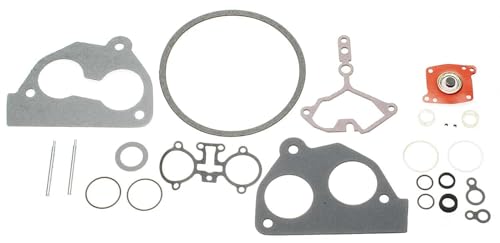
Contains hardware and gaskets needed to service the throttle body

COMPATIBILITY – Fits 2018-2021 Lexus IS300; 2018-2021 Lexus RC350; 2018-2021 Lexus RC300; 2018-2021 Lexus LC500h; 2018-2021 Lexus LS500h; 2018-2021 Lexus RX350L; 2018-2021 Lexus RX450hL; 2018-2021 Lexus IS350; 2007-2021 Lexus ES350; 2007-2021 Lexus RX350;

Meets or exceeds all original equipment specifications
Effects of Battery Replacement on Throttle Body Performance
Disconnecting or losing power from the 12-volt battery may reset some learned values, diagnostic information, clock settings, readiness information, or other vehicle functions. What resets depends on the model year and system design.
After power is restored, an earlier gasoline Camry may need stable idle time and normal driving to rebuild some corrections. The vehicle may also require separate initialization for windows, steering-related systems, or other features, depending on the model year. Consult the correct owner’s manual and repair information instead of assuming every system relearns in the same way.
Battery replacement should not create persistent stalling, severe surging, reduced-power operation, or a loss of throttle control. If those symptoms appear, inspect the battery terminals and grounds, verify charging-system operation, scan for codes, and check anything disturbed during the service.
A memory saver is not required for a throttle-body adaptation and should not be treated as a cure. It may preserve some settings and learned values, but a repair procedure may intentionally require certain memory to be reset. Follow the battery and initialization instructions for the exact Camry.
Why Real-World Relearn Results Differ
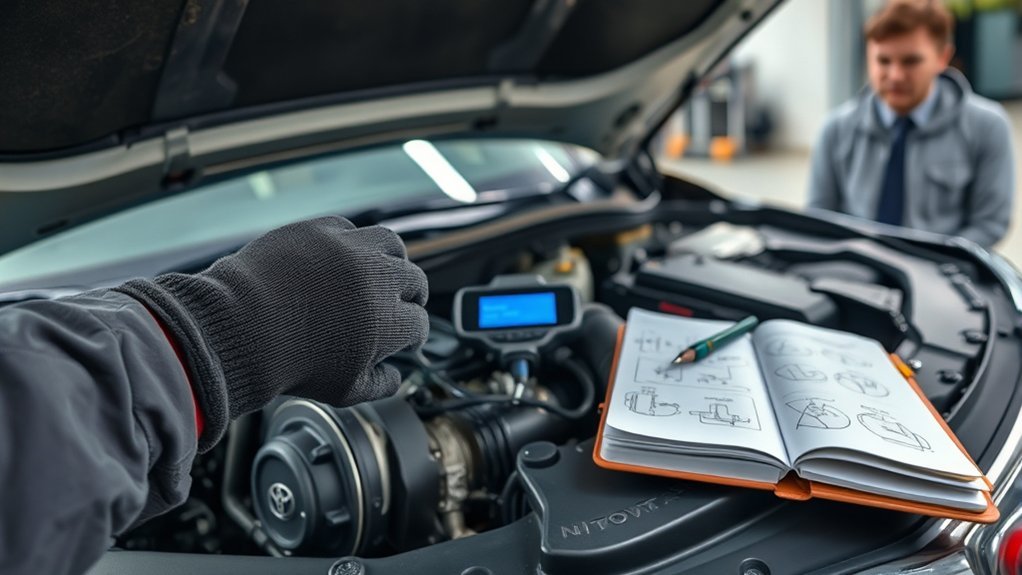
Reports about Camry throttle relearns vary because the starting conditions are different. One vehicle may only need time to rebuild idle corrections, while another has a loose intake clamp, damaged gasket, weak battery, active sensor fault, contaminated throttle bore, incorrect replacement part, or wiring problem.
Treat forum posts, videos, and owner anecdotes as possible clues rather than proof that one procedure applies to your car. The model year, engine, stored codes, freeze-frame information, live data, and exact repair performed matter more than the number of pedal presses described online.
Common Relearn Challenges
Common reasons an adaptation does not settle include incomplete warm-up, accessory loads left on, low battery voltage, an intake leak, a connector left loose, active trouble codes, incorrect throttle-body installation, damaged wiring, or repetition of a generic sequence that does not apply to the vehicle.
Rechecking the repair and reviewing diagnostic data is usually more useful than repeating the same ignition or pedal sequence.
When a Basic Adaptation Can Help
If the throttle body and intake system are mechanically sound, battery voltage is stable, no relevant fault remains, and the problem began only after learned memory was reset, idle quality may improve during a stable warm idle and normal drive cycles.
Improvement should be smooth and repeatable. The engine should not require continued accelerator input to stay running, and warning lights or throttle-control codes should not return.
Impact on Idle Performance
A successful adaptation can improve return-to-idle behavior, reduce hunting, and help the engine compensate for normal accessory and transmission loads. It should not be used to hide a continuing high idle, lean condition, misfire, warning light, poor throttle response, or reduced-power condition.
Additional Maintenance Tips for Optimal Throttle Body Performance
- Inspect the air filter and replace it according to the maintenance guide or when it is excessively dirty, wet, restricted, or damaged.
- Keep the air-intake duct, clamps, seals, and air-filter housing secure so incoming air is measured correctly.
- Investigate repeated oil contamination in the intake instead of repeatedly cleaning the throttle body without identifying the source.
- Clean the throttle body based on symptoms, inspection, or the factory repair procedure, not a universal mileage interval.
- Use a product approved for throttle-body cleaning and keep liquid out of the actuator, motor, sensors, and electrical housing.
- Do not spray large amounts of cleaner into a running engine.
- Do not force the electronic throttle plate unless the exact Toyota cleaning procedure permits and explains how to move it.
- After service, inspect the gasket and every removed connector, hose, clamp, seal, and ground connection before starting the engine.
Troubleshooting Tips for a Failed Throttle Body Relearn
If the first adaptation attempt does not work, follow this order:
- Stop and scan the engine control module. Save all codes, pending codes, permanent-code information, and freeze-frame data.
- Verify battery condition, terminal tightness, ground connections, and charging-system operation.
- Inspect the entire intake tract, PCV system, vacuum connections, throttle-body gasket, and air-filter housing for unmetered air.
- Confirm that the throttle-body and mass-airflow sensor connectors are fully seated and locked.
- Check that the throttle body was installed with the correct gasket, fasteners, part orientation, and torque procedure.
- Review live data for implausible throttle, pedal, airflow, coolant-temperature, voltage, engine-speed, or fuel-trim readings.
- Confirm that replacement components are correct for the VIN, engine, and calibration.
- Use the exact Toyota repair-manual initialization or Techstream utility when the vehicle procedure specifies one.
- Seek professional diagnosis if the engine stalls, surges, enters reduced-power operation, has unpredictable throttle response, or returns a throttle-control code.
Warning: Do not disconnect the battery repeatedly to hide a warning light or erase codes. Doing so removes diagnostic evidence, may reset readiness monitors or learned values, and does not repair the fault.
[Amazon Products Picked for You]

Fit type: Vehicle Specific


Meets or exceeds all original equipment specifications
Frequently Asked Questions
Is there one Toyota Camry throttle body relearn procedure for every model year?
No. Do not assume that one pedal, ignition, idle, or scan-tool sequence applies to every Camry. Procedures can vary by model year, engine, gasoline or hybrid powertrain, market, ECM calibration, and repair performed. Use Toyota’s service information for the exact vehicle.
How long does a Toyota Camry throttle body relearn take?
A basic inspection, warm-up, idle observation, and short verification drive may take about 20 to 40 minutes. A factory scan-tool procedure or diagnosis can take longer. No single time confirms success on every Camry, so verify stable operation and check for returning codes.
Will disconnecting the battery reset the throttle body?
Battery disconnection may reset some learned values on certain models, but it is not a reliable repair or universal throttle-body reset. Repeated disconnection can erase useful diagnostic information and readiness data while leaving the actual air leak, wiring problem, low-voltage condition, or component fault unchanged.
Can I drive while the Camry is relearning the idle?
A gentle verification drive is reasonable only when the engine starts, idles, accelerates, and responds predictably, with no serious warning present. Do not drive if it stalls repeatedly, surges severely, loses throttle response, enters reduced-power mode, or shows a flashing check-engine light.
Does a Camry Hybrid use the same relearn procedure as a gasoline Camry?
No. A Camry Hybrid can start and stop its gasoline engine automatically while the vehicle remains READY, so a conventional continuous-idle routine is unreliable. Use the exact hybrid procedure for the model year. U.S.-market 2025 and 2026 Camrys are hybrid-only.
Do I need a scanner for a Toyota Camry throttle body relearn?
Not always. A scanner is still useful for recording codes, freeze-frame information, and live data before attempting adaptation. When Toyota’s repair procedure specifies an initialization, reset-memory function, or active test, you may need Techstream or another Toyota-capable bidirectional scan tool.
Should I clear the trouble codes before starting the relearn?
Read and save the codes and freeze-frame data first. Diagnose active throttle, airflow, voltage, lean-condition, and misfire faults before adaptation. Clear codes only when the repair procedure calls for it or after the underlying problem has been corrected.
Sources
- Toyota Manuals and Warranties — vehicle-specific owner’s manuals and warranty information
- Toyota Technical Information System — factory repair manuals, service bulletins, diagnostics, wiring information, and Techstream resources
- Toyota Camry Official Vehicle Page — current U.S.-market Camry powertrain information
- Toyota Safety Recall and Service Campaign Lookup — Toyota VIN-based recall and campaign information
- National Highway Traffic Safety Administration Recall Database — federal vehicle recall lookup
- CDC Carbon Monoxide Poisoning Basics — vehicle-exhaust and garage safety guidance
