After a Toyota Camry battery replacement or disconnection, the engine may idle lower, higher, or less smoothly than before. The engine control module may need time to rebuild learned operating values, but there is no single idle-relearn trick that applies to every Camry model year, engine, and throttle system. Start with a safe passive relearn, then diagnose the vehicle if the symptoms continue.
Quick Answer
After reconnecting a Toyota Camry battery, confirm the terminals are tight, switch off accessories, start the engine without pressing the accelerator, and let it reach normal operating temperature in Park. Then take a short, gentle drive. Do not use a universal 3,000-RPM trick; model-specific procedures belong in Toyota service information.
Key Takeaways
- Most Camrys can begin relearning idle through normal warm-up and gentle driving without a special accelerator-pedal sequence.
- Keep the transmission in Park during stationary relearning. Do not idle in Drive while holding the brake.
- A check-engine light, repeated stalling, or severe high idle requires diagnosis, not another battery reset.
- Clean the throttle body only when inspection or diagnosis supports it, and use a cleaner intended for electronic throttle bodies.
- The exact Toyota procedure can vary by model year, engine, conventional or hybrid powertrain, and throttle-control design.
At a Glance
| Time Required | About 20–40 minutes for inspection, warm-up, and a short drive |
| Difficulty | Easy for basic relearning; moderate or professional-level for cleaning and diagnosis |
| Tools Needed | None for a basic relearn; a voltmeter and OBD-II scan tool help with troubleshooting |
| Cost | Usually $0 for basic relearning; cleaner, scanning, or professional diagnosis costs extra |
Warning: Perform engine warm-up outdoors. Never run a Camry in an attached garage, even with the garage door open. Apply the parking brake, keep the transmission in Park, and do not continue driving if the engine repeatedly stalls or the vehicle cannot maintain safe power.
Common Symptoms of Idle Issues After Battery Replacement
Disconnecting the 12-volt battery can erase some learned engine-control values. When power is restored, the control module may need to adapt again to the throttle position, engine load, temperature, and accessory use.
You may temporarily notice:
- An idle that is slightly lower or higher than it was before the battery change
- Minor vibration while stopped
- Idle speed that changes when the air conditioner, lights, or defroster turns on
- Hesitation during the first few stops
- Loss of saved clock, audio, window, or other convenience settings
Idle speed varies with engine temperature, accessory load, transmission position, elevation, and engine design. A single number such as 1,000 RPM should not be treated as the correct idle specification for every Camry.
Severe shaking, repeated stalling, a very high idle, reduced-power operation, or a persistent warning light is not something you should automatically blame on normal relearning. Those symptoms can point to a loose battery connection, low system voltage, an intake leak, throttle deposits, a disconnected sensor, or another stored fault.
A battery replacement may reveal an existing airflow or throttle problem that the engine computer had previously learned to compensate for.
Before You Start the Idle Relearn
Complete these checks before leaving the engine running. A relearn cannot correct a poor electrical connection, damaged intake hose, vacuum leak, or mechanical problem.
- Confirm the correct battery installation. Make sure the positive and negative terminals are fully seated, tight, and free from heavy corrosion.
- Inspect nearby wiring. Check that no sensor connector, ground cable, air-intake tube, or vacuum hose was loosened during the battery replacement.
- Check battery condition. A new battery can still be undercharged. Slow cranking, flickering lights, or repeated resets require a voltage and charging-system check.
- Choose a safe location. Park outdoors on level ground, apply the parking brake, and place the transmission in Park.
- Turn off electrical loads. Switch off the climate control, lights, heated seats, rear defroster, audio system, and phone chargers before starting.
- Check the exact vehicle information. Identify the model year, engine, and whether the Camry is a conventional gasoline model or hybrid.
Note: Toyota provides model-specific owner information through its Manuals and Warranties portal. Factory repair procedures, service bulletins, diagnostics, and calibration information are available through the Toyota Technical Information System.
Toyota Camry Idle Relearn: Step-by-Step Guide
The following process is a conservative passive-adaptation method. It does not replace a model-specific Toyota repair procedure when the vehicle has a fault code or requires scan-tool initialization.
1. Start the Engine Without Pressing the Accelerator
Start the gasoline engine normally and keep your foot off the accelerator pedal. Leave the transmission in Park. Watch the instrument panel for a charging-system warning, check-engine light, or other warning that remains on.
If the engine starts and immediately stalls, try one more normal start. Do not repeatedly rev the engine to keep it running. Repeated stalling requires inspection before a road test.
2. Let the Engine Reach Normal Operating Temperature
Allow the engine to warm naturally with the accessories switched off. The cooling fan may cycle when the engine reaches operating temperature. During this period, the idle may change as the control module adjusts fuel delivery and throttle position.
Do not hold the engine at 3,000 RPM unless the factory repair information for your exact model and engine specifically instructs a technician to do so. It is not a universal Toyota Camry idle-reset requirement.
3. Allow Several Minutes of Stable Idle
After the engine is warm, let it continue idling in Park for several minutes. Avoid turning the steering wheel, pressing the accelerator, or switching large electrical loads on and off during this initial period.
You are looking for improvement in stability, not one exact tachometer number. A small change when the air-conditioning compressor cycles can be normal. Surging, repeated near-stalling, or an unusually high idle needs further diagnosis.
4. Complete a Short, Gentle Drive
If the engine idles safely and no serious warning is present, take a short drive that includes:
- Light acceleration
- Steady cruising
- Several normal decelerations
- A few complete stops
- Normal operation with the engine fully warm
Use a safe route with light traffic. Avoid full-throttle acceleration, aggressive driving, towing, or a long trip until the engine operates normally.
5. Recheck the Idle
Return to a safe outdoor location, shift into Park, and let the engine idle again. Turn the climate control and headlights on one at a time. The control system should respond to the added load without severe shaking or stalling.
No fixed driving time guarantees completion. Some vehicles stabilize quickly, while others need several normal drive cycles. Symptoms that remain unchanged or worsen should be diagnosed rather than treated with repeated battery resets.
Pro Tip: Before disconnecting the battery again, scan for diagnostic trouble codes and write them down. Another reset can erase information that helps identify the real cause of the idle problem.
Why the Camry Model Year and Engine Matter
Toyota has used several engine families and idle-control designs across Camry generations. Advice that works for one model may not apply to another.
Electronic-Throttle Camry Models
Many newer Camrys use an electronically controlled throttle body. The engine computer commands a motor inside the throttle assembly to regulate airflow. Deposits near the throttle plate can affect airflow at small openings, especially after learned compensation values have been reset.
These systems may require factory diagnostic steps when the throttle assembly, accelerator-pedal sensor, engine computer, or related component has been replaced. Do not assume that an accelerator-pedal sequence found for another Toyota model applies to your Camry.
Older Cable-Throttle Camry Models
Some older Camrys use a mechanical throttle cable and a separate idle air control system. Troubleshooting can include the idle air control valve, throttle cable adjustment, vacuum hoses, and other components that may not exist on a newer electronic-throttle model.
This is why statements such as “the Camry has no idle air control valve” should not be applied to every model year.
Camry Hybrid Considerations
A Camry Hybrid can stop and restart its gasoline engine automatically while the vehicle is in READY mode. That behavior makes a conventional gasoline-engine idle procedure unsuitable in some situations.
Warning: This article concerns basic 12-volt battery reconnection and engine behavior. Do not open, disconnect, or attempt to service the high-voltage hybrid battery or orange high-voltage cables. Use Toyota hybrid service information or a qualified technician.
Throttle Body Cleaning: When It Helps and How to Do It Safely
Throttle-body cleaning may help when deposits restrict airflow around the throttle plate. It should not be treated as a required step after every battery replacement.
Consider inspection when:
- The Camry had low-idle or stalling symptoms before the battery was replaced
- The idle improves when the accelerator is pressed slightly
- The throttle bore has visible heavy deposits
- A technician’s diagnosis points to restricted throttle airflow
- The factory maintenance or repair information recommends cleaning
If you perform the work yourself, follow the exact repair instructions for the model year and engine:
- Switch the ignition completely off and keep the key or smart key away from the vehicle.
- Allow hot engine components to cool.
- Remove the intake duct only as directed for that engine.
- Inspect the duct for cracks, loose clamps, and disconnected hoses.
- Use a product specifically labeled safe for electronic throttle bodies and coated throttle plates.
- Apply cleaner to a suitable lint-free cloth when possible instead of flooding the intake or electrical components.
- Do not force a motor-driven throttle plate beyond its normal movement.
- Reinstall every hose, clamp, and connector securely before starting the engine.
A professional should handle the cleaning when access requires moving sensitive components, when the throttle plate cannot be positioned safely, or when the repair manual calls for scan-tool testing afterward.
[Amazon Products Picked for You]
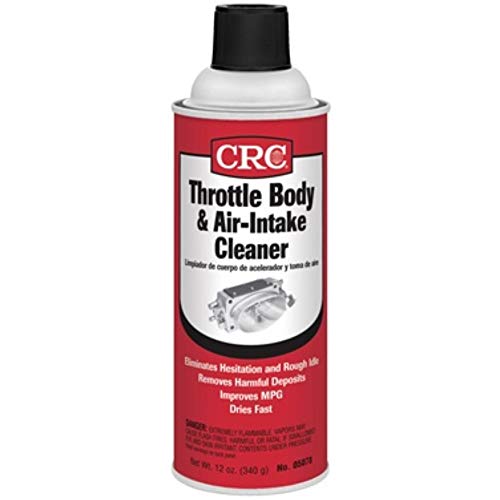
DEEP CLEANING: A top choice for cleaning throttle body build-up caused by harmful deposits of carbon; varnish; and gum.

Increases Horsepower And Improves Air/Fuel Ratio And Mpg

Powerful Throttle Body Cleaning Action: Specially blended formula removes performance-robbing grease, grime, gum, and baked-on varnish from air intake and throttle body components.
How Cleaning the Throttle Body Can Improve Idle Performance
At idle, the engine needs only a small amount of airflow. Deposits around the edge of the throttle plate can therefore have a greater effect at idle than they do during wider throttle openings.
When deposits are the cause, correct cleaning may provide:
| Possible Benefit | What May Improve |
|---|---|
| More consistent airflow | The engine computer can regulate small throttle openings more predictably. |
| Smoother idle | Shaking or near-stalling caused by restricted airflow may decrease. |
| Improved throttle response | Initial response from a stop may feel more consistent. |
| Easier adaptation | The control module does not have to compensate for the same level of deposit-related restriction. |
Cleaning will not correct a vacuum leak, damaged sensor, weak charging system, failing throttle motor, ignition misfire, or mechanical engine problem.
Troubleshooting High Idle Issues: Causes and Solutions
A high idle after battery service can have several causes. Do not assume that all high-idle conditions will disappear through driving.
[Amazon Products Picked for You]

[Built-in Air Pump]: Smoke machine features a built-in air pump, eliminating the need for an external air source, allowing you to perform tests anytime, anywhere. Simply add about 20ml of baby oil or Glycerin (oil not included) to start your testing effortlessly

HyperSmoke Technology – Creates Thick Visible Smoke for Easy Leak Testing. Adjustable Pressure. Infinite Smoke. Instant Warmup. Built-In Air Compressor Motor. OEM Approved Smoke Fluid. Designed and Engineered by AutoLine Pro USA, an American Team of Individuals bringing the latest innovation to you.

HyperSmoke Technology – Creates Thick Visible Smoke for Easy Leak Testing. Adjustable Pressure. Infinite Smoke. Instant Warmup. Built-In Air Compressor Motor. OEM Approved Smoke Fluid. Designed and Engineered by AutoLine Pro USA, an American Team of Individuals bringing the latest innovation to you.
Common High-Idle Causes
- Normal cold-start operation: Idle may be temporarily higher while the engine warms.
- Intake or vacuum leak: A loose intake clamp, cracked duct, disconnected hose, or leaking gasket can allow unmeasured air into the engine.
- Throttle plate not closing correctly: Deposits, damage, or an electronic-throttle fault can affect the commanded position.
- Disconnected sensor or hose: A connector may have been disturbed while accessing the battery.
- Stored diagnostic fault: The engine computer may command a protective operating mode after detecting an electrical or throttle-control problem.
- Older idle-control hardware: On an older Camry, an idle air control valve or cable-related issue may require inspection.
What to Check First
- Verify that the floor mat is not touching the accelerator pedal.
- Confirm that the accelerator pedal returns freely.
- Inspect the air-intake duct and every hose connection that was moved.
- Look for a disconnected mass-airflow or throttle connector.
- Scan for diagnostic trouble codes.
- Compare the symptoms with the repair information for the exact engine.
If the engine races, the accelerator pedal feels abnormal, or the vehicle tries to move more strongly than expected when shifted into gear, switch the engine off and arrange an inspection.
Low Idle or Stalling
Low idle and stalling may improve as the control module adapts, but persistent symptoms can also result from:
- Heavy throttle-body deposits
- An intake leak
- A loose or corroded battery terminal
- Low battery voltage or a charging-system fault
- A disconnected airflow sensor
- An ignition misfire
- A fuel-delivery problem
- A faulty idle-control component on an older model
Do not drive into heavy traffic if the engine stalls at stops. Stalling can reduce steering and braking assistance and make the vehicle difficult to control.
Check-Engine or Traction-Control Lights
A check-engine light does not simply mean that the ECM needs more time to relearn. Scan the vehicle and record the codes. A throttle, airflow, voltage, or engine fault can also cause stability-control or traction-control warnings because those systems depend on reliable engine information.
Some warning indicators may clear after a model-specific initialization or short drive, but a light that remains on should be diagnosed. You can also check the VIN for open recalls and manufacturer communications through the NHTSA recall search.
How the Engine Control Unit Affects Your Idle
The engine control module uses information from several sensors to manage idle speed, fuel delivery, ignition timing, emissions controls, and accessory loads. On electronic-throttle models, it also commands the throttle motor.
Over time, the module can learn adjustments that help the engine maintain a stable idle despite normal wear and deposits. Disconnecting the battery may clear some of those learned adjustments. Once power returns, the module begins adapting again as the engine warms and the vehicle is driven.
This does not mean the battery disconnect created every problem. It can expose a condition that was already developing. For example, the computer may previously have compensated for throttle deposits or a small airflow variation. After memory is cleared, the underlying condition may become more noticeable.
The correct response is to allow reasonable adaptation, then inspect and diagnose the vehicle if normal operation does not return.
Common Owner Experiences and What They May Mean
Camry owners may describe different symptoms after battery replacement because their vehicles use different engines, control systems, and levels of wear.
- The engine idles roughly but improves during a short drive: The control module may be rebuilding learned values. Continue monitoring it.
- The engine stalls whenever the accelerator is released: Stop treating it as a routine relearn. Inspect the throttle body, intake system, voltage, and stored codes.
- The idle is very high: Check for a cold-start condition, intake leak, disconnected hose, stuck throttle, or electronic-throttle fault.
- The check-engine light appeared: Read the diagnostic codes. Do not erase them by disconnecting the battery again.
- The traction-control light is also on: Diagnose the engine fault first because stability systems may be affected by engine-control faults.
- The symptoms started after throttle cleaning: Recheck the intake duct, clamps, connectors, and cleaning procedure. The throttle assembly may also need model-specific diagnosis.
When to Seek Professional Help for Idle Issues
Arrange professional diagnosis when:
- The engine repeatedly stalls or will not stay running
- The idle remains unusually high after the engine is warm
- The check-engine light flashes
- The vehicle enters a reduced-power or limp mode
- The accelerator pedal or throttle response feels abnormal
- A diagnostic code points to the electronic throttle system
- Battery or charging voltage is outside specification
- You find damaged wiring, a cracked intake duct, or a major vacuum leak
- Cleaning the throttle body does not improve a confirmed deposit-related problem
- The Camry Hybrid displays a hybrid-system warning
A technician with an appropriate scan tool can view live throttle position, airflow, fuel-trim, voltage, temperature, and idle-control data. Toyota-specific service information can also show whether the exact vehicle requires an active test, initialization, calibration, or component inspection.
[Amazon Products Picked for You]

【Diagnose Check Engine Light in Seconds – No Mechanic Needed】The FOXWELL NT301 OBD2 scanner instantly reads & clears engine fault codes (DTCs) with one click. Simply plug into the 16-pin DLC port, turn ignition on, and get accurate results within seconds—No prior car knowledge required. Save hundreds on dealership fees by knowing exactly what’s wrong before you visit a shop. The #1 choice car scanner for DIYers and car owners who want to take control of their vehicle’s health

OBD2 SCANNER & BATTERY TESTER IN ONE – The INNOVA 5210 OBD2 scanner not only reads and clears check engine light and ABS codes (coverage may vary) but also functions as a car battery tester to check alternator health and prevent unexpected breakdowns.

CEL Doctor: The ANCEL AD310 is one of the best-selling OBD II scanners on the market and is recommended by Scotty Kilmer, a YouTuber and auto mechanic. It can easily determine the cause of the check engine light coming on. After repairing the vehicle's problems, it can quickly read and clear diagnostic trouble codes of emission system, read live data & hard memory data, view freeze frame, I/M monitor readiness and collect vehicle information
Post-Relearn Maintenance Checklist
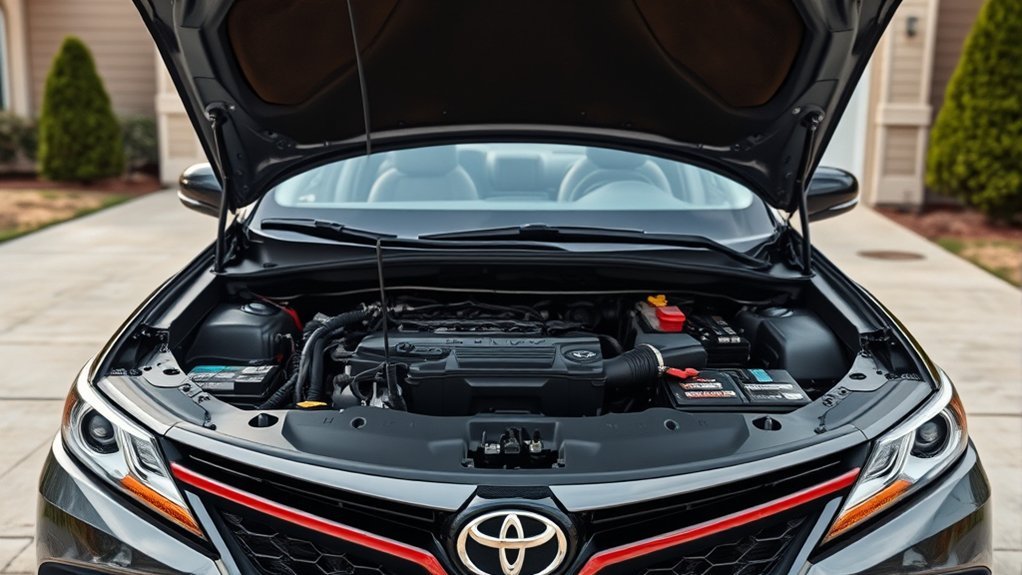
Once the idle has stabilized, complete a final check so a simple battery replacement does not leave another issue unnoticed.
- Recheck the terminals: Make sure both battery terminals remain tight after the test drive.
- Inspect the intake system: Confirm that every duct, hose, clamp, and sensor connector is secure.
- Check warning lights: Scan any persistent check-engine, traction-control, charging, or hybrid warning.
- Restore settings: Reset the clock, audio preferences, and other settings that lost memory.
- Test convenience functions: Check windows, locks, steering-related warnings, and other systems according to the owner’s manual.
- Monitor the next few drives: Note whether the idle continues improving or whether stalling, surging, or warning lights return.
- Use model-specific information: Consult Toyota’s manual portal or TIS before attempting a special calibration or component replacement.
Frequently Asked Questions
How do you reset a Toyota Camry’s idle after a battery change?
Verify the battery connections, turn off accessories, start the engine without pressing the accelerator, and let it reach normal temperature in Park. If it runs safely, complete a short drive with light acceleration and several stops. Use model-specific Toyota repair information if the symptoms continue.
How long does a Toyota idle relearn take?
There is no universal completion time for every Camry. Minor changes may settle during warm-up and a short drive, while full adaptation can continue over several drive cycles. Persistent stalling, severe shaking, high idle, or warning lights require diagnosis instead of more waiting.
Should you hold a Camry at 3,000 RPM for 30 seconds?
Do not treat that as a universal Toyota Camry procedure. Use it only if the factory repair information for your exact model year and engine specifically includes that instruction. A basic passive relearn normally begins with warm-up and gentle driving.
Does the throttle body always need cleaning after battery replacement?
No. Clean it only when inspection or diagnosis indicates that deposits are affecting airflow. Use a cleaner approved for electronic throttle bodies, protect electrical components, and follow the model-specific repair procedure.
Can you drive a Camry that stalls after a battery change?
Do not drive it in traffic if it repeatedly stalls or cannot maintain safe power. Check the battery connections, intake system, throttle body, voltage, and diagnostic codes. Arrange professional diagnosis if the problem continues.
Why did the check-engine or traction-control light appear after the battery change?
A loose connection, low voltage, disconnected sensor, throttle fault, or another engine problem may have stored a diagnostic code. Read the codes before disconnecting the battery again. A traction-control warning can appear alongside an engine-control fault because the systems share information.
Conclusion
A Toyota Camry may need time to rebuild learned idle values after its 12-volt battery is disconnected, but the safest approach is simple: verify the installation, warm the engine outdoors in Park, and complete a gentle drive only if the vehicle runs safely.
A universal 3,000-RPM procedure, idling in Drive, or repeatedly disconnecting the battery can create new risks and erase useful diagnostic information. If the Camry continues to stall, idles excessively high, or shows warning lights, inspect the intake and electrical systems, scan the stored codes, and follow the Toyota repair information for the exact model year and engine.
Sources
- Toyota Manuals and Warranties — model-specific owner manuals, functions, maintenance, and warranty information
- Toyota Technical Information System — factory repair manuals, service bulletins, diagnostics, wiring diagrams, and calibration information
- National Highway Traffic Safety Administration Recall Search — VIN-specific recalls, investigations, complaints, and manufacturer communications
- CDC Carbon Monoxide Poisoning Basics — safety guidance for running vehicles and preventing carbon-monoxide exposure
