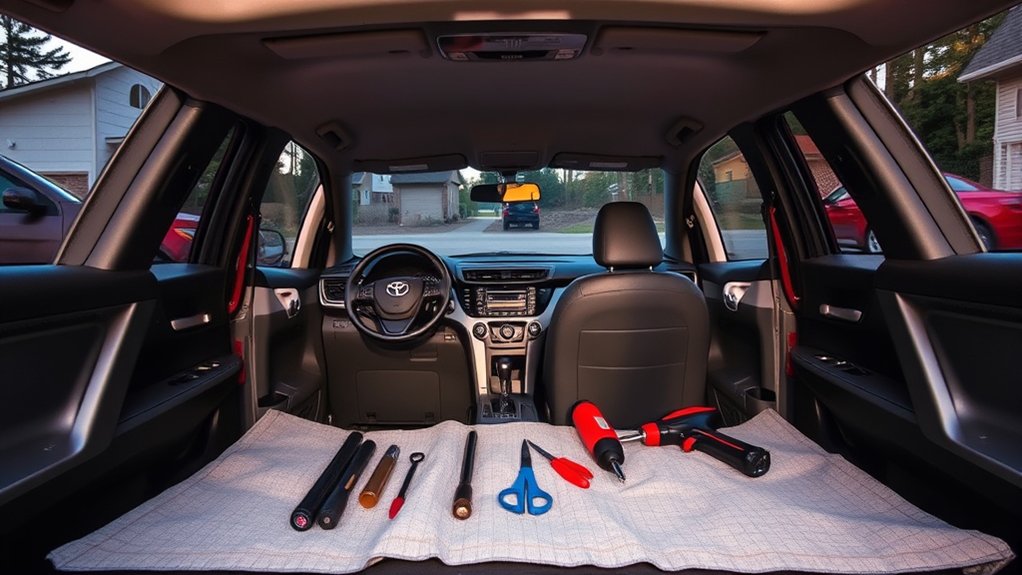
To quiet cabin noise in a 2014 RAV4, the owner should first isolate whether road, engine, or wind noise is dominant with a controlled test drive. The most effective treatment targets the floor, rear wheel wells, doors, roof, and firewall using butyl damping sheets, dense barrier liners, rollers, and basic trim tools. Clean surfaces, strip the interior carefully, seal gaps, and restore weather stripping. Further steps explain where each material produces the greatest benefit.
Find the Biggest 2014 RAV4 Noise Source
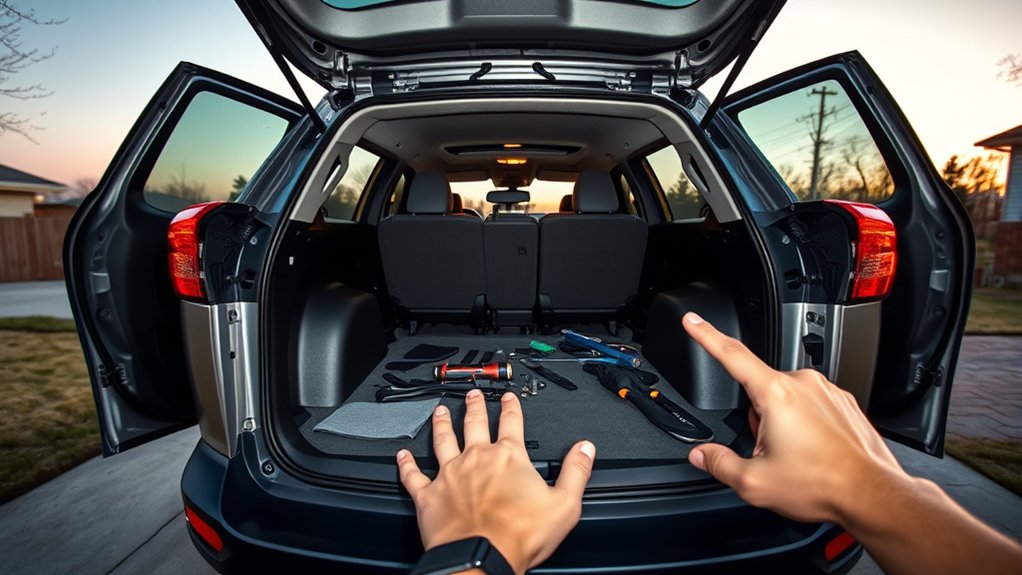
Start by isolating the primary paths of intrusion: in the 2014 RAV4, the dominant cabin noise sources are typically tire and road noise entering from the rear wheel area, followed by engine noise transmitted through limited firewall insulation, with wind noise increasing when door insulation is insufficient.
Diagnosis should begin with a controlled test drive on consistent pavement. If Road Noise rises from the rear floor and cargo zone, the rear wheel wells are the likely entry point. If sound intensifies under acceleration, firewall transmission should be prioritized.
If noise swells at highway speed without throttle change, door sealing and insulation require inspection. Owner reports consistently identify elevated cabin loudness, confirming these as the main release points from acoustic confinement.
After identification, corrective planning becomes precise: Spectrum™ in wheel wells and Damplifier Pro™ on the firewall commonly reduce intrusion by 3–5 dB. Quieter replacement tires and careful material installation further sharpen results, restoring a more controlled, liberated driving environment.
Understand Why the 2014 RAV4 Is Loud
Although the 2014 RAV4 remains practical in layout, its elevated cabin noise is primarily a consequence of limited factory sound insulation at three critical paths: the firewall, the rear wheel well and cargo-floor structure, and the doors.
This architecture allows engine, tire, and wind energy to enter the cabin with minimal attenuation, producing a harsher acoustic profile than many drivers expect.
- Firewall transmission: Insufficient barrier mass between engine bay and cabin permits combustion and accessory noise to pass forward.
- Rear structure resonance: Noise from the rear wheels excites the cargo floor and wheel wells, amplifying road and tire frequencies.
- Door leakage: Inadequate door insulation and sealing increase wind intrusion, especially at highway speed.
- Sparse Sound Deadening: Limited factory damping leaves broad sheet metal panels free to vibrate and reradiate sound.
From a diagnostic standpoint, the RAV4 is loud not because of one defect, but because multiple untreated pathways combine and reinforce each other acoustically.
Choose Materials and Tools for Soundproofing
With the primary noise paths identified, material and tool selection should be matched to the type of intrusion and the panel being treated. For a 2014 RAV4, high-performance damping and barrier products such as Damplifier Pro™ and Luxury Liner Pro™ are appropriate for suppressing engine resonance and road roar.
Match damping and barrier materials to each noise path and panel for the most effective RAV4 cabin noise reduction.
A butyl-based sound deadener is best assigned to vibrating metal surfaces, while a dense barrier layer is reserved for airborne noise transfer.
Core tools are minimal but critical: a utility knife for precise trimming, a roller for full material compression, and cleaning supplies for adhesion control.
Treatment priority should center on the floor, doors, and roof, where noise energy commonly enters the cabin. To avoid wasted coverage and trapped gaps, templates should be made or panel shapes traced before cutting.
Every treated surface must be cleaned of dust, oil, and grease so the adhesive bonds securely and performs to full specification over time.
Strip the 2014 RAV4 Interior Safely
Disconnect the battery before any trim or seat removal so the 2014 RAV4 can be stripped without risking shorts, warning-light faults, or accidental connector damage. This first isolation step creates a controlled workspace and helps strip the 2014 RAV4 interior safely with fewer diagnostic surprises.
- Remove front seats with a socket wrench, then label and store bolts and electrical connectors for exact reinstallation later.
- Unscrew the center console, checking for hidden fasteners, then pry it free carefully to avoid cracking trim near the dash.
- Unbolt the rear seat base and backrest, then lift both sections out methodically to preserve mounting points and clips.
- Peel back carpet and factory sound insulation slowly, exposing the floor while protecting wiring, sensors, and brackets underneath.
This sequence keeps disassembly orderly, reduces avoidable damage, and gives the owner a liberated path toward a quieter cabin.
Careful parts management also shortens reassembly time and limits post-job rattles or fitment issues.
Soundproof the 2014 RAV4 Floor
Apply a two-layer treatment across the exposed 2014 RAV4 floor to target both vibration and airborne road noise.
After the seats and carpet are removed, the bare metal should be inspected, vacuumed, degreased, and dried so the materials bond without compromise. This preparation stage determines whether efforts to soundproof the 2014 RAV4 floor deliver lasting liberation from droning pavement noise.
Damplifier Pro™ should be pressed directly onto the cleaned floor pan, covering broad flat sections and other resonance-prone metal surfaces. Firm roller pressure improves adhesion and increases damping efficiency.
Once that structural layer is complete, Luxury Liner Pro™ should be fitted above it as the mass barrier that blocks airborne tire and road sound. Edges should be trimmed carefully to maintain carpet fitment and seat mounting access.
After reassembly, periodic inspection is advisable. Any lifted sections, moisture intrusion, or wear should be corrected early to preserve performance and sustain a quieter, more controlled cabin over time.
Quiet Wind Noise in the 2014 RAV4 Doors
Addressing door-related wind noise in the 2014 RAV4 begins by treating the inner door skins with Damplifier Pro™ to reduce panel vibration and suppress road-noise transmission through the shell. This first layer stabilizes thin metal, limiting resonance that amplifies wind noise at highway speed. Surfaces should be degreased thoroughly before application to maximize adhesion and durability.
Treating the inner door skins with Damplifier Pro™ calms panel resonance, helping the RAV4 resist wind-noise buildup at speed.
- Apply Mega Zorbe™ inside door cavities to absorb echo and disrupt airborne sound paths.
- Press material firmly into seams and overlaps, where leakage commonly bypasses primary barriers.
- Inspect perimeter weather stripping; replace flattened or cracked seals to restore compression against wind noise.
- Recheck all installed layers periodically for moisture damage, peeling edges, or seal fatigue.
This door-focused process creates a more controlled cabin pressure boundary. By targeting vibration, cavity echo, and edge leakage together, the RAV4 gains a quieter door assembly and a greater sense of liberation from persistent exterior intrusion during daily driving.
Stop Roof Boom in the 2014 RAV4
Roof boom in the 2014 RAV4 is most effectively controlled by treating the roof panel with Damplifier Pro™ to damp vibration and reduce structural resonance that radiates into the cabin. This targets the large unsupported sheet metal area overhead, where low-frequency sound energy can amplify and create a droning effect at speed.
Users commonly report measurable relief, with perceived cabin noise reductions often falling in the 3-5dB range after proper treatment.
For best results, the headliner should be removed to expose the full roof skin. The metal surface must then be cleaned and fully dried so the material bonds securely.
Damplifier Pro™ should be applied with broad, well-pressed coverage across the panel to interrupt resonance paths. This procedure frees the cabin from persistent boom without guesswork.
While roof treatment alone is beneficial, it also integrates effectively with floor and door work to produce a more complete reduction in intrusive sound overall.
Quiet the RAV4 Firewall, Hood, and Wheel Wells
Target the firewall, hood, and wheel wells next, since these zones transmit a high share of engine, tire, and impact noise into the 2014 RAV4 cabin. A systematic treatment here delivers measurable Cabin Noise relief and frees the vehicle from persistent mechanical intrusion.
- Apply Damplifier Pro™ across the firewall to suppress vibration, then add Luxury Liner Pro™ as a decoupled barrier against engine sound transfer.
- Extend coverage to seams, corners, and overlaps. Gaps at the firewall perimeter or tunnel edges allow noise leakage and reduce overall attenuation.
- Install a Hood Insulation Kit under the hood panel to absorb reflected engine noise before it re-enters the cabin through adjacent structures.
- Coat the wheel wells with Spectrum™ to target tire roar and road strike energy; this treatment commonly yields a 3–5 dB reduction in road noise.
Periodic inspection preserves performance. Materials should remain bonded, continuous, and intact to sustain long-term Cabin Noise control and driving calm.
Avoid Common 2014 RAV4 Soundproofing Mistakes
Preventable errors often limit soundproofing gains in a 2014 RAV4, even when quality materials are used. Most failures trace to poor surface preparation, incomplete coverage, and weak product selection. Panels should be cleaned, degreased, and dried before any layer is applied; otherwise adhesion drops and vibration control weakens. Freedom from persistent cabin drone depends on treating the roof, floor, doors, and trunk rather than isolating only one zone.
| Mistake | Effect | Correction |
|---|---|---|
| Dirty surfaces | Delamination, reduced damping | Clean and dry thoroughly |
| Thin coverage | Sound leaks at seams | Overlap and seal edges |
| Ignoring key zones | Uneven noise reduction | Treat roof, floor, doors, trunk |
Material shortcuts also undermine soundproofing. High-grade options such as Damplifier Pro™ and Luxury Liner Pro™ generally outperform bargain sheets in damping and barrier performance. After installation, periodic inspection is required to catch lifting edges, moisture exposure, or damaged sections before noise control declines over time.
Frequently Asked Questions
How Can I Soundproof My Toyota RAV4?
Soundproofing a Toyota RAV4 requires systematic Sound Dampening: apply Damplifier Pro and Luxury Liner Pro on the firewall, Spectrum in wheel wells, upgrade doors with Mega Zorbe, and add hood insulation for measurable cabin-noise reduction.
Why Is RAV4 so Noisy?
The RAV4 is noisy because factory insulation is limited around wheel wells, engine bay, and doors, allowing road, wind, and engine frequencies to intrude; diagnostic focus for Noise Reduction targets sealing, damping, and tire selection.
What Is the Class Action Lawsuit Against the Toyota RAV4?
The Toyota RAV4 class action alleges excessive engine noise, vibration, and inadequate soundproofing. Lawsuit Details indicate nondisclosure at sale, diminished comfort, possible resale harm, and scrutiny over manufacturing transparency, enabling owners to pursue compensation and accountability.
Are RAV4S Loud Inside?
Yes, RAV4s are often considered loud inside, especially during highway driving, with road, tire, engine, and wind noise commonly reported. Diagnostic evaluation typically identifies insulation deficiencies; Noise Reduction measures can greatly improve cabin quietness and driving freedom.
Conclusion
With the correct diagnostics, the 2014 RAV4 can be made noticeably quieter by treating the dominant paths first: floor, doors, roof, firewall, and wheel wells. Road noise typically enters below 500 Hz, where untreated sheet metal behaves like a drum skin. A 3 dB reduction cuts sound energy in half, giving a clear benchmark for each added layer. Careful disassembly, proper surface prep, and strategic material placement produce the most efficient, measurable cabin-noise improvement.
