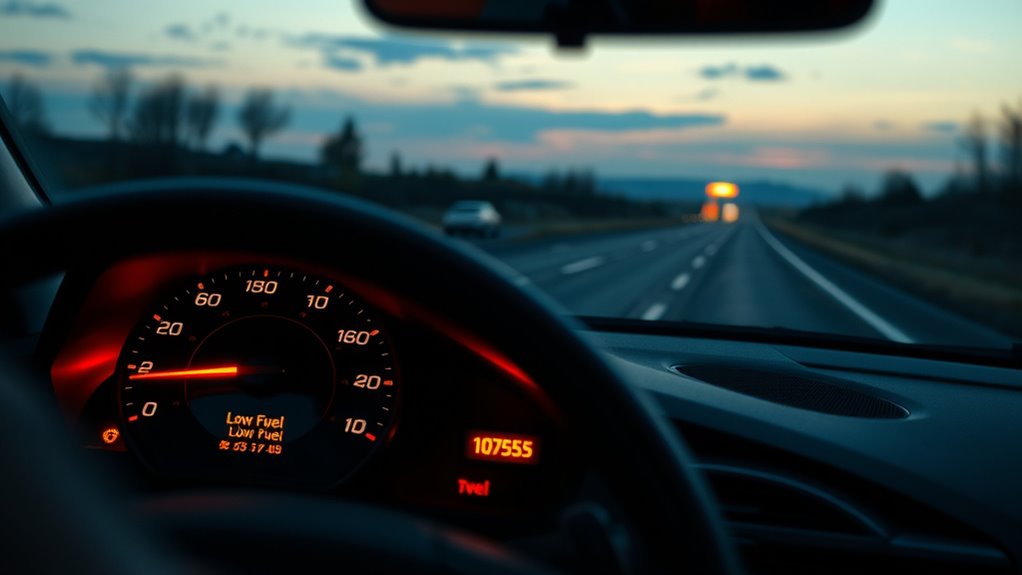
The fuel warning light usually indicates a reserve, but it does not guarantee a fixed distance. In many cars, 30 kilometers may be possible, yet traffic, load, terrain, and driving style can reduce that margin quickly. Running too close to empty also increases the risk of fuel pump damage and unexpected shutdown. The real question is not whether 30 kilometers is possible, but how much uncertainty remains before refueling becomes critical.
Can You Safely Drive 30 Kilometers on Low Fuel?
Driving 30 kilometers on low fuel is generally feasible for many vehicles, since most can typically travel about 48 to 80 kilometers after the fuel light activates, depending on make, model, and efficiency.
Feasibility remains conditional, however, because driving conditions, traffic density, terrain, and driving habits alter consumption rates. A vehicle with strong fuel efficiency may cover the distance with reserve capacity, while a less efficient vehicle may approach the limit sooner.
Feasibility depends on conditions, traffic, terrain, and driving habits, which can quickly change fuel consumption and remaining range.
When the fuel light turns on, the remaining range is not a guarantee; it is an estimate shaped by operating variables. For that reason, 30 kilometers should be treated as a short, interim distance rather than a target for extended use.
Refueling promptly preserves mechanical integrity, reduces stress on the fuel pump, and supports autonomous, unburdened movement. The prudent course is to avoid prolonged low fuel operation and refill before the tank falls below one quarter.
What the Fuel Light Means
The fuel light indicates that the tank has reached a low-fuel threshold, typically around 10% to 15% capacity, and that refueling is no longer optional.
It also implies a limited fuel reserve, often sufficient for only 30 to 50 miles under average conditions, though the exact distance varies by vehicle and operating conditions.
Prompt refueling before the tank reaches empty is the prudent response, since continued operation on reserve increases the risk of stalling and related damage.
Low Fuel Warning Meaning
A low fuel warning light typically illuminates when roughly 10% to 15% of the tank capacity remains, indicating that refueling should occur soon rather than immediately being able to continue indefinitely.
This low fuel warning meaning is an instrument-panel signal that fuel levels have dropped into a limited reserve, and the remaining fuel should be treated as temporary, not dependable.
In analytical terms, the indicator does not guarantee a fixed distance; it only marks a threshold where driving habits become consequential. Aggressive acceleration, heavy loads, and stop-and-go operation can accelerate consumption and reduce margin.
Different vehicles calibrate the warning differently, so the same light may correspond to different reserves.
For drivers seeking autonomy from uncertainty, prompt refueling preserves mobility and reduces exposure to avoidable mechanical stress or immobilization.
Fuel Reserve Estimate
Fuel reserve at the warning threshold is usually small, with the light commonly activating when about 10% to 15% of tank capacity remains, or roughly 1.5 to 2.5 gallons.
When the fuel light comes on, reserve fuel is present, but it is not abundant or guaranteed. Under typical conditions, many vehicles can travel 30 to 50 miles, though exact range varies by model, load, traffic, terrain, and driving style.
A Toyota Camry may approach 45 miles; a Honda Accord, about 40. Aggressive acceleration, heavy cargo, and stop-and-go congestion reduce fuel efficiency and shorten usable distance.
The signal hence functions as a constrained reserve estimate, not a promise. It marks a narrow window of autonomy before running out of fuel becomes likely, and disciplined drivers treat it as an immediate operational constraint.
Refuel Before Empty
Once the fuel warning illuminates, it indicates roughly 10% to 15% of tank capacity remains, often about 1.5 to 2.5 gallons, which is a limited reserve rather than a comfortable buffer. The fuel gauge is signaling urgency, not opportunity. When the fuel light illuminates, a driver should refill your tank soon, because the remaining range is typically 30 to 50 miles, and less under severe driving conditions.
| Signal | Reserve | Action |
|---|---|---|
| Light on | Low fuel | Plan stop |
| Traffic | Higher burn | Reduce load |
| Aggressive throttle | Faster depletion | Moderate inputs |
| Quarter tank | Safer margin | Refill promptly |
| Empty tank | Risk rises | Avoid entirely |
Monitoring levels before quarter tank preserves freedom from breakdowns, protects fuel systems, and reduces repair costs.
How Far Most Cars Can Go After It Comes On
When the low-fuel warning illuminates, most cars still have roughly 30 to 50 miles of usable range, though the exact distance depends on the vehicle’s make, model, and fuel reserve capacity.
Most cars still have about 30 to 50 miles left when the low-fuel warning appears.
Once the warning light illuminates, the fuel indicator is signaling a limited but measurable margin, not an immediate shutdown. The number of miles remaining is typically sufficient for a short, direct trip to a station, yet it should not be treated as a guarantee.
In practical terms, many sedans approach the upper end of this range, while compact vehicles often have less and larger trucks may extend farther. A Toyota Camry may reach about 45 miles, whereas a Ford F-150 may manage near 35 miles.
Because fuel consumption continues as distance accumulates, the reserve steadily shrinks. The rational response is decisive: refuel promptly, preserve mobility, and avoid the costly loss of control that comes from running dry.
What Affects Your Remaining Range?
Remaining distance after the low-fuel warning appears is determined by several interacting variables, beginning with the vehicle’s fuel gauge calibration and reserve design; in many models, the warning activates when approximately 10–15% of tank capacity remains, though this threshold varies by make and model. Larger vehicles may hold more reserve fuel, extending remaining range.
| Factor | Effect |
|---|---|
| Driving conditions | Stop-and-go traffic lowers fuel efficiency |
| Highway speeds | Steadier flow often improves range |
| Aggressive driving | Rapid acceleration increases consumption |
| Tire pressure | Proper inflation supports fuel efficiency |
| Load weight | Heavier loads shorten remaining range |
These inputs shape how far the vehicle can travel before refueling. A fuel pump continues drawing from the reserve, so measured use becomes critical. Routine maintenance, especially pressure checks and limiting excess cargo, preserves fuel efficiency and supports mobility. For drivers seeking liberation from uncertainty, the practical conclusion is simple: remaining range is not fixed; it is a function of calibration, reserve size, driving conditions, and disciplined operation.
Why Running on Empty Can Damage Your Car
Beyond the question of how far a vehicle may travel on reserve fuel lies a more serious issue: operating near or below empty can damage the fuel system. The pump depends on gasoline for lubrication and cooling; when enough fuel is absent, heat and friction rise, accelerating pump wear and possible failure.
Low levels also stir sediment from the tank bottom, creating clogged fuel filters and injectors that restrict flow and impair combustion.
- A fuel pump exposed like a dry-bearing motor, straining in a hot tank
- Dark sediment lifted from the tank floor, drifting toward precision injectors
- Warning lights reflecting on the dash as performance weakens during traffic
Repeated low-fuel operation decreases the vehicle’s safety margin and can trigger unexpected performance issues at critical moments.
It also causes a decrease in fuel efficiency, since engine strain increases consumption. Over time, added wear on fuel system components may lead to repairs costing $500 to $1000, a measurable price for the freedom to avoid refueling.
How to Stretch Your Last Few Kilometers
Once the fuel light appears, a vehicle usually has only about 30 to 50 miles, or 48 to 80 kilometers, left, though that range varies by make, model, and driving conditions.
To extend that distance, the driver should reduce demand on the fuel in the tank by maintaining steady speeds and avoiding rapid acceleration or hard braking.
Stop-and-go traffic and steep grades reduce usable range, so it is technically preferable to select a route with fewer interruptions and flatter terrain.
On highways, cruise control can support consistent throttle input and better gas mileage, provided traffic and road conditions allow its use safely.
Cabin loads and unnecessary idling should be minimized.
The fuel gauge should be monitored continuously, because the remaining margin is small and uncertain.
Even while applying these efficiency measures, the driver should plan to refuel promptly after the light appears, preserving mobility and autonomy rather than testing the reserve beyond its intended limit.
When You Should Refuel Immediately
A fuel warning light should be treated as an immediate refueling signal, because it usually indicates that only 10 to 15 percent of the tank remains, or roughly 1.5 to 2.5 gallons. When the fuel light activates, the rational response is to refuel immediately, not to negotiate with distance.
Most vehicles may still cover 30 to 50 miles, yet driving conditions, speed, load, and terrain can compress that margin sharply. A flashing indicator signals less than 10 percent fuel and demands urgent movement toward a gas station.
Low fuel operation increases fuel-pump stress and can draw contaminants into the system, raising repair risk and reducing autonomy.
- A dim dashboard icon over an emptying gauge
- A queue of vehicles under harsh sunlight at a gas station
- A driver scanning driving conditions while conserving the last drops
Best practice is to refill before a quarter tank, preserving mechanical health and personal freedom.
Frequently Asked Questions
How Long Can You Drive Once Your Fuel Light Comes On?
Typically, a vehicle can travel about 48 to 80 kilometers after the fuel light activates, though exact range depends on fuel efficiency, driving habits, and vehicle design.
These warning signals usually mean only 10% to 15% of the tank remains. Safety concerns increase as reserve fuel declines, so refueling promptly is the most rational course.
Aggressive acceleration, heavy loads, and poor conditions can sharply reduce the remaining distance.
How Many Kilometers Can You Drive When the Fuel Light Turns On?
Typically, a vehicle can travel about 48 to 80 kilometers after the fuel warning illuminates—an impressive invitation to gamble with inconvenience. The exact range depends on the fuel gauge calibration, fuel efficiency, driving habits, vehicle size, and road conditions.
Many cars reserve roughly 1.5 to 2.5 gallons at activation. For technical certainty, refueling promptly remains the rational choice, preserving mobility and autonomy while avoiding engine starvation and unnecessary risk.
How Many Kilometers Can I Drive on Empty?
Typically, a vehicle can travel about 48 to 80 kilometers on empty, depending on fuel tank capacity, driving habits, and road conditions.
Larger models may exceed this range, but warning signals should be treated as urgent, not advisory.
Stop-and-go traffic, hills, and aggressive driving reduce range and can impair engine performance.
Refueling immediately preserves mechanical autonomy and prevents fuel-system damage, ensuring continued liberation from avoidable roadside dependence.
How Long Do 30 Miles of Gas Last?
Thirty miles of gas may last from under an hour to several hours, depending on speed and load; one commuter once stretched it across a storm-lashed city in 90 minutes, like a candle in a tunnel.
Fuel efficiency tips, disciplined driving habits, fuel tank maintenance, and emergency fuel strategies all extend range.
At highway pace, 30 miles may be brief; in stop-and-go traffic, it shrinks sharply.
Conclusion
In most vehicles, the fuel warning light signals a brief reserve, not a guarantee. Thirty kilometers may be possible, but only under favorable conditions: light traffic, level roads, and efficient driving. The margin can vanish quickly with load, speed, or cold weather. Running this close to empty risks fuel-system strain and unexpected shutdown. The prudent response is immediate refueling. The warning is not an invitation to continue, but a deadline approaching quietly.

