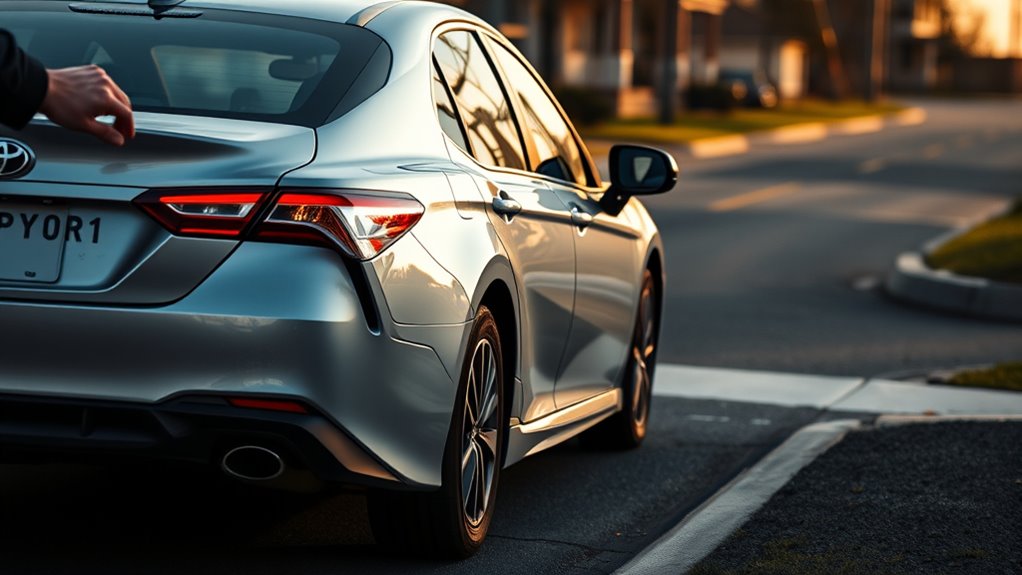
A 2018 Toyota Camry Hybrid that slips out of drive or hesitates under load may be showing signs of transmission control trouble, fluid degradation, or valve body wear. Dark fluid, harsh engagement, and low-speed shudder point to a problem that should not be ignored. An ECM update, solenoid inspection, or hydraulic diagnosis may help narrow the cause, but the real issue may be more involved than it first appears.
Why Is My Camry Hybrid Slipping Out of Drive?

A 2018 Toyota Camry Hybrid that slips out of drive typically points to a transmission control or hydraulic fault rather than a single isolated symptom.
In many cases, transmission slipping follows worn or damaged shift solenoids that fail to hold proper gear engagement, especially when harsh shifts and intermittent flare-up have already appeared.
A malfunctioning Transmission Control Module can also command erratic ratios, causing the unit to disengage unexpectedly; diagnostic scanning and the TSB-0043-19 update should be considered.
Prior highway-speed slipping reported by a previous owner suggests a chronic fault, not a brief anomaly, and may justify deeper inspection for internal wear.
Previous highway-speed slipping points to a chronic transmission issue and may warrant inspection for internal wear.
Deferred service further weakens reliability, allowing the condition to worsen.
For drivers seeking freedom from uncertainty, the key is prompt evaluation, not denial.
Consistent maintenance and timely corrective action help restore stable operation and reduce the risk of recurring transmission slipping.
Check the Camry Transmission Fluid First
Before assuming a deeper transmission failure, the 2018 Toyota Camry Hybrid’s transmission fluid should be checked first. A low level can cause slipping, delayed engagement, and unstable drive selection, so the fluid reservoir condition must be verified regularly.
The specified service fluid is Toyota WS transmission fluid; using the correct type helps preserve shift quality and system life. Its appearance should be clear red. Dark coloration, a burnt odor, or debris suggests contamination or overheating and warrants immediate inspection.
Leaks beneath the vehicle should be traced, because even minor seepage can drain the system and undermine gear engagement. Under normal use, a transmission fluid change is typically due at 60,000 miles, though symptoms such as slipping or harsh shifting justify earlier service.
This diagnostic step is basic, but it restores control by ruling out a preventable cause before further pursuit.
Could an ECM Update Fix Camry Transmission Slipping?
An ECM calibration update, such as Toyota TSB-0043-19, can correct shift logic in 2018–2021 Camry models and reduce symptoms that resemble transmission slipping.
Typical indicators include harsh engagement, delayed shifts, and inconsistent acceleration response, especially under cold start or load.
If software revision does not improve operation, internal hardware faults should be considered.
ECM Calibration Updates
ECM calibration updates can directly affect how the 2018 Toyota Camry Hybrid’s transmission responds to throttle input and shift commands, making them a relevant diagnostic step when slipping, harsh shifts, or delayed engagement occur.
Toyota Camry Hybrid owners benefit when the control logic is revised to better manage line pressure, shift timing, and torque delivery. Technical Service Bulletin TSB-0043-19 and recall 18V-684 identify ECM software as a possible source of drivability faults and authorize a free update on affected vehicles.
A qualified technician should verify the installed calibration against the latest Toyota files. If the module is outdated, reprogramming may restore smoother operation and reduce abnormal transmission behavior.
Regular software maintenance supports mechanical longevity and helps keep the drivetrain responsive without unnecessary intervention.
Shifting Issue Symptoms
When a 2018 Toyota Camry Hybrid exhibits slipping, harsh engagement, or delayed acceleration, the symptoms may point to ECM calibration rather than a purely mechanical transmission fault.
In such cases, the Toyota transmission may feel indecisive during takeoff, upshifts, or low-speed maneuvers. Owners often notice flare between gears, abrupt clutch application, or a lag before power returns, especially after stop-and-go driving.
These patterns align with the conditions addressed by TSB-0043-19, which targets shift quality through updated software logic. A dealer reflash can recalibrate the transmission control strategy and restore smoother operation.
Detailed symptom logs help technicians distinguish software behavior from hardware failure. Regular software maintenance supports reliable, free-moving performance and reduces the chance of recurring slipping.
When Hardware Fails
Even when transmission slipping appears to be a hardware fault, a calibration issue in the engine control module can still be the root cause on a 2018 Toyota Camry Hybrid.
TSB-0043-19 addresses harsh shifting and delayed engagement in 2018-2021 Camry models, making an ECM update the first diagnostic step. When the software is outdated, shift logic may misread load and speed, creating symptoms that mimic mechanical failure.
A specialist can reflash the module, then verify whether responsiveness improves and slip events disappear. If transmission slipping remains after calibration, hardware inspection becomes necessary.
Regular software updates should be part of maintenance, especially after drivability complaints. For owners seeking freedom from unnecessary repair bills, this approach can restore controlled operation and avoid premature replacement of major components.
How Do the ECM and Valve Body Affect Shifting?
The ECM determines shift calibration by using sensor inputs to time and modulate gear changes, so software errors can produce harsh or delayed shifts.
The valve body then routes hydraulic pressure to the correct clutches and bands, and any fault in its operation can disrupt smooth engagement.
When shift complaints appear, diagnostics should assess ECM control logic and valve body pressure regulation together.
ECM Shift Calibration
ECM shift calibration directly influences how the 2018 Toyota Camry Hybrid transmission responds to driving conditions, since the Engine Control Module uses sensor data to fine-tune shift timing and engagement.
ECM shift calibration determines whether gear changes feel controlled or unstable. When calibration is correct, the transmission follows intended operational parameters and supports efficient, predictable movement.
When it is miscalibrated, harsh or erratic shifting may appear, and a software update may be needed to restore proper behavior. Toyota has issued updates for known harsh-shift concerns in 2018-2021 Camry models, including TSB-0043-19.
Precise calibration matters because it reduces needless mechanical stress and helps preserve driver autonomy through smoother operation.
Valve Body Control
Valve body control is the next part of the shifting system to examine after calibration, because the ECM and valve body work together to determine how quickly and smoothly gear changes occur.
The ECM reads sensor data, then commands the valve body to route fluid pressure to the correct clutch circuits. When the valve body responds correctly, shifts remain orderly and efficient.
When contamination, wear, or internal fault affects the valve body, shifting may become erratic or slip under load. A software update, such as TSB-0043-19, can improve ECM logic and restore better coordination with the valve body.
Regular fluid service supports clean passages and stable pressure.
- ECM input timing
- Valve body fluid routing
- Maintenance and software updates
Harsh Shift Diagnostics
Harsh shifting in a 2018 Toyota Camry Hybrid often points to a coordination problem between the ECM and the valve body, since shift timing depends on both control logic and hydraulic response.
The ECM adjusts gear changes to match load, speed, and throttle input; if calibration is off, a harsh shift or delay can follow. Toyota’s TSB-0043-19 targets ECM updates for 2018 to 2021 models because software errors can distort shift quality.
The valve body then routes fluid to the correct clutches and bands; wear, contamination, or damage can make engagement abrupt or erratic.
Fresh transmission fluid and updated ECM programming help restore control, reduce slip, and support long-term mechanical freedom.
What Are the Signs of Transmission Wear?
Transmission wear in a 2018 Toyota Camry Hybrid typically reveals itself through slipping gears, delayed engagement, and abnormal shifting behavior. These signs of transmission wear point to mechanical fatigue inside the driveline, where friction surfaces, solenoids, or clutches may no longer coordinate cleanly.
When the engine revs rise without matching vehicle speed, the transmission may be losing grip. A driver may also notice harsh or jerky gear changes, especially under light throttle, suggesting worn internal parts or control faults.
- Grinding or whining noises during operation can indicate degrading components.
- Fluid that is dark, discolored, or leaking suggests contamination or wear.
- Hesitation before drive engagement can show delayed response within the transmission system.
Together, these symptoms indicate reduced efficiency and diminishing control. For anyone seeking mechanical freedom from guesswork, they justify prompt diagnosis before minor wear becomes a larger failure.
Can a Flush Fix Camry Transmission Slipping?
A transmission flush can sometimes improve a slipping 2018 Toyota Camry Hybrid if the problem is tied to old, contaminated, or degraded fluid that is restricting hydraulic performance. In that case, a transmission flush may restore cleaner flow and steadier engagement. It is not, however, a cure for worn clutches or internal damage, where freedom from symptoms requires repair, not fluid service. Fluid level and condition should be checked first, because low fluid can also trigger slip. Toyota’s 60,000-mile fluid-change interval reflects a maintenance strategy aimed at preserving control and extending transmission life.
| Condition | Likely Outcome |
|---|---|
| Old fluid | Possible improvement |
| Debris in fluid | Possible improvement |
| Low fluid | Correct level first |
| Worn internals | Flush unlikely to help |
A transmission flush is consequently a diagnostic tool, not a guarantee. It may resolve minor fluid-quality issues, but serious mechanical faults remain unchanged.
When Should You Clean Solenoids or Check Linkage?
If fluid service does not correct slipping or delayed shifts, attention should move to the solenoids and shift linkage. Solenoids regulate fluid flow inside the transmission, so contamination or wear can cause harsh shifting, hesitation, or slip. On high-mileage Camry hybrids, especially those with prior transmission complaints, cleaning solenoids may restore responsiveness. If symptoms persist, replacement is the durable answer.
- Inspect for delayed engagement, flare, or abrupt gear changes.
- Check linkage for wear, looseness, or misalignment if gear selection feels inconsistent.
- Reevaluate after service; persistent slip signals deeper faults.
Linkage should also be verified whenever the lever feels vague or gears do not engage cleanly. Minor adjustment can free the system from unnecessary drag and restore precise control.
Routine inspection of solenoids and linkage supports reliable operation and helps prevent greater damage. When cleaning or adjustment fails, further diagnostics are warranted before the driver loses more control.
Should You Repair, Rebuild, or Replace the Transmission?
When the Camry Hybrid’s transmission problems persist after fluid service, solenoid checks, and linkage inspection, the next decision is whether to repair, rebuild, or replace the unit.
A targeted repair is appropriate when diagnostics isolate a minor fault, such as a failed solenoid, valve body concern, or fluid-related issue. This route preserves factory components and limits cost.
A rebuild becomes logical when teardown reveals several worn internal parts, but the case, gears, and core assemblies remain serviceable. It can restore function, yet it may not cure systemic wear or heat damage.
Replacement is the strongest option when clutches are burnt, slip is constant, or internal damage is widespread. A new or remanufactured transmission usually delivers better long-term reliability and fewer repeat failures.
The choice should follow a full diagnostic evaluation, not guesswork, because each path carries different cost, downtime, and durability outcomes for the driver seeking mechanical independence.
Frequently Asked Questions
Is There a Recall on the 2018 Toyota Camry Hybrid?
Yes. The 2018 Toyota Camry Hybrid has a recall, including Recall ID 18V-684, tied to ECM software that can disrupt shifting and create Safety Concerns.
Affected vehicles may receive a free software update from a Toyota dealer, usually in one visit. VIN status can be verified on the NHTSA website.
Both hybrid and non-hybrid 2018 Camry models are included, indicating a broader transmission-control issue requiring prompt diagnostic confirmation.
Was There a Transmission Recall on the 2018 Toyota Camry?
Yes—there was a transmission-related recall on some 2018 Toyota Camry models, including hybrids.
Toyota’s ECM software update addressed Transmission Issues that could cause improper shifting or hesitation.
It was not a full hardware transmission recall, but a corrective calibration campaign, identified as 18V-684.
Vehicle eligibility depended on VIN range.
Owners could verify status through Toyota or a dealer and obtain the update free, restoring safer, more reliable control.
What Are Some Common Problems With the 2018 Toyota Camry Hybrid?
Common problems include transmission control faults, jerky shifts, delayed acceleration, and intermittent slipping.
Electrical Issues may also appear in the hybrid system, sensors, or battery management, creating erratic behavior like a loose thread in a woven machine.
ECM calibration updates and TSB-0043-19 sometimes improve shift quality.
Regular fluid service and documented symptoms help isolate wear, solenoid failure, or module faults before performance degrades further.
Can a Slipping Transmission Be Fixed?
Yes, a slipping transmission can often be fixed. A technician would first inspect fluid level, clutch wear, solenoids, linkage, and the TCM with diagnostic tools.
If the fault is minor, repair and Transmission Maintenance may restore proper operation. If internal damage is severe, a remanufactured or salvage unit may be the freer, more cost-effective solution.
Prompt service prevents further failure and preserves drivetrain health.
Conclusion
In this case, the Camry Hybrid’s slipping out of Drive points to an issue that should be diagnosed methodically rather than guessed at. Dark transmission fluid, harsh engagement, and low-speed hesitation suggest internal wear, hydraulic fault, or control-related miscalibration. An ECM update, solenoid inspection, and linkage check are prudent next steps, but worsening symptoms may indicate deeper transmission damage. Addressing the fault now can help prevent the drivetrain from becoming a much larger repair.

