
The current Toyota Camry sold in the United States is assembled at Toyota Motor Manufacturing Kentucky in Georgetown, Kentucky. Globally, Toyota also lists current Camry production in Japan and through manufacturing operations in China, India, and Thailand. For one specific Camry, the VIN and parts-content label are the most reliable ways to confirm where that vehicle was assembled and where major components came from.
Last updated: September 11, 2026. This article was updated with MY2026 NHTSA parts-content data and Toyota’s latest Kentucky and global production information.
Quick Answer
The current U.S.-market Toyota Camry is assembled at Toyota Motor Manufacturing Kentucky in Georgetown. Toyota also lists Camry production at its Tsutsumi Plant in Japan and at manufacturing operations in China, India, and Thailand for other markets. To confirm a specific car’s assembly country, check the first character of its VIN and the vehicle’s parts-content label.
Key Takeaways
- Current U.S.-market Camrys are assembled at Toyota’s Georgetown, Kentucky, plant.
- Toyota produced its first Kentucky-built Camry in May 1988.
- Toyota’s current global facilities listings also identify Camry production in Japan, China, India, and Thailand.
- A U.S.-assembly VIN begins with 1, 4, or 5; a Japanese-assembly VIN begins with J.
- NHTSA’s MY2026 data lists the Camry Hybrid at 60% U.S./Canadian parts content, with Japan contributing 25%.
- Final assembly location and parts-content percentage are separate measurements.
Where Is the Toyota Camry Built?
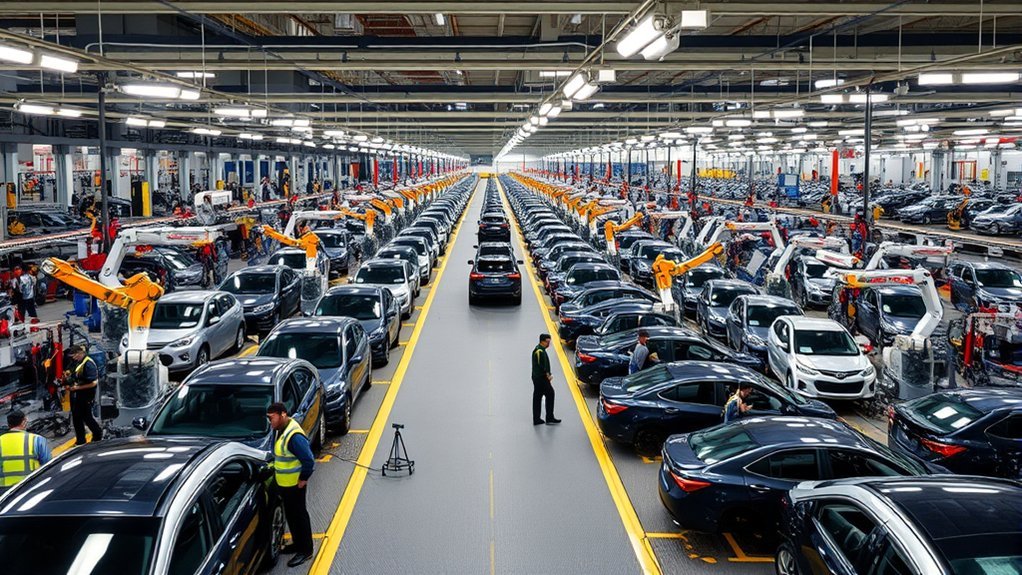
The current Toyota Camry sold in the United States is assembled at Toyota Motor Manufacturing Kentucky, commonly called Toyota Kentucky or TMMK. The plant is in Georgetown, Kentucky.
Toyota describes the Georgetown site as its largest vehicle manufacturing plant in the world. The nine-million-square-foot facility includes stamping, body welding, paint, plastics, final assembly, engine production, and die manufacturing operations.
Production of the ninth-generation Camry began in Kentucky on May 8, 2024. The redesigned Camry switched the U.S. lineup to Toyota’s fifth-generation hybrid system, replacing the previous conventional gasoline-only and V6 choices.
Note: “Built in Kentucky” describes final assembly. It does not mean that every engine, electric motor, transmission, battery component, or other part was manufactured in the United States.
How to Tell Where a Toyota Camry Was Built
The quickest way to check an individual Camry is to look at the first character of its 17-character Vehicle Identification Number. According to Toyota’s VIN guidance:
- 1, 4, or 5: The vehicle was assembled in the United States.
- J: The vehicle was assembled in Japan.
- 2: The vehicle was assembled in Canada.
You can find the VIN at the lower edge of the windshield on the driver’s side, on the driver-door certification label, on the registration, or on the insurance documents. The NHTSA VIN Decoder can provide additional information encoded in the number.
For the clearest manufacturing check, use three sources in order: first read the VIN for the assembly country, then check the parts-content label for the individual vehicle’s final assembly point and major-component origins, and use NHTSA’s labeling reports when you want the model-year carline percentage.
Pro Tip: On a new vehicle, check the parts-content label near the window sticker. It lists the final assembly location, U.S./Canadian parts percentage, major foreign parts sources, and the countries of origin for the engine and transmission.
Final Assembly Versus Parts Content
A Camry can be assembled in Kentucky while still containing components sourced from several countries. Federal labeling rules therefore report final assembly separately from parts content.
In the NHTSA model-year 2026 parts-content report, the Toyota Camry Hybrid is listed with:
- Final assembly country: United States
- U.S./Canadian parts content: 60%
- Major foreign parts source: Japan, 25%
NHTSA explains that U.S./Canadian and foreign parts percentages are calculated on a carline basis rather than separately for every individual vehicle. The label separately identifies the individual vehicle’s final assembly point and the countries of origin for its engine and transmission.
These percentages are calculated under the American Automobile Labeling Act and can change from one model year to another. They should not be treated as a permanent percentage for every Camry.
How Did Toyota’s Kentucky Plant Come to Be?
Toyota established its Kentucky manufacturing subsidiary in January 1986 and broke ground in Georgetown in May of that year. Toyota’s corporate history describes the state recruitment effort and then-Governor Martha Layne Collins’s role in attracting Toyota to Kentucky.
The first Kentucky-built Camry rolled off the production line in May 1988. That milestone marked the beginning of Toyota’s longest-running U.S. vehicle-production operation.
In June 2026, Toyota reported that 15 million vehicles had been assembled at the Kentucky operation since production began.
What Makes Current Camry Production Unique?
The most important recent change is the Camry’s shift to an exclusively hybrid U.S. lineup. Toyota began producing the redesigned ninth-generation model in Georgetown on May 8, 2024.
The Camry uses Toyota’s fifth-generation hybrid system and is offered with front-wheel drive or electronic all-wheel drive. This change ended the previous U.S. lineup’s conventional gasoline-only and V6 options.
Toyota Kentucky assembled 444,414 vehicles and 787,063 engines in 2025, according to Toyota’s current facility profile.
Toyota’s current facility profile lists approximately 10,000 employees and more than $12 billion in current investment at the Georgetown operation. Toyota describes the plant as capable of producing up to 550,000 vehicles and more than 600,000 engines annually, while actual output varies with production schedules and operating conditions.
What Else Does Toyota Build in Kentucky?
Along with the Camry Hybrid, Toyota Kentucky assembles the RAV4 Hybrid and produces engines and numerous vehicle components. The plant’s component operations include machined engine parts, axles, steering components, dies, and hydrogen fuel-cell kits.
The Lexus ES was formerly produced in Kentucky. Toyota announced in 2021 that ES and ES Hybrid production would shift from Kentucky and consolidate back in Japan, and the models are no longer listed in Toyota Kentucky’s current vehicle lineup.
On June 22, 2026, Toyota Kentucky began assembling the all-new RAV4 Hybrid. That announcement also said the plant planned to launch a new Highlander battery-electric vehicle in September 2026. However, Toyota’s current fleet information now says the battery-electric Highlander has been delayed to model year 2028 and that ordering timing has not yet been announced.
Toyota’s Environmental Initiatives in Kentucky
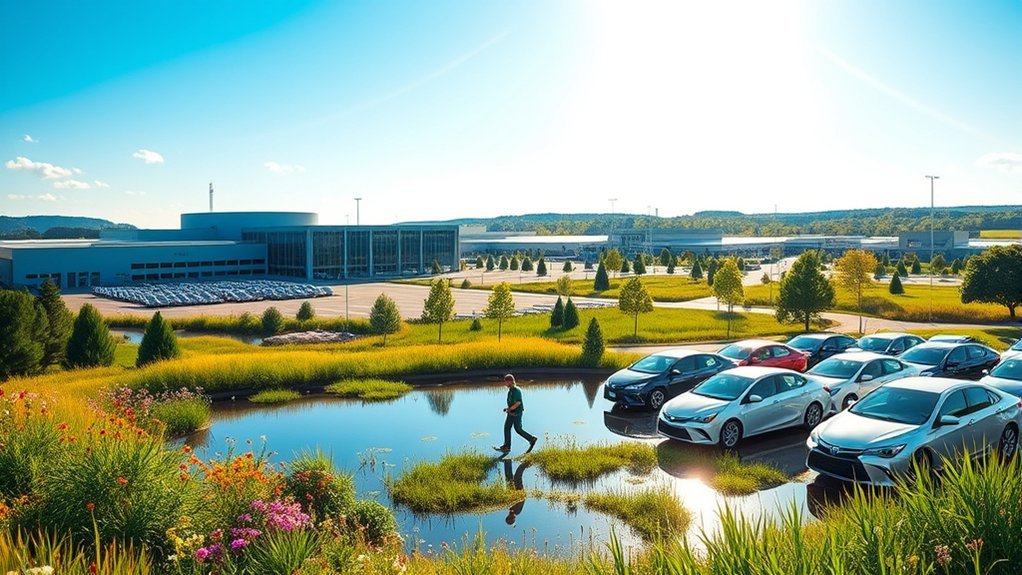
Toyota has described the Kentucky plant as a zero-landfill facility since 2006. Toyota’s description says waste generated at the plant is repurposed instead of being sent to landfill.
This wording is more precise than saying every item is recycled. Waste-diversion and repurposing programs can involve multiple handling methods rather than direct material recycling alone.
The plant has also used landfill gas to generate electricity and has completed projects involving LED lighting, water conservation, waste reduction, and more efficient manufacturing equipment.
In June 2026, Toyota broke ground on a next-generation Kentucky paint facility. Toyota projects that the new operation will reduce paint-process carbon emissions by 30% and save approximately 1.5 million gallons of water each year after it enters service.
Community Contributions From Toyota Manufacturing
Toyota Kentucky supports education, workforce training, local nonprofit organizations, and community-development programs. Employees also participate in volunteer projects throughout the region.
Toyota’s current facility profile reports approximately $164.9 million in community donations associated with its Kentucky operation since 1986.
Those investments have included educational initiatives, manufacturing career programs, charitable grants, and partnerships intended to prepare students and workers for technical careers.
Are Toyota Camrys Still Made in Japan?
Yes. Toyota’s Japan production-site listing, updated in August 2026, includes the Camry among vehicles produced at the Tsutsumi Plant in Toyota City.
Japan is not the only current Camry production location outside the United States. Toyota’s global manufacturing listing for Asia and other markets also identifies Camry production through GAC Toyota Motor in China, Toyota Kirloskar Motor in India, and Toyota Motor Thailand.
| Country | Toyota production operation | Current Camry listing |
|---|---|---|
| United States | Toyota Motor Manufacturing Kentucky, Georgetown | Camry Hybrid |
| Japan | Tsutsumi Plant | Camry |
| China | GAC Toyota Motor Co., Ltd. | Camry, including hybrid models |
| India | Toyota Kirloskar Motor Private Ltd. | Camry Hybrid |
| Thailand | Toyota Motor Thailand Co., Ltd. | Camry, including hybrid models |
This does not mean U.S. dealers routinely receive Camrys from all of these plants. Manufacturing allocation depends on the destination market, model generation, configuration, and Toyota’s production plans.
For that reason, the VIN is more reliable than a general online statement when you need to determine where one specific vehicle was assembled.
What’s Next for the Camry and Other Toyota Models?
The Camry remains central to Toyota Kentucky’s hybrid-production strategy. The Georgetown plant is also being prepared for a broader mix of electrified vehicles through new assembly investments and its next-generation paint facility.
Toyota announced in December 2025 that it aims to begin introducing three U.S.-made vehicles—the Camry, Highlander, and Tundra—to the Japanese market from 2026. The company described the plan as a way to serve a wider range of Japanese customers and support U.S.–Japan trade relations.
That announcement describes Toyota’s planned introduction rather than proving that every model is already available in Japanese showrooms. Availability, launch timing, specifications, and regulatory requirements can differ by vehicle.
Frequently Asked Questions
Where is the Toyota Camry made in the United States?
The current U.S.-market Toyota Camry is assembled at Toyota Motor Manufacturing Kentucky in Georgetown. Toyota began producing Camrys at this plant in May 1988.
What’s the most common problem with a Toyota Camry?
There is no single problem that applies to every Camry. Reported issues differ by model year, powertrain, trim, and equipment. Owners and used-car shoppers should check the vehicle’s VIN through the NHTSA recall lookup, review its maintenance records, and arrange a pre-purchase inspection when appropriate.
Are Toyota Camrys still made in Japan?
Yes. Toyota’s August 2026 facilities information lists Camry production at the Tsutsumi Plant in Japan. Current Camrys for the U.S. market are assembled in Georgetown, Kentucky.
What percent of the Toyota Camry is made in America?
There is no single permanent percentage. NHTSA’s model-year 2026 report lists the Camry Hybrid with 60% U.S./Canadian parts content, 25% content from Japan, and final assembly in the United States. The percentages are calculated on a carline basis and can change by model year.
How can I tell whether my Camry was built in Kentucky or Japan?
Check the first character of the VIN. A VIN beginning with 1, 4, or 5 indicates U.S. assembly, while a VIN beginning with J indicates Japanese assembly. The driver-door label and new-vehicle parts-content label also show manufacturing information.
Does a Kentucky-built Camry use only American parts?
No. Final assembly and parts origin are separate measurements. For model year 2026, NHTSA lists the Camry Hybrid at 60% U.S./Canadian parts content and 25% Japan content. The vehicle’s parts-content label separately identifies its final assembly point and the countries of origin for the engine and transmission.
Is Toyota Kentucky the company’s largest factory?
Toyota currently describes the Georgetown facility as its largest vehicle manufacturing plant in the world. It covers approximately nine million square feet and is capable of producing up to 550,000 vehicles per year.
Sources
- Toyota Motor Manufacturing Kentucky facility profile — current plant products, output, employment, investment, capacity, and community figures.
- Toyota: Redesigned Camry Goes All-Hybrid at Kentucky Plant — ninth-generation Camry production and hybrid-system information.
- Toyota Global Operations: Japan Production Sites — current Camry production at the Tsutsumi Plant.
- Toyota Global Operations: Asia, Middle East, and Other Production Sites — current Camry manufacturing listings in China, India, and Thailand.
- NHTSA MY2026 American Automobile Labeling Act report — current Camry Hybrid U.S./Canadian and foreign parts-content figures.
- NHTSA American Automobile Labeling Act reports — final assembly, parts-content, engine-origin, and transmission-origin labeling requirements.
- Toyota: Landfill Gas to Build Cars and a Greener Community — zero-landfill date and waste-repurposing description.
- Toyota Kentucky June 2026 production and paint-facility update — RAV4 Hybrid production, Kentucky milestones, environmental projections, and the originally announced Highlander BEV schedule.
- Toyota Fleet Highlander availability — current notice that the battery-electric Highlander has been delayed to model year 2028.
Conclusion
For U.S. buyers, the clearest answer is Georgetown, Kentucky: Toyota Motor Manufacturing Kentucky assembles the current Camry for the American market. Globally, Toyota’s current manufacturing listings also identify Camry production in Japan, China, India, and Thailand.
To confirm a particular car’s origin, start with its VIN. Then check the parts-content label if you also want to know the final assembly point, U.S./Canadian carline content, major foreign parts sources, and the countries of origin for the engine and transmission.
