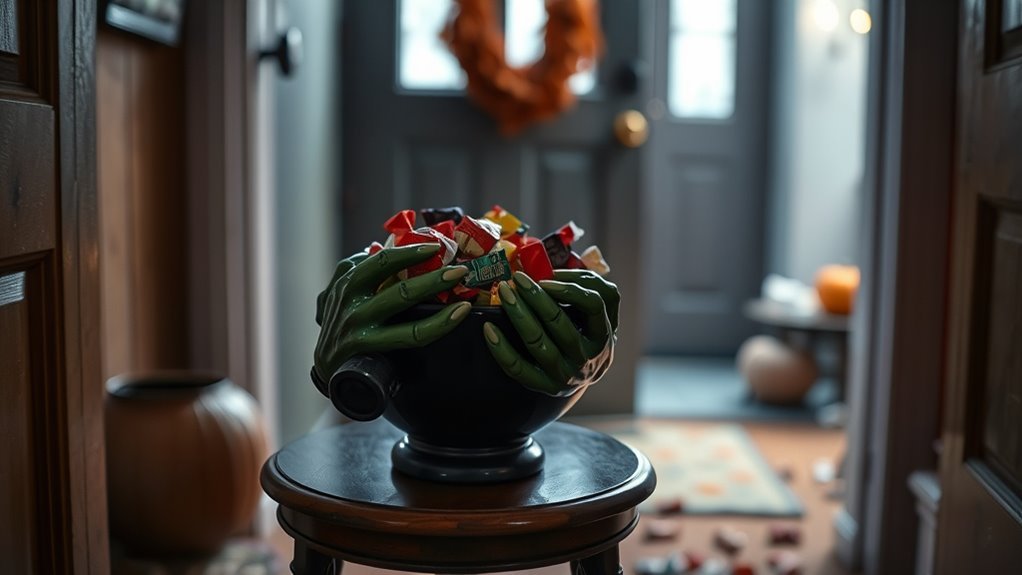
A witch candy bowl motion sensor is a Halloween prop that detects nearby movement and triggers lights, sounds, or animatronic reactions. Buyers should check sensor sensitivity, placement, and weather resistance, since false triggers and moisture can affect performance. Bowl capacity, usually around 32 ounces, matters for busy nights. Power choices also matter, including AA batteries or a 6v adapter. Secure mounting and reliable reach help. More details can clarify which setup works best.
Key Takeaways
- Motion-activated witch candy bowls scare trick-or-treaters with sound, light, and spooky moving effects.
- Check sensor reliability, since light, moisture, obstructions, and extreme temperatures can cause false or slow triggers.
- Place it on an elevated, sheltered surface with a clear route so the motion sensor catches visitors naturally.
- Make sure the candy bowl holds enough treats, is easy to remove and refill, and suits your candy types.
- Choose a power option that fits your setup: 4 AA batteries, a 6V adapter, or rechargeable batteries for longer use.
What Is a Witch Candy Bowl Motion Sensor?

A witch candy bowl motion sensor is a Halloween decoration that activates when movement is detected, startling trick-or-treaters with sound or light effects. It typically takes the form of a seated witch and comes with a candy bowl, combining display and function in one device.
Many versions use glowing eyes, recorded phrases, or sudden movement to create a controlled scare while holding treats in place. Battery power or an adapter gives placement flexibility, making it suitable for porches, entryways, and indoor setups.
Some models integrate animatronics, increasing theatrical impact when visitors reach for candy. The design serves a practical purpose as well: it organizes treats while turning the exchange into a brief performance.
For users seeking festive expression without excess labor, the device offers a simple, repeatable format. Moisture protection remains important, since sheltered storage helps preserve performance and extend usefulness across multiple Halloween seasons.
How Does the Motion Sensor Trigger?
The motion sensor activates the animatronic when it detects movement near the candy bowl, usually as guests reach in for treats. Its movement detection technology responds to nearby motion rather than a manual switch, which allows the effect to feel immediate and less controlled by obvious prompts.
The design supports an immersive scare by pairing motion and sound with the act of taking candy, reducing dependence on visible triggers such as try me buttons. Sensor sensitivity settings influence how readily the unit responds, while activation distance factors determine whether the sensor fires at a comfortable range or waits for a closer approach.
Because the system can be powered by 4 AA batteries or a 6v2a adapter, it remains adaptable to different setups. Consistent triggering depends on proper calibration, so the sensor works most reliably when its detection zone matches the flow of approaching trick-or-treaters.
Best Placement for a Candy Bowl Setup
Positioning the candy bowl on a sturdy, elevated surface such as a deck improves visibility and reduces the risk of accidental damage, especially when paired with the animatronic. This placement supports candy bowl aesthetics while keeping the display orderly and accessible. Proper animatronic positioning is strongest when the Darling Dolly unit sits behind the bowl, so the motion sensor activates as children reach forward. That arrangement preserves suspense without relying on buttons or other visible cues.
| Placement | Effect | Result |
|---|---|---|
| Deck surface | Better sightlines | Safer setup |
| Bowl before animatronic | Natural reach-in motion | Stronger surprise |
| Managed yard route | Clear trick or treat flow | Easier navigation |
A walkthrough path can guide visitors toward the intense setup, while a less frightening station can sit earlier in the yard. Attention to trick or treat flow lets each element function with clarity, freeing movement and improving the overall encounter.
How Much Candy Can It Hold?
Candy capacity is a practical advantage of the witch bowl, which holds up to 32 ounces of treats and can serve multiple trick-or-treaters before needing a refill. That volume is substantial for a decorative bowl, supporting a steady flow of candy without constant supervision.
The design also improves treat accessibility, since guests can reach in easily and select items without awkward barriers. This matters for households that want a smooth, low-friction exchange and fewer interruptions during peak traffic.
The bowl accommodates varied candy types, including bars and smaller treats, so it can match different preferences and portions. Because the bowl is removable, refilling is straightforward and maintenance remains simple throughout the evening.
In practice, the capacity can reduce refill frequency while still keeping the display inviting. For hosts seeking a functional setup, the bowl offers a balanced mix of quantity, accessibility, and convenience for liberated Halloween hosting.
Power Options and Battery Life
The witch candy bowl motion sensor can operate on either 4 AA batteries or a 6v2a adapter, giving users a choice between portable and fixed power.
Battery runtime may vary with usage, so reliability is best assessed through testing before Halloween night.
If consistent operation is the priority, the adapter offers steadier power, while battery use requires spare sets and attention to moisture.
Battery vs Adapter Power
Power options for the witch candy bowl include either 4 AA batteries or a 6v2a adapter, giving users flexibility based on setup needs and power availability.
Battery efficiency matters for mobile displays, since batteries support portable placement without cords. Yet frequent activation during events can accelerate replacement needs, making rechargeables a practical choice for those seeking lower waste and more control.
Adapter convenience suits fixed installations, where a steady supply reduces interruptions and removes the burden of battery changes.
Different usage scenarios consequently favor different power strategies: short, roaming setups may benefit from batteries, while longer, stationary presentations may favor the adapter.
The decision depends on freedom of placement, access to outlets, and how often the motion sensor is expected to engage throughout the display.
Runtime And Reliability
Runtime and reliability depend largely on the chosen power source and the frequency of motion-sensor activation. The witch candy bowl motion sensor accepts 4 AA batteries or a 6v2a adapter, so runtime expectations shift with the setup.
Battery operation offers portability, yet frequent triggering reduces duration and can weaken responsiveness if cells are not fresh. For longer events, a power adapter supports steadier output and removes the burden of replacement, improving reliability factors during extended display periods.
This matters when the unit must react consistently through trick-or-treating hours, where missed activation diminishes effect. Practical performance tips include using new batteries for short sessions and selecting adapter power for continuous use.
Such choices help preserve dependable motion sensing without sacrificing freedom of placement.
How to Mount the Sensor Securely
Velcro provides a practical way to fasten the IR sensor to the candy bowl while preserving easy removal and repositioning without harming the animatronic. This approach supports sensor adjustments and straightforward mounting techniques that improve candy bowl security without permanent modification.
Placement matters: the sensor should sit near reaching hands, ideally within 12 inches above the bowl, so activation occurs as children approach for candy. Before Halloween, the setup should be tested for range and responsiveness to confirm reliable triggering under normal use.
If the bowl is placed outdoors, weatherproofing materials should be added to limit moisture exposure and preserve function in damp conditions. Connections should also be inspected regularly, especially when a spliced or adapted sensor is used, because loose wiring can reduce consistency.
A secure mount should remain stable, removable, and easy to verify, supporting practical control rather than dependency on fixed hardware.
Best Features for Bigger Scares
For bigger scares, the strongest features combine motion activation with a vivid visual design. The witch’s glowing red eyes and eerie laughter deliver immediate scare factor enhancements, turning a simple candy bowl into a controlled shock point.
Its realistic form, black pointed hat, and bony skeleton hands strengthen design aesthetics, making the piece read clearly from a distance and anchoring the Halloween display. The 32 oz capacity adds practical value without weakening the effect, supporting ample treats while preserving the scene’s theatrical force.
When the bowl snaps up with a sinister grin, the sudden movement creates a brief jolt that improves user experiences for those seeking an exciting, liberating holiday moment. Together, these elements maximize presence, surprise, and visual authority.
For households or events aiming to unsettle visitors in a measured way, this combination offers a focused, efficient route to stronger seasonal impact.
Common Problems to Check Before Buying
Before purchase, the motion sensor’s compatibility should be checked against the intended setup, including plug type, wiring needs, and power source.
Trigger reliability also matters, since customer feedback can reveal weak activation, inconsistent sensing, or early wear.
Setup and placement should be reviewed for bowl size, easy refill access, and suitability for indoor or sheltered outdoor use.
Sensor Compatibility Checks
A few compatibility checks can prevent costly mistakes when selecting a motion sensor for a witch candy bowl. Careful review of sensor types, plug standards, and power demands helps keep the setup autonomous and functional. Compatibility testing should confirm the IR plug type matches the existing animatronic system, reducing connection failures and preserving choice.
- Power alignment: Verify the sensor’s voltage and current needs match the supply, especially when multiple devices share one source.
- Environment fit: Confirm outdoor-rated protection if the bowl will face moisture or weather exposure.
- Mounting and response: Check mounting options, range, and sensitivity so the sensor attaches securely and remains effective in low light.
Practical installation tips support a safe, adaptable arrangement without compromising appearance or structure.
Trigger Reliability Issues
Trigger reliability is often affected by environmental conditions that interfere with detection, including glare, obstacles in the sensor’s field of view, moisture, and extreme temperatures. These sensor performance factors can cause delayed or missed activation, reducing consistency for children seeking candy. | Factor | Effect | Check |
| — | — | — |
|---|---|---|
| Light interference | False triggers | Test in varied lighting |
| Obstructions | Reduced detection | Clear the sensing path |
| Moisture | Sensor drift | Inspect for dampness |
| Temperature extremes | Slower response | Verify weather tolerance |
Before purchase, confirm the IR unit matches the animatronic system and responds at the expected range. Troubleshooting techniques should include battery or power verification, sensitivity testing, and pre-event activation trials. A reliable model supports independent operation, minimizing avoidable failure and preserving a liberated, festive experience for users and guests.
Setup And Placement
Although setup is often overlooked, placement strongly affects how well an animatronic candy bowl performs.
Objective buyers should assess outdoor sheltering first: a sheltered porch or indoor entry reduces moisture exposure and extends usability.
Sensor positioning tips matter next; an IR sensor placed where children naturally reach improves activation without visible triggers.
Velcro mounting can simplify attachment and detachment, preserving the unit while allowing quick adjustments.
Capacity also shapes candy distribution strategies: a seated witch holding up to 32 oz suits heavier traffic, but bowl dimensions should still match the treat load.
- Check shelter, not open rain exposure.
- Confirm sensor reach and concealed placement.
- Match bowl size to crowd size.
Frequently Asked Questions
How Many Pieces of Candy Should I Give Each Trick or Treater?
Each trick-or-treater should receive 2 to 3 pieces of candy. These candy portioning tips support age appropriate treats and managing candy allergies, while allowing variety and fairness. Full-size options can be reserved for special occasions.
What to Do With Switch Witch Candy?
It can be traded, donated, or saved; one family once filled a shoebox for a shelter, turning surplus into care. Switch Witch, Candy Traditions, and Halloween Alternatives help families choose moderation, generosity, and imaginative freedom.
How to Check if Halloween Candy Is Safe?
He checks candy expiration, ingredient labels, and packaging integrity first. He watches for allergy awareness regarding nuts, dairy, gluten, and other sensitivities. He avoids homemade treats from untrusted sources and discards anything tampered, damaged, or suspicious.
What Are the Signs of Candy Tampering?
Tampering, naturally, announces itself with theatrical flair: unwrapped pieces, damaged seals, odd discoloration, strange odors, mismatched shapes, or loose packaging. These candy inspection techniques support tampering prevention tips and safe candy storage.
Conclusion
To sum up, a witch candy bowl motion sensor offers a simple way to add surprise to Halloween displays, but performance depends on placement, capacity, power source, and secure mounting. Buyers who expect only novelty may overlook how much these details affect reliability. Still, when the sensor is matched to the right setting and checked for common issues such as weak batteries or limited range, the bowl can deliver a safer, more consistent scare than many assume.
