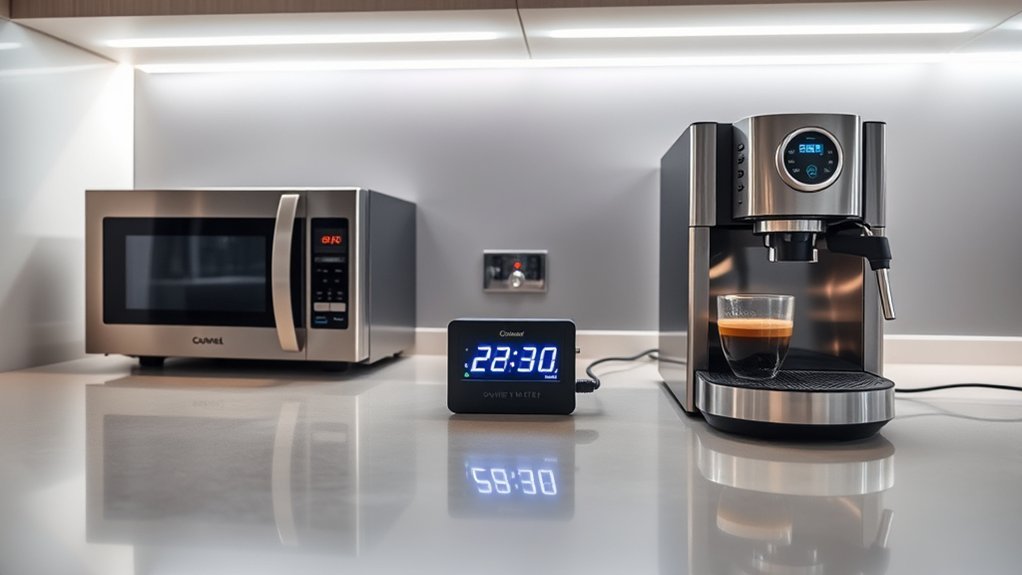
Microwaves are generally more cost-effective to operate than bean-to-cup machines. Microwaves consume about 0.3 kWh daily, translating to an annual cost of approximately $18.60. In contrast, bean-to-cup machines can cost around $135 annually due to higher energy consumption and longer brewing times. Additionally, bean-to-cup machines require more water, further increasing their environmental impact. This comparison highlights significant differences in operating costs and efficiency; further insights into these factors await exploration.
Understanding Energy Consumption of Microwaves
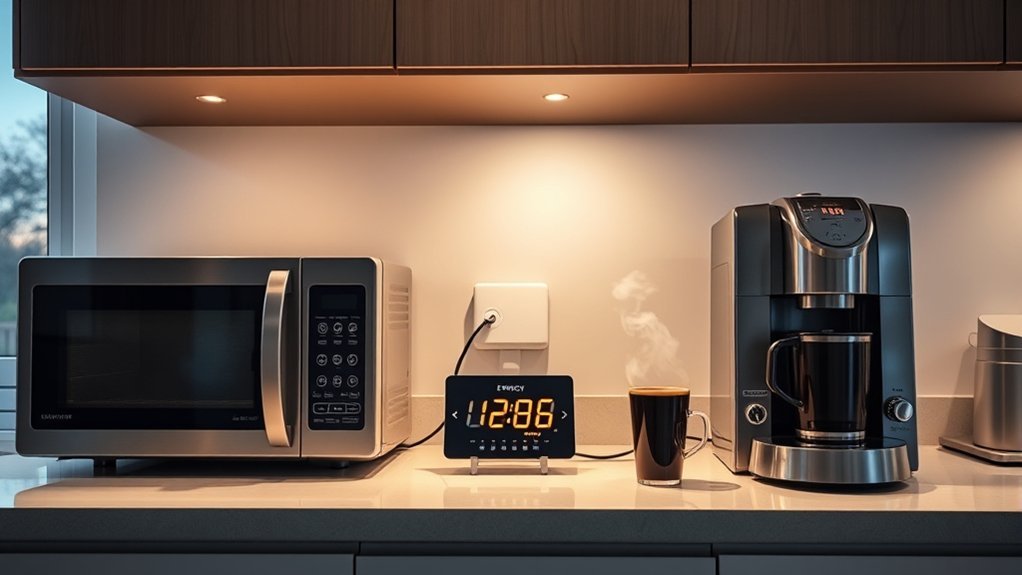
Understanding the energy consumption of microwaves reveals their efficiency in modern kitchens. Standard microwaves, typically operating at around 1,200 watts, represent a cost-effective choice for quick cooking tasks.
Daily usage of approximately 15 minutes translates to about 0.3 kWh, equating to an annual cost of roughly $18.60 at an average electricity rate of 17 cents per kWh. This figure starkly contrasts with gas ovens, which incur annual expenses of $146 for similar daily use.
The wattage of microwaves generally ranges from 600 to 1500 watts, influencing both energy consumption and operational costs. By utilizing microwaves for reheating or cooking smaller portions, consumers can greatly reduce overall energy costs.
Consequently, understanding these dynamics empowers users to make informed choices and save money, thereby liberating them from unnecessary expenses associated with less efficient cooking methods.
Energy Use Comparison: Microwaves vs. Bean-to-Cup Machines
The energy consumption of kitchen appliances greatly impacts household expenses, particularly when comparing microwaves and bean-to-cup machines. Microwaves typically operate at around 1,200 watts, resulting in a cost per hour of approximately $0.20.
Energy consumption of kitchen appliances significantly affects household costs, especially when evaluating the efficiency of microwaves versus bean-to-cup machines.
In contrast, bean-to-cup machines consume between 1,000 to 1,500 watts, translating to a cost range of $0.17 to $0.25 per hour. Daily microwave use for 15 minutes equates to about 0.3 kWh, leading to an annual expense of roughly $18.60.
Comparatively, a bean-to-cup machine may incur about $19.13 annually under similar usage conditions. While microwaves are generally more energy efficient for quick tasks, bean-to-cup machines can consume much energy due to additional features like heating and grinding.
Therefore, understanding these dynamics is essential for consumers seeking cost savings through informed appliance choices, particularly when considering usage frequency and overall energy efficiency.
Monthly Cost: Microwave vs. Bean-to-Cup
The monthly cost of operating a microwave is considerably lower than that of a bean-to-cup machine, with estimates of $1.55 compared to approximately $2.70 for the latter, assuming typical usage patterns.
The difference in energy consumption highlights the efficiency of microwaves for short tasks, while bean-to-cup machines incur higher costs due to extended operational times and additional features.
This cost analysis provides a framework for consumers to evaluate the trade-offs between convenience and expense in their coffee preparation choices.
Monthly Energy Consumption
While evaluating monthly energy consumption, the cost differences between a microwave and a bean-to-cup coffee machine become evident. A standard microwave consumes approximately 1,200 watts, leading to an estimated monthly cost of $18.60 for 15 minutes of daily use at an electricity rate of 17 cents per kWh.
In contrast, bean-to-cup machines, operating at 1,400 to 1,500 watts, incur monthly costs ranging from $25 to $36, depending on usage. This disparity highlights the efficiency of microwaves, which are more energy-efficient for reheating compared to the extended brewing times required by bean-to-cup machines.
Consequently, the average operating cost of a bean-to-cup machine can be 50% higher than that of a microwave under similar usage patterns.
Cost Per Use Comparison
Cost per use reveals significant differences between microwaves and bean-to-cup coffee machines. A standard microwave oven incurs a mere $0.051 per use, translating to an annual cost of approximately $18.60, based on 15 minutes of daily usage. In stark contrast, a bean-to-cup coffee machine consumes around 1,500 watts, leading to a cost of about $0.37 per use and an annual cost of $135 for daily operation. This disparity in energy cost highlights the efficiency of microwave ovens for quick tasks compared to the higher operational expenses of electric bean-to-cup machines.
| Appliance | Cost Per Use | Annual Cost |
|---|---|---|
| Microwave Oven | $0.051 | $18.60 |
| Bean-to-Cup Machine | $0.37 | $135 |
What Affects Energy Costs in Coffee Preparation?
Energy consumption in coffee preparation is influenced by several critical factors, including the wattage of the appliances used and the duration of their operation. Microwaves typically range from 600 to 1200 watts, while bean-to-cup machines consume between 800 to 1500 watts, considerably impacting energy costs.
Daily microwave use for 15 minutes incurs approximately $18.60 annually, while bean-to-cup machines often present higher operational costs due to longer brewing times and additional functionalities like grinding.
The energy efficiency of microwaves, primarily used for reheating, contrasts with bean-to-cup machines that require more energy for complex processes. Features such as integrated grinders and keep-warm functions further complicate the cost analysis for bean-to-cup machines, leading to increased overall energy consumption.
Consequently, understanding these variables is essential for consumers seeking to minimize energy costs while enjoying their coffee.
Convenience vs. Cost: Which Method Wins?
The comparison of convenience versus cost reveals significant differences between microwaves and bean-to-cup machines.
While microwaves offer a lower operational cost and energy efficiency for quick tasks, bean-to-cup machines require higher energy consumption but provide the advantage of freshly brewed coffee.
This trade-off raises questions about whether the enhanced quality justifies the increased expense associated with bean-to-cup devices.
Energy Efficiency Comparison
Although both microwaves and bean-to-cup coffee machines serve distinct purposes in the kitchen, their energy efficiency reveals a complex interplay between convenience and operational costs.
Microwaves typically consume around 1,200 watts, costing approximately $0.20 per hour, making them considerably more economical for reheating small portions.
In contrast, bean-to-cup machines range from 1,000 to 1,500 watts, leading to higher operational costs, especially with longer brewing times.
For example, a microwave’s annual cost of $18.60 for 15 minutes of daily use starkly contrasts with the escalating expenses of frequent bean-to-cup usage, where energy consumption can surge due to brewing cycles.
Therefore, when evaluating cooking times and energy efficiency, using a microwave instead often proves to be the more cost-effective option.
Convenience of Use
When evaluating kitchen appliances, convenience often plays a significant role in consumer decision-making. Microwaves excel in this regard, offering quick results for tasks like reheating, often completing them in under two minutes and consuming approximately $0.20 per hour.
In contrast, bean-to-cup machines, while providing freshly brewed coffee, can take several minutes to grind and brew, incurring higher operational costs of $0.24 to $0.30 per hour. Additionally, a microwave saves around 45 Watt-hours compared to brewing smaller batches in a bean-to-cup machine, emphasizing its energy efficiency.
For consumers prioritizing convenience, microwaves present a more economical and time-efficient option compared to the more complex, albeit flavorful, offerings of bean-to-cup machines.
How to Reduce Energy Costs in Coffee Preparation
Reducing energy costs in coffee preparation can greatly impact both household expenses and environmental sustainability. Various strategies can enhance brewing efficiency while minimizing operational costs associated with coffee machines.
| Strategy | Description | Impact on Energy Costs |
|---|---|---|
| Brew in Larger Batches | Prepare multiple cups at once, then store in a thermal carafe. | Reduces reliance on warming plates. |
| Use Pre-measured Packets | Optimize quantities to minimize waste. | Decreases energy consumption during brewing. |
| Cold Brewing | Utilize no electricity, yielding smoother coffee. | Eliminates heating costs entirely. |
Regular maintenance of coffee machines, including descaling and cleaning, is essential. These practices not only enhance energy efficiency but also prolong the lifespan of the appliances, thereby contributing to significant cost reductions. By implementing these methods, consumers can effectively reduce energy costs while enjoying their coffee experience.
The Environmental Impact of Each Appliance
The environmental impact of coffee preparation appliances, specifically microwaves and bean-to-cup machines, warrants careful examination due to their differing energy consumption profiles and operational demands.
Microwaves typically consume around 1,200 watts, resulting in an annual energy cost of approximately $74 for daily use. In contrast, bean-to-cup machines range from 800 to 1,200 watts, with variable energy consumption based on usage patterns. Their energy efficiency can be lower, as the entire brewing process, including grinding, requires extended operation, thereby increasing their environmental footprint.
Microwaves, consuming around 1,200 watts, offer lower annual energy costs compared to the less efficient, variable bean-to-cup machines.
Additionally, microwaves have shorter cooking times, reducing energy consumption per meal compared to the prolonged operation of bean-to-cup machines.
Water usage also plays a critical role; bean-to-cup machines consume considerably more water for cleaning and operation than the minimal water needs of microwaves, further highlighting the environmental impact of each appliance.
Reader Experiences on Coffee Preparation Choices
How do user experiences shape the perception of coffee preparation methods? Feedback from readers reveals a complex landscape surrounding energy consumption and operational costs of bean-to-cup machines versus microwaves.
While many users appreciate the enhanced flavor and consistency from bean-to-cup machines, they acknowledge that these devices often incur higher energy costs due to their considerable wattage requirements for grinding and brewing.
Reports indicate that frequent use can escalate overall energy consumption, making the cost per cup surpass that of microwave-prepared coffee.
Additionally, the energy efficiency of bean-to-cup machines varies greatly by model, with higher-end versions demonstrating better performance.
Community discussions highlight a preference for quality over convenience; users often prioritize the superior taste of freshly brewed coffee despite the increased operational costs.
This nuanced balance between energy efficiency and coffee quality ultimately shapes consumer choices in coffee preparation.
Frequently Asked Questions
What Runs Your Electric Bill up the Most?
Electric bills escalate primarily due to energy efficiency discrepancies among appliances. Analyzing cooking methods and conducting a cost analysis reveals that usage habits greatly influence expenses, particularly between high-energy-consuming devices and more efficient alternatives.
How Much Does It Cost to Run a Microwave for 10 Minutes?
Running a microwave for 10 minutes typically costs about 3.2 cents, reflecting its energy efficiency. This cost comparison highlights the advantages of lower microwave wattage against other cooking methods, especially with frequent usage.
Does OTG Consume More Electricity Than a Microwave?
OTGs generally consume more electricity than microwaves due to their higher wattage and longer cooking times. This appliance comparison highlights how usage patterns greatly affect energy consumption, underscoring OTG efficiency versus microwave convenience in meal preparation.
Does Leaving a Microwave Plugged in Use a Lot of Electricity?
Leaving a microwave plugged in is akin to a slow leak in a tire; its standby power consumes minimal energy, about 1-2 watts, translating to low electricity costs, yet cumulative appliance usage can add up over time.
Conclusion
To sum up, while a microwave generally incurs lower energy costs than a bean-to-cup machine, the choice ultimately hinges on individual preferences and usage patterns. Importantly, bean-to-cup machines can consume up to 1.5 kWh per week, considerably impacting monthly expenses. Understanding these dynamics allows consumers to make informed decisions based on both convenience and cost-effectiveness. Ultimately, balancing energy consumption with personal coffee-making habits can lead to sustainable choices in the kitchen.
