
A car skid happens when your tires lose traction and your vehicle starts sliding instead of following your steering, braking, or acceleration input. Skids can happen on wet pavement, snow, ice, gravel, oil, worn tires, or during sudden driver movements. The safest response is to stay calm, look where you want to go, steer smoothly, and avoid panic braking.
Quick Answer
If your car starts to skid, ease off the accelerator, avoid sudden braking, and steer smoothly toward the direction you want the front of the car to travel. If the rear slides out, steer into the skid until the vehicle straightens. Stay calm and make small corrections.
Key Takeaways
- Wet roads, ice, snow, oil, gravel, worn tires, poor tire pressure, and sudden inputs can all cause a car to skid.
- Good tires, proper inflation, working brakes, clear visibility, and smooth driving reduce your skid risk.
- During a skid, stay calm, look where you want to go, ease off the gas, and avoid jerky steering.
- Do not slam on the brakes, overcorrect, or use the handbrake during a skid.
- Oversteer and understeer need different corrections, so learning the difference helps you react faster.
At a Glance
| Time Required | 5–10 minutes to learn the basics; more time for safe practice |
| Difficulty | Beginner to intermediate |
| Tools Needed | Tire pressure gauge, tread depth gauge or penny, owner’s manual, and a safe practice area |
| Cost | Free to learn; maintenance costs depend on tires, alignment, brakes, and driver training needs |
Understanding the Causes of a Car Skid
A car skid occurs when the tires lose traction with the road surface, leading to a loss of control over the vehicle. This problem can come from several factors, including weather conditions, road surfaces, tire condition, vehicle speed, and driver behavior. One of the most common causes of skids is wet or icy roads.
When rain or snow builds up on pavement, it creates a slippery layer that can reduce tire grip. When a vehicle accelerates, turns, or brakes suddenly on a wet road, the tires may lose contact with the road surface and slide. In deeper standing water, the tires may hydroplane, which means they ride on top of the water instead of gripping the pavement.
Black ice is another serious hazard because it can be hard to see. It often forms on bridges, overpasses, shaded areas, and roads where melted snow refreezes. Even experienced drivers can be caught off guard when the road looks clear but has a thin layer of ice.
Another major factor is the condition of the tires themselves. Worn-out tires with low tread depth are less effective at moving water, snow, and slush away from the contact patch. That reduces grip, especially in bad weather. Low tread also increases stopping distance and makes hydroplaning more likely.
Improper tire pressure can make this problem worse. Over-inflated tires may reduce the tire’s contact patch, while under-inflated tires can overheat, wear unevenly, and respond poorly during emergency maneuvers. Check the recommended tire pressure on the driver-side door placard or in your owner’s manual instead of relying on the number printed on the tire sidewall.
Aggressive driving behaviors can also trigger skids. Sharp turns, rapid acceleration, sudden braking, tailgating, and quick lane changes can overwhelm available traction. Understanding these causes helps you slow down earlier, steer more smoothly, and leave more room when road conditions get worse.
Preparing Your Vehicle for Safe Driving
To reduce the risk of skids, prepare your vehicle before you face wet, snowy, icy, or loose road conditions. Regular maintenance checks keep your car safer and easier to control. Start by inspecting tire tread depth and confirming that all tires are inflated to the manufacturer’s recommended pressure.
A simple penny test can help you spot severely worn tires. Insert a penny into the tread with Lincoln’s head facing down. If you can see all of Lincoln’s head, the tread is too low and the tire should be replaced soon. A tread depth gauge gives a more accurate reading, especially before winter or a long trip.
You should also check tire condition, not just tread depth. Look for cracks, bulges, exposed cords, punctures, uneven wear, or vibration at highway speeds. Uneven wear may point to an alignment, suspension, or tire balance problem. Fixing these issues improves traction and handling.
Equipping your vehicle with appropriate safety features can also enhance your driving experience. Many modern cars include Electronic Stability Control, often called ESC, which helps reduce loss of control by applying braking force to selected wheels when the system detects a skid or slide.
Anti-lock Braking Systems, or ABS, are another critical feature that allows drivers to maintain steering control during hard braking situations. ABS helps prevent wheel lockup, but it does not shorten every stop on every surface. Its main value is helping you brake firmly while still steering around danger.
Furthermore, investing in high-quality winter tires can significantly improve traction in snowy or icy conditions. Winter tires use tread patterns and rubber compounds designed for cold weather, snow, and slush. They usually grip better than all-season tires when temperatures drop and roads become slick.
Note: Driver-assist systems can help, but they cannot overcome physics. ESC, ABS, all-wheel drive, and traction control still depend on tire grip, road surface, speed, and driver input.
[Amazon Products Picked for You]

1.Accurate and Efficient: Different colors on the bar represents different scopes, the red range on bar: 0 - 3/ 32; Yellow range on bar: 3/ 32 - 6/ 32; Green range on bar: 6/ 32 - 32/ 32, allowing you easy and fast to read and calibrated

1. Accurately measures tire tread depth gauge tool, Calibrated from 0 to 1 inch in 1/32 inch

1. Accurately measures tire tread depth gauge, Calibrated from 0 to 1 inch in 1/32 inch
Reacting to a Skid: Dos and Don’ts

When faced with a skid, how a driver reacts can make the difference between regaining control and losing it entirely. The first step is to remain calm. Panic often leads to hard braking, sharp steering, or overcorrection, which can make the slide worse.
One of the most important things to do during a skid is to look where you want the car to go. Your hands tend to follow your eyes, so looking at the open lane or safe path helps you steer in the right direction. Avoid staring at the ditch, barrier, or vehicle you are trying to avoid.
In a rear-wheel skid, steer smoothly in the direction you want the front of the car to go. This technique is often called steering into the skid. For example, if the rear of your car slides left, gently steer left until the vehicle begins to straighten. Once it recovers, straighten the wheel smoothly.
Conversely, there are several critical don’ts that drivers must avoid during a skid. One of the most common mistakes is slamming on the brakes. Hard braking can worsen the skid by upsetting the vehicle’s balance or locking wheels on vehicles without ABS.
If your vehicle has ABS and you need to stop, press the brake pedal firmly and steadily while steering. You may feel pulsing in the pedal. That is normal. If your vehicle does not have ABS, use gentle threshold braking and avoid locking the wheels.
Another mistake is overcorrecting by turning the steering wheel too sharply in an attempt to regain control. Overcorrection can send the car into a skid in the opposite direction, which may lead to a spinout. Make small, smooth steering corrections instead.
Warning: Do not use the handbrake or parking brake to correct an unexpected road skid. It can lock the rear wheels, increase rotation, and make the vehicle harder to control.
Maintaining Control During a Skid
| Skid Control Technique | Effectiveness | Notes |
|---|---|---|
| Steer into the skid | High | Helps regain control by aligning the wheels with the direction of the skid |
| Do not brake suddenly | High | Prevents further loss of control and potential spin |
| Stay calm and focused | High | Allows for better decision making and control of the vehicle |
Maintaining control during a skid requires smooth movements and a basic understanding of vehicle dynamics. When a vehicle begins to skid, try to identify whether it is experiencing oversteer or understeer. Knowing the difference helps you choose the right correction.
Oversteer happens when the rear wheels lose traction before the front wheels. The back of the car swings outward, and the vehicle may start to rotate. This often happens when drivers enter a curve too fast, lift off the accelerator suddenly, or brake hard while turning.
Understeer happens when the front wheels lose grip. The car keeps pushing forward even though you are turning the steering wheel. This often happens when you enter a turn too fast, accelerate too hard through a turn, or drive on slick pavement with worn front tires.
In an oversteer situation, gently ease off the accelerator and steer in the direction you want the front of the vehicle to go. For instance, if you find yourself in a rear-wheel skid while navigating a curve, reducing throttle input helps shift weight and gives the front tires a better chance to guide the car.
In an understeer situation, ease off the accelerator and avoid adding more steering angle suddenly. Turning the wheel harder rarely helps because the front tires have already lost grip. Instead, slow the vehicle smoothly so the front tires can regain traction. If needed, light braking can help shift weight forward.
Understanding these dynamics not only helps you maintain control during a skid, but it also improves your everyday driving skills. Smooth steering, steady speed, and early braking give your tires more grip to work with.
Correcting Oversteer and Understeer
Correcting oversteer and understeer requires distinct approaches tailored to each situation. In cases of oversteer, where the rear wheels lose traction first, drivers should focus on counter-steering. That means turning the steering wheel in the direction the rear of the vehicle is sliding, while keeping your eyes pointed toward your intended path.
For example, if your car’s rear end slides out to the right while turning left, you should turn your steering wheel slightly right until you regain control. This technique helps realign the vehicle with its intended path and reduces the chance of a complete spinout.
Small, smooth corrections work better than dramatic steering inputs. A skid usually gets worse when the driver panics, brakes hard, or overcorrects.
On the other hand, addressing understeer involves different tactics since it primarily affects front-wheel traction. When experiencing understeer, drivers should avoid abrupt steering inputs that could worsen the situation. Do not keep cranking the wheel farther if the car is already sliding forward.
Instead, gently easing off the accelerator allows weight transfer to the front tires, enhancing their grip on the road surface. If necessary, light braking can also help shift weight forward and improve steering response. In both scenarios, maintaining composure and using smooth inputs are key factors in successfully correcting either type of skid.
Avoiding Skids in Hazardous Conditions

Preventing skids in hazardous conditions requires proactive driving and an understanding of how weather affects traction. One of the most effective strategies is adjusting your speed before road conditions force you to react. During rain, snow, sleet, or fog, slowing down gives you more time and more traction.
Lower speeds also reduce stopping distance on slippery surfaces. Maintaining a greater following distance from other vehicles gives you extra time to react if traffic stops suddenly or another vehicle begins to slide. In bad weather, leave far more space than you would on dry pavement.
Watch the road surface ahead. Puddles can create hydroplaning risks, so avoid sudden lane changes or sharp turns when approaching standing water. Drive through water smoothly, keep both hands on the wheel, and avoid cruise control in heavy rain.
Ice can form at intersections, bridges, overpasses, shaded curves, and areas where vehicles often stop and start. These spots may be slick even when the rest of the road looks normal. Be especially careful early in the morning, late at night, and after temperatures fall below freezing.
Use smooth acceleration and braking techniques to maintain traction. Abrupt movements can break tire grip on slick surfaces. Start gently from stops, brake earlier than normal, and steer gradually through curves. If your vehicle has traction control, let the system help instead of forcing more throttle.
Pro Tip: Before winter weather arrives, check tire tread, tire pressure, wiper blades, washer fluid, headlights, brake lights, and the battery. Good visibility and proper tire contact are your first defense against skids.
[Amazon Products Picked for You]

The GT Radial Maxtour LX 225/45R17 91V Tire is designed with comfort and control in mind. The advanced tread design and robust 60,000 mile tread life warranty offer drivers the optimal balance of form and function. With features like full depth sipes, chamfered tread edges and a continuous center rib, you can drive with confidence and control. Dual sidewall designs also give you the ability to choose the perfect look for your vehicle.

CONTROL YOUR CRUISE – Cooper ProControl tires are designed to wear evenly so your handling feels crisp at every turn, straightaway, and stop light
CONTROL YOUR CRUISE – Cooper ProControl tires are designed to wear evenly so your handling feels crisp at every turn, straightaway, and stop light
Practicing Skid Recovery Techniques
Practicing skid recovery techniques in a controlled environment can improve a driver’s ability to respond effectively in real-life situations. Many driving schools offer defensive driving or winter driving courses that simulate skid scenarios with trained instructors and controlled safety measures.
These courses provide hands-on experience in recognizing different types of skids and applying the right corrective actions without risking safety on public roads. They may cover braking with ABS, steering recovery, speed management, space management, and how different vehicles respond on slick surfaces.
Drivers can also practice basic smooth-control habits in safe locations such as empty parking lots or closed courses where permitted. However, do not intentionally create skids on public roads or crowded lots. That can endanger pedestrians, damage property, and violate local traffic laws.
Setting up cones or markers can create an obstacle course that mimics real-world driving challenges while allowing controlled practice of steering inputs, gentle braking, and throttle management. Regular practice builds confidence and reinforces muscle memory for safer responses when faced with unexpected skids.
[Amazon Products Picked for You]

Highly Visible: The bright orange safety color and 360 degree reflective collars make the parallel parking cones visible from a long distance during day or night
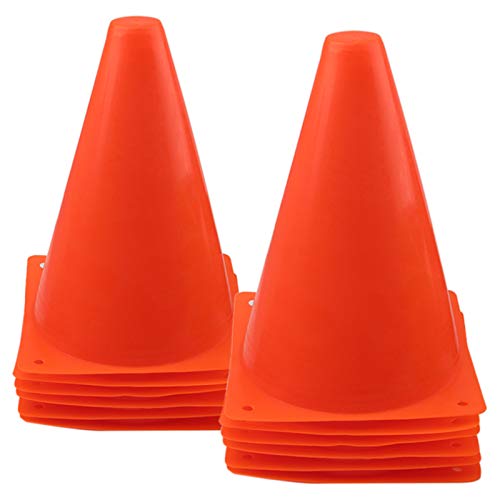
Durable Material: the soccer cones are made of soft polyethylene vinyl, lightweight and practical.

Highly Visible: The bright orange safety color and 360 degree reflective collars make the parallel parking cones visible from a long distance during day or night
Seeking Professional Help for Skid Prevention
For drivers who want to improve their skills further or address specific concerns about skid prevention, professional help can be beneficial. Many driving schools offer advanced defensive driving courses that focus on skid prevention, emergency maneuvers, winter driving, and safe braking techniques.
These courses often include both classroom instruction and practical driving exercises designed to equip participants with essential skills for handling skids safely. A good instructor can also identify habits you may not notice, such as braking too late, steering too sharply, or following too closely.
Automotive professionals can also help you reduce skid risk through proper maintenance. A mechanic can inspect tires, brakes, suspension, alignment, wheel bearings, and electronic safety systems. If your car pulls to one side, vibrates, or wears tires unevenly, schedule an inspection before bad weather makes the problem worse.
Mechanics can also offer tire advice based on your climate, road conditions, and driving habits. Winter tires may be a smart choice in snowy regions, while high-quality all-season tires may work for mild climates. By combining professional training with good maintenance, drivers can reduce skid risk and improve overall control.
Related Guides
Frequently Asked Questions
What causes a car to skid?
Car skidding can be caused by wet or icy road conditions, excessive speed, sudden braking, sharp steering, worn-out tires, poor tire pressure, or loss of traction from oil, gravel, leaves, or debris on the road.
How can I prevent my car from skidding?
To prevent skidding, drive at a safe speed, increase your following distance, avoid sudden braking or acceleration, and keep your tires in good condition. Check tire pressure regularly and slow down early in rain, snow, ice, gravel, or other low-traction conditions.
What should I do if my car starts to skid?
If your car starts to skid, remain calm, ease off the accelerator, look where you want to go, and steer smoothly toward your intended path. If the rear of your car skids, steer into the skid until the car straightens. Avoid slamming on the brakes.
Should I use the handbrake if my car skids?
Using the handbrake during a skid is not recommended. It can lock the rear wheels and make the skid worse. Focus on smooth steering, easing off the accelerator, and using the brake pedal correctly based on whether your vehicle has ABS.
What is the difference between oversteer and understeer?
Oversteer happens when the rear tires lose grip and the back of the vehicle swings outward. Understeer happens when the front tires lose grip and the vehicle continues forward instead of turning as expected. Each skid needs a different correction.
Can ABS stop my car from skidding?
ABS can help you maintain steering control during hard braking by reducing wheel lockup. However, it cannot create traction where none exists. You still need safe speed, good tires, proper following distance, and smooth steering.
When should I seek professional help after a skid?
If you experience a severe skid, hit a curb, leave the road, hear new noises, feel vibration, or notice steering problems afterward, have your car inspected by a professional. A mechanic should check the tires, suspension, alignment, brakes, and related components.
Sources
- NHTSA Winter Driving Tips — supports skid recovery, winter driving, tire safety, and safe braking guidance.
- NHTSA Tires — supports tire tread, tire pressure, and tire maintenance safety guidance.
- NHTSA Driver Assistance Technologies — supports the discussion of vehicle safety systems and driver-assist limits.
