
As a motorcycle rider, you know how quickly wind roar can turn a good ride into a tiring one. The right quiet motorcycle helmet cannot eliminate highway noise, but a well-sealed full-face or modular design can reduce distracting airflow, turbulence, and buffeting around your head.
Helmet wind noise depends on more than the shell. Visor sealing, chin curtains, neck rolls, cheek-pad fit, ventilation, your motorcycle’s windscreen, riding position, speed, and even your jacket collar can change what you hear. That is why this guide focuses on helmets with noise-conscious aerodynamics and sealing features rather than claiming that one model will be equally quiet for every rider.
Long exposure to loud noise can contribute to hearing fatigue and hearing damage. A quieter helmet should not be treated as hearing protection, so consider properly fitted motorcycle earplugs or other appropriate hearing protection for sustained highway riding while maintaining the situational awareness required for safe riding and following local laws.
This guide compares full-face and modular helmets for riders who want less wind noise, better long-distance comfort, and a more focused ride. You will find premium fixed full-face choices, a touring-focused option, a modular helmet, a value pick, and a previous-generation touring alternative.
Affiliate disclosure: This roundup is reader-supported. When you click through Amazon links, we may earn a referral commission on qualifying purchases at no extra cost to you. Always confirm the current size chart, exact configuration, certification label, production information, included accessories, seller, return terms, and product condition before buying.
Quick Verdict
Best overall quiet-focused full-face pick: The Shoei RF-1400 is the strongest all-around choice here if you want a fixed full-face shell, noise-conscious aerodynamics, a well-sealed shield system, and fewer convenience features adding complexity.
Best premium touring pick: The Shoei GT-Air 3 makes more sense if you want quiet-focused touring design plus an internal sun shield and compatibility with an optional integrated communication system.
Best modular option: The Shoei Neotec 3 is the better choice when flip-up convenience matters enough to accept the added weight and complexity of a modular helmet.
Best value: The HAX Force gives budget-conscious riders an aerodynamic full-face alternative with useful everyday features, although it should not be expected to match the refinement of the premium Shoei models.
Top Picks
| Category | Product | Best For |
|---|---|---|
| 🏆 Best Overall for Quiet Full-Face Riding | Shoei RF-1400 Full Face Motorcycle Helmet | Highway and sport-touring riders who want a fixed full-face design with strong noise-control features |
| ⚡ Best Premium Touring Helmet | Shoei GT-Air 3 Full Face Motorcycle Helmet | Touring riders who want an internal sun shield, refined airflow, and optional integrated comms |
| 🚀 Best Quiet-Focused Modular Helmet | Shoei Neotec 3 Modular Motorcycle Helmet | Touring and commuting riders who prioritize flip-up convenience |
| 💰 Best Value | HAX Force Aerodynamic Full Face Helmet | Budget-conscious riders who want aerodynamic full-face coverage and useful everyday features |
| 🌟 Best Previous-Generation Touring Option | Shoei GT-Air II Full Face Motorcycle Helmet | Riders who prefer the older GT-Air fit or find the right current-stock configuration |
[Amazon Products Picked for You]
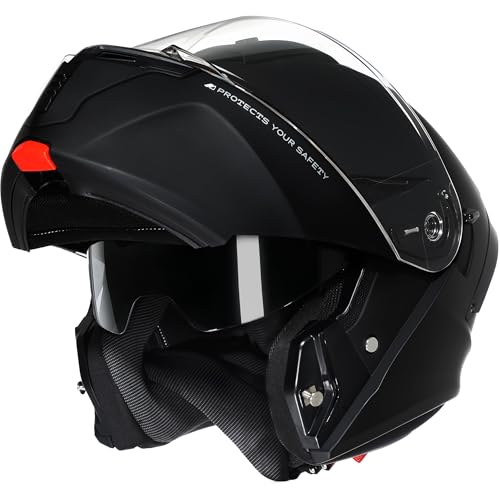
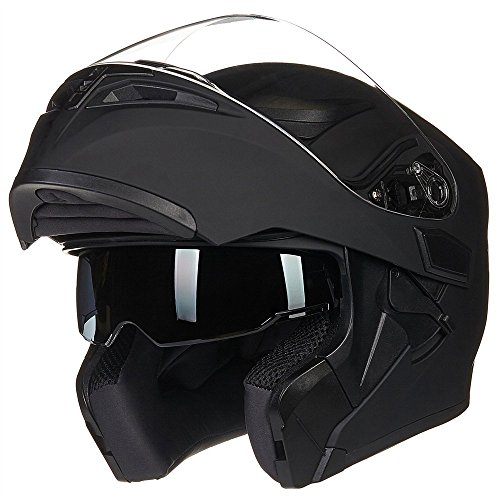
【DOT Safety & Intercom Ready】 This modular motorcycle helmet DOT approved features a high-strength ABS shell, lightweight 3.6 lbs design, and energy-absorbing EPS liner. It is professionally designed to be intercom-compatible, ensuring safety and connectivity for all modular motorcycle helmets users

SHELL CONSTRUCTION: Extremely lightweight TCT-Ultra Composite shell provides superior strength and impact dispersal properties. CAD-refined aerodynamics result in a streamlined profile and balanced footprint, minimizing lift and turbulence for a smoother, quieter, and more stable ride. Advanced multi-layer EPS provides superior energy absorption. Equipped with U.S. DOT Certification and ECE 22.06 Safety standard, which requires a wider range of testing than the previous 22.05 certificate.
How We Chose These Quiet Motorcycle Helmets
This is a feature-based buying comparison, not a laboratory decibel ranking. Helmet noise varies too much with head shape, fit, motorcycle aerodynamics, windscreen height, posture, speed, and surrounding airflow to assign a universal “quietest” winner without controlled matched testing.
Instead, we focused on design factors that can help manage motorcycle helmet wind noise: shell aerodynamics, visor sealing, chin curtains, neck opening design, cheek-pad support, ventilation layout, and overall fit. We also considered whether each helmet makes sense for its intended use, such as commuting, long-distance touring, highway riding, or frequent stops.
- Noise-control design: visor seal, shell aerodynamics, chin curtain, neck opening, cheek pads, and vent design
- Road comfort: balance, airflow, interior support, sun management, and long-ride practicality
- Safety basics: current certification information, correct sizing, secure retention system, and undamaged condition
- Use case: highway commuting, sport touring, long-distance touring, modular convenience, or budget-conscious riding
- Buyer confidence: clear sizing guidance, replaceable components, realistic limitations, and straightforward purchase links
Before You Buy a Quiet Motorcycle Helmet
- Measure your head first: Use the current manufacturer size chart and consider head shape, not just circumference. A helmet that is too loose can allow more movement and airflow around the neck and cheeks.
- Do not size up just to make a new helmet feel loose: New cheek pads commonly feel snug. The helmet should be secure without creating painful pressure points.
- Check the return policy before riding in it: Fit is personal, and a model that works for one rider may be uncomfortable or noisy for another.
- Confirm the certification label: Standards and model specifications can vary by market and production run. Check the physical label on the exact helmet you receive.
- Check included accessories: Pinlock inserts, communication systems, alternate shields, and other accessories may be sold separately depending on the model and listing.
- Match the helmet to your motorcycle: A touring windscreen, sport fairing, naked-bike airflow, seat height, and riding posture can all change perceived helmet noise.
- Consider hearing protection: A quieter helmet does not eliminate harmful noise exposure during sustained high-speed riding.
- Avoid questionable used helmets: Do not rely on a helmet with an unknown impact history, visible damage, or a condition you cannot confidently verify.
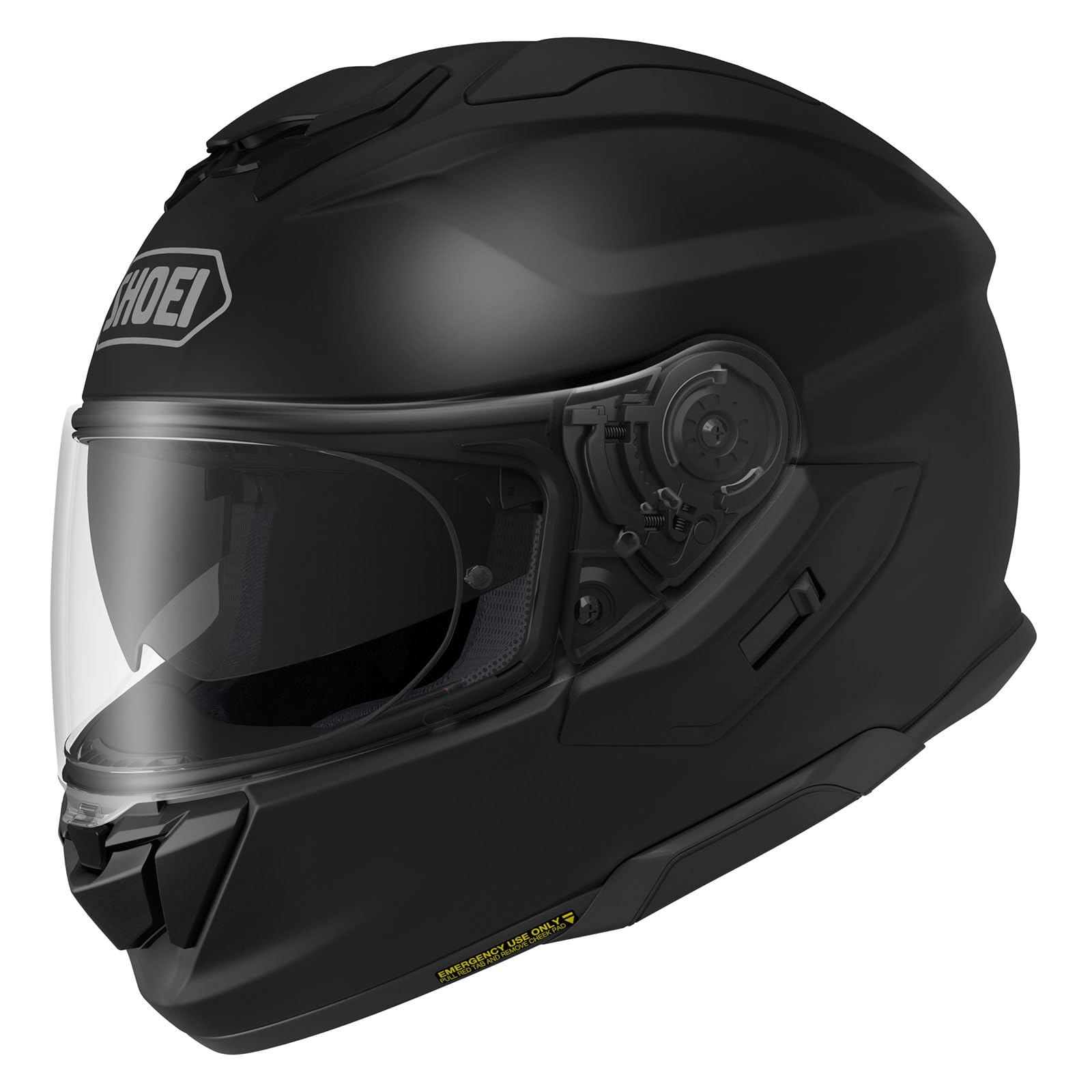
Shoei RF-1400 Full Face Motorcycle Helmet


The RF-1400 earns the top position because its design directly addresses several common sources of wind noise. The streamlined shell helps manage turbulent airflow, while the shield sealing, lower cheek-pad volume, chin curtain, and ear-area padding help limit unwanted air entering the helmet.
Best For
This helmet is best for highway commuters, sport-touring riders, and anyone who wants a premium fixed full-face design with strong attention to aerodynamics and wind-noise management.
Who Should Buy This
- Riders who want a quiet-focused fixed full-face helmet for regular highway riding
- Riders who prefer a simpler helmet without a built-in internal sun shield
- Riders who want speaker pockets for a cleaner communication-system installation
- Riders who value strong visor sealing, replaceable interior components, and a premium fit
Who Should Avoid This
- Riders who need a flip-up chin bar for frequent stops
- Riders who strongly prefer an integrated drop-down sun shield
- Riders whose budget is better matched to an entry-level or midrange helmet
- Riders whose head shape does not match the RF-1400 comfortably
Key Features You’ll Appreciate
- AIM+ full-face shell developed with aerodynamic performance in mind
- CWR-F2 shield system with sealing and aerodynamic features designed to reduce unwanted airflow
- Voluminous cheek pads and removable ear pads that help manage internal wind noise
- 3D Max-Dry interior system with removable and replaceable components
- Chin curtain and breath guard included with the current SHOEI USA configuration
- Speaker pockets for communication-system installation
Certification and Fit Note
SHOEI USA currently lists the RF-1400 as DOT-218 approved and Snell M2025D certified. Marketplace stock can include helmets manufactured at different times, so confirm the certification labels and production information on the exact helmet you receive.
Honest Limitation
The RF-1400 is engineered to reduce wind noise, but it is not silent and there is no universal noise result for every rider. Windscreen turbulence, head shape, helmet size, speed, posture, and the seal around your neck can change the experience significantly.
Check Product Details on Amazon
Shoei GT-Air 3 Full Face Motorcycle Helmet
The GT-Air 3 solves a different problem than the RF-1400. It gives touring riders an internal sun shield and integrated communication-system architecture without moving to a modular chin bar. SHOEI also developed the shell and ventilation in its wind tunnel with reduced noise and fatigue as design goals.
Best For
This helmet is best for commuters and long-distance touring riders who want a quiet-focused full-face design plus an internal sun shield and a clean way to add compatible communications.
Who Should Buy This
- Riders who spend long days touring or commuting at mixed road speeds
- Riders who want a built-in QSV-2 sun shield for changing light conditions
- Riders planning to add the compatible SENA SRL3 communication system
- Riders who want a fixed full-face shell but more touring convenience than the RF-1400 provides
Who Should Avoid This
- Riders who want the simplest fixed full-face helmet possible
- Riders who do not need an internal sun shield or integrated comms architecture
- Riders who specifically want a modular flip-up chin bar
- Riders whose budget or head shape points to a different model
Key Features You’ll Appreciate
- AIM shell with wind-tunnel-developed aerodynamic shaping
- CNS-1C shield with improved sealing around the closed shield position
- QSV-2 internal sun visor for quick glare management
- Pinlock-ready face shield with a Pinlock EVO lens listed in the current SHOEI USA package
- Touring-oriented ventilation layout with redesigned intake and exhaust areas
- SHOEI Comlink architecture compatible with the optional SENA SRL3
Certification and Accessory Note
SHOEI USA currently lists the GT-Air 3 as DOT certified. The SENA SRL3 communication system is optional and sold separately, so do not assume Bluetooth electronics are included with the helmet.
Honest Limitation
The GT-Air 3 adds an internal sun visor and touring technology that some riders will appreciate, but those features also make it a more complex choice than the RF-1400. If your priority is a straightforward fixed full-face helmet focused on aerodynamics and sealing, the RF-1400 may be the cleaner match.
Check Product Details on Amazon
Shoei Neotec 3 Modular Helmet
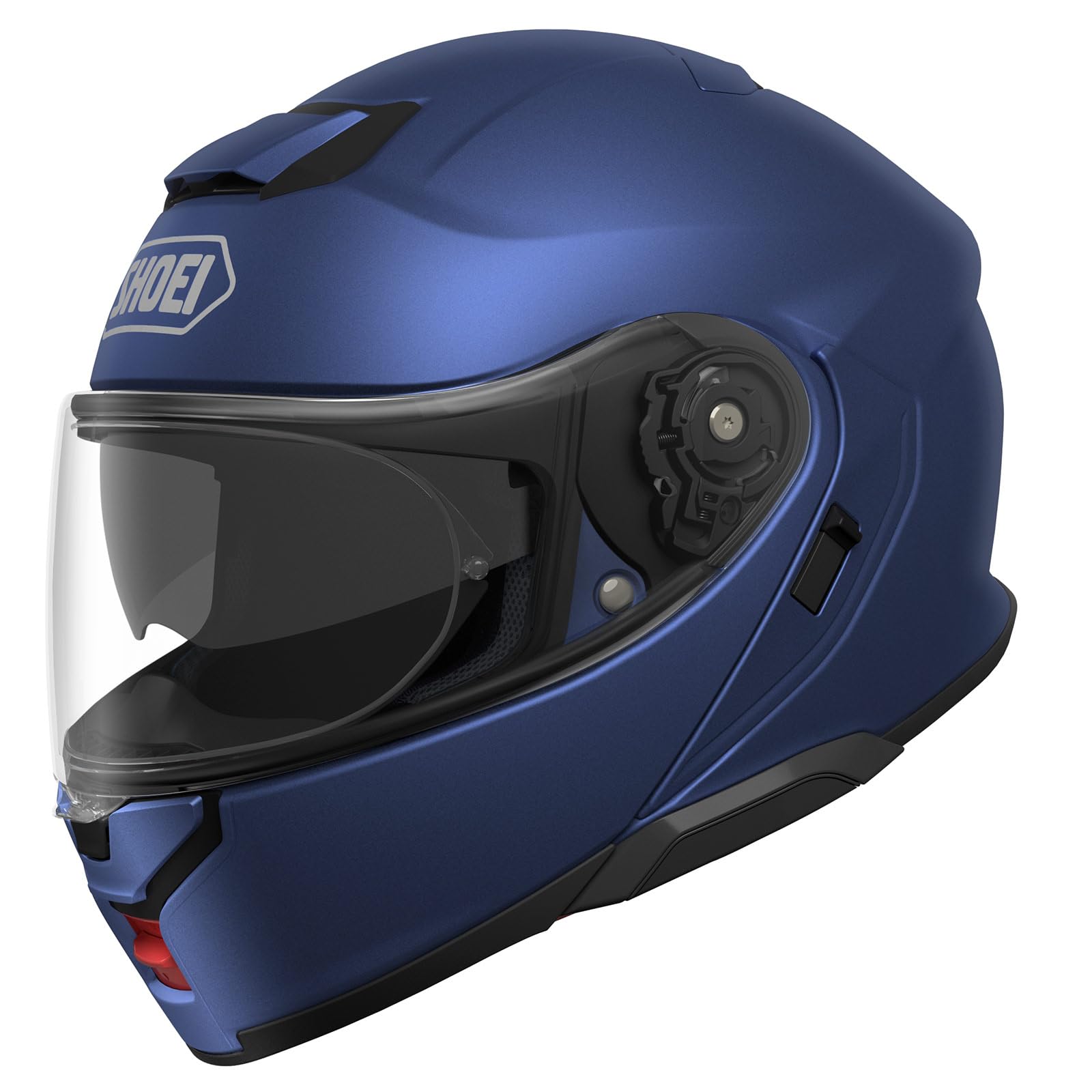
The Neotec 3 is most compelling if you regularly open your helmet while stopped for fuel, tolls, directions, or short conversations. Its modular construction adds hinges and a moving chin bar, so it should be chosen for the convenience it provides rather than because modular designs are automatically quieter than fixed full-face helmets.
Best For
This helmet is best for touring riders and commuters who want premium modular convenience while still prioritizing visor sealing, aerodynamic stability, and wind-noise management.
Who Should Buy This
- Touring riders who make frequent fuel, food, and navigation stops
- Commuters who value flip-up convenience during stationary interactions
- Riders who want an integrated QSV-2 sun shield
- Riders who are comfortable accepting additional modular-helmet weight and complexity
Who Should Avoid This
- Riders who want the simplest quiet-focused shell design above all else
- Riders who prefer the lower complexity of a fixed full-face helmet
- Riders who rarely use a modular chin bar
- Riders looking for the lowest-cost option in this roundup
Why You’ll Like It
- Flip-up chin-bar design adds convenience during stops
- Aerodynamic AIM shell is designed for touring stability
- CNS-3C shield shape and sealing are designed to help keep out wind and noise
- QSV-2 internal sun shield helps manage changing light
- Touring-focused interior and ventilation support long-distance use
- Compatible with the optional SENA SRL3 communication system
Certification and Modular Safety Note
SHOEI USA currently lists the Neotec 3 as DOT certified. The SENA SRL3 is sold separately. Follow the current SHOEI manual for chin-bar operation, locking, and permitted riding configuration rather than assuming the helmet can be used in every position while moving.
Honest Limitation
The Neotec 3 is the better choice when modular convenience is genuinely useful. If you rarely need to open the chin bar, a fixed full-face helmet such as the RF-1400 or GT-Air 3 removes some weight and mechanical complexity from the decision.
Check Product Details on Amazon
HAX Force Aerodynamic Full Face Helmet

The Force makes sense if you want to address basic wind resistance and full-face coverage without paying for the refinement and model-specific touring systems of the Shoei options. The supplied Amazon listing is for the HAX Force family, but configurations and accessories can change, so verify the exact visor setup and included components before ordering.
Best For
This helmet is best for budget-conscious street riders and commuters who want an aerodynamic full-face helmet with useful day-to-day features and are willing to verify the exact configuration carefully.
Who Should Buy This
- Riders who want a more affordable full-face option
- Commuters who value aerodynamic shaping and ventilation
- Riders who want compatibility with a Force-series Pinlock insert
- Riders who do not need the premium interior refinement or integrated touring systems found on the Shoei models
Who Should Avoid This
- Riders who want the most refined premium touring interior and shield mechanism
- Riders who want a modular flip-up chin bar
- Riders who want all communication or anti-fog accessories included out of the box
- Riders who cannot verify that the exact size and head-shape fit are correct
Why You’ll Like It
- Aerodynamic full-face design intended to reduce wind resistance
- Multi-channel ventilation for everyday street use
- Breathable interior padding designed for longer-ride comfort
- Emergency-release padding system on current Force-series product descriptions
- Force-series Pinlock 70 compatibility, with the insert sold separately
- Multiple size options for riders who carefully match the current sizing chart
Safety, Certification, and Configuration Note
HAX currently describes Force-series helmets as meeting DOT requirements and ECE R22.06. Certification and configuration details can vary by market or listing, so confirm the physical labels on the exact helmet you receive. Also verify whether any alternate visor, Pinlock insert, Bluetooth accessory, or other add-on shown or mentioned in the listing is actually included.
Honest Limitation
The Force is here as the value choice, not as a claim that it matches the RF-1400, GT-Air 3, or Neotec 3 for premium refinement. Fit, shield sealing, padding shape, and your motorcycle’s airflow will still determine whether it feels quiet enough for your riding conditions.
Check Product Details on Amazon
Shoei GT-Air II Full Face Motorcycle Helmet

The GT-Air II should be viewed as an older but still relevant touring alternative rather than the default premium pick. Its aerodynamic shell, window beading, cheek-pad structure, and ventilation were designed with unwanted wind noise in mind. The newer GT-Air 3 adds updated aerodynamics, shield design, and communication integration, so compare the two based on fit, features, production information, and the exact listing rather than model name alone.
Best For
This helmet is best for riders who like the GT-Air II fit and feature set or find the right current-stock configuration while comparing it with the newer GT-Air 3.
Who Should Buy This
- Riders who find the correct size, color, and configuration from a seller they trust
- Riders who want an internal QSV-2 sun shield and touring-focused full-face design
- Riders who use or plan to use the compatible optional SENA SRL2 system
- Riders who already know the GT-Air II shape works well for their head
Who Should Avoid This
- Riders who specifically want the newest GT-Air generation and updated Comlink/SRL3 architecture
- Riders who cannot confirm production information, condition, included accessories, or return terms
- Riders who want a modular flip-up helmet
- Riders for whom the older model offers no meaningful fit or value advantage
Key Features You’ll Appreciate
- Streamlined full-face touring shell developed to reduce air resistance
- Airtight window beading designed to help control unwanted wind noise
- QSV-2 internal sun shield for changing light conditions
- Touring ventilation system with multiple intake and exhaust points
- Removable and washable 3D Max-Dry interior components
- Compatibility with the optional SENA SRL2 communication system
Certification and Older-Model Note
SHOEI USA currently lists the GT-Air II as DOT certified and still shows product configurations for sale. Because it is the previous generation, check the exact helmet’s production information, storage condition, seller, return policy, included parts, and certification label before buying marketplace stock.
Honest Limitation
The GT-Air II remains relevant, but most shoppers starting from scratch should compare it directly with the newer GT-Air 3. Choose the older helmet when its fit, exact configuration, or overall value genuinely works better for you—not simply because it once held flagship status.
Check Product Details on Amazon
Quiet Motorcycle Helmet Buying Guide
Full-Face vs. Modular for Wind Noise
A fixed full-face helmet is usually the simpler starting point when minimizing wind intrusion is your main goal. Its fixed chin bar eliminates the hinge and movable chin-bar interfaces found on modular helmets. A well-designed modular helmet can still manage wind noise effectively, but fit, shield sealing, chin-bar sealing, and neck-roll contact become especially important.
Fit Can Matter More Than the Model Name
A premium helmet can still be uncomfortable or noisy if its internal shape does not match your head. Your cheeks should feel securely supported, the helmet should not rotate freely around your head, and the neck opening should sit close enough to limit excessive airflow without causing painful pressure. Always follow the manufacturer’s current sizing and fit guidance.
Visor Sealing Matters
Air leaking around the face shield can create whistles and high-frequency noise. Look for a shield that closes evenly against its gasket and make sure the base plates and seal are adjusted according to the manufacturer instructions. Do not modify a helmet or shield in a way that could interfere with its intended operation.
Chin Curtains and Neck Openings Help Control Airflow
Some of the loudest turbulence can enter from underneath the helmet rather than through the visor. A properly fitted chin curtain, supportive cheek pads, and a close-fitting neck opening can reduce unwanted airflow from below. Your jacket collar and riding posture can also change this airflow.
Do Not Ignore Your Bike Setup
Your motorcycle can make the same helmet feel very different. A windscreen that sends turbulent air directly toward your helmet may produce more buffeting than clean airflow on another bike. Handlebar position, seat height, windscreen angle, fairings, mirrors, and your own height all influence where the airflow hits.
Ventilation Is a Trade-Off
More ventilation can improve hot-weather comfort, but vents and open shield positions can change noise levels. The goal is not simply to buy the helmet with the fewest vents. Look for a well-designed ventilation system that lets you manage airflow without relying on a permanently cracked-open visor.
Do Not Treat a Quiet Helmet as Hearing Protection
Even a premium helmet cannot eliminate all wind noise at highway speeds. If sustained airflow feels harsh or tiring, use appropriately fitted hearing protection that suits motorcycle riding and follow applicable local laws. Correct fit matters for hearing protection just as it does for the helmet itself.
FAQ
What Is the Quietest Motorcycle Helmet?
There is no single helmet that is guaranteed to be the quietest for every rider. Noise depends on helmet fit, head shape, windscreen height, riding position, motorcycle aerodynamics, speed, neck sealing, and other factors. In this comparison, the Shoei RF-1400 is the strongest quiet-focused fixed full-face recommendation because its design specifically emphasizes aerodynamics, shield sealing, cheek-pad support, and wind-noise reduction.
How Do Motorcycle Helmets Reduce Wind Noise?
Quiet-focused motorcycle helmets manage noise with aerodynamic shell shaping, a tight visor seal, a close neck opening, a chin curtain, supportive cheek pads, and carefully designed vents. These features can reduce turbulence and air leaks around the face opening and lower edge of the helmet.
What Features Should I Prioritize for a Quieter Helmet?
Start with correct fit and head shape. Then look at visor sealing, shell aerodynamics, chin curtains, neck-roll design, cheek-pad support, and ventilation. A feature-rich helmet that fits poorly can be noisier than a simpler helmet that seals correctly around your head and neck.
Are Full-Face Helmets Quieter Than Modular Helmets?
A fixed full-face helmet has fewer moving interfaces around the chin bar, so it is a logical starting point when quietness is the main priority. Premium modular helmets can also manage noise well, but their hinge, locking, and chin-bar interfaces make correct fit and sealing especially important.
Do I Still Need Earplugs With a Quiet Helmet?
A quiet-focused helmet does not replace hearing protection. Sustained loud noise can damage hearing, so properly fitted earplugs or other suitable hearing protection can be useful on longer or faster rides. Choose protection that is appropriate for motorcycle use, preserves necessary situational awareness, and complies with local law.
Why Does My Helmet Get Louder When I Turn My Head?
Turning your head changes the angle at which airflow meets the shell, shield, vents, and neck opening. That can create new turbulence during shoulder checks. Aerodynamic shell shaping and a stable helmet fit can reduce the effect, but some change in noise as airflow direction changes is normal.
Can My Windscreen Make a Quiet Helmet Seem Loud?
Yes. A windscreen can direct smooth air over your helmet or send turbulent air directly toward it. That is why one rider may describe a helmet as calm while another finds the same model noisy. Before replacing a well-fitting helmet solely because of wind noise, consider whether the turbulence changes when you slightly raise or lower your riding position.
Should I Choose a Helmet Based Only on Noise Reduction?
No. Correct fit, certification, condition, retention system, visibility, ventilation, comfort, and suitability for your riding style should come first. Noise management is important for comfort, but it should be one part of the buying decision rather than the only factor.
Pick Your Quiet
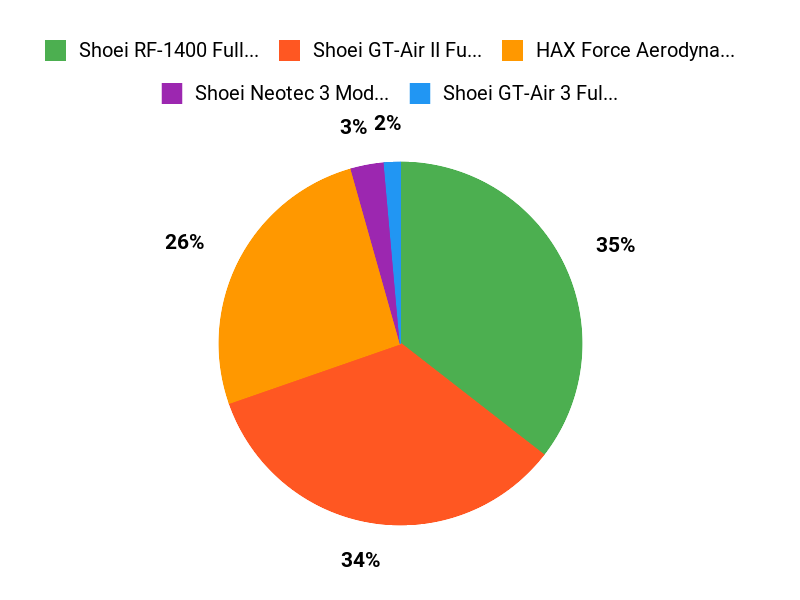
Choose the Shoei RF-1400 if you want the strongest quiet-focused fixed full-face option in this roundup. Choose the Shoei GT-Air 3 if touring convenience, an internal sun shield, and optional integrated communications matter. Choose the Shoei Neotec 3 if you genuinely benefit from a flip-up chin bar. Choose the HAX Force when budget matters and you are comfortable verifying the exact configuration carefully. Choose the GT-Air II when its fit, current-stock configuration, or overall value makes more sense for you than moving to the GT-Air 3.
Wrapping Up
A well-designed helmet can make highway riding feel calmer by managing turbulent airflow and reducing some of the wind noise reaching the rider. But there is no universal quietest helmet because fit, head shape, motorcycle aerodynamics, windscreen position, posture, and speed all affect the result.
For most riders who want a fixed full-face helmet with a strong noise-control design, the Shoei RF-1400 is the best place to start. The Shoei GT-Air 3 is the better touring-focused choice when an internal sun shield and optional integrated communications matter. The Shoei Neotec 3 is the modular choice for frequent stops, while the HAX Force gives budget-focused shoppers a lower-cost alternative. The GT-Air II remains worth considering when the older model’s fit and exact listing work in your favor.
Final buying check: Confirm your head measurement and shape, current size chart, exact certification label, production information, included accessories, seller and return terms before ordering. No recommendation can compensate for a helmet that does not fit correctly.
| Product | Image | Best For | Noise-Control Strengths | Comfort and Ventilation Notes | Check Details |
|---|---|---|---|---|---|
| Shoei RF-1400 Full Face Motorcycle Helmet |
 |
Best overall quiet-focused full-face helmet | Fixed full-face shell, CWR-F2 shield sealing, cheek pads, chin curtain, ear-area padding, and aerodynamic shaping | Removable Max-Dry interior, speaker pockets, and a simpler feature set without an internal sun visor | Check Amazon |
| Shoei GT-Air 3 Full Face Motorcycle Helmet |
 |
Best premium touring helmet | Wind-tunnel-developed shell, improved CNS-1C shield seal, chin curtain, and fixed full-face construction | QSV-2 internal sun shield, Pinlock-ready setup, touring ventilation, and optional SENA SRL3 compatibility | Check Amazon |
| Shoei Neotec 3 Modular Motorcycle Helmet |
 |
Best quiet-focused modular option | Aerodynamic AIM shell, improved CNS-3C shield sealing, chin curtain, and premium modular construction | QSV-2 sun shield, touring ventilation, flip-up convenience, and optional SENA SRL3 compatibility | Check Amazon |
| HAX Force Aerodynamic Full Face Helmet for Street & E-Bikes |
 |
Best value pick | Aerodynamic full-face shape intended to reduce wind resistance, with exact visor configuration to be confirmed on the listing | Ventilation, breathable padding, emergency-release padding, and Force-series Pinlock compatibility | Check Amazon |
| Shoei GT-Air II Full Face Motorcycle Helmet |
 |
Best previous-generation touring option | Streamlined full-face shell, airtight window beading, cheek-pad support, and noise-conscious ventilation | QSV-2 internal sun shield, Max-Dry interior, Pinlock-ready shield, and optional SENA SRL2 compatibility | Check Amazon |
This roundup is reader-supported. When you click through qualifying links, we may earn a referral commission at no extra cost to you.
