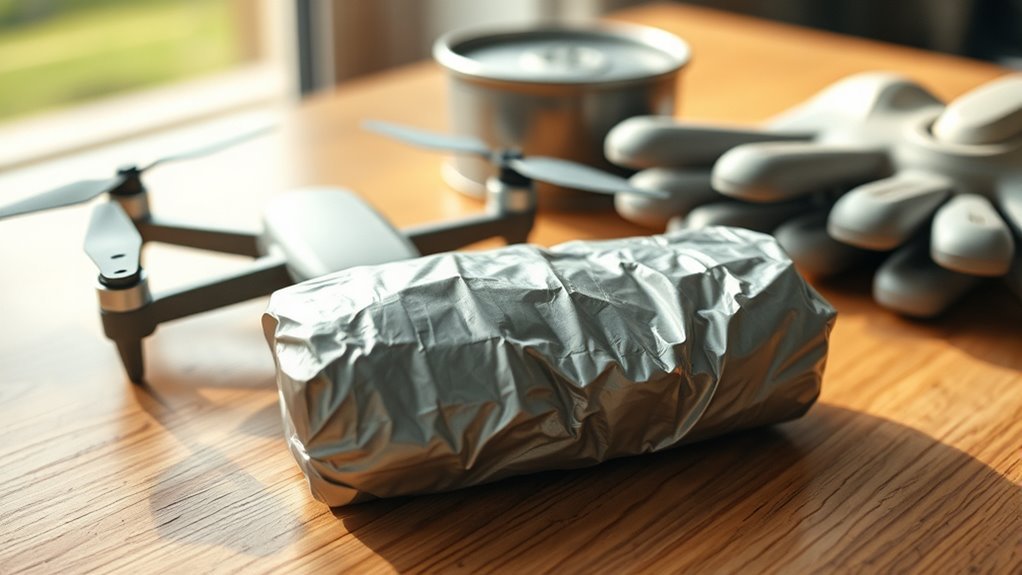
A swollen drone battery is a stop-use warning, not a cosmetic problem. Persistent bulging, casing distortion, unusual heat, leakage, or odor can indicate a damaged lithium battery with a higher fire risk. Do not fly with it, charge it, puncture it, or deliberately discharge it.
Quick Answer
A swollen drone battery is not safe to fly or charge. Stop using it, do not puncture or deliberately discharge it, and keep it away from anything combustible. If it is stable enough to handle, isolate it while you contact the manufacturer or a local household hazardous-waste program for damaged-battery disposal instructions.
At a Glance
| Time Required | Stop use immediately; final disposal timing depends on the local facility. |
| Difficulty | Simple stop-use decision; potentially hazardous handling if the battery is hot, leaking, smoking, or making unusual noises. |
| Tools Needed | No repair tools. A phone or camera can document the condition if that can be done without unnecessary handling. |
Is a Swollen Drone Battery Safe to Fly?
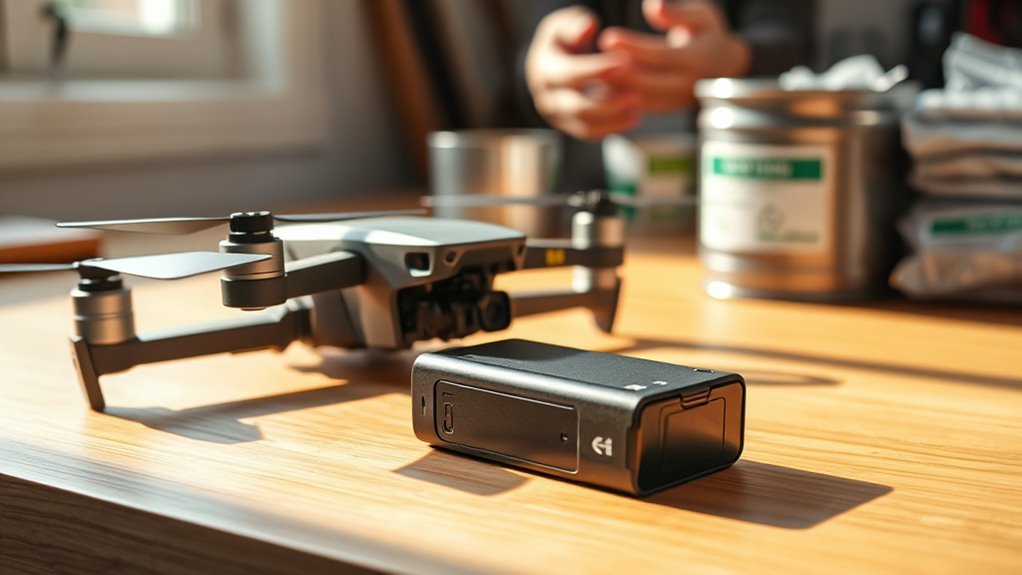
No. A persistently swollen drone battery is not safe to fly. DJI’s current guidance says never to use swollen or cracked aircraft batteries, because visible deformation means the pack should be taken out of service rather than tested under flight load.
If a battery is bulging, has separated seams, leaks, smells unusual, or no longer fits normally, power the aircraft down and stop using the pack. Do not force it into the battery compartment or try a short flight to see whether it still works.
DJI’s swollen-battery guidance specifically states that swollen or cracked batteries should never be used.
Warning: If the battery is smoking, hissing, rapidly heating, leaking heavily, or burning, do not keep handling or photographing it. Move people away from the hazard and contact emergency services or the local fire department.
What Causes a Drone Battery to Swell?
Drone battery swelling happens when degradation or damage causes gas to build inside lithium cells. Heat, aging, excessive cycling, over-discharge, impact damage, water exposure, and internal defects can all contribute.
DJI notes an important distinction. Some batteries can temporarily expand from heat immediately after flight and return to their normal shape after cooling. Persistent deformation after cooling is different and should be treated as a battery fault.
Long-term storage at a very low charge can also lead to over-discharge. DJI says this can damage battery materials and eventually make a cell unusable. Its battery maintenance guidance also identifies excessive charge cycles, impact, water ingress, and poor long-term storage practices as possible causes of swelling.
For a battery that stays swollen when cool, the cause matters less than the decision: stop using it. Do not try to flatten the casing, vent the cell, open the pack, or repair swollen cells yourself.
How to Spot a Swollen Drone Battery
Look for a change from the battery’s normal shape. Bulging faces, a bowed casing, raised seams, leakage, discoloration, unusual odor, or a battery that no longer seats normally can all signal damage.
The U.S. Fire Administration advises users to stop using lithium-ion batteries when they notice excessive heat, an unusual odor, a change in shape or color, leaking, or unusual noises. Its lithium-ion battery safety guidance also recommends keeping batteries away from combustible materials and excessive heat.
Inspect drone batteries visually before and after flights, especially after a hard landing or crash. Compare a questionable battery with an undamaged pack of the same model if you have one, but do not press the swollen surface to test it.
A battery that looks normal while cold but becomes noticeably distorted every time it is used still deserves manufacturer assessment. Repeated abnormal expansion should not be ignored simply because the casing later contracts.
Stop Using and Charging the Battery
Once persistent swelling or other damage is visible, stop both flight and charging. Continuing to put energy into a compromised lithium battery can add heat and stress when the safest goal is to keep the pack undisturbed until you have disposal instructions.
Visible Swelling Signs
Check for bulging, puffing, separated seams, leakage, discoloration, latch distortion, or a casing that no longer sits flat. A damaged battery may also feel unusually loose or tight in the aircraft because its dimensions have changed.
Never force a distorted battery into or out of a compartment. If safe removal is not straightforward, contact the drone manufacturer or a qualified service provider rather than applying pressure to the pack.
Physical damage from a crash, crushing, or water exposure should also increase your caution even if swelling is modest. A damaged cell does not have to look dramatic to require removal from service.
Immediate Stop-Use Steps
If you identify a swollen drone battery, focus on preventing further charging, physical damage, and exposure to combustible materials. Do not perform a capacity test or a deliberate discharge cycle to decide whether the battery is still usable.
- Power off the drone or charger and stop using the battery.
- If the battery is stable and can be removed without force, separate it from the aircraft and charger.
- Keep it away from paper, fuel, fabrics, other batteries, and other materials that can burn.
- Do not puncture, crush, bend, open, flatten, or deliberately discharge the battery.
- Document its condition only if doing so does not require extra handling.
- Contact the manufacturer or a facility that specifically accepts damaged lithium batteries.
If the pack is already rapidly heating, smoking, hissing, or burning, personal safety takes priority over removing or documenting it.
Where to Store a Swollen Drone Battery
A stable swollen battery awaiting disposal should be kept in a cool, dry location away from combustible materials. The temporary storage area should reduce the chance that a battery failure could spread to nearby objects.
Do not leave the pack in direct sunlight, inside a hot vehicle, beside a heater, or mixed with other loose batteries and metal objects. Room-temperature storage is preferable to temperature extremes.
Normal long-term battery-storage advice is not a reason to charge or discharge a swollen pack to a target percentage. Once the battery is damaged, disposal guidance takes priority over routine battery-maintenance procedures.
Do not assume that a generic battery bag, toolbox, ammunition can, or other improvised container makes an unstable battery safe. If you need advice on temporary containment, ask the battery manufacturer, household hazardous-waste facility, or local fire authority what they recommend for the battery’s actual condition.
How to Document the Battery Condition
Documentation can help when you contact DJI, another manufacturer, a warranty provider, or a disposal facility. Take photographs only if the battery is stable enough that you can do so without touching, pressing, or repositioning it unnecessarily.
Photograph From Multiple Angles
Photograph the top, bottom, sides, seams, and connector area from a safe position. Good lighting can make casing distortion or seam separation easier to see without physically testing the battery.
If a ruler or another scale reference is already easy to place nearby without touching the battery, it can help show the extent of swelling. Do not move an unstable pack merely to improve a photograph.
Record Visible Damage Details
Write down what you can actually observe: bulging, separated seams, leakage, impact marks, discoloration, latch distortion, or a change in how the battery fits. Include the drone and battery model and serial information if it is readable without unnecessary handling.
Keep the description factual. You do not need to diagnose which internal cell failed before asking the manufacturer or disposal facility what to do next.
Note Odor And Heat
Record unusual odor or obvious heat only if you notice it naturally. Do not touch a questionable pack simply to determine whether it feels warm, and do not bring your face close to it to identify a smell.
If heat is increasing, the casing is venting, or smoke appears, stop documentation and move away. Those signs can indicate a more immediate battery failure.
Can You Ship or Travel With It?
Do not treat a swollen drone battery like an ordinary spare battery for travel. Damaged lithium batteries face stricter restrictions because they can produce dangerous heat, short-circuit, or enter thermal runaway during transport.
For normal undamaged spare lithium batteries, the FAA generally requires them to stay in carry-on baggage. However, the FAA PackSafe rules for lithium batteries say damaged or recalled batteries likely to create sparks or dangerous heat must not be carried aboard an aircraft in either carry-on or checked baggage unless they have been removed or otherwise made safe.
A visibly swollen battery should therefore not be packed for an ordinary passenger flight. Contact the airline and manufacturer if a professional disposition or return process is required rather than arriving at the airport with the damaged pack.
Shipping is also regulated. The U.S. Department of Transportation’s PHMSA lithium-battery transportation guidance explains that damaged or defective batteries have a greater potential to short-circuit, release heat, or catch fire and that commercial transport must follow hazardous-material requirements.
Do not place a swollen battery in an ordinary parcel and mail or ship it based on a generic battery label. If a manufacturer or recycling program provides a return-shipping process, follow its damaged-battery packaging and carrier instructions exactly.
How to Dispose of a Swollen Drone Battery
The safest disposal route is a program that specifically accepts damaged lithium-ion or lithium-polymer batteries. Do not place a swollen pack in household trash, curbside recycling, or a general battery collection box unless the operator confirms that damaged batteries are accepted.
The EPA’s lithium-ion battery disposal guidance directs consumers to separate recycling or household hazardous-waste collection options rather than household garbage or municipal recycling. EPA also recommends contacting the manufacturer for specific handling information when a lithium-ion battery is damaged.
For an intact used battery, EPA recommends protecting terminals with non-conductive tape or individually bagging the battery to prevent short circuits. With a visibly swollen or leaking pack, however, do not add unnecessary handling just to prepare it yourself. Ask the receiving facility exactly how it wants the damaged battery presented.
The U.S. Consumer Product Safety Commission has also warned that defective lithium-ion batteries may require different handling from ordinary used batteries. Its defective lithium-battery disposal guidance says consumers should contact a household hazardous-waste facility in advance and confirm that it accepts defective lithium-ion batteries.
Do not deliberately discharge a swollen battery to zero with a drone, resistor, light bulb, saltwater bath, or other improvised method. A damaged pack should remain out of service while you arrange an approved disposal route.
When to Replace the Battery
Replace a drone battery when persistent swelling, cracking, leakage, or other structural damage appears. A pack that remains deformed after cooling should not return to flight or charging service.
Before buying a replacement, record the battery model and aircraft model so you can confirm compatibility. Inspect the replacement for shipping damage before charging or installing it.
If the swollen battery is a DJI aircraft battery, DJI currently states that aircraft batteries carry a 12-month warranty from the date of purchase and directs owners of in-warranty swollen batteries toward its after-sales process. Eligibility can still depend on the specific product and claim circumstances.
Do not attempt to repair the old pack by opening the case or replacing individual cells yourself. A replacement battery is the appropriate path once a sealed flight battery has developed persistent swelling.
Key Takeaways
- Persistent swelling after the battery has cooled is a stop-use condition; do not test it with another charge or flight.
- Heat, odor, leakage, shape changes, and unusual noises are warning signs that deserve immediate attention.
- A damaged battery should not be deliberately discharged, punctured, crushed, or opened before disposal.
- Swollen batteries are not ordinary passenger baggage and may also require special hazardous-material procedures for commercial shipping.
- Confirm that a recycling or household hazardous-waste facility accepts damaged lithium batteries before transporting the pack there.
Frequently Asked Questions
How to Throw Away a Swollen Lithium Battery?
Do not put a swollen lithium battery in household trash, curbside recycling, or an ordinary used-battery bin. Contact the manufacturer or a household hazardous-waste or specialized battery facility and confirm that it accepts damaged lithium batteries. Do not intentionally discharge, puncture, crush, or open the pack first.
How to Get Drone Battery Out of Hibernation Mode?
A healthy DJI battery in hibernation mode is normally awakened by connecting it to the model-approved charger, aircraft charging port, or charging hub until its battery-level indicators respond. This advice is only for an undamaged battery. Never try to wake or recharge a battery that is swollen, cracked, leaking, or otherwise damaged.
What Are the Odds of a Lithium Battery Exploding?
There is no useful universal percentage for the chance that a particular lithium battery will explode or catch fire. Risk depends on its chemistry, design, condition, temperature, charge state, and damage. Swelling, excessive heat, puncture, water exposure, and internal faults increase concern, so a visibly damaged pack should be removed from service.
Does Home Depot Recycle Swollen Batteries?
Do not place a swollen battery in a Home Depot collection bin without confirming acceptance first. Home Depot’s published recycling guidance says its Call2Recycle bins accept non-leaking rechargeable batteries within program limits. Because swelling indicates damage, contact the store or use a household hazardous-waste facility that confirms it handles damaged lithium batteries.
Conclusion
A swollen drone battery should stay grounded. Stop flying and charging it, avoid DIY repair or deliberate discharge, isolate it from combustible materials when safe to do so, and arrange disposal through the manufacturer or a facility that specifically accepts damaged lithium batteries. Replace the pack before flying the drone again.
Sources
- DJI Support — What should I do if a battery is swollen?: Supports the instruction not to use swollen or cracked DJI aircraft batteries and the current warranty statement.
- DJI Battery Routine Maintenance Guide: Supports causes of swelling, cooling guidance, over-discharge information, storage guidance, and hibernation behavior.
- U.S. Fire Administration — Battery Fire Safety: Supports warning signs, room-temperature storage, keeping batteries away from combustibles, and proper recycling.
- Federal Aviation Administration — PackSafe Lithium Batteries: Supports passenger-aircraft rules for spare and damaged lithium batteries.
- PHMSA — Transporting Lithium Batteries: Supports hazardous-material transport requirements and the greater shipping risk of damaged batteries.
- U.S. Environmental Protection Agency — Used Lithium-Ion Batteries: Supports separate recycling, household hazardous-waste options, terminal protection, and manufacturer guidance for damaged batteries.
- U.S. Consumer Product Safety Commission — Defective Lithium-Ion Battery Disposal Guidance: Supports avoiding ordinary retail battery boxes for defective batteries and confirming household hazardous-waste acceptance first.
- The Home Depot — Rechargeable Battery Recycling: Supports the distinction that its normal Call2Recycle drop-off guidance applies to non-leaking rechargeable batteries.

