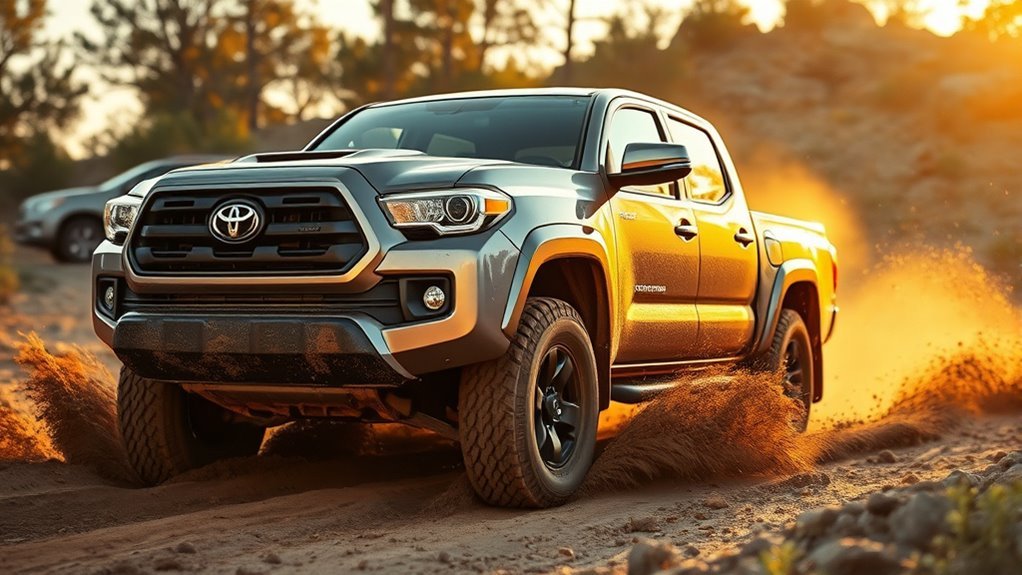
The Toyota Pickup 4×4 is known for its rugged construction, simple mechanical drivetrain, and useful off-road capability. However, checking a restored 1979–1983 pickup requires a different approach from testing a modern Tacoma or Tundra. Understanding the differences helps you identify drivetrain problems, operate four-wheel drive correctly, and avoid unnecessary repairs.
Quick Answer
A classic Toyota Pickup 4×4 uses a part-time four-wheel-drive system with a transfer case and mechanical front-axle components. Check the locking hubs, driveshafts, transfer case, steering, and differential condition before off-road driving. Modern Toyota pickups add electronic traction aids, but these systems are not interchangeable with the older truck’s mechanical setup.
Last checked: September 26, 2026. Historical dates and current-model specifications were verified against Toyota sources.
Key Takeaways
- The 1979–1983 Toyota Pickup 4×4 uses body-on-frame construction and a mechanically operated part-time 4WD system.
- Four-wheel drive improves traction on loose or slippery ground but does not increase tire grip or shorten braking distances.
- Older pickups rely on mechanical transfer-case operation and front-hub engagement rather than electronic terrain-management systems.
- Modern Tacoma models offer features such as Multi-Terrain Select, Crawl Control, and available locking differentials.
- Front-end noise, difficult engagement, fluid leaks, steering problems, and worn driveline parts deserve inspection before trail use.
Toyota Pickup 4×4 Overview
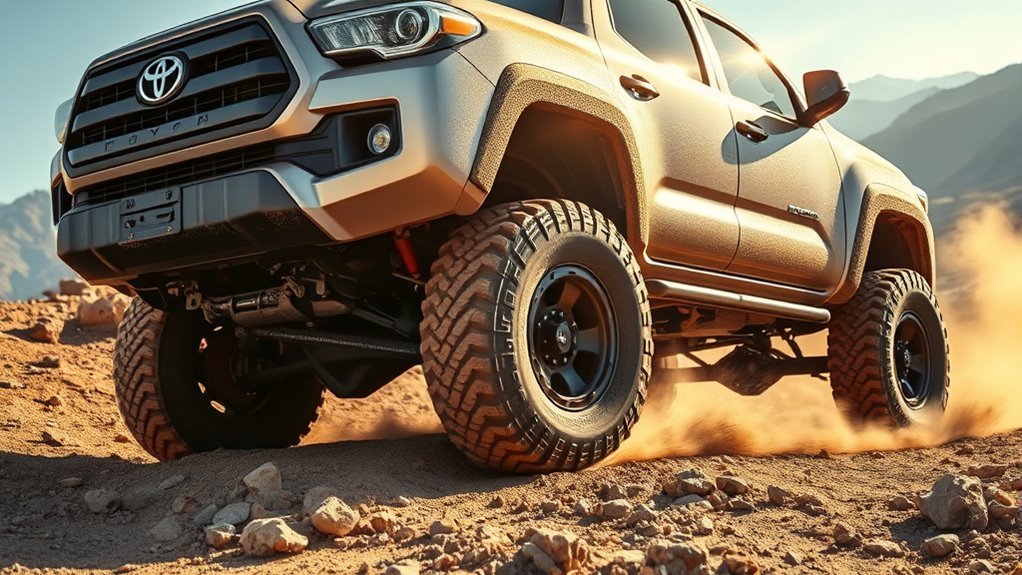
The 1979–1983 Toyota Pickup 4×4 belongs to Toyota’s fourth-generation US truck lineup. It combines a ladder-style frame, solid front axle, conventional suspension components, and a manually operated four-wheel-drive system.
Toyota introduced four-wheel drive to the Hilux family in 1979. Its official 1983 Hilux history confirms that the addition expanded the truck’s appeal as both a working vehicle and a recreational off-roader.
North American examples from 1979–1980 generally used the carbureted 20R four-cylinder engine. The 1981–1983 trucks generally used the larger 22R engine.
These engines are valued for their straightforward mechanical design. However, their condition depends on maintenance history, cooling-system health, correct engine adjustments, and the quality of previous repairs.
What Makes the Classic Toyota Pickup Different?
The early Toyota Pickup 4×4 does not depend on a modern traction-control computer to operate its four-wheel-drive system.
Its main components include:
- A transfer case that selects two-wheel drive or four-wheel drive.
- A front differential and solid front axle.
- Front and rear driveshafts that transfer engine power.
- Front locking hubs, depending on the vehicle’s equipment.
- Leaf-spring suspension and a separate load-bearing frame.
This layout supports straightforward inspection and repair. It also gives restorers access to individual components without replacing an entire electronically controlled drivetrain assembly.
However, mechanical simplicity does not eliminate wear. A vintage truck can have worn bearings, damaged steering joints, corroded structural components, or previous modifications that affect safe operation.
Break-In Period or Restoration Road Test?
A restored classic truck and a new Toyota pickup have different testing needs.
A restoration road test checks whether repaired components work correctly. A new-vehicle break-in period follows the manufacturer’s driving precautions while components settle into normal operation.
If your classic pickup has received a rebuilt engine, replacement differential, or other major drivetrain work, follow the repairer’s component-specific break-in instructions.
Do not assume that the recommended procedure for a new Tacoma applies unchanged to a rebuilt vintage truck.
Toyota Pickup 4×4 Technology
Toyota’s four-wheel-drive technology has changed considerably since the original Pickup. The classic truck relies mainly on mechanical engagement, while modern models combine a transfer case with electronic traction management.
Knowing which system your vehicle has prevents incorrect diagnosis and helps you operate it safely.
How the Classic Part-Time 4WD System Works
In two-wheel-drive mode, the engine drives the rear wheels. Selecting four-wheel drive connects the front drivetrain through the transfer case.
On trucks with manual locking hubs, both front hubs must be engaged before the front wheels can receive drive power.
The common transfer-case positions are:
- 2H: High-range two-wheel drive for normal driving on firm roads.
- 4H: High-range four-wheel drive for loose gravel, mud, snow, and other low-traction surfaces.
- 4L: Low-range four-wheel drive for slow movement, steep terrain, and situations requiring greater torque multiplication.
Low range changes the gearing. It does not increase the engine’s actual horsepower.
Warning: Do not use a conventional part-time 4WD system on dry pavement with good traction. The front and rear drivetrains need to accommodate different wheel speeds during turns. Using locked four-wheel drive on high-grip surfaces can cause drivetrain binding and component damage.
What Technology Do Modern Toyota Pickups Add?
Modern Tacoma and Tundra models retain body-on-frame construction but offer substantially more advanced drivetrain and suspension technology.
The 2026 Tacoma’s available i-FORCE MAX hybrid produces up to 326 horsepower and 465 lb-ft of torque. Toyota’s 2026 Tacoma specifications also identify part-time and full-time four-wheel-drive configurations.
The 2026 Tundra uses a different hybrid powertrain. Its available i-FORCE MAX twin-turbo V6 produces 437 horsepower and 583 lb-ft of torque, according to Toyota’s Tundra specifications.
Classic Toyota pickups use mechanical four-wheel-drive engagement. Modern trucks combine mechanical drivetrains with electronic systems that help manage wheel slip and low-speed movement.
These are different vehicle generations. A restored 1979–1983 pickup does not have factory Multi-Terrain Select, Active Traction Control, Crawl Control, or an i-FORCE MAX powertrain.
What Do Multi-Terrain Select and Crawl Control Actually Do?
Multi-Terrain Select adjusts vehicle responses for different off-road conditions. Depending on the model and selected mode, it changes how the vehicle manages drive force, braking, and wheel slip.
Toyota’s Tacoma Multi-Terrain Select documentation identifies separate settings for conditions such as dirt, sand, mud, deep snow, and rock.
Available systems include:
- Multi-Terrain Select: Adjusts traction-related controls to match the selected surface.
- Active Traction Control (A-TRAC): Uses brake intervention to help limit spinning wheels on equipped Toyota models.
- Crawl Control: Manages low-speed acceleration and braking so the driver can concentrate on steering.
- Electronic locking rear differential: Connects the rear axle shafts so both rear wheels rotate together when engaged.
Availability varies by model, trim, transmission, and model year. These systems improve control in suitable conditions, but they cannot overcome the physical limits of the tires or terrain.
Off-Road Features of the Toyota Pickup
The Toyota Pickup’s off-road capability comes from its drivetrain layout, ground clearance, suspension, and tire traction. Modern Tacoma and Tundra models build on that foundation with additional electronic systems and specialized equipment.
Classic Pickup Off-Road Strengths
The 1979–1983 Toyota Pickup 4×4 uses a solid front axle that keeps the front wheels connected through a rigid axle assembly.
Its leaf springs and body-on-frame structure suit utility work and uneven ground. The low-range transfer case also allows controlled movement when ordinary high-range gearing is unsuitable.
However, the truck’s original hardware should not be treated as indestructible. Excessive wheel spin, sudden traction changes, oversized tires, and poorly installed modifications can overload drivetrain parts.
Before driving over difficult terrain, inspect:
- Front and rear differential housings for leaks and damage.
- Steering linkage, tie-rod ends, and wheel bearings.
- Leaf springs, shackles, bushings, and mounting points.
- Driveshaft joints and mounting hardware.
- Tire condition, inflation pressure, and clearance.
Modern Tacoma and Tundra Off-Road Equipment
Modern Toyota trucks offer specialized off-road packages, but equipment is not identical across the lineup.
Depending on the configuration, Tacoma TRD Off-Road, TRD Pro, and Trailhunter models offer features such as terrain-management systems, skid plates, specialized suspension components, and rear differential locking.
Hill Start Assist Control helps reduce rollback when starting on an incline. Skid plates protect selected underbody components from contact with obstacles.
Tundra TRD off-road configurations also offer terrain-management technology and suspension equipment intended for rougher surfaces.
The i-FORCE MAX hybrid powertrain provides substantial low-speed torque, which is useful when accelerating under load or climbing.
However, engine output alone does not determine off-road capability. Tire grip, ground clearance, suspension travel, vehicle weight, and driver technique all matter.
How to Test Four-Wheel Drive Safely
Start with a basic mechanical inspection before testing the transfer case. Use a level area with enough space to maneuver, then select an appropriate low-traction surface for the four-wheel-drive test.
- Check tire pressures and confirm that all four tires are suitable for the vehicle.
- Inspect the transfer case, driveshafts, differentials, and front hubs for visible damage or leaks.
- On a classic truck with manual hubs, set both front hubs to the engaged position before selecting four-wheel drive.
- Engage 4H using the procedure specified for your exact vehicle.
- Drive slowly and listen for grinding, repeated clicking, or unusual vibration.
- Stop before selecting low range, following the transmission and transfer-case instructions for your model.
- Return to two-wheel drive after the test and confirm normal steering and drivetrain behavior.
Do not force a transfer-case lever or selector that refuses to move. First confirm that the transmission, vehicle speed, and other required conditions are correct.
A small amount of normal mechanical noise may occur during engagement. Persistent grinding, strong vibration, or an engagement failure is different and requires diagnosis.
Common Toyota 4WD Problems and Fixes
Common Toyota 4WD problems include delayed engagement, front-end noise, drivetrain vibration, and difficulty shifting the transfer case. The likely cause depends on whether the truck has a mechanical or electronically controlled system.
Begin with simple checks before replacing expensive drivetrain components.
1. Four-Wheel Drive Will Not Engage
On a classic Toyota Pickup, inspect the transfer-case linkage and front locking hubs first.
A hub left in the free position can prevent the corresponding front wheel from receiving drive power, even when the transfer case is in four-wheel drive.
Check for:
- Incorrect front-hub position.
- Seized or damaged locking-hub components.
- Worn transfer-case linkage.
- Internal transfer-case damage.
- Incorrect shifting technique.
On newer electronically controlled models, a flashing 4WD indicator may mean that engagement has not finished or that the system has detected a problem.
Follow the vehicle’s operating instructions before attempting further diagnosis.
2. Front-End Noise During Driving
A clicking, humming, grinding, or knocking sound can come from several different components.
Inspect the front differential, axle joints, wheel bearings, driveshaft joints, and locking hubs. Check whether the noise occurs only in four-wheel drive or remains present in two-wheel drive.
A sound that changes with vehicle speed may suggest a rotating component. Noise that changes while steering can provide another useful diagnostic clue.
Do not assume that every front-end noise comes from the differential.
3. Delayed Engagement or Difficult Disengagement
Delayed engagement can result from an incomplete shift, mechanical binding, worn linkage, or an actuator problem on electronically controlled systems.
On older trucks, examine the transfer-case mechanism and front hubs. On newer models, inspect the relevant electrical controls and actuator system.
Drivetrain windup can also make a part-time four-wheel-drive system difficult to disengage after use on high-traction pavement.
Do not use excessive force to overcome binding.
4. Vacuum-Related Problems
Vacuum faults require careful separation from drivetrain faults.
On a carbureted 1979–1983 Toyota Pickup, damaged vacuum hoses can affect idle quality, engine response, and emissions-related controls.
They are not the normal means of engaging the truck’s mechanical four-wheel-drive transfer case.
Inspect cracked hoses, loose connections, and incorrect routing when diagnosing poor idle or engine performance.
Some later Toyota four-wheel-drive configurations use different axle-disconnect and actuator arrangements. Diagnose those systems according to the exact vehicle rather than applying the vintage pickup procedure to every Toyota.
5. Modern Traction-Control or Sensor Problems
Modern electronic traction systems depend on sensors, control modules, wiring, and related brake-system components.
If Multi-Terrain Select does not activate, verify that the selected driving mode and transfer-case position meet its operating requirements.
Then inspect warning messages and retrieve relevant diagnostic trouble codes with suitable equipment.
Do not replace a sensor solely because an indicator flashes. The stored fault information and system checks should guide the repair.
Note: If the vehicle develops severe vibration, steering instability, grinding, or a persistent drivetrain warning, stop testing it. A qualified technician should inspect the affected components before the truck returns to road or trail use.
Toyota Pickup Restoration Next Steps
After the initial road test, record the remaining mechanical problems and repair them in order of safety and importance. For a 1979–1983 Toyota Pickup 4×4, frame condition, steering, brakes, and drivetrain integrity deserve attention before cosmetic restoration.
Vacuum settings and ignition timing can affect engine performance, while worn transfer-case or axle components affect four-wheel-drive operation. These are separate systems and should be diagnosed accordingly.
| Task | Purpose |
|---|---|
| Check vacuum lines | Restore stable idle and correct engine operation |
| Set ignition timing | Improve engine response and power delivery |
| Inspect locking hubs and transfer case | Confirm proper four-wheel-drive engagement |
| Check steering and suspension | Identify wear affecting handling and control |
| Inspect frame and mounting points | Identify rust and structural damage |
| Record findings | Track repairs and verify progress |
Inspect the Frame Before Cosmetic Work
Frame corrosion is particularly important on an older body-on-frame pickup. Surface rust and structural corrosion require different repair approaches.
Inspect the frame rails, crossmembers, suspension mounting points, and areas where dirt or moisture can collect.
If corrosion has weakened a structural section, have it assessed before loading the truck or driving off-road.
Check Engine Timing and Drivability
Ignition timing should match the engine’s specifications and test conditions. Do not adjust it by guesswork or confuse ignition timing with transfer-case operation.
Engine performance checks should also cover the fuel system, ignition components, cooling system, and vacuum connections.
For older vehicle procedures, Toyota’s manuals and warranty resources explain how owners can access available historical documentation and technical information.
Document Repairs and Repeat the Road Test
Keep a record of symptoms, parts replaced, adjustments made, and test results.
After each major repair, confirm that the original symptom has disappeared and that no new problem has developed.
Online restoration communities can provide useful comparisons and troubleshooting ideas, but verify repair procedures against appropriate technical documentation.
Progress photographs and repair notes also help future owners understand the truck’s mechanical condition.
Once the drivetrain, steering, brakes, and suspension operate correctly, proceed with cosmetic restoration and final presentation.
Frequently Asked Questions
What Is Toyota’s Best 4×4?
The Land Cruiser and 4Runner are established Toyota off-road vehicles with different strengths. The Land Cruiser combines full-time four-wheel drive with specialized off-road hardware, while the 4Runner offers several drivetrain and equipment configurations. For pickup buyers, the Tacoma provides a separate combination of cargo utility and off-road capability.
Do You Have to Be in Neutral to Switch to 4WD Toyota?
No, neutral is not required for every Toyota four-wheel-drive shift. Many part-time systems allow switching between 2H and 4H while moving within the specified conditions. Shifting between high and low range generally requires stopping and selecting neutral on automatic models. Follow the procedure for your exact model and transmission.
What Is Toyota’s Most Powerful Pickup Truck?
The 2026 Toyota Tundra has the higher-output hybrid powertrain in Toyota’s US pickup lineup. Its available i-FORCE MAX twin-turbo V6 produces 437 horsepower and 583 lb-ft of torque. The 2026 Tacoma’s available i-FORCE MAX hybrid produces up to 326 horsepower and 465 lb-ft of torque.
Which Toyotas Have Full-Time 4WD?
The 2026 Land Cruiser has standard full-time four-wheel drive. The 2026 4Runner offers it on specified Limited and Platinum configurations, while the 2026 Tacoma Limited offers a full-time system. Equipment depends on the model and trim. Full-time four-wheel drive should not be confused with a conventional part-time system.
Can You Drive a Toyota Pickup in 4WD on Dry Pavement?
A classic Toyota Pickup with conventional part-time four-wheel drive should remain in 2H on dry pavement with good traction. Using 4H or 4L on that surface can create drivetrain binding. A properly operated full-time system can accommodate normal paved-road driving because its drivetrain arrangement differs.
Conclusion
The Toyota Pickup 4×4 remains a durable example of practical off-road engineering. Its part-time four-wheel-drive system, body-on-frame construction, and straightforward mechanical layout support long service life when maintained correctly.
Many well-maintained examples exceed 200,000 miles, although mileage alone cannot establish a vintage truck’s condition.
For restoration, prioritize drivetrain inspection, structural rust repair, steering, brakes, and suspension wear. A careful mechanical inspection followed by controlled road testing offers a sound path toward reliable operation and preserved vehicle value.
Sources
- Toyota Motor Corporation — 1983 Hilux Announcement: Historical development and introduction of the four-wheel-drive Hilux.
- Toyota USA — 2026 Tacoma: Hybrid powertrain output, drivetrain configurations, and modern off-road equipment.
- Toyota — 2026 Tundra: Current Tundra engine and hybrid powertrain specifications.
- Toyota Owners — Tacoma Multi-Terrain Select: Terrain modes, system operation, and operating limitations.
- Toyota Owners — Manuals and Warranties: Owner documentation and access to historical Toyota technical information.
- Toyota USA — 2026 4Runner: Full-time four-wheel-drive availability and off-road technology.
- Toyota USA — 2026 Land Cruiser: Standard full-time four-wheel drive and locking differential equipment.
