Not every Toyota RAV4 sold in the United States has all-wheel drive. Selected 2026 RAV4 Hybrid trims are available with front-wheel drive or AWD, while every 2026 RAV4 Plug-in Hybrid comes with standard AWD. Older RAV4s vary more widely, so the model year, powertrain, and trim all matter.
Quick Answer
No, not all Toyota RAV4s are AWD. For 2026, selected RAV4 Hybrid grades offer front-wheel drive or all-wheel drive, while the RAV4 Plug-in Hybrid has standard AWD. Used gas-powered RAV4s from earlier model years may also have either FWD or one of Toyota’s mechanical AWD systems.
Key Takeaways
- The 2026 RAV4 Hybrid offers FWD on selected grades and AWD across the lineup.
- Every 2026 RAV4 Plug-in Hybrid has standard AWD.
- Current hybrid AWD uses an electric motor to assist the rear wheels automatically.
- Some 2019–2025 gas RAV4s use mechanical Dynamic Torque Control or Dynamic Torque Vectoring AWD.
- AWD improves acceleration traction, but it cannot replace suitable tires, safe speed, or extra stopping distance.
Updated: July 16, 2026
Which 2026 Toyota RAV4 Trims Offer AWD in the USA?
The current U.S. RAV4 lineup is fully electrified. Toyota sells the regular 2026 RAV4 Hybrid and the more powerful 2026 RAV4 Plug-in Hybrid. A new gas-only RAV4 is no longer offered for the 2026 model year.
The table below shows the current drivetrain choices. Availability can vary by region and dealer inventory, so confirm the drivetrain on the window sticker before buying.
| 2026 U.S. Model or Trim | FWD | AWD | What to Know |
|---|---|---|---|
| RAV4 Hybrid LE | Available | Available | Entry-grade choice for efficiency or added traction. |
| RAV4 Hybrid SE | Available | Available | Sport-styled Hybrid with both drivetrain choices. |
| RAV4 Hybrid XLE Premium | Available | Available | Adds comfort features while retaining drivetrain choice. |
| RAV4 Hybrid Woodland | No | Standard | Rugged trim with all-terrain tires and added trail-focused equipment. |
| RAV4 Hybrid XSE | No | Standard | Higher sport trim with AWD. |
| RAV4 Hybrid Limited | No | Standard | Premium Hybrid configuration with AWD. |
| RAV4 Plug-in Hybrid SE, Woodland, XSE, and GR SPORT | No | Standard | Every current U.S. Plug-in Hybrid trim uses AWD. |
Note: Older RAV4 trim names and drivetrain choices differ. Adventure, TRD Off-Road, XLE, and Limited badges do not identify the drivetrain reliably without the model year and vehicle specifications.
What Is RAV4 AWD and How Does It Work?
All-wheel drive can send driving force to both axles when the vehicle needs more traction. However, it does not continuously send equal power to all four wheels. The RAV4’s control system varies rear-wheel assistance according to acceleration, steering, road conditions, and detected wheel slip.
On a current RAV4 Hybrid AWD model, the hybrid system powers the front axle while a dedicated electric motor assists the rear axle. The system works automatically, so you do not need to engage AWD with a lever or transfer-case switch.
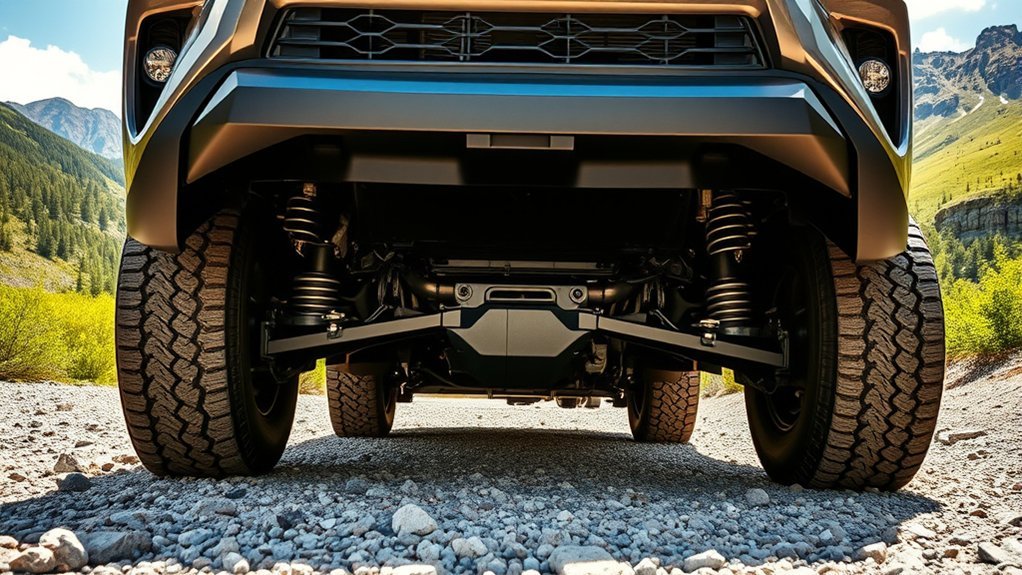
The RAV4 Plug-in Hybrid also uses automatic AWD. Its front and rear electric drive components can respond quickly because electric motors produce torque without waiting for a conventional mechanical transfer case to engage.
Older gas-powered RAV4s use a different arrangement. Those models can send engine torque to the rear axle through a driveshaft, coupling, and rear differential. The exact hardware depends on the year and trim.
Benefits of Choosing an AWD RAV4 Over Front-Wheel Drive
An AWD RAV4 can provide more secure acceleration when rain, snow, loose gravel, or an unpaved incline reduces front-tire grip. Rear-wheel assistance can also make pulling away from a slippery intersection or climbing a steep driveway easier.
- Better launch traction: More than one axle can help move the vehicle from a stop.
- Improved confidence on loose surfaces: AWD can help on gravel roads, wet grass, and maintained dirt routes.
- More suitable towing configurations: Selected AWD grades receive higher manufacturer towing ratings.
- Automatic operation: The system reacts without requiring routine driver input.
FWD still makes sense when you mainly drive on paved roads in a mild climate. It can cost less, weigh less, and deliver the highest fuel-economy rating in the Hybrid lineup.
Warning: AWD helps the vehicle accelerate when traction is limited, but it does not shorten braking distance. Winter tires, correct tire pressure, slower speeds, and greater following distance remain essential in snow and ice.
AWD can help you get moving on a slippery road, but your tires still determine how effectively you turn and stop.
Understanding the Different RAV4 AWD Systems
Toyota has used several AWD designs across different RAV4 generations. You should identify the model year and powertrain before comparing features or maintenance needs.
| RAV4 Type | AWD Design | How It Works |
|---|---|---|
| 2026 RAV4 Hybrid AWD | Electronic On-Demand AWD | A dedicated electric motor assists the rear axle automatically when conditions require it. |
| 2026 RAV4 Plug-in Hybrid | Standard electronic AWD | Front and rear electric drive components provide automatic all-wheel assistance on every trim. |
| 2019–2025 RAV4 Hybrid and RAV4 Prime | Electronic On-Demand AWD | The front hybrid system drives the front wheels, while a separate rear motor assists the rear wheels. |
| Selected 2019–2025 gas RAV4s | Dynamic Torque Control AWD | A mechanical driveline sends engine torque to the rear axle when additional traction is needed. |
| Selected Adventure, TRD Off-Road, and Limited gas models | Dynamic Torque Vectoring AWD | Rear clutches can vary torque between the left and right rear wheels, while a disconnect system reduces drag when AWD is unnecessary. |

Electronic AWD does not mean the vehicle is a battery-electric SUV. The regular RAV4 Hybrid refuels with gasoline and charges its small hybrid battery while driving. The Plug-in Hybrid has a larger battery that you can charge from an external power source.
Features That Support RAV4 AWD Performance
AWD works alongside traction control, stability control, drive modes, tire selection, and terrain settings. The available features depend on the model year and trim.
Multi-Terrain Select System
Multi-Terrain Select changes throttle response, braking intervention, and traction-control behavior for specific low-traction surfaces. Depending on the RAV4, available settings may include modes for mud, sand, rock, dirt, snow, or normal road driving.
These settings do not turn the RAV4 into a dedicated rock crawler. They help the vehicle manage moderate loose or uneven surfaces within its ground-clearance and tire limits.
Dynamic Torque Vectoring
Dynamic Torque Vectoring AWD is most relevant when you are shopping for a used fifth-generation gas RAV4. It can distribute rear-axle torque between the left and right rear wheels to support cornering and low-traction performance.
This mechanical system should not be confused with the electric rear-motor AWD used by current Hybrid and Plug-in Hybrid models.
Drive Modes and Driver Controls
RAV4 drive modes can change accelerator response, climate operation, and powertrain behavior. Normal, Eco, Sport, EV, Trail, and terrain-related modes are not available on every model.
Use the labels displayed in your vehicle rather than assuming that another RAV4 has the same controls. Toyota’s manual and warranty portal provides model-specific instructions.
How AWD Affects RAV4 Fuel Economy and Performance
AWD can add weight and energy use, but the exact difference depends on the trim, wheels, tires, and powertrain. A fixed claim that AWD always costs a certain number of MPG is not reliable.
For 2026, Toyota rates the RAV4 Hybrid at 226 combined horsepower with FWD and 236 combined horsepower with AWD. The additional rear motor therefore provides both rear-wheel assistance and a higher total system output.
| 2026 Configuration | Drivetrain | Published Efficiency Highlight |
|---|---|---|
| RAV4 Hybrid LE, SE, or XLE Premium | Most efficient FWD configurations | Up to an estimated 47 city/40 highway MPG |
| RAV4 Hybrid Woodland | AWD | Estimated 41 city/35 highway MPG |
| RAV4 Hybrid XSE or Limited | AWD | Estimated 43 city/37 highway MPG |
| RAV4 Plug-in Hybrid SE | AWD | Estimated 40 MPG combined, 101 MPGe, and 54 miles of electric range |
| RAV4 Plug-in Hybrid Woodland | AWD | Estimated 37 MPG combined and 94 MPGe |
| RAV4 Plug-in Hybrid XSE | AWD | Estimated 40 MPG combined and 96 MPGe |
| RAV4 Plug-in Hybrid GR SPORT | AWD | Estimated 36 MPG combined and 86 MPGe |
MPGe measures energy use while operating with electricity and is not the same as gasoline MPG. Your actual results will vary with temperature, charging frequency, speed, tire pressure, terrain, and driving style.
Pro Tip: Compare FWD and AWD versions of the same trim whenever possible. Comparing an efficient LE with an all-terrain Woodland can make tires and equipment look like an AWD penalty.
Comparing Hybrid, Plug-in Hybrid, and Gas AWD Options
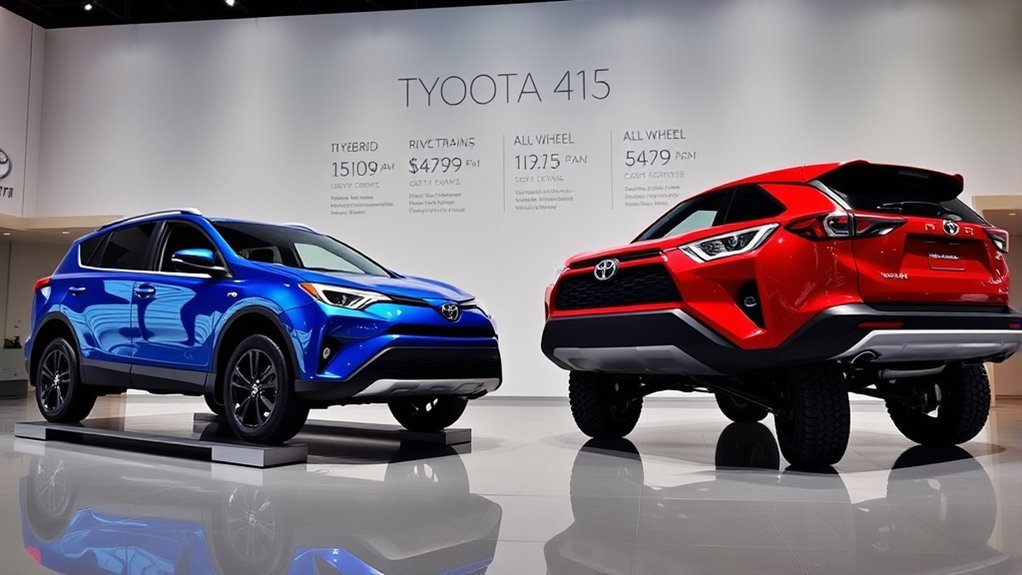
For a new 2026 RAV4, your choice is between a regular Hybrid and a Plug-in Hybrid. A gas-only RAV4 remains relevant only when you are shopping for an older used model.
| Option | AWD Availability | Main Advantage | Main Consideration |
|---|---|---|---|
| 2026 RAV4 Hybrid | Available across the lineup | Strong fuel economy without external charging | FWD may be more efficient if you do not need AWD. |
| 2026 RAV4 Plug-in Hybrid | Standard on every trim | Electric commuting range, 324 combined horsepower, and gasoline backup | You need regular charging to receive the greatest efficiency benefit. |
| 2019–2025 gas RAV4 | Optional or standard, depending on trim | Potentially lower used purchase price and conventional gas operation | Lower efficiency than comparable hybrids and more variation between AWD systems. |
Does AWD Affect RAV4 Towing Capacity?
AWD alone does not determine a RAV4’s towing limit. Toyota assigns the rating according to the exact powertrain, trim, cooling capacity, equipment, and vehicle configuration.
Toyota lists a maximum towing capacity of up to 3,500 pounds for selected 2026 AWD grades. Other configurations have lower limits. Never assume that two RAV4s with AWD share the same rating.
Warning: Check the owner’s manual, certification labels, hitch rating, payload capacity, and trailer tongue weight before towing. Do not use a general online figure in place of the rating for your exact vehicle.
How AWD Affects RAV4 Tire Maintenance
AWD systems depend on four tires with compatible rolling characteristics. Large differences in tire size, construction, inflation, or tread wear can affect traction-control operation and place unnecessary stress on drivetrain components.
- Use the tire size and cold pressure shown on the driver-side door-jamb label.
- Check tire pressure at least monthly when the tires are cold.
- Rotate the tires according to the model-specific maintenance schedule.
- Keep the same tire type, size, load rating, and speed rating at all four positions unless Toyota specifies otherwise.
- Ask a qualified tire professional whether remaining tread depth permits replacement of fewer than four tires.
- Correct alignment or suspension problems that cause uneven wear.
The NHTSA TireWise guide explains tire pressure, rotation, tread, tire selection, and other safety checks.
RAV4 AWD Maintenance Requirements
A current Hybrid AWD model does not use the same rear driveshaft and torque-vectoring differential found on an older gas RAV4. Maintenance items therefore vary by generation and powertrain.
Follow the schedule for your exact VIN rather than requesting a generic “AWD service.” Relevant inspections may include tires, brakes, suspension, fluid condition, cooling systems, axle components, and leak checks.
Use Toyota’s official manuals and warranties page to select the correct year and model. Severe operating conditions, including frequent towing or extensive dirt-road driving, may require additional inspections.
How to Tell Whether Your RAV4 Has AWD
Do not rely only on an exterior badge. Badges can be missing, replaced, or misunderstood.
- Check the original window sticker or sales listing. It should identify FWD, AWD, Electronic On-Demand AWD, or a similar drivetrain description.
- Review the vehicle specification record. A Toyota dealer can confirm the factory configuration from the VIN.
- Use an official VIN decoder. The NHTSA VIN decoder can provide manufacturer-submitted vehicle information.
- Check the owner’s manual and instrument display. AWD models may show drivetrain or traction information that FWD versions do not have.
- Inspect the vehicle only if you understand the hardware. Older gas AWD models have rear driveline components that a FWD model lacks, while a Hybrid AWD model uses different rear electric-drive hardware.
Choosing the Best RAV4 Drivetrain for Your Needs
Your climate, roads, towing plans, charging access, and budget should guide the decision.
- Choose a FWD RAV4 Hybrid if you mainly drive on maintained pavement and want the highest available fuel economy.
- Choose a RAV4 Hybrid AWD if you regularly face snow, steep wet roads, gravel, or low-traction parking areas.
- Choose the Woodland if you want AWD, all-terrain tires, raised exterior equipment, and a more rugged factory setup.
- Choose a RAV4 Plug-in Hybrid if you can charge regularly and want standard AWD, stronger acceleration, and electric commuting range.
- Consider a 2019–2025 gas AWD RAV4 if you prefer a used gas-only model, but verify which mechanical AWD system it has.
AWD is valuable when your driving conditions justify it. It should not be treated as a required feature for every driver or as a substitute for good tires.
Frequently Asked Questions
Can I switch between FWD and AWD in my RAV4?
You cannot convert or manually switch a factory FWD RAV4 into AWD during normal driving. An AWD RAV4 manages front and rear assistance automatically, but it remains an AWD-equipped vehicle. A factory FWD RAV4 does not gain AWD through a drive-mode button.
Is RAV4 AWD active all the time?
The system remains ready, but it does not provide equal torque to all four wheels continuously. It varies rear-wheel assistance according to acceleration, cornering, wheel slip, road conditions, and efficiency needs.
Are all RAV4 Hybrid models AWD?
No. Selected 2026 RAV4 Hybrid grades are available with FWD or AWD. This differs from some earlier U.S. RAV4 Hybrid lineups that were sold only with electronic AWD.
Are all RAV4 Plug-in Hybrid models AWD?
Yes. Every current 2026 U.S. RAV4 Plug-in Hybrid trim, including SE, Woodland, XSE, and GR SPORT, has standard AWD.
Does AWD increase the RAV4’s towing capacity?
Some AWD grades receive a higher towing rating, but AWD by itself does not establish the limit. Selected 2026 AWD configurations are rated for up to 3,500 pounds, while other RAV4 configurations are rated lower. Check the manual for the exact vehicle.
Does an AWD RAV4 need four matching tires?
The tires should match Toyota’s specifications and have compatible rolling characteristics. Keep the same size, type, load rating, speed rating, and similar tread depth unless the manufacturer specifies otherwise. Consult a tire professional before replacing fewer than four worn tires.
Is AWD better than FWD in snow?
AWD usually provides better acceleration traction in snow because more than one axle can help move the vehicle. It does not automatically improve braking. Suitable winter tires often make a larger difference to turning and stopping performance.
What is the cost difference between a FWD and AWD RAV4?
The difference changes with the model year, trim, destination charge, options, and dealer inventory. AWD generally costs more than the equivalent FWD configuration. Compare the same trim in Toyota’s current configurator rather than using an old fixed price difference.
Conclusion
Not every Toyota RAV4 is AWD. The 2026 RAV4 Hybrid gives you FWD or AWD choices on selected grades, while every 2026 RAV4 Plug-in Hybrid has standard AWD. Older gas RAV4s may use one of several mechanical AWD systems, so check the model year, trim, and VIN before buying.
Choose AWD when snow, steep roads, loose surfaces, or an eligible towing configuration make the added traction worthwhile. Choose FWD when your roads are predictable and efficiency is the higher priority. In either case, correct tires and safe driving remain more important than the drivetrain badge.
Sources
- Toyota 2026 RAV4 — current U.S. Hybrid trims, features, MPG ratings, and maximum towing information
- Toyota 2026 RAV4 Plug-in Hybrid — current AWD trims, horsepower, electric range, MPG, MPGe, and towing information
- Toyota USA Newsroom: All-New 2026 RAV4 — powertrain, drivetrain, horsepower, trim, and towing details
- Toyota Manuals and Warranties — model-specific operating and maintenance instructions
- NHTSA TireWise — tire pressure, rotation, tread, tire selection, and safety guidance
- NHTSA VIN Decoder — manufacturer-submitted vehicle identification information