Disclosure: As an Amazon Associate, we earn from qualifying purchases. If you click a link on this page and make a purchase, we may receive a small commission at no extra cost to you.
A performance tire can feel quiet and responsive on dry pavement yet still be the wrong choice for your winter roads. The Armstrong Blu-Trac HP 235/45R18 targets value-focused drivers who want stable steering, wet-road drainage, and a comfortable highway ride. Its 98W XL service description, 340AA UTQG, and 45,000-mile limited tread-life listing make it competitive on paper. This review explains where it fits well, where its seasonal labeling creates concern, and what you should confirm before ordering.
Quick Verdict
Rating: 7.8/10, recommended with caveats
Best For: Budget-minded drivers who mainly face dry roads, rain, and mild seasonal conditions
Bottom Line: The Blu-Trac HP offers useful wet-road channels, responsive dry handling, and a comfort-focused tread design at a value-oriented level. Its mixed summer and all-season classification means it should not be treated as a dependable snow tire.
Key Specifications
| Specification | Detail |
|---|---|
| Brand | Armstrong |
| Model | Blu-Trac HP |
| Product type | High-performance passenger radial tire |
| Tire size | 235/45R18 |
| Service description | 98W XL |
| Maximum load | 750 kg, about 1,653 lb, per tire |
| Maximum inflation pressure | 50 psi, not the same as your vehicle’s recommended pressure |
| Approved rim width | 7.5 to 9 inches |
| Overall diameter | About 26.3 inches, or 669 mm |
| Tread depth | 10/32 inch, about 7.6 mm |
| UTQG | 340AA |
| Sidewall | Black sidewall |
| Run-flat | No |
| Season label | Listed as all-season by U.S. retailers, but classified as summer by Armstrong in Europe |
| Limited tread-life listing | 45,000 miles in the reviewed U.S. listing; terms and eligibility apply |
| Package note | Confirm quantity before checkout because tire listings are commonly priced per tire |
At a Glance
|
Feature |
Verdict |
|---|---|
|
Installation |
Standard professional mounting and balancing are required |
|
Ride Comfort and Noise |
Silent-groove features and close road contact are designed to reduce tread noise and vibration |
|
Dry Handling |
Continuous ribs and shoulder blocks support steering response and cornering stability |
|
Wet Performance |
Four wide circumferential grooves help move water away from the contact patch |
|
Winter Use |
Not a substitute for a dedicated winter or severe-snow-rated tire |
|
Durability and Warranty |
XL construction, 10/32-inch tread depth, and a listed 45,000-mile limited tread-life warranty |
What Is the Armstrong Blu-Trac HP?
The Blu-Trac HP is Armstrong’s high-performance passenger tire for drivers who want sharper road manners than a basic touring tire. The 235/45R18 version uses a 235 mm nominal section width, a sidewall height equal to 45 percent of that width, and an 18-inch wheel diameter. Its 98W XL marking means it is built for an extra-load application and carries a W speed rating, but your vehicle still has to approve that size and service description.
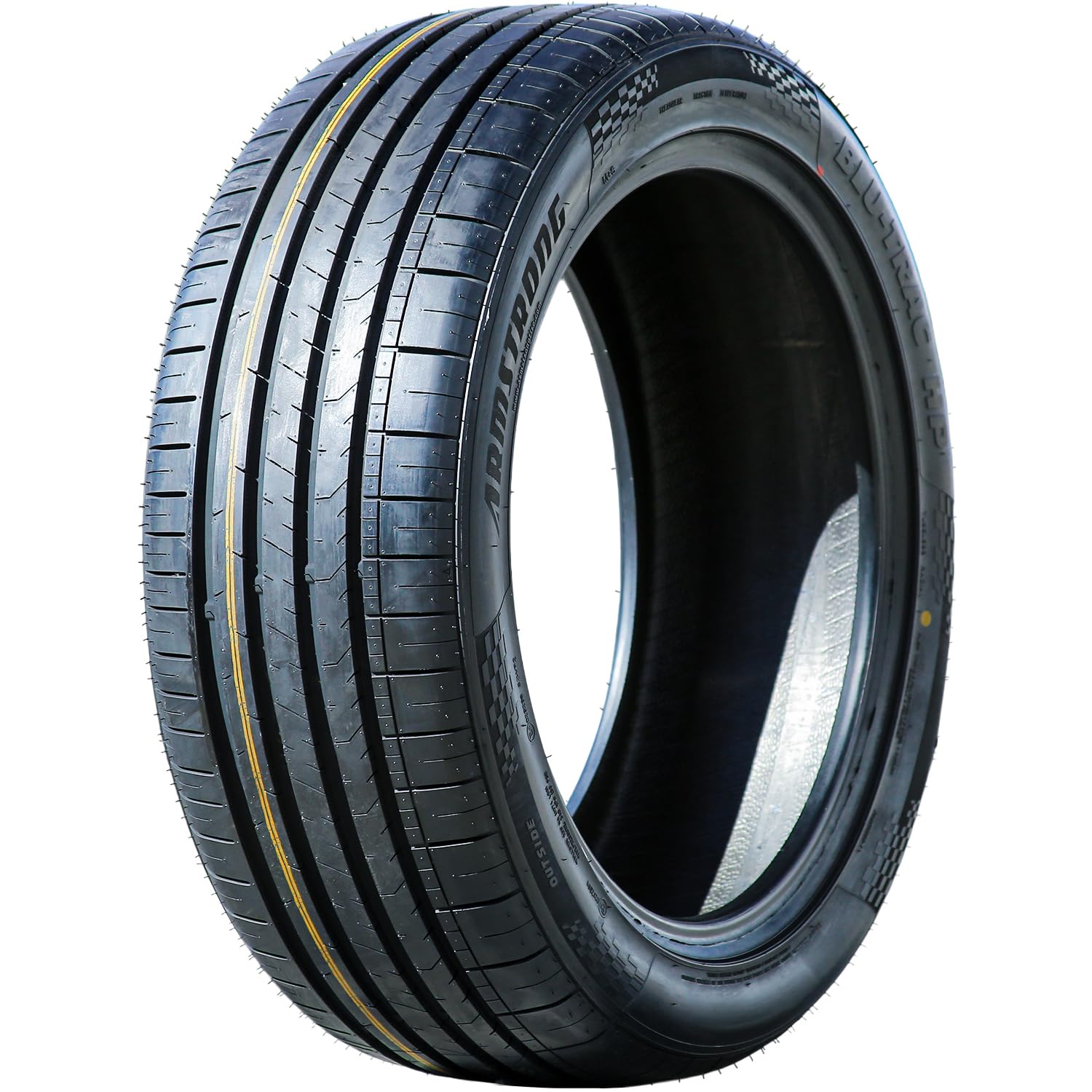
The tread uses four wide circumferential grooves, several sipe patterns, outer-shoulder grooves, and a silent-groove wall. Those features target water evacuation, grip, cornering stability, and lower exterior tread noise. The main buying issue is seasonal positioning: U.S. sellers may call it all-season, while Armstrong’s European product page calls the pattern a summer tire.
Who Should Buy It?
Best For
- Drivers whose door placard or approved fitment includes 235/45R18 98W XL
- Commuters who want a performance-oriented tire for dry roads and rain
- Value-focused buyers who can use separate winter tires when conditions demand them
Skip If
- You need dependable traction in frequent snow, packed ice, or severe winter weather
- Your vehicle requires a different size, load index, speed rating, or run-flat design
- You want a premium tire with extensive independent test data and broad dealer support
Before You Buy: Do not rely on the Amazon fitment tool alone. Match 235/45R18, the 98 load index, the W speed rating, and XL requirement to your door-jamb placard or owner’s manual, then confirm the tire quantity in the listing.
Fit and Compatibility
A matching diameter is not enough for safe fitment. Your vehicle must accept the tire’s width, aspect ratio, wheel diameter, load capacity, and speed rating. The approved rim-width range is 7.5 to 9 inches, and the overall diameter is about 26.3 inches. Changing from the original tire size can affect clearance, speedometer accuracy, handling, and electronic driver aids.
This model is not a run-flat tire. If your car originally uses run-flats and has no spare, switching designs may change how you handle a puncture. A qualified tire shop should inspect wheel condition, valve stems, TPMS components, alignment, and clearance before installation.
Tread Design and Build
The Blu-Trac HP uses four wide grooves that run around the tire. They work with lateral channels to move water from beneath the tread. Multiple sipe shapes add biting edges, while sub-straight grooves in the outer shoulders support cornering precision and stability.
A silent-groove wall is designed to interrupt airflow through the tread channels. That can reduce pattern noise compared with a more open performance tread. The 10/32-inch starting tread depth gives the tire useful water-channel volume when new, although wet performance will decline as the tread wears.
Dry Handling and Steering
Continuous center ribs help keep the tread in steady contact with the pavement. That design supports direct steering response and straight-line stability at highway speeds. Shoulder blocks add contact area during turns, which suits everyday drivers who want a more planted feel than a soft touring tire.
The W speed rating describes the tire’s laboratory speed capability under controlled conditions. It is not permission to exceed legal speeds or drive beyond road, weather, vehicle, or driver limits. Real handling also depends on pressure, alignment, tread condition, suspension, and having four compatible tires.
Wet Traction and Winter Limits
The circumferential grooves are the strongest wet-weather feature. They create paths for water and slush to leave the footprint, which can reduce hydroplaning risk when tread depth and speed are appropriate. Sipes provide extra edges on damp pavement, but no tread design can overcome excessive speed or standing water.
The seasonal label needs careful reading. A U.S. retailer lists this exact size as all-season, while Armstrong’s European page places the Blu-Trac HP in its summer category. It does not carry a verified three-peak mountain snowflake claim in the reviewed material. Choose a dedicated winter or severe-snow-rated tire for regular snow, ice, and prolonged cold.
Ride Comfort and Noise
The tread is designed to limit cabin disturbance through its silent-groove walls and consistent road contact. Buyer feedback summarized in the original article also points to a smooth highway ride and restrained noise. Those traits make the tire appealing for commuting and road trips, where constant tread hum can become tiring.
Noise can still change with pavement texture, vehicle insulation, tire pressure, and wear. Cupping caused by weak dampers, poor alignment, or missed rotations can make any tire louder. Correct installation and maintenance matter as much as the tread pattern.
Installation, Balancing, and Maintenance
This tire requires normal professional mounting, inflation, and dynamic balancing. The maximum 50 psi molded specification is not your normal target pressure. Use the cold inflation pressure on the vehicle placard unless the vehicle manufacturer or a qualified tire professional gives a different approved setting.
Rotate the tires at the interval in your owner’s manual or warranty terms. Check pressure at least monthly and before long trips, inspect for uneven wear or damage, and correct alignment issues early. Warranty coverage may require proof of purchase and maintenance, and tread-life coverage is usually prorated rather than a promise that every driver will reach the stated mileage.
Pro Tip: After installation, save the invoice and record the starting mileage. Recheck wheel-nut torque if your installer recommends it, then keep rotation and pressure records in case you later need warranty support.
How It Performs in Real Use
Daily Commuting
For city and suburban driving, the 235 mm tread width and performance pattern should provide stable road contact and predictable steering. The comfort-focused groove design is useful when your route mixes smooth highways with rougher local streets.
Highway Trips
The continuous ribs and W-rated construction suit sustained highway use when the tire is correctly fitted and maintained. Its noise-reduction features are a practical benefit on long drives, but pressure and balance should be checked before a trip.
Heavy Rain
Four wide channels help move water away from the tread, giving the design a clear advantage over a worn or poorly drained tire. You still need to slow down in standing water because hydroplaning risk rises with speed and reduced tread depth.
Cold Weather and Snow
Occasional light wintry conditions do not make this a winter specialist. The conflicting seasonal labels and lack of a verified severe-snow designation are strong reasons to use a dedicated winter tire where snow, ice, or prolonged freezing temperatures are common.
What People Say
Customer comments summarized in the source article commonly describe a quiet, smooth highway ride, substantial tread depth, straightforward mounting, and stable road behavior. These reports fit the product’s groove-wall and continuous-contact design, although they do not replace controlled comparison testing.
The repeated caution is winter performance. Buyers should not treat an all-season seller label as proof of deep-snow or ice capability, especially when the manufacturer’s European catalog classifies the pattern as summer.
Overall Sentiment: Positive, with winter-use caveats

Pros and Cons
Pros
- Four wide circumferential grooves support wet-road drainage
- Continuous ribs and shoulder blocks target stable steering and cornering
- Silent-groove walls are designed to reduce tread noise
- 98W XL specification suits approved higher-load passenger applications
- 45,000-mile limited tread-life listing adds value when warranty terms are met
Cons
- Summer and all-season classifications conflict across markets
- No verified severe-snow rating, so it is not a winter-tire replacement
- Fitment and package quantity require careful checking before checkout
Is It Worth the Price?
The Blu-Trac HP sits in the value end of the high-performance tire market. Its useful size specifications, XL load range, wet-drainage design, noise-control features, and listed tread-life coverage create strong value for the price when your driving is mainly on dry and wet pavement.
It makes less sense when winter traction is your first concern or when you want a premium model backed by extensive independent testing. Also compare the installed cost, not just the tire price. Mounting, balancing, valve or TPMS service, alignment, disposal fees, and replacement quantity can change the total.
How It Compares to Alternatives
The General G-MAX AS-07 and Falken Azenis FK460 A/S are useful comparisons if you want a clearly marketed ultra-high-performance all-season tire with stronger manufacturer emphasis on light-snow capability. The Falken also carries a 50,000-mile limited tread-life warranty, while the General includes wear and alignment indicators.
The Armstrong makes the most sense when value, wet drainage, and quiet road manners matter more than premium-brand support. Drivers who face regular ice or deep snow should compare dedicated winter tires instead of relying on any performance all-season model.
Why Drivers Choose It
You choose the Armstrong Blu-Trac HP for a practical mix of responsive road feel, four-channel wet drainage, lower-noise tread features, and a value-oriented 45,000-mile limited tread-life listing. It is best viewed as a dry-and-wet performance tire with cautious mild-season use, not as a substitute for true winter traction.

Frequently Asked Questions
Is the Armstrong Blu-Trac HP a true all-season tire?
U.S. retail data for this size labels it all-season, but Armstrong’s European product page classifies the Blu-Trac HP as summer. Treat it as a dry-and-wet performance tire unless the exact tire sidewall and local product documentation confirm the seasonal rating you need.
Is it good for snow and ice?
It is not a verified severe-snow tire and should not replace dedicated winter tires. Use winter or three-peak-mountain-snowflake-rated tires when you regularly drive on snow, packed ice, or in prolonged freezing temperatures.
Will 235/45R18 98W XL fit my car?
Check the tire placard on the driver’s door jamb and your owner’s manual. The size, 98 load index, W speed rating, XL requirement, and approved wheel width must all be compatible, not just the 18-inch rim diameter.
Is this a run-flat tire?
No. If your vehicle came with run-flat tires, discuss the change with a qualified installer and make sure you have an approved plan for punctures, roadside assistance, or a spare.
What pressure should I use?
Use the cold pressure listed by your vehicle manufacturer, usually on the door-jamb placard. The tire’s 50 psi maximum is a construction limit, not a universal daily inflation target.
How does the 45,000-mile warranty work?
The reviewed U.S. listing states a 45,000-mile limited tread-life warranty. Coverage is subject to the seller’s and manufacturer’s current terms, and it may require registration, proof of purchase, rotation records, proper inflation, alignment, and prorated replacement.
Does the listing include one tire or a full set?
Do not assume a set is included. Tire listings are commonly priced per tire, so check the quantity selector, product description, and order total before purchasing two or four tires.
What maintenance helps it last longer?
Check cold pressure monthly, rotate at the approved interval, keep the wheels aligned, and inspect the tread for uneven wear or damage. Replace the tire when it reaches the legal or manufacturer wear limit, or sooner if damage makes it unsafe.
The Bottom Line
The Armstrong Blu-Trac HP 235/45R18 is worth considering when you want value-focused dry handling, wet-road drainage, and a quieter highway ride in an approved 98W XL fitment. Skip it for regular severe winter use or when your vehicle requires a different size or run-flat setup. Its main strength is a practical performance tread at a lower-cost tier, while its main limitation is the conflicting seasonal classification.
Ready to Buy?
Check the latest listing details, tire quantity, and vehicle fitment before you decide.