
You want a car subwoofer that delivers hard-hitting bass without turning every track into uncontrolled boom. The right driver should combine useful RMS power handling, sensible wiring options, durable construction, and an enclosure that fits your vehicle. This updated guide focuses on three relevant choices for punchy daily bass, budget-friendly output, and compact installations.
Disclosure: This roundup is reader-supported. When you click qualifying Amazon links, we may earn a referral commission at no additional cost to you. As an Amazon Associate I earn from qualifying purchases.
Top Picks
|
Best For |
Product |
|---|---|
|
🏆 Best Overall Punch |
|
|
💰 Best Budget Power |
|
|
🚀 Best Compact Punch |
How We Picked
For a hard-hitting car subwoofer, start with RMS power handling rather than a large peak-power number. RMS gives you a more useful reference for amplifier matching. Voice-coil configuration also matters because it determines the final impedance loads you can present to your amplifier.
We also considered driver size, mounting depth, enclosure requirements, cone and motor construction, cooling features, and how easily each sub can fit a realistic daily-driver system. A strong subwoofer still depends on the right enclosure, amplifier, gain setting, and electrical installation, so no driver should be judged by wattage alone.
Trust note: This comparison is based on published product specifications and buyer-oriented suitability. It does not claim hands-on laboratory testing.
Rockford P3

If you want a strong balance of punch, power handling, and everyday usability, the Rockford Fosgate P3D4-12 is the most complete option in this group. It is a 12-inch dual-4-ohm subwoofer rated for 600 watts RMS and 1,200 watts maximum, giving you enough continuous-power capability for a serious daily system without relying on an inflated peak number.
The P3 uses an anodized-aluminum cone and dustcap along with motor-cooling features and a robust basket. Its dual 4-ohm coils also give you useful wiring flexibility: a single driver can typically be wired to a 2-ohm or 8-ohm final load, so you should choose an amplifier that delivers appropriate RMS power at the load you plan to use.
Why You’ll Like It
It combines substantial 12-inch cone area with 600W RMS power handling and flexible DVC wiring, making it a strong choice when you want impactful bass without stepping into a specialized competition build.
Best for: Daily drivers, bass-heavy music, upgraded aftermarket amplifiers, and listeners who want a mix of output and control.
Who should avoid it: Buyers with very shallow mounting space or those trying to build the lowest-cost system possible.
What People Say
The chart below is retained from the original roundup as a historical feedback snapshot. Current marketplace ratings, review totals, and sentiment can change over time and were not independently verified for this update.

When It Works Best
|
Situation |
How It Helps |
|---|---|
|
Daily Driving |
Adds substantial low-frequency weight while still giving you the option to tune for controlled everyday listening. |
|
Bass-Heavy Music |
The 12-inch driver and useful excursion capability help reproduce kick drums, bass lines, and low synth notes with physical impact. |
|
Sealed Enclosures |
A properly sized sealed enclosure can emphasize tighter response and a compact, controlled presentation. |
|
Ported Enclosures |
A correctly designed vented enclosure can increase output around its tuning range when louder bass is the priority. |
Ease Of Use
|
Feature |
Ease Level |
|---|---|
|
Installation |
Moderate |
|
DVC Wiring |
Easy to Moderate |
|
Amp Matching |
Moderate |
|
Enclosure Matching |
Moderate |
Versatility
The P3D4-12 can be used in sealed or vented enclosure designs, letting you prioritize tighter response or greater output depending on your goals. Rockford specifies about 1.02 cubic feet for its recommended sealed configuration and about 1.79 cubic feet for its vented configuration.
Durability
The aluminum cone and dustcap, high-temperature voice-coil design, spider venting, and reinforced basket are useful durability features for a system that will regularly see meaningful power.
Practicality
Check space before ordering. The driver requires roughly 6.66 inches of mounting depth and an appropriate enclosure. Its dual 4-ohm coils give you useful amplifier-matching flexibility, but they still need to be wired to a load your amplifier safely supports.
Problem Solving Ability
If your current system sounds thin or runs out of low-frequency headroom, the P3 can add substantially more bass foundation. The biggest improvements will come when the driver, enclosure, amplifier power, gain, and crossover settings are treated as one system.
Key Benefits
- 600W RMS power handling for a strong daily-driver system
- 12-inch cone area for authoritative bass
- Dual 4-ohm voice coils for flexible wiring
- Works with properly designed sealed or vented enclosures
Check Current Amazon Availability
Planet AC12D
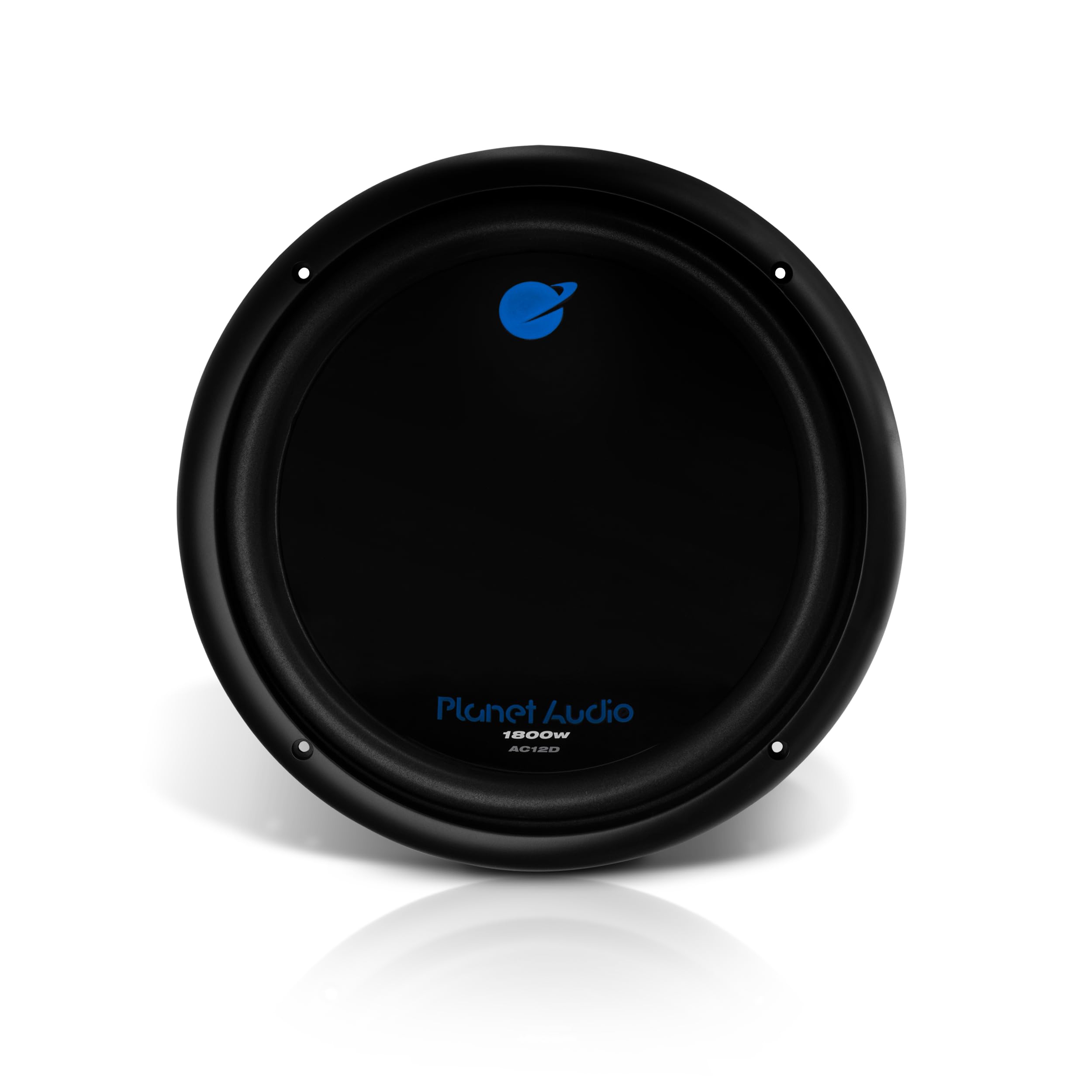
If you want a 12-inch subwoofer with substantial published power handling while keeping the system budget in mind, the Planet Audio AC12D is the value-focused option. Planet Audio specifies 900 watts RMS and 1,800 watts peak, dual 4-ohm voice coils, an 88 dB sensitivity rating, and a 32 Hz resonant frequency.
It uses a polypropylene cone and foam surround and can be installed in either sealed or ported enclosures. The key is to treat the RMS specification—not the larger peak figure—as the starting point when choosing and setting up your amplifier.
Why You’ll Like It
The AC12D gives budget-minded builders a large 12-inch driver, dual-voice-coil wiring flexibility, and published RMS capability that can support a high-output system when installed correctly.
Best for: Budget builds, larger trunks, DIY enclosure projects, and buyers prioritizing output per dollar.
Who should avoid it: Buyers who want the smallest enclosure, premium materials, or the most compact overall installation.
What People Say
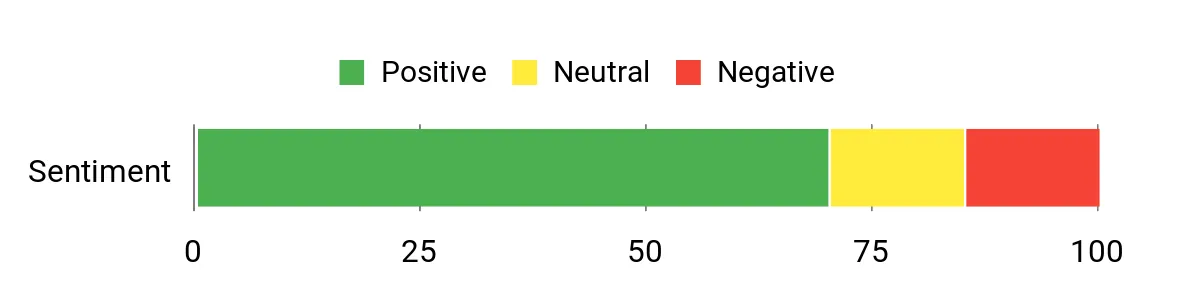
The chart below is retained from the original roundup as a historical feedback snapshot. Current Amazon review totals and overall sentiment were not independently verified for this update.
When It Fits
|
Situation |
How It Helps |
|---|---|
|
Budget Builds |
Provides a 12-inch driver and dual-voice-coil flexibility without pushing you toward a premium-priced subwoofer. |
|
Daily Driving |
Can add substantial bass weight when paired with appropriate power, enclosure volume, and sensible gain settings. |
|
Ported Builds |
The manufacturer supports ported installation when you want more output around the enclosure tuning range. |
|
Sealed Builds |
A sealed enclosure offers a simpler route when tighter response and reduced enclosure complexity matter. |
Ease Of Use
|
Feature |
Ease Level |
|---|---|
|
Installation |
Moderate |
|
DVC Wiring |
Easy to Moderate |
|
Amp Matching |
Moderate |
|
Box Planning |
Moderate |
Versatility
The AC12D supports both sealed and ported installations. Planet Audio lists approximately 1.25 cubic feet for a sealed enclosure and 2 cubic feet for a ported enclosure, so measure your available cargo space before choosing the box style.
Durability
The polypropylene cone, foam surround, steel basket, and high-temperature voice coil provide a conventional construction for an affordable car-audio subwoofer. Reliability still depends heavily on clean amplifier power, correct impedance, and sensible gain settings.
Practicality
The driver has an approximately 5.375-inch mounting depth and 11-inch mounting diameter. That can make enclosure planning easier than guessing from the nominal 12-inch size alone.
Problem Solving Ability
If your priority is adding stronger bass without spending premium-subwoofer money, the AC12D gives you a straightforward path. Its value depends on matching it to a suitable amplifier and enclosure rather than chasing the 1,800-watt peak figure.
Key Benefits
- 900W published RMS power handling
- Dual 4-ohm voice coils for wiring flexibility
- 12-inch driver for substantial bass output
- Supports sealed and ported enclosure designs
Check Current Amazon Availability
Skar SDR-10

The Skar SDR-10 D4 is the compact choice when you want meaningful bass without automatically moving to a 12-inch driver. This 10-inch dual-4-ohm model is rated at 1,200 watts maximum and 600 watts RMS, giving it useful continuous-power capability for a properly matched daily-driver system.
Skar builds the SDR-10 around a 2.5-inch four-layer high-temperature copper voice coil, a high-flux ferrite motor, and an airflow-cooling design. Those features make it a strong candidate when you want a smaller driver that can still handle a serious aftermarket amplifier.
Why You’ll Like It
You get substantial RMS capability in a 10-inch format, making the SDR-10 appealing when a 12-inch driver is harder to package or when you prefer a more compact bass build.
Best for: Compact cars, smaller enclosure projects, daily systems, and listeners who want punch without automatically choosing a 12-inch sub.
Who should avoid it: Buyers specifically seeking maximum cone area from a single large driver or a very shallow-mount subwoofer.
What People Say
The chart below is retained from the original roundup as a historical feedback snapshot. Current marketplace review counts and sentiment may differ and were not independently verified for this update.

When It Works
|
Situation |
How It Helps |
|---|---|
|
Daily Driving |
Adds low-frequency weight while keeping the driver itself smaller than the 12-inch options in this roundup. |
|
Compact Vehicles |
The 10-inch format can make enclosure packaging easier when trunk or cargo space is limited. |
|
Aftermarket Amp Builds |
Its dual-4-ohm configuration gives you useful wiring choices when matching the final load to a compatible amplifier. |
|
Mixed Music |
A properly tuned 10-inch system can provide punch for drums while still adding useful extension to bass-heavy tracks. |
Ease Of Use
|
Feature |
Ease Level |
|---|---|
|
Installation |
Moderate |
|
DVC Wiring |
Easy to Moderate |
|
Amp Matching |
Moderate |
|
Box Matching |
Moderate |
Versatility
The 10-inch format makes the SDR-10 useful for systems where you want meaningful power handling without committing to the physical size of a 12-inch driver. Your final result will still depend strongly on enclosure volume and tuning.
Durability
The high-temperature copper voice coil, high-flux ferrite motor, and airflow-cooling design are intended to manage the heat and mechanical demands created during higher-output listening.
Practicality
The SDR-10 gives you the space advantage of a 10-inch driver while retaining dual-voice-coil wiring flexibility. Check the exact cutout, mounting depth, enclosure volume, and amplifier load before building or buying a box.
Problem Solving Ability
If a 12-inch driver is difficult to package but your current speakers still lack convincing low-end impact, the SDR-10 offers a practical middle ground between compact installation and substantial bass capability.
Key Benefits
- Compact 10-inch format
- 600W RMS and 1,200W maximum power rating
- Dual 4-ohm voice coils
- High-temperature voice coil and airflow-cooling design
Check Current Amazon Availability
Before You Buy a Hard-Hitting Subwoofer
- Use RMS power for amp matching: Peak wattage is not the best number for choosing an amplifier. Compare the amplifier’s RMS output at your final impedance with the subwoofer’s continuous-power rating.
- Calculate final impedance: A single dual-4-ohm sub can normally be wired in parallel for 2 ohms or in series for 8 ohms. Your amplifier must be stable at the final load.
- Measure mounting depth and cutout: A nominal 10-inch or 12-inch size does not tell you whether the driver will physically fit your enclosure.
- Follow recommended enclosure volume: Too small, too large, or incorrectly tuned boxes can change output, cone control, and sound quality dramatically.
- Set gain correctly: Gain is not a volume knob. Excessive gain and clipping can damage a subwoofer even when the amplifier’s advertised wattage appears appropriate.
- Plan wiring and electrical capacity: Use properly sized power cable, speaker wire, grounding, and circuit protection for the amplifier you install.
FAQ
How Do I Match An Amp To A Subwoofer?
Start with the subwoofer’s RMS power rating and the final impedance created by your voice-coil wiring. Choose an amplifier that can deliver appropriate continuous power at that impedance and is explicitly stable at that load.
After installation, set gain carefully and use appropriate crossover settings. Clean power and correct setup matter more than choosing an amplifier because its peak wattage sounds impressive.
Does A Higher Peak Wattage Mean A Subwoofer Hits Harder?
No. Peak wattage alone does not tell you how hard a subwoofer will hit. RMS capability, cone area, excursion, sensitivity, enclosure design, amplifier power, cabin acoustics, and tuning all affect real-world output.
Sealed or Ported Enclosure?
A sealed enclosure is generally simpler and can provide tight, controlled bass in a relatively compact box. A properly designed ported enclosure can produce more output around its tuning frequency but normally needs more space and careful port design.
Use the enclosure volume and tuning recommendations for the exact subwoofer rather than choosing a generic box only because the nominal driver diameter matches.
Can A Dual 4-Ohm Subwoofer Be Wired To 2 Ohms?
Yes. With one dual-4-ohm driver, wiring the two coils in parallel normally creates a 2-ohm final load, while wiring them in series creates an 8-ohm load. Confirm that your amplifier is stable at the impedance you choose before connecting it.
How Do I Keep My Subwoofer From Getting Damaged?
Avoid sustained clipping, wire the voice coils correctly, use an amplifier that is stable at the final impedance, and set gain and filters carefully. Also follow the manufacturer’s enclosure recommendations because an unsuitable box can reduce cone control or create excessive excursion in parts of the frequency range.
Which One Should You Choose?
Choose the Rockford P3 if you want the strongest overall balance of 12-inch output, build quality, RMS handling, and flexible enclosure options.
Choose the Planet AC12D if budget matters most and you want a 12-inch dual-voice-coil sub with substantial published power handling. Give particular attention to enclosure size and realistic amplifier setup.
Choose the Skar SDR-10 if you want a smaller 10-inch driver without dropping to an entry-level power rating. It makes the most sense when installation space matters but you still want meaningful low-end output.
Wrapping Up
The best hard-hitting subwoofer is not simply the model with the largest peak-power number. Your amplifier, final impedance, enclosure, mounting space, crossover settings, and gain structure all affect the result.
For the most balanced all-around choice, the Rockford P3D4-12 stands out. The Planet Audio AC12D gives budget-conscious builders a high-power 12-inch option, while the Skar SDR-10 D4 is the more compact choice for installations where a 10-inch driver makes more sense.
| Product Name | Image | RMS / Max Power | Voice Coil | Best For | Amazon |
|---|---|---|---|---|---|
| Rockford Fosgate P3D4-12 Punch P3 DVC 4-Ohm 12-Inch |
|
600W RMS / 1200W Max | Dual 4 Ohm | Best overall balance of punch and build quality | Check Amazon |
| Planet Audio AC12D Anarchy Series 12 Inch Car Subwoofer |
|
900W RMS / 1800W Max | Dual 4 Ohm | Budget-focused 12-inch builds | Check Amazon |
| Skar Audio SDR-10 D4 10″ 1200 Watt Max Power |
|
600W RMS / 1200W Max | Dual 4 Ohm | Compact hard-hitting installations | Check Amazon |