
If you’re an active parent, you might wonder if a jogging stroller can double as a regular stroller. In many families, it can. A jogging stroller can work well for daily walks, errands, parks, uneven sidewalks, and outdoor trips because it has larger wheels, a sturdy frame, and better shock absorption than many standard strollers. Still, it is not always the easiest choice for tight aisles, small car trunks, crowded public transportation, or quick indoor errands. Before you make it your main stroller, compare comfort, size, folding, storage, age limits, and safety features.
Quick Answer
Yes, you can use a jogging stroller as a regular stroller if it fits your daily routine. It is best for outdoor walks, bumpy sidewalks, parks, and active families. It may feel bulky for travel, narrow store aisles, public transportation, or small storage spaces.
Key Takeaways
- A jogging stroller can replace a regular stroller for many everyday outings, especially if you spend time outdoors.
- Its larger wheels, stronger frame, suspension, and 5-point harness make it more stable on rough sidewalks, gravel paths, and parks.
- The trade-off is size. Jogging strollers are often heavier, wider, and harder to manage in tight indoor spaces.
- Do not jog with a baby until your child has strong head and neck control and meets the stroller maker’s age guidance.
- For daily use, look for a swivel front wheel that locks, a reliable parking brake, a wrist strap, good canopy coverage, and easy folding.
At a Glance
| Best Daily Use | Outdoor walks, parks, uneven sidewalks, light trails, longer strolls, and active family routines. |
| Main Drawback | More bulk and weight than many regular strollers, which can make travel and tight spaces harder. |
| Must-Have Features | 5-point harness, parking brake, wrist strap, locking front wheel, suspension, canopy, and clear weight and height limits. |
| Best For | Parents who want one stroller for exercise, long walks, rougher surfaces, and everyday outings. |
Benefits of a Jogging Stroller
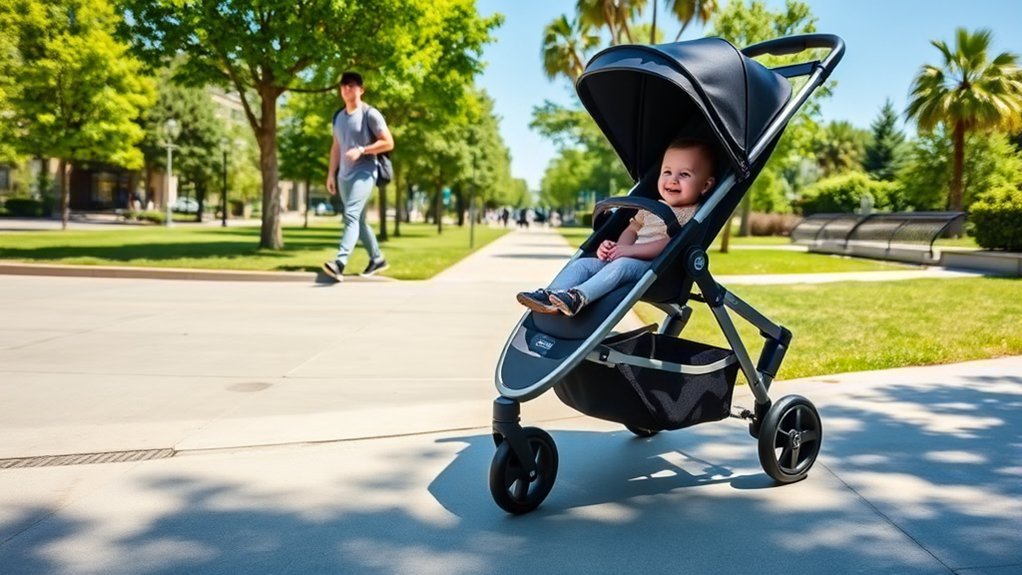
When you’re looking for a way to stay active while spending quality time with your little one, a jogging stroller is an excellent choice. These strollers blend fitness and fun, allowing you to add movement to your childcare routine without always needing a babysitter.
As you jog along trails or walk through parks, you’re not just exercising. You’re also creating outdoor routines that can help your child enjoy fresh air, changing scenery, and time with you.
Jogging strollers also tend to feel smoother on rough surfaces than many standard strollers. The larger wheels help roll over cracks, grass, packed dirt, gravel, and uneven sidewalks with less shaking. That makes them helpful even when you are not running.
With safety features like a 5-point harness, suspension, a hand or parking brake on many models, and a wrist strap, you can feel more confident as you navigate different terrain. A jogging stroller offers versatility, making it useful for both fitness routines and everyday outings.
Can a Jogging Stroller Replace a Regular Stroller?
A jogging stroller can replace a regular stroller if your everyday routine matches its strengths. It works especially well when you take longer walks, live near uneven sidewalks, visit parks, or want one stroller that handles both exercise and casual outings.
For many parents, the biggest advantage is ride quality. Regular strollers are usually easier to fold, lift, and steer through tight indoor spaces, but jogging strollers often feel more stable outdoors. If you regularly push a stroller over bumpy sidewalks or rough paths, the jogging stroller can be the more comfortable daily option.
Still, it may not be the perfect one-stroller solution for everyone. If you use stairs often, ride buses or trains, shop in narrow aisles, or have a small trunk, the added size can become frustrating.
Note: A jogging stroller is most practical as an everyday stroller when it has a front wheel that swivels for walking and locks straight for jogging or rough ground.
Where a Jogging Stroller Works Best for Everyday Use
A jogging stroller is a strong everyday choice when your outings include more than smooth mall floors. It can be useful for:
- Neighborhood walks: Larger wheels make cracks, curbs, and uneven pavement easier to handle.
- Parks and trails: Better suspension helps reduce bouncing on packed dirt, grass, and gravel paths.
- Longer outings: Many jogging strollers have roomy seats, large canopies, and helpful storage baskets.
- Active routines: You can walk, power walk, and jog with the same stroller once your child is old enough and the stroller is approved for that use.
- Bad sidewalks: A sturdy frame can feel more secure than a lightweight stroller on rougher surfaces.
Where a Jogging Stroller Can Be Less Convenient
The same features that make a jogging stroller stable outdoors can make it less convenient indoors. Jogging strollers are often wider, longer, and heavier than regular strollers. That can matter more than you expect during quick errands.
You may notice the drawbacks in these situations:
- Public transportation: The wider frame can be difficult on buses, trains, and crowded platforms.
- Small car trunks: Some jogging strollers fold large, even after the wheels are removed.
- Narrow store aisles: A longer wheelbase can make turns harder in tight spaces.
- Apartment living: Carrying a heavier stroller up stairs can become tiring.
- Air travel: A compact travel stroller is usually easier to gate-check, carry, and store.
Pro Tip: Before using a jogging stroller as your only stroller, measure your trunk, doorway, elevator, and storage area. A stroller that feels great outside can still be annoying if it is hard to store.
Safety First: Jogging Strollers vs. Regular Strollers
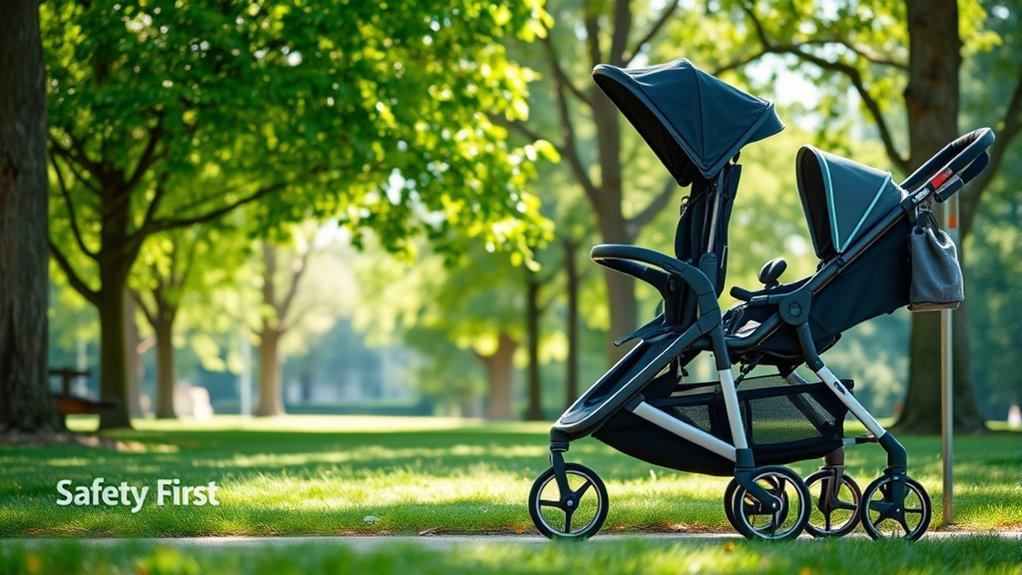
While both jogging strollers and regular strollers serve the purpose of transporting your child, their design and safety features are made for different experiences.
Jogging strollers often come equipped with large tires that provide better shock absorption, making them useful for varied terrain. Many models include a 5-point harness, wrist strap, suspension system, parking brake, and a front wheel that can lock for better stability during active outings.
In contrast, regular strollers typically have smaller wheels and a lighter frame. They are often easier to fold, carry, and move through stores, but they may not feel as smooth or stable on rough surfaces. The stability comparison is clear: a jogging stroller’s three-wheel design is made for forward movement and outdoor control, while regular strollers are usually intended for slower, everyday strolling.
If you’re seeking adventure, a jogging stroller offers stronger outdoor performance for your active lifestyle. If most of your stroller time happens indoors, a regular stroller may still be the simpler choice.
Warning: Never jog with the front wheel unlocked unless your stroller manual clearly says it is safe. A swiveling front wheel can wobble at speed and make the stroller harder to control.
Age and Newborn Safety
Age is one of the most important safety points when using a jogging stroller. Many parents use a jogging stroller for walking before they use it for jogging, but you should always follow the stroller manufacturer’s instructions.
Most babies need strong head and neck control before jogging is safe. Many stroller makers and child-safety experts recommend waiting until around 6 months for jogging, but some babies may need more time. For newborns, only use a jogging stroller if the model allows a compatible infant car seat, bassinet, or fully supported newborn setup for walking.
Even then, walking with a newborn is different from jogging. A newborn’s head and neck need more support, and rough terrain can create too much movement. Keep the ride slow, smooth, and supervised.
Features to Look For If You Want One Stroller for Everything
If you want a jogging stroller to work as your regular stroller, focus on convenience as much as performance. The best everyday jogging stroller should be safe for active use but easy enough for daily errands.
- Swivel-lock front wheel: Swivel mode helps in stores and sidewalks; locked mode helps for jogging and rough ground.
- 5-point harness: This keeps your child secure across the shoulders, waist, and between the legs.
- Good suspension: Suspension helps smooth out bumps for your child.
- Parking brake: A reliable brake keeps the stroller still when stopped.
- Wrist strap: This adds control during jogging, slopes, and faster walking.
- Adjustable handlebar: This helps parents of different heights push comfortably.
- Large canopy: A deep canopy helps protect your child from sun, wind, and light rain.
- Easy fold: A jogging stroller that folds quickly is much easier to use every day.
- Useful storage: A basket, pockets, and cup holder can make errands simpler.
- Clear limits: Check the child weight, height, age, and car seat compatibility before buying.
Maintenance Tips for Longevity
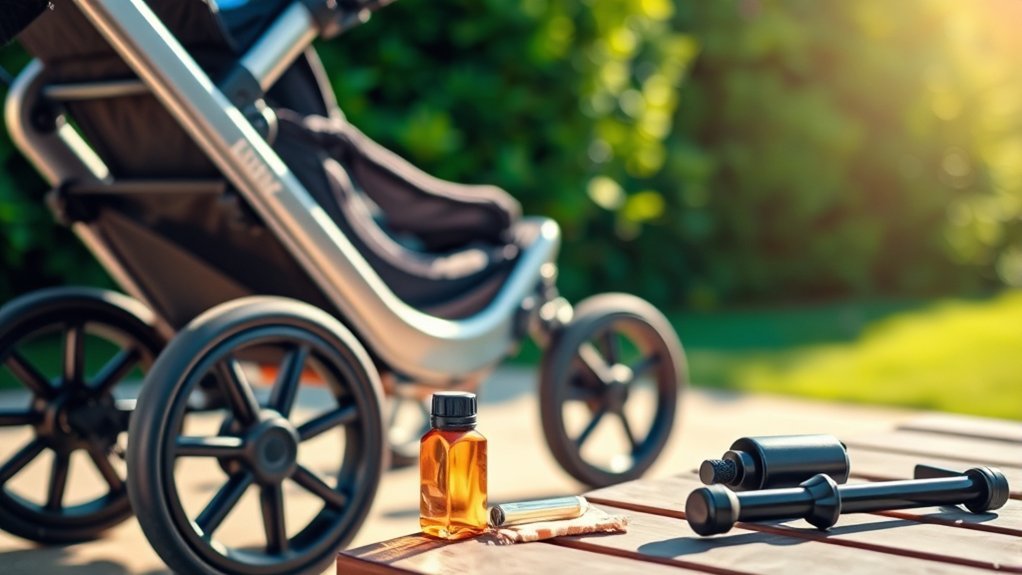
To keep your jogging stroller in top shape, regular maintenance is essential for its longevity and performance.
Use simple cleaning techniques by washing fabric parts with mild detergent and warm water. Some fabrics may be machine washable, but always check the stroller manual first so you do not damage straps, padding, or flame-resistant materials.
Regularly inspect the tires for punctures, cracks, low pressure, or uneven wear. If your stroller uses air-filled tires, keep them properly inflated. This helps with safety, steering, and smooth rides on various terrains.
Regular tire inspections and proper inflation help protect ride quality, steering control, and everyday stroller safety.
Don’t forget to check the brakes, harness, buckle, folding lock, canopy, and frame for any signs of wear and tear. If anything feels loose, noisy, cracked, or difficult to latch, stop using the stroller until you can inspect it properly.
Store your stroller in a cool, dry place to help prevent mold, rust, fabric fading, and sun damage. After muddy walks or rainy outings, wipe the frame and wheels before storage.
Expert Opinions
Many stroller specialists, fitness-minded parents, and child-safety educators agree that jogging strollers can offer impressive versatility when they are used correctly. They can be a solid choice for both active parents and those managing everyday life.
The key is matching the stroller to the activity. Safety elements like air-filled or all-terrain tires, a 5-point harness, a wrist strap, and a stable frame can help with comfort and control during varied activities.
Good handlebar height and smooth steering also matter. A stroller that forces you to hunch, overreach, or kick the rear axle can make long walks uncomfortable. For casual strolls, an ergonomic design can make the stroller easier to push for longer periods.
Outdoor specialists often favor jogging strollers for multiple terrains because they tend to provide a smoother ride than traditional lightweight strollers. Expert-style recommendations also suggest making sure the front wheel can lock for stability when used on uneven surfaces or during faster movement.
With their adaptability and safety features, jogging strollers can redefine what a stroller can be for modern families, as long as parents understand their limits.
Jogging Stroller vs. Regular Stroller Comparison
| Feature | Jogging Stroller | Regular Stroller |
| Best use | Jogging, long walks, parks, uneven sidewalks, outdoor errands. | Shopping, travel, quick errands, smooth sidewalks, indoor spaces. |
| Wheels | Usually larger, often air-filled or all-terrain. | Usually smaller and designed for smoother surfaces. |
| Size | Often larger, longer, and heavier. | Often lighter and easier to fold. |
| Ride comfort | Usually smoother on bumps and rough paths. | Usually fine on smooth floors and paved sidewalks. |
| Storage and travel | Can be harder to store, lift, or bring on public transport. | Often easier for trunks, travel, stairs, and tight spaces. |
Guava Family’s Solution: The Roam Stroller
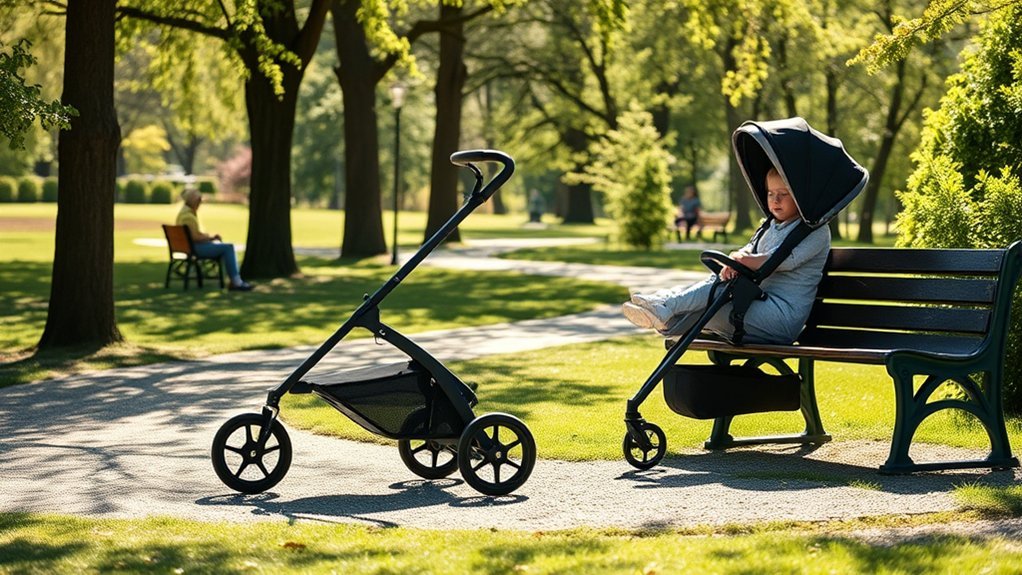
For parents seeking a versatile stroller that adapts to both active lifestyles and everyday errands, the Guava Family Roam Stroller stands out as a strong example of a hybrid-style option.
Its tri-wheel design makes it suitable for jogging while still working for everyday use, whether you’re navigating city sidewalks or exploring more rugged paths.
With airless tires and reflective accents, it is designed to reduce flat-tire worries and improve visibility during outdoor adventures. These features can be helpful for families who want one stroller for walking, jogging, and errands.
The Roam accommodates children up to 75 pounds and 45 inches tall, making it a longer-use option for many families.
Accommodating children up to 75 pounds and 45 inches tall, the Roam Stroller is built to support families beyond the early baby stage.
This multipurpose stroller combines jogging, shopping, and urban exploration, allowing you to embrace an active life without sacrificing too much convenience.
Still, as with any stroller, check the folded size, weight, car-seat compatibility, and manufacturer instructions before deciding whether it should be your only stroller.
How to Decide If a Jogging Stroller Is Right for You
Use your real daily routine as the deciding factor. A jogging stroller may be right for you if you walk outdoors often, want to jog once your child is old enough, need smoother handling on rough sidewalks, or prefer one sturdy stroller over owning multiple models.
A regular stroller may be better if you travel often, use public transportation daily, live upstairs without an elevator, have limited storage, or mostly use the stroller in stores and indoor spaces.
The best choice is the one you will actually enjoy using. A jogging stroller can be more capable, but a regular stroller can be more convenient. If you need both outdoor stability and compact travel, some families choose a jogging stroller for home use and a lightweight stroller for trips.
Related Guides
Frequently Asked Questions
Can I use a jogging stroller on public transportation?
You can use a jogging stroller on public transportation, but be prepared for some challenges. Its benefits, like stability and maneuverability, come with added bulk, so plan ahead for crowded spaces, narrow doors, stairs, and tight spots. A compact regular stroller is usually easier for frequent bus, subway, or train use.
What age is suitable for a child in a jogging stroller?
Most experts recommend using jogging strollers for jogging only when children are around six months or older and have strong head and neck control. Some babies need longer. Always check the age, weight, height, and activity guidance from the stroller manufacturer before jogging.
How much does a typical jogging stroller weigh?
A typical jogging stroller weighs between 20 to 30 pounds, depending on the model. When doing a stroller weight comparison, you’ll find jogging strollers are often heavier than standard ones, but they usually offer stronger stability, larger wheels, and better durability for outdoor use.
Can jogging strollers be used for newborns?
Some jogging strollers can be used for newborn walks only when they support a compatible infant car seat, bassinet, or newborn setup. You should not jog with a newborn. Always check the stroller’s safety guidelines first because many jogging stroller seats are not designed for unsupported infants.
Are jogging strollers more expensive than regular strollers?
Yes, jogging strollers typically cost more than basic regular strollers because they use specialized features like larger wheels, enhanced suspension, stronger frames, wrist straps, and locking front wheels. When you do a stroller price comparison, these quality and performance differences are usually easy to see.
Can I use a jogging stroller for shopping?
Yes, you can use a jogging stroller for shopping, especially in larger stores with wide aisles. It may be harder in small shops, crowded markets, and tight checkout lanes because jogging strollers are often wider and longer than regular strollers.
Is a jogging stroller safe for everyday walking?
Yes, a jogging stroller is generally safe for everyday walking when your child fits the stroller’s age, weight, and height limits and is secured in the harness. Use the parking brake when stopped, keep control of the handlebar, and inspect the wheels, frame, and buckles regularly.
Conclusion
To sum up, a jogging stroller is not just for running; it can be a practical choice for everyday activities, too. It gives you a smoother ride on rough sidewalks, more stability outdoors, and the flexibility to walk, jog, visit parks, and handle daily outings with one stroller.
The best choice depends on your lifestyle. If you value outdoor performance, strong wheels, suspension, and long-walk comfort, a jogging stroller can work well as your regular stroller. If you need something compact for travel, public transportation, small trunks, or narrow stores, a regular stroller may still be easier.
By choosing the right model, following age and safety guidance, and keeping up with basic maintenance, you can make sure your jogging stroller serves you well on both your runs and daily outings.
