Last updated: September 22, 2026
A travel system stroller is worth it mainly for families who drive often and want fast car-to-stroller transfers with a young baby. It is less compelling if you rely on public transit, have very limited storage, want the lightest stroller possible, or prefer to choose the car seat and stroller independently.
A travel system pairs an infant car seat with a compatible stroller, either directly or with a manufacturer-approved adapter. A vehicle base may be included, but it is not what defines the system. This guide explains the travel system stroller pros and cons, safety checks, long-term trade-offs, and when separate gear may make more sense.
Quick Answer
A travel system stroller is most useful if you drive often, run frequent errands, and want one approved infant-car-seat-and-stroller setup. It may not be worth it if you live in a small space, rely on public transit, want a very light stroller, or would rather choose each piece separately. Choose the car seat for your child and vehicle first; stroller convenience comes second.
Key Takeaways
- A travel system pairs a stroller with a compatible infant car seat. The connection may be direct or use a manufacturer-approved adapter, and a vehicle base may or may not be included.
- The biggest benefit is convenience during short car-to-stroller transitions.
- The biggest drawbacks are bulk, weight, limited stroller customization, and the shorter useful life of the infant car seat.
- Compatibility is model-specific. Check the exact infant seat, stroller model or generation, required adapter, vehicle manual, and manufacturer instructions.
- A travel system should not become your baby’s regular nap space. Move a sleeping baby to a firm, flat sleep surface on their back as soon as possible.
Travel System vs. Separate Gear at a Glance
| Decision Factor | Travel System Usually Fits Better | Separate Gear Usually Fits Better |
|---|---|---|
| Daily routine | Most outings begin with short car trips and frequent stops. | You mainly walk, use public transit, or rarely move an infant seat between car and stroller. |
| Storage and lifting | You have enough trunk and home storage space and can comfortably manage the folded stroller. | You need the smallest fold or lowest practical carry weight. |
| Customization | You want a coordinated, approved connection with fewer compatibility decisions. | You want a specific car seat and a different stroller for terrain, travel, weight, or features. |
| Long-term stroller use | You would still choose the stroller after your baby outgrows the infant car seat. | You expect to switch to a lighter or more specialized stroller soon after the infant-seat stage. |
What Is a Travel System?
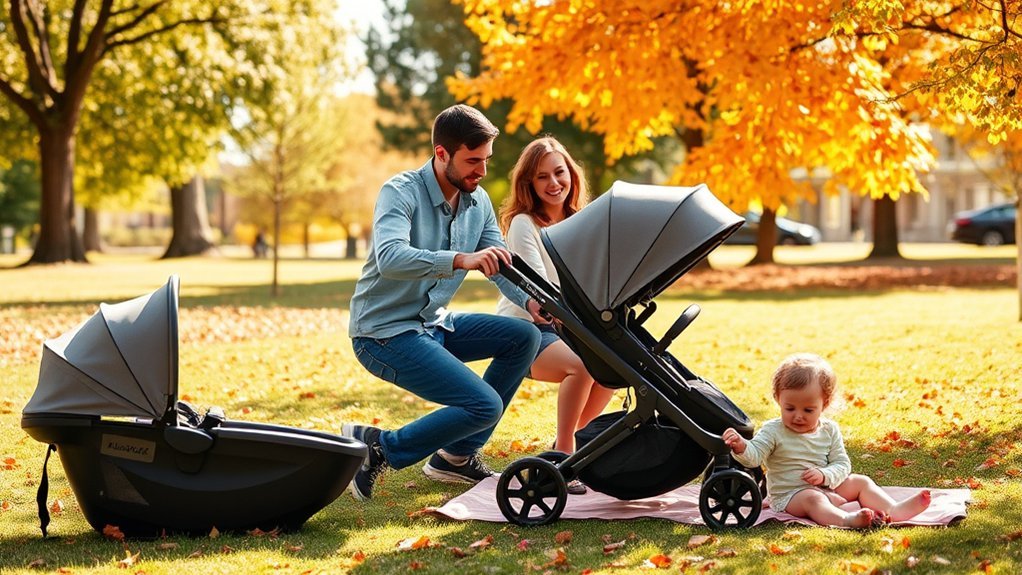
A travel system pairs an infant car seat with a stroller that is approved to accept that seat. The connection may be built into the stroller or require a manufacturer-approved adapter. Many packages also include a vehicle base, but a base is not what makes the stroller and infant seat a travel system.
This setup helps when you need to move from a parking lot to a store, from the car to a doctor’s office, or from a vehicle to a short walk. Instead of unbuckling your baby from the infant seat, you can attach the occupied seat to the compatible stroller according to the manufacturer’s instructions.
Do not assume two products work together simply because they share a brand. Confirm the exact infant-car-seat model, stroller model or generation, and any required adapter in the manufacturer’s compatibility information. The stroller seat may remain useful long after the infant seat is outgrown, so also check each product’s height, weight, age, installation, and usage limits separately.
What Are the Benefits of Using a Travel System?
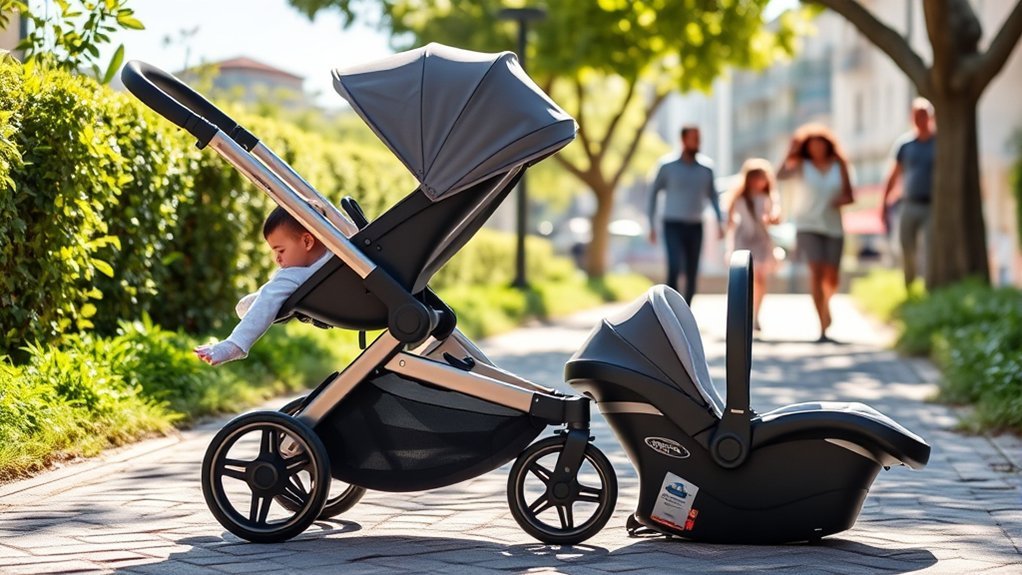
A travel system stroller can simplify daily routines during the infant-seat stage. Instead of separately researching a car seat, adapter, and stroller connection, you can start with a combination the manufacturers approve for use together.
A travel system works best for parents who drive often and want a simple, compatible car seat and stroller setup for everyday errands.
- Easy car-to-stroller transitions: You can move the infant seat between the vehicle and stroller without unbuckling your baby at every short stop.
- Clearer compatibility: An approved combination reduces guesswork about whether a specific infant seat and stroller can connect safely.
- One coordinated purchase: When sold as a bundle, a travel system can reduce the number of separate gear decisions you need to make.
- Helpful storage: Many full-size travel system strollers include a basket for diapers, bags, snacks, and small shopping items.
- Useful during the infant-seat stage: An approved infant-seat connection can provide a stroller option before a baby is ready for a stroller seat that has later minimum-age or developmental requirements.
Safety note: A car seat or stroller should not become your baby’s regular sleep space. The American Academy of Pediatrics advises moving a baby who falls asleep in a car seat, stroller, swing, carrier, or sling to a firm sleep surface on their back as soon as possible.
What Are the Drawbacks of Travel Systems?

Travel systems can be convenient, but many full-size configurations are bulky. A stroller frame, infant seat, and any separate vehicle base can take up significant room in apartments, small trunks, closets, and crowded entryways.
You should also think about long-term value. The stroller may last into the toddler years, while the infant car seat is usable only while your child fits its manufacturer limits and the seat remains serviceable. Stop using a seat that is expired, damaged, missing required parts, or subject to an unresolved recall. After a crash, follow the car-seat manufacturer’s instructions and NHTSA’s crash-replacement guidance; NHTSA recommends replacement after moderate or severe crashes but does not require automatic replacement after every qualifying minor crash.
| Drawback | What It Means | Why It Matters |
|---|---|---|
| Bulky design | Many travel systems use a full-size stroller frame. | Storage can be harder in small homes, small trunks, and tight hallways. |
| Heavier lifting | The infant seat and stroller can each be substantial pieces of gear. | This matters if you use stairs, load the stroller often, or need to carry it long distances. |
| Shorter car-seat stage | The infant car seat has model-specific height and weight limits. | You will eventually need another appropriate child restraint even if the stroller is still useful. |
| Less customization | A bundled setup may limit your choice of stroller style or car-seat brand. | Parents with specific terrain, trunk, travel, or accessibility needs may prefer separate pieces. |
| Compatibility still matters | The exact car seat must fit your child and vehicle, and the stroller connection must be approved. | A convenient bundle is not useful if one component does not fit your real-world needs. |
Comparing Travel Systems to Separate Car Seat and Stroller Options
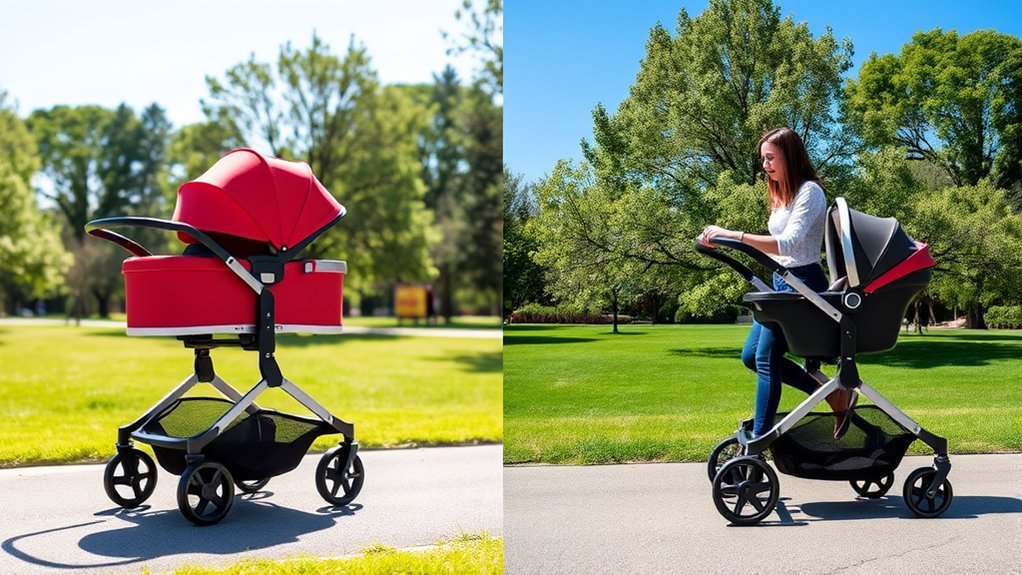
When you compare a travel system with separate car-seat and stroller purchases, start with your daily routine. A coordinated system favors convenience and easier compatibility research. Separate purchases give you more control over the car seat, stroller weight, fold, terrain performance, and long-term setup.
| Option | Best For | Possible Tradeoff |
|---|---|---|
| Travel system | Parents who drive often and want a simple approved infant-seat-and-stroller setup. | Can be heavier, bulkier, and less customizable. |
| Separate infant car seat and stroller | Parents who want specific features, brands, sizes, or terrain performance. | You must confirm the exact stroller, seat, and adapter combination is approved. |
| Convertible car seat plus separate stroller | Families who want a car seat that remains installed in the vehicle and do not need to carry the infant seat. | You lose the infant-seat click-in convenience for car-to-stroller transfers. |
| Lightweight stroller later | Families who walk, travel, or use public transit often. | Many lightweight strollers are not approved for newborn use. Check the exact manual for minimum-age guidance and any required infant-seat, bassinet, or newborn configuration. |
If you value a coordinated setup and frequent car-to-stroller transfers, a travel system can make sense. If you care more about low carry weight, compact folding, a particular car seat, premium suspension, or mixing brands, separate gear may serve you better.
What Should You Look for in a Travel System?

The right features can make a travel system easier to live with every day. Start with child fit, vehicle fit, exact stroller compatibility, lifting, folding, and storage before color or optional accessories.
- Correct car-seat fit: Check your baby’s height and weight against the seat’s current manufacturer limits.
- Vehicle compatibility: Read both the vehicle owner’s manual and car-seat manual before relying on a setup.
- Exact stroller-seat compatibility: Confirm the infant-seat model, stroller model or generation, and any required approved adapter.
- Secure connection: The infant seat should lock into the stroller exactly as its instructions describe. If your car-seat installation uses a base, follow the seat manufacturer’s base-installation instructions as well.
- Easy fold: Test whether you can fold and unfold the stroller comfortably in the situations where you will actually use it.
- Manageable weight: Check the published stroller and infant-carrier weights and, when possible, practice lifting the stroller before buying.
- Real folded size: Compare the manufacturer’s folded dimensions with your trunk, hallway, closet, or storage area.
- Storage basket: Check the basket size and manufacturer load limit against what you normally carry.
- Wheels for your routine: Smooth sidewalks, gravel paths, uneven streets, and public transit create different priorities for wheel size and maneuverability.
- Washable fabrics: Removable or manufacturer-approved washable components make spit-up, snack crumbs, and everyday mess easier to manage.
- Clear harness adjustment: Choose a seat whose harness can be adjusted correctly as your child grows.
- Registration and recall checks: Register the car seat so the manufacturer can contact you about recalls, and use NHTSA’s child-seat resources to check current safety information.
- Secondhand history: Before using a secondhand seat, confirm its crash history, labels and model information, recall status, required parts, and instructions. NHTSA provides a used car-seat safety checklist.
Cost vs. Value: Is a Travel System Worth It?

A travel system can offer good value when you use both the infant seat and stroller frequently and would have chosen those components anyway. A bundle can also reduce the need to buy a separate stroller adapter when the approved connection is already included.
The value drops when the stroller is difficult to lift, does not fit your storage space, handles your normal terrain poorly, or is something you plan to replace soon after the infant-seat stage. Compare the complete setup against how you will actually use it rather than judging the package only by the number of included pieces.
Before You Buy Checklist
- Does the car seat fit your baby’s current size and expected growth within the manufacturer limits?
- Can the car seat be installed correctly in your vehicle according to both manuals?
- Is the exact infant seat approved for your stroller, with the correct adapter if one is required?
- Can you lift and fold the stroller comfortably?
- Do the folded dimensions fit your trunk, hallway, closet, or apartment storage?
- Does the stroller suit your normal sidewalks, paths, stores, and transit routine?
- Can you clean the fabrics using the manufacturer-approved method?
- Have you registered the car seat and checked its recall status?
- Will you need a second vehicle base, adapter, or another child restraint soon?
- Would you still choose this stroller if the infant car seat were not part of the package?
Four-Question Decision Test
Use these questions as a practical buying filter, not as safety rules:
- Do most of your baby outings begin with a car trip?
- Can you comfortably lift, fold, store, and transport the stroller?
- Would you still want this stroller after your child outgrows the infant car seat?
- Does the infant car seat fit your child and vehicle correctly before you consider stroller convenience?
If the answer to all four is yes, a travel system is likely to match your routine well. If storage, lifting, public transit, or long-term stroller use creates a problem, compare separate gear before committing to a bundle.
Real-Life Scenarios: When a Travel System Makes Sense
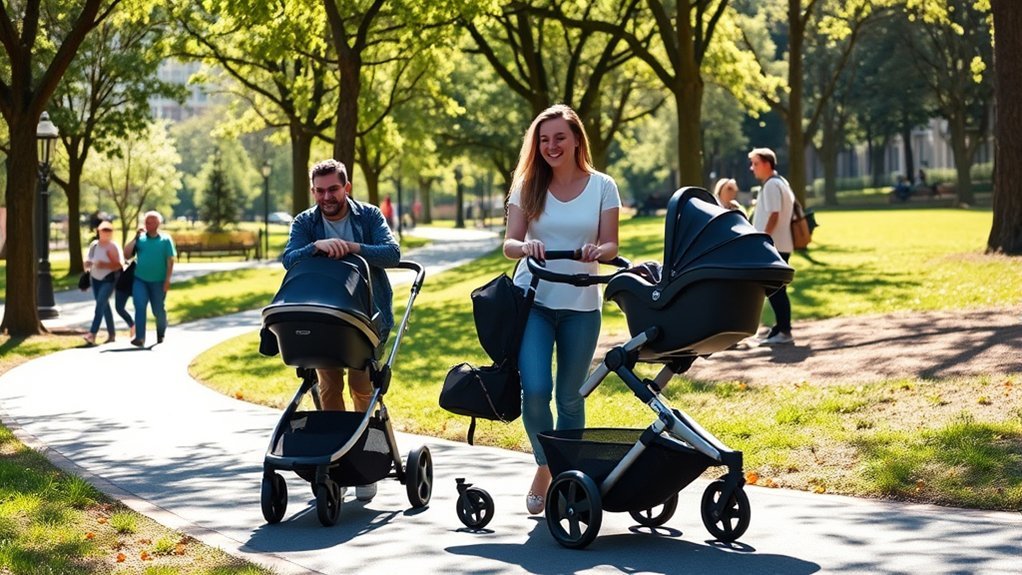
A travel system makes the most sense when your daily routine includes short drives, quick stops, and frequent vehicle-to-stroller transitions. It can also simplify use for multiple caregivers when everyone follows the same installation and connection instructions.
Busy Parent Lifestyle
If you juggle errands, appointments, grocery trips, and daycare drop-offs, a travel system can reduce the number of gear changes between stops. You can keep the stroller in the trunk and attach the approved infant seat when needed.
- Quick store visits
- Doctor’s appointments
- Daycare drop-offs
- Short walks after car trips
- Errands where you need stroller storage space
Frequent Car Trips
Families who drive often usually benefit most from the travel-system concept. If the infant seat uses an installed vehicle base, the routine may be base in the car, seat locked into the base for travel, then seat attached to the approved stroller when you arrive. Follow the exact seat instructions because installation methods differ by model.
| Scenario | Why a Travel System Helps | Feature to Prioritize |
|---|---|---|
| Grocery shopping | You can move quickly from car to stroller for a short stop. | Useful basket, manageable fold, and trunk fit |
| Doctor’s appointments | You can manage parking and baby gear with fewer transfers. | Manageable frame weight and reliable approved seat connection |
| Family visits | Caregivers can learn one consistent setup. | Clear instructions and straightforward harness adjustment |
| Weekend errands | You can handle several short stops without changing to a different stroller setup. | Compact-enough fold and good trunk fit |
Urban Living Convenience
A travel system can work in a city if you have enough storage space and choose a stroller whose folded size, maneuverability, and carry weight fit your building and normal routes. Measure elevators, doorways, trunk space, and storage areas instead of relying only on product photos.
If you rely heavily on buses, trains, stairs, or a small apartment, a lighter stroller or separate compact setup may work better. Compare folded dimensions and actual carry weight before buying.
When May a Travel System Not Be the Best Choice?
You may prefer separate gear when convenience between the car and stroller is less important than size, weight, terrain performance, or long-term flexibility.
- You live in a small space: A full-size stroller may be difficult to store indoors.
- You use public transit often: A lighter, faster-folding stroller may be easier to carry and manage.
- You do not need a portable infant seat: A different rear-facing child-restraint setup may suit your vehicle routine better, provided it fits your child and is used according to its instructions.
- You need rugged terrain performance: A dedicated all-terrain or jogging stroller may better match your routes, subject to its manufacturer’s age and use instructions.
- You want features from different brands: Separate purchases can give you more customization, but you must confirm any stroller/car-seat combination is specifically approved.
How Do You Decide Whether a Travel System Fits Your Lifestyle?

The best choice depends on your vehicle, storage space, lifting ability, normal routes, and how often you expect to make short car-to-stroller transfers. Evaluate the car seat and stroller as two products that must each work well for you—not simply as a bundle.
Lifestyle Compatibility Assessment
Think through a normal week with your baby before buying. Your answers should come from your actual routine and measurements, not just product photos.
- How often will you drive with your baby?
- Will you carry the stroller up stairs?
- Do the stroller’s folded dimensions fit your trunk?
- Will it fit through your doorway, elevator, or hallway?
- Do you need all-terrain capability or a compact city frame?
- Will multiple caregivers need to install or use the system?
- Is the exact infant seat approved for the exact stroller configuration?
- Would you still want the stroller once the infant seat is outgrown?
Cost vs. Convenience Analysis
A travel system can be a sensible buy when you genuinely value frequent car-to-stroller transfers and would choose the stroller on its own. Its value comes from compatibility and convenience, not simply from receiving more pieces in one box.
Separate purchases may require more compatibility research, but they can give you a lighter stroller, a different child restraint, or equipment that better fits city travel, small vehicles, or rougher routes. Compare the full setup against the way you expect to use it for the next several stages.
Final Recommendation
Choose a travel system when frequent car trips, quick transfers, and simple approved stroller compatibility matter most. Choose separate gear when low weight, compact storage, terrain performance, or customization matters more. In either case, choose the car seat for your child and vehicle first, confirm the exact stroller connection, register the seat, and follow all manufacturer limits and instructions.
Related Guides
Frequently Asked Questions
Is a Travel System Worth It?
For many families, yes—especially if most outings begin with a car trip and you want quick transfers during the infant-seat stage. It is less useful if you mainly walk or use public transit, have tight storage, or expect to replace the bundled stroller quickly.
Is a Travel System Safer Than Buying a Car Seat and Stroller Separately?
No. Buying a stroller and infant car seat as a bundle does not make the car seat inherently safer. Safety depends on choosing a seat that fits your child and vehicle, installing and using it correctly, and attaching it to the stroller only through an approved manufacturer connection.
Can I Use a Travel System for Toddlers?
You can often use the stroller part for a toddler if your child remains within the stroller manufacturer’s limits. The infant car seat is different: stop using it when your child reaches a manufacturer limit or the seat becomes expired, damaged, incomplete, or subject to an unresolved recall. After a crash, follow the manufacturer’s instructions and NHTSA guidance rather than assuming every crash requires the same response.
How Long Can I Use the Infant Car Seat?
Use the infant car seat only while your baby fits within the manufacturer’s height and weight limits and the seat remains within its permitted service life and condition. Some babies reach the height limit before the weight limit, so check both. When the infant seat is outgrown, move to another appropriate rear-facing child restraint that fits your child and vehicle rather than moving forward-facing earlier than the new seat’s instructions and current safety guidance allow.
Are Travel Systems Compatible With All Car Models?
No. The stroller may accept its matching infant car seat, but the car seat must still install correctly in your specific vehicle. Check the car-seat manual, your vehicle owner’s manual, permitted installation method, recline requirements, and front-seat clearance before relying on any setup.
What Safety Standards Should I Look For?
In the United States, child restraints are regulated under federal requirements administered by NHTSA, while strollers are covered by the CPSC carriage and stroller rule. Compliance is only the starting point: the car seat must fit your child and vehicle, be installed and used according to its instructions, and connect to the stroller only through an approved configuration.
Can I Purchase Additional Stroller Seats Separately?
Sometimes. Some stroller brands sell second seats, toddler seats, bassinets, adapters, snack trays, or replacement parts separately. Others do not. Check your exact stroller model and generation because accessories are usually model-specific.
Is a Travel System Safe for Naps?
A travel system can be useful when your baby falls asleep during a normal car trip or stroller outing, but it should not replace a safe sleep space. The American Academy of Pediatrics advises moving a baby who falls asleep in a sitting device such as a car seat or stroller to a firm sleep surface on their back as soon as possible.
Conclusion
A travel system stroller is most useful when your routine includes frequent car trips and you value an approved, convenient connection between an infant car seat and stroller. Its disadvantages are usually size, weight, reduced customization, and the relatively short period in which the infant seat itself is useful.
Before buying, choose a car seat that fits your child and vehicle, verify the exact stroller compatibility, compare folded size and carry weight with your real storage needs, and ask whether you would still want the stroller after the infant-seat stage. Those checks tell you more about long-term value than the bundle label alone.