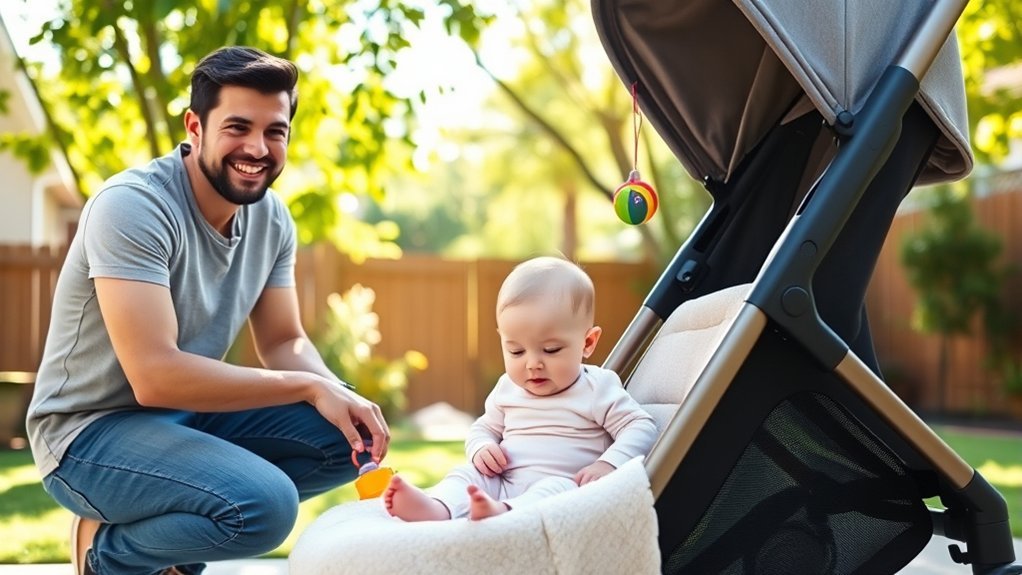
Introducing your baby to a stroller can shape how comfortable, calm, and curious they feel during outings. A slow, supportive transition helps your little one feel secure while giving you confidence that the seat, harness, recline, and foot support are set correctly. Start in familiar surroundings, keep early rides short, and build up to longer walks as your baby shows readiness.
Quick Answer
Introduce your baby to a stroller gradually by starting indoors, using the proper recline, securing the five-point harness, and taking short walks when your baby is rested and fed. Newborns need a flat or near-flat recline, while older babies can sit more upright once they have steady head and trunk control.
Key Takeaways
- Use a bassinet, infant car seat, or fully reclining stroller seat for newborns who cannot sit with steady head control.
- Keep the harness snug every time, with shoulder straps placed at or just above your baby’s shoulders.
- Begin with short, calm outings and increase the time only when your baby stays relaxed.
- Check stroller weight limits, brake function, recline settings, and wheel condition before each walk.
- Avoid hanging heavy bags from the handlebar because that can make the stroller tip backward.
At a Glance
| Time Required | 5 to 10 minutes for indoor practice, then 10 to 20 minutes for early outdoor walks |
| Difficulty | Easy, as long as you check fit, recline, and harness position before each ride |
| Tools Needed | Stroller, stroller manual, favorite toy or blanket, weather cover or sun canopy when needed |
| Cost | Usually no extra cost if you already have a stroller that fits your baby’s age, weight, and developmental stage |
Understanding When to Transition From Bassinet to Stroller
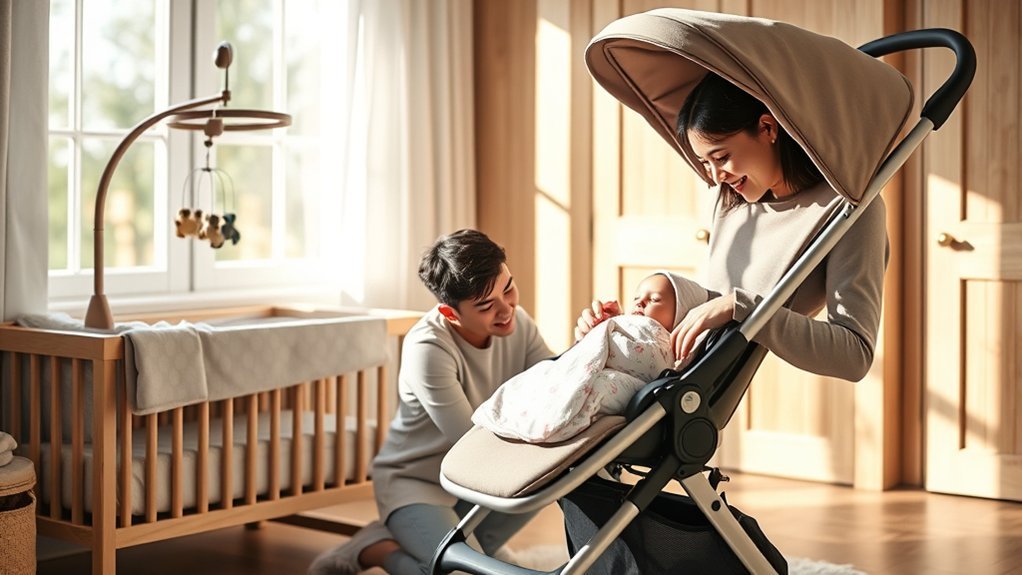
As your baby grows, you might wonder when it is time to change from the cozy bassinet to a stroller seat. The right timing depends on your baby’s size, strength, stroller model, and the manufacturer’s limits. Many stroller bassinets have lower weight limits than toddler seats, so always check your manual before making the switch.
Some babies are ready to spend short periods in a reclining stroller seat around 3 to 4 months, especially when they show more interest in their surroundings. That does not mean every baby is ready for an upright seat. Until your baby has steady head and neck control, they need a flat or deeply reclined position that supports the head, neck, airway, and spine.
By around 6 months, many babies can sit with better head control and may enjoy a more upright view. Even then, move gradually. Start with a semi-reclined position, watch your baby’s posture, and adjust the seat angle as their strength improves.
Note: Age is only a guide. Your baby’s head control, weight, height, comfort, and your stroller’s manual matter more than the calendar.
Checking Your Stroller Before the First Ride
Before your baby’s first stroller outing, take a few minutes to check the stroller itself. Confirm that the frame locks fully open, the brakes engage firmly, the wheels roll smoothly, and the seat clicks securely into place. If your stroller uses adapters for an infant car seat or bassinet, make sure each adapter is installed on the correct side and locked before placing your baby inside.
Check the stroller’s weight and height limits for the exact mode you plan to use. A stroller may have different limits for the bassinet, infant car seat attachment, toddler seat, storage basket, and parent tray. Staying within those limits helps prevent tipping, poor support, and unsafe fit.
- Lock the frame open before placing your baby in the stroller.
- Test the parking brake on a flat surface.
- Remove loose blankets, straps, or toys that could interfere with the wheels.
- Use only accessories approved for your stroller model.
- Keep heavy bags in the storage basket instead of hanging them from the handlebar.
Warning: Never leave your baby unattended in a stroller, even for a moment. Always use the brake when stopped, and avoid placing the stroller near stairs, slopes, pools, roads, or hot surfaces.
Ensuring Proper Stroller Seat Setup
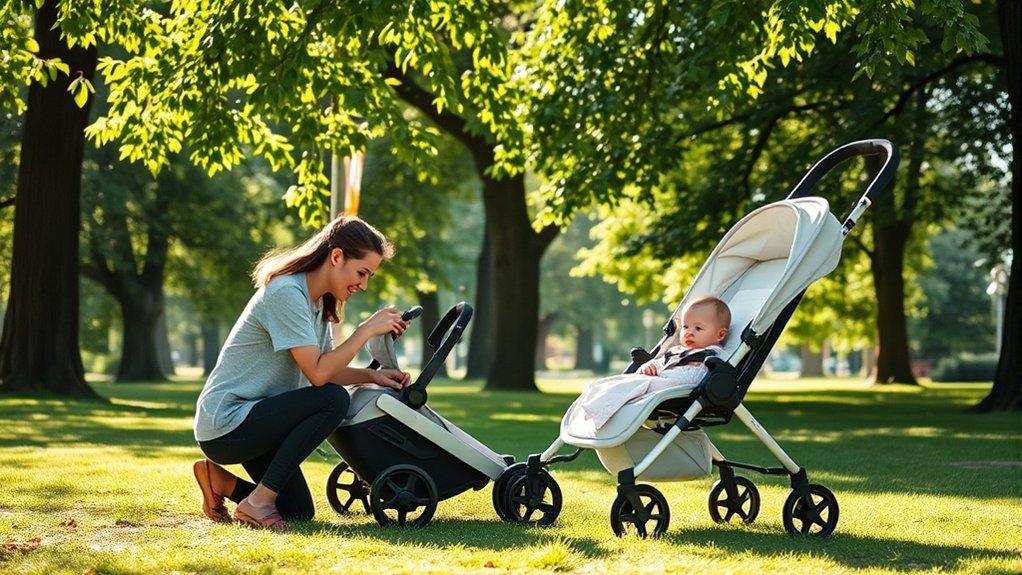
When shifting your baby to a stroller, confirming the seat setup is correct is crucial for safety and comfort. Start by adjusting the seat to the recline level recommended for your baby’s age and strength. A semi-reclined position can support the head, neck, and spine while still allowing your baby to see you and their surroundings.
Make sure your baby’s chin does not press down onto their chest. A small open gap helps protect breathing and keeps the airway clear. Your baby’s back should rest against the seat, with hips centered and not sliding forward.
Check that the shoulder straps are level with or just above your baby’s shoulders, and position the crotch strap buckle below the belly button. Adjust the footrest so it supports your baby’s legs without pushing their knees too high. Recheck these settings often because babies grow quickly, and a good fit one month may feel cramped the next.
Adjusting Harness Safety for Your Baby
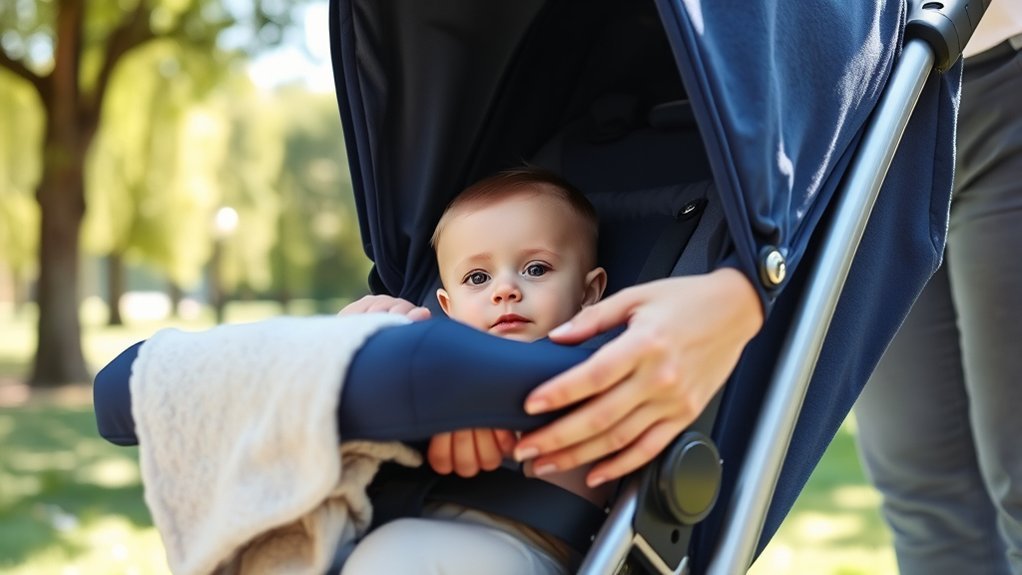
Adjusting the harness safety for your baby is essential for a secure and comfortable ride. Use the stroller’s harness every time, even for short walks around the block. A five-point harness offers the best support because it secures the shoulders, waist, and crotch area together.
Start by placing the shoulder straps level with or just above your baby’s shoulders. The crotch strap buckle should sit below the belly button to reduce sliding. Next, align the waist straps with your baby’s hips for added stability.
The harness should feel snug, not tight. You should be able to fit about two fingers between the strap and your baby’s body. If the straps twist, loosen them, flatten them, and buckle again. Twisted straps can dig into your baby’s skin and may not hold as evenly during sudden stops.
Pro Tip: Buckle the harness before adding toys, snacks, or blankets. It is easier to check strap placement when nothing blocks your view.
Supporting Baby’s Legs and Feet
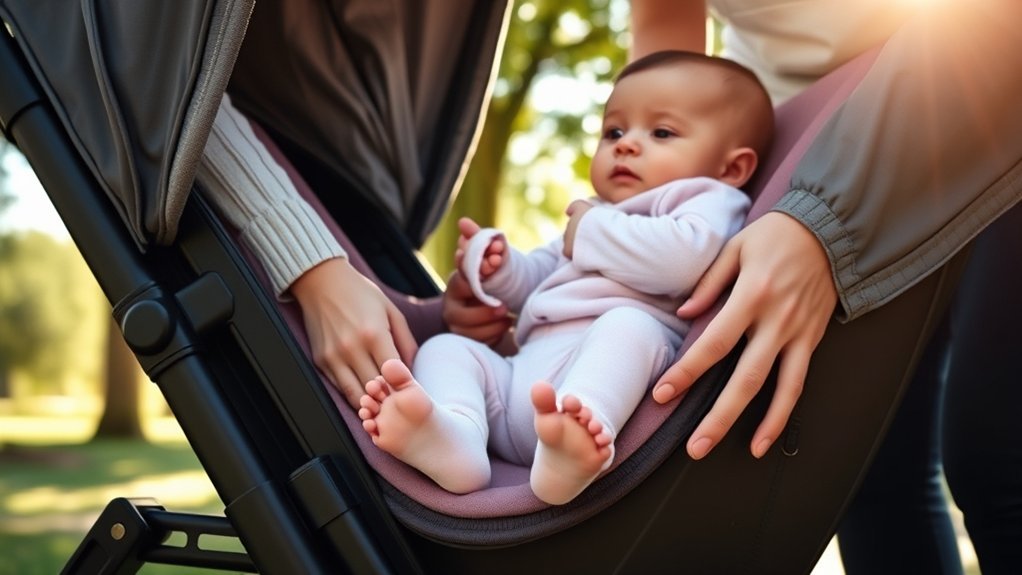
Properly supporting your baby’s legs and feet is essential for a comfortable stroller experience. Start by ensuring the footrest is level with your baby’s feet, if your stroller offers that adjustment. Good foot support can reduce dangling, slumping, and pressure on the hips.
If your baby’s feet do not reach the footrest, you can use a small folded towel under their lower legs, as long as it does not interfere with the harness or create a loose item near the face. Keep your baby’s back against the seat and their hips level so they do not slide forward.
As your baby grows, check leg support during each setup. Dangling legs may not bother an older toddler, but a younger baby who lacks trunk control may slump or twist without support. Good positioning helps each ride feel smoother and gives your baby more energy to look around, listen, and engage.
Adding Comfort Measures for a Smooth Ride

Creating a cozy environment for your baby while in the stroller can make outings calmer. Start by setting the stroller seat at the safest recline for your baby’s stage. For younger babies, a flatter recline provides better support. For babies with stronger head and trunk control, a slightly more upright position can make walks more engaging.
Comfort accessories can help, but they must not compromise safety. Avoid bulky padding, pillows, or inserts that were not approved for your stroller because they may change harness fit or push your baby into an unsafe posture. If you use a light blanket, keep it below the chest and away from the face.
Adjust the footrest so it supports your baby’s feet or legs. Secure the harness snugly, then check your baby’s posture after a few minutes of movement. If they slide, slump, arch, or fuss, stop and adjust the recline, straps, or outing length.
Choosing the Best Time and Place for Early Stroller Walks
The best first stroller outing is simple, short, and close to home. Pick a quiet route with smooth sidewalks, low traffic, and easy shade. Your baby is more likely to enjoy the stroller when they are rested, fed, burped, and wearing comfortable clothing.
Avoid starting with crowded stores, loud events, bumpy trails, or long errands. Too much noise, motion, and visual stimulation can overwhelm a baby who is still getting used to the stroller. Once they stay calm during short rides, you can slowly add new places and longer routes.
- Start after a nap or feeding, not when your baby is already tired.
- Choose mild weather and avoid extreme heat or cold.
- Use the canopy for shade, but do not fully cover the stroller with a heavy blanket.
- Keep your phone, keys, and water within reach so you can focus on your baby.
- Turn back early if your baby seems uncomfortable.
Gradual Introduction to Stroller Outings
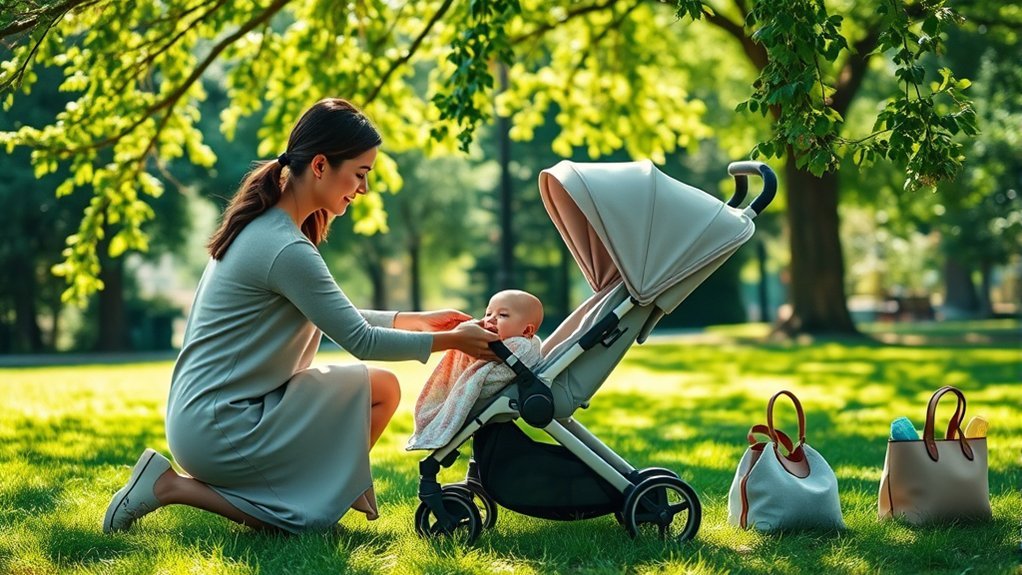
As you introduce your baby to stroller outings, take things slow so they can feel comfortable and secure. Start with stroller acclimation at home. Let your baby sit in the stroller for a few minutes while you talk, smile, and stay nearby. This helps the stroller feel familiar before you add movement, outdoor sounds, and new sights.
Once your baby seems relaxed, begin short outings around the neighborhood. Choose times when your baby is well-rested and fed to reduce fussiness. Bring a familiar toy or blanket to create a sense of security, but keep loose items away from the face and harness.
Gradually increase the duration of your outings as your baby grows more comfortable. Pay attention to their cues. Wide eyes, calm body language, and relaxed hands can suggest interest. Crying, arching, turning away, or repeated squirming may mean they need a break, a diaper change, a feeding, or a shorter ride.
Encouraging Exploration and Engagement During Walks
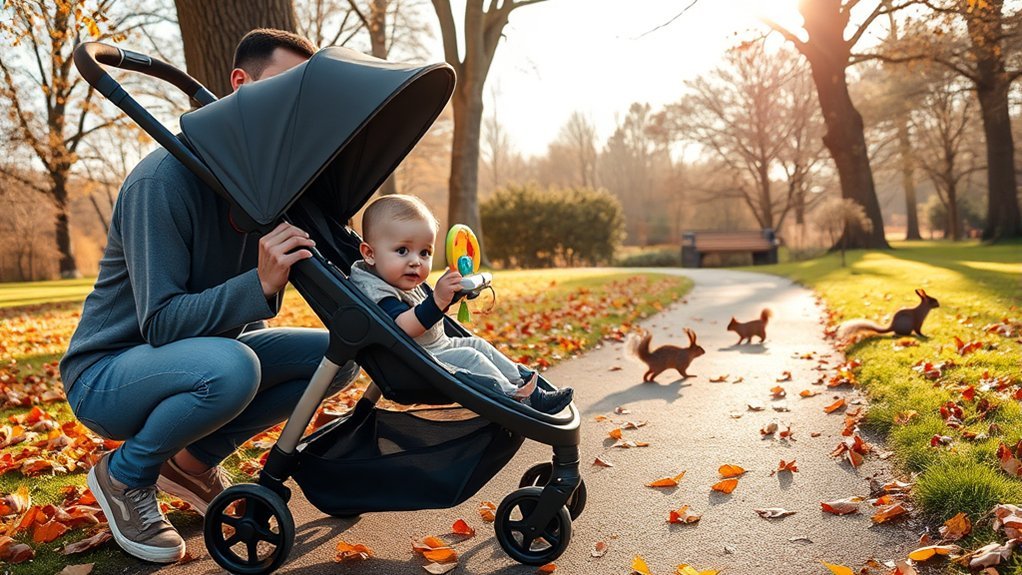
While introducing your baby to the stroller, their natural curiosity can turn every walk into an exciting adventure. As they become more aware of their surroundings, use each outing to support gentle exploration and sensory learning. Talk about what you see, such as trees, birds, cars, dogs, clouds, or flowers.
To enhance engagement, attach stroller-safe toys or soft visual items where your baby can see them without grabbing long cords or loose straps. Simple textures, soft rattles, and high-contrast toys can keep young babies interested without overwhelming them.
You can also change your walking route or adjust the direction your baby faces, depending on your stroller model and your baby’s age. Younger babies may feel calmer facing you. Older babies may enjoy facing forward for a wider view. Each outing gives them a safe way to notice sounds, light, movement, and familiar voices.
Handling Common Stroller Problems
Even with the right setup, your baby may not love the stroller right away. That is normal. Some babies need more time to adjust to the straps, motion, sounds, or separation from your arms. Instead of forcing a long ride, treat early outings as practice.
- If your baby cries immediately: Try indoor stroller time first, check the diaper, and make sure the harness is not pinching.
- If your baby slumps: Increase recline, check hip position, and confirm the seat is appropriate for their stage.
- If your baby seems bored: Talk, sing, change the route, or add a stroller-safe toy.
- If your baby gets overstimulated: Choose a quieter route, shorten the outing, or use a parent-facing position.
- If the ride feels rough: Check the wheels, avoid cracked sidewalks, and slow down over bumps.
Short, positive practice builds trust. A calm 10-minute walk is more useful than a long ride that leaves both of you stressed.
Stroller Safety Mistakes to Avoid
Many stroller problems come from small habits that seem harmless. Avoiding these mistakes helps protect your baby and keeps the stroller stable during daily use.
- Do not hang a heavy diaper bag, purse, or shopping bag from the handlebar.
- Do not use the stroller on stairs or escalators.
- Do not jog with a regular stroller unless the model is designed for jogging and your child meets the stroller’s age guidance.
- Do not park the stroller on a slope without holding it, even when the brake is engaged.
- Do not let an older child climb on the stroller unless it has an approved ride-on attachment.
- Do not place loose blankets over the stroller opening in hot weather, as airflow can drop and heat can build.
A good stroller introduction is not about rushing to longer walks. It is about helping your baby feel safe, supported, and ready to explore a little more each time.
Related Guides
Frequently Asked Questions
What age is appropriate to start using a stroller?
You can use a stroller from birth only if it offers a bassinet, approved infant car seat attachment, or flat recline made for newborns. For a regular stroller seat, many babies are more comfortable around 6 months, when they have better head and trunk control.
Can I use a stroller for newborns?
Yes, you can use a stroller for newborns if the stroller mode supports newborn use. Choose a bassinet, a properly installed infant car seat travel system, or a stroller seat with a flat or near-flat recline. Always follow the stroller manual and keep the harness secure.
How do I clean my stroller effectively?
Wipe the frame and handle with a damp cloth, use mild soap for sticky spots, and brush crumbs from the seat seams. Check the wheels for hair, dirt, and small stones. Follow the manufacturer’s care label before removing fabric or washing any seat parts.
What features should I look for in a stroller?
Look for a sturdy frame, reliable brakes, a five-point harness, proper recline, a supportive footrest, a sun canopy, and storage that does not affect balance. A lightweight fold and adjustable handle can also make daily outings easier.
How do I secure my belongings while using a stroller?
Use the storage basket, zippered pockets, or stroller organizer only within the stroller’s weight limits. Avoid hanging heavy bags from the handlebar because that can make the stroller tip. Keep valuables closed, close to you, and out of easy reach in crowded areas.
Why does my baby cry in the stroller?
Your baby may be tired, hungry, overstimulated, too warm, too cold, or uncomfortable with the harness position. Check the basics first, then shorten the ride. Try indoor practice, a parent-facing position, or a smoother route until your baby adjusts.
Can my baby nap in the stroller?
A short supervised stroller nap may happen during a walk, but a stroller is not a replacement for a safe sleep space. Keep the harness secured, maintain airflow, and move your baby to a firm, flat sleep surface when you return home.
Conclusion
Introducing your baby to the stroller can be a beautiful journey, much like planting a seed and watching it bloom. By choosing the right recline, securing the harness, supporting their legs, and starting with short familiar outings, you nurture comfort and confidence step by step.
Pay attention to your baby’s cues and make adjustments as needed. Some babies enjoy the stroller quickly, while others need more practice. With patience and care, you can create safe, relaxed outings that support exploration and strengthen your bond during every walk.
Sources
- HealthyChildren.org from the American Academy of Pediatrics — stroller safety basics, harness use, and supervision guidance
- U.S. Consumer Product Safety Commission — child product safety guidance and recall awareness
- Safe Kids Worldwide — stroller safety tips for brakes, stability, and safe use
- Juvenile Products Manufacturers Association — baby product safety reminders and manufacturer-instruction guidance
