
Disclosure: As an Amazon Associate, we earn from qualifying purchases. If you click a link on this page and make a purchase, we may receive a small commission at no extra cost to you.
Choosing a replacement tire is not just about matching the numbers on the sidewall. You also need the right load rating, predictable wet grip, reasonable road noise, and seasonal capability that fits where you drive. The Hankook Ventus V2 Concept2 H457 in 215/45R17 91V XL is a performance-focused all-season tire designed to balance those needs for daily-driven passenger cars. It offers useful wet-road features and a quiet-road design, but its M+S marking does not make it a severe-snow tire.
Quick Verdict
Rating: 8.2/10, Recommended with caveats
Best For: Drivers who want responsive all-season handling, wet-road confidence, and manageable cabin noise in a 215/45R17 fitment.
Bottom Line: The Ventus V2 Concept2 gives you a useful mix of steering stability, drainage, comfort, and a 45,000-mile limited treadwear warranty. Its main tradeoff is winter capability, because this M+S tire does not carry the Three-Peak Mountain Snowflake severe-snow designation.
Key Specifications
| Specification | Detail |
|---|---|
| Brand | Hankook |
| Model | Ventus V2 Concept2 H457 |
| Product type | Performance all-season passenger tire |
| Size | 215/45R17 XL |
| Load index | 91, maximum load 1,356 pounds per tire under rated conditions |
| Speed symbol | V |
| UTQG | 500 AA A |
| Initial tread depth | 9.5/32 inch |
| Tire weight | 19 pounds |
| Revolutions per mile | 848 |
| Recommended rim width | 7.0 inches |
| Approved rim-width range | 7.0 to 8.0 inches |
| Season markings | M+S; not 3PMSF rated |
| Run-flat design | No |
| Limited treadwear warranty | 45,000 miles, subject to Hankook terms and exclusions |
| Package note | Confirm the seller’s quantity before ordering; wheel and installation are not included unless stated. |
TL;DR
|
Feature |
Verdict |
|---|---|
|
Overall |
8.2/10: A balanced performance all-season tire for drivers who value wet grip, predictable steering, and everyday comfort. |
|
Wet Traction |
Wide straight grooves and a V-shaped tread pattern are designed to move water away from the contact area. |
|
Comfort and Noise |
Shoulder noise-care blocks and uniform block stiffness aim to reduce pattern noise during daily driving. |
|
Winter Use |
Suitable for mild seasonal use, but not a substitute for a 3PMSF winter tire in regular snow or ice. |
|
Longevity |
UTQG 500 treadwear and a 45,000-mile limited warranty provide a reasonable ownership baseline. |
What Is the Hankook Ventus V2 Concept2?
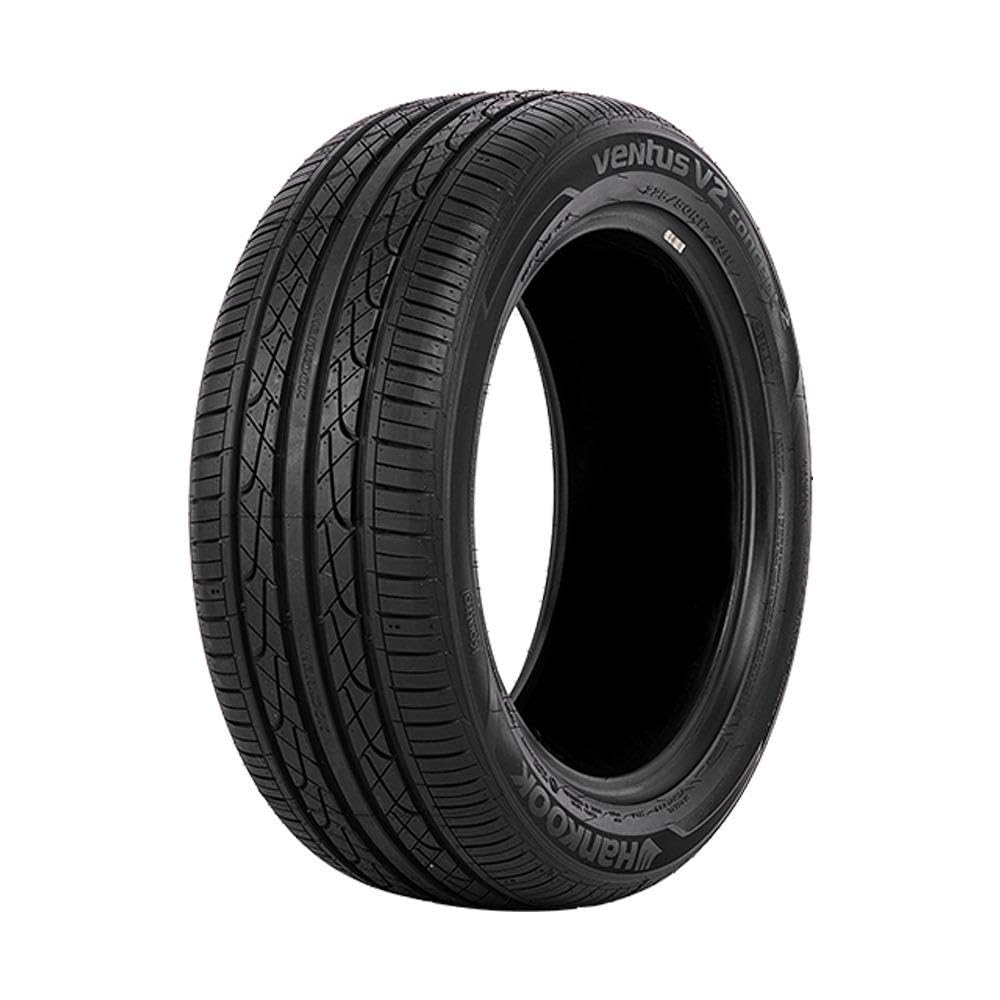
The Ventus V2 Concept2 H457 is Hankook’s performance all-season tire for passenger cars. The 215/45R17 version reviewed here uses an extra-load construction with a 91 load index and V speed symbol. Its 500 AA A UTQG rating places it in a category aimed at buyers who want a blend of tread life, strong graded wet traction, and heat resistance rather than maximum summer-only grip.
Hankook builds the tread around a solid center rib, reinforced belt structure, shoulder noise-control blocks, and wide drainage grooves. Those details are intended to support steady steering response, stable contact during cornering, and lower pattern noise. The design is most useful for commuters and daily drivers who want sharper road manners than a basic touring tire without moving to a dedicated summer tire.
Who Should Buy It?
Best For
- Drivers whose vehicle specifies 215/45R17 with a compatible 91V or higher requirement.
- Daily commuters who want responsive handling without excessive road noise.
- Drivers in mild climates who need wet, dry, and occasional light-winter versatility.
Skip If
- You regularly drive through packed snow, freezing rain, or persistent ice.
- Your vehicle requires a different size, higher load index, or different speed specification.
- You want maximum warm-weather grip for track use or aggressive performance driving.
Before You Buy: Match the full 215/45R17 91V XL specification to the tire placard or owner’s manual. Size alone is not enough, and the correct cold inflation pressure comes from the vehicle placard, not the maximum pressure molded on the tire.
[Amazon Products Picked for You]

This all-season performance tire uses a high grip silica compound for improved dry and wet traction, and for lower rolling resistance that promotes fuel efficiency.
3D Point Effect and Center Rib Block: Optimize handling and braking ability.

True all-season high performance
Fit and Compatibility
This specific tire fits a 17-inch wheel and is approved for rim widths from 7.0 to 8.0 inches, with 7.0 inches listed as the recommended measuring width. The 91 load index corresponds to a maximum rated load of 1,356 pounds per tire under the correct operating conditions. That does not mean it is suitable for every car that can physically accept a 17-inch wheel.
Check the driver’s-door placard for tire size, load requirement, and recommended cold pressure. Replacement tires should meet the vehicle manufacturer’s specification, and all four tires should be compatible in size, construction, and performance. Ask a qualified tire installer to confirm fitment if your vehicle uses staggered sizes, modified wheels, or nonfactory suspension parts.
Tread Design and Wet Performance
Wet-road control is one of this tire’s clearer strengths. Hankook uses wide straight grooves with a V-shaped pattern to move water through the tread. A solid center rib and 3D block-edge design are intended to keep the tread stable during braking and steering inputs.
The 9.5/32-inch starting tread depth gives the grooves useful volume when the tire is new. Wet grip still declines as tread wears, so the design cannot replace proper speed, following distance, or routine inspection. Hydroplaning can occur with any tire when water depth and vehicle speed exceed the tread’s ability to clear water.
Dry Handling and Steering Feel
The H457 uses a high-density nylon-reinforced belt structure to help maintain contact pressure during cornering. Its center rib and block layout support direct response during lane changes and normal back-road driving. You should expect a firmer, more connected feel than from many comfort-first touring tires.
This is still a street-oriented all-season tire. It is designed to balance grip with tread life and noise control, not to match a dedicated summer performance tire in warm, dry conditions. Drivers who prioritize track use, maximum steering precision, or repeated high-heat driving should compare summer-specific options.
Ride Comfort and Noise
Hankook’s noise-care blocks use straight shoulder ribs to control frictional pattern noise. The sipe layout also aims for more uniform block stiffness, which can reduce uneven sound as the tire rolls. On a properly aligned car, that should translate into a composed highway ride and less tread hum than an aggressive winter or all-terrain pattern.
Actual cabin noise also depends on the vehicle, pavement, pressure, wheel condition, and wear. A 45-series sidewall has less cushioning than a taller touring-tire sidewall, so sharp potholes may still feel firm. Correct pressure and balanced installation matter as much as tread design.
How It Performs in Real Use
For Daily Commuting
The tire’s center rib and all-season compound suit repeated city and suburban driving. Steering should feel stable during normal braking and merging, while the noise-control features help keep everyday road sound manageable. The main ownership task is maintaining pressure and rotation so the tread wears evenly.
For Highway Driving
The optimized tread profile is designed to keep the contact patch more even at speed. That supports straight-line stability and predictable lane changes. The V speed symbol must still match your vehicle’s requirements, and it is not an invitation to exceed legal or safe speeds.
For Rainy Conditions
The straight grooves and V-shaped channels give water a path out of the tread. This makes the H457 a sensible option for drivers who frequently encounter wet pavement. You still need to slow down in standing water, especially as tread depth decreases.
For Light Winter Weather
The M+S marking and all-season pattern can manage cold, wet roads and occasional light snow better than a summer tire. However, Hankook lists this size as not 3PMSF certified. If snow, slush, or ice is a routine part of your winter, use a dedicated winter tire or a severe-snow-rated all-weather alternative.
Installation and Maintenance Tips
- Have the tires mounted and balanced by a qualified installer.
- Confirm the directional rotation arrow is facing the correct way on each wheel.
- Inflate to the vehicle manufacturer’s cold-pressure specification, not the tire sidewall maximum.
- Check pressure monthly and before long trips.
- Follow the vehicle manual’s rotation pattern and interval. A common guideline is 5,000 to 8,000 miles when the vehicle allows rotation.
- Inspect for uneven shoulder wear, vibration, cuts, bulges, punctures, or alignment pull.
- Keep purchase and service records in case you need warranty support.
Pro Tip: Measure tread depth at several points across each tire, not just in the center. A large difference between the inner and outer shoulders can reveal an alignment or suspension problem before the tire is fully worn.
What People Say
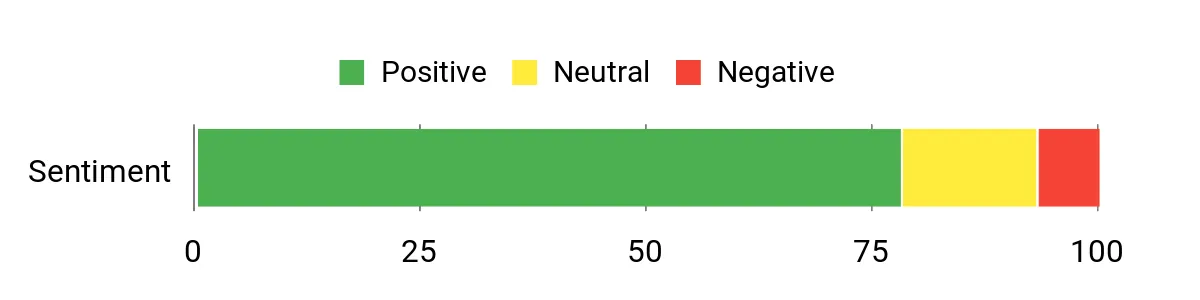
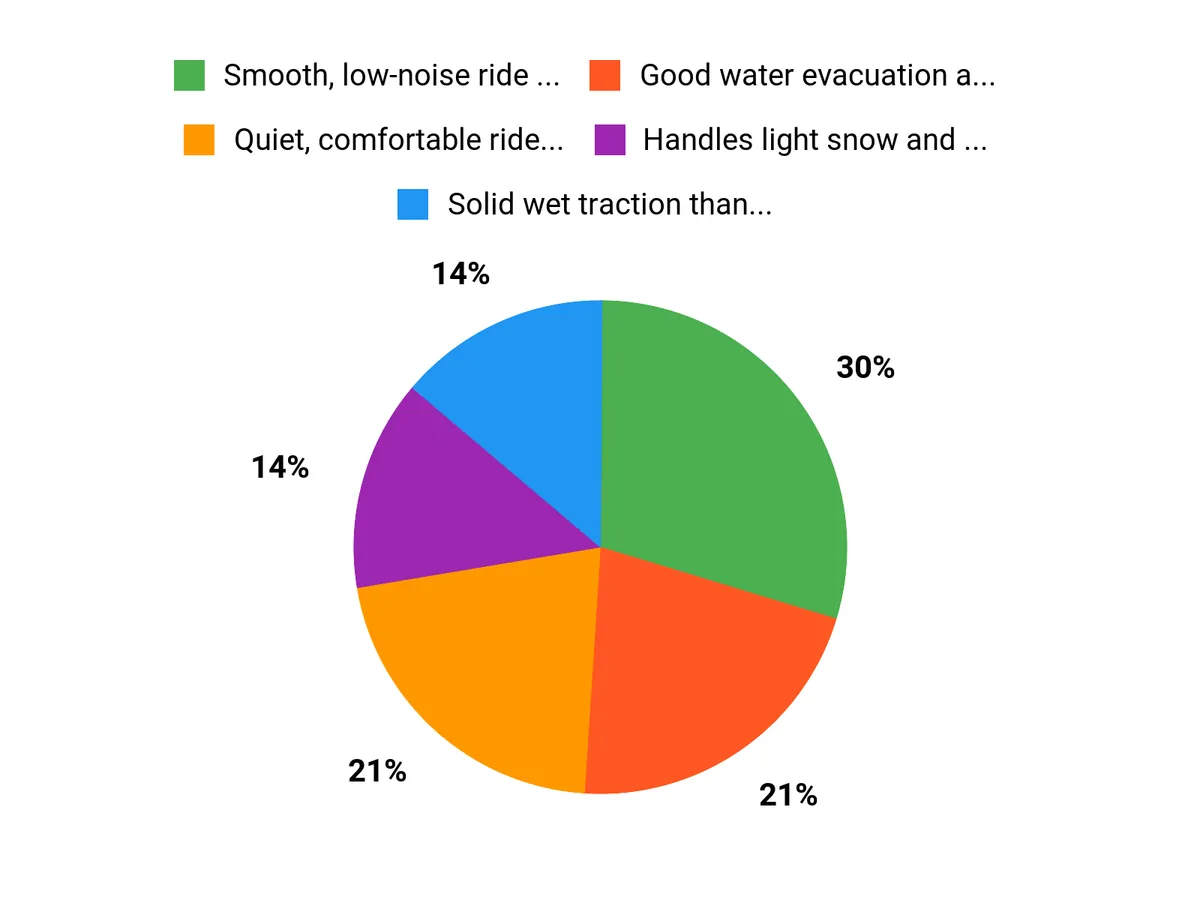
Owner feedback commonly focuses on a smooth ride, low tread noise, and reassuring wet-road behavior. Drivers also mention that the tire feels stable in everyday cornering and can restore a near-factory sense of control when replacing worn tires.
Long-term mileage reports vary, which is normal for a performance all-season tire. Vehicle alignment, pressure, rotation, road surface, and driving style can change tread life substantially. Treat the 45,000-mile warranty as conditional coverage, not a promise that every set will reach the same mileage.
Overall Sentiment: Positive
Pros and Cons
Pros
- Wide grooves and a V-shaped pattern support water evacuation.
- Noise-care shoulder blocks target a quieter daily ride.
- 91V XL specification suits compatible performance-oriented passenger cars.
- UTQG 500 AA A balances treadwear, wet traction grade, and temperature resistance.
- Backed by a 45,000-mile limited treadwear warranty.
Cons
- Not 3PMSF certified for severe-snow service.
- Directional mounting requires correct orientation and can limit some rotation patterns.
- Low-profile 45-series sizing may feel firm over broken pavement.
Seasonal Benefits
The Ventus V2 Concept2 is useful when you want one tire for warm pavement, rain, cool mornings, and limited light snow. Its M+S marking and all-season compound make it more flexible than a summer-only tire, while the performance tread keeps steering response more direct than many comfort-first touring models.
The limitation is clear: this size does not have the Three-Peak Mountain Snowflake mark. Drivers in areas with frequent snowstorms, mountain passes, or sustained freezing conditions should choose dedicated winter tires or compare severe-snow-rated all-weather tires.
Compatibility and Safety
Tire safety begins with fitment and maintenance. Verify the complete size, load index, speed symbol, and XL requirement against the vehicle placard or owner’s manual. Never use the sidewall’s maximum pressure as your normal target. Use the vehicle manufacturer’s recommended cold pressure and check it when the tires have been parked long enough to cool.
Replace tires that show bulges, exposed cords, deep cuts, irregular wear, or other damage. Keep all four tires compatible, and follow professional guidance for mixing new and worn tires. Because this is not a run-flat tire, a puncture or pressure loss requires prompt attention rather than continued driving.
Key Benefits
- Performance-oriented steering without moving to a summer-only tire
- Wide drainage grooves for wet-road control
- Noise-focused shoulder and sipe design
- Extra-load 91V specification for compatible vehicles
- 45,000-mile limited treadwear warranty
Why Drivers Choose It
You may choose the Ventus V2 Concept2 because it sits between a basic touring tire and a more aggressive summer performance tire. It gives you a 500 AA A UTQG rating, a reinforced performance construction, wet-weather drainage features, and a warranty that helps define its value.
It makes the most sense when you want one set for daily use in a mild climate and your vehicle calls for 215/45R17 91V XL. Its balanced design is the selling point, while the lack of severe-snow certification is the key reason some drivers should choose another tire.
Is It Worth the Price?
The Ventus V2 Concept2 generally fits the value-to-midrange part of the performance all-season market. You are paying for a recognizable manufacturer, specific noise-control and drainage features, an extra-load fitment, and a 45,000-mile limited warranty rather than premium-brand pricing alone.
It is a smart buy for everyday use when the size matches your vehicle and wet-weather stability matters more than maximum snow capability. It is not the best fit if your priority is severe-winter traction, the longest possible touring-tire warranty, or track-focused summer grip.
[Amazon Products Picked for You]

4-WAY STRETCH COMPRESSION FIT:Designed with flexible 4-way stretch fabric for comfortable compression, support, and freedom of movement during training, running, and everyday workouts.

Product Overview: The Fullway HP108 is a 275/40R20 106V XL-Extra Load, 4 Ply Rated Performance Tire Manufactured For Trucks & SUVs

Exceptional Performance: DOT-approved tubeless tire, sized 130/60-13. Crafted with a street-tailored tread pattern for superior performance. Rated with a Load Rating of 53 (Load Range B), supporting a maximum load of 453 lbs. These tires boast a Speed Rating of J, enabling speeds of up to 62 mph.
How It Compares to Alternatives
The General G-MAX AS-07 is worth comparing if you want a newer ultra-high-performance all-season design with a 50,000-mile limited warranty and wear indicators. The Continental ExtremeContact DWS06 Plus is a more premium alternative for drivers who prioritize wet, dry, and light-snow performance, and it also carries a 50,000-mile limited tread-life warranty.
The Hankook makes the most sense when you want a more value-focused option with a verified 215/45R17 91V XL fitment, directional wet-road design, and a quieter daily-driving emphasis. Confirm that each alternative is available in the exact size and load specification your vehicle requires.
[Amazon Products Picked for You]

Designed for use on sport and performance-oriented coupes and sedans
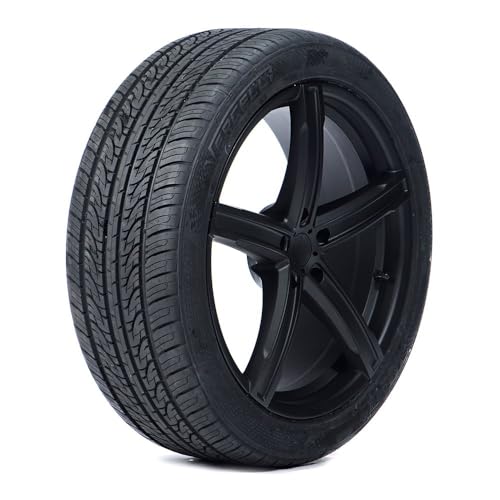
M+S all season tire

Designed for use on passenger cars
Frequently Asked Questions
Will the Hankook Ventus V2 Concept2 fit my vehicle?
It fits only when your vehicle accepts 215/45R17 tires and the 91V XL specification meets or exceeds the manufacturer’s requirement. Check the driver’s-door placard and owner’s manual, then have a tire professional confirm fitment if your wheels or suspension are modified.
Is this tire good for snow?
It is M+S marked and can handle occasional light snow more effectively than a summer tire. It is not 3PMSF certified, so use dedicated winter tires or severe-snow-rated all-weather tires when snow and ice are regular conditions.
How long should the tread last?
Hankook lists a 45,000-mile limited treadwear warranty for the Ventus V2 Concept2. Actual life depends on alignment, pressure, rotation, road surface, load, and driving style, so keep service records and inspect wear regularly.
What does 91V XL mean?
The 91 load index identifies the tire’s rated load capacity, and V is its speed symbol. XL means extra load, so the tire is built for a higher load capacity at its specified pressure than a comparable standard-load version.
Is the Ventus V2 Concept2 a run-flat tire?
No. Hankook lists this size as a non-run-flat tire, so you should stop safely and address a pressure-loss warning or puncture rather than assuming you can continue driving normally.
How should directional tires be rotated?
Directional tires normally stay on the same side of the vehicle unless they are dismounted and remounted. Follow the vehicle manual and installer guidance, especially if the front and rear tires use different sizes.
Does the listing include a wheel or a full set?
Do not assume that a wheel or multiple tires are included. Review the current seller description and quantity before checkout, because tire listings often show one tire and use wheel images only for illustration.
The Bottom Line
The Hankook Ventus V2 Concept2 H457 is a strong choice for drivers who need 215/45R17 91V XL and want balanced wet grip, responsive road manners, and reasonable noise control. Skip it if severe winter weather is common or if your vehicle requires a different load, speed, or size specification.
Its main strength is the practical mix of performance and everyday comfort. Its main limitation is the lack of 3PMSF severe-snow certification, so your climate should guide the final decision.
Ready to Buy?
Check the latest seller details, quantity, and fitment information before you decide.