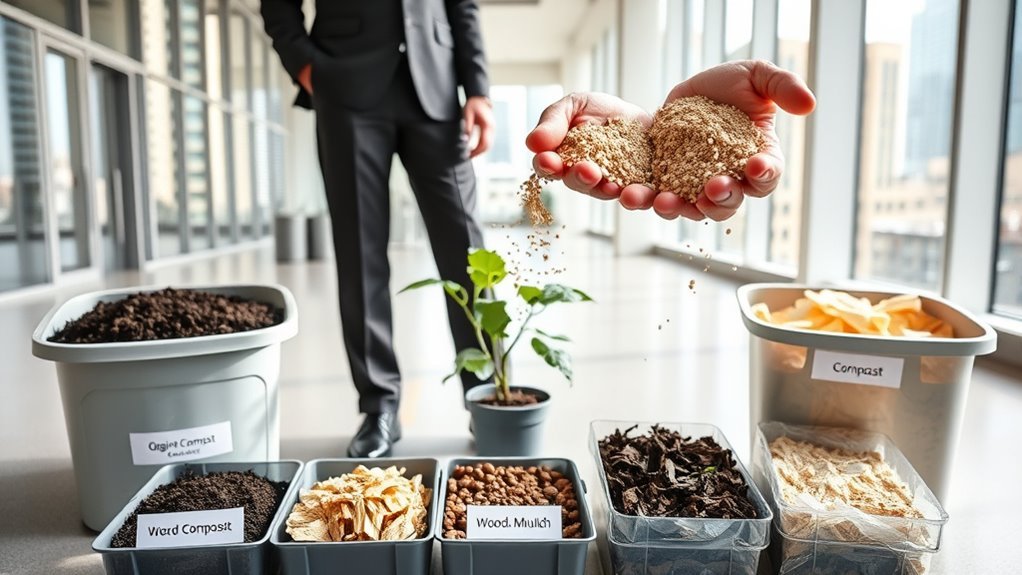
An effective office compost program starts with the right collection service, accessible bins, and clear instructions for employees. The best setup depends on how much food waste your workplace generates, whether your building already collects organics, and which materials your local processor accepts. This guide explains how to choose a service, set up collection stations, train staff, and prevent odors and contamination.
Quick Answer
Choose a compost program based on your office’s food-waste volume, building facilities, and available collection services. Arrange suitable pickup, place labeled compost bins beside recycling and trash containers, and teach employees what belongs in each stream. Empty indoor bins daily, clean them regularly, and review contamination and collection results to keep the program effective.
Key Takeaways
- Measure food-waste volume before choosing a collection service or bin size.
- Compare providers on pickup frequency, accepted materials, contamination policies, and total service costs.
- Use clearly labeled, lidded compost bins in kitchens, cafeterias, and break rooms.
- Confirm that your compost processor accepts the bags and food-service products your office uses.
- Empty indoor containers daily and arrange regular outdoor collection to control odors.
- Track collected waste and contamination to measure results and improve the program.
Should Your Office Compost?
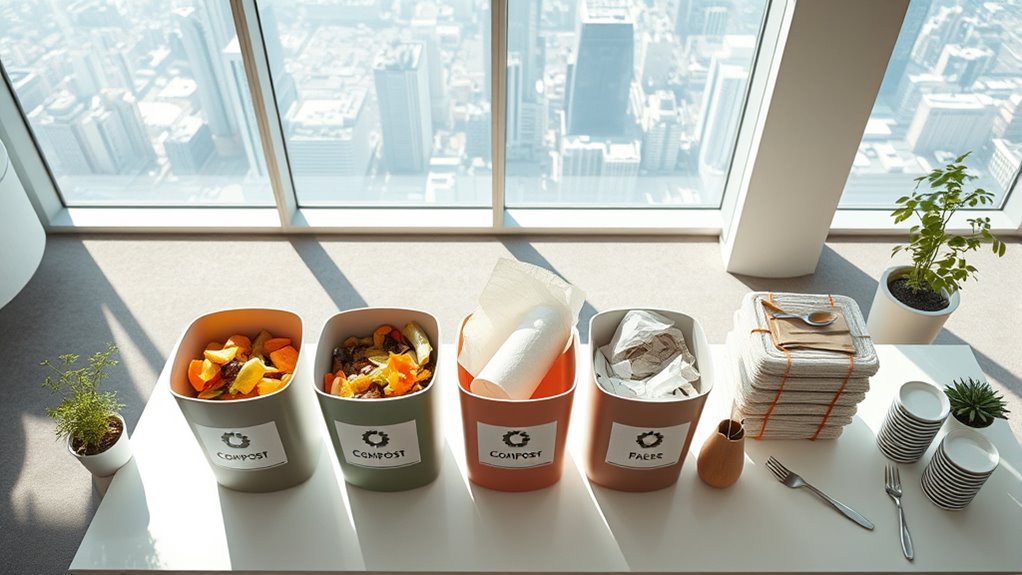
Office composting makes sense when your workplace generates enough food scraps to support a practical collection system. Headcount matters, but the amount of food employees eat or prepare on-site is a better measure.
The City of Portland’s office compost guide suggests that workplaces with 100 or more employees may generate enough food waste to justify dedicated service, particularly when staff eat lunch at work.
That figure is a planning guideline, not a universal requirement. Smaller workplaces may also benefit from composting when their building provides shared collection or when nearby businesses already use an organic-waste service.
For example, an office sharing a building with a restaurant or cafeteria may be able to use an existing collection system. The arrangement must still meet the waste hauler’s material and contamination requirements.
Composting also provides an environmental benefit. According to the U.S. Environmental Protection Agency, composting diverts organic materials from landfills, helps reduce methane emissions, and returns valuable nutrients and organic matter to soil.
It can also reduce disposal costs when compost collection replaces part of an existing garbage service. However, savings are not guaranteed. Collection fees, bin rental, labor, and available local infrastructure all affect the total cost.
Before starting, identify who controls your building’s waste contract, where collected material will be stored, and who will maintain the bins.
Choose the Right Office Compost Program and Service
The right commercial compost service should match your waste volume, pickup needs, and local processing rules. Compare providers before signing a contract, and confirm exactly what happens to your collected food scraps.
Start by assessing the amount of food waste generated in kitchens, break rooms, and cafeterias. Include both employee leftovers and food-preparation waste where applicable.
The EPA provides food waste assessment tools that businesses can use to establish a baseline and track improvements.
What Should You Compare Between Compost Providers?
Ask your existing waste company for an organics collection quote. Then compare it with other available providers or a shared building service.
| Factor | What to check | Impact |
|---|---|---|
| Volume | Food waste generated per week and required container capacity | Determines service size and collection needs |
| Cost | Collection fees, bin rental, liners, cleaning, and extra pickup charges | Shows the total operating cost |
| Logistics | Pickup access, shared routes, storage space, and collection schedule | Affects operational efficiency |
| Accepted materials | Food Only rules, dairy, meat, paper, bags, and food-service packaging | Determines sorting instructions |
| Contamination policy | Rejected loads, inspection procedures, and additional charges | Helps prevent avoidable costs |
| Contract terms | Service changes, cancellation conditions, and collection reporting | Supports long-term accountability |
How Often Should Office Compost Be Collected?
Weekly pickup is a practical starting point for many commercial compost programs. However, the correct schedule depends on waste volume, temperature, storage conditions, and local service requirements.
High-volume offices may need more frequent collection. Small workplaces should investigate shared service if they do not generate enough material for dedicated pickup.
Indoor collection and outdoor pickup are separate tasks. Kitchen bins should be emptied daily even when the waste company collects the building’s outdoor container weekly.
Can Offices Share Compost Collection?
Yes. Offices may be able to share collection with another tenant, restaurant, or nearby food-service business.
Before arranging shared service, confirm that the existing provider allows it. Agree on container access, costs, cleaning responsibilities, and acceptable materials.
Shared collection works only when everyone follows the same sorting rules. A contaminated load may be rejected or handled as garbage instead of compost.
Check Local Commercial Organics Requirements
Commercial composting rules vary by location. Some jurisdictions require certain businesses to separate organic waste, while others provide voluntary collection programs.
For example, New York City’s commercial organics requirements apply to specified food-service establishments and other qualifying businesses.
Covered businesses must follow rules for separation, labeling, storage, and collection. An ordinary office should not assume that every requirement applies solely because it has a kitchen.
Ask your property manager or local waste authority which rules apply to your specific building.
Set Up Compost Stations in the Office
Place compost stations where employees already dispose of food and packaging. Kitchens, break rooms, cafeterias, and shared dining spaces are the most useful locations.
Each station should provide separate containers for compost, recycling, and garbage. Keeping all three together makes correct sorting easier and discourages employees from using the nearest bin without checking its label.
Choose the Right Compost Containers
A 15-gallon indoor container is a practical option for many offices, although smaller workplaces may only need countertop collection bins.
Choose containers based on actual waste volume and how often custodial staff can empty them.
- Green: Compost and accepted organic materials.
- Blue: Recyclables accepted by the local recycling service.
- Black or gray: General garbage.
Use lidded containers, preferably with pedal-operated lids, to improve cleanliness and reduce direct contact with waste.
Containers should be easy to clean and positioned without blocking walkways or access to other facilities.
Use Clear Signs and Consistent Labels
Place durable labels on the front and top of each container. Use simple pictures showing the actual products commonly discarded in your office.
For example, an office with a shared coffee station should show employees where coffee grounds, filters, cups, lids, and stirrers belong.
Use the same colors and instructions on every floor. Different rules at different stations can confuse employees and increase contamination.
Distinct colors and lidded bins make sorting faster, cleaner, and easier to maintain.
Before opening the stations, confirm that cleaning staff know where the collected waste must go. Compost must remain separate from general garbage throughout the building’s collection process.
Teach Staff What Can Go In
Employee training should explain exactly which materials the compost provider accepts. Do not assume that every biodegradable or compostable-looking item belongs in an office compost bin.
Acceptance rules vary between commercial processing facilities. Some accept food scraps only, while others also process certain food-soiled paper products and certified compostable packaging.
Which Materials Are Usually Accepted?
The following examples provide a starting point for staff training. Your provider’s accepted-material list should determine the final instructions.
- Fruit and vegetable scraps: Peels, cores, and other unwanted produce.
- Coffee grounds: Grounds and accepted paper filters.
- Food leftovers: Bread, rice, and other food scraps permitted by the processor.
- Meat, bones, and dairy: Only when the collection service specifically accepts them.
- Yard trimmings: Where the service includes landscape waste.
- Food-soiled paper: Only when allowed by the collection program.
Commercial compost facilities may process materials that are unsuitable for a small backyard compost pile. This is especially relevant to meat, dairy, and some food-service products.
What Should Stay Out of the Compost Bin?
Keep conventional plastic and other prohibited materials out of the organic-waste stream.
- Plastic utensils, wrappers, and ordinary plastic bags.
- Produce stickers and non-compostable labels.
- Glass, metal, and other recyclable packaging.
- Cleaning chemicals and hazardous waste.
- Food-service products the processor does not accept.
According to the EPA’s food-service guidance, certified commercially compostable products should only be purchased for compost collection when an appropriate local facility accepts those product types.
Are Compostable Bags Required?
Compostable bags can reduce mess and simplify cleaning, but they are not automatically accepted by every processing facility.
Before buying liners, confirm the provider’s requirements. Where certification is required, use the BPI certified product directory to verify the product.
BPI certification confirms that listed products meet applicable compostability requirements. It does not override a local facility’s acceptance policy.
Never substitute ordinary plastic garbage bags for approved compostable liners when the collected bags will enter the compost stream.
Explain Why Proper Sorting Matters
Food waste carries environmental and economic costs beyond disposal.
The USDA estimated that 31% of the available U.S. food supply at retail and consumer levels went uneaten in 2010. That represented approximately 133 billion pounds of food.
This historical estimate illustrates the scale of food loss. It should not be presented as a new annual measurement or as the amount generated by offices alone.
Explain to employees that preventing avoidable food waste should come first. Composting then provides a useful destination for unavoidable scraps.
Introduce the program during a staff meeting and provide a short sorting demonstration. Reinforce the instructions through visible signs and periodic reminders.
Keep Office Compost Clean and Odor-Free
Clean office composting depends on frequent emptying, covered containers, and clear maintenance responsibilities. Food scraps should not remain in indoor bins for several days simply because the outdoor collection schedule is weekly.
Assign daily collection and cleaning tasks to the facilities or custodial team.
- Empty indoor compost containers at least once each workday.
- Replace approved liners when required.
- Wipe or wash containers to remove food residue.
- Transfer collected material into the designated outdoor organics container.
- Close container lids securely after every use.
- Inspect stations for misplaced materials, leaks, and pest activity.
Busy cafeterias may need indoor bins emptied more than once per day. Avoid overfilling containers because wet food waste becomes heavy and can split bag liners.
How Do You Prevent Compost Odors and Fruit Flies?
Remove food residue promptly, keep lids closed, and clean spills around each collection station. Empty containers more frequently if waste begins to smell.
Fruit flies can appear when exposed produce or food residue remains in kitchens. Keep food covered, clean nearby sink drains, and remove scraps before they accumulate.
If a container leaks or develops a persistent odor, clean it thoroughly and inspect its lid and seals. Ask the collection provider about cleaning or replacing damaged outdoor containers.
Regular spot checks also help prevent contamination. Correct sorting mistakes early rather than allowing them to become routine.
Measure the Results of Your Office Compost Program
Track the amount of material collected and the quality of the compost stream. These measures show whether the program is working and where improvements are needed.
Start with a baseline of food waste and general garbage before introducing compost collection. Then compare subsequent collection periods using the same measurement method.
Useful performance measures include:
- Food waste collected per week.
- Changes in general garbage volume or weight.
- Contamination incidents reported by staff or the provider.
- Missed pickups and additional collection charges.
- Employee participation and recurring sorting problems.
If the collection service provides weight reports, use those figures instead of estimating how full the containers appear.
Compare total disposal costs before and after implementation. Include compost collection charges, supplies, and any reductions in general garbage service.
Review results with the facilities team and use recurring problems to guide staff reminders or changes to station placement.
Frequently Asked Questions
What Is the Best Commercial Compost?
Good commercial compost is mature, stable, and suitable for its intended soil application. Look for a product with consistent texture, limited contamination, and documented testing. The U.S. Composting Council’s Seal of Testing Assurance program provides technical data sheets that help buyers compare compost properties and appropriate uses.
How to Tell if Compost Is Good Quality?
Good compost usually has a dark color, earthy smell, and crumbly texture. It should not contain obvious plastic contamination or large amounts of recognizable food scraps. Laboratory results provide stronger evidence of maturity, stability, nutrient content, pH, and suitability for a particular growing application.
What Are the Four Types of Compost?
Four commonly discussed approaches are traditional aerobic composting, vermicomposting, bokashi fermentation, and commercial composting. They use different biological processes and operating conditions. Bokashi material requires further decomposition, while compost tea is a liquid extract made from compost rather than a separate method of producing finished solid compost.
What Is the Difference Between Commercially Compostable and Regular Compostable?
Commercially compostable products are designed to break down under specified commercial composting conditions. Home-compostable products are intended for less intensive composting environments. Neither label guarantees acceptance by your office’s collection provider, so confirm the approved product types before placing packaging or liners in compost bins.
Can Paper Coffee Cups Go in Office Compost Bins?
Paper coffee cups should only enter the compost stream if your provider accepts that specific cup type. Many cups contain coatings that affect compostability. A paper appearance does not establish that a product is compostable, and even certified products may be excluded by local processors.
Do Office Compost Bins Attract Pests?
Office compost bins can attract fruit flies and other pests when food scraps remain exposed or containers are poorly maintained. Covered bins, daily indoor emptying, regular cleaning, and prompt removal of spills help prevent problems. Collection frequency should increase when waste volume or storage conditions require it.
Conclusion
A successful office compost program combines suitable collection service, convenient sorting stations, informed employees, and consistent maintenance. Start by measuring your food waste and confirming local processing requirements. Then establish clear responsibilities for collection, cleaning, and monitoring so the program remains practical as your workplace’s needs change.
Sources
- City of Portland – Office Compost Guide: Office size, collection arrangements, bins, cleaning, and staff education.
- U.S. Environmental Protection Agency – Composting: Composting processes, environmental benefits, and organic-waste management.
- EPA – Tools for Preventing and Diverting Wasted Food: Waste assessments and tracking methods.
- NYC Department of Sanitation – Commercial Organics Requirements: Applicable business rules and separation requirements.
- EPA – Identifying Sustainable Food Service and Food Service Ware: Commercial compostability and local facility acceptance.
- Biodegradable Products Institute – Certified Product Directory: Verification of compostable products and bags.
- USDA Economic Research Service – Food Loss: Historical U.S. food loss estimates.
- U.S. Composting Council – Seal of Testing Assurance: Compost quality testing and technical data sheets.
