Last updated: September 16, 2026. Technique, freshness, seasoning, and food-safety guidance were reviewed and updated.
To make scrambled eggs, whisk 2–3 large eggs until the yolks and whites are fully blended. Melt butter in a non-stick pan over medium-low heat, pour in the eggs, and gently stir or fold until soft curds form. Stop cooking when the eggs are moist and tender but no runny raw egg remains, then season and serve immediately.
The texture depends on how you move the eggs in the pan. Frequent stirring produces smaller, creamier curds, while slower folding produces larger, fluffier curds. Milk or cream is optional; good temperature control matters more than adding dairy.
If you specifically want larger, softer diner-style curds, see this step-by-step guide to fluffy diner-style scrambled eggs.
🍳 Recipe at a Glance
Prep Time: 2 minutes | Cook Time: 4 minutes | Total Time: 6 minutes
Servings: 1–2 | Difficulty: Easy
Basic Ingredients: 2–3 large eggs · 1 tbsp unsalted butter · 1 tbsp milk or cream (optional) · Salt and pepper to taste
How to Make Scrambled Eggs: Quick Steps
- Crack the eggs: Crack 2–3 eggs into a clean bowl so you can check for shell fragments before cooking.
- Whisk: Beat until the yolks and whites are fully combined with no clear streaks. Add a small pinch of salt now if you like.
- Heat the pan: Warm a non-stick pan over medium-low heat. Add 1 tablespoon of butter and let it melt without browning.
- Add the eggs: Pour the eggs into the pan. Let them begin to set, then move them gently with a silicone spatula.
- Choose your texture: Stir more frequently for smaller, creamier curds. Fold more slowly and less often for larger, fluffier curds.
- Finish safely: Take the pan off the burner when the curds are still moist and tender but no runny raw egg remains. Serve right away.
Choosing Ingredients
Good scrambled eggs need very little: eggs, cooking fat, and seasoning. Optional dairy, cheese, vegetables, herbs, or cooked meat can change the flavor and texture, but they are not required.
Making scrambled eggs starts with eggs that have been stored properly and have clean, uncracked shells. Keep them refrigerated until you are ready to cook.
Selecting Eggs
Fresh eggs often have thicker whites. According to the USDA Food Safety and Inspection Service, a cloudy egg white is associated with a very fresh egg, while the white generally becomes clearer as the egg ages. Yolk color, however, mainly reflects the hen’s diet, so a darker or brighter yolk is not proof that an egg is fresher or higher quality.
Free-range, organic, conventional, brown, and white eggs can all be used for scrambled eggs. Choose eggs based on freshness, storage, budget, and your own flavor preference rather than assuming a particular label guarantees better-tasting scrambled eggs.
Picking Add-ins
Cheese, herbs, vegetables, and cooked meats can turn a basic scramble into a fuller meal. Grated cheddar, feta, mozzarella, chives, parsley, spinach, bell peppers, tomatoes, ham, bacon, or smoked salmon can all work.
Cook watery vegetables such as mushrooms or tomatoes before adding the eggs so excess moisture does not loosen the scramble. Meat should already be safely cooked before it is folded into the eggs. Cheese works best near the end, when the curds are almost set and the residual heat can melt it.
Preparing Equipment
You only need a few basic tools to make scrambled eggs, but the pan and spatula affect how easy it is to control the curds.
Necessary Tools
A medium non-stick pan is the easiest option for a small batch. It reduces sticking and lets you move the eggs gently without scraping aggressively.
Use a silicone or other heat-safe flexible spatula to push and fold the eggs. A fork or whisk works for blending the raw eggs before they go into the pan.
You also need a clean bowl large enough to whisk the eggs without spilling them.
Optional Extras
Butter adds rich flavor and helps prevent sticking. A neutral cooking oil or light olive oil can also work if you prefer not to use butter.
Salt and black pepper are enough for a basic scramble. Cheese, chives, parsley, or another preferred seasoning can be added without changing the core cooking method.
Cracking The Eggs
Crack the eggs into a bowl before they reach the pan. This gives you a chance to spot shell fragments or an abnormal egg without contaminating the entire batch.
Proper Technique
Hold the egg gently and tap it on a flat surface until the shell cracks. Open it over the bowl and let the egg fall in. Repeat with the remaining eggs.
If a shell fragment falls into the bowl, remove it with a clean utensil before whisking.
Avoiding Shells
Using a separate bowl is especially useful when you are cooking several eggs because one broken shell or questionable egg can be dealt with before it reaches the hot pan.
Wash your hands and any surface or utensil that contacts raw egg. Keep raw egg away from foods that will be served without further cooking.
Whisking The Eggs
Whisking combines the yolks and whites into one even mixture. The goal is a uniform yellow color with no obvious streaks of clear white.
Best Practices
Crack 2–3 eggs into a clean bowl and whisk with a fork or whisk until fully blended. You do not need to beat them for several minutes; a thorough mixing is enough for a basic scramble.
You can add a small pinch of salt while whisking. Current culinary testing does not support the old claim that pre-salting automatically makes scrambled eggs tough or watery. Heat and cooking time have a much larger effect on whether the finished eggs stay tender.
Adding Milk Or Cream
Milk or cream is optional. If you like the result, add about 1 tablespoon for every 2 eggs and whisk it in completely.
A small amount can soften the texture and add richness, but adding a large quantity can dilute the egg flavor and leave excess moisture in the pan. Eggs, butter, and careful heat control are enough to make a good scramble without dairy.
Heating The Pan
Warm the pan over medium-low heat, then add the butter. Gentle heat gives you enough time to form tender curds without quickly drying or browning the eggs.
Pan temperature is one of the biggest controls over the finished texture. A burner setting that works on one stove may be too hot on another, so watch the butter and the speed at which the eggs begin to set.
Ideal Temperature
For a beginner-friendly scramble, start at medium-low heat. The eggs should begin setting gradually rather than sizzling hard or turning brown at the edges. If they set almost instantly, reduce the heat.
Very low heat can make a soft, creamy scramble, while slightly more heat combined with slower folding can create larger, fluffier curds. The important point is to avoid uncontrolled high heat that dries the eggs before you can shape the curds.
Using Butter Or Oil
Butter adds a rich flavor, while oil tends to taste more neutral. If you use butter, let it melt and coat the pan but do not wait for it to burn or become deeply browned before adding the eggs. If you prefer oil, a light olive oil or neutral vegetable oil works well.
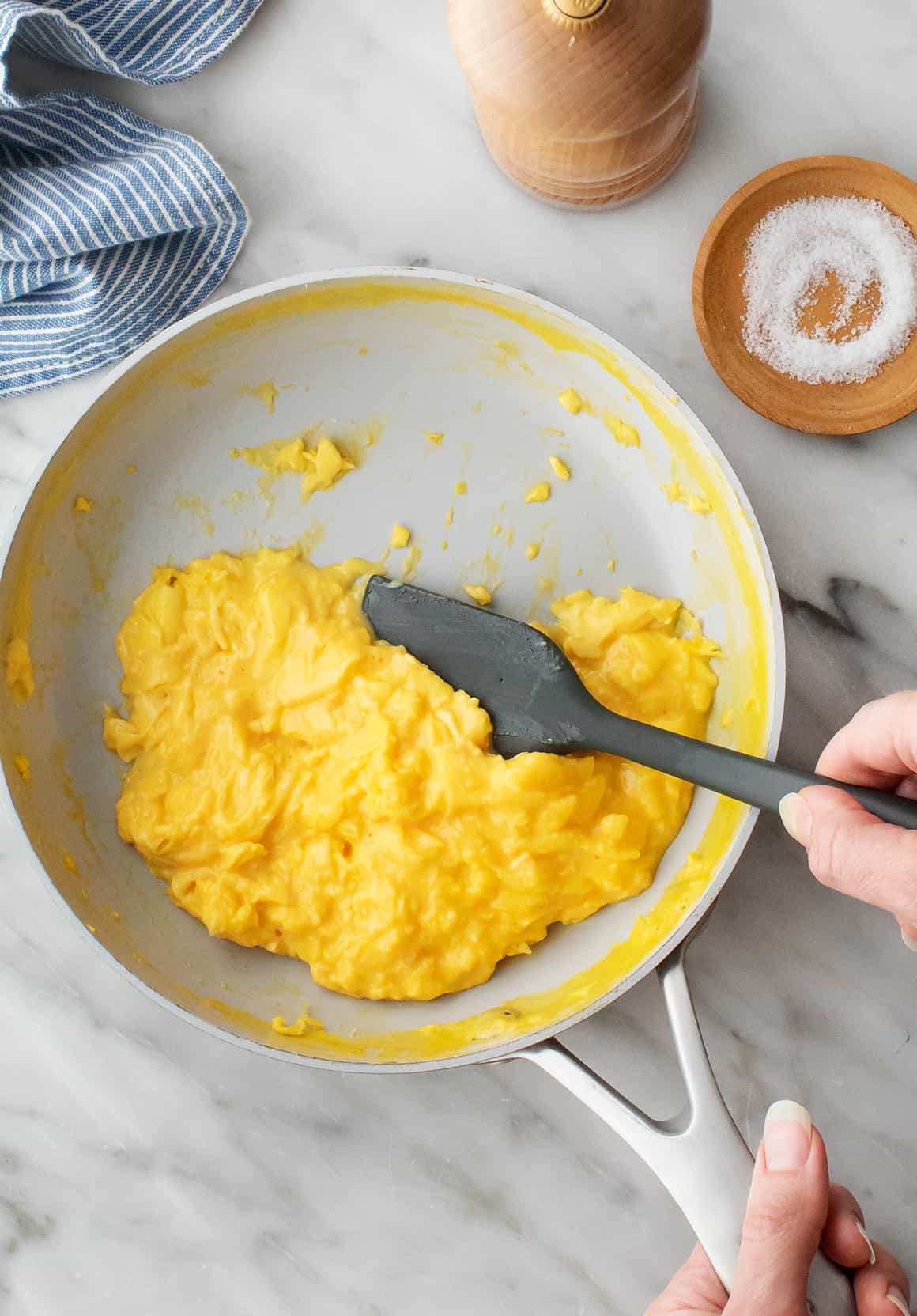
Credit: www.loveandlemons.com
How to Cook Scrambled Eggs
Pour the whisked eggs into the buttered pan and use a flexible spatula to move them as they set. Cook until the eggs form moist, tender curds with no visible runny raw egg remaining.
The way you stir determines the size of the curds. That means there is no single stirring pattern that is best for every preferred texture.
Stirring Techniques
For smaller, creamier curds, move the eggs more frequently and scrape gently across the bottom of the pan so one area does not cook much faster than another.
For larger, fluffier curds, let the eggs set briefly and then use the spatula to push or fold them from the outside toward the center. Move them less often so larger sections can set before being folded.
Cooking Time
A small batch commonly cooks in a few minutes, but exact timing varies with your stove, pan, egg quantity, and heat level. Watch the eggs rather than relying only on a timer.
Stop active cooking when the curds are set but still moist. Residual heat from the pan will continue firming them briefly, so transfer the eggs to a plate promptly instead of leaving them in the hot skillet.
Food-safety note: The U.S. Food and Drug Administration advises cooking scrambled eggs so they are not runny. Children, older adults, pregnant people, and people with weakened immune systems face a higher risk of severe illness from Salmonella, so thorough cooking and careful raw-egg handling are especially important for these groups.
Adding Extras
Scrambled eggs can carry many add-ins, but ingredients with their own cooking time should usually be prepared before the eggs enter the pan.
Incorporating Ingredients
Finely chopped bell peppers, onions, mushrooms, tomatoes, or spinach can add flavor and texture. Sauté vegetables first until they are cooked to your liking and excess moisture has reduced.
Ham, sausage, or bacon should be cooked before it is added to the scramble. Cut it into small pieces so it reheats quickly without forcing the eggs to stay on the burner longer.
Timing Add-ins
Once vegetables are cooked, lower the heat if necessary and pour the beaten eggs over them. Fold in pre-cooked meats while the eggs are setting.
Add cheese near the end. The heat of the eggs can melt grated cheddar, feta, mozzarella, or another cheese without requiring extra cooking time.
:max_bytes(150000):strip_icc()/__opt__aboutcom__coeus__resources__content_migration__serious_eats__seriouseats.com__recipes__images__2015__05__20150511-scrambled-eggs-vicky-wasik-17-c96b9d65e3bc4b1097aa15b84721b4b9.jpg)
Credit: www.seriouseats.com
Common Scrambled Egg Mistakes to Avoid
Most scrambled-egg problems come from excessive heat, excess cooking time, too much added liquid, or using the wrong stirring method for the texture you want.
- Using uncontrolled high heat: Eggs can set and dry out before you have time to form tender curds. Start around medium-low and adjust to your pan and stove.
- Adding too much milk or cream: A small splash is optional, but a large amount can dilute the eggs and leave extra moisture in the pan.
- Stirring the wrong way for your goal: Frequent stirring makes smaller curds; slower folding makes larger ones. Neither is automatically wrong.
- Overcooking: Transfer the eggs out of the hot skillet once they are set but still moist so carryover heat does not dry them out.
- Adding watery raw vegetables: Tomatoes, mushrooms, and similar ingredients can release water into the eggs. Cook them first.
- Confusing moist with raw: Tender scrambled eggs can still be fully set. FDA guidance says scrambled eggs should not be runny.
Serving Suggestions
Scrambled eggs are best served immediately because they continue to firm as they sit. Prepare toast, fruit, vegetables, or other sides before the eggs finish cooking.
Plating Ideas
Serve the eggs on a warm plate and finish with black pepper, chives, parsley, or another fresh herb. Toast works as a simple base, while sliced avocado or tomatoes can add freshness and color.
Complementary Foods
Scrambled eggs pair well with bacon, fruit, yogurt, whole-grain toast, sautéed vegetables, hash browns, or a small salad. Choose sides based on whether you want a light breakfast or a more substantial meal.

Credit: natashaskitchen.com
How to Store and Reheat Scrambled Eggs
Serve scrambled eggs soon after cooking. If you have leftovers, refrigerate them promptly in a covered container. FDA and USDA guidance says perishable cooked foods should generally be refrigerated within 2 hours, and cooked egg dishes can be kept refrigerated for about 3–4 days.
Reheat leftovers thoroughly before eating. The FDA recommends reheating previously cooked egg dishes to 165°F. Use gentle heat when possible because prolonged reheating can make scrambled eggs dry and rubbery.
Frequently Asked Questions
How To Make Scrambled Eggs Step By Step?
Crack 2–3 eggs into a bowl and whisk until the yolks and whites are fully blended. Melt 1 tablespoon of butter in a non-stick pan over medium-low heat. Pour in the eggs and use a silicone spatula to stir frequently for smaller curds or fold more slowly for larger curds. Cook until the eggs are moist and tender but no runny raw egg remains, then transfer them to a plate, season, and serve.
Do You Add Milk To Eggs For Scrambled Eggs?
Milk is optional. About 1 tablespoon per 2 eggs can soften the texture and add a little richness, but scrambled eggs do not need milk to turn out well. Eggs, butter, controlled heat, and the right stirring technique are enough. Too much added liquid can dilute the egg flavor and make the finished scramble wetter.
How Do You Scramble Eggs In A Frying Pan?
Whisk the eggs in a bowl, then melt butter in a non-stick frying pan over medium-low heat. Pour in the eggs once the butter has melted. Push or fold the setting eggs gently with a spatula until soft curds form and no runny raw egg remains, then transfer them out of the hot pan.
What Is The Trick To Scrambled Eggs?
The main trick is controlling heat and choosing a stirring method that matches the texture you want. Use gentler heat so the eggs do not dry out before the curds form. Stir more frequently for a small, creamy curd or fold more slowly for larger, fluffier curds. Remove the eggs from the hot skillet as soon as they are set but still moist.
Should You Salt Scrambled Eggs Before Or After Cooking?
You can salt scrambled eggs before cooking or season them in the pan. The old claim that early salting automatically makes eggs tough or watery is not well supported. A recent Serious Eats side-by-side test found that pre-salting did not make the eggs tougher and could improve moisture retention. Heat and cooking time have a much larger effect on the finished texture.
Why Are My Scrambled Eggs Rubbery?
Rubbery scrambled eggs are usually caused by excessive heat or cooking them for too long. Egg proteins tighten as they cook, and prolonged heating pushes out more moisture. Start with moderate heat, watch the curds closely, and transfer the eggs from the hot pan as soon as they are fully set but still tender and moist.
Are Runny Scrambled Eggs Safe To Eat?
The FDA advises that scrambled eggs should not be runny. Cook shell eggs thoroughly and handle raw eggs carefully to reduce the risk of foodborne illness. This is especially important for children, older adults, pregnant people, and people with weakened immune systems, who are at greater risk of severe illness from Salmonella.
How Long Do Cooked Scrambled Eggs Last In The Refrigerator?
Cooked egg dishes can generally be refrigerated for 3–4 days when handled and chilled promptly. Store leftovers in a covered container and reheat them thoroughly before eating. Do not leave cooked eggs sitting at room temperature for extended periods.
Conclusion
Good scrambled eggs come down to a few controllable details: whisk the eggs until uniform, use butter or another cooking fat, manage the heat, and move the eggs according to the curd size you want. Frequent stirring makes smaller, creamier curds; slower folding makes larger, fluffier ones.
Cook until the eggs are set with no runny raw egg remaining, then move them out of the hot pan while they are still moist and tender. Once you know that basic method, cheese, herbs, vegetables, and cooked meats are easy additions.