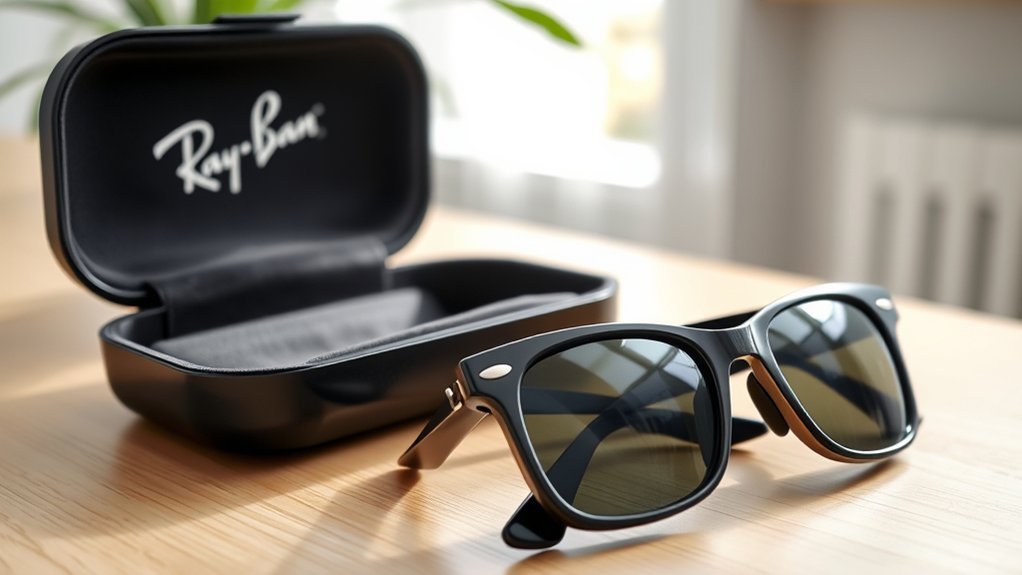
Putting Ray-Ban sunglasses into their case is simple, but the safest method depends on the shape of the case. Clean and dry the glasses first, fold both temples gently, place the frames into the position the case naturally supports, and close it without force. Ray-Ban recommends keeping glasses in a protective hard or soft case, ideally somewhere dry and between -10°C and +35°C.
Quick Answer
To put traditional Ray-Ban sunglasses in a case, clean and dry them, fold both temples gently, set them into the orientation the case lining naturally accepts, and close without force. Ray-Ban does not publish one universal “lenses inward” rule for every case. Keep the closed case dry and away from excessive heat.
Key Takeaways
- Clean and dry the lenses before putting the sunglasses away.
- Fold both temples gently and do not twist or force the hinges.
- Let the case shape determine the correct orientation instead of forcing a universal lens direction.
- If the lid resists, reopen the case and reposition the glasses rather than pressing harder.
- Store the case in a dry location between about -10°C and +35°C and away from strong heat.
At a Glance
| Time Required | About 2–5 minutes, including a quick cleaning |
| Difficulty | Easy |
| Tools Needed | Clean microfiber cloth, suitable lens cleaner or neutral cleaner if needed, and a properly fitting case |
| Cost | Usually no added cost when using the supplied case and cleaning cloth |
Clean Your Ray-Bans Before Storage
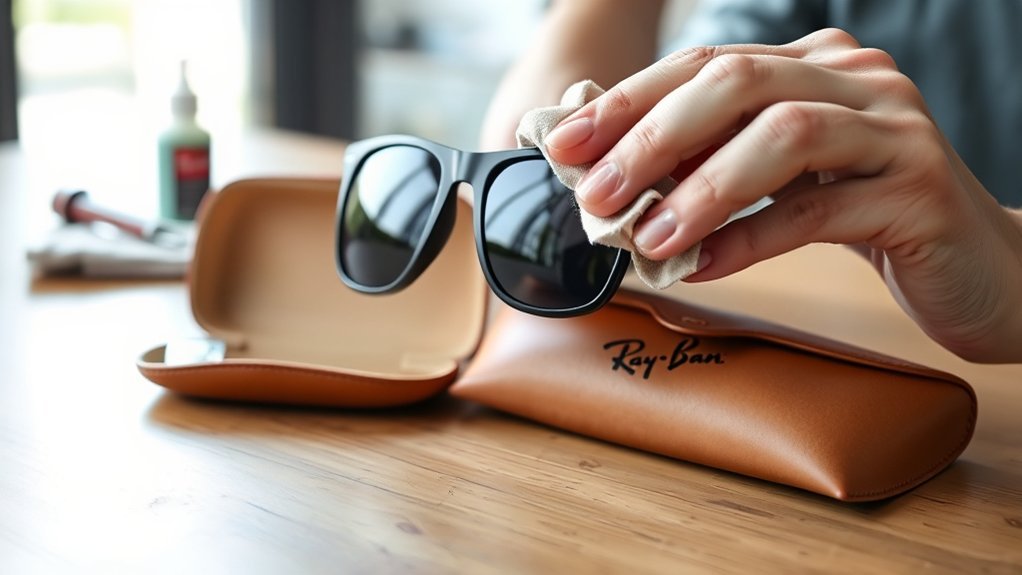
Begin by cleaning your Ray-Ban sunglasses before placing them in the case. Dust, fingerprints, skin oils, and grit can remain against the lenses or lining while the glasses are stored.
Ray-Ban’s official product-care guidance recommends cleaning glasses with a soft microfiber cloth and/or a neutral cleaner. For the lenses, Ray-Ban recommends a dedicated lens spray.
Use a clean microfiber cloth rather than paper towels, tissues, shirts, or other rough materials. Ray-Ban’s own care leaflet specifically warns that abrasive materials can affect the lenses and filters.
For a deeper clean, follow the instructions for your lens cleaner or use the cleaning method recommended for your specific Ray-Ban model. Make sure the lenses and frame are dry before storing them.
Warning: Do not use dirty cloths, abrasive paper products, harsh solvents, or excessive pressure on the lenses. Smart Ray-Ban models may also have model-specific cleaning restrictions.
[Amazon Products Picked for You]

Glasses cleaner - Sourced from the highest quality microfiber that absorbs and removes dust, oil, smudges, fingerprints, dirt, and more. Leaves no scratches, streaks, marks, or lint behind. The perfect eyeglass cleaner for reading glasses, women, men, adults, him, her, teens, and more.

Glasses cleaner - Sourced from the highest quality microfiber that absorbs and removes dust, oil, smudges, fingerprints, dirt, and more. Leaves no scratches, streaks, marks, or lint behind. The perfect eyeglass cleaner stocking stuffers for adults, men, women, him, her, teens, and more.

VALUE PACK OF 6: Includes 6 premium microfiber cleaning cloths (7x6 inches)—4 Black + 2 Gray—perfect for daily use, home, office, or travel.
Check That the Case Fits Properly
The case should hold the sunglasses securely without crushing them. Ray-Ban recommends storing glasses in a designated hard or soft case to protect the frame and lenses from scratches.
A good fit means the folded sunglasses settle into the case naturally, without excessive sliding and without needing pressure to make the lid close. The case does not necessarily have to be unique to one traditional Ray-Ban model, but it should be the right size and shape for the frame.
Inspect the case periodically. A cracked shell, damaged hinge, broken closure, exposed hard edge, torn lining, or debris inside can reduce the protection it provides.
The important moisture rule is simple: put dry glasses into a clean, dry case and store the case somewhere dry. Ray-Ban does not require a specially ventilated case for standard sunglasses.
Note: If the sunglasses only fit when you press down on the frame or force the lid shut, the case is too small, the glasses are positioned incorrectly, or something inside the case is obstructing them.
[Amazon Products Picked for You]

The successor to our popular DAKA Can, the DAKA Can 2.0 is an upgraded storage solution with increased strength, expanded size, and an optimized opening; It’s a rugged, weather and dust-resistant, injection-molded polymer storage solution

Classic Leather Style: This eyewear case is meticulously crafted from leather. This exquisite set includes three eyewear cases. With our wide variety of colors to choose from, there’s sure to be one that best suits your personal style. Switch to a different color eyewear case every day

Package includes: 3 black zipper glasses cases
Fold Both Arms Gently
Fold both temples gently before putting the sunglasses away. Guide each side inward using controlled movement rather than snapping the hinges shut.
The temples should normally be fully folded so the frame sits compactly in the case. Do not twist one side to make the glasses fit.
If a hinge suddenly feels unusually stiff, loose, gritty, or uneven, stop forcing it. Check for debris or damage and have the glasses inspected if the problem continues.
Gentle handling reduces stress on the hinges and helps the frame keep its intended alignment.
Position the Lenses to Prevent Scratches
There is no single published Ray-Ban rule stating that the lenses of every traditional model must face one particular direction inside every case. Case shapes and linings vary.
Instead, place the folded sunglasses into the orientation that the molded or cushioned interior naturally accepts. The lenses should not be pressed against a hard edge, closure, zipper, hinge, or loose object.
Check the lining for sand, grit, crumbs, or other debris before inserting the sunglasses. Even a protective case can scratch a lens if hard particles are trapped inside.
Pro Tip: Let the shape of the case guide the placement. If the sunglasses settle flat and the lid closes easily without touching or pressing the frame, they are positioned more safely than if you force them to follow a fixed “lenses in” or “lenses out” rule.
If you temporarily have no case, place the glasses somewhere secure with the lenses facing upward. Ray-Ban warns against resting glasses lens-side down on a surface because the lenses can be damaged.
Slide the Sunglasses Into the Case
After cleaning and folding the sunglasses, hold the frame carefully and guide it into the case. Avoid pushing against one temple or twisting the bridge while inserting it.
Allow the sunglasses to settle into the case rather than forcing them past a tight edge. The frame should remain centered and stable.
If the case has a molded recess or shaped lining, use that contour as your guide. A properly fitting case should support the frame without squeezing it.
Before closing the case, make one quick check: both temples are folded, no cloth or object is trapped against the lenses, and the frame is sitting below the closing edge.
Close the Case Without Pressure
Close the case slowly. The lid should meet the base without needing significant pressure.
If you feel resistance, stop. Open the case and check the position of the temples, lenses, bridge, and any cleaning cloth inside. Reposition the sunglasses before trying again.
Ray-Ban accepts both hard and soft cases for normal storage. A rigid case generally provides more resistance to crushing when sunglasses are carried in luggage or a crowded bag, while a soft case can still protect against dust and surface contact when used carefully.
Do not place heavy objects on top of a soft case. Even with a hard case, avoid unnecessary weight or impact.
Avoid Common Case Storage Mistakes
Several small storage mistakes can damage sunglasses even when a case is being used.
- Do not store the sunglasses while they are wet or dirty.
- Do not leave the temples partly open if that makes the frame press against the case.
- Do not force a lid or zipper closed around the frame.
- Do not leave coins, keys, grit, or other hard objects inside the eyewear case.
- Do not use a badly damaged case with exposed hard edges or torn lining.
- Do not leave the case beside strong heat sources or on a hot dashboard.
Ray-Ban recommends storing its glasses in a dry place and within a temperature range of approximately -10°C to +35°C.
Store Your Ray-Bans Away From Heat
Heat is one of the clearest storage risks identified by Ray-Ban. The company advises keeping prescription and sunglass lenses away from strong heat sources because heat can damage treatments applied to the lenses.
Ray-Ban recommends storing glasses in a hard or soft case, ideally in a dry place between -10°C and +35°C.
Do not leave the sunglasses or their case near hot air, steam, ovens, heaters, or other strong heat sources. A parked car can also become extremely hot, so a dashboard or other sun-heated interior surface is a poor long-term storage location.
Direct sun and excessive heat can affect frames, lens treatments, and overall fit. A shaded drawer, cabinet, bag compartment, or other protected location is usually safer.
After accidental heat exposure, inspect the glasses for obvious warping, unusual hinge behavior, lens changes, or misalignment before wearing them normally.
Ray-Ban Meta Glasses Need Different Case Handling
Ray-Ban Meta smart glasses are an important exception to ordinary sunglass-case advice because their case is also a charger.
According to the official Ray-Ban Meta FAQ, Meta glasses must be placed into their charging case and docked correctly on the nose bridge contacts. The case LED helps confirm charging status.
Ray-Ban also advises cleaning and drying Meta glasses before returning them to the charging case and warns that non-Ray-Ban Meta glasses should not be stored in a Meta charging case.
Note: If you own Ray-Ban Meta glasses, follow the dedicated charging-case instructions for your generation rather than relying only on traditional sunglass-case positioning advice.
[Amazon Products Picked for You]

All-in-One Charging and Storage: Designed as a charging and storage solution in one, this case safely holds your smart glasses while charging them inside the case, helping keep your glasses powered and protected during daily use or travel.

CHARGING STAND: The 2026 Invisible Charger Cable has a hidden foldable stand built into the cord. It instantly becomes a stable sideways phone holder or a charging stand for Rayban meta charging case. Please NOTE: It cannot directly charge the glasses. You can put your glasses in the charging case to charge them.

Perfect Fit for Ray-Ban Glasses: Compatible with Ray-Ban Meta Wayfarer/Skyler/headliner/Oakley Meta HSTN/Meta Blayzer/Scriber, this rectangular charging station provides a steady, form-fitting base for daily use and ensures uninterrupted power delivery.
Protect Your Sunglasses Every Day
Daily protection is mostly about consistency: clean the sunglasses when needed, fold them gently, return them to their case, and keep the case dry and away from excessive heat.
A clean, properly fitting case reduces exposure to scratches, dust, and pressure when the glasses are not being worn.
Routine inspection of the frame, hinges, lenses, and case can also reveal wear before it becomes a larger problem.
Daily Case Use
Keep your Ray-Ban sunglasses in a protective hard or soft case whenever you are not wearing them. This is especially important when they are in a handbag, backpack, suitcase, glove compartment, or other place where loose objects can contact them.
Keep the case interior clean and close it completely. If the lining becomes abrasive, the shell cracks, or the closure no longer works reliably, replace the case.
For normal Ray-Ban eyewear, the manufacturer’s recommended storage environment is dry and approximately -10°C to +35°C.
Avoid Heat Damage
Because heat can affect frames and lens treatments, avoid prolonged storage in very hot locations.
| Risk | Possible Effect | Better Action |
|---|---|---|
| Hot parked car | Heat stress or frame distortion | Take the glasses with you when practical |
| Direct sun during storage | Unnecessary heat exposure | Keep the case in shade |
| Strong heat, steam, or hot air | Possible damage to lens treatments | Move glasses away from the heat source |
If the glasses have been exposed to unusual heat, check for frame warping, hinge stiffness, loose alignment, or visible changes to the lenses before continued use.
Frequently Asked Questions
Which Way Do Ray-Bans Go in the Case?
For traditional Ray-Ban sunglasses, follow the molded or cushioned shape of the specific case. Ray-Ban does not publish one universal rule requiring every pair to be stored with the lenses facing inward. Fold the temples, position the glasses so the lenses and frame are not under pressure, and make sure the case closes easily.
How Do You Put Ray-Ban Sunglasses in a Case?
Clean and dry the sunglasses, fold both temples gently, check the case for grit, place the frame into the orientation the case naturally accepts, and close the lid without force. If the case resists closing, reopen it and reposition the glasses.
Which Way Should Sunglasses Face When You Do Not Have a Case?
If you temporarily need to set sunglasses down without a case, use a clean, secure surface and keep the lenses facing upward. Ray-Ban specifically advises against placing glasses lens-side down because the lenses can be damaged.
Do All Ray-Ban Sunglasses Come With a Case?
Ray-Ban’s own care guidance states that every pair comes with a protective case. However, packaging can be different when buying used eyewear, replacement frames, open-box items, or products from third-party marketplace sellers, so check the seller’s listing if a case is important to you.
Can You Put Ray-Ban Meta Glasses in a Regular Sunglasses Case?
For routine charging and storage, use the dedicated Ray-Ban Meta charging case designed for the glasses. Ray-Ban instructs users to dock Meta glasses correctly on the charging contacts and says the charging case is specifically compatible with Ray-Ban Meta glasses.
Conclusion
Proper Ray-Ban storage comes down to a few simple habits: keep the sunglasses clean and dry, fold the temples gently, use a case that fits without pressure, and let the case shape determine the safest orientation. Never force the lid closed, keep debris away from the lenses, and avoid excessive heat. For Ray-Ban Meta glasses, use the dedicated charging case and follow the model-specific docking instructions.
Sources
- Ray-Ban Product Help, Care and Fitting — official guidance for cases, dry storage, -10°C to +35°C storage temperature, microfiber cleaning, and neutral cleaner.
- Ray-Ban Official Care Tips Leaflet — guidance on protective cases, heat exposure, abrasive cleaning materials, neutral soap, and avoiding lens-down placement.
- Ray-Ban Meta FAQ — official charging-case, docking, cleaning, compatibility, and storage information for Ray-Ban Meta glasses.
- Ray-Ban Care Guidance — states that Ray-Ban pairs are supplied with a protective case and advises storing them when not in use.
- ZEISS Glasses Care Guide — supporting guidance on hard-case storage, lens-up placement when no case is available, and avoiding excessive heat.
