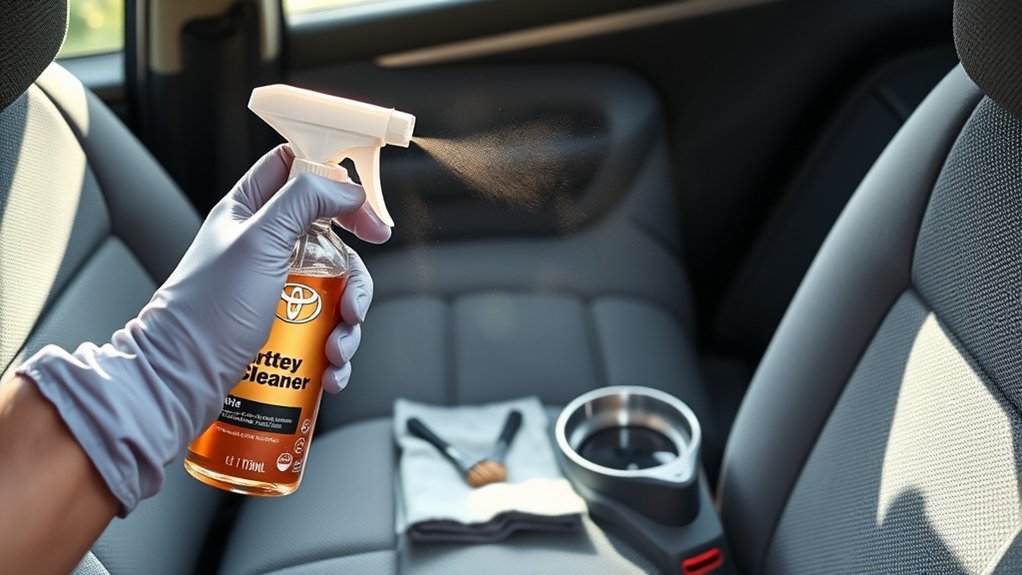
Stains on Toyota Camry cloth seats are usually easier to remove when you act quickly, use a cleaner approved for automotive fabric, and keep moisture to a minimum. The safest method is to vacuum first, identify the stain, test the cleaner in a hidden area, blot instead of aggressively rubbing, remove the residue, and let the seat dry completely.
Quick Answer
To remove stains from Toyota Camry cloth seats, vacuum the area, blot up moisture, test a fabric-safe automotive upholstery cleaner, and apply only enough product to dampen the stain. Agitate gently, blot or extract the cleaner, and ventilate the car until the seat is completely dry. Avoid untested vinegar, alcohol, or concentrated soap mixtures.
Key Takeaways
- Check the owner’s manual for your Camry’s model year and confirm that the seating surface is cloth before applying a cleaner.
- Vacuum first, treat a small area, and blot from the outside of the stain toward the center.
- Use a cleaner specifically labeled for automotive fabric and follow its dilution, dwell-time, rinsing, and ventilation instructions.
- Do not soak the seat. Excess moisture can cause water rings, lingering odor, slow drying, or a returning stain.
- Allow the seat to dry completely before sitting on it or closing the vehicle for an extended period.
At a Glance
| Time Required | 30–60 minutes of cleaning, plus approximately 2–6 hours of drying |
| Difficulty | Easy for fresh stains; moderate for dried, oily, or recurring stains |
| Tools Needed | Vacuum, white microfiber cloths, soft-bristle brush, fabric-safe automotive cleaner, clean water, and an optional upholstery extractor |
| Cost | About $10–$35 when using tools you already own; extractor rental or professional service costs more |
Before Cleaning Toyota Camry Cloth Seats
Start by confirming that the stained surface is cloth. Some Camry trims and model years may use cloth, SofTex, leather-trimmed upholstery, or a combination of materials. A cleaner that is appropriate for cloth may not be suitable for leather or synthetic trim.
Visit Toyota’s Manuals and Warranties page, select your Camry’s model year, and review the interior-cleaning instructions before using a new chemical or machine. When the manual and a cleaner label differ, follow the more restrictive instruction.
Warning: Work with the vehicle parked, switched off, and well ventilated. Never mix cleaning products. Do not soak seat seams, electrical seat controls, seat-belt buckles, speakers, connectors, or nearby electronics. Keep children and pets away from the work area until the upholstery is clean and dry.
Test every cleaner on a hidden section of fabric, such as the lower rear edge of the seat. Apply a small amount, remove it according to the label, and let the test area dry. Do not continue if the cloth becomes lighter, darker, stiff, fuzzy, sticky, or discolored.
Note: Ordinary dirt and drink stains usually need cleaning, not disinfecting. The CDC recommends using products appropriate for soft surfaces, following the label, ventilating the area, and avoiding chemical mixtures.
Preparation: Gather Your Cleaning Supplies for Cloth Seats
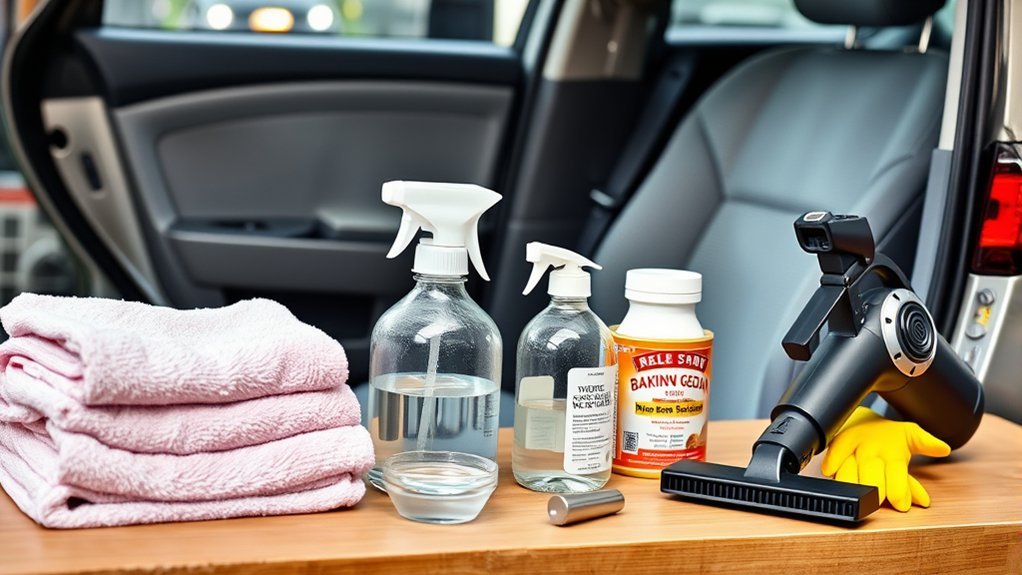
Gather the supplies before applying moisture so you can remove cleaner and residue without leaving the seat wet while searching for another tool.
- Vacuum with a crevice or upholstery attachment: Removes crumbs, sand, hair, and dry soil before they turn into muddy residue.
- White microfiber cloths: White cloths make it easier to see whether the stain or the seat dye is transferring.
- Soft-bristle upholstery brush: Use light pressure. A stiff brush can roughen or distort the fabric.
- Automotive upholstery cleaner: Choose a product whose label specifically permits use on fabric car seats.
- Clean water: Use only as directed for rinsing, damp-blotting, or filling an approved extractor.
- Spray bottle: Useful when the product requires controlled application, but avoid spraying large amounts directly onto the seat.
- Wet-and-dry extractor or upholstery machine: Optional for deep soil, provided its instructions permit automotive upholstery.
- Gloves: Recommended when handling biological messes or when required by the cleaner label.
A product carrying the EPA Safer Choice label has undergone EPA review for ingredient safety and performance. The certification does not guarantee compatibility with every Camry seat, so you must still check the surface directions and perform a spot test.
If you choose Simple Green All-Purpose Cleaner, follow the company’s current cloth car-seat directions. Its guidance includes spot testing, avoiding oversaturation, preventing the cleaner from drying on the upholstery, damp-blotting or extracting residue, and allowing the seat to dry fully.
Clean the touchscreen separately with the vehicle switched off and according to Toyota’s multimedia instructions. Never apply upholstery cleaner, vinegar, alcohol, or an all-purpose degreaser to the display.
Cleaning Methods for Different Types of Seat Stains
Identify the stain before choosing a treatment. A method that removes a drink spill may not work on grease, ink, or an odor-causing biological stain.
| Stain Type | Safest Starting Method | What to Avoid |
|---|---|---|
| Coffee, juice, soda, or water-based spills | Blot immediately with a white cloth. Apply a small amount of fabric-safe automotive cleaner, work from the outside inward, and damp-blot or extract the residue. | Do not rub a fresh spill across a larger area or flood the foam beneath the fabric. |
| Grease, oil, sunscreen, or makeup | Lift excess material without smearing it. Use an automotive upholstery product labeled for oily stains or grease. Repeat light treatments instead of using one heavy application. | Do not pour concentrated dish soap or kitchen degreaser onto the seat. A few drops of clear mild detergent should be used only when the manual or cleaner instructions allow it. |
| Ink or dye transfer | Use a product specifically labeled for ink or dye on automotive fabric. Work with small amounts and stop if color transfers from the seat itself. | Do not assume rubbing alcohol is safe. It may alter dyes or finishes and should be used only when the vehicle and product guidance support it. |
| Food, sauce, or sticky residue | Lift solids with a spoon or dull plastic edge. Blot the remaining moisture, apply upholstery cleaner sparingly, and rinse or extract as directed. | Do not grind food deeper into the weave with a stiff brush. |
| Urine, vomit, milk, or other odor-causing messes | Wear gloves, remove solids, blot moisture, and use a fabric-approved enzyme or odor treatment exactly as labeled. Extract residue and dry thoroughly. | Do not mix disinfectants, bleach, vinegar, peroxide, ammonia, or enzyme products. |
| Dried dirt or mud | Remove as much dry material as possible with a vacuum and soft brush before applying a damp cleaner. | Do not wet a thick layer of dry soil before vacuuming it. |
Pro Tip: When a spot-cleaned area begins to form a visible ring, make the final light cleaning pass from seam to seam across that seat panel. Keeping the moisture even and removing the residue evenly can produce a more uniform finish.
Step-by-Step Toyota Camry Cloth Seat Cleaning Guide
-
Park safely and ventilate the car. Work in shade or a protected garage with the doors or windows open. Switch off the vehicle and remove floor mats or personal items that could become wet.
-
Vacuum the complete seat. Vacuum the seat cushion, seatback, seams, piping, and gaps. Use light pressure so the attachment does not drag debris across the fabric.
-
Identify the stain and read the cleaner label. Confirm that the product permits automotive cloth upholstery. Note its dilution, dwell time, ventilation, rinsing, and protective-equipment instructions.
-
Test a hidden area. Treat a small concealed section and let it dry. Continue only if the color and texture remain unchanged.
-
Remove excess material. Lift solids with a spoon or dull plastic edge. Blot liquids with a white microfiber cloth, moving to a clean section of the cloth as moisture transfers.
-
Apply the cleaner sparingly. When the label permits, apply the cleaner to a microfiber cloth or a small controlled area rather than saturating the seat. Work from the outside edge of the stain toward the center.
-
Agitate gently. Use a soft-bristle brush only when needed. Make short, light passes that follow the fabric’s texture. Stop if the cloth begins to fuzz, pill, or lose color.
-
Remove cleaner and soil. Blot with a clean, lightly damp microfiber cloth or use an approved extractor with clean water. Repeat with fresh sections of cloth until little or no cleaner transfers.
-
Check the full panel. If the cleaned spot looks noticeably lighter or wetter than the surrounding fabric, make a light, even pass across the panel from seam to seam and remove the moisture uniformly.
-
Dry completely. Press dry towels against the fabric to remove remaining moisture. Leave the doors or windows open in a secure location and use moving air. Do not sit on the seat until the surface and padding feel completely dry.
Warning: More cleaner is not necessarily more effective. Repeatedly soaking the seat can drive the stain into the cushion, leave detergent behind, create water marks, and extend drying time.
How to Remove Deep or Returning Stains
A stain that disappears while wet but returns after drying is often caused by remaining soil or cleaner moving back toward the surface. Treat the cause instead of repeatedly spraying the visible mark.
The Stain Returns After Drying
Lightly re-treat the affected panel, then use a wet-and-dry upholstery extractor to remove as much liquid as possible. Make several extraction-only passes without adding more cleaner. Dry the seat quickly with ventilation and moving air.
A Water Ring Appears Around the Cleaned Area
Check that the fabric passed the original color test. Lightly clean the entire bounded panel from seam to seam, keeping the application even. Blot or extract uniformly instead of concentrating moisture on the ring.
The Fabric Feels Stiff or Sticky
This usually indicates remaining cleaner. Use a clean, barely damp microfiber cloth or an extractor with clean water to remove residue. Avoid adding another chemical until the original product has been removed.
Seat Color Transfers to the Cleaning Cloth
Stop immediately. Blot away the cleaner with clean water only if the product instructions permit it, dry the area, and consult a Toyota dealer or professional automotive upholstery cleaner before continuing.
An Odor Remains
Confirm that the cushion is fully dry. If the spill penetrated the padding, surface cleaning may not reach it. Persistent sour, musty, biological, or smoke odors may require extraction, foam treatment, partial upholstery removal, or professional odor remediation.
How to Maintain Clean Toyota Camry Cloth Seats
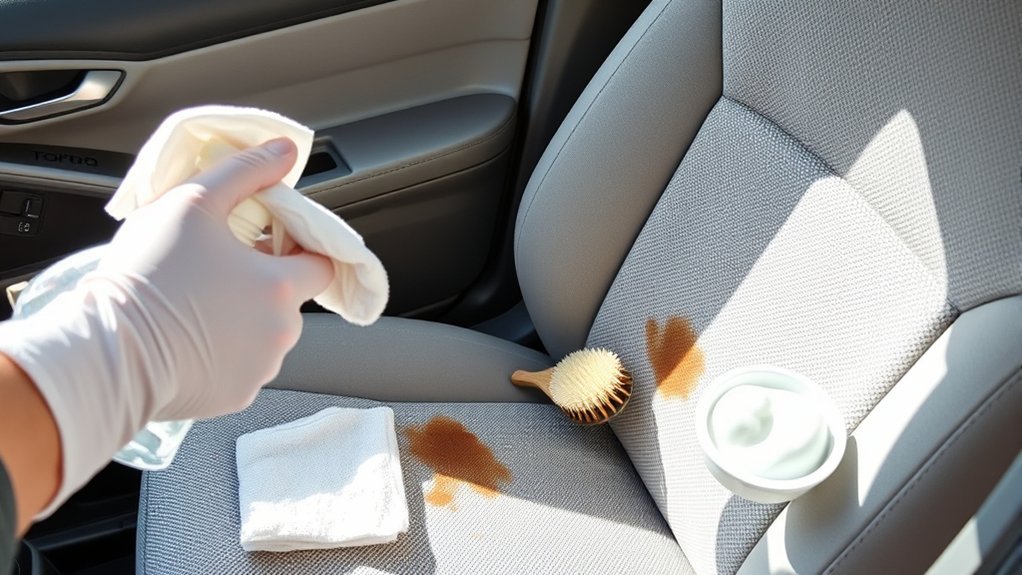
Regular maintenance prevents loose soil from becoming embedded and gives you time to treat spills before they dry.
- Vacuum regularly: Pay attention to seams, seat edges, and the space between the cushion and seatback.
- Blot spills promptly: Keep a clean white microfiber cloth in the trunk for quick cleanup.
- Avoid eating messy foods in the vehicle: Sauces, dairy drinks, oils, and strongly colored beverages are harder to remove after they soak into the padding.
- Keep the interior dry: Address open windows, wet clothing, leaking containers, or water intrusion promptly.
- Clean only when needed: Excessive wet cleaning can leave residue and wear the fabric.
- Use a protector cautiously: Apply a fabric protector only when both the product label and the Camry manual permit its use on automotive cloth. Keep it off buckles, controls, displays, and non-fabric trim.
A lightly damp microfiber cloth may be used for routine surface dust only when the upholstery remains nearly dry. Follow with ventilation so moisture does not remain trapped in the seat.
When to Consider Professional Seat Cleaning
Professional cleaning is appropriate when normal spot treatment has failed, when the upholstery is changing color or texture, or when the contamination has reached the seat padding.
Seek professional help for:
- Ink or dye that continues to spread or transfer
- Large grease, paint, adhesive, or chemical spills
- Persistent urine, vomit, milk, smoke, or musty odors
- Seats that remain damp long after cleaning
- Water intrusion from flooding, a leaking window, or contaminated water
- Visible mold or recurring mildew odor
- Fabric that has faded, stiffened, pilled, separated, or become damaged
- Stains that return after careful extraction and complete drying
The EPA’s mold-cleanup guidance explains that mold can penetrate porous materials and may be difficult or impossible to remove completely. If a seat has extensive mold, contaminated-water exposure, an unresolved moisture source, or possible HVAC contamination, stop using ordinary upholstery cleaners and consult a qualified remediation or automotive-interior professional.
The safest stain-removal process uses the least moisture and least aggressive cleaner that can remove the soil without changing the seat’s color, texture, or function.
Related Guides
Frequently Asked Questions
How do you clean stains from Toyota Camry cloth seats?
Vacuum the seat, blot the stain, test a fabric-safe automotive upholstery cleaner in a hidden area, and apply a small amount from the stain’s outer edge toward the center. Agitate gently, damp-blot or extract the residue, and allow the seat to dry completely before use.
How do you get deep stains out of cloth car seats?
Use repeated light treatments rather than one heavy application. After gently loosening the stain, use an upholstery extractor to remove cleaner, soil, and moisture. Make several extraction-only passes and dry the seat with ventilation. A stain that keeps returning may be in the foam and require professional cleaning.
Can you use Simple Green on Toyota Camry cloth seats?
Simple Green publishes instructions for cleaning cloth car seats, but you should first confirm compatibility with your Camry’s model-year manual and spot-test the product. Follow the current manufacturer directions, avoid oversaturation, do not let the cleaner dry on the fabric, remove residue, and air-dry completely.
Should you use vinegar or rubbing alcohol on Camry cloth seats?
Do not use either as a default treatment. Vinegar can leave odor or affect some fabrics, and alcohol may alter dye or surface treatments. Use a product labeled for automotive cloth and the specific stain. Test it in a hidden area and follow the Toyota manual and product label.
How long do cloth car seats take to dry?
A lightly treated seat may dry in a few hours, while an extracted or oversaturated seat can take much longer. Temperature, humidity, airflow, and the amount of liquid all affect drying. Keep the vehicle ventilated and do not use the seat until both the surface and padding feel completely dry.
How do you remove water rings from cloth car seats?
After confirming that the fabric is colorfast, lightly clean the complete seat panel from seam to seam. Keep the moisture even, then blot or extract the panel uniformly. Avoid repeatedly soaking only the visible ring because that can create another outline.
How should the rest of a Toyota Camry interior be cleaned?
Vacuum loose debris first, then use products approved for each individual surface. Cloth, SofTex, leather, hard plastic, glass, piano-black trim, and touchscreens may require different products. Follow the model-year owner’s manual and never apply upholstery cleaner to displays or electrical controls.
Sources
- Toyota Manuals and Warranties — provides access to model- and year-specific Toyota owner documentation.
- Simple Green: How to Clean Cloth Car Seats — supports vacuuming, spot testing, limited moisture, residue removal, and complete drying.
- CDC: When and How to Clean and Disinfect — supports surface-appropriate products, label compliance, ventilation, and avoiding chemical mixtures.
- U.S. EPA: Mold Cleanup in Your Home — supports prompt moisture control and professional evaluation of mold in porous materials.
- U.S. EPA: Learn About the Safer Choice Label — explains EPA review of certified cleaning-product ingredients and performance.
Conclusion
To remove stains from Toyota Camry cloth seats without causing a larger problem, use a controlled process: check the model-year manual, vacuum thoroughly, identify the stain, test the cleaner, apply minimal moisture, remove the residue, and dry the seat completely. Avoid treating vinegar, rubbing alcohol, dish soap, or any all-purpose cleaner as universally safe. When a stain keeps returning, the fabric changes color, or moisture and odor have reached the padding, professional upholstery cleaning is the safer choice.
