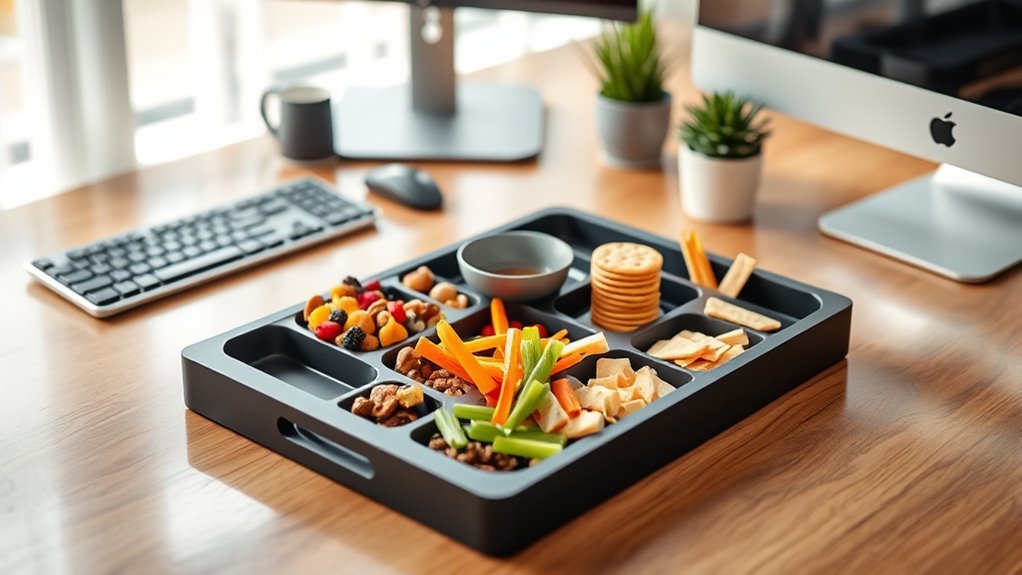
A versatile office snack tray keeps packaged snacks and small food containers organized without taking over the desk. The best setup depends on available space, whether the tray is personal or shared, how easily it can be cleaned, and whether food will touch the surface directly. Compartments, covers, removable inserts, and clear labels can make everyday use simpler while reducing clutter.
Quick Answer
For an office desk, choose a snack tray that fits beside your keyboard without crowding the work surface, has separate compartments, and is easy to wipe clean. Use covered or individually packaged snacks for shared spaces, keep perishable foods refrigerated, and verify that any surface touching unwrapped food is intended for food contact.
Key Takeaways
- Choose a tray that leaves enough room for your keyboard, mouse, documents, and other daily work items.
- Use compartments to separate sweet, savory, allergen-sensitive, or individually packaged snacks.
- Prefer easy-to-clean surfaces and use a cover when protection from dust or handling is useful.
- Verify food-contact suitability before placing unwrapped food directly on decorative wood, bamboo, marble, metal, or plastic trays.
- Keep perishable foods such as yogurt, cheese, hummus, and cut produce refrigerated until they are ready to be eaten.
Why Use an Office Snack Tray?
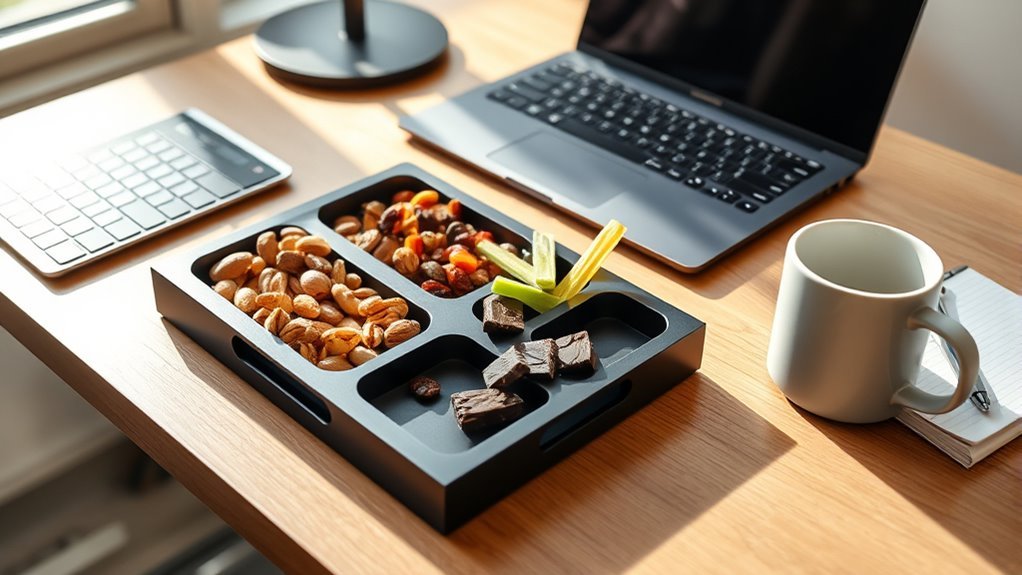
An office snack tray is useful mainly because it puts frequently used snacks in one defined place instead of scattering packets, containers, and crumbs across a desk. For a personal workspace, that can mean fewer trips to a cabinet or break room. For a shared area, a clearly organized tray makes it easier for coworkers to see what is available.
A good office snack tray is less about promising higher productivity and more about making snacks easier to find, easier to manage, and less likely to create desk clutter.
A varied selection can also make a shared snack area more useful to people with different preferences. The CDC recommends keeping nutritious snacks available at home or work and lists choices such as vegetables, fruit, nuts, and seeds.
Providing snacks may be appreciated by employees or coworkers, but the effect on morale, focus, or productivity will vary by workplace and person. It is better to treat the tray as a practical convenience than as a guaranteed performance tool.
Key Features to Look for in an Office Snack Tray
When choosing an office snack tray, focus first on organization, cleaning, and the amount of space you actually have. Useful features include:
- Separate compartments: Keep different snack types from becoming mixed or crushed.
- A stable base: Rubber feet or a nonslip bottom can help prevent the tray from sliding when items are removed.
- Raised edges: A small lip helps keep packets and loose containers from falling onto the desk.
- Removable inserts: These make crumbs easier to empty and allow the layout to change.
- A lid or cover: Helpful for limiting dust and unnecessary handling, although a loose cover should not be treated as airtight food storage.
- Easy-clean construction: Smooth surfaces and uncomplicated corners are easier to wipe than deeply carved or highly textured designs.
- Portable handles: Useful when the tray moves between a desk, conference room, kitchen, or shared workspace.
For a shared setup, clear labels can make categories easier to understand. Keeping packaged foods in their original wrappers is especially useful because coworkers can check ingredients, dates, and allergen information for themselves.
How to Choose the Right Size for Your Desk
There is no single ideal office snack tray size. Instead of relying on a fixed 12- to 24-inch recommendation, measure the part of the desk that remains free after the computer, keyboard, mouse, phone, lamp, and paperwork are in their normal positions.
- Measure the available width and depth. Do not measure the entire desktop; measure only the space you are willing to dedicate to snacks.
- Leave working clearance. The tray should not interfere with mouse movement, typing, writing, charging cables, or frequently used drawers.
- Check height. Tall containers or tiered organizers should not block a monitor or create an awkward reach.
- Choose capacity last. A smaller tray that is refilled regularly is often easier to manage than an oversized tray that turns into long-term storage.
Pro Tip: Trace the proposed tray footprint on a sheet of paper and leave it on the desk for a normal workday. If it interferes with typing, paperwork, or mouse movement, choose a smaller footprint before buying.
Best Materials and Styles for an Office Snack Tray
A well-chosen tray balances appearance with cleaning needs. Wood, bamboo, marble, metal, ceramic, and durable plastic can all work, but a decorative tray is not automatically designed for direct contact with unwrapped food.
| Material | Best For | Main Consideration |
| Wood or bamboo | Warm, natural-looking offices | Follow the maker’s cleaning and food-contact instructions; unfinished surfaces can absorb moisture. |
| Plastic | Lightweight, practical organization | Check whether it is intended for food contact and whether it is dishwasher-safe. |
| Metal | Modern or industrial workspaces | Choose a smooth, corrosion-resistant finish and dry it after cleaning. |
| Ceramic | Serving snacks in separate wells | Easy to wipe when glazed, but heavier and breakable. |
| Marble | Formal or decorative desks | Heavy and potentially stain-prone; confirm direct-food-contact suitability before serving unwrapped food. |
The FDA Food Code is written for retail and food-service settings rather than ordinary personal desks, but its emphasis on safe, durable, smooth, and cleanable food-contact surfaces is a useful benchmark when food will touch a reusable tray directly. The FDA issued the 2026 Food Code as its latest full edition.
For style, minimalist trays with straight lines tend to blend easily into modern offices, while wood and bamboo suit warmer or more rustic spaces. Compartments can provide visual order regardless of material.
Food Safety and Allergens for Office Snack Trays
A tray of crackers or individually wrapped snacks is much easier to manage than a tray holding refrigerated foods. Yogurt, cheese, hummus, cut fruit, cut vegetables, and similar perishable foods should stay refrigerated until they are ready to be eaten.
Warning: USDA guidance says perishable food should not remain at room temperature for more than two hours, or more than one hour when the temperature is above 90°F (32°C). Do not leave yogurt, cheese, hummus, cut produce, or similar foods sitting on a desk all day.
See the USDA Food Safety and Inspection Service guidance for current safe-handling recommendations.
Allergens matter even more when several people share one tray. The FDA identifies nine major food allergens in the United States: milk, egg, fish, Crustacean shellfish, tree nuts, peanuts, wheat, soybeans, and sesame. For packaged foods, keep the original labels available instead of emptying everything into anonymous jars or bins.
If coworkers have food allergies, separate items where practical and avoid presenting a shared tray as “allergen-free” unless the workplace has controls that genuinely support that claim. FDA guidance also recognizes allergen labeling and prevention of unintended allergen exposure as important food-safety considerations.
Best Snacks for an Office Snack Tray
The most convenient desk snacks are generally shelf-stable, individually portioned, and unlikely to leak or leave heavy residue. A balanced selection can include both everyday nutrient-dense options and occasional treats.
Shelf-Stable Snack Ideas
- Whole apples, bananas, oranges, or other durable whole fruit
- Unsalted or lightly salted nuts and seeds, with clear allergen labeling
- Dried fruit without excessive added sugar
- Whole-grain crackers
- Popcorn in sealed individual packages
- Granola or protein bars with ingredient labels intact
- Single-serve nut or seed butter packets where appropriate
- Small portions of dark chocolate or other sweets
Refrigerated Snack Ideas
- Yogurt cups
- String cheese or individual cheese portions
- Vegetable sticks with hummus
- Fresh berries or cut fruit
- Prepared snack boxes containing cheese, fruit, vegetables, or other perishables
The current Dietary Guidelines for Americans, 2025–2030 emphasize whole, nutrient-dense foods including protein foods, dairy, vegetables, fruits, healthy fats, and whole grains. An office snack tray does not need to contain only one type of food, but offering several categories gives people more useful choices.
How an Office Snack Tray Fits Your Workday
A personal office snack tray can keep frequently used snacks within reach and prevent packages from spreading across drawers and work surfaces. A shared tray serves a different purpose: it needs clearer organization, visible ingredient information, and a predictable restocking routine.
The most useful snack setup is one that people can understand at a glance: clearly grouped choices, visible labels, a clean surface, and no uncertainty about which foods require refrigeration.
Different snack choices can accommodate varied preferences without assuming everyone wants the same food. Keeping categories separate also makes it easier to see what is running low and which items are rarely chosen.
For an individual desk, position the tray where reaching for food does not require leaning across a keyboard or computer. Avoid placing open drinks, crumb-heavy foods, or oily snacks directly beside electronics.
A shared snack tray can also provide a casual point of interaction among coworkers, but that social benefit is secondary to good organization, cleanliness, and easy access.
How to Organize and Restock Office Snacks
A simple system works better than an elaborate display that becomes difficult to maintain.
- Group snacks by category. For example, use separate areas for fruit, savory snacks, bars, sweets, and refrigerated items.
- Keep labels visible. Do not discard original packaging when coworkers may need ingredient or allergen information.
- Put older stock in front. Use snacks with nearer best-by dates before newly purchased items.
- Check the tray regularly. Remove empty wrappers, crumbs, damaged packages, and food that is past its recommended date.
- Clean before restocking. Follow the tray manufacturer’s care instructions and allow the surface to dry before replacing food.
- Restock in smaller amounts. Keep extra inventory elsewhere instead of overcrowding the display.
Pro Tip: For a shared office, a short weekly check is usually easier than waiting until everything is empty. Note what disappeared quickly, what remained untouched, and what is nearing its date before placing the next order.
Where to Buy an Office Snack Tray
Office snack trays are sold through home-goods retailers, restaurant-supply stores, office organizers, specialty makers, and marketplaces such as Etsy. The right source depends on whether you want a simple organizer, a direct-food-contact serving tray, a personalized item, or a larger mobile snack station.
Etsy offers many handmade and customizable options, but listings vary widely in intended use. Recent examples include the Foldable Wooden Snack Cart, Personalized Couchbar, Girl Dinner Charcuterie Board, and Handmade Marble Rectangular Tray. These products serve different purposes: the wooden cart is much larger than a desk tray, the Couchbar is designed primarily for sofa use, the ceramic board is a serving piece, and the marble tray can function as a decorative organizer or serving surface depending on the maker’s instructions.
Marketplace prices should be treated as snapshots rather than permanent specifications. At the time these listings were checked, the Foldable Wooden Snack Cart was shown around $321.75+ during a promotion, the Personalized Couchbar around $54.31+, the Girl Dinner board around $90+, and the Handmade Marble Rectangular Tray around $99+ before possible sale pricing. Promotions, configurations, shipping costs, stock, and seller terms can change.
A practical shortlist may therefore include:
- A compact compartment tray for an individual desk
- A covered organizer for packaged shared snacks
- A food-safe serving board for meetings
- A marble, wood, or metal catchall when snacks remain wrapped
- A rolling cart only when the office needs a larger mobile station
Before buying, compare actual dimensions, cleaning instructions, food-contact guidance, lid design, return terms, customization, shipping, and recent vendor feedback rather than choosing by appearance alone.
Frequently Asked Questions
What are some good desk snacks for the office?
Good shelf-stable options include whole fruit, nuts or seeds with clear allergen labels, whole-grain crackers, popcorn, dried fruit, and individually wrapped bars. Yogurt, cheese, hummus, berries, cut fruit, and cut vegetables can also work when they remain refrigerated until needed.
What are some good ideas for a snack tray?
Use separate compartments for fruit, savory snacks, bars, and occasional sweets. Keep frequently chosen items at the front, avoid overfilling the tray, retain ingredient labels for shared snacks, and use a cover where dust protection is useful.
What are some good snack items to bring to the office?
Practical options include apples, bananas, nuts, seeds, crackers, popcorn, granola bars, protein bars, and dark chocolate. Refrigerated choices can include yogurt, cheese, hummus, berries, and vegetable sticks when safe cold storage is available.
How should office snacks be organized?
Group snacks into simple categories, keep original labels visible, place older stock in front, and avoid packing the tray so tightly that items become hidden. In a shared office, check the tray regularly for crumbs, damaged packages, expired products, and items that need replenishing.
Can yogurt, cheese, or hummus stay in a desk snack tray?
Not for an entire workday without temperature control. USDA guidance says perishable food generally should not remain at room temperature for more than two hours, or more than one hour when the temperature is above 90°F (32°C). Keep these foods refrigerated until they are ready to be eaten.
How often should an office snack tray be cleaned?
Clean visible crumbs and spills promptly and give the tray a thorough cleaning whenever it is emptied or restocked. Follow the manufacturer’s instructions for the material, especially for wood, bamboo, marble, painted surfaces, and products labeled dishwasher-safe.
Conclusion
A versatile snack tray can keep an office desk organized while making snacks easier to store and reach. The best choice is not simply the most decorative one: it should fit the available workspace, be easy to clean, and suit the type of food being stored. Wood, bamboo, marble, metal, ceramic, and durable plastic can all work when used according to their intended purpose.
For shared trays, visible labels, sensible allergen precautions, regular cleaning, and safe refrigeration of perishable foods matter more than elaborate presentation. A compact, well-managed tray can reduce clutter and add a polished touch without interfering with the work area.
Sources
- U.S. Food and Drug Administration — FDA Food Code — current food-contact and retail food-safety framework, including the 2026 edition.
- U.S. Food and Drug Administration — Food Allergies — major food allergens, labeling, and allergen-safety information.
- USDA Food Safety and Inspection Service — Keep Food Safe — safe handling and time limits for perishable foods at room temperature.
- Centers for Disease Control and Prevention — How to Have Healthier Meals and Snacks — practical snack guidance for home and work.
- HHS Office of Disease Prevention and Health Promotion — Dietary Guidelines for Americans, 2025–2030 — current federal nutrition guidance.