
Moving your baby from an infant car seat or bassinet into a regular stroller seat is a big step, but it should happen only when your baby has enough strength and stability to sit safely. Most babies are ready for a stroller seat around 6 to 8 months, but age alone is not enough. The safest choice depends on head control, independent sitting, stroller recline, harness fit, and the manufacturer’s limits.
Quick Answer
Most babies can use a stroller seat without a car seat when they can hold their head steady, sit with little or no support, and fit the stroller’s age, height, and weight limits. This often happens around 6 to 8 months, but some babies need more time.
Key Takeaways
- Newborns need a bassinet, infant car seat attachment, or fully reclining stroller seat with proper head and neck support.
- Most babies move to a regular stroller seat around 6 to 8 months, once they can sit steadily and control their head.
- Always follow the stroller manufacturer’s age, height, weight, recline, and harness instructions.
- Use the harness every time, lock the brake when stopped, and avoid hanging heavy bags from the handles.
- If your baby was premature, has low muscle tone, or has medical needs, ask your pediatrician before changing stroller positions.
At a Glance
| Typical Age | Around 6 to 8 months, depending on your baby’s development |
| Main Requirement | Strong head and neck control plus stable sitting with little or no support |
| Before 6 Months | Use a bassinet, infant car seat attachment, or fully reclining stroller approved for newborn use |
| Safety Check | Confirm the harness fits snugly, the seat reclines as needed, and your baby meets stroller limits |
Understanding Newborn Stroller Usage
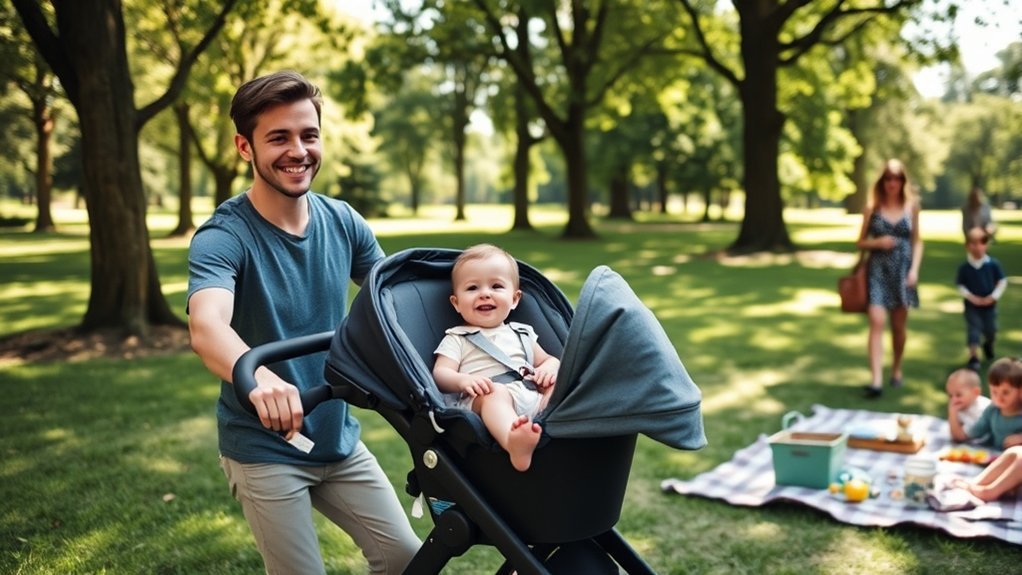
When you’re choosing a stroller for a newborn, safety and body support matter more than convenience. Newborns cannot hold their heads up well, so they need a stroller setup that lets them lie flat or nearly flat while keeping the head, neck, and airway supported. A bassinet stroller, an approved infant car seat travel system, or a stroller with a fully reclining newborn-safe seat is usually the best option from birth.
A traditional upright stroller seat is different. It is usually meant for babies who can sit with control and stay stable during movement. For many babies, that begins around 6 months, but some are ready closer to 7 or 8 months. Always check your stroller manual because each model has its own approved age range, recline positions, weight limits, height limits, and harness instructions.
Before every outing, buckle the harness, check that the stroller locks open, and inspect the wheels, brakes, seat, and straps for damage. These small checks can prevent falls, tipping, pinching, or unsafe seating during walks.
Warning: Do not place a newborn in an upright stroller seat unless the stroller is specifically approved for newborn use and provides the required recline and support. An unsupported upright position can let the baby’s head slump forward, which may affect breathing.
Signs Your Baby Is Ready for a Stroller Seat
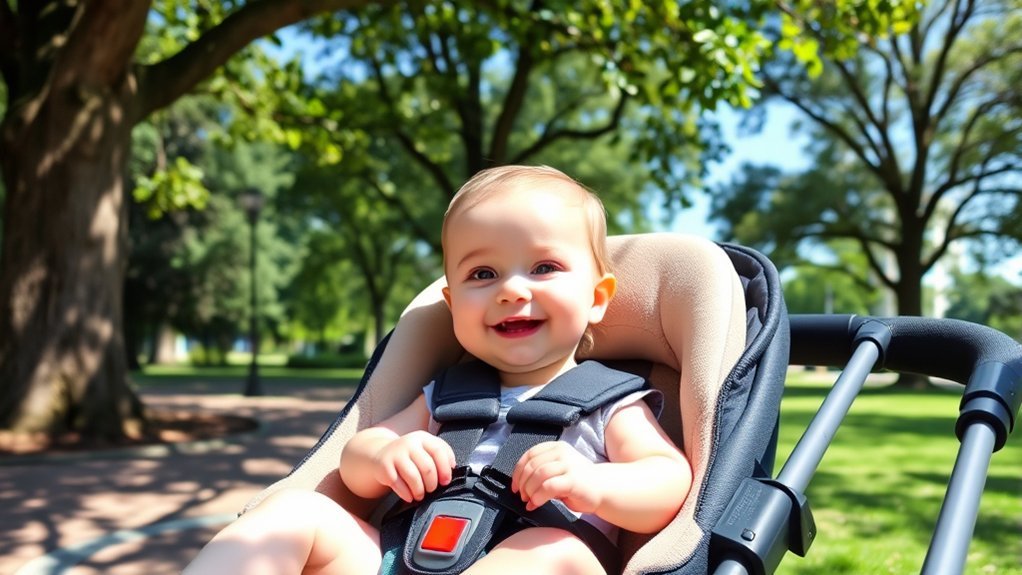
As your baby grows, you will notice signs that they may be ready to move from a car seat or bassinet into a stroller seat. This change often happens between 6 and 8 months, but your baby’s skills are more important than the calendar.
Your baby is usually ready for a stroller seat when they can hold their head steady, sit with little support, and stay comfortable in the seat without slumping.
- Strong head and neck control: Your baby should hold their head upright and steady while seated, even when the stroller moves gently.
- Independent or nearly independent sitting: Your baby should sit with little or no support and should not fold forward, lean sharply to the side, or slide down.
- Good trunk stability: Your baby should have enough core strength to stay centered in the stroller seat with the harness properly adjusted.
- Comfort in the stroller position: Your baby should look relaxed, alert, and well supported instead of strained, curled, or slumped.
- Proper harness fit: The stroller straps should sit correctly on your baby’s shoulders, waist, and crotch area without gaps or looseness.
- Manufacturer approval: Your baby should meet the stroller’s minimum age, height, weight, and seat-position requirements.
Types of Strollers Suitable for Newborns
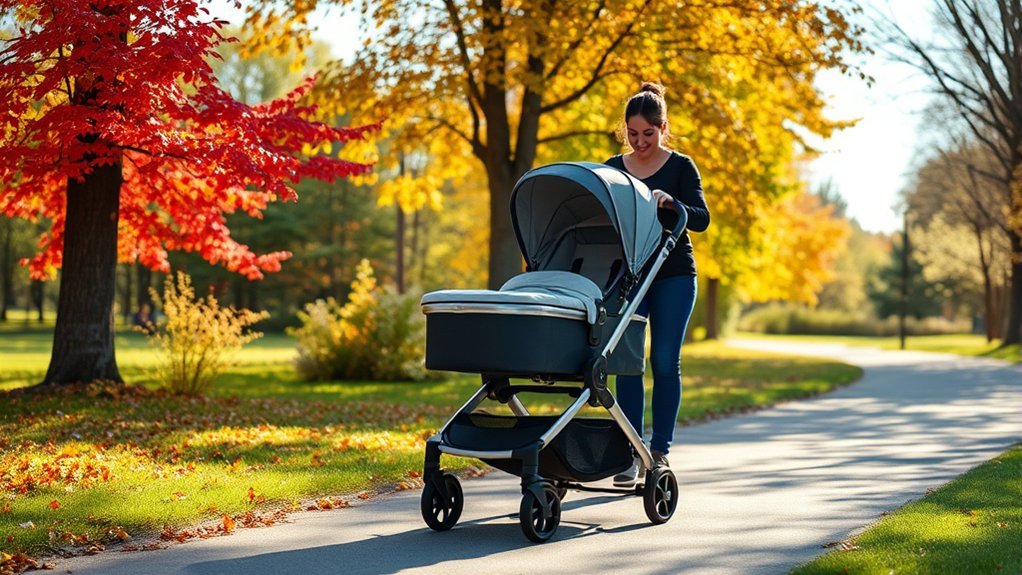
When choosing a stroller for your newborn, look for a design that supports a flat or deeply reclined position. The best newborn stroller setup depends on your daily routine, storage space, travel needs, and whether you want to move the baby between the car and stroller without waking them.
Bassinet Stroller Features
Bassinet strollers are made for the earliest months because they let your baby lie flat. This position gives better support to the head, neck, back, and hips than a standard upright stroller seat.
- Flat sleeping-style surface: A true bassinet allows your baby to rest on a flat surface during supervised stroller outings.
- Removable bassinet: Many models let you attach and detach the bassinet from the stroller frame for easier transitions.
- Large canopy: A good canopy helps protect your baby from direct sun, wind, and light rain while still allowing airflow.
- Firm, supportive base: The bassinet should not sag, fold, or let your baby sink into soft padding.
- Clear age and weight limits: Stop using the bassinet once your baby exceeds the limit or begins pushing up, rolling strongly, or trying to sit.
These features make bassinet strollers a smart choice for early outings, especially when your baby is too young for an upright seat.
Infant Car Seat Compatibility
A stroller that accepts an infant car seat can make short errands easier. You can move the car seat from the vehicle to the stroller frame without unbuckling your baby. This setup is often called a travel system.
Still, an infant car seat should be used according to the manufacturer’s instructions. It should lock securely into the stroller adapter, sit at the approved angle, and never be placed loosely on top of a stroller seat. Check the car seat and stroller compatibility list before buying or using adapters.
Also remember that car seats are designed mainly for travel in vehicles. For long walks or extended stroller time, a bassinet or properly reclined stroller seat may be more comfortable for a newborn, as long as the stroller is approved for that use.
Fully Reclining Strollers
Some full-size strollers are approved from birth because their seats recline deeply enough for newborns. If you choose this type, confirm that the recline is suitable for newborn use, not just for naps in older babies. A newborn-safe reclining stroller should keep your baby’s head from falling forward and should provide enough support so the baby does not roll into the side of the seat.
Strollers That Are Not Ideal for Newborns
Lightweight umbrella strollers, jogging strollers without newborn-approved attachments, and basic upright stroller seats are usually not suitable for newborns. Many of these models are designed for babies who can already sit well. If the seat does not recline enough or the harness cannot fit a small baby securely, wait until your baby is older and stronger.
Safety Features to Consider in Strollers
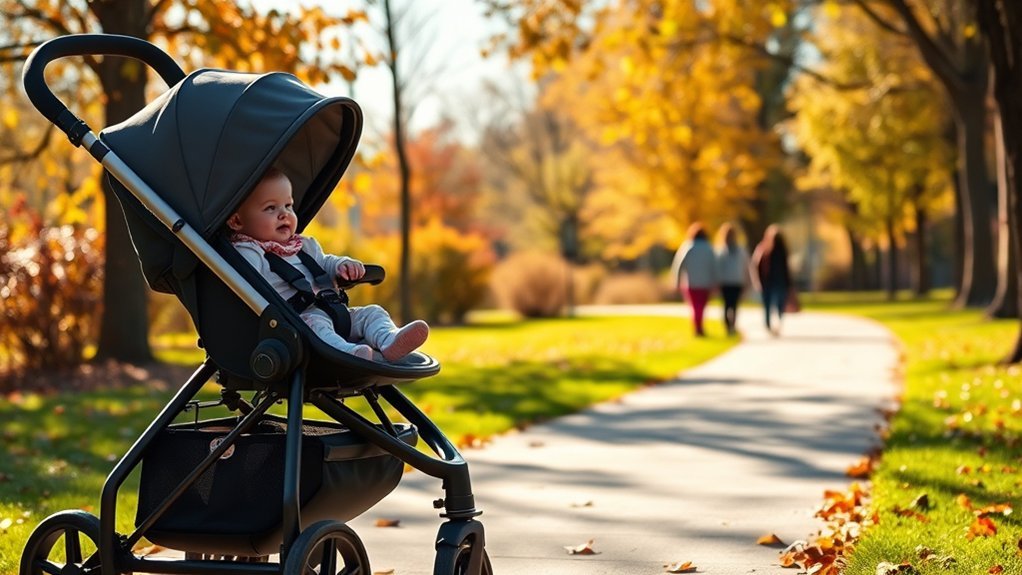
When choosing a stroller, look beyond style and storage. The safest stroller is one that fits your baby’s current stage and stays stable during real daily use. Harness design, brakes, recline, frame stability, wheel quality, and adapter security all matter.
Harness and Strapping Systems
The harness keeps your baby from sliding, standing, leaning out, or falling from the stroller. A secure harness is especially important once your baby becomes more active.
- 5-point harness: Choose a stroller with shoulder straps, waist straps, and a crotch strap when possible.
- Adjustable height: The harness should adjust as your baby grows so the straps sit at the correct level.
- Snug fit: The straps should be close to your baby’s body without digging into their skin.
- Easy buckle: The buckle should close securely for you but not open easily for a child.
- Regular checks: Look for fraying, twisting, loose stitching, cracked buckles, or stretched straps.
Stroller Stability Features
Stroller stability helps prevent tipping, rolling, and sudden movement. This is especially important when you use a car seat adapter, store items in the basket, or walk on uneven sidewalks.
| Feature | Why It Matters |
|---|---|
| Secure Harness System | Keeps your baby safely seated and helps prevent falls |
| Parking Brake | Stops the stroller from rolling when parked |
| Wide Stable Frame | Reduces the risk of tipping during turns or bumps |
| Locked Car Seat Adapter | Keeps the infant seat attached correctly to the stroller frame |
| Low Storage Basket | Keeps extra weight low instead of pulling the stroller backward |
Regularly inspect your stroller’s frame, wheels, brakes, folding lock, and seat attachments. If something feels loose, cracked, bent, or unstable, stop using the stroller until it is repaired or replaced.
Pro Tip: Put diaper bags and shopping bags in the storage basket instead of hanging them from the handlebar. Weight on the handle can make some strollers tip backward.
Assessing Your Baby’s Developmental Milestones
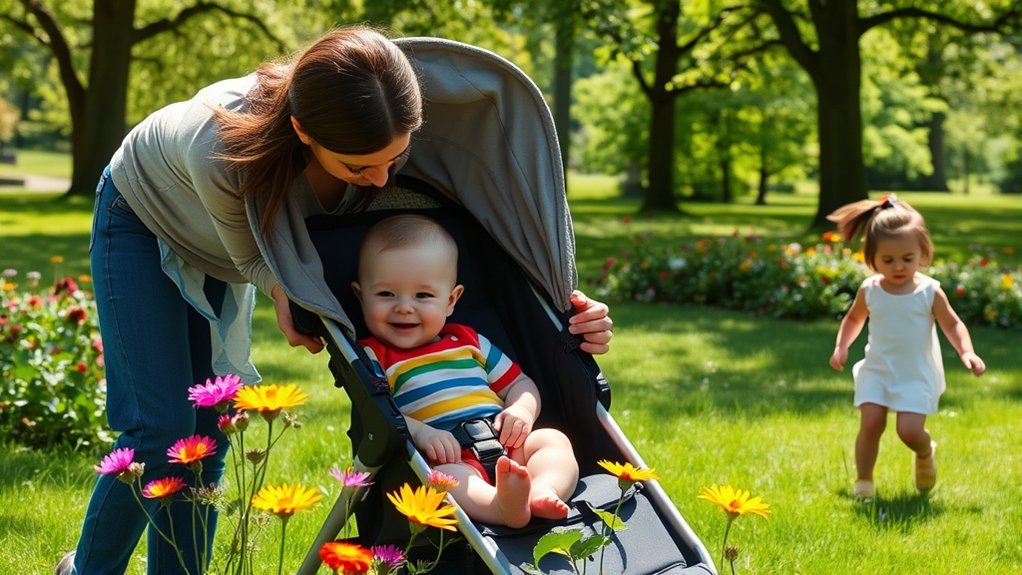
Around 6 months of age, many babies begin showing signs that they are ready for a stroller seat without a car seat. Some babies reach this point earlier, and others need more time. That difference is normal. The goal is to watch your baby’s body control, not rush the transition.
Use this simple readiness checklist before moving your baby into a more upright stroller seat:
- Strong head and neck control: Your baby can hold their head steady while seated and does not bob forward repeatedly.
- Stable sitting: Your baby can sit with little or no support for short periods.
- Good posture in the stroller: Your baby does not slump sideways, slide down, or curl forward when buckled.
- Comfort and alertness: Your baby seems relaxed, curious, and able to look around comfortably.
- Safe harness position: The straps fit securely across the shoulders, waist, and between the legs.
- No special medical concerns: If your baby was premature or has breathing, muscle tone, spine, hip, or developmental concerns, ask your pediatrician first.
If your baby does not meet these signs yet, continue using the infant car seat attachment, bassinet, or reclined stroller position approved for their age and size.
Transitioning From Car Seat to Stroller Seat
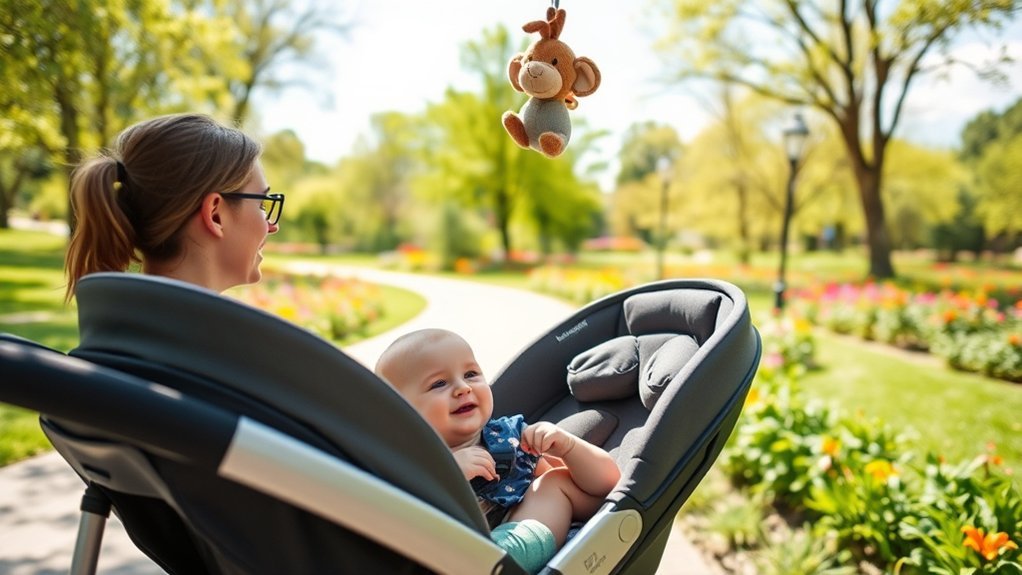
As your baby approaches 6 to 8 months, you can start checking whether they are ready to move from a car seat or bassinet into the stroller seat. Start slowly. Your baby may need time to get used to the new view, new posture, and different harness position.
Here’s a quick reference table to help you decide:
| Criteria | Considerations |
|---|---|
| Head and Neck Control | Baby keeps their head stable without slumping forward |
| Age Range | Often around 6 to 8 months, but development matters more than age |
| Stroller Specifications | Check minimum age, weight, height, recline, and harness instructions |
| Seat Position | Begin with a reclined position before moving fully upright |
| Safety Features | Use a snug harness, stable frame, working brake, and proper support |
For the first few outings, keep walks short and use a slightly reclined seat if your stroller allows it. Watch your baby’s posture closely. If they slump, fuss, slide down, or seem uncomfortable, return to the previous setup and try again later.
Best Practices for Stroller Safety
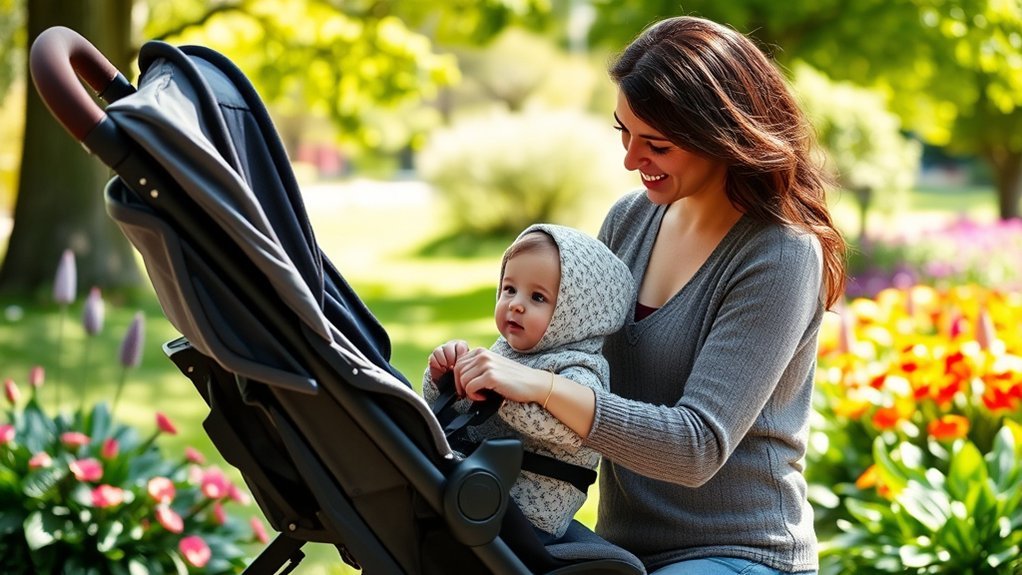
Once your baby is seated in the stroller, keep safety at the center of every outing. A few habits can make walks smoother and safer for both of you.
- Buckle your baby every time: Use the harness even for short walks or when your baby seems calm.
- Use the parking brake: Lock the brake whenever you stop, especially on slopes, sidewalks, parking lots, or near doors.
- Keep one hand on the stroller: Stay close when near traffic, curbs, stairs, elevators, ramps, or uneven ground.
- Avoid hanging bags from handles: Place bags in the storage basket to reduce tipping risk.
- Keep hot drinks away: Do not place hot coffee, tea, or soup where it could spill onto your baby.
- Check the stroller regularly: Inspect wheels, brakes, harness straps, folding locks, adapters, and frame joints.
- Use shade wisely: Use the canopy for sun protection, but avoid covering the stroller with a thick blanket because it can trap heat and reduce airflow.
- Stay within limits: Follow the stroller’s weight and height limits, including basket and accessory limits.
Note: A stroller is not a substitute for a crib or bassinet for unsupervised sleep. If your baby falls asleep during a walk, keep them buckled, visible, and positioned safely, then move them to a safe sleep space when practical.
Evaluating Stroller Age and Weight Limits
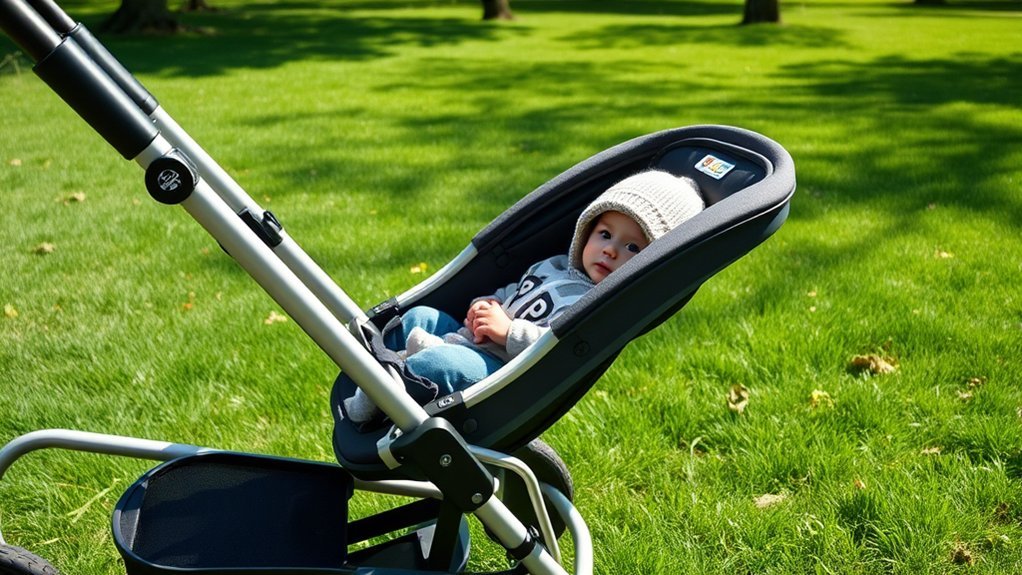
When evaluating stroller age and weight limits, start with the stroller manual. Many full-size strollers can hold toddlers up to about 40 to 50 pounds, but that does not mean the seat is safe for a newborn or young infant. Maximum weight and minimum age are different safety details.
Look for these details in the manual or product label:
- Minimum age: Some seats are approved from birth only when fully reclined, while others start at 6 months.
- Maximum weight: This tells you when your child becomes too heavy for the stroller seat.
- Maximum height: A child can outgrow the seat by height before reaching the weight limit.
- Recline rules: Some strollers require a certain recline angle for younger babies.
- Car seat adapter rules: Only use adapters approved for your exact car seat and stroller model.
- Basket and accessory limits: Too much extra weight can affect balance and steering.
If your baby is under 6 months or does not have steady head and neck control, make sure the stroller has a fully reclining newborn-approved position, bassinet, or compatible infant car seat. If not, wait before using the regular stroller seat.
Tips for a Smooth Transition to Upright Stroller Use
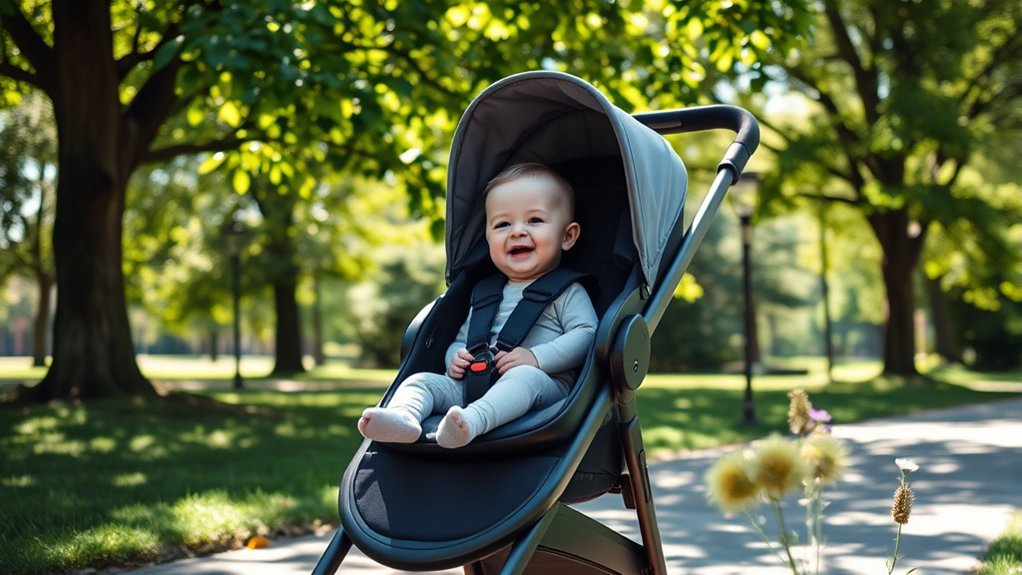
To make the move to upright stroller use easier, give your baby time to adjust. A new stroller position changes what they see, how their body rests, and how the harness feels.
Start with short, calm walks in a slightly reclined stroller position before using a fully upright seat for longer outings.
- Start reclined: Use the lowest approved stroller seat angle first, then raise it gradually as your baby gets stronger.
- Try short walks: Begin with 10 to 15 minutes and watch your baby’s posture and comfort.
- Check the harness fit: Adjust the straps so your baby stays centered without sliding down.
- Choose smooth routes first: Avoid rough paths, steep hills, and crowded areas during the first few attempts.
- Keep your baby visible: Use a parent-facing seat or viewing panel if available, especially during the transition stage.
- Watch for fatigue: If your baby slumps or gets fussy, recline the seat more if allowed or return to the previous setup.
Following these steps helps your baby build comfort and confidence while you keep safety under control.
When to Wait Before Using a Stroller Seat
It is better to wait if your baby is not physically ready yet. Do not rush the change just because your baby has reached a certain age or because the car seat feels heavy to carry.
Wait before using the regular stroller seat if your baby:
- Cannot hold their head steady while seated
- Slumps forward or sideways in the stroller
- Slides down even with the harness adjusted
- Needs rolled blankets or extra padding to stay upright
- Was born premature and has not reached the right developmental stage
- Has breathing, feeding, muscle tone, neck, spine, or hip concerns
- Does not meet the stroller manufacturer’s minimum age, height, or weight requirements
In these cases, use a bassinet, approved infant car seat attachment, or newborn-safe recline option until your baby is stronger. If you are unsure, ask your pediatrician for guidance based on your baby’s development.
Common Stroller Transition Mistakes to Avoid
Many stroller problems happen when parents use the right stroller at the wrong stage or skip small safety steps. Avoid these common mistakes:
- Moving upright too soon: A baby who cannot sit steadily may slump and become uncomfortable or unsafe.
- Ignoring the manual: Stroller limits vary by brand and model, so do not rely only on general age advice.
- Using unapproved adapters: A car seat should click securely into an approved adapter made for that setup.
- Adding loose padding: Extra pillows, thick blankets, or aftermarket inserts can affect harness fit and support.
- Skipping the brake: Always lock the stroller when stopped, even on flat ground.
- Overloading the handles: Heavy bags on the handlebar can make the stroller tip backward.
- Covering the stroller fully: Thick covers can trap heat, especially in warm weather.
Related Guides
Frequently Asked Questions
Can I use a stroller for short walks before my baby is ready for the stroller seat?
Yes, but use the right stroller setup for your baby’s age and development. For a newborn or young infant, choose a bassinet, approved infant car seat attachment, or fully reclining newborn-safe stroller seat. Do not use a regular upright seat until your baby has strong head control and can sit safely.
What should I do if my baby dislikes the stroller seat?
Start with short walks, use a slightly reclined position if approved, and check that the harness is snug but comfortable. Your baby may prefer seeing you, so a parent-facing seat can help. If your baby keeps slumping or crying, return to the previous stroller setup and try again later.
Can I use a stroller with a sleeping baby?
Yes, a baby may fall asleep during a stroller walk. Keep your baby buckled, visible, and positioned safely. Avoid loose blankets near the face, do not leave your baby unattended, and move your baby to a safe sleep space when the outing is over or when practical.
How do I clean my stroller safely and effectively?
Check the stroller manual first. In most cases, you can wipe the frame with mild soap and water, vacuum crumbs from the seat, spot-clean fabric, and let everything dry fully before use. Avoid harsh chemicals unless the manufacturer allows them, and inspect straps, brakes, wheels, and folding locks while cleaning.
Are there strollers specifically designed for premature babies?
Some stroller systems offer bassinets, deep recline, or infant car seat compatibility that may work better for premature babies. However, premature babies may need extra positioning and breathing support guidance. Ask your pediatrician before changing stroller positions or using a regular stroller seat.
Can I put my 4-month-old in a stroller seat?
Usually, a 4-month-old should not ride in a regular upright stroller seat unless the stroller is approved for that age and provides a safe reclined position. Many babies at this age still need more head, neck, and trunk support. Use a bassinet, infant car seat attachment, or newborn-safe recline instead.
When can my baby sit fully upright in a stroller?
Many babies can sit more upright around 6 to 8 months, once they have strong head control and can sit steadily without slumping. Start with a reclined position first, then move more upright as your baby shows comfort, strength, and stability.
Conclusion
Changing your baby from a car seat or bassinet to a regular stroller seat is an important milestone, but it should be based on readiness, not just age. Most babies are ready around 6 to 8 months, when they can hold their head steady, sit with little support, and fit the stroller’s safety limits. Until then, use a bassinet, infant car seat attachment, or fully reclining newborn-approved stroller setup. Check the manual, buckle the harness every time, and watch your baby’s posture closely so every outing stays safe and comfortable.
Sources
- American Academy of Pediatrics: Stroller Safety — supports stroller harness, brake, tipping, and safe-use guidance.
- U.S. Consumer Product Safety Commission: Stroller Safety — supports stroller safety checks and injury-prevention guidance.
- CDC Developmental Milestones — supports using developmental readiness, head control, and sitting skills instead of age alone.
- National Highway Traffic Safety Administration: Car Seats and Booster Seats — supports following car seat instructions and correct infant car seat use.