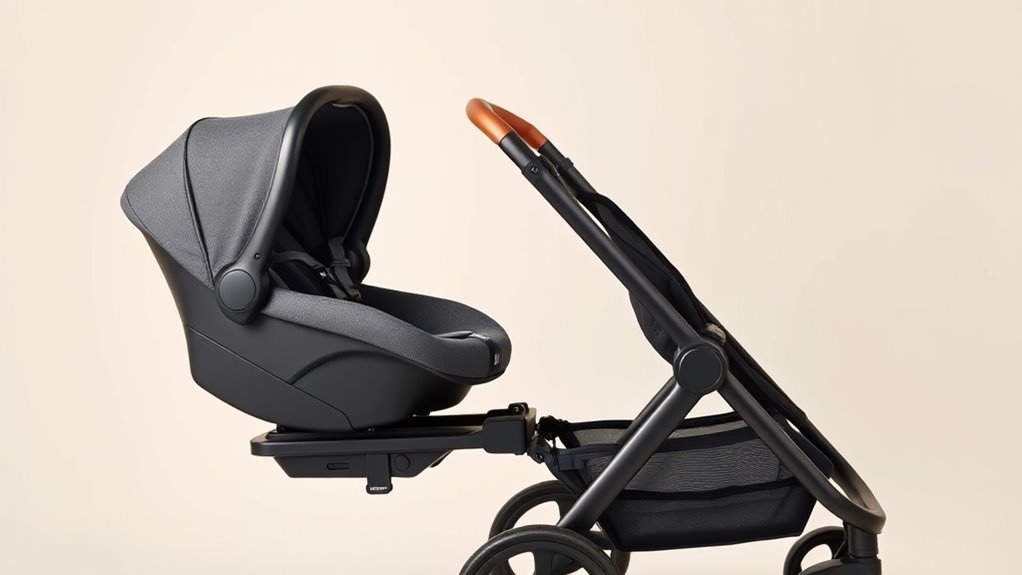
American Airlines lets eligible families travel with a stroller and car seat without paying the normal checked-bag fee for those two child-travel items. The important detail is how they are checked: American currently allows both items to be checked at the ticket counter, or one item to be checked at the gate while the other is checked at the counter. Stroller type, onboard car-seat use, and your child’s age can also affect the process.
Quick Answer
American Airlines allows each ticketed customer traveling with a child or to adopt to check one stroller and one car seat free of charge. Both may be checked at the ticket counter, or one may be checked at the gate and the other at the counter. Do not assume that both can be gate-checked.
Key Takeaways
- American Airlines allows one stroller and one car seat to be checked free for each ticketed customer traveling with a child or traveling to adopt.
- You can check both items at the ticket counter, or check one at the gate and the other at the counter.
- Non-collapsible strollers and stroller wagons without built-in child safety straps must be checked at the ticket counter under American’s current child-travel policy.
- A fully collapsible stroller under 20 pounds may qualify for cabin carriage if it fits in an overhead bin, although space and aircraft restrictions still apply.
- If you plan to use a car seat onboard, confirm that it is certified for aircraft use and that your child has a seat available for it.
Can You Check a Car Seat and Stroller on American Airlines?
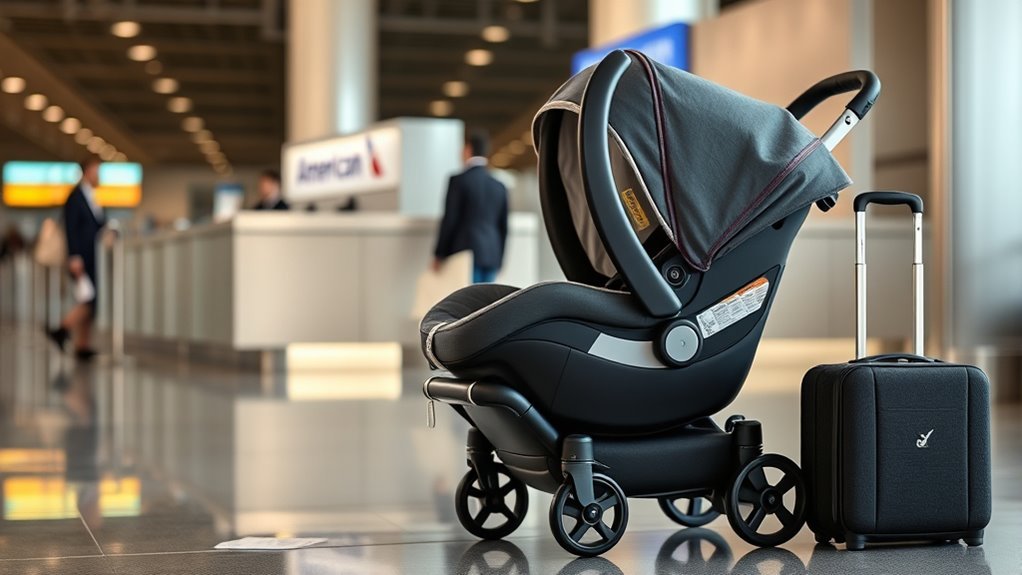
Yes. According to American Airlines’ traveling-with-children policy, each ticketed customer may check one stroller and one car seat free of charge when traveling with a child or traveling to adopt.
The stroller and car seat remain two separate pieces of child equipment. American publishes two checking options:
- Check both at the ticket counter; or
- Check one at the gate and the other at the ticket counter.
American Airlines’ published allowance is one free stroller plus one free car seat, with both checked at the counter or one checked at the gate and one at the counter.
You therefore should not arrive expecting to gate-check both pieces. If you want the stroller available while walking through the terminal, the most practical setup is often to check the unused car seat at the counter and take an eligible stroller to the gate.
If you plan to use the car seat onboard instead, the situation changes. American allows an acceptable child safety seat in the cabin when the child has a purchased seat or an appropriate adjacent seat is available. If no suitable seat is available, the gate agent may need to check the restraint.
Note: American’s Conditions of Carriage also states that a fully collapsible stroller weighing under 20 pounds may be carried onboard if it fits in an overhead bin. Cabin space is not guaranteed, so check with the gate agent if you intend to carry a compact stroller rather than check it.
American Airlines Gate-Check Rules
American Airlines does not publish a rule allowing both a stroller and car seat to be gate-checked when you are using the free stroller-and-car-seat allowance. If you bring both pieces, plan around the airline’s published one-at-the-gate and one-at-the-counter option unless you choose to check both at the ticket counter.
Stroller construction also matters. American currently says:
- Non-collapsible strollers must be checked at the ticket counter.
- Stroller wagons without built-in child safety straps must be checked at the ticket counter.
- Other qualifying strollers should generally be checked at the gate before boarding.
- A fully collapsible stroller under 20 pounds may qualify for cabin carriage if it fits the overhead bin, subject to space and airline approval.
Warning: Do not wait until boarding to discover that the item you planned to gate-check must instead go to the ticket counter. Confirm your stroller type and your stroller/car-seat checking plan before passing the counter whenever possible.
For a straightforward trip with a stroller and an unused car seat, the process can look like this:
- Decide which item you want available in the terminal.
- Check the other item at the American Airlines ticket counter.
- Take the eligible gate-check item through security.
- Ask the gate agent for the appropriate gate-check tag.
- Verify the destination on the tag before handing over the item.
Families with children under 2 are included in American’s family boarding process, giving them additional time to get settled before later boarding groups.
[Amazon Products Picked for You]

THE STYLISH AND COMFY TRAVEL DUO: Go anywhere with baby using a matching car seat and stroller. The Zelia² Luxe Travel System includes the Mico Pro Infant Car Seat for comfort for baby and parent. Fits 4–30 lbs. and up to 32 inches. Easy everyday comfort

THE STYLISH AND COMFY TRAVEL DUO: Go anywhere with baby using a matching car seat and stroller. The Zelia² Luxe Travel System includes the Mico Pro Infant Car Seat for comfort for baby and parent. Fits 4–30 lbs. and up to 32 inches. Easy everyday comfort

FROM CAR SEAT TO STROLLER IN SECONDS - Whether you're running errands or traveling by car, train, or plane, Doona is the complete travel system. Move from car seat to stroller at the click of a button, without disturbing your sleeping child.
How to Get Gate-Check Tags
If one of your items will be gate-checked, ask the gate agent for the appropriate tag before boarding. The item checked at the ticket counter should already have a normal checked-item tag, so it does not need a second gate-check tag.
Keep your claim stubs or baggage receipts until you have recovered both pieces at your destination.
[Amazon Products Picked for You]

Id insert on back of the tag

VERSATILE: These luggage tags for suitcases are easy to attach, helping you quickly find your bags at baggage claim. Reduce your time spent at the airport! Don’t lose your luggage and all of your valuables

Premium PU Leather:Crafted from high-quality PU leather with a smooth, scratch-resistant finish, these luggage tags blend elegant aesthetics with rugged performance—perfect for elevating your travel gear while withstanding rough handling during air travel,train rides,or road trips.
Ask at the Gate
When you reach the departure gate, tell the agent that you are traveling with a child and identify the stroller or car seat that you intend to gate-check. Do this before boarding starts when possible.
A simple process is:
- Show the gate agent the item you intend to gate-check.
- Confirm that the item qualifies for gate handling.
- Ask where you should leave it, such as at the end of the jet bridge.
- Verify the destination shown on the tag.
- Keep the claim portion until the item is returned.
If you have already checked the other piece at the ticket counter, there is no need to request a gate-check tag for that item.
Tag Both Items Correctly
Both the stroller and car seat should have identification, but they may receive different types of airline tags. A car seat surrendered at the ticket counter normally receives a checked-item tag, while an eligible stroller surrendered at the gate receives the tag used for gate handling.
Add a personal luggage tag with your name and current contact information to each piece. Remove dangling toys, cup holders, detachable organizers, and other loose accessories before handing the equipment to airline staff.
Pro Tip: Take a quick photo of the stroller or car seat and its airline tag before handing it over. The photo gives you the tag number and a record of the item’s condition if you need to identify it later.
Board Early Together
American Airlines’ current boarding process includes families with children under 2 in family boarding. If that applies to your family, being ready near the gate before family boarding begins gives you time to finish the gate-check handoff without rushing.
Before boarding:
- Remove anything you need from the stroller basket.
- Detach loose accessories.
- Fold the stroller if the agent requests it.
- Confirm that the gate-check tag is secure.
- Ask where the item will be returned after landing.
A protective stroller or car-seat travel bag can help keep upholstery, straps, and fabric cleaner during handling, but no bag can guarantee that checked equipment will avoid damage.
Should You Gate Check the Stroller or Car Seat First?
American Airlines does not require families to gate-check the stroller “first.” Instead, choose which item should stay with you through the airport.
For many families, keeping the stroller until boarding is practical because it can carry the child, diaper bag, or other allowed belongings through the terminal. In that setup, the car seat is checked at the ticket counter and the eligible stroller is taken to the gate.
If you purchased a seat for your child and plan to install an aircraft-certified child restraint system onboard, keep the car seat with you rather than checking it. You can then check the stroller according to American’s stroller rules.
If neither item is needed in the terminal or cabin, American permits both pieces to be checked at the ticket counter.
| Your Plan | Practical Arrangement |
|---|---|
| Use stroller through airport; car seat not needed onboard | Counter-check car seat; gate-check eligible stroller |
| Use car seat onboard | Keep aircraft-certified car seat; check stroller according to its eligibility |
| Need neither item in terminal | Check both at ticket counter |
How to Get Through Security With Both Items
If you take a stroller, car seat, or travel-system component through a U.S. security checkpoint, prepare it so TSA officers can inspect it efficiently. The Transportation Security Administration permits child car seats in carry-on or checked baggage, although the airline still controls whether the item can actually be carried in the aircraft cabin.
Before entering the screening lane:
- Remove bags, toys, blankets, snacks, and other loose items from the stroller.
- Empty the stroller basket.
- Fold or collapse the stroller when practical.
- Detach the infant car seat from a stroller frame if needed for screening.
- Place smaller removable items in a bin as directed.
- Follow the TSA officer’s instructions if an item is too large for the normal screening equipment.
Do not assume every airport uses the exact same physical setup. Checkpoint equipment and procedures can vary, and the TSA officer determines how an item will be cleared.
Formula, breast milk, toddler drinks, and certain baby foods have separate TSA provisions, so tell the officer at the beginning of screening if you are carrying those items.
Why Families Gate Check Both Items
Families sometimes prefer gate handling because it allows them to keep useful child equipment until close to boarding. On American Airlines, however, the published stroller-and-car-seat allowance should not be interpreted as permission to gate-check both pieces together.
If you travel with both a stroller and car seat, American’s published choices are to check both at the counter or to gate-check one while checking the other at the counter.
The main advantage of keeping an eligible stroller until the gate is airport mobility. A stroller can make long terminals, connections, and waits easier with a young child.
Gate handling should not be described as damage-proof or guaranteed to be gentler than ordinary baggage handling. Remove loose parts, use identification tags, follow the manufacturer’s storage recommendations, and inspect the equipment when it is returned.
FAA-Approved Car Seats for Air Travel
If you want your child to ride in a car seat during the flight, use a child restraint system certified for aircraft use. The Federal Aviation Administration recommends an approved child restraint system for young children and advises parents to check the certification label on the restraint.
For a U.S.-certified restraint, look for the required wording indicating that the restraint is certified for use in motor vehicles and aircraft. Follow the car-seat manufacturer’s instructions for the child’s size and for forward- or rear-facing installation.
American Airlines also requires an acceptable safety seat to have a solid back and seat, functioning restraint straps, and the appropriate approval marking.
Before the trip:
- Check the aircraft-use certification label.
- Make sure your child is within the restraint manufacturer’s height and weight limits.
- Read the aircraft-installation section of the car-seat manual.
- Confirm that your child has a purchased seat or that an acceptable adjacent seat will be available.
- Check American’s restrictions for your aircraft and cabin.
A window seat is American’s preferred location for a child safety seat, but the core safety requirement is that the restraint must not block another passenger’s path to the aisle. Child safety seats cannot be used in an exit row or in certain rows adjacent to overwing exits.
Note: American restricts safety-seat use in some First and Business cabins because of particular seat designs. Check your aircraft and cabin before relying on a car seat onboard.
[Amazon Products Picked for You]

MADE TO BE WITH YOU FOR YEARS The Safety 1st Ellaris Convertible Car Seat is a 3 in 1 car seat that adapts to your growing little one with 3 modes of use, making Ellaris car seats a key piece of your family for years to come

MADE TO BE WITH YOU FOR YEARS The Safety 1st Ellaris Convertible Car Seat is a 3 in 1 car seat that adapts to your growing little one with 3 modes of use, making Ellaris car seats a key piece of your family for years to come

✈Usage Instructions: In addition to the car seat cart, two straps and two ratchet straps are included. It is recommended to use all of them to secure the car seat. Use one ratchet strap to fasten around the base, and the other to secure the backrest. If the backrest of the car seat is reclined or slanted, lift the latch, rotate the tow bar, and then fasten the strap
What to Expect When You Land
Where you retrieve the stroller or car seat depends on how it was tagged and checked.
American states that a stroller checked at the gate is generally picked up after the flight at the gate. If an item was checked at the ticket counter, expect to collect it through the baggage system, which may include the normal carousel or an oversized-baggage area.
For a gate-checked car seat or an itinerary involving connections, ask the agent exactly where the item is tagged to go. Do not rely only on assumptions based on a previous airport.
After landing:
- Check the jet bridge or designated gate-return area if the stroller was tagged for gate return.
- Check baggage claim or oversized baggage for counter-checked equipment.
- Match the claim tag before leaving the airport.
- Inspect the stroller and car seat for visible damage or missing parts.
- Report a problem to the airline promptly if something is missing or damaged.
If your trip continues on another airline, verify that carrier’s stroller and child-restraint rules because another airline’s policy may differ from American’s.
Tips for a Smoother Flight With an Infant
A smoother travel day starts with deciding before you arrive which equipment will go to the counter, which item will continue to the gate, and whether the car seat will be used onboard.
Keep diapers, wipes, bottles, snacks, medications, travel documents, and one change of clothing where you can reach them without unpacking the stroller or car-seat travel bag.
If your child will use a restraint onboard, verify its aircraft certification before leaving home rather than trying to locate the label during boarding.
Airport Prep Essentials
Before departure, review American Airlines’ current child-travel policy and check any operating carrier on the itinerary. Codeshare or connecting flights can introduce another airline’s rules.
- Attach your own identification tag to the stroller and car seat.
- Remove loose stroller and car-seat accessories before checking them.
- Keep baggage and gate-check claim receipts until the trip is complete.
- Know whether your stroller is collapsible and whether you intend to carry, counter-check, or gate-check it.
- Confirm aircraft certification if the car seat will be installed onboard.
- Allow extra airport time when traveling with bulky child equipment.
For U.S. domestic security, TSA generally does not require identification from children under 18, although the airline may request documentation for age or travel purposes.
Gate Check Strategy
A good gate-check strategy starts at the ticket counter, not at the aircraft door. Decide which of the two pieces will be checked there and which eligible item you want to keep through the terminal.
| Step | Action | Benefit |
|---|---|---|
| 1 | Choose the counter item | Avoids gate confusion |
| 2 | Keep the needed item | Maintains terminal mobility |
| 3 | Request the gate tag | Ensures correct routing |
| 4 | Verify destination | Reduces retrieval confusion |
| 5 | Keep the claim stub | Helps identify the item later |
In-Flight Comfort Tips
During the flight, keep diapers, wipes, bottles, snacks, and comfort items within easy reach rather than inside equipment that has been checked.
Dress the child in layers so you can adjust to cabin-temperature changes. A familiar blanket, pacifier, or quiet toy may also help a young child settle.
Feeding, nursing, or using a pacifier during ascent and descent may encourage swallowing, which some children find more comfortable during pressure changes. Follow your child’s normal feeding routine and any advice from your pediatrician if your child has an ear or respiratory condition.
If your child is using an aircraft-certified restraint, keep the harness secured during taxi, takeoff, landing, and whenever required by the crew or seat-belt sign.
Frequently Asked Questions
Are car seat and stroller combos safe?
A travel system can be safe when every component is used according to the manufacturer’s instructions and the child remains within the stated size limits. The stroller frame itself is not an aircraft restraint. If the car seat will be used during the flight, it must meet the airline and aircraft-certification requirements for onboard child restraints.
What is a stroller car seat combo called?
A stroller and compatible infant car seat sold or designed to work together is commonly called a travel system. Some systems use an infant seat that clicks directly into the stroller frame, while others require an adapter.
What’s a good stroller and car seat combo for air travel?
The best choice depends on your child’s size, the car seat you need at the destination, stroller folding size, stroller weight, and how much equipment you want to carry through the airport. For frequent air travel, prioritize a stroller that folds easily and a car seat that is appropriately certified for aircraft use if you intend to install it onboard.
Is it worth getting a stroller car seat combo?
A travel system can be worthwhile when you frequently move an infant between a vehicle and stroller because the compatible components can reduce transfers. For flying, also consider the system’s total weight, folding size, ease of separating the pieces, and whether the car seat meets aircraft-use requirements.
Can I gate-check both a stroller and car seat on American Airlines?
American Airlines’ published policy says that when traveling with both pieces, both may be checked at the ticket counter, or one may be checked at the gate and the other at the ticket counter. You should therefore not plan on gate-checking both under the standard free stroller-and-car-seat allowance.
Does American Airlines charge for a stroller and car seat?
American Airlines allows each ticketed customer traveling with a child or traveling to adopt to check one stroller and one car seat free of charge. Other child equipment, such as certain play pens, cribs, and wagons, can fall under normal baggage rules and fees.
Can I use my child’s car seat on an American Airlines flight?
Yes, if the child restraint is acceptable for aircraft use, is appropriate for your child, and can be installed according to its instructions. Your child needs a purchased seat or an appropriate available adjoining seat. American prefers a window location for a child safety seat and prohibits use in specified exit-row locations.
Where do I pick up a gate-checked stroller after an American Airlines flight?
American says strollers checked at the gate are generally picked up after the flight at the gate. Still, verify the destination shown on the tag and ask the gate agent where the stroller will be returned, especially when you have a connection or another airline operates part of the trip.
Sources
- American Airlines — Traveling with children — stroller and car-seat allowance, checking options, stroller restrictions, and acceptable child safety seats.
- American Airlines — Conditions of Carriage — carry-on rules for fully collapsible strollers and other cabin baggage requirements.
- American Airlines — Boarding process — current family boarding information.
- Transportation Security Administration — What Can I Bring? — security guidance for child car seats and other travel items.
- Federal Aviation Administration — Child travel safety guidance — aircraft-certified child restraints, labels, installation, and child-safety recommendations.
Conclusion
American Airlines allows an eligible traveler to check one stroller and one car seat free of charge, but the two pieces should not be treated as one combined gate-check item. Under the airline’s published policy, you can check both at the ticket counter or check one at the gate and the other at the counter.
Before travel, confirm whether your stroller qualifies for gate or cabin handling, decide whether the car seat will be used onboard, and check the restraint’s aircraft-use certification if necessary. At the airport, keep each item’s identification and airline tag secure, follow TSA and gate-agent instructions, and verify where each piece will be returned after landing.
