
If you work on exhaust systems, you already know the challenge: thin tubing, awkward angles, rusty joints and limited space under the car. Picking the right MIG welder can make exhaust repairs cleaner, faster and less likely to burn through the pipe.
In this guide, you’ll find welders that balance low-amp control for thin metal, portability for driveway or garage work, and enough output for thicker hangers, brackets and flanges. The best choice depends on whether you want simple gasless flux-core repair, cleaner gas MIG welds, dual-voltage flexibility, or a multiprocess machine that can grow with your shop.
Affiliate note: This roundup is reader-supported. When you click through qualifying links, we may earn a referral commission at no extra cost to you. As an Amazon Associate I earn from qualifying purchases.
Quick Verdict
Best overall exhaust welder: YESWELDER YWM-160 because it gives you gas MIG, flux-core, stick and lift TIG in a portable dual-voltage package.
Best budget-friendly pick: YESWELDER FLUX-135PRO if you want a compact gasless flux-core welder for muffler patches and light garage repairs.
Best upgrade option: YESWELDER MIG-205DS PRO if you want more output, dual voltage, gas MIG, flux-core and spool-gun support for aluminum projects.
Top Picks
| Category | Product | Best Fit |
|---|---|---|
| 🏆 Best Overall | YESWELDER 160 | Dual-voltage exhaust and garage work |
| 💰 Best Value | YESWELDER 135 | Simple gasless repairs |
| 🥇 Best For Aluminum | YESWELDER 205 | Spool-gun-ready versatility |
| ⚡ Best For Portability | ARCCAPTAIN 135 | Compact 110V repairs |
| 🔧 Best For Beginners | ARCCAPTAIN 160 | Easy setup with synergy control |
| 🛠️ Best Multi-Process | ARCCAPTAIN 200 | Garage fabrication and exhaust repair |
| 🚀 Most Feature-Rich | ARCCAPTAIN 205MP | All-in-one welding and cutting |
| 🎁 Best Bundle | Ehomful 145 | Starter kit with accessories |
| 🔋 Best Power | ARCCAPTAIN 165 | Portable dual-voltage output |
| 🏅 Best Compact | ARCCAPTAIN 130 | Small home-garage fixes |
How We Picked These Welders
You need a welder that handles thin exhaust tubing without burning through, fits into a small garage workflow, and still has enough flexibility for brackets, flanges and hangers. We compared the products in the source article by low-heat control, wire-feed consistency, gasless flux-core support, gas MIG flexibility, dual-voltage capability, portability, included accessories, duty-cycle claims, process range and buyer-relevant limitations.
For exhaust work, raw amperage is not the only thing that matters. A smooth wire feed, usable low settings, short tack control and easy setup are often more important than maximum output.
Before You Buy
- For thin muffler tubing: choose a welder with stable low settings and use short tacks instead of one long bead.
- For driveway repairs: flux-core is convenient because it does not need a shielding gas bottle, but it creates more smoke and spatter.
- For cleaner shop welds: gas MIG is usually neater and easier to clean up than flux-core.
- For heavier hangers and flanges: dual voltage gives you more flexibility when a 220V outlet is available.
- For aluminum work: look for spool-gun compatibility instead of assuming every MIG welder can handle aluminum well.
YESWELDER YWM-160
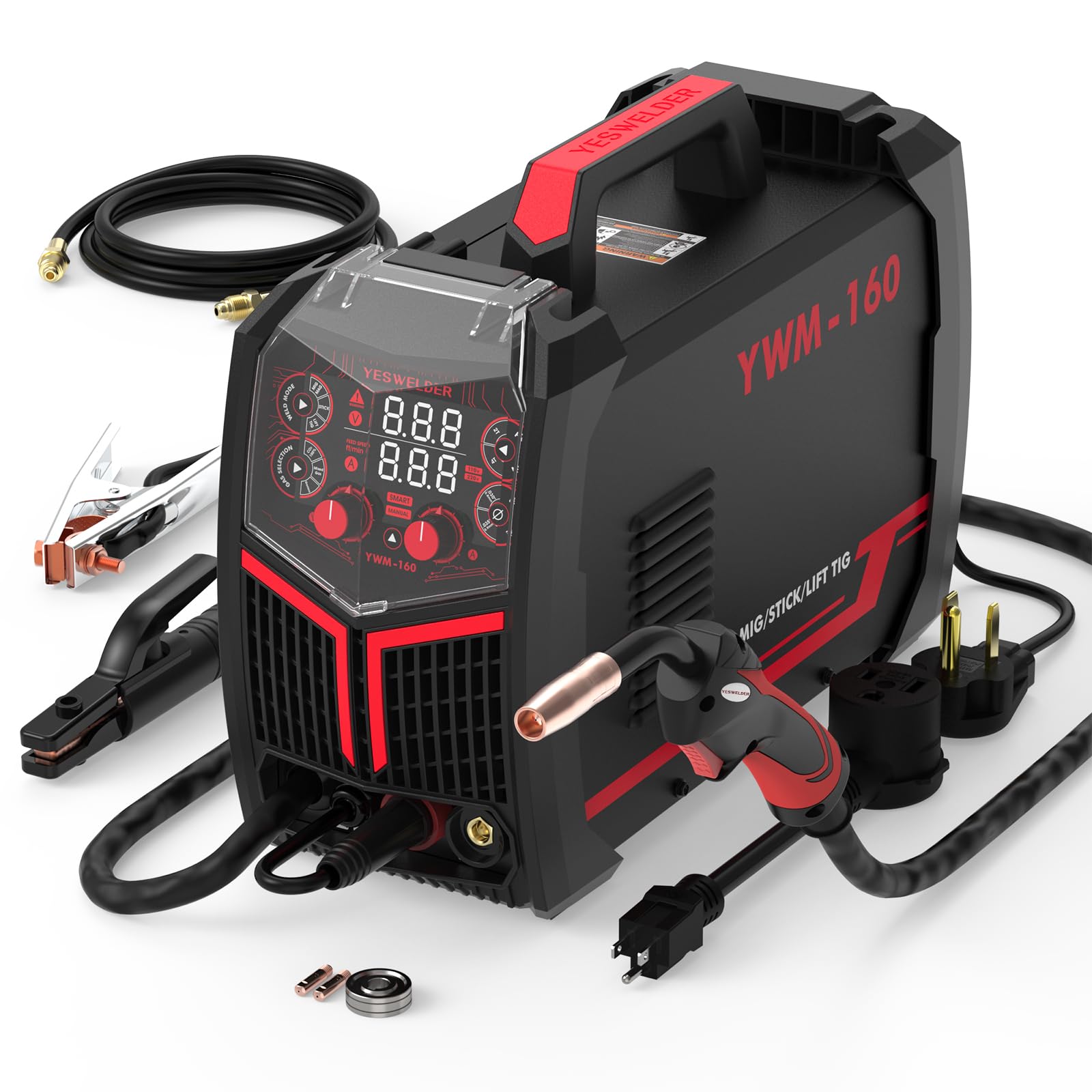
If you want one welder that covers most exhaust and light fabrication needs, the YESWELDER YWM-160 is the strongest all-around fit in this lineup. It gives you gasless flux-core for quick muffler patches, gas MIG for cleaner shop work, plus stick and lift TIG options when you need more flexibility.
The synergic mode helps you get close to a usable setup faster by matching wire feed and voltage, while manual adjustment lets you fine-tune the bead once you test on scrap. For exhaust repair, that balance matters because thin tubing needs heat control more than brute force.
Best for: DIYers and light shop users who want one portable welder for exhaust patches, hangers, brackets and occasional gas MIG work.
Skip if: You only want the cheapest gasless flux-core machine for basic muffler patches.
What People Say
Buyer feedback in the source material highlights strong MIG performance, useful program mode and better results when paired with quality wire. Some owners note that the stock connectors and hard-wired gun feel basic.
Feedback Theme: Positive

Common praise centers on easy setup, a stable arc in MIG mode and better performance on heavier work when 220V power is available. The main caution is to use good wire and avoid expecting premium torch hardware at this price point.
DIY Tips
For exhaust tubing, start with .030" or .035" flux-core wire when you need gasless convenience. Use short tacks, let the metal cool between passes and avoid running one long bead on thin tubing.
If the wire feed feels inconsistent, try a known-quality spool before blaming the machine. Clean heavy rust and paint at the joint, use anti-spatter, and weld in a well-ventilated area with proper PPE.
What It Fixes
You can use this machine to patch tailpipes and mufflers, repair hangers and brackets, tack thin panels and handle light shop maintenance. It is especially useful when you want one portable welder that can handle both gasless outdoor repairs and cleaner gas MIG work indoors.
Key Benefits
- 4-in-1 process range covers flux-core MIG, gas MIG, stick and lift TIG
- Dual 110V/220V support gives you flexibility for light and heavier jobs
- Synergic control helps beginners find usable starting settings faster
- Manual trims let you fine-tune bead appearance and heat input
- Portable size makes it practical for garage and under-car work
Check Product Details on Amazon
YESWELDER FLUX-135PRO

If you want a compact, no-frills welder for mufflers, patching exhaust pipes and basic garage repairs, this is the simple value pick. The gasless flux-core setup means you do not need a shielding gas bottle, which is helpful when you are working outdoors, under a vehicle or away from a full shop setup.
The digital display and synergic wire-feed behavior help make setup less intimidating. It will not replace a heavy shop-grade machine for industrial use, but for occasional exhaust work, brackets and small repairs, it gives you a practical starting point.
Best for: Budget-minded DIY users who mainly want gasless flux-core exhaust repairs.
Skip if: You need gas MIG, spool-gun aluminum support or higher-output fabrication capacity.
What People Say
Buyer feedback in the source material points to consistent wire feed, useful digital controls and good performance for thin-sheet repairs when settings and technique are dialed in. The most common limitations are basic clamps and entry-level accessories.
Feedback Theme: Positive

Owners tend to like the portability and simple flux-core setup. For best results on thin exhaust tubing, expect to practice on scrap and use short tack or stitch welds rather than continuous beads.
DIY Tips
Use .030" or .035" flux-core wire for typical mild-steel exhaust repairs. Clean off heavy rust and paint where possible, clamp the joint tightly and start with conservative heat settings.
For thin pipe, tack in short bursts, move around the joint and let the metal cool. Use anti-spatter, keep spare tips nearby and weld only with proper ventilation and PPE.
What It Fixes
This welder is suited to muffler patches, tailpipe repairs, hanger fixes, thin brackets and general small maintenance work where portability and simple setup matter more than long duty cycles.
Key Benefits
- Portable gasless flux-core setup for quick exhaust repairs
- Digital display helps you monitor settings more clearly
- Synergic control can simplify setup for newer welders
- 3-in-1 functionality adds stick and lift TIG options for occasional use
- Good fit for light-duty DIY and hobby repair work
Check Product Details on Amazon
YESWELDER MIG-205DS PRO

The YESWELDER MIG-205DS PRO is the better fit if you want more room to grow beyond basic muffler patches. You still get flux-core for quick exhaust repairs, but you also get gas MIG for cleaner shop work and spool-gun support for aluminum projects.
That extra flexibility matters if your exhaust work includes thicker flanges, custom brackets, stainless practice projects or other fabrication jobs around the garage. It is more machine than a basic flux-core box, but that extra capability can save you from upgrading too soon.
Best for: Buyers who want exhaust repair capability plus aluminum and heavier light-fabrication flexibility.
Skip if: You only need a small welder for rare muffler patches and do not plan to use gas MIG or aluminum support.
What People Say
Feedback in the source material highlights easy setup, useful synergic control and strong versatility for a compact machine. The most common caution is that some stock accessories may feel basic for heavy use.
Feedback Theme: Positive

Owners often like the dual-voltage flexibility and the ability to move between MIG, flux-core, stick and spool-gun work without buying separate machines.
DIY Tips
For mild-steel exhaust work, start with short tack welds on scrap tubing before moving to the vehicle. Use gas MIG when you want cleaner beads and less cleanup, and flux-core when gas shielding is not practical.
If you plan frequent heavier work, consider upgrading consumables or accessories that feel light-duty. Keep wire feed moderate, grind mating surfaces where possible and always weld away from fuel lines, batteries and flammable undercoating.
What It Fixes
You can patch tailpipes and mufflers, repair hangers and brackets, tack thin sheet metal, handle small fabrication tasks and support aluminum work when paired with the proper spool-gun setup and filler.
Key Benefits
- Multiprocess range covers gas MIG, flux-core MIG, spool-gun aluminum, lift TIG and stick
- Dual-voltage support helps with both home outlets and heavier shop work
- Synergic mode speeds setup while manual controls allow fine tuning
- Spool-gun support makes it more useful beyond basic exhaust repairs
- Digital display helps you track settings during setup
Check Product Details on Amazon
ARCCAPTAIN MIG135A
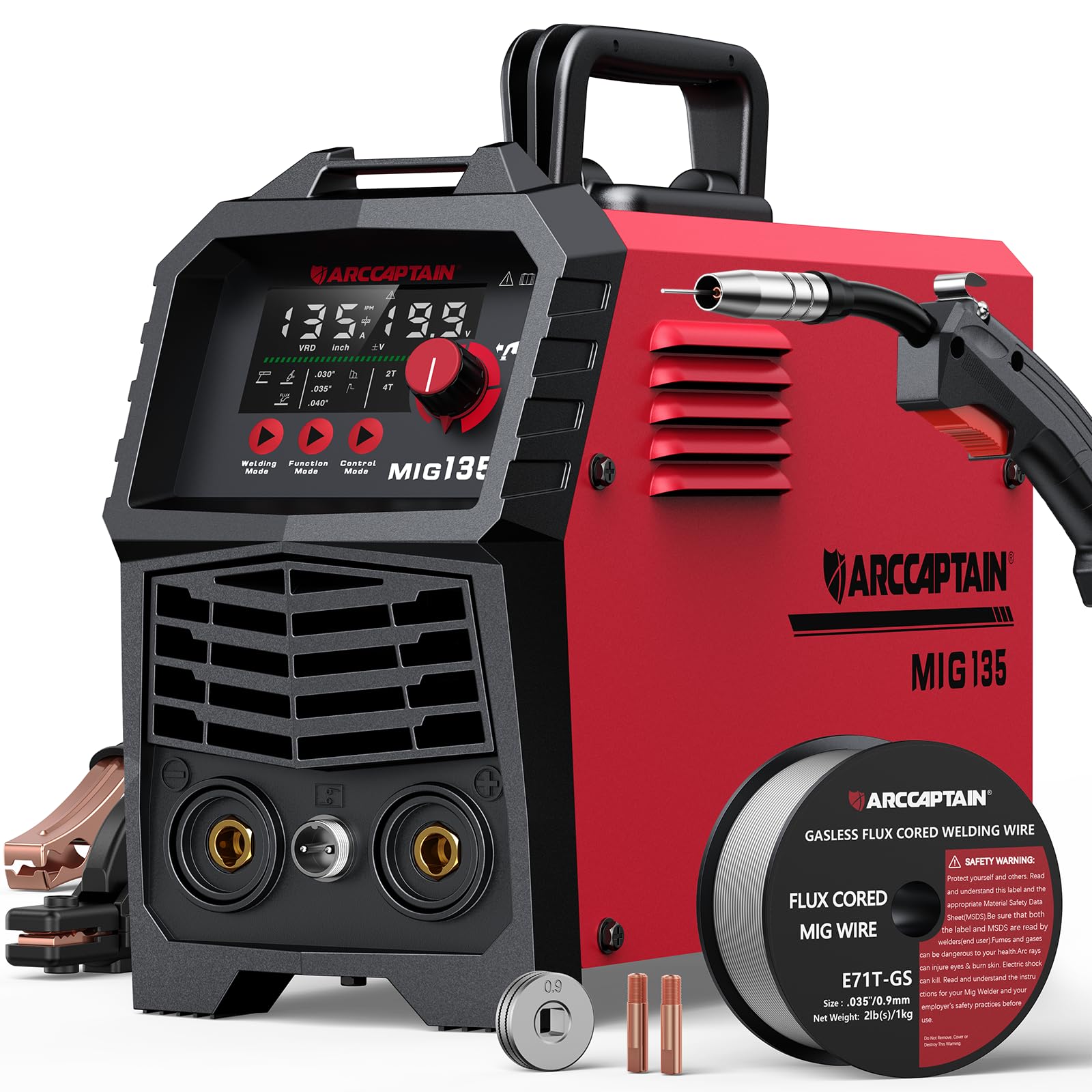
If portability is your top concern, the ARCCAPTAIN MIG135A is a practical pick for driveway exhaust work. It runs from a standard 110V outlet and supports gasless flux-core welding, so you can patch a muffler or tack a hanger without managing a gas cylinder.
The large LED display and synergy presets make it easier to start with usable settings, while manual adjustment gives you room to fine-tune once you test on scrap. It is best for lighter work, but that is exactly where many exhaust repairs live.
Best for: Users who want a compact, easy-to-carry welder for light exhaust and garage repairs.
Skip if: You need dual voltage, gas MIG or frequent heavy fabrication capacity.
What People Say
Source feedback emphasizes easy setup, useful preprogrammed settings and good usability for weekend welding. Some users mention that accessory quality is not the main reason to buy it.
Feedback Theme: Positive

The strongest praise is for portability, beginner-friendly controls and the ability to fine-tune wire feed and voltage for cleaner results on small jobs.
DIY Tips
Use short tacks on exhaust tubing and avoid building too much heat in one area. Start with the synergy preset for your wire size, then adjust voltage and feed speed until the weld does not sit too tall or blow through.
Keep the joint clamped tightly, remove heavy rust where possible and use flux-core only with good ventilation because it creates more smoke than gas MIG.
What It Fixes
This welder is useful for patching mufflers, repairing tailpipes and hangers, tacking thin sheet metal and doing small weekend fabrication projects where a compact 110V machine is enough.
Key Benefits
- Compact 110V design for easy garage and driveway use
- Flux-core MIG support for gasless exhaust repairs
- Large LED display and synergy settings simplify setup
- Manual tuning helps improve bead control on thin metal
- Portable size works well for tight spaces around a vehicle
Check Product Details on Amazon
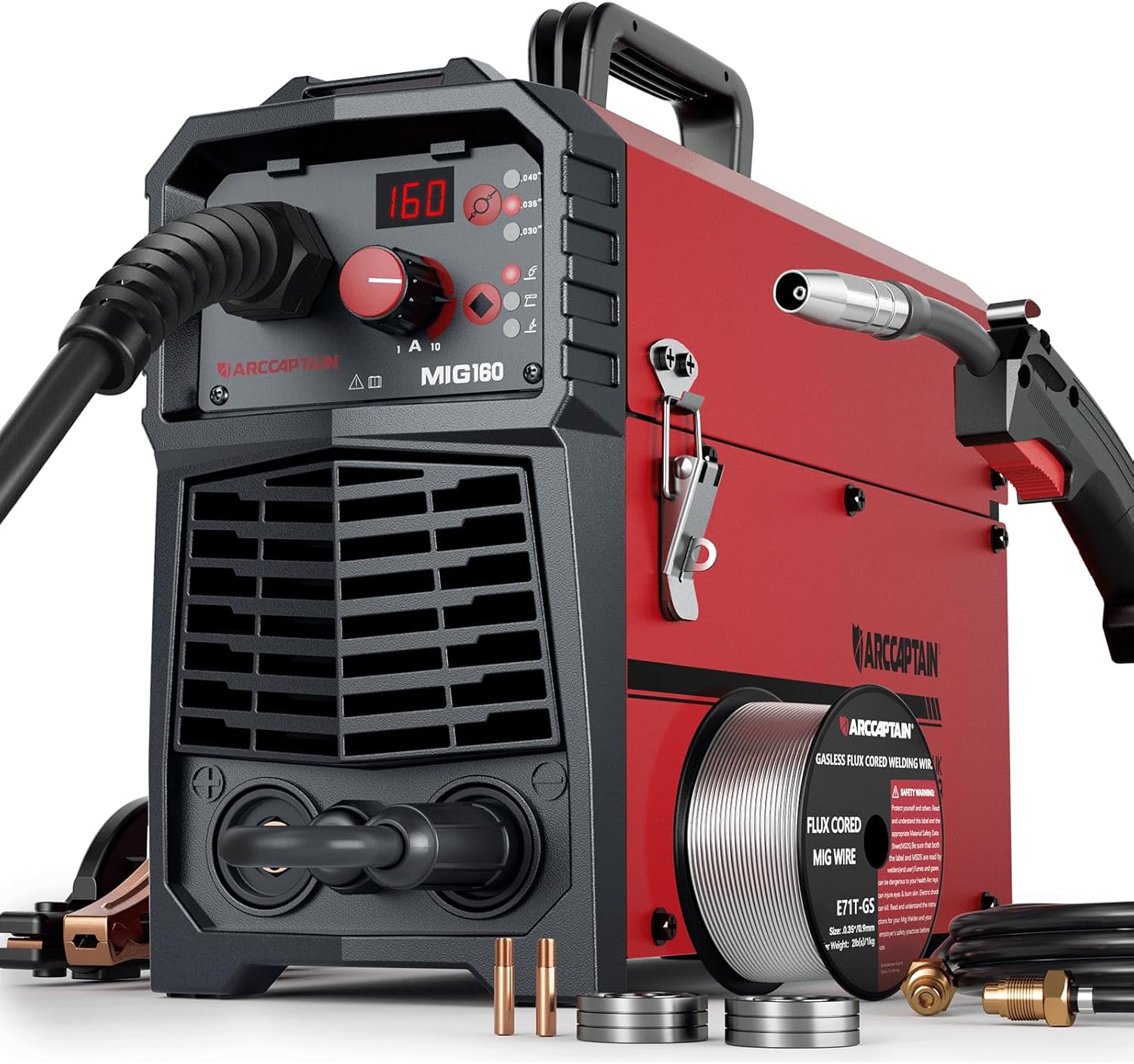
ARCCAPTAIN MIG160
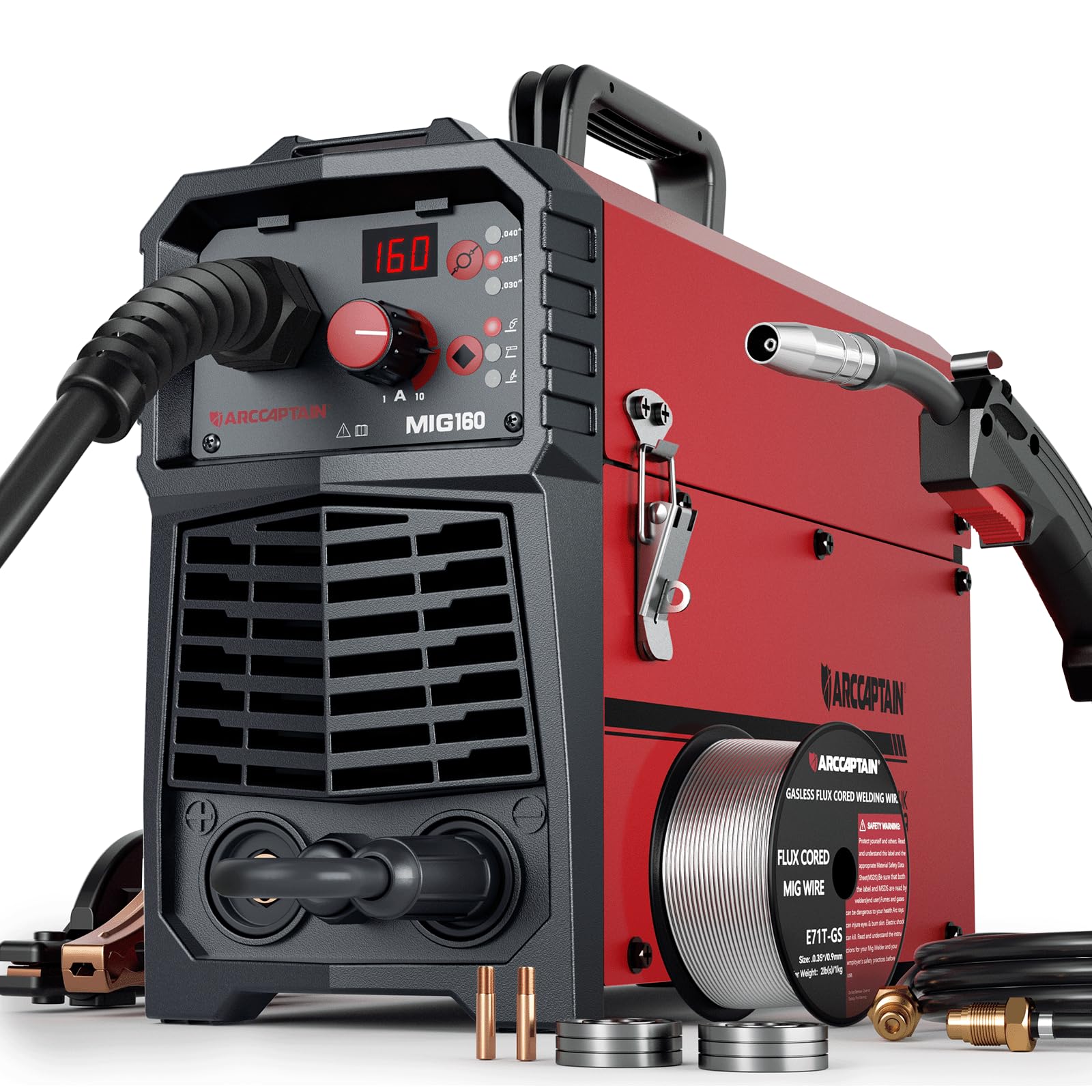
The ARCCAPTAIN MIG160 is a strong beginner-friendly option because it gives you helpful setup assistance without locking you into one process. You can run gasless flux-core for outdoor exhaust repairs or use gas MIG when you want a cleaner finish in the shop.
The dual-voltage support also gives you more room than a basic 110V-only welder. Use the lower-power setup for light exhaust work, then move to 220V when you need better headroom for thicker brackets or small fabrication tasks.
Best for: Newer welders who want simple setup, gas and gasless MIG flexibility and room to grow.
Skip if: You want the smallest possible machine or only need occasional gasless repair work.
What People Say
Source feedback points to easy setup, good flux-core performance and convenient homeowner use. The main tradeoff is that included accessories are functional but not premium.
Feedback Theme: Positive

Owners often describe it as easy to learn and convenient for repair work around the garage, especially when using flux-core on standard household power.
DIY Tips
For exhaust patches, start with a synergy preset and make several quick tacks around the joint before stitching the seam. Short welds reduce heat buildup and help prevent burn-through.
If you switch between 110V and 220V, power down safely and follow the manual. Keep the work area clear of fuel vapor, undercoating and other flammable materials.
What It Fixes
The MIG160 is well suited for patching mufflers, repairing tailpipes and hangers, tacking thin sheet and doing light fabrication. It is a good middle ground between basic gasless welders and higher-output shop units.
Key Benefits
- 4-in-1 capability covers gas MIG, gasless MIG, lift TIG and stick
- Synergetic control helps speed up setup
- Dual-voltage support gives you more flexibility than 110V-only models
- Compact enough for garage and vehicle-side work
- Useful safety protections for small-shop welding sessions
Check Product Details on Amazon
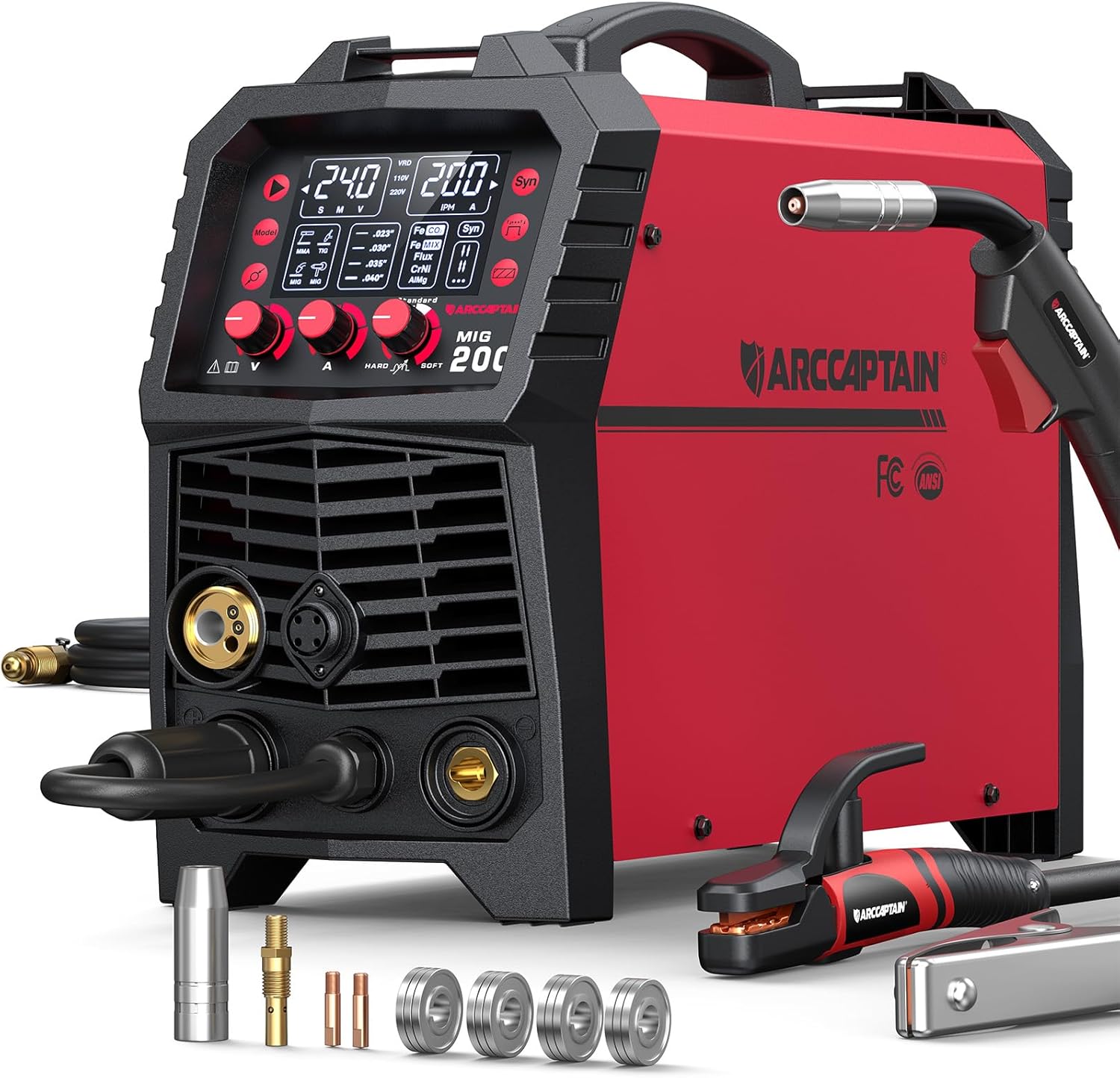
ARCCAPTAIN MIG200
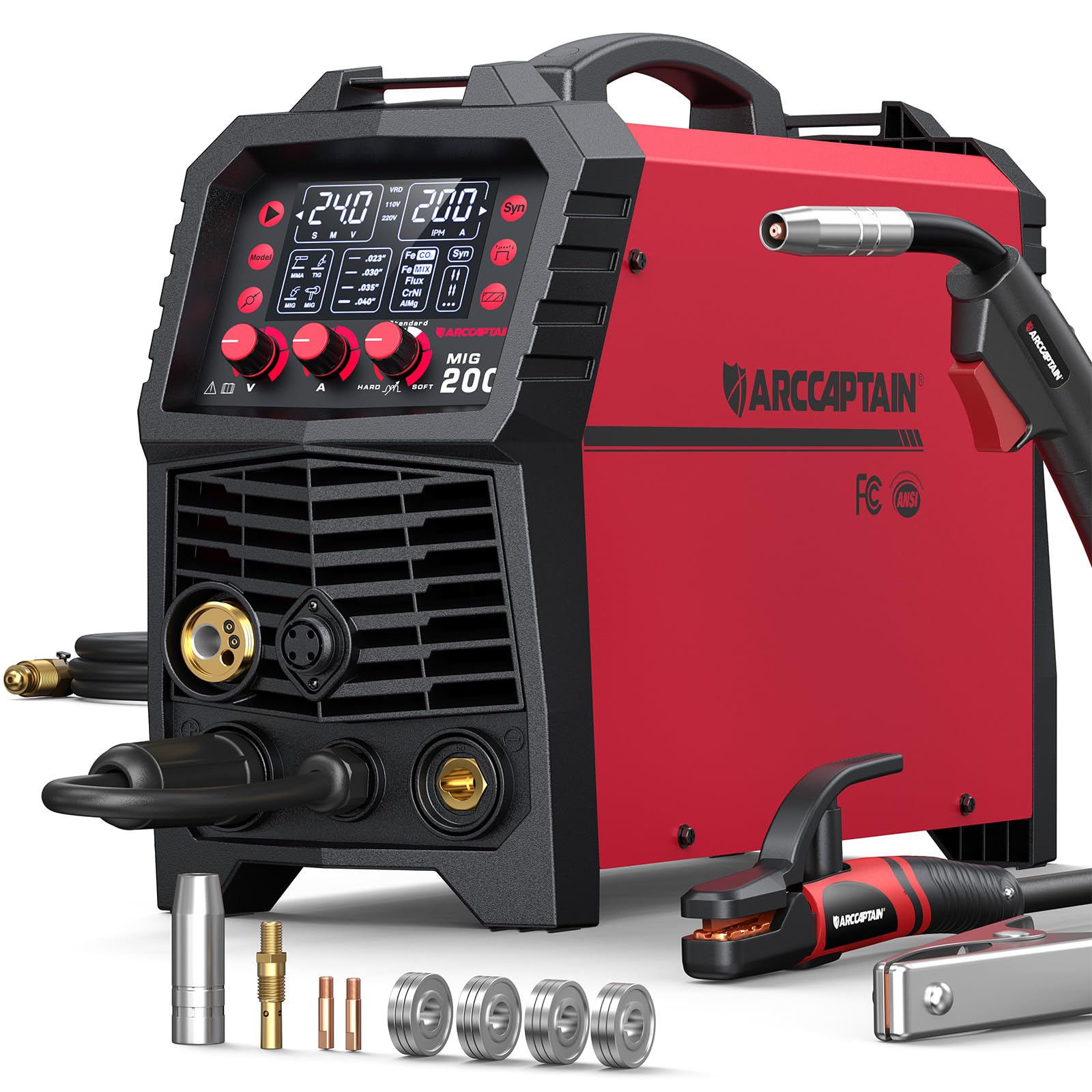
The ARCCAPTAIN MIG200 is a better fit if exhaust repair is only part of what you do. It gives you the flux-core convenience you want for quick tailpipe and muffler work, but it also expands into gas MIG, stick, lift TIG and other shop tasks.
For exhaust-specific use, the main advantage is flexibility. You can use lighter settings and short tacks for thin tubing, then use the higher-capacity side of the machine for hangers, brackets, small frames and fabrication jobs.
Best for: Home fabricators who want one machine for exhaust work, brackets and general garage projects.
Skip if: You want a small, simple welder only for occasional muffler patches.
What People Say
Source feedback consistently praises the synergy mode and the machine’s ability to handle a variety of garage and automotive tasks. Some buyers mention stock torch and cord details as areas to check before heavy use.
Feedback Theme: Positive

Buyers tend to like the adjustability, preset memory and ability to work across different metal projects without switching machines.
DIY Tips
For thin exhaust tubing, avoid using the machine’s higher capacity as an excuse to run hot. Use short tacks, let the pipe cool and stitch the seam gradually.
Flux-core throws spatter, so keep a nozzle brush, spare tips and cleaning tools nearby. Use gas MIG when you have shielding gas available and want cleaner beads with less grinding.
What It Fixes
This welder can handle muffler patches, tailpipe sections, hangers, brackets, thin sheet metal and broader light fabrication projects. It is a practical pick for users who want exhaust repair capability plus a wider garage welding platform.
Key Benefits
- 6-in-1 process range for MIG, flux-core, stick, lift TIG, spot work and spool-gun-ready tasks
- Dual-voltage support for portable and heavier shop work
- Synergic mode helps speed up setup
- Large LED display improves setting visibility
- Useful for exhaust repair plus general fabrication
Check Product Details on Amazon
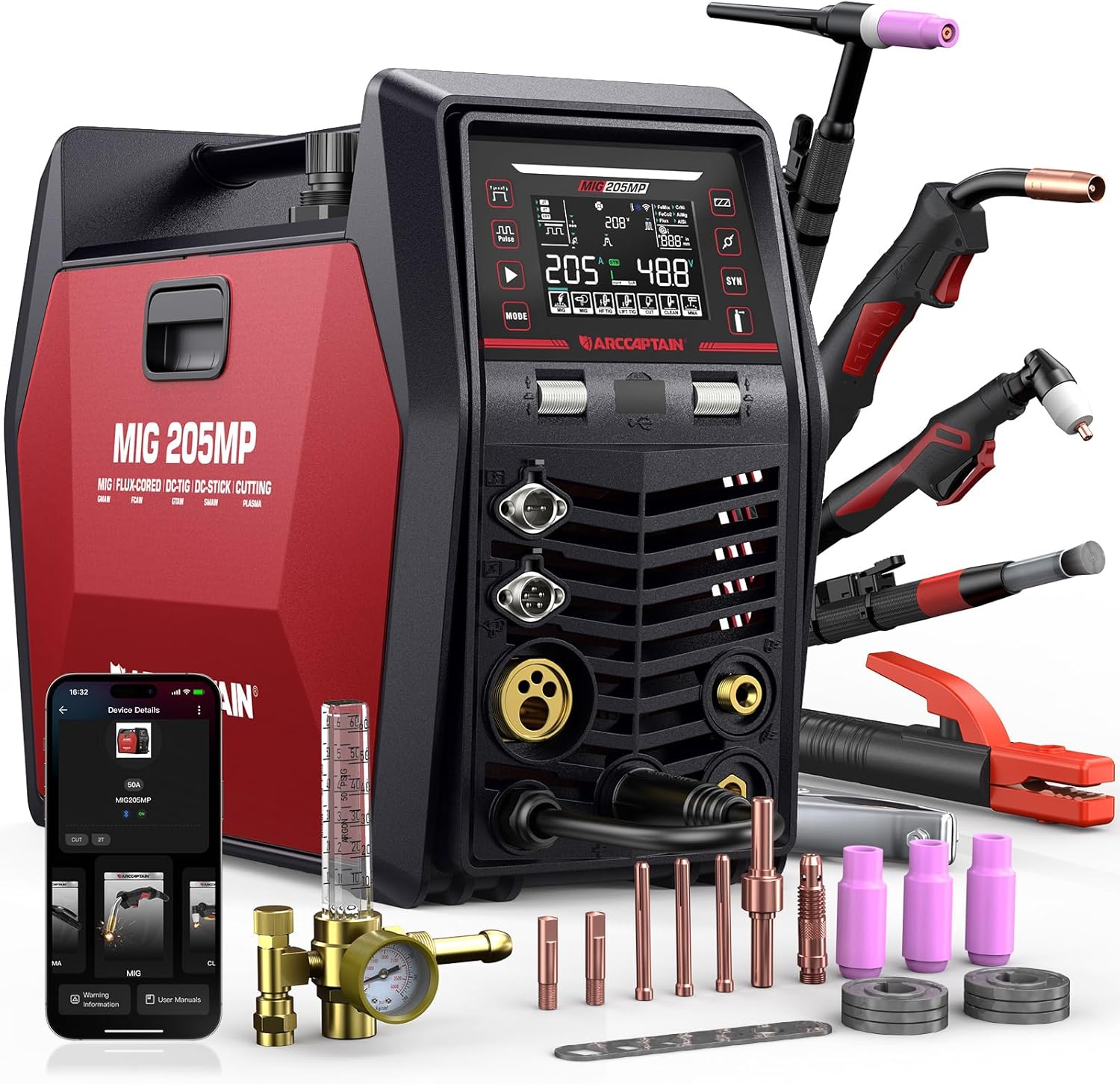
ARCCAPTAIN MIG205MP

If you want one machine that can weld, cut and handle a wider range of metal jobs around exhaust work, the ARCCAPTAIN MIG205MP is the feature-heavy option. It is more than a basic muffler repair welder, but that is the point: it gives you gas and gasless MIG, pulsed MIG options, TIG, stick and plasma cutting in one setup.
That makes it useful if you are cutting patch panels, trimming brackets, building custom exhaust pieces or handling mixed shop tasks. For someone who only repairs a muffler once in a while, it may be more machine than needed. For a serious garage user, the extra range can be attractive.
Best for: Advanced DIYers and small-shop users who want welding and cutting capability in one machine.
Skip if: You want a simple, budget-friendly exhaust-only welder.
What People Say
Source feedback highlights the process range, app controls, saved settings and plasma cutter usefulness. The main buying consideration is whether you will use enough of those features to justify the complexity.
Feedback Theme: Positive

Owners tend to value the all-in-one workflow, especially when moving between cutting, MIG, flux-core and TIG-style tasks without switching machines.
DIY Tips
For exhaust repairs, clean paint and heavy rust from the joint before welding. Use gas MIG for cleaner shop beads and flux-core when portability or outdoor use matters more.
If you use the plasma cutter, keep the work area clear, protect nearby vehicle components and avoid cutting near fuel, wiring, rubber lines or undercoating. Save presets only after you confirm settings on scrap metal.
What It Fixes
This machine can patch mufflers, repair tailpipes and hangers, cut patch panels, trim brackets and support broader fabrication work. It is best for users who want a versatile metalworking station instead of a single-purpose exhaust welder.
Key Benefits
- Multiprocess capability for MIG, flux-core, pulsed MIG, TIG-style work, stick and plasma cutting
- App-based controls and preset memory can speed repeat tasks
- Dual 120/240V operation supports garage and jobsite flexibility
- Large display and SYN parameter matching help with setup
- Strong fit for users who cut and weld during the same project
Check Product Details on Amazon
Ehomful 145A MIG Welder
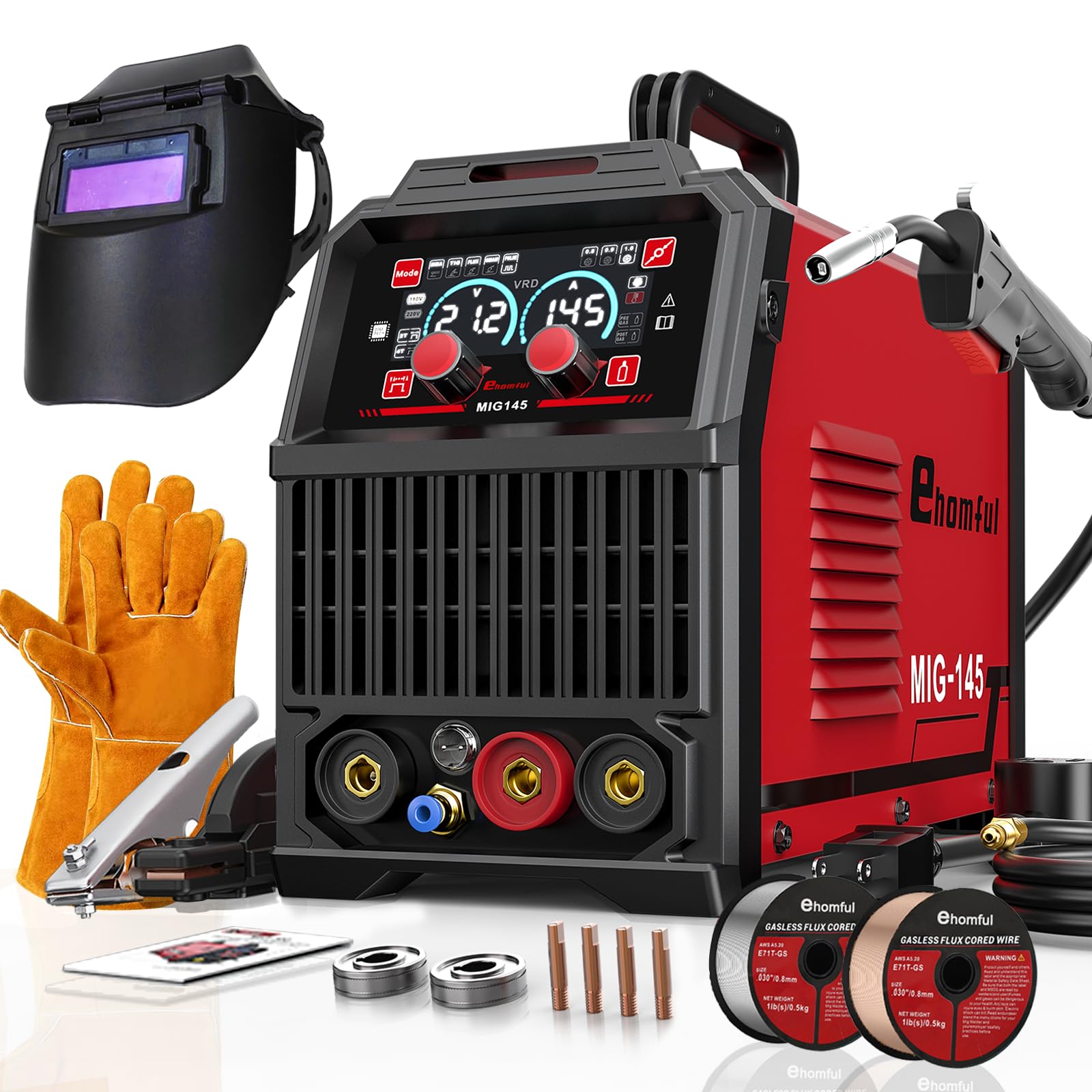
The Ehomful 145A stands out as the bundle pick because it is positioned as a multiprocess welder with starter accessories included. For a new DIYer, that can reduce the number of separate items you need before your first practice session.
For exhaust work, the useful part is the combination of gas and gasless MIG support. You can use flux-core when working outside or away from a gas bottle, then use gas MIG when you want cleaner beads and less cleanup.
Best for: Beginners who want a starter bundle and multiprocess flexibility.
Skip if: You already own welding PPE and prefer a more established direct product listing.
What People Say
Source feedback highlights multiprocess flexibility, easy setup and the convenience of included starter gear. As with any bundle, you should still confirm that the included PPE and accessories meet your comfort and safety expectations before welding.
Feedback Theme: Positive

Buyers tend to appreciate the compact build, dual-voltage flexibility and the fact that common starter accessories are included in the package.
DIY Tips
Before welding on an exhaust, clean the joint, test your settings on scrap and inspect all included safety gear. Use short stitch welds on thin muffler steel to limit heat distortion.
Choose gas MIG where you can for cleaner welds, and flux-core when gas shielding is not practical. Keep extra contact tips, a wire brush and a spare nozzle available.
What It Fixes
This welder can help with muffler patches, tailpipe splices, hanger repairs and light-duty flange or bracket work. It is best for people who want a starter-friendly kit rather than a bare welder.
Key Benefits
- 4-in-1 process range covers gas MIG, gasless MIG, lift TIG and stick
- Dual-voltage support for home and jobsite flexibility
- Synergy control helps simplify initial setup
- Compact build with starter accessories included
- Good fit for new DIY users building a basic welding setup
Check Product Details on Amazon
ARCCAPTAIN MIG165
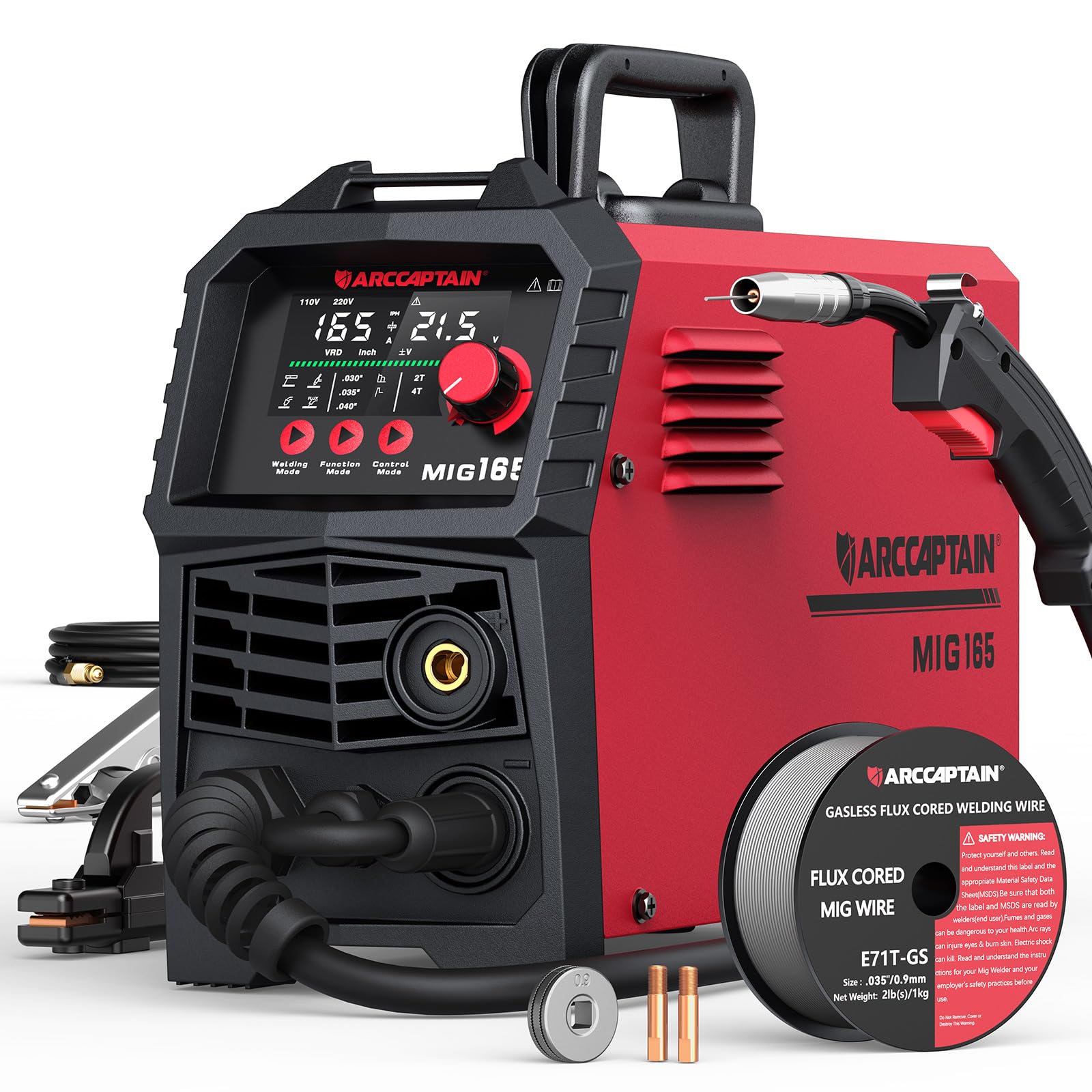
The ARCCAPTAIN MIG165 is a sensible choice if you want a compact welder but do not want to give up dual-voltage flexibility. It gives you enough process range for exhaust repairs and light fabrication while still being portable enough for tight garage spaces.
For mufflers and tailpipes, the gasless flux-core mode is the convenient option. For cleaner brackets, flanges and shop welds, gas MIG gives you a better finish with less cleanup.
Best for: Users who want portable size with more output flexibility than a small 110V-only welder.
Skip if: You want the lowest-cost compact machine or rarely need 220V capability.
What People Say
Source feedback focuses on strong flux-core performance, helpful synergy presets and garage-friendly usability. Some buyers note that the torch and accessories are not premium-grade.
Feedback Theme: Positive

Owners tend to praise the machine for small car projects, light fabrication and the ability to run on common household power for lighter work.
DIY Tips
Start with short tack welds on exhaust tubing, then connect the tacks with small stitch welds. If you see the edge of the tubing collapsing or blowing through, reduce heat and increase cooling time between tacks.
Clean or replace the nozzle after heavy flux-core use, and always wear proper PPE. Do not weld near fuel vapor, rubber lines or flammable undercoating.
What It Fixes
This welder is useful for patching mufflers, repairing tailpipes and hangers, tacking thin sheet metal and handling light bracket or flange work.
Key Benefits
- 4-in-1 process range covers gas MIG, gasless MIG, lift TIG and stick
- Dual 110V/220V support for portable and heavier work
- Synergy presets help reduce setup guesswork
- Large LED display improves readability
- Portable size works well around vehicles and small shops
Check Product Details on Amazon
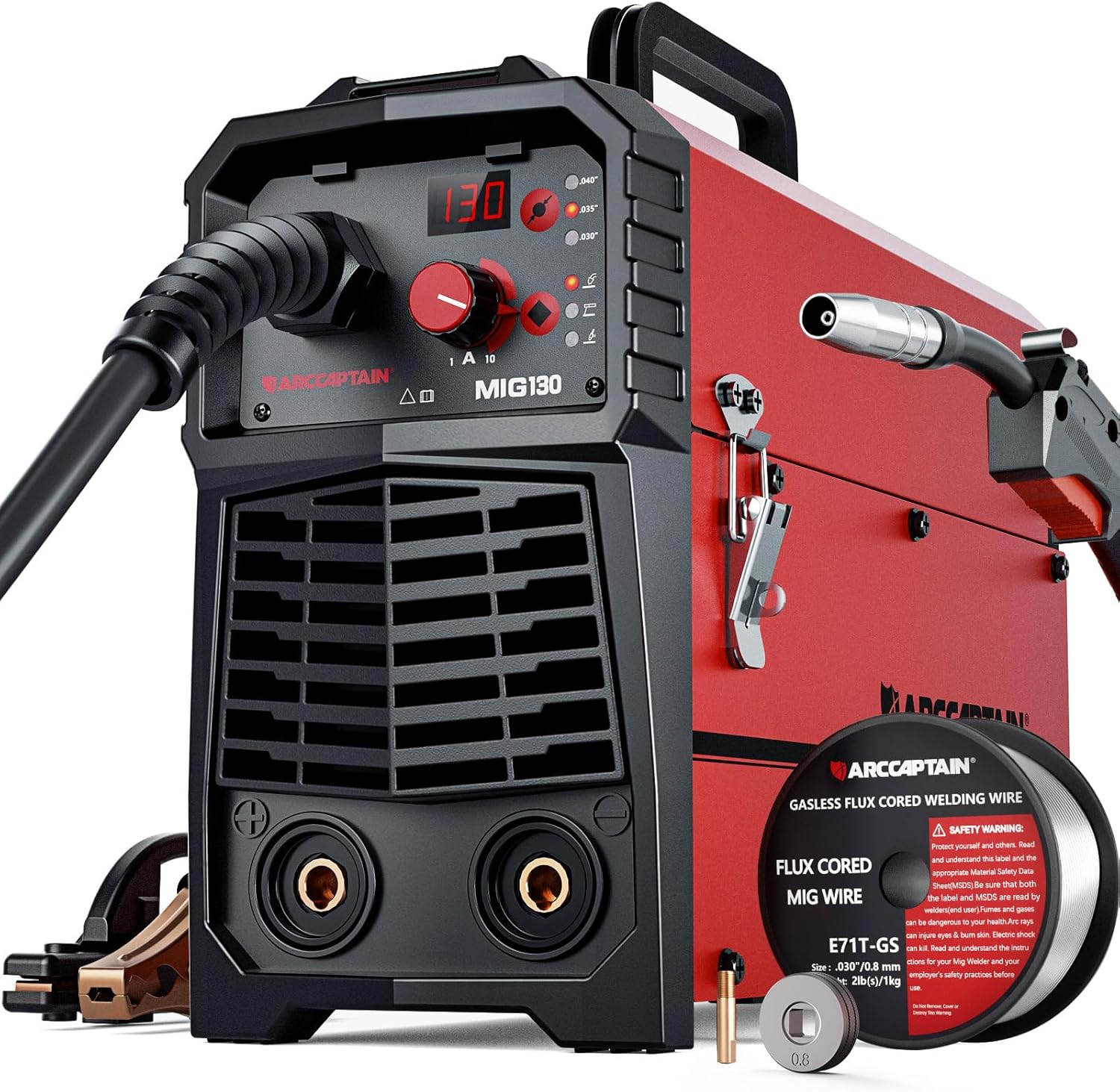
ARCCAPTAIN MIG130
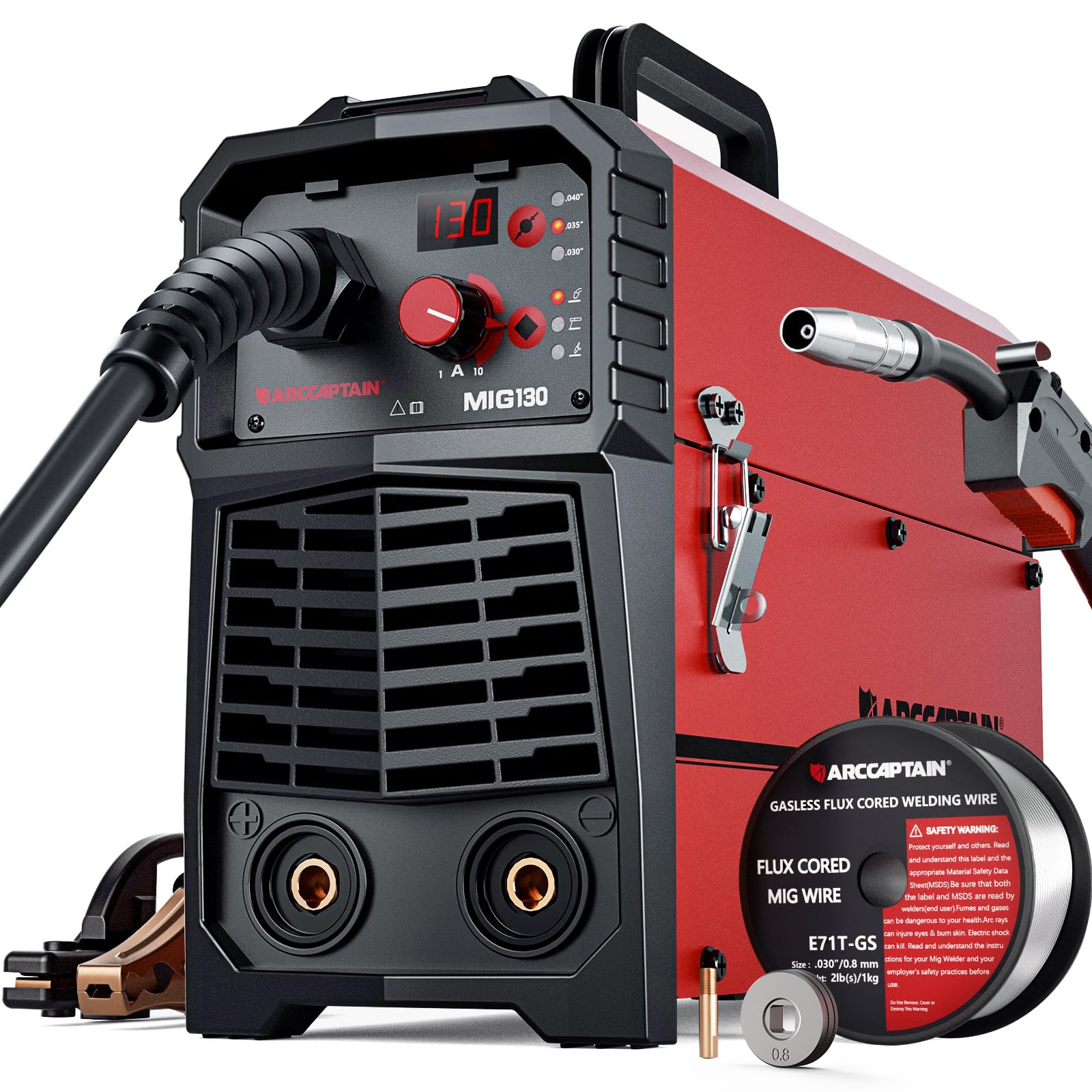
If you want the smallest practical option in this roundup, the ARCCAPTAIN MIG130 keeps things simple. It is built around 110V gasless flux-core use, which makes it a natural fit for small muffler patches, light brackets and quick driveway repairs.
The tradeoff is capacity. This is not the pick for frequent thicker fabrication or clean gas MIG work. It is best when the job is light, access is tight and portability matters most.
Best for: Occasional DIY exhaust fixes where compact size and simple setup matter most.
Skip if: You need gas MIG, dual voltage or a machine for frequent heavy projects.
What People Say
Source feedback highlights easy setup, convenient size and good usefulness for homeowner repairs. Some owners mention that it can draw more power than expected for a small machine, so check your circuit and extension cord setup.
Feedback Theme: Positive

Buyers tend to like the convenience and value for small repairs, especially when they do not want to deal with gas cylinders or a full-size welder.
DIY Tips
Use .030" or .035" flux-core wire for most small exhaust jobs. Clean rust and paint at the weld area, then tack every few inches before stitching the seam.
Use a proper-rated extension cord if needed, keep your ground connection clean and avoid welding on a vehicle with sensitive components connected unless you understand the proper precautions.
What It Fixes
This compact welder is useful for muffler patches, light tailpipe repairs, hanger tacks and small sheet-metal jobs. It is best for occasional use rather than high-volume repair work.
Key Benefits
- Small 110V gasless setup for quick home-garage repairs
- Synergic control helps reduce setup time
- 3-in-1 functionality adds lift TIG and stick options
- Includes basic starter items so you can begin practicing sooner
- Portable enough for tight vehicle-side work
Check Product Details on Amazon
Safety Note For Exhaust Welding
Exhaust welding can be risky if the work area is not prepared. Clean the metal, support the vehicle securely, disconnect or protect sensitive components when appropriate, and never weld near fuel vapor, rubber fuel lines, wiring, undercoating or flammable debris.
Flux-core welding creates smoke and spatter, so use proper ventilation, eye protection, gloves, flame-resistant clothing and a suitable welding helmet. When in doubt, practice on scrap tubing before touching the vehicle.
FAQ
What Type Of Welder Is Best For Exhaust Work?
For most exhaust repairs, a MIG-style machine is the easiest place to start because it is fast, forgiving and practical for thin mild-steel tubing. Look for stable low settings, smooth wire feed, gasless flux-core support for outdoor convenience and gas MIG support if you want cleaner shop welds.
If you also repair brackets, flanges or hangers, dual voltage gives you more flexibility. If you work with stainless or want very clean, narrow welds, TIG can be useful, but MIG or flux-core MIG is usually more approachable for DIY exhaust repair.
How Do I Avoid Burning Through Thin Exhaust Tubing?
Use low heat, short tacks and stitch welding instead of one continuous bead. Tack the joint in several places, move around the pipe and let the metal cool between welds. Keep the joint tight because gaps make burn-through more likely.
Practice on scrap tubing first. If holes appear, reduce voltage or wire feed, shorten the weld time and build the patch slowly with small tacks.
Can I Use Flux-Core For Exhaust Repairs Or Should I Use Gas MIG?
You can use flux-core for exhaust repairs, especially outdoors or when you do not want to use a gas bottle. It is convenient and more tolerant of light wind, but it creates more smoke, spatter and cleanup.
Gas MIG is cleaner and usually easier to finish neatly, especially in a garage. If you want the most flexible setup, choose a welder that supports both flux-core and gas MIG.
What Wire Size Works Best For Exhaust Repair?
Many DIY exhaust repairs use .030" or .035" flux-core wire for mild steel, depending on the machine and material thickness. For gas MIG on mild steel, match the wire and shielding gas to the tubing and follow the welder’s chart as a starting point.
Always test on similar scrap before welding the actual exhaust. Thin tubing can vary, especially when it is rusty or already weakened.
Is A 110V Welder Enough For Exhaust Work?
A 110V welder can be enough for many light exhaust repairs, including small muffler patches, hangers and thin tailpipe sections. The key is stable low-amp control and good technique.
If you also work on thicker brackets, flanges, plate or general fabrication, a dual-voltage welder gives you more room to grow.
Buyers Top Picks
When choosing between the YESWELDER FLUX-135PRO, YESWELDER YWM-160 and YESWELDER MIG-205DS PRO, think about how much flexibility you really need. The FLUX-135PRO is the simple value choice for gasless exhaust patches. The YWM-160 is the best all-around fit for most DIY users because it adds gas MIG and dual-voltage flexibility. The MIG-205DS PRO is the upgrade pick if you want more output, spool-gun support and broader shop capability.
Wrapping Up
By choosing the right machine, you can avoid common exhaust repair problems like burned-through tubing, weak tacks and messy patches. For most people working on mufflers, tailpipes and hangers, a portable welder with stable low settings, smooth wire feed and flux-core support is the safest starting point.
If you want the best balance, choose a dual-voltage MIG welder that supports both gas and gasless welding. If you only need occasional driveway repairs, a compact flux-core unit can be enough. If you plan to weld aluminum, cut metal or expand into fabrication, choose a higher-capacity multiprocess model with the right accessories.
| Product | Image | Best For | Power Source | Weight | Welding Processes | Amazon Details |
|---|---|---|---|---|---|---|
| YESWELDER Gas Gasless 160A Multi-process MIG Welder |
 |
Best overall exhaust and garage welder | AC | 26.4 pounds |
|
Check Details |
| YESWELDER 135Amp MIG Welder |
 |
Best value gasless flux-core repair | AC | 19.27 pounds |
|
Check Details |
| YESWELDER MIG-205DS PRO MIG Welder |
 |
Best for aluminum support and higher versatility | AC | 35.9 pounds |
|
Check Details |
| ARCCAPTAIN 135A MIG Welder |
 |
Best portable 110V option | AC | 10 pounds |
|
Check Details |
| ARCCAPTAIN 160A MIG Welder |
 |
Best beginner-friendly dual-voltage option | AC | 10 pounds |
|
Check Details |
| ARCCAPTAIN MIG200 Welder |
 |
Best multiprocess garage welder | AC | Check product listing |
|
Check Details |
| ARCCAPTAIN 165A MIG Welder |
 |
Best compact power balance | AC | 10 pounds |
|
Check Details |
| ARCCAPTAIN MIG130 Welder |
 |
Best compact budget-style option | AC | Check product listing |
|
Check Details |
| ARCCAPTAIN MIG205MP MIG Welder |
 |
Best feature-rich welding and cutting option | DC | 46.2 pounds |
|
Check Details |
| Ehomful 145A MIG Welder |
 |
Best starter bundle | AC | 23.6 pounds |
|
Check Details |
This Roundup is reader-supported. When you click through links we may earn a referral commission on qualifying purchases.