If you work on a farm, downtime from broken equipment can get expensive fast. This guide helps you pick a farm-repair welder that matches how you actually work, whether you need an ultra-portable unit for fence and gate fixes, a stick-capable machine for rougher outdoor repairs, or a multi-process welder for barn, trailer, implement, and shop maintenance.
Choosing the right welder saves time, reduces repair costs, and gives you more control over urgent fixes. The best choice depends on the metal thickness, power source, welding process, portability needs, and how often you expect to weld away from the shop.
Quick Verdict
Best all-around choice: The Lincoln Power MIG 215 MPi is the strongest pick if you want one machine for MIG, flux-cored, stick, and DC TIG work.
Best lightweight field option: The Lincoln Sprinter 180Si is easier to carry and better suited if stick and TIG matter more than MIG.
Best budget-friendly repair tool: The Lincoln Electric 90i FC is a simple flux-core option for light farm repairs, but it is not a true stick welder.
Affiliate disclosure: This roundup is reader-supported. As an Amazon Associate, we may earn a referral commission from qualifying purchases at no extra cost to you.
Top Picks
|
Category |
Product |
Editorial Fit Score |
|---|---|---|
|
🏆 Best Overall |
95/100 |
|
|
⭐ Best TIG-Focused |
92/100 |
|
|
🚀 Best MIG Workhorse |
91/100 |
|
|
🎯 Best Lightweight |
90/100 |
|
|
💰 Best Budget |
88/100 |
|
|
🔰 Best for Aluminum |
87/100 |
|
|
⚡ Best Portable MIG+Flux |
86/100 |
|
|
💼 Best 120V Multi-Process |
85/100 |
|
|
🛡️ Best Accessory Bundle |
84/100 |
|
|
🎨 Best for Hobbyists |
83/100 |
How We Picked These Farm Repair Welders
When choosing welders for farm repairs, we focused on real-world factors that affect you on the job: portability, power, duty cycle, process flexibility, ease of setup, reliability, serviceability, and value. We also weighed practical extras like dual-voltage capability, included accessories, generator-friendly use, and how forgiving each unit is for non-professionals doing quick repairs.
Important process note: Some welders in this roundup are true stick-capable machines, while others are MIG or flux-cored wire-feed welders better suited to light repair work. If stick welding is required for your farm jobs, check the “Welding Process” column before buying.
Before You Buy
- For thick farm steel: Choose a stick-capable or higher-output dual-voltage welder.
- For quick fence and gate repairs: A portable 120V flux-core or MIG unit may be easier to carry.
- For aluminum: Look for AC TIG or spool-gun compatibility, depending on your work.
- For field use: Confirm generator compatibility, power draw, extension cord requirements, extension-cord limits, and duty cycle.
- For safety: Use proper PPE, clean the joint, clamp securely, disconnect sensitive electronics when appropriate, and never weld sealed tanks, fuel containers, or unknown containers.
- For current specs: Confirm included accessories, input power, duty cycle, and current listing details before buying.
This is the kind of all-in-one machine you reach for when a dozen small jobs pop up around the farm. It runs MIG, flux-cored, stick, and DC TIG, so you do not need a separate tool for bodywork, trailer tabs, fence repairs, or light fabrication.
Dual 120/230V inputs mean you can plug in at the shop or use a common outlet when the job is away from your main bench. At about 48 lbs with multiple lift points, it is portable enough to move around the yard. The Ready.Set.Weld presets, ArcFX feedback, memory settings, built-in TIG solenoid, and foot pedal adapter help reduce setup time when you switch between jobs.
Why You’ll Like It
It reduces tool clutter by covering the main welding processes a farm owner may need for repairs, fabrication, and occasional precision work.
Who Should Buy This
Buy it if you want one machine that can handle MIG, flux-core, stick, and DC TIG without stepping up to a large industrial unit.
Who Should Avoid This
Skip it if you only need cheap light repairs or if you need nonstop commercial-duty welding every day.
What People Say
Buyer feedback commonly focuses on versatility, easy setup, and good weld quality across several modes. Owners also point out the convenience of dual voltage and the unit’s portability. A small number of users mention shipping damage or early unit issues, so inspect the machine when it arrives.
Overall Sentiment: Positive

Use Cases
|
Situation |
How It Helps |
|---|---|
|
Fixing fence posts and hinges |
Use MIG, flux-core, or stick depending on the metal condition, then save repeat settings for similar repair jobs. |
|
Trailer and implement repairs |
Consistent wire feed, adjustable settings, and memory recall help you replace tabs, patch seams, and rebuild mounting points. |
|
Bodywork and rust patching |
Presets and DC TIG capability give you finer control for thin metal repairs and cleaner-looking beads on sheet metal work. |
|
Shop projects and hobby fabrication |
Multi-process capability means you can switch modes for different materials and techniques without buying another machine. |
Problem Solving
Very capable for typical farm and shop tasks: tacking, patching, small structural repairs, and hobby fabrication are all within its wheelhouse. It is not a heavy industrial production welder for nonstop, full-day commercial work, but for maintenance, mobile fixes, and weekend projects it solves a wide range of problems.
Key Benefits
- Welds MIG, flux-cored, stick, and DC TIG for true multi-process flexibility
- Dual 120V/230V input so you can work from common outlets or shop power
- Compact ergonomic case with multiple lift points for easier transport
- Ready.Set.Weld presets and ArcFX visual feedback simplify setup
- Memory recall for saving job-specific settings
- Built-in TIG solenoid and foot pedal adapter with no extra install
- Robust wire drive that helps keep feed consistent during repairs
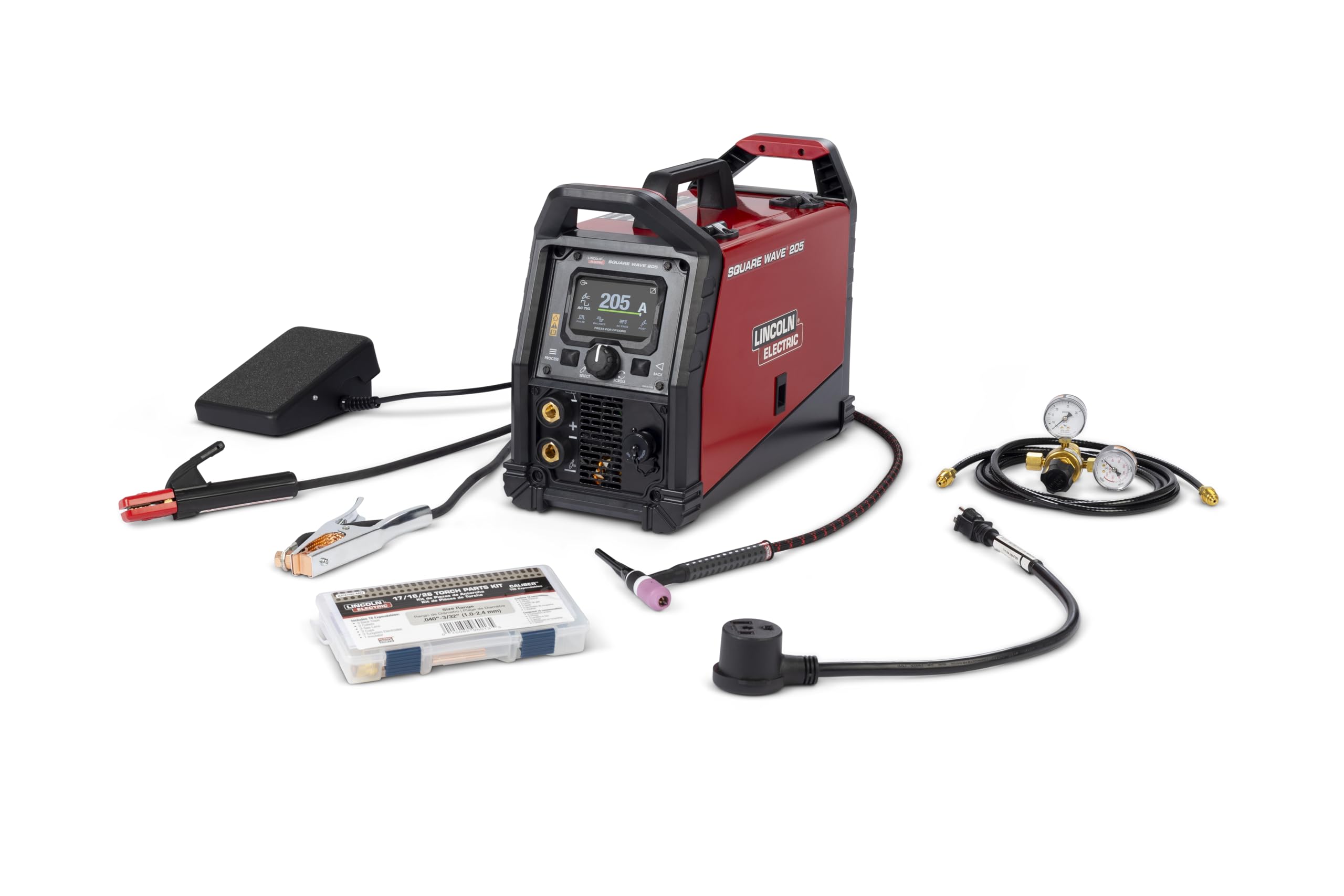
When you need a machine that can live in the shop but also travel to the field, this is a solid choice. The Square Wave 205 handles AC TIG on aluminum and DC TIG on steel, plus it doubles as a stick welder for outdoor or thicker work. You get adjustable AC frequency and balance for cleaner aluminum beads, a pulse mode for controlled filler deposition, and dual 120V/230V input so you can plug in across many farm or shop setups.
At around 36 lb, it is portable enough to carry between jobs, and Lincoln bundles thoughtful accessories such as a torch, foot amptrol, regulator, and stick holder. It is a strong fit when weld appearance, heat control, and aluminum capability matter more than the lowest purchase price.
Why You’ll Like It
It gives you a better path for cleaner TIG work and aluminum repairs while still keeping stick capability for outdoor farm jobs.
Who Should Buy This
Choose it if you work with aluminum, stainless, thin metal, or finish-sensitive repairs where TIG control matters.
Who Should Avoid This
Skip it if you only need basic fence repair or want the simplest low-cost wire-feed machine.
What People Say
Buyer feedback often highlights approachable controls, TIG and stick versatility, bundled accessories, and portability. Some users note a learning curve for advanced features like pulse or fine TIG settings, which is normal for a more capable TIG-focused machine.
Overall Sentiment: Positive

Use Cases
|
Situation |
How It Helps |
|---|---|
|
Fixing gates and fence hardware |
Switch to stick mode and tack broken brackets or hinge mounts on-site without relying on a dedicated MIG setup. |
|
Trailer and implement repairs |
Dual voltage and solid output let you rebuild tabs, mend cracks, and reattach hardware where the trailer sits. |
|
Aluminum panels or brackets |
AC TIG with adjustable balance and frequency helps clean oxide and control bead shape for neater aluminum welds. |
|
Precision shop finishing |
Pulse mode and the included foot amptrol give you better heat control for tidy filler runs and consistent beads. |
Problem Solving
Great for everyday farm and shop problems: patching, tacking, aluminum repairs, and general maintenance. It is versatile and portable, though not meant to replace heavy-duty industrial production welders for continuous, high-amperage work.
Key Benefits
- AC TIG suited for aluminum with adjustable AC frequency and balance
- DC TIG and stick welding from one power source for flexibility
- Dual input voltage, 120V/230V, so you can use shop or field power
- Portable at about 36 lb, making it easier to move between jobs
- Pulse mode for better heat and filler control on detailed work
- Includes torch, foot amptrol, gas regulator/flowmeter, and stick accessories
You will grab this when a trailer tab snaps or a hinge needs tacking. It auto-detects 120/230 V power, walks you through a basic three-step setup, and the digital readout plus easy knobs get you welding fast.
The included MAGNUM PRO 100L gun and spool-gun readiness mean you can handle mild steel and aluminum setups without swapping the whole rig, and the case and lift points make it easier to move between shop, truck, and field. Just remember that this model is focused on MIG and flux-cored work rather than stick welding.
Why You’ll Like It
It is a cleaner step up from small 120V-only wire-feed welders, especially if you want dual-voltage flexibility and a stronger MIG setup.
Who Should Buy This
Buy it if MIG and flux-cored welding handle most of your farm repair needs and you want a more capable machine than a tiny entry-level unit.
Who Should Avoid This
Skip it if stick welding is your main requirement or if you need TIG capability from the same box.
What People Say
Buyer feedback frequently mentions easy setup, clean welds once dialed in, auto-sensing dual voltage, solid wire feed, and the included Magnum gun. Some users note that long heavy runs can require cooling breaks or wire-feed adjustments.
Overall Sentiment: Positive

Use Cases
|
Situation |
How It Helps |
|---|---|
|
Fixing gates and fence hardware |
You can carry the unit to the fence, plug into a nearby outlet or generator, and tack or rebuild plates and hinges without hauling a full shop setup. |
|
Trailer and implement repairs in the field |
Dual-voltage auto-sensing and portability let you make repair welds and replace tabs at the yard or roadside with predictable settings. |
|
Working with aluminum |
Spool-gun compatibility and steady wire feed can help reduce feeding problems common with soft aluminum wire. |
|
Small-shop fabrication and learning |
Simple controls and reliable wire feed make it easier to practice technique, try different wire sizes, and finish light fabrication. |
Problem Solving
Very capable for routine farm maintenance, tack welding, patching brackets, and handling thin-to-medium metal work. It is not designed for nonstop heavy industrial production, and longer continuous runs may hit duty cycle limits and require cooling breaks.
Key Benefits
- Auto-sensing input for easy switching between 120 V and 230 V
- Simple digital display and knobs for quick, predictable setup
- Wide welding range suitable for light-to-medium farm repairs
- Portable 41 lb design with multiple lift points for fieldwork
- Cast-aluminum drive and smooth wire feeding for consistent beads
- Includes MAGNUM PRO 100L gun and spool-gun readiness for aluminum
- Good penetration and repeatable results across common materials
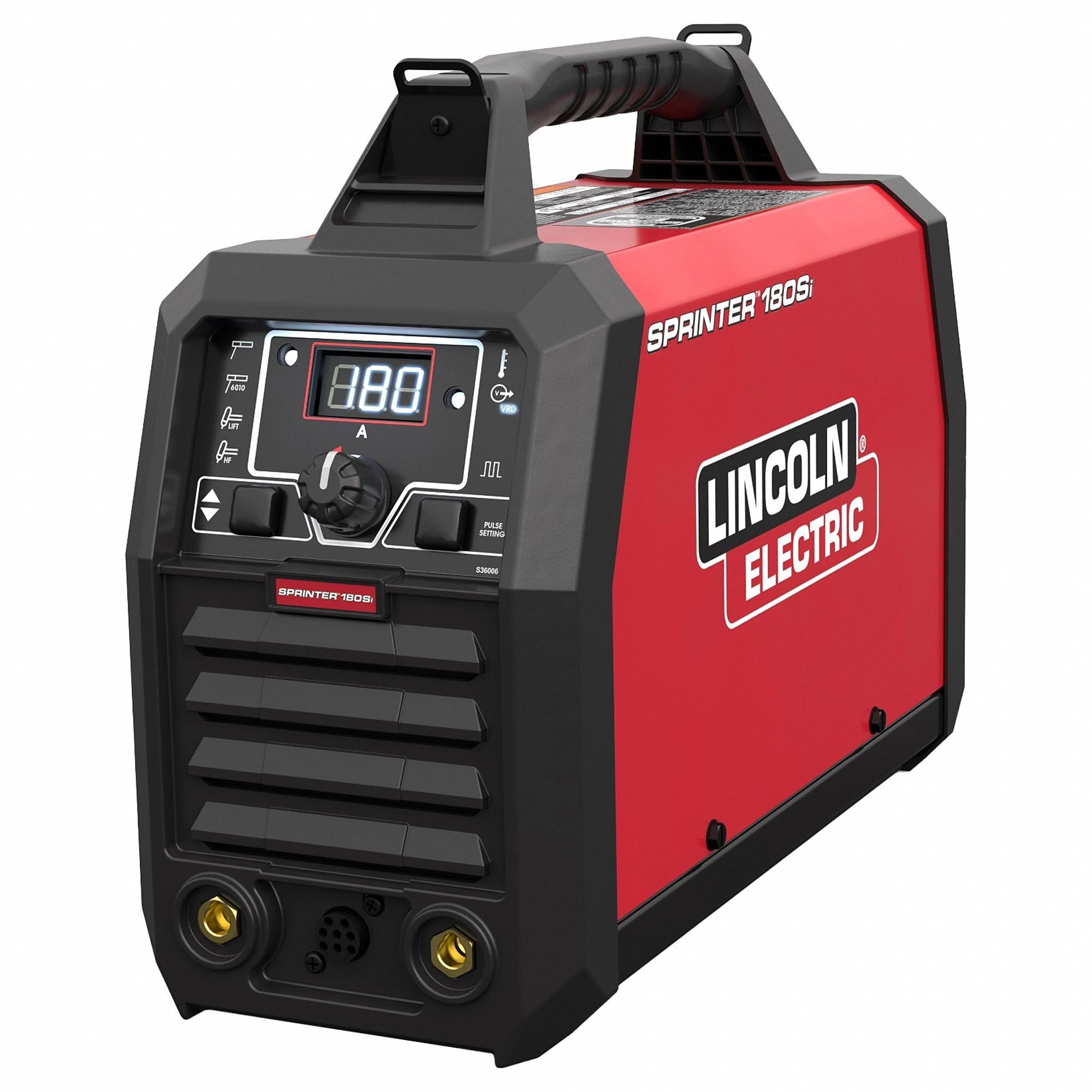
This is the kind of welder you reach for when the shop or field needs a dependable fix without lugging a heavy rig. You get real stick power for electrodes like 7018 and 6010, plus DC TIG with pulsed mode for thinner metal, all in a package under 20 lbs.
The dual 120V/230V inputs mean you can plug in at the barn, the trailer, or a shop outlet and get to work. Controls are straightforward so dialing in a setting does not take forever, and features like high-frequency start and amptrol compatibility give you options as your skills grow.
Why You’ll Like It
It gives you true stick capability without the bulk of a larger shop machine, which matters when the repair is away from your main workbench.
Who Should Buy This
Choose it if you need portability, dual-voltage flexibility, and stick/TIG performance for repairs that go beyond basic wire-feed work.
Who Should Avoid This
Skip it if you mainly want MIG welding or if you need a heavy-duty machine for long, continuous production runs.
What People Say
Buyer feedback often praises how this unit balances portability and power. People like being able to carry it between the shop and the field while still running larger electrodes. Common highlights include dual-voltage flexibility, TIG features, pulsed mode, and dependable HF start.
A few users note a learning curve when switching to TIG or using advanced settings, but the overall feedback is positive for maintenance and light fabrication.
Overall Sentiment: Positive

Use Cases
|
Situation |
How It Helps |
|---|---|
|
Fence and gate repairs |
Carry the lightweight unit to the post, switch to stick mode, and tack up broken brackets or hinge mounts without hauling a large machine. |
|
Trailer and implement maintenance |
Use the 180 A output and dual voltage to rebuild worn tabs, mend cracks, and reattach hardware at the worksite. |
|
Thin-sheet repair |
Pulsed TIG mode and HF start give you better heat control for delicate welds and cleaner penetration on thinner materials. |
|
Light fabrication and shop projects |
Simple controls and amptrol compatibility let you fine-tune welds for brackets, frames, and small structural builds. |
Problem Solving
Excellent for everyday farm and shop problems: patching, tacking, and precise TIG work. Not intended to replace heavy industrial 220V production welders.
Key Benefits
- Portable, weighing under 20 lbs with handle or strap for easy carry
- Dual input voltage, 120V/230V, for flexible power options on the farm
- Multi-process support for DC stick and DC TIG, including pulsed TIG for thin metal
- High-frequency start for reliable TIG ignition
- Two stick modes for better performance with E6010/E6011 and E7018 electrodes
- Simple display and controls help you get welding quickly
Check Product Details on Amazon
This little Weld-Pak is the kind of tool you grab when something on the farm needs a quick fix. You can plug it into a 120V outlet and get to work, and it is light enough to carry to the pasture, trailer, or barn.
The controls are simple: two knobs for wire speed and voltage, which makes dialing in a decent bead straightforward even if you are not a pro. It is built for flux-core welding and is aimed at small-to-medium repair work. If you want a handy portable machine for fence repairs, tractor touch-ups, and general barn maintenance, this is an easy budget pick. Just know it is not the right choice if your main need is heavy stick welding.
Why You’ll Like It
It solves the “small repair right now” problem. You do not need gas, a large shop machine, or complicated settings for basic tacks and patch work.
Who Should Buy This
Buy it if you want a simple, affordable, easy-carry flux-core welder for light farm maintenance, fence panels, brackets, and hobby projects.
Who Should Avoid This
Skip it if you need true stick welding, long duty cycles, thick steel repair, or daily heavy fabrication.
What People Say
Buyer feedback tends to praise how portable and easy the unit is to use. Users often mention the light weight, smooth weld characteristics from the inverter, and how quickly they can get a repair done. Customers also appreciate the included accessories and the hard metal case for job-site wear.
A few common concerns are the small spool capacity and the shoulder strap instead of a molded handle, but overall the feedback is that it punches above its size for routine repairs.
Overall Sentiment: Positive

Use Cases
|
Situation |
How It Helps |
|---|---|
|
Fence and gate repairs |
Plug into a barn outlet, carry the unit to the post, and tack up broken panels or brackets without hauling a heavy rig. |
|
Tractor and implement touch-ups |
Use the voltage and wire-speed controls for small patches, brackets, and tack welds on lighter repair jobs. |
|
Mobile emergency fixes |
Compact size and shoulder strap let you take it to remote jobs so quick field or trailer fixes are faster. |
|
Beginner practice and hobby projects |
Simple dial controls and flux-core operation make it easier to learn on scrap metal before tackling real repairs. |
Problem Solving
Great at solving everyday farm maintenance problems: patching fences, mending brackets, and quick on-site repairs. Not intended as a replacement for a 220V industrial welder or a true stick welder for heavy production work.
Key Benefits
- Truly portable light inverter design with shoulder strap for easy carry
- Simple controls let you fine-tune welds quickly
- Includes essential accessories and a protective metal case
- Good utility for a small 120V flux-core unit
- Ideal for DIY, hobbyists, and on-the-go farm maintenance
If you want one machine that covers most farm jobs and gives you a more aluminum-ready buying path, this is the sort of unit you will reach for. It handles MIG, flux-cored, stick, and DC TIG so you can move between trailer tabs, gate repairs, and occasional aluminum work without juggling separate machines.
The auto-sensing dual voltage means you can plug into shop power or a generator in the field, while Ready.Set.Weld and ArcFX make dialing in settings less of a guessing game. It also has memory recall for setups you use often, a built-in TIG solenoid, and a robust wire drive so feeding stays steady.
Why You’ll Like It
It is built for buyers who want the Power MIG 215 MPi platform with a more aluminum-focused setup path.
Who Should Buy This
Choose it if you want multi-process flexibility and expect occasional aluminum work where spool-gun readiness matters.
Who Should Avoid This
Skip it if you do not need aluminum support, since a standard multi-process configuration may be simpler and more cost-effective.
What People Say
Buyer feedback commonly points to the machine’s versatility and how it can replace several single-purpose machines in a small shop. People also mention dual-voltage auto-sense, Ready.Set.Weld, steady wire feed, and TIG readiness. Some users note shipping or delivery concerns, so inspect the unit and accessories right away.
Overall Sentiment: Positive

Use Cases
|
Situation |
How It Helps |
|---|---|
|
Trailer and implement repairs |
Use MIG or stick to tack and rebuild tabs and frame pieces on trailers; dual voltage and portability mean you can work at the yard or roadside. |
|
Gate, fence, and hardware fixes |
Light-to-medium tacks and patch plates are quick with steady wire feed and preset recommendations, so you get repeatable results without fuss. |
|
Occasional aluminum work |
Spool-gun readiness and a controlled wire drive reduce feeding headaches when you switch to softer aluminum wire. |
|
Small shop fabrication and teaching |
Memory recall and visual ArcFX feedback help you save and teach settings for common tasks, making practice and small builds less fiddly. |
Problem Solving
Very capable for routine farm maintenance, tack welding, bracket repairs, and light structural work across multiple metal types. It solves the problem of needing several machines by combining processes, but it is not aimed at nonstop heavy industrial production. Expect duty-cycle and heat limits on long, continuous runs.
Key Benefits
- Multi-process capability: MIG, flux-cored, stick, and DC TIG
- Auto-sensing dual input, 120 V / 230 V, for field or shop use
- Ready.Set.Weld simplifies setup and recommended parameters
- ArcFX gives instant visual feedback on setting changes
- Memory recall to save go-to welding setups
- Built-in TIG solenoid and spool-gun readiness for aluminum
- Robust wire drive and ergonomic case for portability
Check Current Amazon Availability
If you need something you can toss in the truck and take to the barn, this is the kind of machine that makes farm life easier. It runs on 120V, handles flux-cored welding and MIG, and the inverter design keeps it light enough to carry where the work is.
Setup is straightforward with two knobs for wire speed and voltage, and Lincoln includes a gun, tips, clamp, and protective metal case so you can get welding fast. It is ideal for routine fence and gate fixes, trailer tabs, light fabrication, and general shop maintenance.
Why You’ll Like It
It is easy to move, easy to set up, and better for quick wire-feed repairs than overcomplicated shop machines.
Who Should Buy This
Buy it if you want a compact MIG and flux-cored unit for light-to-medium farm work and general repairs.
Who Should Avoid This
Avoid it if you specifically need stick welding or high-output welding for thick implement steel.
What People Say
Buyer feedback often points to how portable and user-friendly this unit is. The small footprint and included accessories help people get welding fast. Users also praise the smooth weld characteristics from the inverter and the sturdy metal case, though some wish for a built-in handle or larger spool capacity for longer jobs.
Overall Sentiment: Positive

Use Cases
|
Situation |
How It Helps |
|---|---|
|
Repairing fence posts and hinges |
Portable 120V operation and quick setup let you tack or rebuild hardware where it failed without hauling heavy gear. |
|
Trailer and implement patching |
Consistent wire feed and adjustable voltage help you fill cracks, replace tabs, and restore mounting points with controlled bead shape. |
|
On-the-go emergency fixes |
Lightweight design and shoulder strap mean you can take it to remote equipment for fast temporary repairs until full service is possible. |
|
Hobby and starter welding |
Easy controls, included consumables, and forgiving flux-cored mode make learning and small projects less frustrating for newcomers. |
Problem Solving
Excellent for common farm and shop problems like tacking, patching, and light fabrication. It will not replace a full-size 220V production welder or a dedicated stick machine, but for maintenance, mobile repairs, and hobby projects it solves more problems than its size suggests.
Key Benefits
- Runs on common 120V power so you can plug in at the shop or in the field
- Supports flux-cored and solid MIG wire for flexible repair options
- Inverter-based, compact, and lightweight for true portability
- Includes gun, contact tips, nozzle, regulator, and clamp
- Simple two-knob controls make it easy to dial in welds quickly
- Protective metal case and shoulder strap for transport and durability
You will reach for this when a fence hinge snaps, a trailer tab needs replacing, or a last-minute fabrication task pops up. It runs MIG, flux-cored, stick, and DC TIG from a household 120 V outlet, so you do not need separate machines for many light-to-medium farm jobs.
The simple two-knob controls and single-button process selector make it friendly if you do not want complicated menus, and at about 34.5 lb it is portable enough to carry across the yard. If you want a versatile, easy-to-move unit that covers many farm repair needs without requiring 230V power, this is a practical choice.
Why You’ll Like It
It gives you multi-process flexibility while staying on common 120V power, which can be more convenient than a larger 230V-only machine.
Who Should Buy This
Choose it if you want a flexible 120V welder for moderate farm repairs, shop projects, and occasional stick or TIG work.
Who Should Avoid This
Skip it if you need higher amperage, long duty cycles, or regular repairs on thick farm equipment.
What People Say
Buyer feedback often praises how flexible and easy this unit is. Owners like that it handles multiple processes and runs off a normal outlet. The controls and portability get frequent mentions as things that save time on small repairs.
Some buyers report reliability hiccups, so it is smart to inspect the unit, test it on scrap, and confirm accessories when it arrives.
Overall Sentiment: Positive

Use Cases
|
Situation |
How It Helps |
|---|---|
|
Fixing gates and fence hardware |
You can plug into a household outlet, carry the unit to the spot, and tack or rebuild plates and hinges without lugging heavier shop gear. |
|
Trailer and implement repairs |
Consistent wire feed and adjustable settings let you replace tabs, patch seams, and reinforce mounts with repeatable results. |
|
Thin metal and body patching |
Switch to DC TIG or fine MIG settings for better control on sheet metal and cleaner, lower-heat beads. |
|
Weekend fabrication and shop projects |
Multi-process capability means you can experiment with different techniques and materials without buying another machine. |
Problem Solving
Very capable for routine farm and shop jobs. Tack welding, patching rusted brackets, and light structural fixes are all within its wheelhouse. It is not built for nonstop industrial production, but for mobile maintenance, occasional TIG work, and weekend fabrication it addresses common farm repair problems.
Key Benefits
- True multi-process capability: MIG, flux-cored, stick, and DC TIG in one unit
- Runs from common 120 V outlets for field-friendly repairs
- Simple two-knob interface and single-button process selection for quick setup
- Wide amperage ranges to handle light sheet work up to medium repairs
- Light enough at about 34.5 lb to move around the yard or into the trailer
- Includes accessories so you can start welding without a lot of extra gear
- Good wire-feed consistency for cleaner, repeatable MIG results
Check Product Details on Amazon
If you want a lightweight machine you can grab and carry to a fence line or trailer, this bundle is a smart choice. At under 20 lb, the Sprinter 180Si is genuinely portable, but the 180-amp output still handles common farm repair work with stick welding and DC TIG.
It ships with a TIG torch, foot pedal, adapters, and cables, so you can get started on maintenance, light fabrication, or structural touch-ups without hunting for as many extras. If you prioritize flexibility and easy transport over nonstop heavy production, this is a welder you will reach for on the farm.
Why You’ll Like It
This bundle gives you a more complete start for stick and TIG work, which helps reduce accessory shopping after the welder arrives.
Who Should Buy This
Buy it if you like the Sprinter 180Si platform and want the included torch, foot pedal, work clamp, and adapter setup.
Who Should Avoid This
Skip it if you already own the needed TIG accessories or if MIG welding matters more than stick and TIG.
What People Say
Buyer feedback commonly likes how portable and complete the package is. Reviewers point out the lightweight case, included torch and foot pedal, and the convenience of dual voltage. The pulsed TIG and HF start often get called out for helping with thin metal and reliable arc starts, while the stick modes are appreciated for handling different electrodes.
Some users note it runs warm on long, heavy jobs and that duty-cycle limits make it better suited to repairs and light fabrication than nonstop industrial use.
Overall Sentiment: Positive

Use Cases
|
Situation |
How It Helps |
|---|---|
|
Trailer and implement repairs |
You can carry it to the job and use stick mode to tack and rebuild tabs; dual voltage lets you plug into farm power or a generator at the roadside. |
|
Fence, gate, and hardware fixes |
Light tacks and patch plates are easier with the steady stick arc and preset stick modes for common electrodes. |
|
Thin-metal patching and sheet work |
Pulsed TIG and HF start give better heat control and cleaner arc starts, which helps you avoid burn-through on thinner material. |
|
Remote field jobs and emergency fixes |
Lightweight portability and 120/230 V compatibility mean you can take it to the field and run it from a generator or available power source. |
Problem Solving
Very capable for routine farm maintenance, tack welding, bracket repairs, and light structural work across common steel electrodes. It solves the need for a portable stick and TIG tool, but it is not designed for long, continuous heavy production. Expect duty-cycle and heat limits during extended runs.
Key Benefits
- True portability under 20 lb with ergonomic handle and shoulder strap
- Dual input, 120 V / 230 V, so you can use shop power or a generator
- Supports DC stick plus DC TIG with pulsed TIG mode
- High-frequency start for reliable TIG arc strikes
- Two stick modes, crisp and soft, for better performance with common electrodes
- Comes with torch, foot pedal, work clamp, and adapter
Check Product Details on Amazon
You will reach for this when a gate hinge snaps or you need to tack up a trailer corner. It runs MIG and flux-core from a standard 120 V outlet, so you do not need to haul a larger machine just to make a quick repair.
The controls are straightforward, the unit is compact enough to move around the yard, and it comes with the basic accessories to get you welding fast. It handles thin sheet work and light-to-medium farm repairs well, and the wire-feed consistency helps you get cleaner, repeatable beads without fuss.
Why You’ll Like It
It is straightforward and approachable, which makes it a good fit for farm owners who want reliable wire-feed repairs without too many settings.
Who Should Buy This
Buy it if your work is mostly thin-to-medium metal, shop projects, hobby welding, or light farm repairs.
Who Should Avoid This
Skip it if you need stick welding, heavy implement repair, or long welds at higher amperage.
What People Say
Buyer feedback generally highlights reliability and ease of use for everyday fixes. Users like the consistent wire feed and the ability to plug into a household outlet. Many appreciate that it comes with the basics so you can get started quickly, and users often note tidy bead appearance on thinner metals.
A minority report occasional wire-feeding hiccups, some wish for finer voltage control, and a few mention shipping or mechanical issues on arrival.
Overall Sentiment: Positive

Use Cases
|
Situation |
How It Helps |
|---|---|
|
Fixing gates and fence hardware |
You can carry the unit to the fence, plug into a nearby outlet, and tack or rebuild plates and hinges without dragging heavy shop equipment around. |
|
Trailer and implement repairs |
Adjustable wire feed and output let you replace tabs, patch seams, and reinforce mounts with repeatable results for medium-duty fixes. |
|
Thin sheet metal and body patching |
Lower amperage settings and steady feed help you avoid burning through thin panels and give cleaner-looking beads on sheet work. |
|
Weekend fabrication and learning |
Simple controls and included accessories make it easy to practice techniques, try flux-core or MIG, and finish small shop projects without extra purchases. |
Problem Solving
Very capable for routine farm maintenance and light structural repairs. Tack welding, patching rusted brackets, trailer tabs, and thin-metal work are all well within what this unit does. It is not aimed at heavy, continuous production work; the duty cycle at higher amps and the 120 V input mean it is best for mobile fixes and occasional MIG tasks rather than nonstop industrial jobs.
Key Benefits
- Runs from common 120 V outlets for field-ready repairs
- Simple, no-nonsense controls so you can set up quickly
- Good wire-feed consistency for cleaner MIG beads
- Handles mild steel, aluminum, and stainless for thin-gauge work
- Portable design makes yard-to-shop moves easier
- Includes basic accessories so you can start right away
- Wide output range, 30–140 A, for light to medium repairs
FAQ
How Do I Choose The Right Welder For Farm Repairs?
You want a machine that balances portability, power, process type, and the metal thickness you usually repair. Prioritize a dual-voltage or 230 V-capable unit if you expect to weld thicker steel or heavy farm equipment, but a 120 V inverter welder can be great for light repairs and easy transport. Check the duty cycle so the machine can run long enough between cool-downs for the jobs you do.
Make sure the welder handles the process you actually need. Stick-capable welders are useful for outdoor repairs and thicker steel. MIG and flux-cored units are often easier for quick light repairs. TIG is useful when you need cleaner control on thin metal, stainless, or aluminum. Consider multi-process models only if you will actually use the extra modes.
Can I Run A Farm Welder On A Generator Or Household Circuit?
Yes, but you need to match the power source to the welder’s draw. Small 120 V machines may run on a household 20 A circuit but can still trip breakers at high settings, so use a dedicated circuit when possible. If you plan to use a generator, size it for the welder’s running amperage plus other loads and allow margin for startup surges.
Be careful with low-quality or underpowered generators because unstable voltage can cause inconsistent arc performance or damage. If you are unsure, test the setup on scrap before starting a repair. When working outdoors on the farm, a dual-voltage machine gives you more flexibility to plug into available power.
What Techniques And Accessories Help Make Reliable Farm Repairs?
Start with the right consumables and prep. Choose the correct electrode or wire for the metal and conditions, clean the joint of rust and paint, and tack to align parts before welding. Use the proper amperage and travel speed to avoid cold laps or excessive burn-through. Practice on scrap of the same thickness until you get consistent penetration.
Keep electrodes dry, especially moisture-sensitive rods like 7018. Store them in a rod oven or sealed container when needed. Bring a good chipping hammer, wire brush, grinding disk, clamps, and a reliable ground clamp to every job.
Do not skip PPE. A good auto-darkening helmet, leather gloves, and protective clothing protect you from spatter and UV exposure. If you are new to welding, spend time controlling arc length, angle, and travel speed before welding critical farm equipment.
Is Stick Welding Better Than MIG For Farm Repairs?
Stick welding is often better for outdoor repairs, rusty or painted steel, and thicker farm equipment because it is less dependent on shielding gas. MIG is easier for clean metal, shop work, and thinner material. Flux-cored welding sits between them because it is portable and does not require gas, but it can create more spatter. The best choice depends on where you weld, how clean the metal is, and how thick the repair area is.
What Safety Steps Matter Before Welding Farm Equipment?
Clean the work area, disconnect batteries or sensitive electronics when appropriate, remove flammable material, and never weld sealed tanks, fuel containers, chemical containers, or unknown containers. Clamp the work securely and make sure your ground connection is solid. If the repair affects steering, towing, lifting, or structural safety, consider having the weld inspected or completed by a qualified professional.
Farmers Top Picks
You will choose between these Lincoln options based on what matters most to your day-to-day repairs: the Power MIG 215 MPi for one-machine versatility, the Weld-Pak 90i FC for rugged no-gas flux-core fixes and portability, the Sprinter 180Si if you want true stick/TIG versatility in a lighter package, or the Square Wave 205 TIG when precision TIG work on aluminum or stainless is required. Farmers typically prioritize portability, ease of use, generator compatibility, process type, and duty cycle, trading off simplicity for power or precision depending on whether the job involves quick fence patches or more finish-sensitive repairs.

Wrapping Up
By matching a welder to how you work, you can keep repairs local, fast, and less expensive. If you want a single go-to machine for most farm tasks, choose a multi-process unit like the Power MIG 215 MPi that balances power, features, and flexibility.
If portability and budget matter most, the Weld-Pak 90i line gives you field-ready capability without a heavy investment.