
This roundup is reader-supported. When you click through Amazon links, we may earn a referral commission on qualifying purchases. As an Amazon Associate I earn from qualifying purchases.
Aluminum TIG welding needs the right kind of machine. For most buyers, that means choosing an AC/DC TIG welder with pulse control, adjustable AC balance or frequency, steady arc starts, and accessories that match your workflow. The picks below focus on machines that are clearly aimed at aluminum TIG work rather than general MIG, stick, or DC-only welding.
Quick Verdict
Best overall: ARCCAPTAIN TIG200PACDC if you want the strongest mix of AC/DC TIG control, pulse settings, and beginner-friendly setup.
Best for more power: Sunstac SS-250P/ACDC if you want a higher-output AC/DC TIG with a portable footprint.
Best value AC/DC TIG: YESWELDER TIG-200P ACDC if you want a capable aluminum TIG setup for garage and light-shop work without stepping into premium pricing.
Top Picks
|
Category |
Product |
Best For |
|---|---|---|
|
🥇 Best Overall AC/DC Control |
Aluminum TIG control and learning room |
|
|
🔌 Best Power/Portability |
Higher-output garage and jobsite TIG |
|
|
✨ Best Value AC/DC TIG |
Budget-conscious aluminum TIG practice |
How We Picked These TIG Welders
You want a machine that makes aluminum welding more predictable, not a general welder that only mentions TIG as an add-on. For this revised list, the strongest weight went to AC/DC TIG capability, pulse control, adjustable AC settings, dual-voltage support, stable starts, clear controls, and practical accessory support such as foot-pedal compatibility, gas fittings, torch consumables, and easy-to-read displays.
We also removed machines that were better suited to MIG, stick, lift-TIG, flux-core, or plasma cutting when they did not clearly match the main goal: TIG welding aluminum with proper AC control.
Before You Buy
- Choose AC/DC for aluminum TIG: AC helps with the oxide-cleaning action aluminum usually needs.
- Check your power supply: Dual-voltage welders are flexible, but higher output usually requires a 220V circuit.
- Budget for extras: Argon, tungsten, filler rod, cups, collets, a gas lens, and a better ground clamp may not all be included.
- Look for pedal support: A foot pedal helps manage heat on thin aluminum and small parts.
- Match the machine to your workload: Hobby and light-shop welders are not the same as high-duty-cycle industrial rigs.

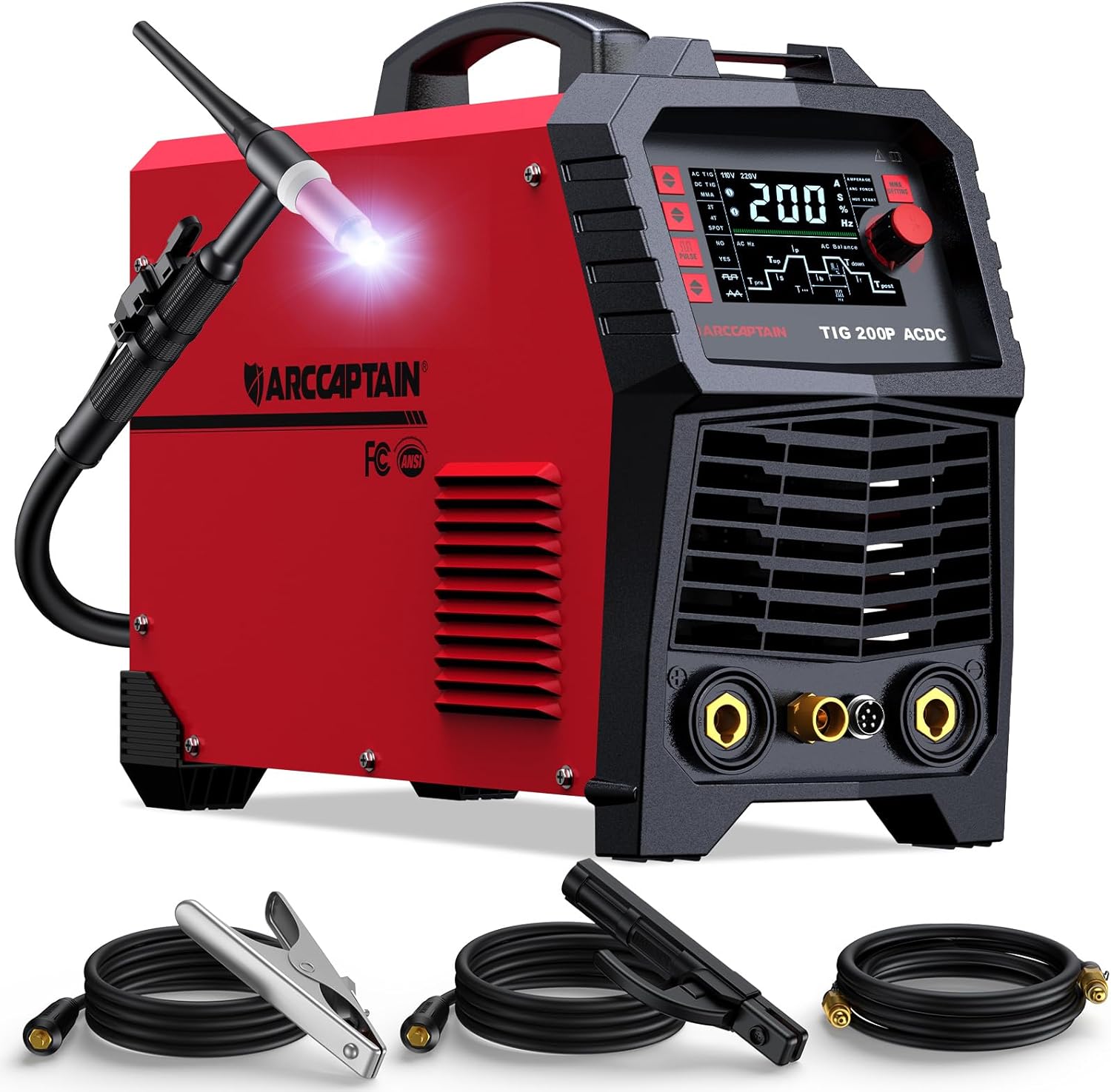
If you want one aluminum-capable TIG machine that gives you room to learn and improve, the ARCCAPTAIN TIG200PACDC is the strongest fit in this list. It gives you AC and DC TIG, pulse, waveform options, and stick/spot modes, so it can cover aluminum practice, stainless work, mild steel repairs, and small fabrication jobs without forcing you into a single-process machine.
The clear controls are useful when you are learning how AC balance, pulse, pre-flow, post-flow, and ramp settings affect your weld. It is a practical pick for garage fabricators, DIY repair work, small shops, and anyone who wants more control than a basic lift-TIG unit can offer.
Why You’ll Like It
You get real aluminum TIG features in a package that is still approachable. The waveform and pulse settings give you more ways to manage heat, tighten the arc, and practice on thinner material.
Who Should Buy This
Choose this model if you want the most balanced option for learning aluminum TIG, working on mixed metals, and growing into more advanced settings over time.
Who Should Avoid This
Skip it if you only need quick steel repairs with stick or MIG, or if you need a high-duty-cycle industrial machine for daily production work.
What People Say
Buyer feedback commonly highlights the straightforward setup, stable arc, pulse control, waveform choices, and useful accessory bundle. Some buyers also mention that a foot pedal is a worthwhile add-on for more precise heat control.
Overall Sentiment: Positive

Durability
For everyday garage and light jobsite work, this machine is positioned as a practical AC/DC TIG option. As with most budget-to-midrange inverter welders, inspect the unit, leads, torch parts, and fittings when it arrives, and test each mode before starting an important project.
Skill Level
Beginner to Intermediate — friendly enough for a newcomer to learn TIG basics, with enough controls for hobbyists and light professional work.
Key Benefits
- True AC/DC capability with pulse and selectable waveforms for aluminum control
- Multi-process flexibility with TIG, pulse TIG, stick/MMA and spot modes
- Clear digital display and adjustable parameters for repeatable setup
- Dual-voltage design for garage and jobsite flexibility
- Good growth path for users who want to learn AC balance, pulse, and pedal control
Check Product Details on Amazon
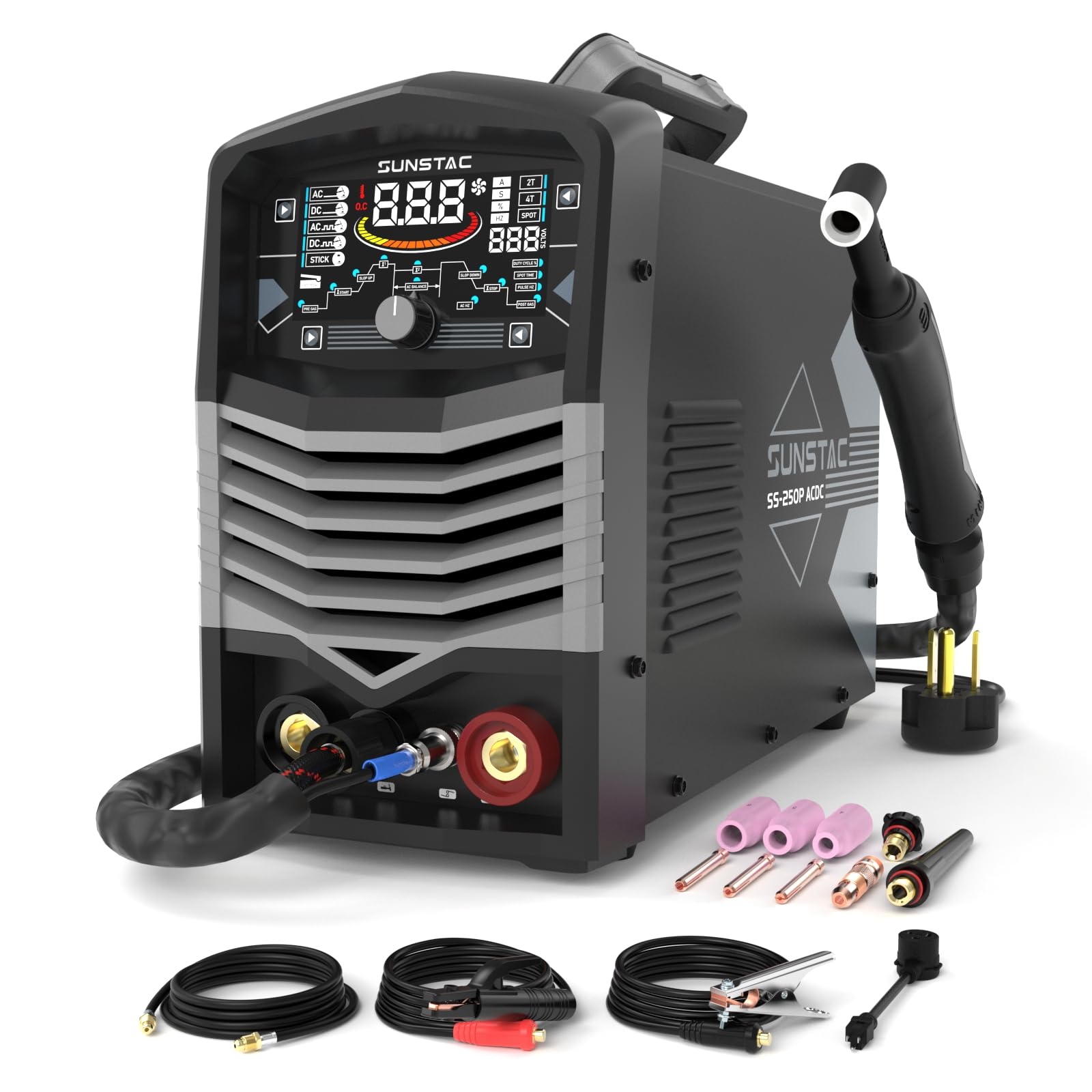
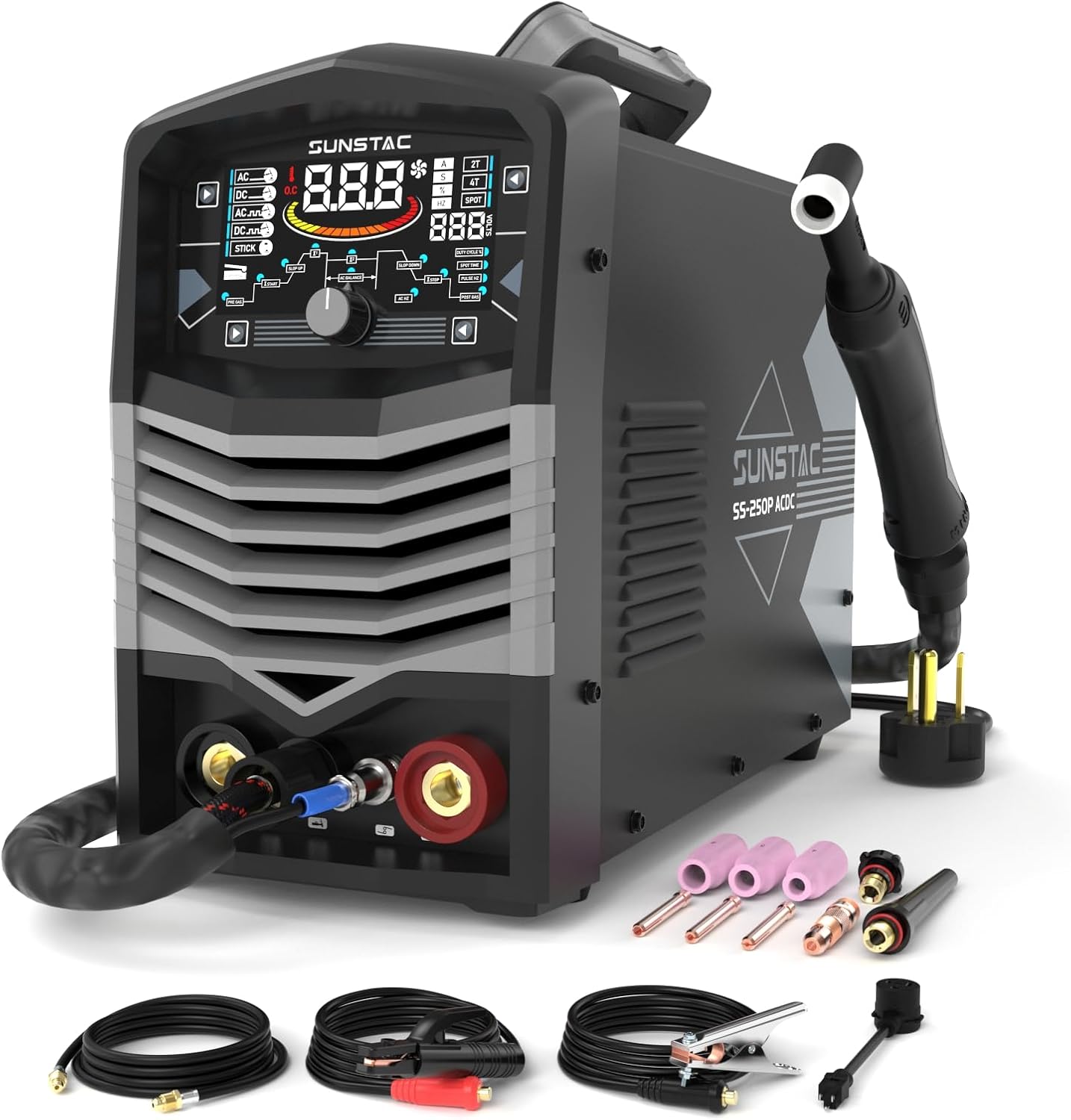
The Sunstac SS-250P/ACDC is a strong fit if you want an AC/DC TIG that still feels portable but gives you more headroom than many smaller 200A-class machines. It includes AC/DC TIG, pulse, spot, and stick modes, with an LCD that makes settings easier to see when you are moving between materials or jobs.
This is the pick to consider when you want aluminum capability for garage repairs, light jobsite work, small fabrication, and weekend projects. The extra output potential is useful, but you will still want to match your expectations to your power circuit, duty cycle, torch setup, and consumables.
Why You’ll Like It
It gives you a broad AC/DC TIG feature set in a machine that is still practical to move around. The LCD and pulse controls help reduce guesswork once you start dialing in aluminum settings.
Who Should Buy This
Choose it if you want a portable AC/DC TIG with more output headroom for thin-to-medium aluminum practice, repair work, and mixed shop tasks.
Who Should Avoid This
Skip it if you need the simplest possible beginner machine, or if unclear instructions and setup learning curves would frustrate you.
What People Say
Common buyer feedback points to a stable arc once the AC settings are dialed in, a bright LCD, a portable body, and useful TIG leads. Common cautions include setup documentation, small parts on arrival, and the need to inspect accessories before starting major work.
Overall Sentiment: Positive

Durability
For general garage use and light jobsite work, the machine is positioned as a solid portable option. Check fittings, fans, buttons, leads, and included accessories on arrival so you can solve small issues before you are in the middle of a weld.
Skill Level
Beginner to Intermediate — approachable for someone learning aluminum TIG, with enough settings to grow into more precise work.
Key Benefits
- AC/DC TIG with pulse for aluminum heat control
- Dual-voltage 110V/220V support for flexible shop or site use
- LCD display for easier setting adjustments
- Portable format for repair work and small fabrication jobs
- Multi-process design with TIG, pulse, spot and stick modes
Check Product Details on Amazon
The YESWELDER TIG-200P ACDC is the value pick for buyers who want real AC/DC aluminum TIG features without overbuying. It includes AC square-wave control, pulse, HF non-touch start, and dual-voltage operation, which makes it a practical fit for hobbyists, weekend fabricators, and small-shop users.
It is not a premium industrial TIG rig, but it gives you the core controls that matter for aluminum practice and light fabrication. Plan on checking the included leads, clamp, torch parts, and pedal compatibility so the setup matches the kind of work you want to do.
Why You’ll Like It
It keeps the focus on the essentials: AC/DC capability, pulse, HF start, and a readable display. That makes it a sensible pick when your goal is learning and improving aluminum TIG technique.
Who Should Buy This
Choose this model if you want a portable AC/DC TIG for garage projects, custom brackets, small repairs, practice coupons, and thin-to-medium aluminum work.
Who Should Avoid This
Skip it if you need a production-duty machine for long daily weld sessions, or if your work requires premium low-amp refinement on delicate thin-gauge parts.
What People Say
Buyer feedback often highlights the machine’s aluminum capability, LED display, portability, and pulse/AC modes. Common cautions include inconsistent quality control on some units and stock leads or clamps that some users choose to upgrade.
Overall Sentiment: Positive

Durability
For casual use and light-to-medium shop work, this machine is positioned as a practical, portable AC/DC TIG. Inspect cables, clamps, torch parts, and controls before relying on it for a large job, especially if you plan to run it hard.
Skill Level
Beginner to Intermediate — friendly for TIG learners and weekend fabricators, with enough control to serve as a portable backup for more experienced users.
Key Benefits
- AC/DC with square-wave and pulse modes for aluminum control
- Large LED display for easier setup
- 200A class output for many home, garage and light-shop tasks
- Dual 110V/220V operation for shop and jobsite flexibility
- HF non-touch start and foot-pedal interface option for smoother arc control
Check Product Details on Amazon
FAQ
How Do I Choose A TIG Welder For Aluminum?
Start with AC/DC TIG capability. Aluminum forms an oxide layer that requires proper cleaning action, so a machine with AC balance and AC frequency control is much better aligned with aluminum TIG than a DC-only lift-TIG unit. Pulse control is also useful because it helps manage heat on thinner parts and can reduce distortion.
Next, decide how portable the machine needs to be, whether you have access to a 220V circuit, and whether you want foot-pedal support. Also check what is included in the box. You may still need argon, filler rod, tungsten, cups, collets, a regulator, a gas lens kit, and a better ground lead.
Do You Need A Spool Gun To Weld Aluminum Or Will A TIG Torch Work?
You do not need a spool gun for TIG welding aluminum. A spool gun is mainly for MIG welding aluminum because soft aluminum wire can feed poorly through a standard MIG liner. For TIG aluminum, focus on an AC/DC TIG welder, argon shielding gas, the correct tungsten, suitable filler rod, and clean material preparation.
Can A DC TIG Welder Weld Aluminum?
Some advanced DC aluminum TIG methods exist, but most hobbyists and small-shop buyers should choose AC/DC TIG for aluminum. DC-only lift-TIG machines are usually better suited to steel and stainless, so they are not the best match for a buyer searching for an aluminum TIG welder.
What Common Problems Will You Encounter And How Can You Troubleshoot Them?
If the arc is unstable, check your tungsten, ground connection, gas flow, polarity, AC balance, and torch angle. If you see porosity, clean the aluminum again, verify argon flow, check for leaks, and keep the torch shielded from drafts. If the machine trips breakers or feels weak, move to a proper 220V circuit when the manufacturer allows it and avoid undersized extension cords.
For better results, practice on scrap that matches your project thickness, keep spare consumables nearby, and use proper ventilation, gloves, eye protection, and welding-safe clothing.
Final Recommendation
If you want the most balanced aluminum TIG pick, start with the ARCCAPTAIN TIG200PACDC. If you want more output headroom in a portable format, compare it with the Sunstac SS-250P/ACDC. If your priority is value and a straightforward AC/DC learning machine, the YESWELDER TIG-200P ACDC is the one to check first.
Wrapping Up
If you plan to weld aluminum, choose an AC-capable TIG with good pulse control and dual-voltage support. That gives you the heat control and arc behavior you need for cleaner, lower-distortion welds. Match the machine to your material thickness, power supply, and skill level, and leave room in your budget for argon, tungsten, filler rod, torch consumables, and a quality ground setup.
| Product | Image | Aluminum TIG Fit | Power Source | Dual Voltage | Special Highlights | Details |
|---|---|---|---|---|---|---|
| ARCCAPTAIN TIG Welder AC/DC 200Amp |
 |
Best overall AC/DC control | AC/DC | Yes |
|
Check Price |
| 250A AC/DC Aluminum TIG Welder |
 |
Best power/portability balance | AC/DC | Yes |
|
Check Price |
| YESWELDER TIG-200P ACDC |
 |
Best value AC/DC TIG | AC/DC | Yes |
|
Check Price |