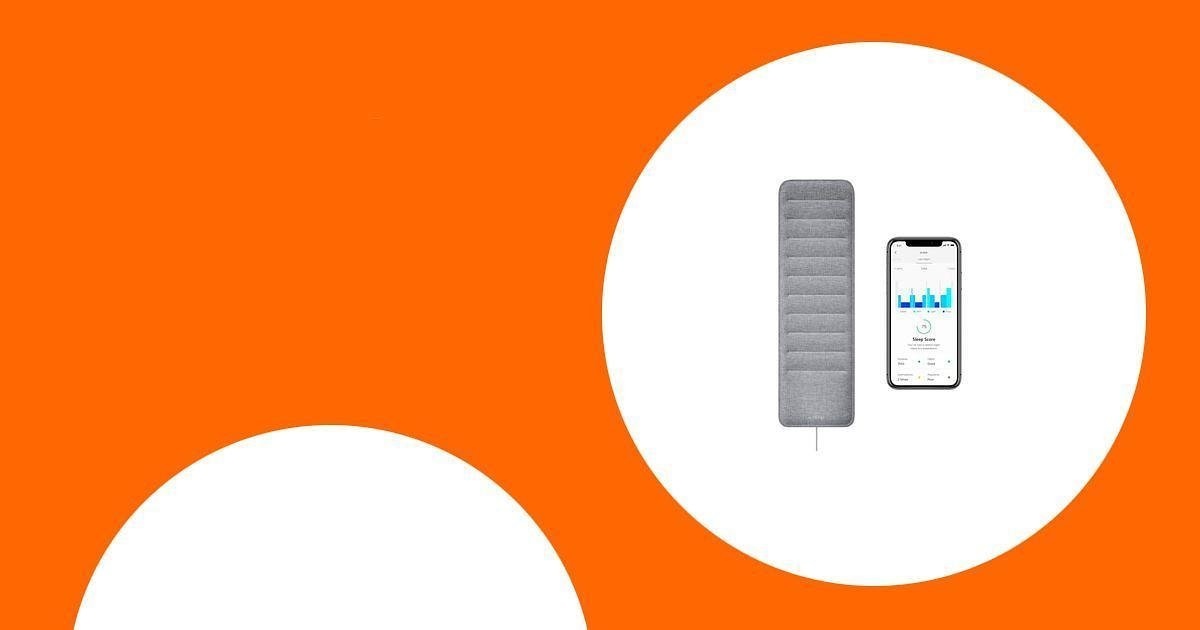
Understanding your sleep patterns can help you notice trends in your rest, bedtime routine, and sleep environment. If you do not want to wear a watch, ring, or wristband overnight, the Withings Sleep offers a convenient alternative by tracking your nights from underneath your mattress. It can help you follow sleep duration, sleep stages, heart-rate patterns, snoring, breathing disturbances, and overall sleep consistency without wearing or charging a tracker overnight.
It is best treated as a wellness and trend-tracking tool rather than a replacement for professional sleep testing. If you have loud persistent snoring, witnessed breathing pauses, severe daytime sleepiness, or concerns about sleep apnea, discuss those symptoms with a qualified medical professional.
This roundup is reader-supported. When you click through links, we may earn a referral commission on qualifying purchases. As an Amazon Associate I earn from qualifying purchases.
Quick Verdict
Choose Withings Sleep if you want a low-maintenance, wearable-free sleep tracker that stays under your mattress and automatically records nightly sleep trends.
Best for: One sleeper who wants automatic sleep tracking without wearing or charging a device overnight.
Keep in mind: One Withings Sleep sensor tracks one sleeper. If two people sharing a bed both want individual sleep data, each person needs a separate sensor.
Why Withings Sleep Is Our Recommended Wearable-Free Option
Withings Sleep matches the main reason most people consider an under-mattress tracker: convenience. Once installed and connected, it can remain beneath the mattress and automatically collect sleep data while you rest.
The device tracks useful nightly patterns without requiring you to remember to put on a wearable before bed. That makes it particularly appealing if watches or rings feel uncomfortable while sleeping or if you regularly forget to charge wearable devices.
How We Evaluated This Sleep Tracker
For this review, the main priority is practical wearable-free sleep tracking. Important considerations include under-mattress setup, mattress compatibility, sleep-stage estimates, heart-rate tracking, snoring and breathing information, app usability, connectivity, shared-bed limitations, and whether the device is practical for repeated nightly use.
We also consider limitations that can affect the buying decision. A sleep tracker can help you identify long-term patterns, but it should not be treated as a medical diagnosis. Correct placement, compatible bedding, reliable Wi-Fi, and proper setup are also important for consistent use.
Withings Sleep – Sleep Tracking Pad Under The Mattress With Sleep Cycle Analysis
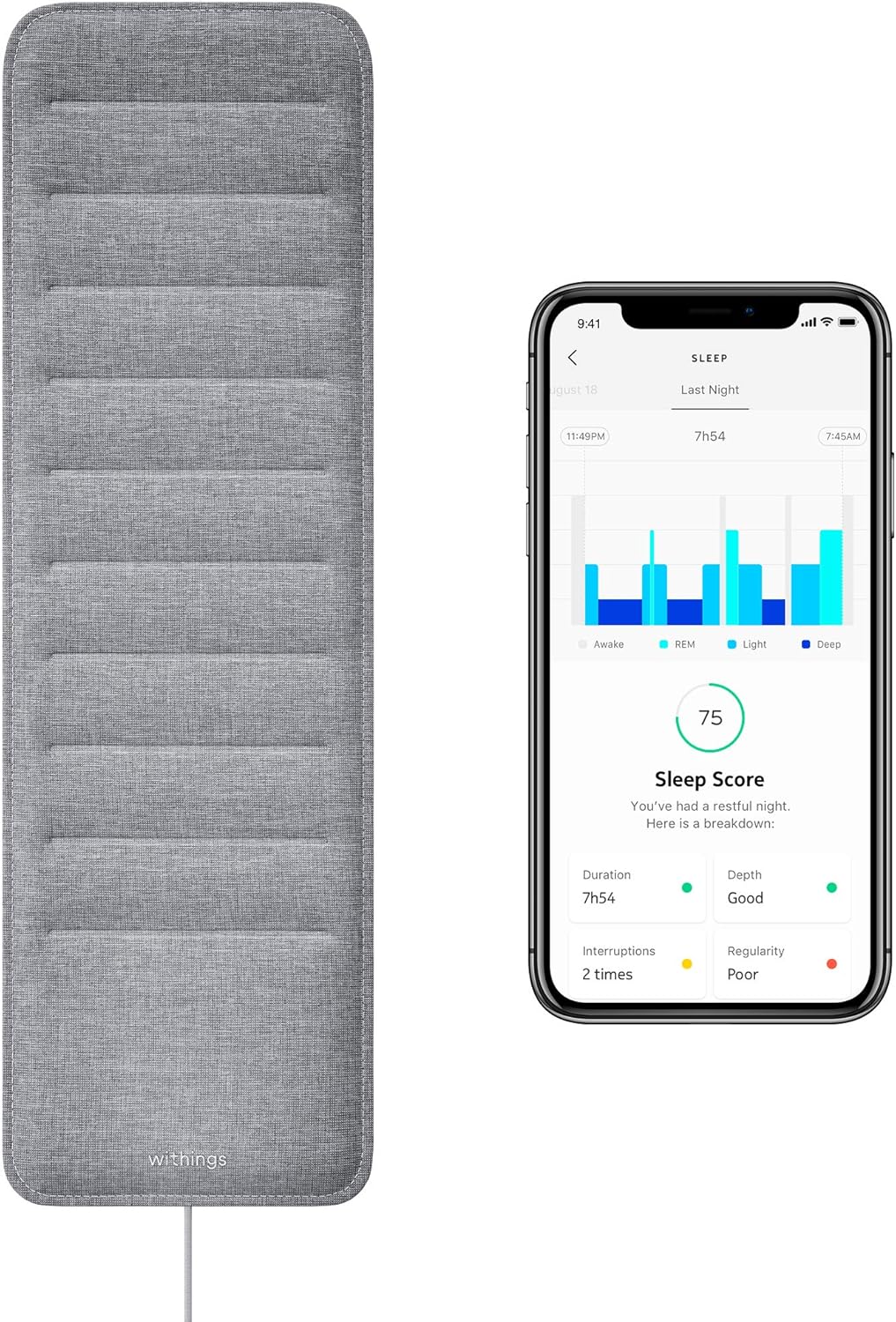
The Withings Sleep is an under-mattress sensor designed for people who want automatic sleep tracking without wearing anything overnight. It can track sleep duration, sleep stages, heart-rate patterns, snoring, breathing disturbances, and an overall Sleep Score, with results synced to the Withings app.
Its main advantage is convenience. After installation and calibration, the sensor stays under the mattress and records your nights automatically. You do not need to put it on before bed or recharge a wearable every few days.
This makes Withings Sleep especially useful for tracking longer-term patterns. Instead of focusing too heavily on one night’s score, you can compare changes in your sleep with factors such as bedtime consistency, caffeine timing, alcohol, exercise, stress, late meals, and bedroom conditions.
Best For: People who want automatic under-mattress sleep tracking without wearing a watch, ring, or wristband overnight.
Why You’ll Like It
- No wearable is needed while you sleep.
- The under-mattress setup keeps the sensor out of the way during normal use.
- Tracks sleep duration and estimates light, deep, and REM sleep stages.
- Tracks heart-rate patterns, snoring, and breathing disturbances.
- Automatically syncs sleep information to the Withings app through Wi-Fi.
- There is no wearable battery to recharge each night.
Who Should Buy This
Choose the Withings Sleep if you want a set-and-forget sleep tracker and dislike wearing devices overnight. It is particularly well suited to one sleeper who wants to monitor long-term sleep trends with minimal daily effort.
It can also make sense if you already use the Withings ecosystem and want your nightly sleep information available alongside other compatible health data in the Withings app.
Who Should Avoid This
Skip it if you need a diagnostic sleep study or expect a consumer sleep tracker to diagnose a medical condition. It may also be a poor fit for waterbeds or air mattresses, which Withings does not recommend for this sensor.
If both people sharing a bed want individual tracking, one sensor is not enough. Each sleeper needs a separate Withings Sleep device positioned for that person.
Pros and Cons
Pros:
- Wearable-free under-mattress design
- Automatic nightly tracking after setup
- Tracks sleep stages, duration, heart-rate patterns, and snoring
- Includes breathing-disturbance information
- No watch or ring to charge before bed
- Useful for comparing sleep patterns over time
Cons:
- One sensor tracks one sleeper
- Requires correct installation and Wi-Fi connectivity for normal syncing
- Needs to remain connected to power
- Waterbeds and air mattresses are not recommended
- Not a substitute for professional medical sleep testing
Key Benefits
- Tracks sleep duration and sleep-stage estimates
- Tracks continuous and average sleeping heart-rate patterns
- Detects snoring and breathing disturbances
- Provides a Sleep Score for easier trend review
- Fits underneath the mattress instead of on your body
- Automatically sends sleep data to the Withings app
Mattress Compatibility
Withings Sleep is designed to work with common spring, latex, foam, and memory-foam mattresses. Withings reports testing the sensor with mattresses about 4 to 15 inches thick. Waterbeds and air mattresses are not recommended.
The sensor should normally sit underneath the mattress around chest level. Depending on your bed setup, it can be placed between the mattress and bed platform, box spring, or an appropriate mattress topper or pad. Follow the current Withings setup instructions for your bed configuration.
Shared-Bed Use
A single Withings Sleep sensor tracks one person. If you share a bed but only one person wants sleep tracking, the sensor should be positioned for that sleeper. If both partners want separate sleep data, each person needs a separate sensor on their side of the bed.
Privacy and Snoring Tracking
The device uses its sound sensor to identify snoring-related sounds. Withings states that the snoring feature detects relevant sound patterns rather than storing audio recordings. You can also review the current sound-sensor settings in the Withings app.
When to Use It
Use Withings Sleep when you want to understand your sleep habits across several nights or weeks rather than judging your sleep from a single night. Longer-term data may help you notice patterns connected with bedtime consistency, exercise, caffeine, alcohol, stress, late meals, or changes in your sleep environment.
Price: Check Amazon for the current price and availability.
Before You Buy Withings Sleep
- Check your mattress: Spring, latex, foam, and memory-foam mattresses are supported, while waterbeds and air mattresses are not recommended.
- Consider mattress thickness: Withings reports testing Sleep with mattresses approximately 4 to 15 inches thick.
- Plan for one sensor per sleeper: One sensor tracks one person. Couples who both want individual tracking need separate sensors.
- Check your Wi-Fi setup: The device uses Wi-Fi to automatically sync sleep information to the Withings app.
- Remember the power requirement: Unlike a wearable that needs periodic charging, the sensor stays connected to its power supply during use.
- Use trends rather than one-night scores: Sleep data becomes more useful when you compare patterns across multiple nights.
- Do not self-diagnose: Seek professional medical advice for persistent fatigue, breathing pauses, significant snoring, or suspected sleep apnea.
Related Guides
FAQ
Does Withings Sleep Work Without Wearing Anything?
Yes. The sensor sits underneath your mattress, so you do not need to wear a watch, ring, wristband, or other tracker while sleeping.
What Does Withings Sleep Track?
Withings Sleep can track sleep duration, sleep timing, light, deep, and REM sleep-stage estimates, heart-rate patterns, snoring, breathing disturbances, and an overall Sleep Score. The information is sent to the Withings app for review.
Can Two People Use One Withings Sleep Sensor?
One sensor tracks one sleeper. If two people sharing a bed both want individual sleep tracking, each person needs a separate Withings Sleep sensor positioned on their side of the bed.
Does Withings Sleep Work With Memory-Foam Mattresses?
Yes. Withings lists memory foam among the supported mattress types, along with spring, latex, and other foam mattresses. The sensor has been tested with mattresses approximately 4 to 15 inches thick.
Does It Work With Air Mattresses or Waterbeds?
Withings does not recommend using the Sleep sensor with waterbeds or air mattresses.
Do I Need to Charge Withings Sleep?
You do not recharge it like a watch or smart ring. The sensor uses a power adapter and remains connected to power during normal use.
Does Withings Sleep Record My Snoring Audio?
Withings states that its snoring feature detects relevant sound patterns but does not store audio recordings. Snoring detection can also be managed through the device settings in the Withings app.
Can Withings Sleep Diagnose Sleep Apnea?
Do not use the consumer tracker as a substitute for a professional diagnosis or sleep study. Withings offers different sleep-related products and features in different markets, so capabilities should not be assumed to be identical across Withings Sleep, Sleep Analyzer, and clinical products. If you are concerned about sleep apnea, discuss your symptoms with a qualified medical professional.
How Do I Use a Sleep Tracker Effectively?
Follow the installation instructions carefully and give the tracker several nights to establish useful trend data. Keep a reasonably consistent sleep routine when possible, maintain the required Wi-Fi connection, and compare longer-term patterns rather than reacting to one unusually good or bad score.
Can a Sleep Tracker Improve My Sleep?
A tracker does not improve sleep by itself. Its main value is helping you recognize patterns that may guide practical changes, such as keeping a steadier bedtime, changing caffeine timing, improving your bedroom environment, or discussing persistent symptoms with a medical professional.
Is an Under-Mattress Tracker Better Than a Watch or Ring?
It can be better if comfort and low-maintenance overnight tracking are your priorities. You do not have to wear anything while sleeping. A watch or ring may make more sense if you also want portable daytime activity, exercise, or recovery tracking. The better choice depends on the type of data and convenience you value most.
Final Recommendation
Withings Sleep is a strong choice if your main priority is simple, wearable-free sleep tracking. Its biggest advantage is that you can install it under your mattress and let it collect nightly trends without remembering to wear or recharge another device.
It makes the most sense for one sleeper who wants convenient information about sleep duration, sleep stages, heart-rate patterns, snoring, and breathing disturbances. If two partners both want individual tracking, plan on using one sensor per person.
Treat the results as long-term wellness information rather than a medical diagnosis, and seek professional advice if your sleep patterns or symptoms raise concerns about a sleep disorder.
