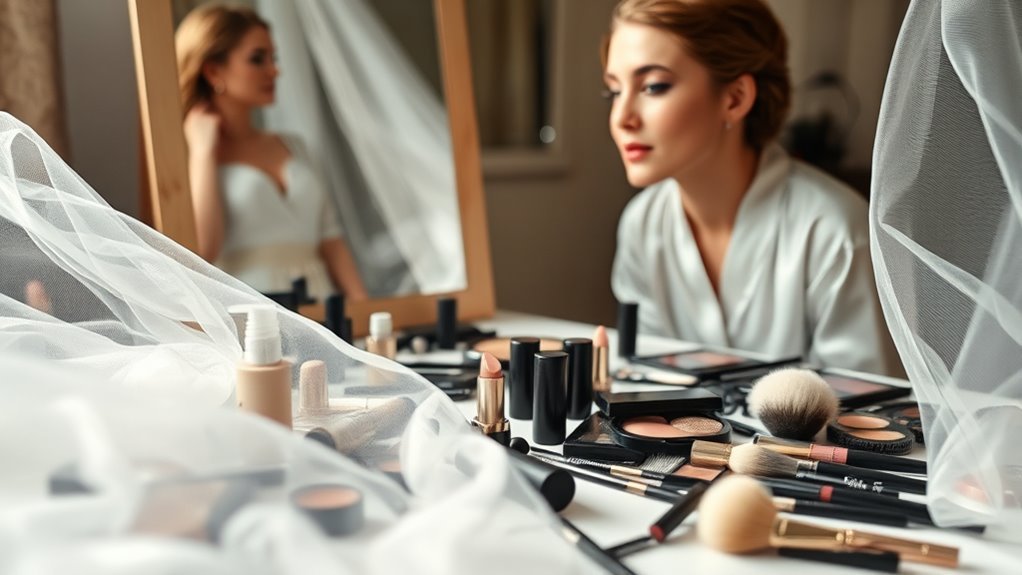
Wedding makeup should look beautiful in person, photograph well, and stay comfortable from the ceremony to the last dance. The right products depend on your skin type, wedding weather, preferred finish, and how long the celebration lasts. With careful skin preparation, well-matched foundation, and a realistic makeup trial, you can create a bridal look that feels like you without needing constant touch-ups.
Quick Answer
For long-lasting wedding makeup, start with hydrated skin, choose a primer and foundation suited to your skin type, and use waterproof eye products. Apply thin layers, set areas that become oily, and test the complete look in daylight and flash photography. Schedule a trial before the wedding and carry a small touch-up kit.
Last checked: October 11, 2026. Key skincare recommendations, wedding makeup cost data, and trial guidance were checked against the sources listed below.
Key Takeaways
- Match makeup formulas to your skin type rather than choosing products based only on trends or packaging.
- Test foundation on your jawline in natural light, then photograph the complete makeup look with flash.
- Avoid heavy layers of translucent powder, especially formulas that produce a white cast in photographs.
- Schedule a bridal makeup trial about one to three months before the wedding, allowing time for changes.
- Carry lipstick, blotting papers, a compact mirror, and a few emergency beauty supplies for quick touch-ups.
Know What Wedding Makeup Needs to Do
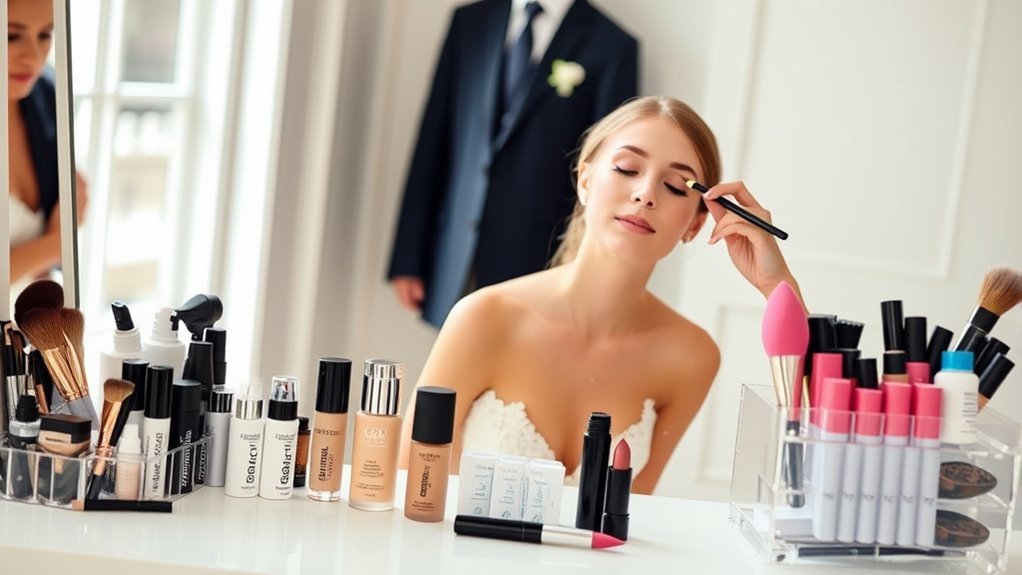
Good wedding makeup must balance appearance, comfort, durability, and photography. A product that looks beautiful in a mirror may crease, transfer, or appear different under bright lights and camera flash.
Plan for the entire celebration, not just the ceremony. Think about the hours spent getting ready, outdoor portraits, emotional moments, dinner, and dancing.
Your makeup should complement your dress, hairstyle, accessories, and wedding setting. However, you do not need dramatically heavier makeup simply because you are getting married.
A reliable bridal look usually depends on four things:
- Skin preparation: A comfortable, moisturized base that supports smooth makeup application.
- Product compatibility: Foundation, primer, concealer, and setting products that work well together.
- Targeted durability: Water-resistant or waterproof formulas where tears, humidity, and sweat may cause problems.
- Realistic testing: A complete trial that checks appearance, comfort, and wear throughout the day.
Long-wear labels are useful starting points, but they are not guarantees. Your application technique, skin condition, and environment also affect how makeup performs.
Match Wedding Makeup to Your Skin Type
Choose wedding makeup based on how your skin normally behaves. Oily skin often needs targeted shine control, while dry skin benefits from moisture and flexible formulas that do not emphasize flaky areas.
Combination and sensitive skin require a more selective approach. You may need different products on different parts of your face rather than one finish everywhere.
Know Your Skin Type
Identifying your skin type helps narrow down foundation, primer, concealer, and setting products. Notice how your skin feels after cleansing and how it changes throughout a normal day.
- Oily skin: Look for comfortable, long-wear formulas and apply oil-control products where shine develops.
- Dry skin: Choose hydrating skincare and foundation that does not highlight dry patches.
- Combination skin: Use lighter moisturization or mattifying products in the T-zone and richer hydration where needed.
- Sensitive skin: Prioritize familiar, fragrance-free formulas and review ingredients that have caused previous reactions.
Do not assume a product is safe simply because it says hypoallergenic. The FDA explains that hypoallergenic cosmetics have no standardized federal definition in the United States.
If your skin reacts easily, test new products in advance instead of introducing several unfamiliar formulas on the wedding morning.
Choose the Right Makeup Formula
The best foundation formula is one that gives you your preferred finish without becoming uncomfortable or breaking apart. Matte, satin, natural, and radiant finishes can all work for bridal makeup when applied correctly.
For oily skin, try a lightweight, longer-wearing foundation with targeted powder. For dry skin, consider a moisturizing formula with a natural or radiant finish.
Combination skin often works best with flexible, medium-coverage products. Keep the base light where your skin is dry and add shine control only where needed.
Choose concealer separately from foundation. The delicate under-eye area may need a more flexible formula, while blemishes can benefit from concentrated coverage.
Primer can help with texture or oil control, but it is not compulsory. If your foundation wears well over your normal skincare, adding another product may be unnecessary.
Test Makeup Wear Time
A wedding makeup wear test reveals how products behave after several hours. It can expose foundation separation, concealer creasing, mascara smudging, or discomfort that is easy to miss immediately after application.
Wear the complete makeup look during an ordinary day with conditions similar to your wedding. Include indoor lighting, outdoor exposure, eating, and normal movement where practical.
Pay attention to these areas:
- Forehead and nose: Check for excessive shine or foundation separating.
- Under the eyes: Look for mascara transfer and concealer settling into lines.
- Cheeks: Notice whether blush and foundation fade unevenly.
- Lips: See how the color wears after drinking or eating.
- Overall comfort: Watch for tightness, itching, dryness, or irritation.
Use what you learn to adjust product amounts, application methods, and touch-up supplies before the wedding.
Build Your Wedding Skincare Routine
Start planning your wedding skincare routine early enough to address concerns without rushing. If you have several months, focus on consistency rather than adding many treatments at once.
A basic routine of gentle cleansing, moisturizing, and sun protection is a practical foundation. More complicated skincare is not automatically more effective.
Use this general preparation timeline:
- About six months before: Review concerns such as persistent acne, uneven pigmentation, dryness, or irritation. Consider a dermatologist if treatment may be needed.
- Three to six months before: Discuss possible treatments, including retinoids, with a qualified professional when appropriate. Introduce products cautiously and monitor tolerance.
- Around three months before: If using alpha hydroxy acids (AHAs) or beta hydroxy acids (BHAs), avoid combining too many exfoliating products or increasing their frequency too quickly.
- Final weeks: Keep your routine familiar. Focus on moisturizing, gentle cleansing, and protecting the skin barrier.
- Wedding morning: Cleanse gently and apply the skincare products you already know work well beneath your makeup.
Facials may be part of your routine, but monthly treatments are not necessary for everyone. Avoid scheduling an unfamiliar or potentially irritating facial immediately before an important event.
Warning: Retinoids and exfoliating acids may irritate the skin. If you are pregnant or trying to become pregnant, consult your healthcare professional before using treatment products. The American Academy of Dermatology advises avoiding retinoids during pregnancy.
Test unfamiliar skincare products on a small area before applying them widely. The American Academy of Dermatology recommends testing skincare products for seven to 10 days to look for possible reactions.
Home product testing does not replace professional allergy testing. If a product causes a serious reaction or you have an ongoing skin condition, consult a dermatologist.
Choose the Right Primer for Wedding Makeup
The right primer for wedding makeup depends on your skin’s needs and the foundation you plan to wear. A mattifying primer can reduce visible shine, while a hydrating primer can help dry areas look smoother.
Do not automatically apply the same primer across your entire face. Concentrating it where needed often produces a more natural finish.
- Mattifying primer: Useful on oily areas such as the forehead, nose, and chin.
- Hydrating primer: Helps create a more comfortable base when skin feels dry.
- Smoothing primer: Can temporarily soften the appearance of pores and uneven texture.
- Illuminating primer: Adds a luminous finish where you want gentle radiance.
Silicone-based primers often feel silky, while formulas containing ingredients such as glycerin may provide additional moisture. The overall formula matters more than any single ingredient.
During your trial, apply your skincare, primer, and foundation together. Watch for pilling, rolling, patchiness, or unexpected shine. These problems may mean the layers are incompatible or too much product was applied.
For daytime outdoor weddings, use proper sun protection rather than relying only on a primer with SPF. The American Academy of Dermatology recommends broad-spectrum, water-resistant sunscreen with SPF 30 or higher and reapplication about every two hours when outdoors.
A primer containing sunscreen does not automatically provide enough protection when applied in the small quantity normally used for makeup.
Pick Foundation That Won’t Flash Back
Choose wedding foundation for both real-life appearance and photography. A good shade match should look natural against your neck and chest, while the finished base should avoid a pale or uneven cast under camera flash.
Flashback happens when certain makeup products reflect or scatter strong camera light, sometimes creating unusually white areas in photographs.
Choose the Right Foundation Shade
Foundation should match your overall skin tone and undertone. A shade that looks right on your hand may be noticeably different on your face.
Try these steps before making your final choice:
- Apply candidate foundation shades along your jawline.
- Compare them against your face and neck in natural daylight.
- Allow the product to settle before judging the final color.
- Check whether the foundation becomes darker, orange, or uneven after wearing it.
- Take photographs in indoor and outdoor lighting.
Undertones are commonly described as warm, cool, or neutral. However, complexion products vary between formulas and brands, so actual testing is more useful than relying on a label alone.
For a natural finish, start with a thin layer and build coverage only where needed. Heavy foundation is not required to create a polished bridal look.
Test Foundation and Powder With Camera Flash
Camera flash can reveal makeup problems that are not visible in daylight. Powder buildup, very light concealer, and highly reflective products may appear brighter or chalkier in photographs.
Silica is a useful oil-absorbing and light-diffusing ingredient, but heavy application of some silica-rich translucent powders can produce flashback. Allure’s makeup flashback explanation describes how these powders can reflect strong flash lighting.
Some products containing zinc oxide, titanium dioxide, or reflective pigments may also look different in flash photographs. However, these ingredients do not automatically mean a formula will create flashback.
To reduce the risk:
- Apply foundation and concealer in thin, blended layers.
- Use translucent setting powder sparingly, especially beneath the eyes.
- Make sure powder does not leave a visible white cast.
- Take direct-flash photographs of your completed makeup.
- Compare those pictures with photos taken in natural light.
A matte label or a flashback-free claim is not a substitute for testing. Both radiant and matte foundations can photograph well when the entire product combination works together.
Do not skip needed sunscreen solely because you are worried about flashback. Instead, test your sunscreen and makeup together before the wedding.
Pro Tip: Test the finished makeup, not just the foundation. Concealer and setting powder can change how the completed look appears under flash, even when the foundation looks good on its own.
Test Long-Wear Wedding Makeup Before the Big Day
A complete long-wear makeup rehearsal helps you understand how your bridal look performs. Ideally, complete at least one trial with enough time left to replace products or adjust your technique.
Use the actual combination you plan to wear: skincare, primer, foundation, concealer, eye makeup, lip color, powder, and setting spray.
Follow this practical rehearsal checklist:
- Prepare your skin: Use your planned cleansing and moisturizing routine.
- Apply your complete makeup: Use the techniques and product amounts intended for the wedding.
- Record the initial finish: Take clear photographs under natural and indoor lighting.
- Wear the makeup: Continue normal activities for several hours without immediately correcting every small change.
- Check problem areas: Look for fading, creasing, transfer, shine, and discomfort.
- Test planned touch-ups: Blot and reapply products only as you would during the celebration.
- Review the results: Decide what to keep, replace, or apply differently.
Pay special attention to waterproof mascara and eyeliner. These products may resist moisture better than ordinary formulas, but their performance varies.
A long-wear setting spray may improve durability for some makeup combinations. Test it rather than assuming that spraying more product will always make the result last longer.
Check whether your lipstick transfers onto cups or fades after meals. A matching lip liner and an easy-to-reapply color may be more practical than an uncomfortable formula that promises extreme wear.
Choose Products for Heat, Humidity, or Cold
Wedding weather can change how makeup wears. Humidity and sweat may increase smudging or transfer, while cold or dry air can make some formulas emphasize tightness and flaky patches.
Adjust the product combination to the conditions rather than applying more makeup to compensate.
| Condition | Product Focus |
|---|---|
| Humid | Lightweight long-wear foundation, waterproof eye makeup, and setting products suited to your skin |
| Hot | Thin makeup layers, targeted powder, and blotting papers |
| Cold | Comfortable moisturizer, hydrating primer, and flexible complexion formulas |
| Dry | Moisturizing skin preparation and cream products where powder looks dry |
| Test | Wear the complete makeup look in conditions similar to the wedding |
For outdoor summer weddings, consider how you will manage sweat without rubbing the foundation away. Gently press a clean tissue or blotting paper against damp or oily areas instead of wiping.
In winter, apply moisturizer before makeup and avoid excessive powder on dry patches. Cream blush and more flexible foundation may create a fresher finish.
For combination weather, such as an outdoor ceremony followed by an air-conditioned reception, prioritize products that remain comfortable in both settings.
Remember that no makeup is completely immune to heat, tears, friction, or moisture. A realistic touch-up plan is more useful than relying on an absolute waterproof promise.
Pack a Wedding Day Touch-Up Kit
A wedding day touch-up kit helps maintain your look without carrying your entire makeup collection. Focus on products that correct the changes most likely to happen during your celebration.
Keep the kit in a small bag and ask someone you trust to carry it if your dress has no practical storage.
Touch-Up Essentials
The most useful touch-up products are easy to apply quickly and do not require removing or rebuilding your makeup.
- Lipstick or lip gloss: Refresh color after meals and drinks.
- Lip liner: Restore the edges of your lip color when needed.
- Blotting papers: Remove excess oil without adding another layer of powder.
- Compact mirror: Check details in changing lighting.
- Small setting powder: Control shine in selected areas without heavy buildup.
- Mini setting spray: Refresh the finish if you tested it successfully during your rehearsal.
Blot excess oil before adding powder. Applying powder directly over perspiration or accumulated oil can leave the skin looking patchy or heavy.
If your lipstick wears away unevenly, gently remove loose color before applying a fresh layer.
Wedding Day Must-Haves
A few additional items can help manage unexpected problems with makeup, hair, and overall comfort.
- Lightweight concealer: For small areas where coverage has faded.
- Clean cotton swabs: For carefully correcting minor smudges.
- Bobby pins and hair ties: For loose pieces or unexpected hairstyle changes.
- Tissues: For gently managing tears before they disturb eye makeup.
- Travel-sized perfume: Optional for a personal fragrance refresh, provided it is already familiar and tolerated.
Do not rub wet mascara or eyeliner when you cry. Blot tears gently and allow the area to dry before repairing any smudges.
If you have hired a professional makeup artist, ask whether touch-up services are included or available for an additional fee. On-site assistance may be useful for a long event or a planned second makeup look.
Decide Between a Makeup Artist and DIY
Hiring a professional makeup artist offers experienced application, product selection, and help managing your wedding morning schedule. DIY makeup offers more control and may cost less if you already own suitable products and have the necessary skills.
The best choice depends on your budget, confidence, preferred makeup style, and how much preparation you can reasonably manage.
For a US cost reference, The Knot’s May 2026 wedding beauty cost report, based on its Real Weddings Study of couples married in 2025, lists an average of $150 for bridal makeup and $300 for bridal hair and makeup combined.
This is a national average, not a fixed quote. Prices vary with location, artist experience, travel, complexity, and additional services. Makeup trials and on-site touch-ups may cost extra.
When to Hire a Professional Makeup Artist
A professional is particularly useful when you want detailed eye makeup, have trouble finding comfortable complexion products, or prefer not to handle application on the wedding morning.
Before booking, ask about the artist’s experience with your skin tone and type, trial policies, sanitation practices, travel fees, and cancellation terms.
Review examples of makeup photographed in natural light. A portfolio that includes a variety of skin tones and textures can help you judge whether the artist’s style matches your expectations.
When DIY Wedding Makeup Makes Sense
DIY may be a good fit when you enjoy applying makeup, prefer a familiar look, and have time to practice.
You should already feel comfortable with techniques such as blending foundation, applying eyeliner, setting concealer, and correcting small mistakes.
DIY does not necessarily mean buying inexpensive products. You may need to purchase missing items or replace formulas that fail your wear test.
Practice the entire routine more than once and prepare your brushes, sponges, and products before the wedding morning.
Whether you choose professional or DIY makeup, allow a realistic preparation window. The time needed depends on the makeup’s complexity and whether hair styling is scheduled separately.
Plan a Wedding Makeup Trial
A wedding makeup trial gives you the chance to refine your preferred look before the ceremony. It is also an opportunity to check product comfort, photograph the makeup, and communicate specific changes.
Many professionals recommend scheduling the trial about one to three months before the wedding. According to The Knot’s wedding hair and makeup trial guidance, that period usually allows enough time to evaluate the look and arrange adjustments.
If you have a popular wedding date or a specific artist in mind, book the artist well before the trial date rather than waiting until the final months.
Bring these items to your trial:
- Reference photos showing makeup styles you like and dislike.
- Pictures of your dress, hairstyle, accessories, and wedding setting.
- A white, ivory, or similarly colored top if it reflects your planned outfit.
- Details about your skin type, known sensitivities, and past product reactions.
- Information about the expected ceremony lighting and weather.
Explain how much coverage you prefer, whether you want a matte or radiant finish, and which facial features you want to emphasize.
After the trial, take photographs from different angles. Notice how the makeup looks in close-ups and wider portraits.
Give specific feedback rather than simply saying you like or dislike the result. For example, ask for lighter under-eye coverage, softer brows, less powder, or a different lip color.
If you are unhappy with the finished look, discuss changes while there is still time for another appointment.
Pro Tip: If possible, arrange your makeup trial on a day when you have another event or several hours of activities planned. This lets you evaluate the makeup outside the salon rather than judging only the freshly applied result.
Frequently Asked Questions
What Is the 30/5 Rule for Weddings?
The 30/5 wedding rule is an informal scheduling idea, not a makeup budget formula. It suggests that small wedding-day tasks that normally take five minutes may need much longer, sometimes 30 minutes. It also reflects how quickly memorable moments can seem to pass. For makeup planning, the lesson is to leave extra time for unexpected delays.
What Is the 2/3 Rule for Makeup?
The popular 2/3 getting-ready rule means focusing on two of three areas: hair, makeup, and outfit. It is not a standard rule requiring two-thirds of bridal makeup to emphasize the eyes. For a wedding, use it only as a relaxed planning idea rather than a strict beauty formula. People explains the trend.
What Is the Best Concealer for Bridal Makeup?
The best bridal concealer is comfortable, long-wearing, buildable, and suited to your skin. A flexible, hydrating formula may work well beneath dry or mature eyes, while a more matte finish can suit oily areas. Match the shade carefully, avoid applying too much, and test the finished concealer in flash photography before your wedding.
What Are Some Mistakes to Avoid in Wedding Makeup?
Common mistakes include skipping a makeup trial, choosing the wrong foundation shade, applying excessive powder, and introducing unfamiliar skincare immediately before the event. Another mistake is ignoring weather and lighting conditions. Test your finished look early, apply products in controlled layers, and keep practical touch-up supplies nearby.
How Far in Advance Should You Book a Wedding Makeup Trial?
A wedding makeup trial is often scheduled one to three months before the ceremony. This allows you to check the appearance, comfort, and durability of the planned look and make changes if necessary. However, you may need to reserve the artist and trial appointment much earlier, particularly for a busy wedding season.
Can You Wear Sunscreen Under Wedding Makeup?
Yes, you can wear sunscreen beneath wedding makeup, and outdoor sun protection remains important. Choose a sunscreen suited to your skin and apply it according to the label. Test the sunscreen, primer, foundation, and powder together because some combinations may pill or photograph differently. Reapply sunscreen as directed during prolonged outdoor exposure.
Conclusion
Beautiful wedding makeup starts with understanding your skin, choosing comfortable formulas, and testing how the complete look behaves under real conditions. The goal is not to use more products, but to use the right combination for your setting and preferred style.
Schedule a trial, check the makeup in photographs, and prepare a compact touch-up kit. With those details handled in advance, you can spend less time worrying about your appearance and more time enjoying your wedding.
Sources
- American Academy of Dermatology, How to Test Skin Care Products: Product testing and potential reactions.
- American Academy of Dermatology, Dermatologist-Approved Pregnancy Skin Care: Retinoid precautions during pregnancy.
- American Academy of Dermatology, How to Apply Sunscreen: Sunscreen selection, application, and reapplication.
- U.S. Food and Drug Administration, Hypoallergenic Cosmetics: Limitations of hypoallergenic labeling.
- Allure, Angelina Jolie: How to Avoid Her Powder Disaster: Flash photography and reflective makeup powder.
- The Knot, Everything You Need to Know About Wedding Hair and Makeup Trials: Trial scheduling and preparation.
- The Knot, The Average Cost for Professional Wedding Hair and Makeup, According to Data: US wedding beauty cost figures reported in May 2026.
- People, TikTok’s Viral 2/3 Rule: Explanation of the hair, makeup, and outfit getting-ready trend.

